Phones
Infinix Note 50x 5G
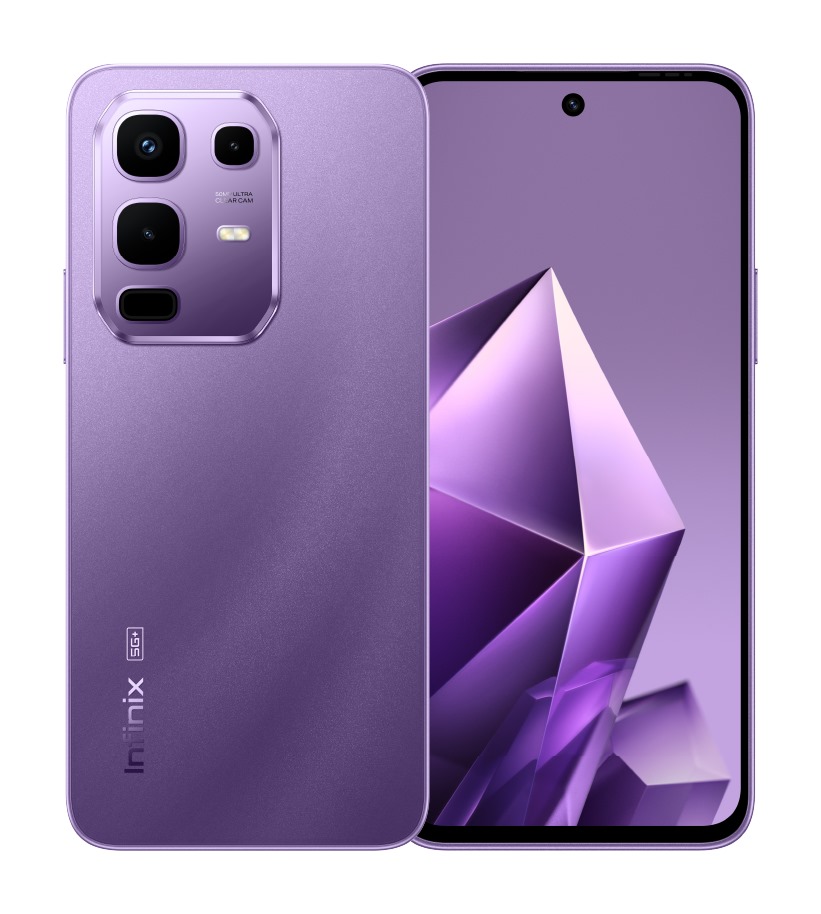
Infinix's value 5G phone pairs a Dimensity 7300 Ultimate chip and a 5,200 mAh battery with 45W charging, 4K video and a 6.67-inch 120Hz HD+ LCD in a body rated IP64.
Key figures at a glance
Gallery
Specifications
- Display
- 6.67" IPS LCD, 720x1600 (HD+), 60/90/120Hz, 672 nits peak
- Chipset
- MediaTek Dimensity 7300 Ultimate (4nm)
- RAM
- 8GB
- Extended RAM
- 8GB virtual
- Storage
- 256GB
- Rear Camera
- 50MP main (f/1.6, PDAF)
- Front Camera
- 8MP, f/2.0
- Battery
- 5200 mAh, 45W wired, 10W reverse
- OS
- XOS 15, powered by Android 15
- Dimensions
- 165.42 x 76.41 x 7.98 mm, 195.4 g (8.18 mm, 198.9 g in green and pink)
- Water resistance
- IP64
- Network
- 5G
The Infinix Note 50x 5G is the value-minded member of the Note 50 range. Instead of chasing a flagship-style screen, it concentrates on a 5G modem, a MediaTek Dimensity 7300 Ultimate processor, a 5,200 mAh battery with 45W charging and a body that Infinix says meets the MIL-810H durability standard. The screen is a 6.67-inch LCD at HD+ resolution, which is where the savings are most obvious. This overview draws on the specification pages Infinix publishes for its regional sites and is written from those documents, not from hands-on use. It aims to show who gets the best deal from the phone and where the price shows.
What the name tells you
Infinix sells the Note 50 line in several flavours: a plain Note 50, a Note 50 Pro, a Note 50 Pro+ 5G and a Note 50s 5G appear in its regional listings alongside this one. The "x" model is the one built around affordability, with a 5G connection as its main selling point. The spec page lists network support for 2G, 3G, 4G and 5G, and the 5G bands include n1, n3, n5, n7, n8, n12, n20, n28, n38, n40, n41, n66, n71, n77 and n78, which covers a broad set of European, Asian and African networks. As with all regional phones, the usable bands depend on the country version you buy. No single official launch date or US price is given on the pages we could read, so the release date on this site is an approximation and no price is quoted. The sibling model with a sharper AMOLED screen and faster wired charging is covered separately as the Infinix Note 50 Pro.
Camera and video
The main camera is a 50-megapixel sensor with an f/1.6 aperture, a 75.5-degree field of view and phase-detection autofocus. Infinix lists a front flash and a dual rear flash, and the headline summary promises "50MP Ultra-Clear Cam" with 4K video recording. The detailed table is more specific: the rear camera records 4K at 30 fps, 1080p at 30 fps or high frame rate, and offers 1080p slow motion at 120 or 240 fps, while the selfie camera goes up to 2K at 30 fps. The selfie camera itself is an 8-megapixel unit with an f/2.0 aperture and a 77.8-degree field of view. That is a modest front camera, and photographers who mainly shoot selfies will notice the difference against the 32-megapixel sensor on the Pro. There is only one rear lens listed, so there is no ultra-wide or telephoto option. Shooting modes include Super Night, Portrait, Dual Video, Pro, Panorama, Documents and Vlog, plus slow motion and time-lapse.
Because only a single main camera is named, expect good results in daylight and a more limited range in low light, since Infinix does not publish image stabilization for this phone. The 4K video option is a genuine plus at this price tier, and it is the clearest advantage over the 4G Note 50 Pro, which tops out at 2K video.
Screen: the main compromise
The display is a 6.67-inch IPS LCD with a resolution of 720 x 1600 pixels, a 90.2 percent screen-to-body ratio and refresh rates of 60, 90 and 120Hz. Peak brightness is listed at 672 nits (560 nits typical), colour gamut at 72 percent NTSC and touch sampling at up to 240Hz. Those are budget numbers. An HD+ panel at 6.67 inches is less sharp than the Full HD+ panels in most competing phones, and the 120Hz mode is welcome mainly for smoothness while scrolling. The LCD also supports an always-on-display mode, and Infinix mentions touch handling with wet or greasy fingers. A side-mounted fingerprint reader handles unlocking.
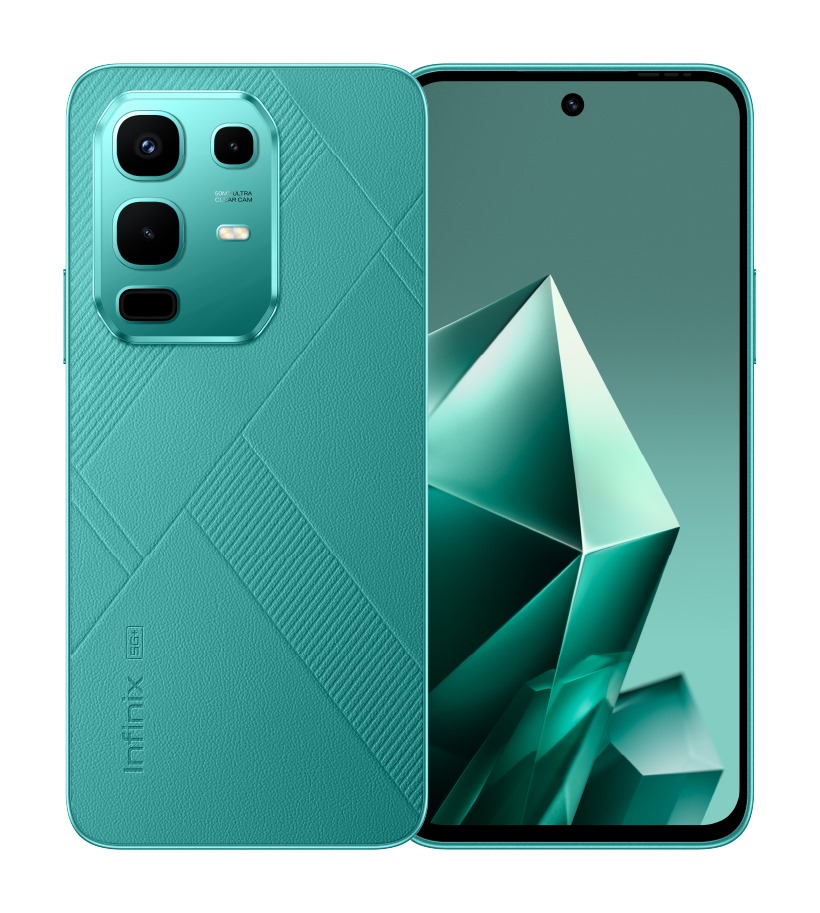
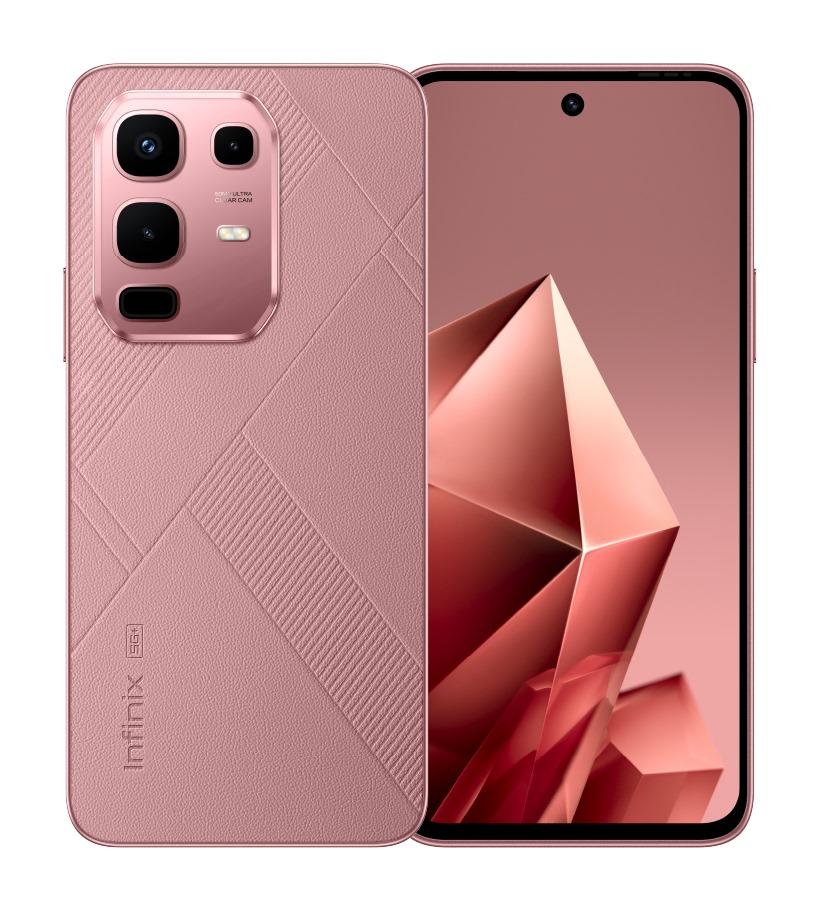
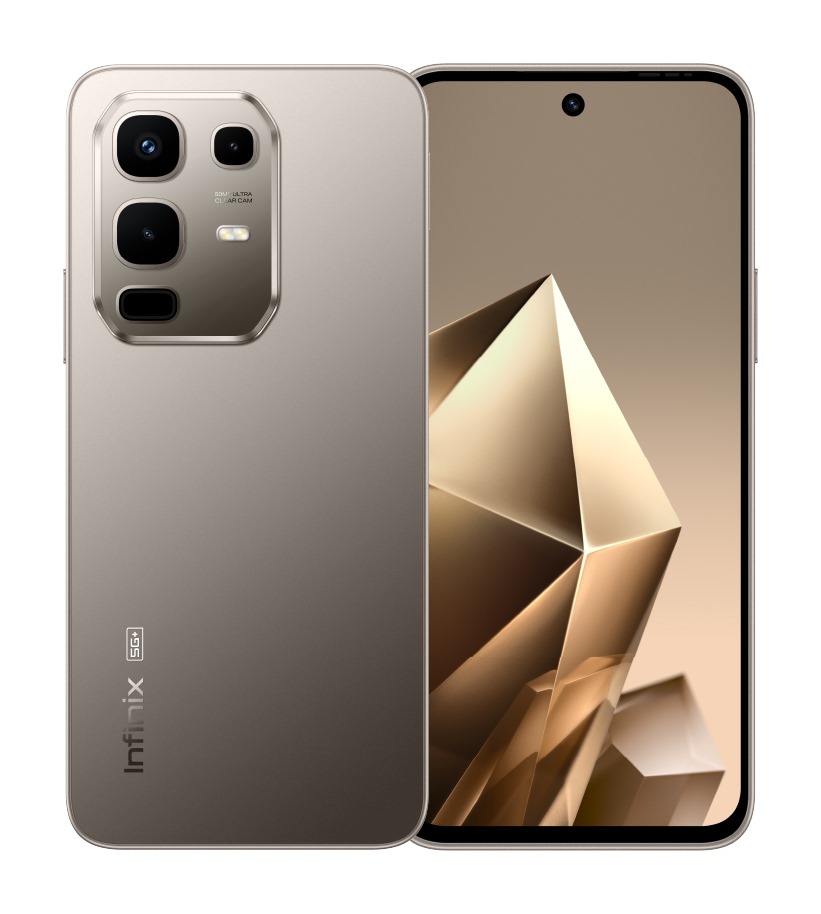
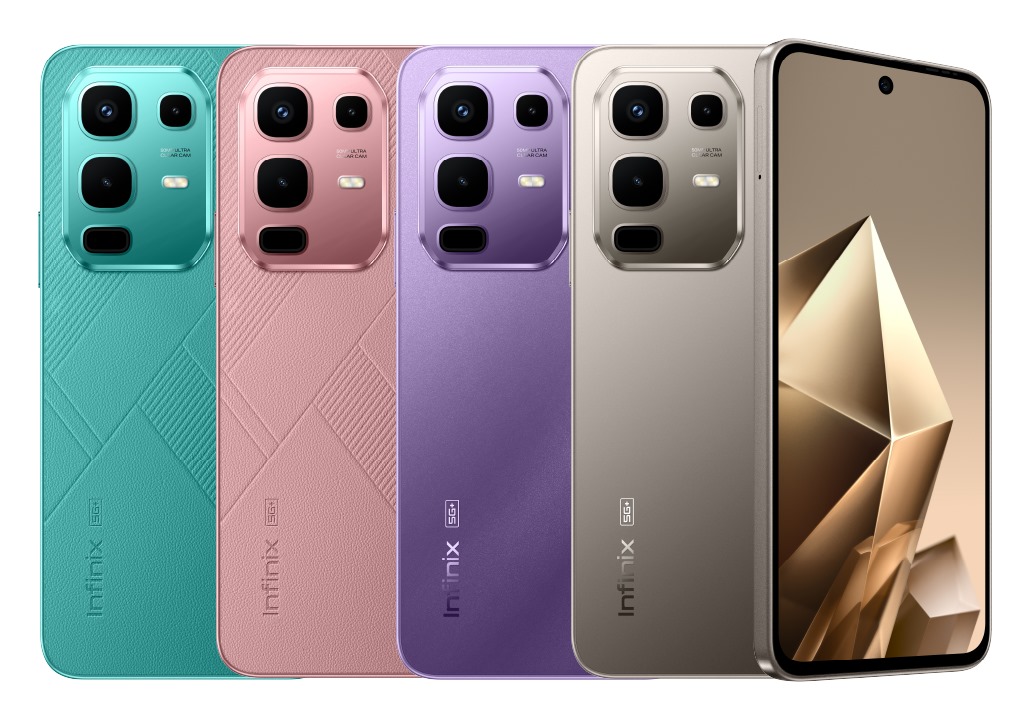
The body is slightly different from what many buyers expect. It measures 165.42 x 76.41 mm and is 7.98 mm thick in the Titanium Grey and Enchanted Purple versions, and 8.18 mm thick in Sea Breeze Green and Sunset Spice Pink; weights are 195.4 g and 198.9 g respectively. The textured finishes of the two brighter colours add a little thickness and weight. The company's feature list adds an IP64 dust and splash rating, in addition to the military-standard claim, and a "gem style" camera module.
Everyday speed and storage
The chip is the MediaTek Dimensity 7300 Ultimate, built on a 4nm process with four Cortex-A78 cores at up to 2.5GHz and four Cortex-A55 cores at up to 2.0GHz, plus a Mali-G615 MC2 graphics unit. On paper that is a clear step up from the Helio-class processors found in many 4G phones, and it should handle social media, video streaming, navigation and moderate gaming without trouble. The low resolution of the screen also means the graphics unit has fewer pixels to draw, which usually helps sustained frame rates, though no official benchmark figures are published.
Memory is stated as 256GB of storage with 8GB of physical RAM, using UFS 2.2 storage and LPDDR4X memory. Infinix adds 8GB of extended RAM, which is storage space used as additional memory rather than another chip, so the real figure to compare is 8GB. The operating system is XOS 15, described as powered by Android 15. Infinix also highlights its One-Tap AI button. Connectivity is generous for the price: NFC, Wi-Fi 802.11 a/b/g/n/ac/ax (Wi-Fi 6), Bluetooth 5.4, an infrared blaster, FM radio, a USB Type-C port with OTG, dual nano SIM and a headphone connection through the USB-C port. Dual speakers carry DTS processing, and Widevine L1 is listed for HD streaming.
Battery and charging
The battery is 5,200 mAh (typical) with charging up to 45W; the page lists 11V at 4.1A and 10V at 4.5A as the supported input profiles and notes that different voltage inputs may change the maximum output in some regions. Reverse charging at up to 10W is included, so the phone can power accessories. A 45W charger is a middle-ground speed: much quicker than the 18W or 33W chargers on older budget phones, but well short of the 90W figure on the Pro. There is no wireless charging listed. Official battery-life hours are not published, so it is sensible to rely on independent runtime tests, which the low-resolution LCD and efficient 4nm chip suggest should be favourable.
Who should buy it, and what to weigh
The Note 50x 5G is the practical choice for people who want a reliable 5G phone with a large battery, strong connectivity and decent processing power, and who care little about display sharpness. It is also a sensible secondary phone or a first smartphone, thanks to the rugged-body claims and the generous battery. If you read a lot, watch video in bright light or take many selfies, the HD+ LCD and 8-megapixel front camera are the points that may disappoint.
- Plus points: 5G with many bands, Dimensity 7300 Ultimate, 5,200 mAh battery, 4K video, NFC, Wi-Fi 6, IP64 and MIL-810H claim.
- Minus points: 720p LCD, 8MP front camera, a single rear lens, no wireless charging and extended RAM that is virtual.
To see how it compares to a better-known mid-range rival, try Infinix Note 50x 5G vs Galaxy A56. Other Infinix options include the Hot 60 Pro, and the rankings page lists every phone we cover by score.
Where it ranks
Compare Infinix Note 50x 5G with similar devices
More from Infinix
Frequently asked questions
When was the Infinix Note 50x 5G released?
The Infinix Note 50x 5G was released on 2025-03-01, according to the manufacturer’s published information.
What are the main specs of the Infinix Note 50x 5G?
Headline figures for the Infinix Note 50x 5G: Battery: 5,200 mAh, Refresh rate: 120 Hz, Main camera: 50 MP, RAM: 8 GB. The full specification table is further up this page.
Is the Infinix Note 50x 5G worth buying?
That depends on your priorities. Use the editorial review on this page for our view, check the rankings above to see where the device stands on battery, display and camera, and compare it directly with similar models before you decide.


