Phones
Infinix Hot 40
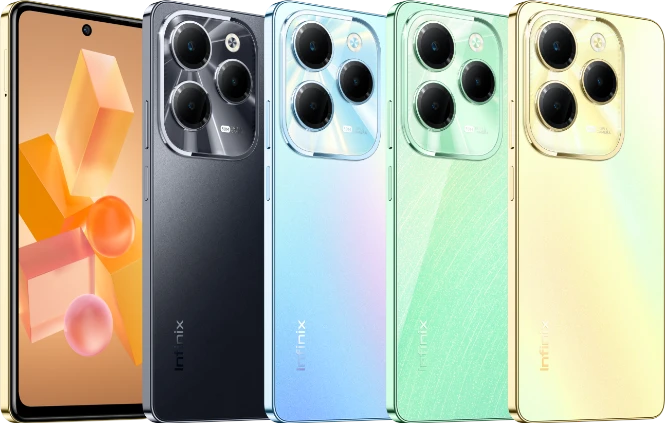
The more modest Hot 40: a 6.78-inch 90Hz screen, Helio G88, a 50MP main camera, 5,000 mAh battery and 33W charging in a 4G-only body.
Key figures at a glance
Gallery
Specifications
- Display
- 6.78" FHD+ IPS LTPS LCD, 1080x2460, 90Hz, 500 nits peak, up to 270Hz touch sampling, 90.7% screen-to-body
- Chipset
- MediaTek Helio G88 (12nm), octa-core up to 2.0GHz, Mali-G52 MC2
- RAM
- 8GB
- Storage
- 128GB / 256GB
- Rear Camera
- 50MP main (f/1.6, autofocus) + 2MP macro (f/2.4) + AI lens (f/2.0), quad flash
- Front Camera
- 32MP (f/2.2, fixed focus), dual front flash
- Battery
- 5,000 mAh (typical), 33W wired charging
- OS
- XOS 13.5
- Extended RAM
- Infinix lists the RAM as "8GB (up to 16GB)"; the 16GB figure is an extended-RAM total, not additional physical memory
- Memory
- LPDDR4X RAM with eMMC storage; microSD up to 1TB
- Video
- Up to 2K at 30fps
- Dimensions
- 168.61 x 76.61 x 8.25 mm, 196 g (model X6836)
- Connectivity
- 4G LTE (no 5G), dual nano-SIM + microSD, Wi-Fi IEEE 802.11 a/b/g/n/ac, Bluetooth, NFC, GPS, FM radio, USB Type-C, OTG, 3.5mm headphone jack
- Audio
- DTS, Widevine L1
- Security
- Fingerprint sensor
- Colors
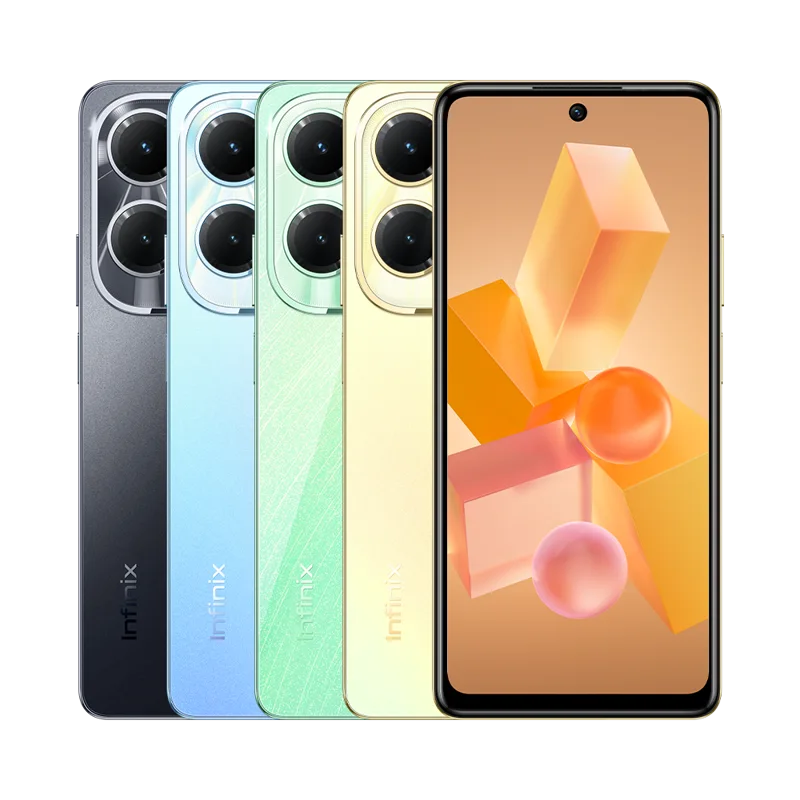
- Palm Blue, Horizon Gold, Starlit Black, Starfall Green
Infinix has a habit of putting a big screen and a big battery into phones that cost very little, and the Infinix Hot 40 is a clear example. It is the standard model of the Hot 40 generation: a 6.78-inch Full HD+ display, a 5,000 mAh battery, a 50MP main camera and 33W charging, all running on a MediaTek Helio G88. It leaves out 5G and does not chase the headline numbers of its pricier sibling, which makes it a useful reference point for anyone shopping at the very bottom of the market. The notes below are based on the published specifications and the manufacturer's own pages, and they separate stated facts from sales language.
What the Hot 40 is meant to be
Think of the Hot 40 as the value choice. Infinix sells a stronger variant, the Hot 40 Pro, with a newer chip, a 120Hz-capable panel and a 108MP camera; the standard model keeps the same size, the same battery capacity and the same colour palette while saving money on the processor and the screen refresh rate. If you have ever wondered what the generation before the Hot 50 offered at the entry point, this is it, and the Hot 40 vs Hot 50 page makes the differences easy to read.
No official page we could consult gives a release date or a United States list price for this model, and local prices differ widely, so neither is stated here.
Body and screen
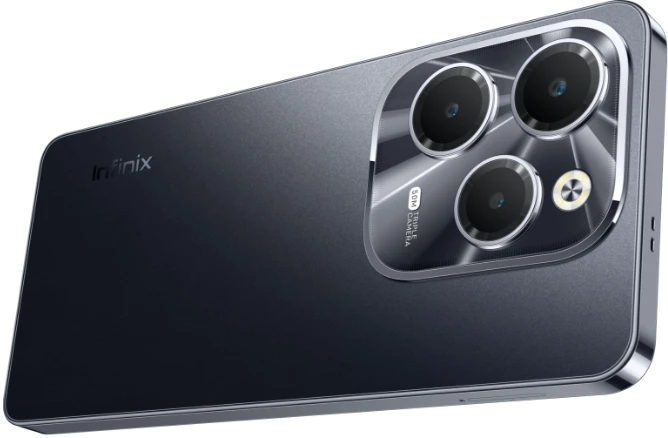
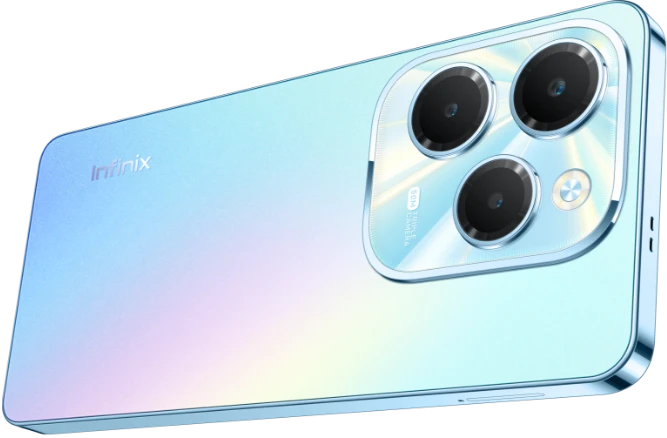
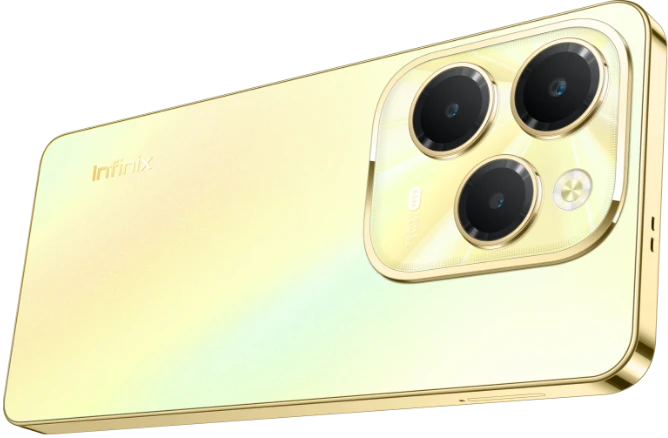
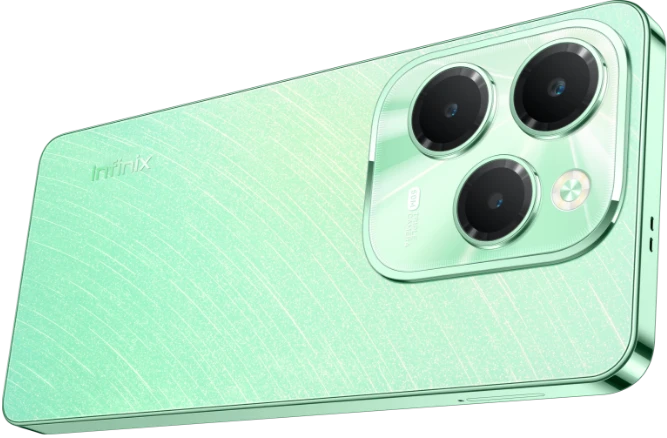
Infinix lists the phone at 168.61 x 76.61 x 8.25 mm and 196 g, which is almost exactly the size of the Pro but 3 g lighter. The four colours are Palm Blue, Horizon Gold, Starlit Black and Starfall Green. In the official renders the front shows a thin, even frame around the screen with a small punch-hole for the selfie camera, and the back has a vertical module with several lens rings and a flash.
The display is a 6.78-inch IPS LTPS LCD at 1080 x 2460 pixels, with a screen-to-body ratio of 90.7 percent. Peak brightness is rated at 500 nits and the refresh rate is fixed at 90Hz, a step above the 60Hz panels that still turn up in this price range. Touch sampling is quoted at up to 270Hz, and Infinix puts the colour gamut at 80 percent NTSC minimum and 85 percent typical, with a typical contrast ratio of 1500:1. The company calls it a "Super Fluid" display with a feature named Magic Ring, but the spec page does not say what Magic Ring does. Treat the 90Hz figure and the brightness number as the practical facts and the rest as branding.
Everyday speed
The Helio G88 is built on a 12nm process, older and less efficient than the 6nm process used in the Pro's Helio G99. It has an octa-core CPU that Infinix gives as running up to 2.0GHz and a Mali-G52 MC2 graphics unit. Memory is 8GB of LPDDR4X with eMMC storage in 128GB or 256GB. eMMC is slower than the UFS storage in the Pro, which tends to show in app installs, large file copies and how quickly apps reopen. A microSD slot takes cards up to 1TB.
Infinix writes the RAM as "8GB (up to 16GB)". The extra 8GB is virtual memory carved out of storage, a software option that helps keep more apps alive in the background but is not additional silicon. Plan on 8GB of real memory.
Expect a phone that copes with chat apps, maps, video streaming and light games, and that starts to feel its age with heavy 3D titles or when many apps are open together. The operating system is XOS 13.5; the Android version underneath it and the length of the update promise are not stated on the page we read, so ask the seller if that matters to you.
Camera notes
The main camera is a 50MP sensor with an f/1.6 lens and autofocus, backed by a 2MP macro camera and an AI lens at f/2.0. A quad flash ring sits around the rear module. Video recording goes up to 2K at 30 frames per second. On the front, a 32MP camera with an f/2.2 lens and a dual flash serves selfies; its focus is fixed.
The aperture on the main sensor is wider than the Pro's, which can help in dim rooms, but Infinix does not list optical stabilisation, a larger sensor or an ultrawide lens, so the camera system is best understood as a competent daylight tool. Macro shots at 2MP are low in detail. The company's own phrase, "Triple AI Cam", counts the AI lens as a camera, which may overstate the hardware. For documents, social posts and ordinary outdoor snapshots it should be perfectly serviceable.
Battery and wires
With a 5,000 mAh (typical) battery, a Full HD+ screen locked at 90Hz and a 12nm chip, the Hot 40 should last through a normal day and probably into the next for light users, though Infinix publishes no standard runtime test. Charging is rated at 33W, listed on the page as 10V at 3.3A, so a full top-up should fit comfortably into a short break and a long sleep. Whether a charger is included depends on the market.
The phone connects to 2G, 3G and 4G networks only. You get dual nano-SIM plus a separate microSD slot, IEEE 802.11 a/b/g/n/ac Wi-Fi, Bluetooth, NFC, GPS, FM radio, OTG and a USB Type-C port. A 3.5mm headphone jack is still present, which wired-headphone users will appreciate. Audio carries DTS branding and Widevine L1, the DRM level that allows HD streaming on major apps. Infinix's promotional line about "Game Antenna Wi-Fi Enhancement Technology" is a claim about signal handling in games; no figures are given to test it. A fingerprint sensor is included.
Who should consider it
This is a phone for someone who mostly watches video, chats and scrolls, who wants more than a day of battery, and who is not willing to pay for 5G or a high-end chip. It also works as a backup device or a gift for a younger user. If gaming or fast storage matters, step up to the Pro or consider something like the Galaxy A16, which offers an AMOLED panel and a long update policy for a similar budget.
Where it gives way
- The Helio G88 and eMMC storage are the slowest parts of the package.
- No 5G, so it depends on 4G coverage.
- An LCD panel with 500 nits of peak brightness is dim in direct sunlight.
- The camera set has no ultrawide lens and no stated stabilisation; the macro lens adds little.
- Extended RAM is virtual, and the update policy is not specified on the reviewed page.
Used within those limits, the Hot 40 delivers a large screen and a durable battery at a low price. For a wider view of how it compares with other phones, see the rankings, or put it next to its sibling on the Hot 40 vs Hot 40 Pro page.
Where it ranks
Compare Infinix Hot 40 with similar devices
More from Infinix
Frequently asked questions
When was the Infinix Hot 40 released?
The manufacturer’s release date for the Infinix Hot 40 is not stated in the information we have.
What are the main specs of the Infinix Hot 40?
Headline figures for the Infinix Hot 40: Battery: 5,000 mAh, Refresh rate: 270 Hz, Main camera: 50 MP, RAM: 8 GB. The full specification table is further up this page.
Is the Infinix Hot 40 worth buying?
That depends on your priorities. Use the editorial review on this page for our view, check the rankings above to see where the device stands on battery, display and camera, and compare it directly with similar models before you decide.


