Phones
Samsung Galaxy A16
Samsung's budget Galaxy A16 pairs a 6.7-inch 90Hz Super AMOLED screen with a 5,000 mAh battery, IP54 protection and a promise of six OS upgrades.
Key figures at a glance
Gallery
Specifications
- Display
- 6.7" FHD+ Super AMOLED, 1080x2340, up to 90Hz
- Chipset
- Octa-core (2.4GHz + 2GHz)
- RAM
- 8GB
- Storage
- 128GB / 256GB
- Rear Camera
- 50MP main (f/1.8) + 5MP ultrawide (f/2.2) + 2MP macro (f/2.4)
- Front Camera
- 13MP (f/2.0)
- Battery
- 5,000 mAh (typical), 25W wired charging (charger sold separately); no wireless charging listed
- OS
- Android with One UI 6.1 at launch (per Samsung's product page); up to 6 OS upgrades and 6 years of security updates
- Dimensions
- 164.4 x 77.9 x 7.9 mm, 192-200 g depending on market
- Durability
- IP54 dust and splash resistance
- Memory
- 4GB + 128GB (Canada), 6GB + 128GB (India), 8GB + 256GB (Philippines); microSD up to 1.5TB
- Connectivity
- 5G sub-6, Wi-Fi 802.11 a/b/g/n/ac, Bluetooth 5.3, NFC, USB-C 2.0, GPS/GLONASS/BeiDou/Galileo
- Security
- Samsung Knox Vault, fingerprint sensor
- Colors
- Blue Black, Light Gray, Light Green (UK); Gold (Philippines)
The Samsung Galaxy A16 is the kind of phone that rarely makes headlines but ends up in a lot of pockets. Introduced in late 2024 as part of Samsung's entry-level A series, it comes in a 5G version and an LTE-only sibling, and the 5G model is the one this review looks at. It does not try to out-spec rivals on raw performance. Instead it concentrates on the things a first smartphone, a family handset or a reliable backup phone actually needs: a large and colourful screen, a battery that lasts, a modest but versatile camera set and a long software-support promise. This review is based on the published specifications and the manufacturer's own material, and it separates what Samsung states from what a buyer should verify locally.
Where it sits in the lineup
The A16 sits near the bottom of Samsung's mainstream range, below the mid-range models such as the Galaxy A56 and its siblings. In the United States Samsung listed the A16 5G at $199.99 when it went on sale in January 2025; in the United Kingdom the 5G model launched at 199 pounds, while the LTE version was positioned slightly lower. Memory configurations differ by country: Samsung's regional pages list 4GB with 128GB in Canada, 6GB with 128GB in India and 8GB with 256GB in the Philippines. That patchwork matters, because the 4GB versions will feel noticeably more constrained than the 8GB ones when many apps are open at once.
Within the same family, the newer Galaxy A17 follows the same recipe with a refreshed spec sheet. If you are weighing the two, the side-by-side numbers are on the Galaxy A16 vs Galaxy A17 page.
Design and display
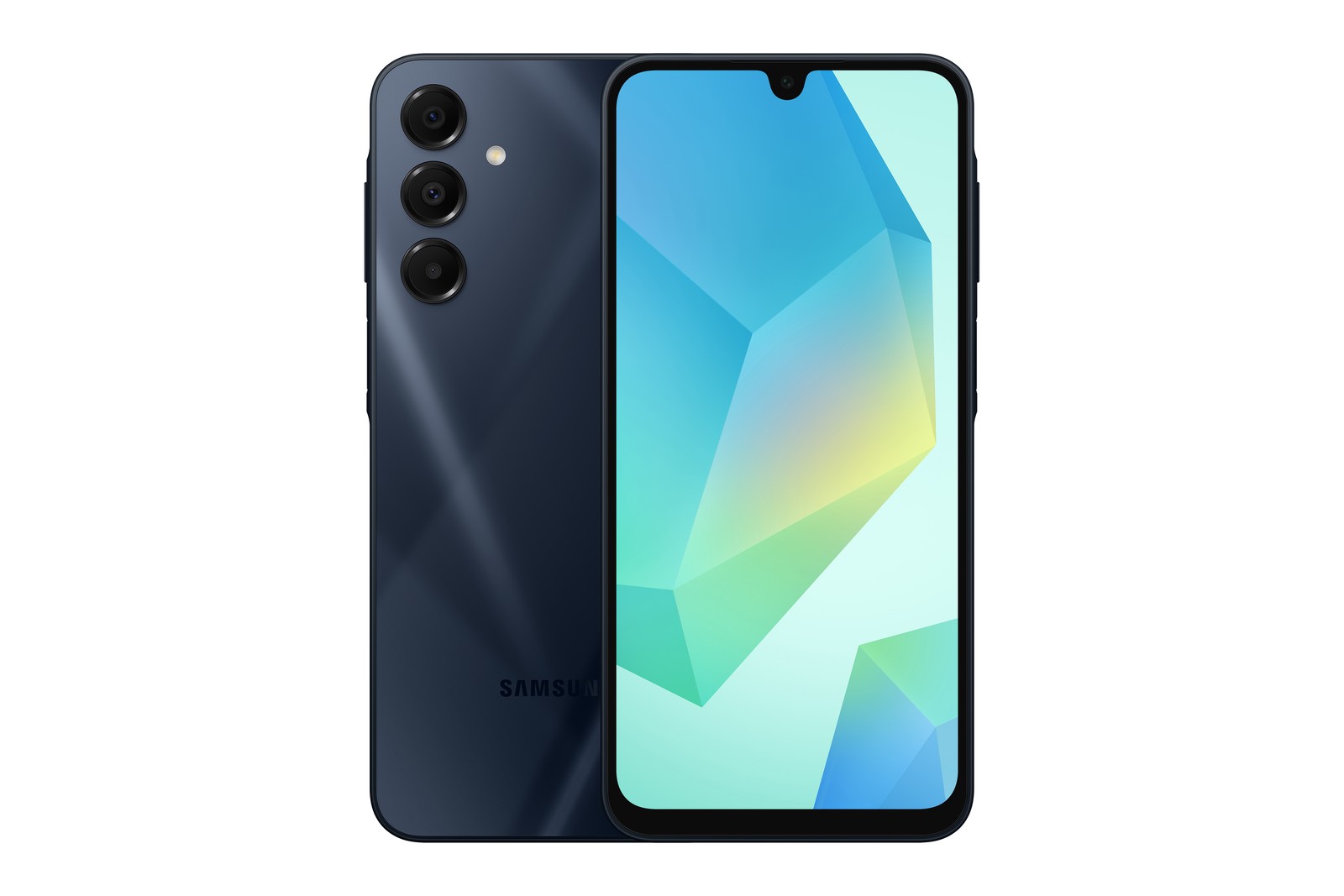
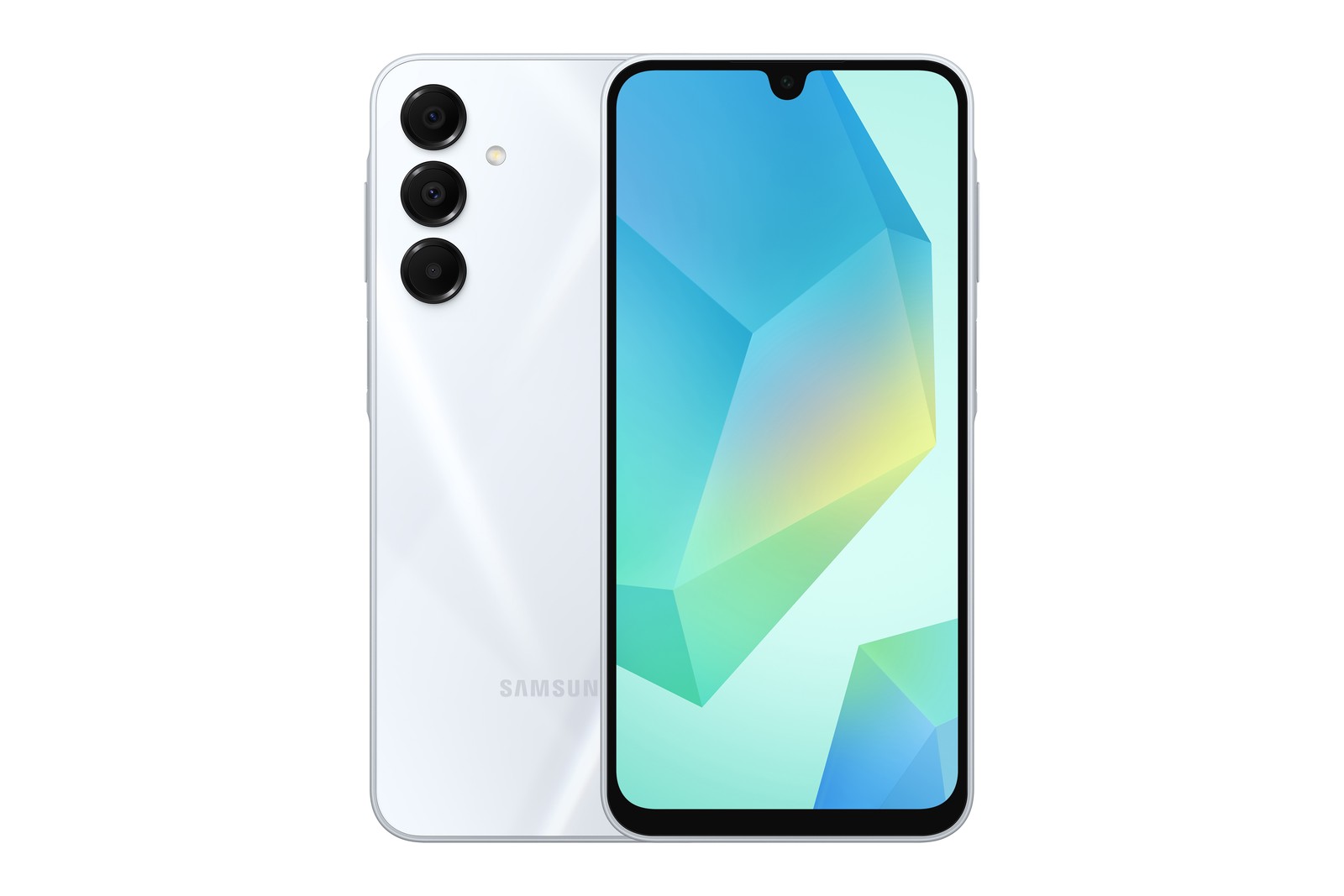
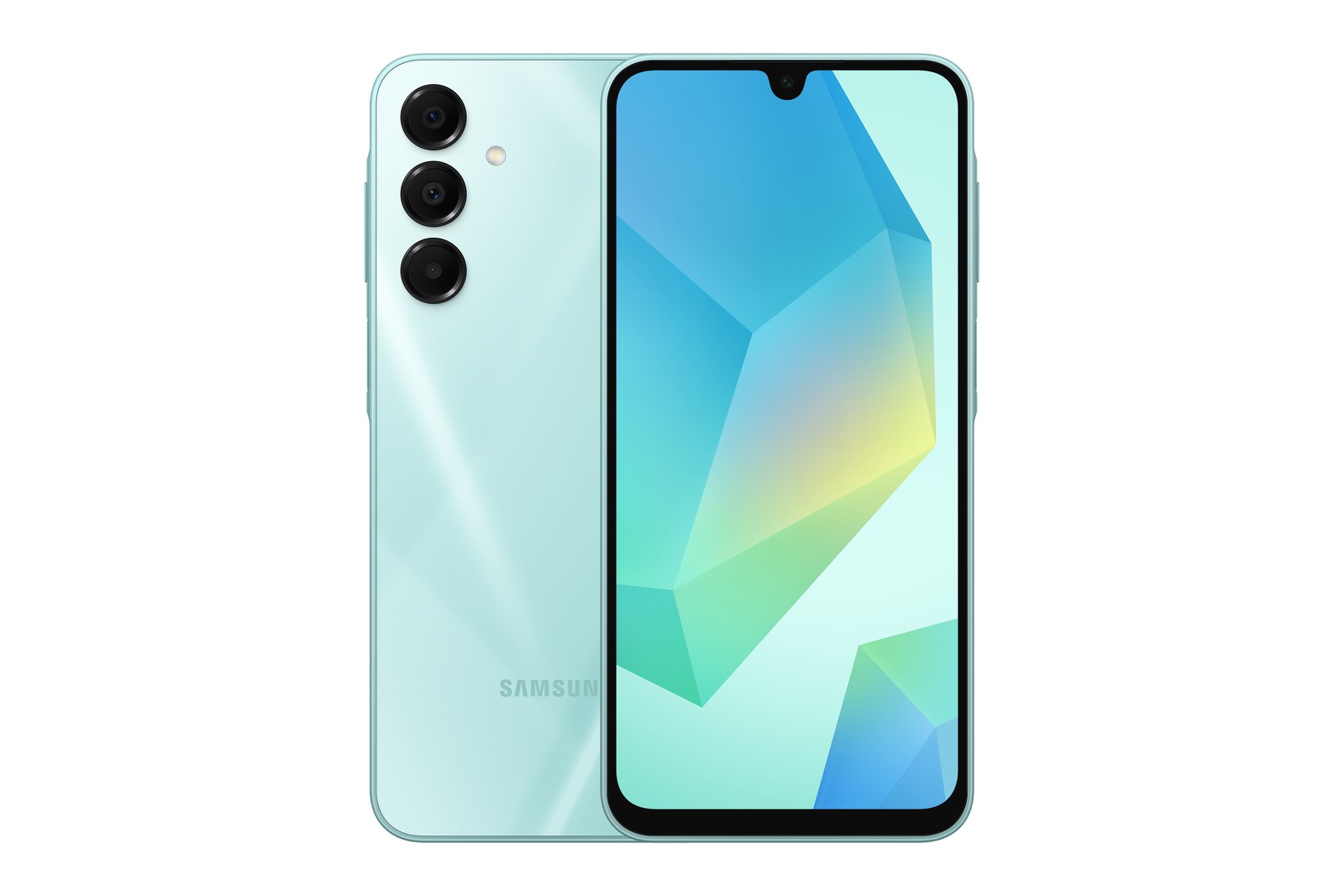
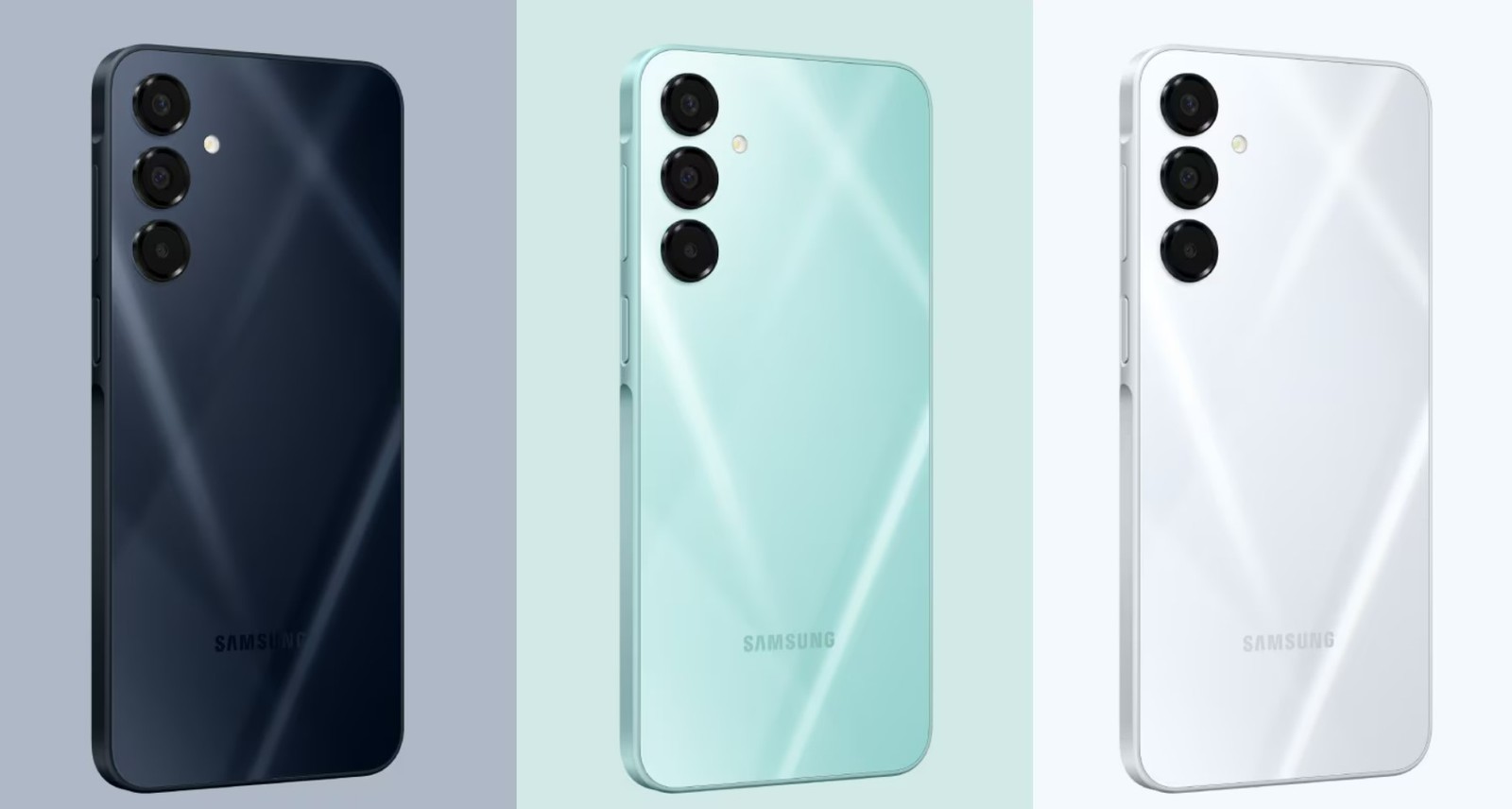
Samsung describes the A16 as slimmer than its predecessor at 7.9 mm thick, with dimensions of 164.4 x 77.9 x 7.9 mm. The weight is listed as 192 g on some regional pages and 200 g on others, so treat roughly 200 g as the realistic figure. The back carries three separate camera lenses stacked vertically, a styling cue Samsung uses across the A line, and the colour range varies by market: Blue Black, Light Gray and Light Green in the UK, plus Gold in some Asian markets. The phone is rated IP54, which Samsung explains as protection against dust and splashing water. That is useful for rain and spills, but it is not a submersion rating, and it is a step below the IP67 or IP68 claims found on pricier handsets.
The display is the headline feature for the money. It is a 6.7-inch Super AMOLED panel with a 1080 x 2340 (FHD+) resolution and a 90Hz maximum refresh rate. Samsung's own pages note the 6.7-inch figure is measured on a full rectangle, with a smaller visible diagonal once the rounded corners are accounted for. A teardrop-style notch holds the selfie camera. In practical terms, an AMOLED panel at this price delivers deep blacks and strong contrast that LCD rivals struggle to match, while the 90Hz refresh makes scrolling look smoother than a 60Hz screen. The company does not publish a peak-brightness number on the pages reviewed, so outdoor legibility in direct sun is something to check in reviews of the physical device.
Performance and software
Samsung's spec pages describe the processor only as an octa-core design running at 2.4GHz and 2GHz and do not name the chip, so this review will not guess. What the specification does tell us is that the A16 is built for everyday tasks: messaging, social media, streaming video, mobile banking and casual games. Expect it to be adequate rather than quick, particularly in the 4GB configuration, where heavy multitasking and app switching can bring brief stutters. Storage is 128GB or 256GB depending on the market, and Samsung's pages list microSD expansion up to 1.5TB, which is helpful for photos, offline music and downloaded video. In several markets the card shares the slot with the second SIM, so check whether you need both.
Software support is where the A16 punches above its price. Samsung states that the phone comes with up to six generations of OS upgrades and six years of security updates, and its product pages describe the interface as One UI 6.1 with Samsung's Knox Vault security hardware, which isolates PINs, passwords and other sensitive data. For a budget phone, a six-year support window is unusually generous and can matter more over the life of the device than a faster chip. Connectivity covers 5G sub-6, dual-band Wi-Fi (802.11 a/b/g/n/ac), Bluetooth 5.3, NFC for contactless payments, USB-C (USB 2.0 speeds) and the main satellite navigation systems. A fingerprint sensor handles biometric unlocking.
Camera
The rear camera system uses a 50MP main sensor (f/1.8), a 5MP ultrawide (f/2.2) and a 2MP macro (f/2.4). The specification lists autofocus on the rear unit but no optical image stabilisation, and digital zoom up to 10x. In daylight a 50MP main camera on this class of phone typically produces pleasant, shareable images, with the ultrawide helping with landscapes and group shots. The 2MP macro is the weakest element and is best regarded as a bonus for occasional close-ups rather than a reason to buy. Video recording tops out at Full HD at 30 frames per second, with HD slow motion at 120 frames per second, so there is no 4K capture. The front camera is a 13MP unit (f/2.0), enough for video calls and casual selfies.
Low-light results are the usual compromise at this price. Without stabilisation on the main sensor, night photos depend heavily on software processing and a steady hand. Samsung advertises instant editing suggestions for the main camera, but those claims should be understood as marketing descriptions rather than measured results.
Battery and charging
The battery is a 5,000 mAh unit (typical capacity), the same headline figure Samsung uses across much of its A range. Samsung's own battery table quotes up to 15 hours of internet use over LTE, up to 16 hours over Wi-Fi, up to 18 hours of video playback and up to 79 hours of audio playback, all under the company's test conditions. Real-world endurance depends on screen brightness, signal quality and usage, but a 5,000 mAh pack paired with an efficient AMOLED screen should comfortably cover a full day for most people, with moderate users plausibly stretching toward a second day. Charging is the main concession: wired charging is listed at 25W, and the charger is sold separately in several markets, so factor that into the price. Wireless charging is not listed. A full top-up from empty will take noticeably longer than on phones with 45W or faster charging.
Who it is for
The A16 suits several kinds of buyer well. It is a sensible first smartphone for a teenager, an easy-to-recommend phone for older relatives who value a big, readable screen and long battery life, and a dependable secondary device for travel. People who prioritise multi-year updates over benchmark scores will also appreciate the long support window. If you plan to upgrade within two years and care about speed, a stronger chip at a higher price may serve better. For buyers who want a step up in cameras and performance, the Galaxy A56 is the next logical rung, and you can compare them directly on the Galaxy A16 vs Galaxy A56 page. The broader ranking of devices is available on the rankings page.
Compromises to weigh
- Performance ceiling: an octa-core chip that Samsung does not name, paired with as little as 4GB of RAM in some markets, means this is a phone for everyday use, not demanding games.
- Camera limits: no stabilisation on the main camera, a 2MP macro lens of limited value and Full HD video only.
- Charging: 25W wired charging, no wireless charging, and a charger that may not be in the box.
- Durability: IP54 protects against splashes and dust, not against immersion.
- Regional variation: memory, storage, weight and colours differ by country, so check the exact model on sale where you live.
Balanced against those limits are real strengths: an AMOLED display at 90Hz, a large battery, a notably long update promise and a compact thickness of 7.9 mm. For a budget Android phone from a mainstream brand, that is a well-rounded set of priorities, and it is the reason the Galaxy A16 stays relevant even as newer models appear.
Where it ranks
Compare Samsung Galaxy A16 with similar devices
More from Samsung
Frequently asked questions
When was the Samsung Galaxy A16 released?
The Samsung Galaxy A16 was released on 2024-10-25, according to the manufacturer’s published information.
How much does the Samsung Galaxy A16 cost?
The estimated range for the Samsung Galaxy A16 is $180 to $220 in US dollars, based on the launch list price. Actual prices vary by country, retailer and storage option.
What are the main specs of the Samsung Galaxy A16?
Headline figures for the Samsung Galaxy A16: Battery: 5,000 mAh, Refresh rate: 90 Hz, Main camera: 50 MP, RAM: 8 GB. The full specification table is further up this page.
Is the Samsung Galaxy A16 worth buying?
That depends on your priorities. Use the editorial review on this page for our view, check the rankings above to see where the device stands on battery, display and camera, and compare it directly with similar models before you decide.


