Phones
Samsung Galaxy S26
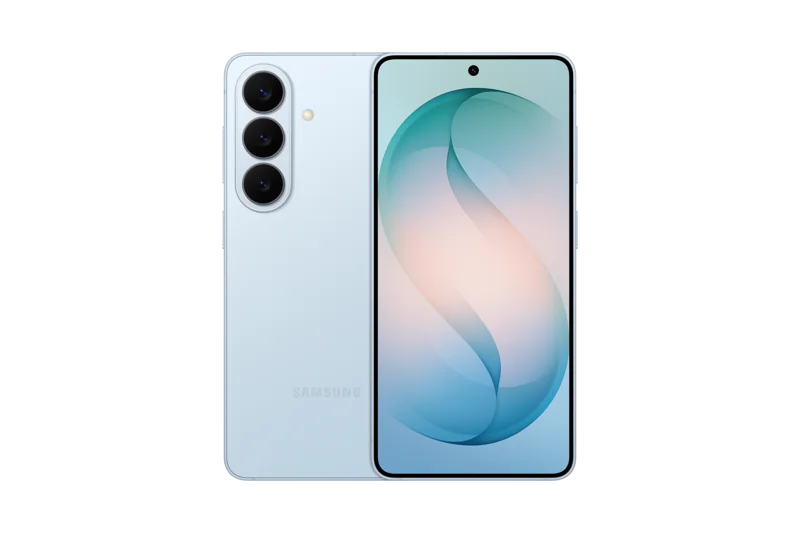
Samsung's compact 2026 flagship keeps the 120Hz AMOLED screen, IP68 and a 50MP triple camera in a 167 g body, with a 4,300 mAh battery and 25W charging.
Key figures at a glance
Gallery
Specifications
- Display
- 6.3" FHD+ Dynamic AMOLED 2X, 1-120Hz, 2600 nits peak
- Chipset
- Exynos 2600 or Snapdragon 8 Elite Gen 5 for Galaxy (varies by market)
- RAM
- 12GB
- Storage
- 256GB / 512GB
- Rear Camera
- 50MP main + 12MP ultrawide + 10MP telephoto 3x
- Front Camera
- 12MP
- Battery
- 4,300 mAh, 25W wired, 15W wireless
- OS
- Android 16, One UI 8.5
- Dimensions
- 149.6 x 71.7 x 7.2 mm, 167 g
- Durability
- IP68, Armor Aluminum frame, Gorilla Glass Victus 2
The Galaxy S26 is the compact entry to Samsung's Galaxy S26 family and the model most people will think of when they hear "Galaxy S". It has a 6.3-inch screen, weighs 167 g and is 7.2 mm thick, yet it keeps the 120Hz AMOLED display, the IP68 rating and the Galaxy AI software of its bigger siblings. This page is a review based on the published specifications and manufacturer information. It covers the phone's place in the lineup, the design, the hardware and the trade-offs.
Where it sits in the lineup
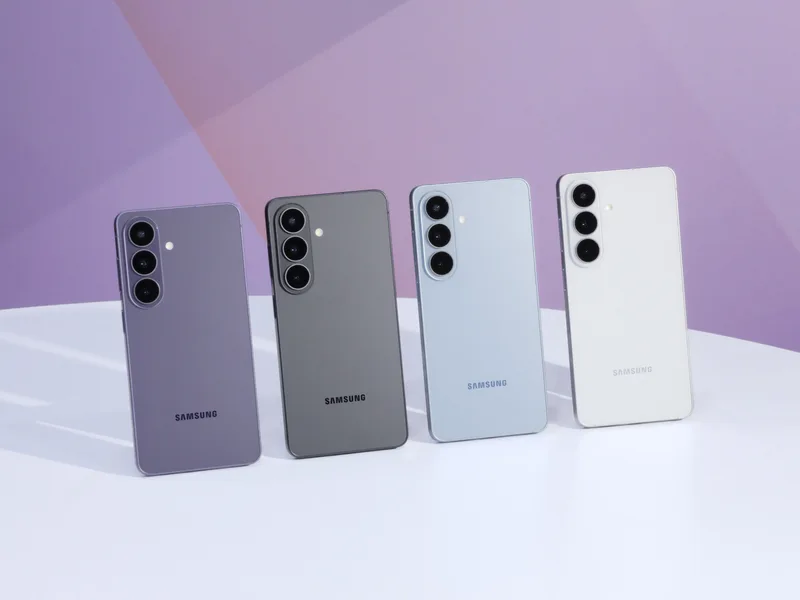
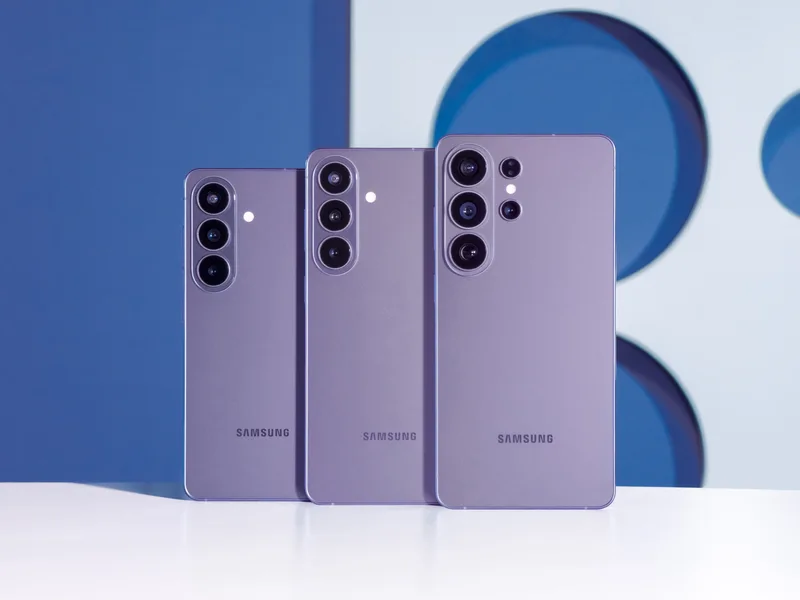
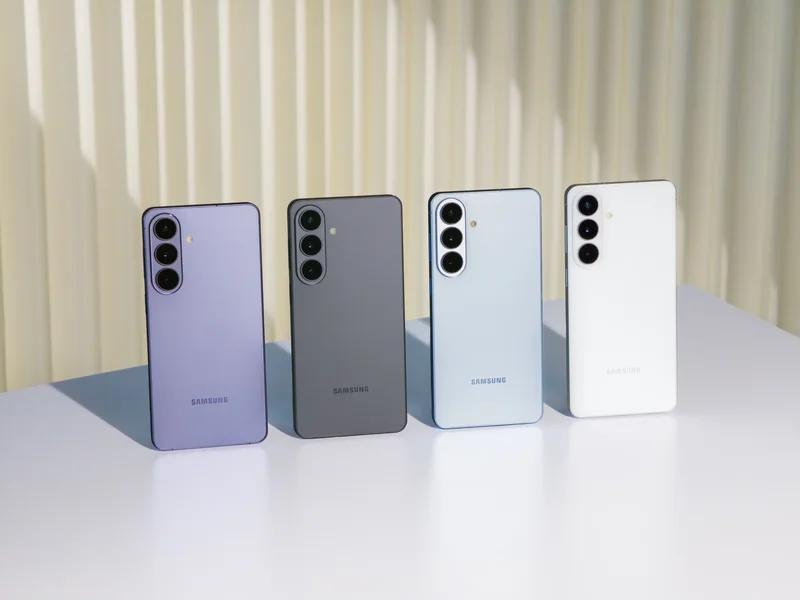
Samsung unveiled the Galaxy S26, S26+ and S26 Ultra on 25 February 2026 at Galaxy Unpacked in San Francisco, and US general availability started on 11 March 2026. The S26 is the cheapest of the three, with a US starting price of $899.99 for 256GB and a 512GB version above it. The Galaxy S26+ costs $200 more and the Galaxy S26 Ultra $400 more at their starting configurations. The three phones share a unified design language and the same colour options: Cobalt Violet, White, Black and Sky Blue, with Pink Gold and Silver Shadow available exclusively through Samsung's own store. The predecessor is the Galaxy S25, and the page Galaxy S26 vs Galaxy S25 shows the two next to each other.
Design and display
The phone measures 149.6 x 71.7 x 7.2 mm and weighs 167 g, which makes it the smallest and lightest of the family and one of the easier flagships to use with one hand. The frame is Armor Aluminum and Corning Gorilla Glass Victus 2 covers the front and the back, according to Samsung. The IP68 rating, which Samsung explains as submersion in up to 1.5 metres of fresh water for up to 30 minutes under lab conditions, is the same as on the other two models.
The screen is a 6.3-inch FHD+ Dynamic AMOLED 2X panel with an adaptive refresh rate of 1 to 120Hz and a peak brightness of 2,600 nits. Samsung states that the diagonal is 6.3 inches across the full rectangle and 6.1 inches with the rounded corners taken into account. The resolution is the main difference to the larger S26+, which uses QHD+; on a screen this size, FHD+ is generally considered sharp enough for everyday use, but it is a step down from the QHD+ panels in the other two models. Samsung lists the ProScaler image-scaling feature for the S26+ and the Ultra only, so the base model does without it. The built-in Privacy Display, the headline new feature of the generation, is limited to the Ultra.
Performance and software
On its product pages Samsung names the Exynos 2600 as the processor of the S26 and S26+, while the specification table at launch says the type of processor may vary by device and market and lists both the Exynos 2600 and the Snapdragon 8 Elite Gen 5 for Galaxy for the series. The chip in your phone may therefore depend on the country where you buy it, and it is worth checking your regional specification. Memory is 12GB with 256GB or 512GB of storage, though options may vary by carrier and country. Samsung describes the series as its most powerful hardware ever in a Galaxy S phone and emphasises AI performance, efficiency and thermal management. It publishes percentage gains only for the Ultra's chip, so we have no manufacturer figure for the S26 itself and avoid inventing one.
The software is Android 16 with One UI 8.5, and Samsung promises seven years of security updates for the series. Galaxy AI gets several additions: Photo Assist lets you describe an edit in your own words, with changes you can review step by step or undo; Now Nudge offers contextual suggestions, for example photos you might want to send when a friend asks for them; Now Brief shows reminders for reservations and travel; Circle to Search with Google recognizes multiple objects in one image; and Bixby now works as a conversational agent for settings, next to Gemini and Perplexity as selectable agents. Samsung adds that features may depend on country, language and account sign-in, and that basic Galaxy AI features are free. Security additions include AI call screening, privacy alerts for apps asking for sensitive data, a Private Album in Gallery and post-quantum cryptography for some system processes.
Camera
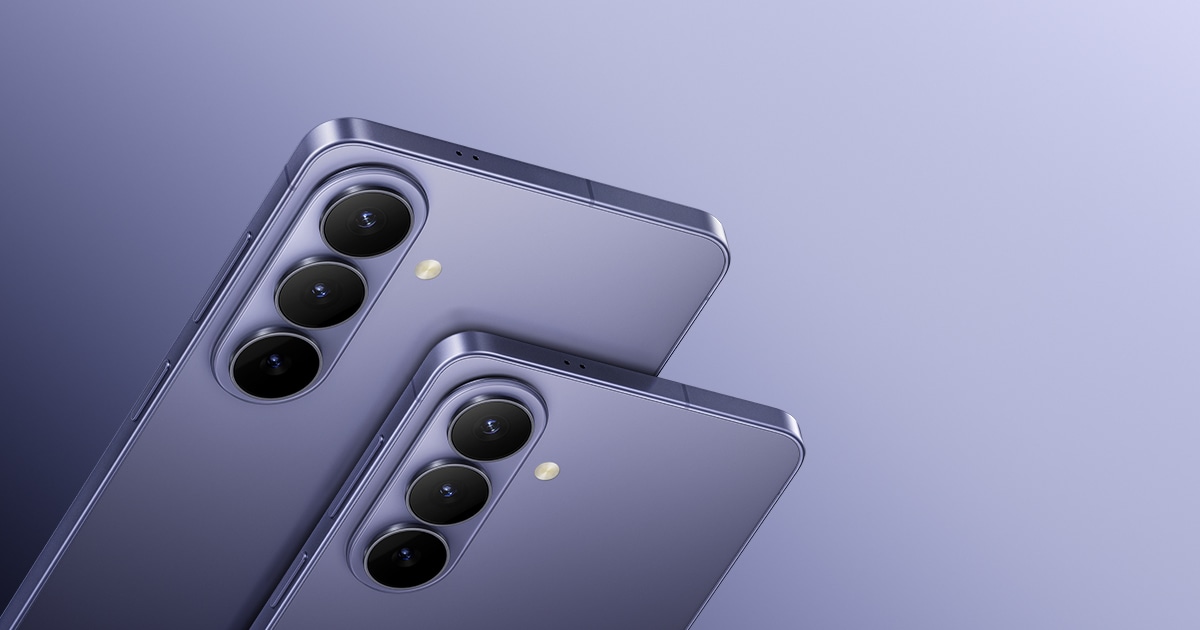
The S26 has a triple rear camera with a 50MP wide camera with autofocus, a 12MP ultrawide and a 10MP telephoto with 3x optical zoom. Samsung describes 2x as optical-quality zoom made possible by the Adaptive Pixel sensor and lists 30x digital zoom. The front camera is 12MP with an 85-degree field of view, and video can be recorded up to 8K at 30fps or 4K at 60fps. These are the same cameras as in the S26+, so choosing the smaller phone does not mean a weaker camera. The Ultra, by contrast, adds a 200MP main camera, a 50MP ultrawide, and both 3x and 5x telephoto lenses.
The software side of photography is shared. Samsung's announcement highlights the improved AI image processor that now also serves the selfie camera, Document Scan that removes creases and fingers from scanned pages and can combine several pictures into one PDF, and Creative Studio for making stickers, invitations and wallpapers from a sketch, photo or prompt. Features that Samsung describes only for the Ultra, such as the APV codec and the wider apertures, should not be assumed here.
Battery and charging
The S26 has a 4,300 mAh battery (typical value; the rated minimum is 4,175 mAh), and Samsung quotes video playback of around 30 hours. Wired charging is 25W, which Samsung says reaches about 55% in around 30 minutes with a 25W adapter and a 3A USB-C cable; the adapter is sold separately. Wireless charging is 15W and Wireless PowerShare is included. In numbers this is the weakest charging spec of the family: the S26+ charges at 45W wired and 20W wireless, and the Ultra at 60W wired and 25W wireless. The battery is also the smallest, with 4,900 mAh in the S26+ and 5,000 mAh in the Ultra. The trade is physical size: a smaller cell is the price of a phone that weighs 167 g.
Who it is for
The S26 is for people who want a compact Android flagship with current software, a bright 120Hz screen, water resistance and a capable camera set, and who value pocketability over battery size. It suits those who use their phone mostly for messaging, social media, photos and navigation rather than long gaming sessions, and anyone who finds 6.7- or 6.9-inch phones awkward. It also suits buyers who want long software support: seven years of security updates is a strong argument for keeping the phone for a long time. If you are coming from the Galaxy S24 or something older, the jump in AI features, charging and support will be noticeable. Compact alternatives include the iPhone 17 and the Pixel 10, and the rankings page compares them on one scale.
Compromises
The compact size brings obvious limits. The battery is the smallest in the family and charging is the slowest, so heavy users may need a top-up before the day ends. The screen is FHD+ rather than QHD+, there is no 5x telephoto and no Privacy Display, and the maximum zoom is lower than on the Ultra. The processor can differ by region, which makes it harder to compare benchmarks and reviews from other markets. The charger is not included according to Samsung's footnotes, so a compatible adapter has to be bought separately. Finally, the $899.99 starting price is not low for a phone with a 6.3-inch screen, and the S26+ offers a noticeably larger battery for $200 more. Still, as a small, light and complete flagship, the Galaxy S26 remains one of the most balanced phones in Samsung's lineup, and it is a clear improvement in software support and AI features over earlier compact models.
Where it ranks
Compare Samsung Galaxy S26 with similar devices
More from Samsung
Frequently asked questions
When was the Samsung Galaxy S26 released?
The Samsung Galaxy S26 was released on 2026-03-11, according to the manufacturer’s published information.
How much does the Samsung Galaxy S26 cost?
The estimated range for the Samsung Galaxy S26 is $809 to $989 in US dollars, based on the launch list price. Actual prices vary by country, retailer and storage option.
What are the main specs of the Samsung Galaxy S26?
Headline figures for the Samsung Galaxy S26: Battery: 4,300 mAh, Refresh rate: 120 Hz, Main camera: 50 MP, RAM: 12 GB. The full specification table is further up this page.
Is the Samsung Galaxy S26 worth buying?
That depends on your priorities. Use the editorial review on this page for our view, check the rankings above to see where the device stands on battery, display and camera, and compare it directly with similar models before you decide.


