Smartwatches
Huawei Watch 6 Pro
Huawei's Watch 6 Pro comes in 46 mm titanium and 43 mm ceramic, with a sapphire-glass AMOLED up to 3,500 nits, eSIM, X-TAP health sensing and up to 4.5 days of typical battery life.
Key figures at a glance
Gallery
Specifications
- Size
- 46 mm: 46.4 x 46.4 x 10.9 mm (Space Edition 11.4 mm), about 57 g (Space Edition 60 g), strap excluded; 43 mm: 43.5 x 43.5 x 10.2 mm, about 50 g
- Display
- 46 mm: 1.5-inch LTPO 2.0 AMOLED, 466x466, 310 ppi; 43 mm: 1.38-inch LTPO 2.0 AMOLED, 466x466, 338 ppi; up to 3,500 nits peak (Huawei lab figure); spherical sapphire glass
- Case
- 46 mm: titanium alloy front, ceramic rear; 43 mm: ceramic front and rear; titanium, ceramic or composite straps
- Battery
- Up to 4.5 days typical (46 mm), up to 3 days with always-on display; 43 mm: up to 3 days typical, 2 days always-on; Battery saver mode up to 11 days light use (46 mm) or 7 days (43 mm); wireless charging (Huawei lab tests)
- Durability
- 5 ATM, IP69, free-dive rated to 40 m (EN13319)
- Sensors
- 12-channel optical heart rate (X-TAP), ECG, temperature, barometer, depth, accelerometer, gyroscope, compass, ambient light
- Positioning
- Dual-band GPS (L1+L5), GLONASS, BeiDou, Galileo, QZSS
- Connectivity
- eSIM cellular, Bluetooth 5.2, NFC, NearLink, Wi-Fi 2.4 + 5 GHz, speaker and microphone
- OS
- Huawei watch software with the Huawei Health app; works with Android 9.0+ and iOS 13.0+
- Colors
- 46 mm: Space Edition, Silver, Brown; 43 mm: Ceramic Edition, White
The Huawei Watch 6 Pro is the premium model of Huawei's Watch 6 family, introduced in 2026. It is built from titanium alloy and ceramic, covered with spherical sapphire glass, and combines an AMOLED display of up to 3,500 nits with a 12-channel optical sensor module called X-TAP, eSIM cellular support, dual-band satellite positioning and a battery that Huawei rates at up to 4.5 days of typical use on the larger size. This page is based on the published specifications and manufacturer information. It covers where the watch sits in Huawei's lineup, what the materials and sizes are, how the health and sports features work, what the battery figures mean, and where the compromises are.
Place in the lineup
Huawei sells two different families of round watches. The GT line, such as the Watch GT 7 Pro, is aimed at long battery life and sport. The Watch 6 line sits next to it with a stronger focus on smart features: eSIM calling, a cellular-capable design, gesture control and a health sensor array with a physical pressure element. Within the Watch 6 family there are two models. The standard Watch 6 uses an aluminum or stainless steel case and weighs as little as 38 g in the 42 mm size, while the Pro uses titanium or ceramic, a brighter display and an additional Expedition app for outdoor use. A third model, the Watch D3, is a separate blood-pressure-focused design. Huawei does not publish a global price on its product page, so no price is listed here; availability and pricing depend on the region.
Design, materials and sizes
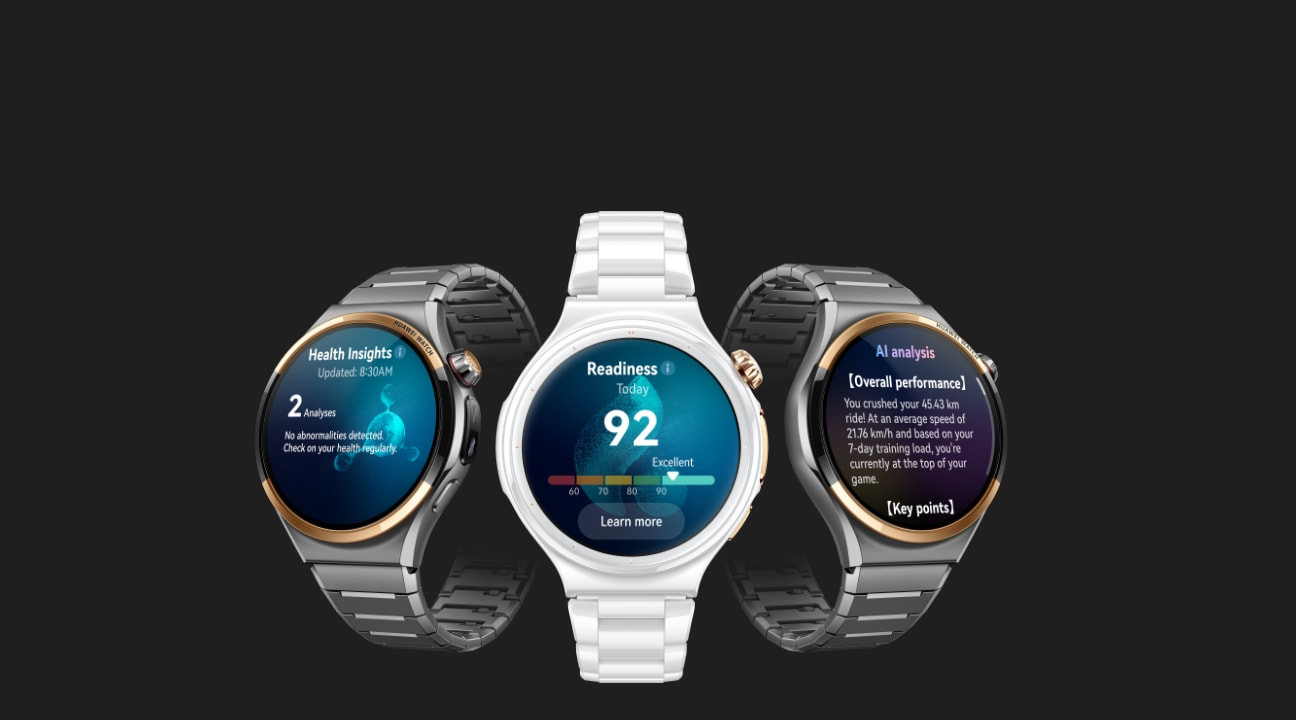
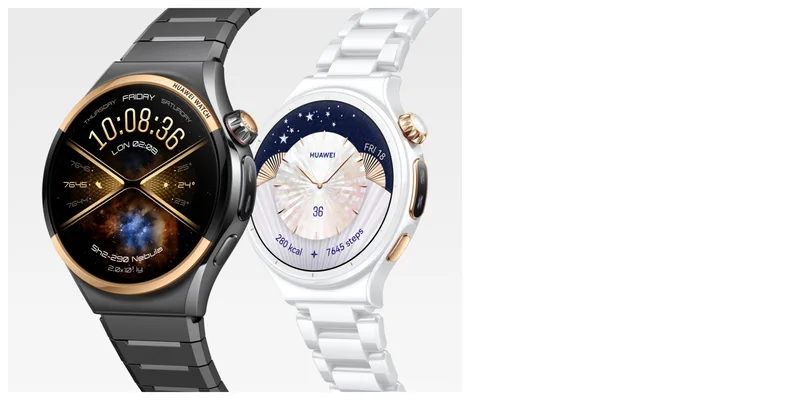
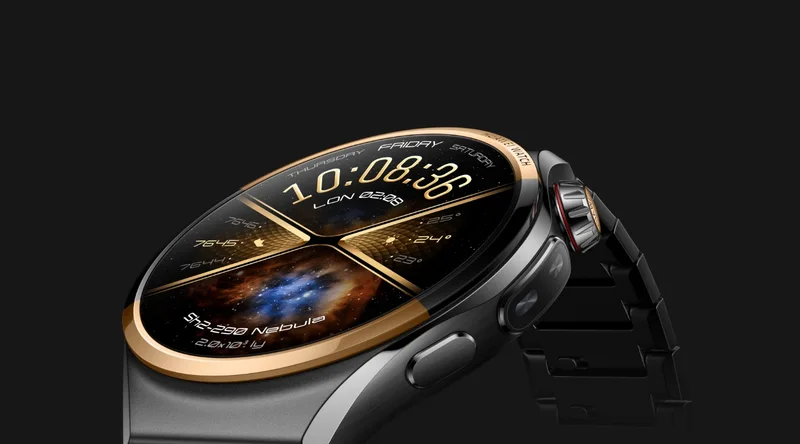
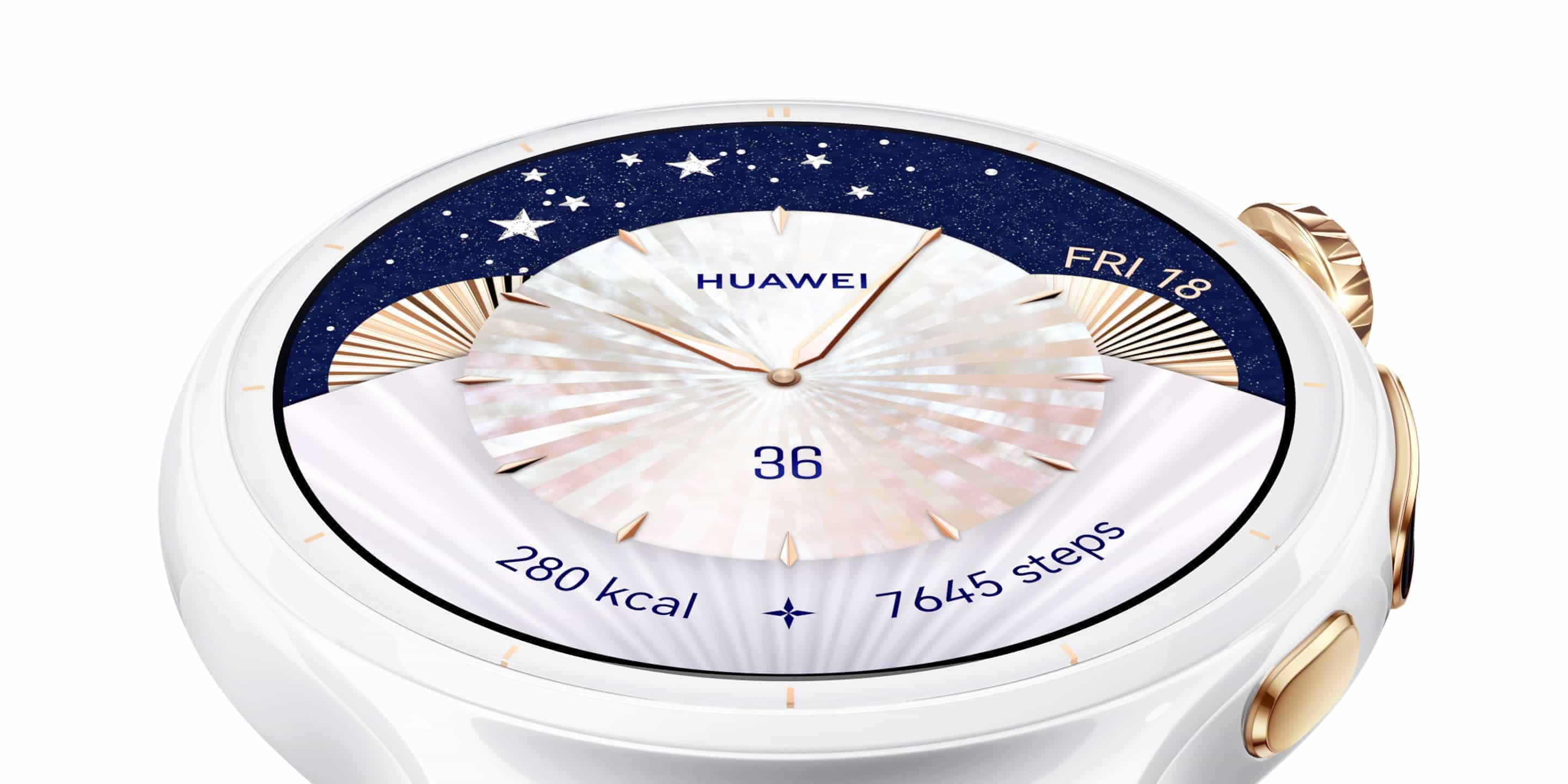
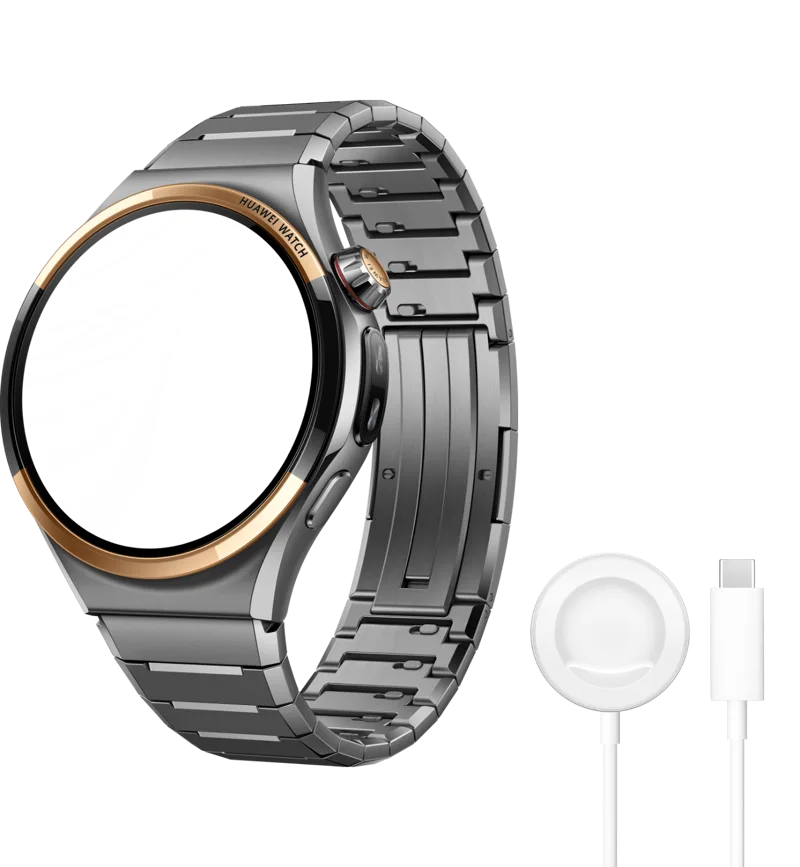
The Pro comes in two sizes. The 46 mm version measures 46.4 by 46.4 by 10.9 mm and weighs about 57 g without the strap, with the Space Edition slightly thicker at 11.4 mm and about 60 g. It has a titanium alloy front case and a ceramic back, and it is sold in Space Edition (black titanium), Silver and Brown, with a titanium strap on the first two and a brown composite strap on the Brown version. The 43 mm version measures 43.5 by 43.5 by 10.2 mm, weighs about 50 g, and is ceramic on both front and back, offered as the Ceramic Edition with a white ceramic strap and as White with a pure white composite strap. In the box you get the watch, the charging cradle with its cable and the documents; the Ceramic and Space editions also include a fluoroelastomer strap as a bonus. Wrist sizes are listed as 140 to 210 mm for the 46 mm model, and 120 to 180 mm or 130 to 190 mm for the 43 mm versions, depending on the strap. Huawei states that titanium, ceramic and composite straps are not designed for swimming or heavy sweat, so a rubber strap is advised for water sports.
Display and glass
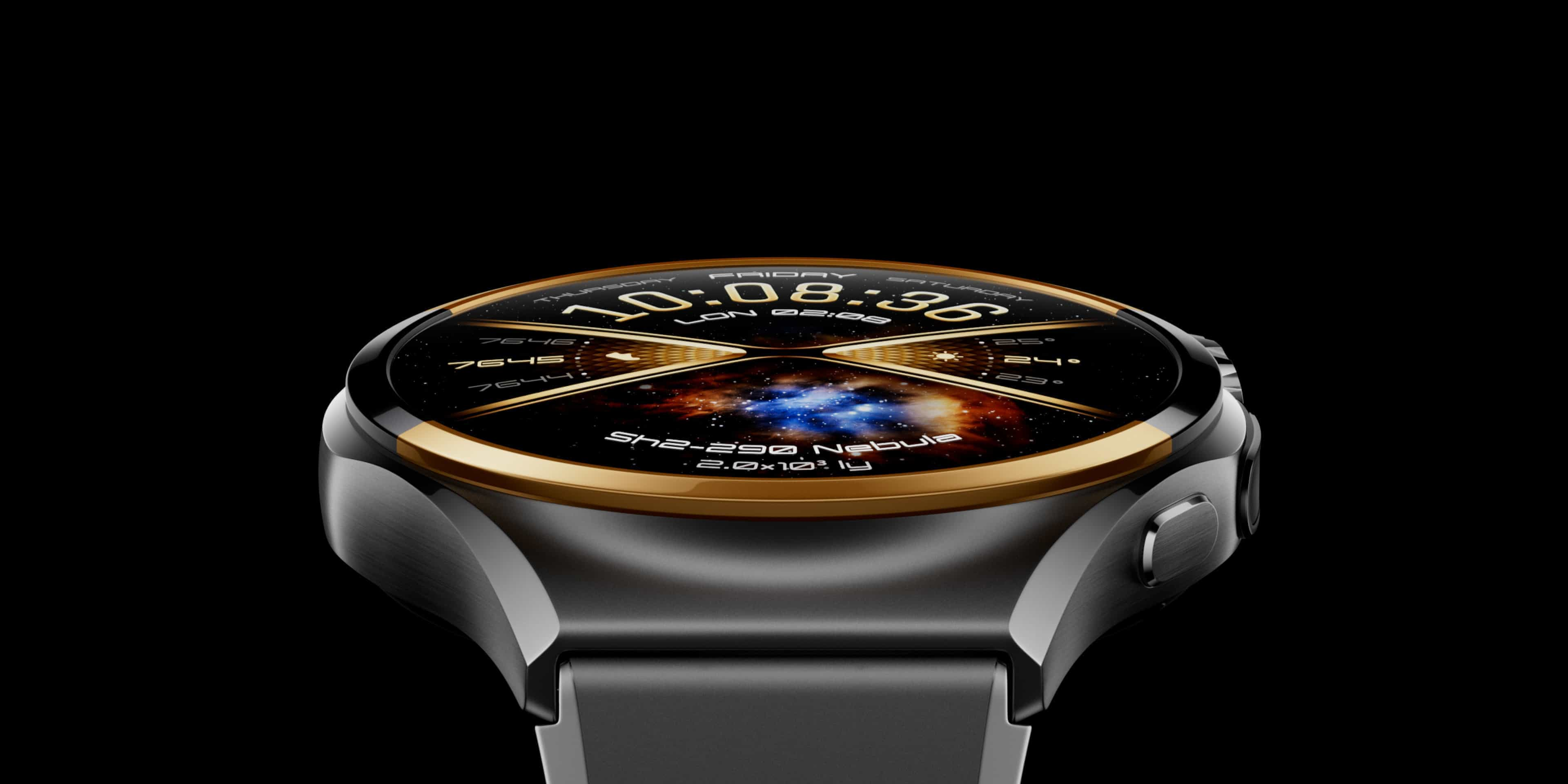
Both sizes use an LTPO 2.0 AMOLED panel with 466 by 466 pixels: 1.5 inches and 310 pixels per inch on the 46 mm model, 1.38 inches and 338 pixels per inch on the 43 mm model. Huawei quotes a peak brightness of up to 3,500 nits, measured under an 80 percent average picture level in its own labs, which is higher than the 3,000 nits quoted for the standard Watch 6. The cover is spherical sapphire glass, which should resist scratches better than most mineral glass. As always, peak brightness is a lab figure for part of the screen, and real outdoor readability will be lower, but sapphire and a bright panel are a sensible combination for a watch that is meant to be worn in sun and rain.
Health sensing and software
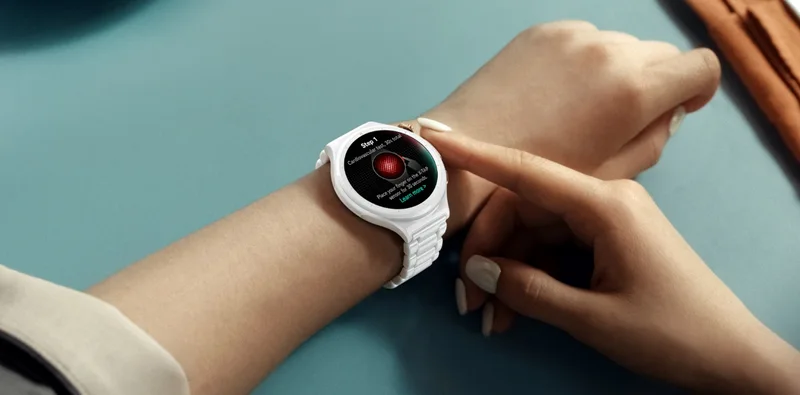
The key health feature is X-TAP. It pairs a 12-channel PPG sensor with a pressure sensor, and Huawei says the combination doubles responsiveness compared with the Watch 5. Pressing and holding the X-TAP element for three seconds starts Health Glance, which delivers a report in about 60 seconds across four body systems and up to 14 metrics. New evaluations for coronary heart disease, diabetes risk and hypertension risk appear in the report, but only after the user joins the relevant study through the Huawei Research app and after enough data has been collected. Huawei stresses that neither the watch nor Health Glance is a medical device, that results are for reference only, and that some of these functions are available in certain markets and arrive by over-the-air update. The watch also has an ECG sensor, a temperature sensor and a barometer, and the software includes a Readiness score that assesses recovery on waking, Healthy Living habit tracking and AI workout analysis that comments on training history and suggests whether to push or rest. AI analysis is available only in some languages and regions and not for expedition, skiing, golf or diving modes.
For daily use there are smart gestures, such as a double pinch and double slide to control the watch with one hand, with a wrist-rotation gesture promised in a later update. One watch can pair with two phones, whether HarmonyOS, Android or iOS, though the second phone supports Bluetooth calls only. Third-party apps come from Watch AppGallery, and the selection varies by region. The watch works with phones running Android 9.0 or iOS 13.0 and newer through the Huawei Health app. Huawei also gives purchasers a three-month membership to Huawei Health+.
Sports, navigation and water resistance
Huawei lists many sports modes, including golf, snow sports, cycling and diving, and adds an Expedition app that allows routes to be loaded in advance, with smart backtracking and waypoint navigation. Positioning uses dual-band GPS (L1 and L5), GLONASS, BeiDou, Galileo and QZSS. The case is rated 5 ATM and IP69 and supports free dives to 40 meters under the EN13319 standard, but not scuba diving or technical diving. The watch should not be worn in hot showers, saunas or around soap and shampoo. These are useful ratings for a luxury-style watch, although it remains a smartwatch and not a dive computer in the professional sense.
Battery and charging
All numbers are Huawei lab figures. In Standard mode the 46 mm model is rated for up to 4.5 days of typical use and up to 3 days with the always-on display; the 43 mm model gives up to 3 days typical and 2 days with always-on. In Battery saver mode, the 46 mm model reaches 11 days of light use, 7 days of typical use or 4.5 days with always-on, and the 43 mm model reaches 7, 5 and 3 days. The tests assume specific usage: two hours of LTE per day, heart rate monitoring always on, two ECG measurements per day, 90 minutes of exercise per week, and about 200 screen activations daily. Battery saver mode disables several features, including Wi-Fi, Health Glance, Maps and the Watch AppGallery. Charging uses the second-generation Huawei wireless SuperCharger with a USB-C cable, and Huawei claims a 15-minute charge covers a typical day, which is a claim and not a measured result. Compared with the multi-week claims of the GT line, the numbers are modest, and they are comparable to what mainstream smartwatches offer.
Who it is for and compromises
The Watch 6 Pro fits people who want a metal or ceramic smartwatch that works with both Android and iOS, offers eSIM calling and tracks health in detail. Those who want longer battery life will find more in the GT line, and those who want a rugged outdoor tool may prefer the Garmin Fenix 8. People inside the Apple world may compare it with the Apple Watch Ultra 3; the Huawei Watch 6 Pro versus Apple Watch Ultra 3 page lines up the specifications, and the rankings give a wider view.
The compromises are worth stating. Many of the health and AI features depend on region, language, over-the-air updates and joining research studies, and none of them is a medical diagnosis. App choice is narrower than on Wear OS or watchOS because the watch relies on Huawei's own app store. Battery life is mid-range. The second phone supports only calls. Huawei does not list a price on its global page, and the exact release date can differ by market, so check local availability before planning a purchase.
Where it ranks
Compare Huawei Watch 6 Pro with similar devices
More from Huawei
Frequently asked questions
When was the Huawei Watch 6 Pro released?
The Huawei Watch 6 Pro was released on 2026-09-02, according to the manufacturer’s published information.
What are the main specs of the Huawei Watch 6 Pro?
Headline figures for the Huawei Watch 6 Pro: Battery life: 5 days. The full specification table is further up this page.
Is the Huawei Watch 6 Pro worth buying?
That depends on your priorities. Use the editorial review on this page for our view, check the rankings above to see where the device stands on battery, display and camera, and compare it directly with similar models before you decide.