Smartwatches
Huawei Band 11
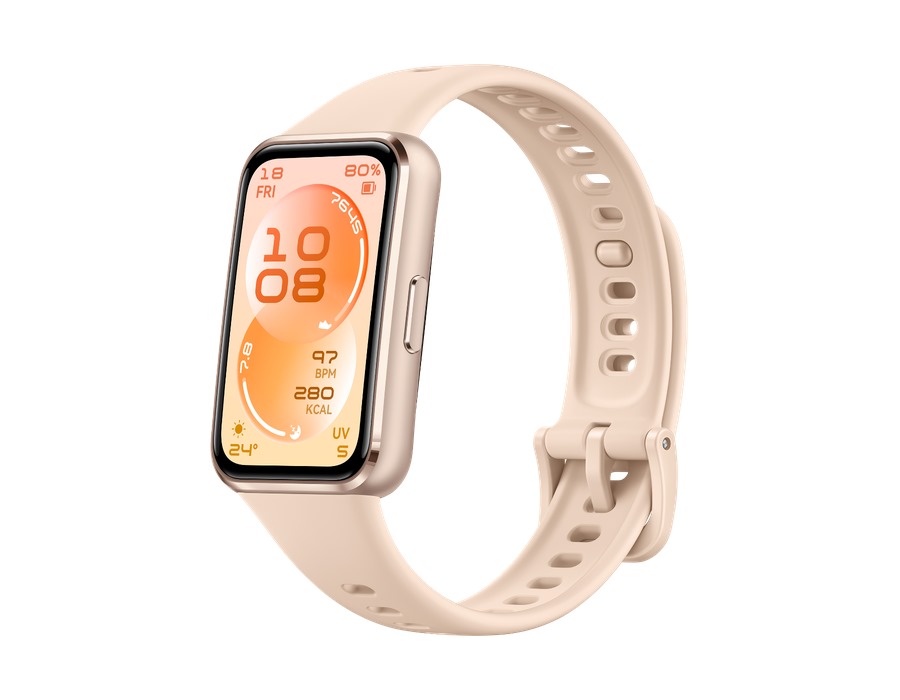
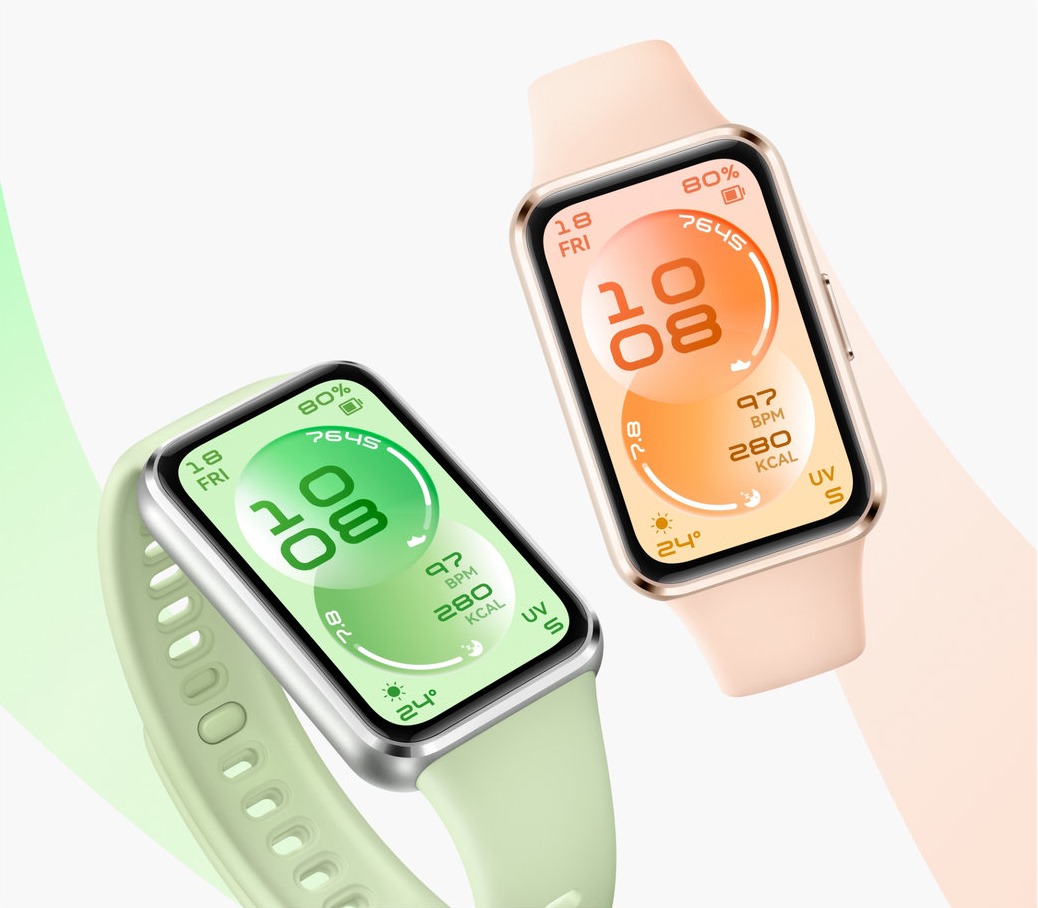
Huawei's entry 2026 fitness band offers a 1.62-inch AMOLED display, 5 ATM water resistance and up to 14 days of battery life in seven colour and case options, including a lighter polymer case.
Key figures at a glance
Gallery
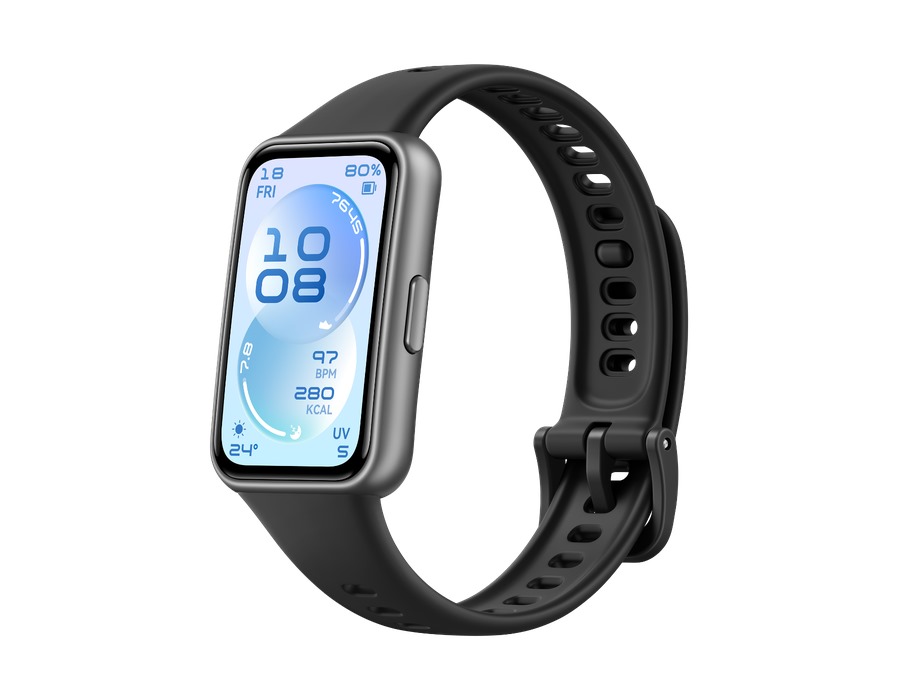
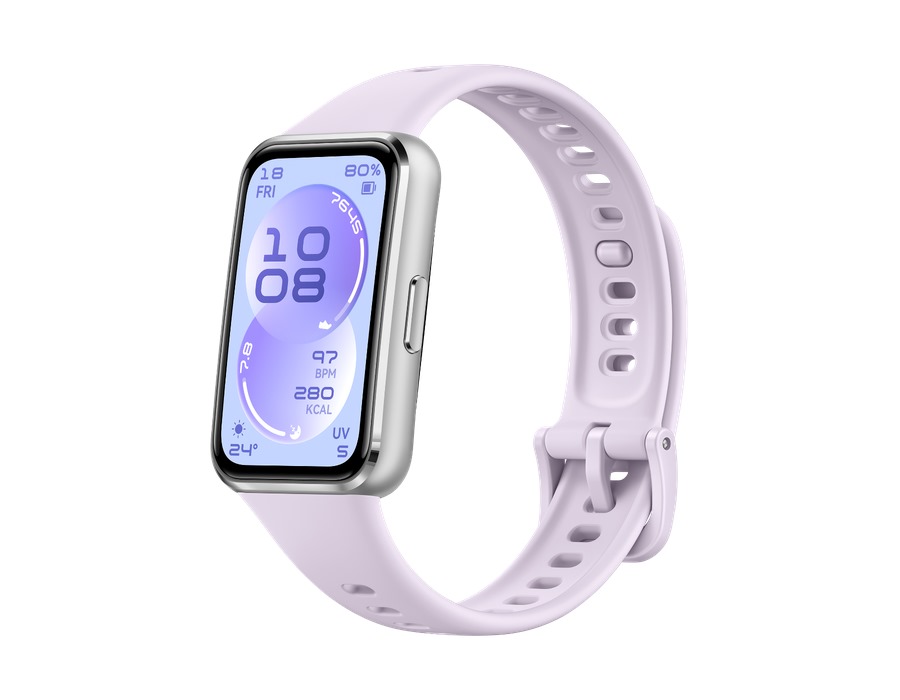
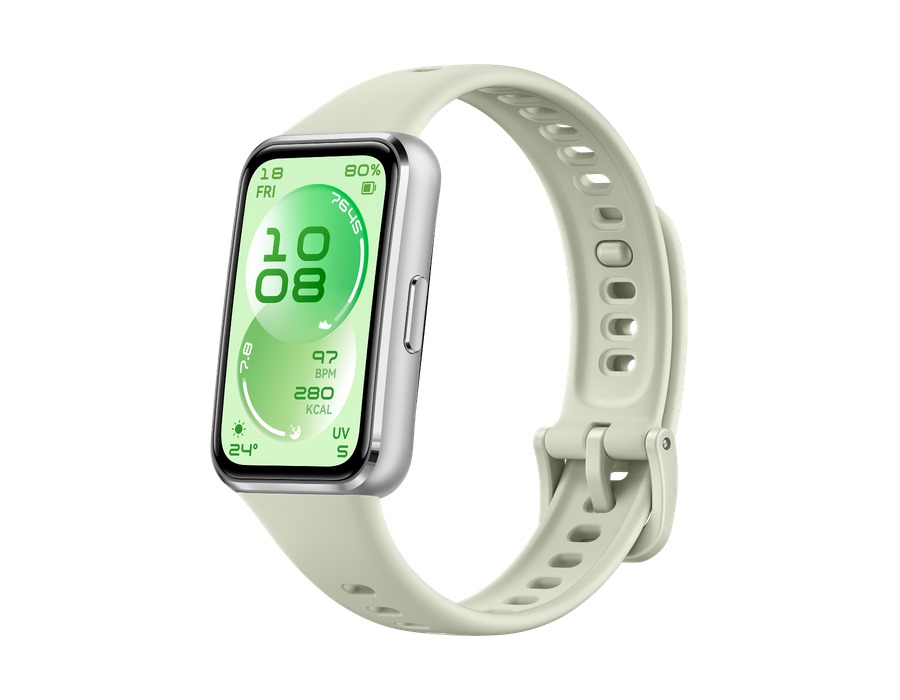
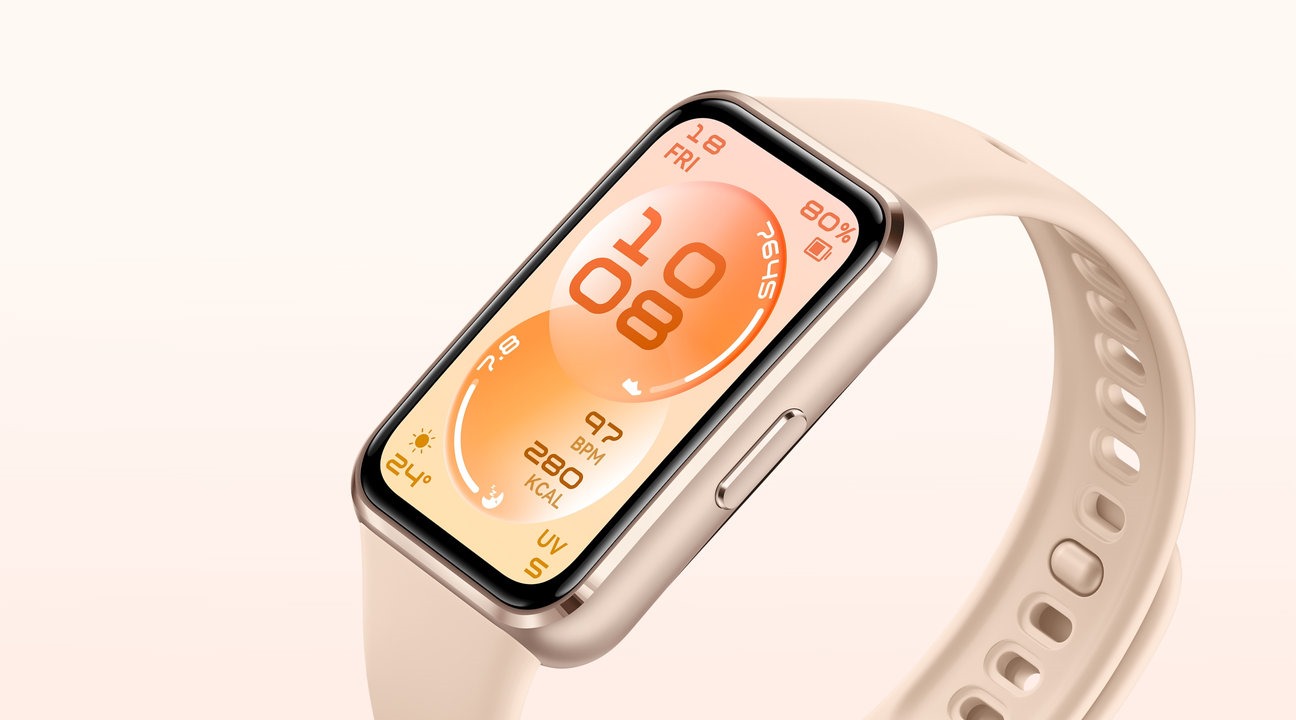
Specifications
- Display
- 1.62-inch AMOLED, 286x482 pixels (347 ppi), 60 Hz, up to 1500 nits peak brightness, touchscreen with Always-On Display
- Body
- 42.6 x 28.2 x 8.99 mm (thickness measured at thinnest point, excluding sensor area); about 17 g with aluminium alloy case (beige, green, purple, white, black) or about 16 g with durable polymer case (purple, black); fluoroelastomer straps; fits 120-210 mm wrists depending on colour
- Battery
- Up to 14 days (light use), up to 8 days (typical use), up to 3 days with Always-On Display; 300 mAh, magnetic charging (5V/1A)
- Sensors
- Optical heart-rate sensor, 9-axis IMU (accelerometer, gyroscope, magnetometer), ambient light sensor
- Connectivity
- Bluetooth 6.0 and BLE, 2.4 GHz; relies on the phone for GNSS during outdoor cycling
- Durability
- 5 ATM water resistance (ISO 22810:2010)
- Health
- 24/7 heart rate, SpO2, HRV monitoring, TruSleep sleep tracking, Sleep Breathing Awareness, pulse wave arrhythmia analysis (region dependent), emotional wellbeing and stress tools, cycle calendar; not a medical device
- Sports
- Around 100 workout modes, Active Rings activity goals including a wheelchair mode
- Compatibility
- Huawei Health app; Android 9.0 or later and iOS 13.0 or later
The Huawei Band 11 is the entry model of Huawei's 2026 Band line, a light and slim fitness band built around a 1.62-inch AMOLED screen, a battery that Huawei rates at up to 14 days, 5 ATM water resistance and a choice of seven colour and case combinations that includes a durable polymer case. It leaves out the independent GNSS positioning of the Band 11 Pro, which means outdoor distance and route tracking relies on the connected phone. This page is based on the published specifications and manufacturer information, and it explains where the band sits in the range, what you get for the display and design, how the sports and health features are described, what the battery figures mean and which compromises apply. Huawei's global site gives no on-sale date or price for the Band 11, so none is quoted here.
Place in the lineup
The Band 11 is the simplest way into Huawei's wearable world. It shares the 1.62-inch screen size, the sensor set, the battery capacity and the water rating with the Huawei Band 11 Pro, so the real differences between the two are the independent GNSS, the brighter 2,000-nit panel and the nylon strap on the Pro, against the broader palette and polymer-case options on the standard model. Beyond the Band family, Huawei's rectangular smartwatches, the Huawei Watch Fit 5 and the Huawei Watch Fit 5 Pro, give you a larger display and a richer software experience, and the round Huawei Watch GT 7 is aimed at people who want a classic watch with longer battery life. If you want to see how a band compares with a Fit watch, the Band 11 vs Watch Fit 5 page puts the figures next to each other.
Design and colours
The Band 11 measures 42.6 x 28.2 mm, and Huawei quotes a thickness of 8.99 mm at the thinnest point, excluding the sensor area on the back. With an aluminium-alloy case, the weight is about 17 g without the strap; the polymer-case versions are lighter at about 16 g. The aluminium case is CNC-cut. Huawei offers five finishes on the aluminium case (beige, green, purple, white and black) and two on the durable polymer case (purple and black). All of them use fluoroelastomer straps. Wrist circumference is listed as 130 to 210 mm for the black, green and white versions and 120 to 190 mm for the purple and beige ones, so smaller wrists are covered by the lighter colours. Charging is through a magnetic charging port with a 5 V / 1 A charger, and the box holds the band, a charging cable and the documentation.
The display is a 1.62-inch AMOLED touchscreen with 286 x 482 pixels (347 ppi) and a 60 Hz refresh rate. Huawei says the screen is 27 percent larger than before and up to three times brighter, with a peak of 1,500 nits, and it presents this as the way to keep the display clear under glaring sun. Operation uses touch gestures and a side button. More than 100 watch faces are available, with customisable widgets and colours, and an Always-On Display; some of the faces in the store are paid, and Huawei warns that faces can be changed or removed.
Sports and activity tracking
Huawei lists around 100 workout types, from yoga and strength training to rope skipping. Unlike the Pro, the Band 11 does not advertise an independent satellite receiver. Huawei's own footnote says that outdoor cycling is only supported when the band is used with a phone that supports GNSS, so for outdoor rides and runs the band uses the phone's positioning and you have to carry it. That is the single most important thing to understand before buying: if leaving the phone at home matters to you, the Pro is the better match. The band's motion sensors still measure steps, activity time and workout duration, and Huawei's activity system uses Active Rings to turn your move and exercise goals into streaks and badges. A dedicated mode for wheelchair users tracks pushes, durations and calories, which is a thoughtful touch that many bands at this level lack.
Health and sleep
The sensors are an optical heart-rate sensor, a 9-axis motion sensor with accelerometer, gyroscope and magnetometer, and an ambient-light sensor. Huawei's software uses them for 24-hour heart-rate monitoring, blood-oxygen (SpO2) readings and heart-rate variability, and it can alert you when readings fall outside your personal range. Sleep tracking is a focus: you can see sleep phases and consistency by lifting your wrist, average sleep HRV is offered as a recovery indicator, and Sleep Breathing Awareness is designed to detect breathing disruptions. An emotional-wellbeing feature shows your state as twelve floral states on a watch face, and there are guided breathing exercises. A pulse-wave arrhythmia analysis offers prompts about possible atrial fibrillation; Huawei says the app has obtained TUV Rheinland CE MDR certification, while noting that availability varies by region. The company states that the product is not a medical device and that all data is for reference only. A cycle calendar and a family-sharing feature that lets you follow up to 10 people in the Huawei Health app complete the picture.
Smart features
The Band 11 handles the basics: notifications for messages and calls, tap-to-decline and preset replies, calendar reminders after you enable sync in the Huawei Health app, a remote shutter for the phone camera, a calculator, a compass and weather. It does not list a speaker, a microphone, cellular connectivity or an app store. Connectivity is Bluetooth 6.0 with BLE and 2.4 GHz, and it works with Android 9.0 or later and iOS 13.0 or later through the Huawei Health app. Huawei notes that some features need a particular phone model or software version, and that the emotional-wellbeing feature is not available when connected to a 32-bit Android phone.
Battery and charging
The battery is a 300 mAh cell. Huawei's own laboratory figures are up to 14 days in a light-use scenario with heart-rate monitoring on, TruSleep off at night, 30 minutes of exercise a week, 200 screen wakes a day and notifications for 50 messages, 6 calls and 3 alarms; up to 8 days of typical use with TruSleep, continuous SpO2 monitoring and emotion tracking on and 60 minutes of exercise a week; and up to 3 days with the Always-On Display enabled. These numbers are identical to those of the Pro. The Band 11's lower peak brightness may help a little in practice, but the manufacturer does not claim any difference. Expect the real result to land somewhere between the typical and light-use figures, depending on how often you wake the screen and whether you use the always-on mode.
Who it is for
The Band 11 is for people who want a comfortable, colourful tracker for steps, sleep and heart rate, with a screen that is easy to read, and who usually carry the phone when they exercise. It suits first-time wearable buyers, people who dislike chunky watches, and anyone who wants a light device for sleep tracking. It is a poor fit for runners who want to leave the phone behind, for those who want to take calls from the wrist or install third-party apps, and for anyone who needs navigation. For that kind of use, step up to the Pro or to one of the Watch Fit models.
Compromises
- No independent GNSS. Outdoor distance and route tracking depends on the connected phone.
- Lower peak brightness. At up to 1,500 nits, the screen is rated below the Pro's 2,000 nits.
- Battery depends on settings. The 14-day figure is a light-use profile, and the Always-On Display cuts the quoted life to about 3 days.
- Limited smart features. There is no mention of voice calls, music storage, payments or third-party apps.
- Region-dependent health features. Arrhythmia prompts and some other metrics are not available everywhere and are not diagnostics.
- Manufacturer claims. Brightness, battery life and certification statements are Huawei's own; no independent measurements are reported here.
Where it ranks
Compare Huawei Band 11 with similar devices
More from Huawei
Frequently asked questions
When was the Huawei Band 11 released?
The Huawei Band 11 was released on 2026-02-26, according to the manufacturer’s published information.
What are the main specs of the Huawei Band 11?
Headline figures for the Huawei Band 11: Refresh rate: 60 Hz, Battery life: 14 days. The full specification table is further up this page.
Is the Huawei Band 11 worth buying?
That depends on your priorities. Use the editorial review on this page for our view, check the rankings above to see where the device stands on battery, display and camera, and compare it directly with similar models before you decide.