Phones
Tecno Spark 30 Pro
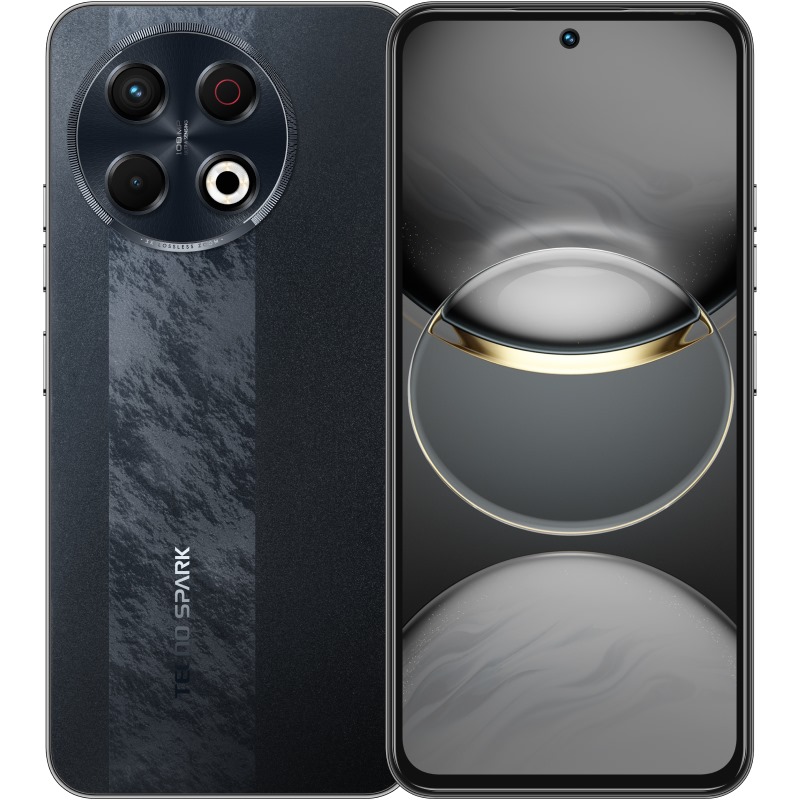
Spark 30 Pro is a Tecno budget phone with a 6.78-inch 120Hz AMOLED display, Helio G100, 108MP main camera, 5000 mAh battery with 33W charging and an under-display fingerprint sensor.
Key figures at a glance
Gallery
Specifications
- Display
- 6.78-inch AMOLED (1080 x 2436) with punch-hole selfie camera, 120Hz; 1700 nits peak brightness, 2160Hz PWM dimming and 100% DCI-P3 (Tecno claims)
- Chipset
- MediaTek Helio G100
- RAM
- 8GB
- Extended RAM
- up to 8GB of storage used as virtual memory (8GB + 8GB)
- Storage
- 128GB / 256GB
- Rear Camera
- 108MP main camera, listed with a four-part rear flash
- Front Camera
- 13MP with dual colour temperature flash
- Battery
- 5000 mAh, 33W wired charging (USB-C); Tecno states over 80% capacity retained after 1,000 charge cycles
- OS
- Android 14
- Audio
- Stereo dual speakers, Dolby Atmos, Hi-Res Audio
- Connectivity
- NFC, 2G/3G/4G/4.5G (LTE Advanced, up to 300Mbps per Tecno); infrared remote control
- Security
- Under-display fingerprint sensor
- Durability
- IP54 dust and water resistance (SGS-tested per Tecno); wet touch control
- Colors
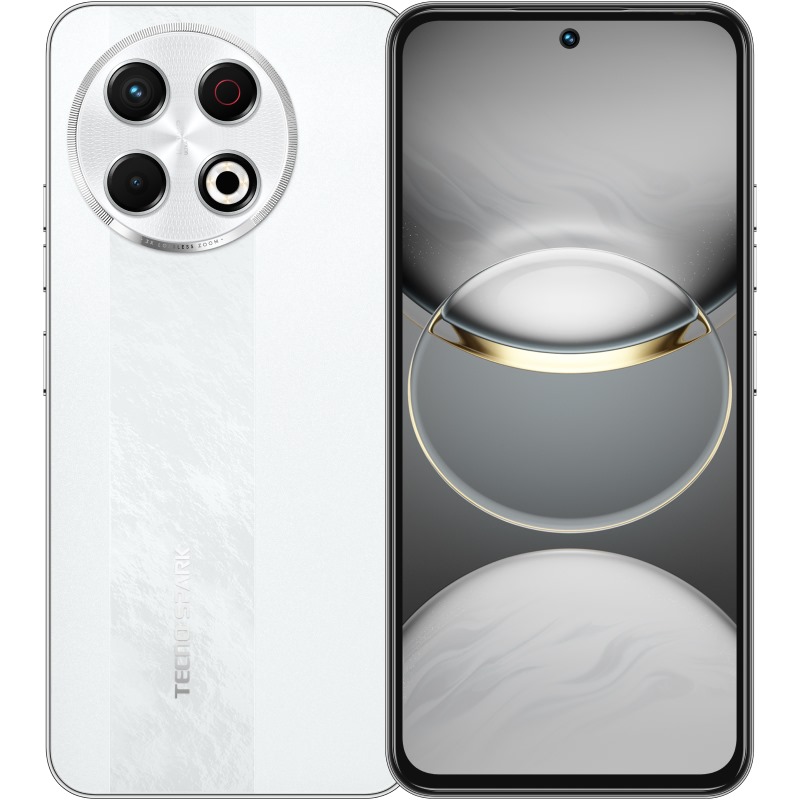
- Arctic Glow, Obsidian Edge
If you take the Tecno Spark 30 family and ask which model puts most of its effort into the screen, the answer is the Tecno Spark 30 Pro. It is a budget Android phone with a 6.78-inch 120Hz AMOLED display, a MediaTek Helio G100 chip, a 108MP main camera, a 5000 mAh battery with 33W charging, an under-display fingerprint sensor and 4.5G (LTE Advanced) connectivity. This review is based on the published specifications and the statements on Tecno's own product pages, and manufacturer statements are labelled as such. Tecno does not give a US price for the phone, and the pages consulted carry no confirmed on-sale date, so neither appears here.
How the Pro differs from the rest of the family
Tecno lists the Spark 30 line as a set of models: the standard Spark 30, a 5G version, the lower-cost Spark 30C and 30C 5G, and this Pro, with a limited edition of the Pro also shown. The Pro is the one that Tecno describes with the most upgraded hardware: AMOLED instead of an unnamed panel, 120Hz instead of 90Hz, a 108MP camera instead of 64MP, faster 33W charging instead of 18W and a fingerprint reader under the glass instead of at the side. Anyone deciding between the two should read the Tecno Spark 30 page next to this one. Later models in the series include the Tecno Spark 40, and from a different Tecno product line there is the Tecno Pova 7; the Spark 30 Pro vs Pova 7 comparison puts the specification sheets side by side.
A display-led design
The 6.78-inch AMOLED panel is the main reason to choose this phone. It has a 1080 x 2436 resolution, a 120Hz refresh rate and a punch-hole selfie camera at the top. Tecno's marketing page lists several screen figures: a peak brightness of 1700 nits, 2160Hz PWM dimming for reduced flicker, 100% coverage of the DCI-P3 colour range and a certified low-blue-light mode. These are all manufacturer figures, and "peak brightness" typically applies to a small bright area under ideal conditions, not to a full-screen white image. Even so, a 120Hz AMOLED screen is something entry-level phones rarely have, and 2160Hz dimming is a feature mostly associated with higher-priced models.
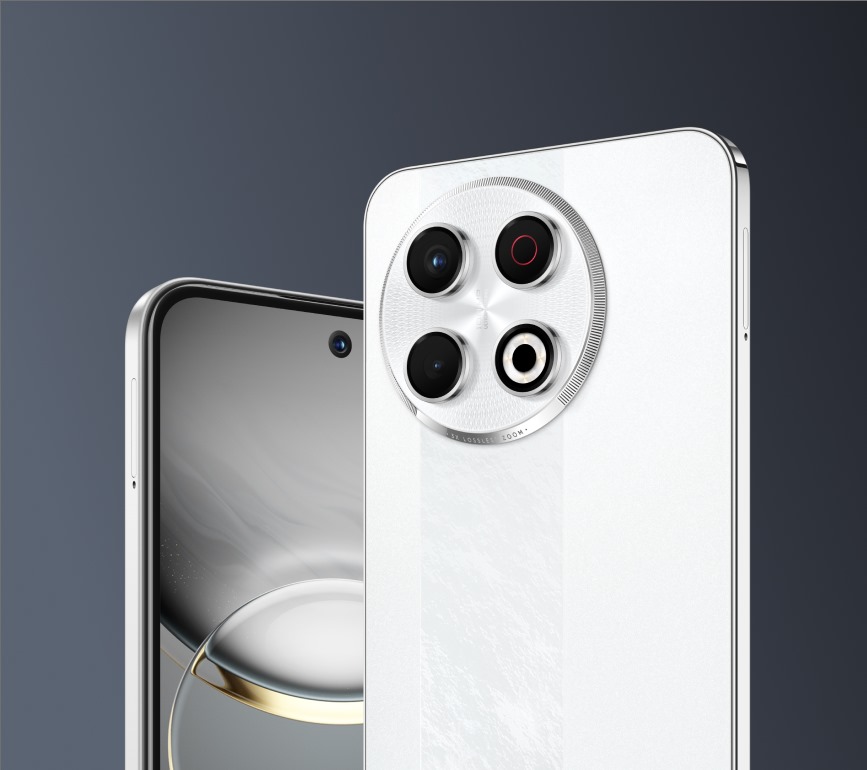
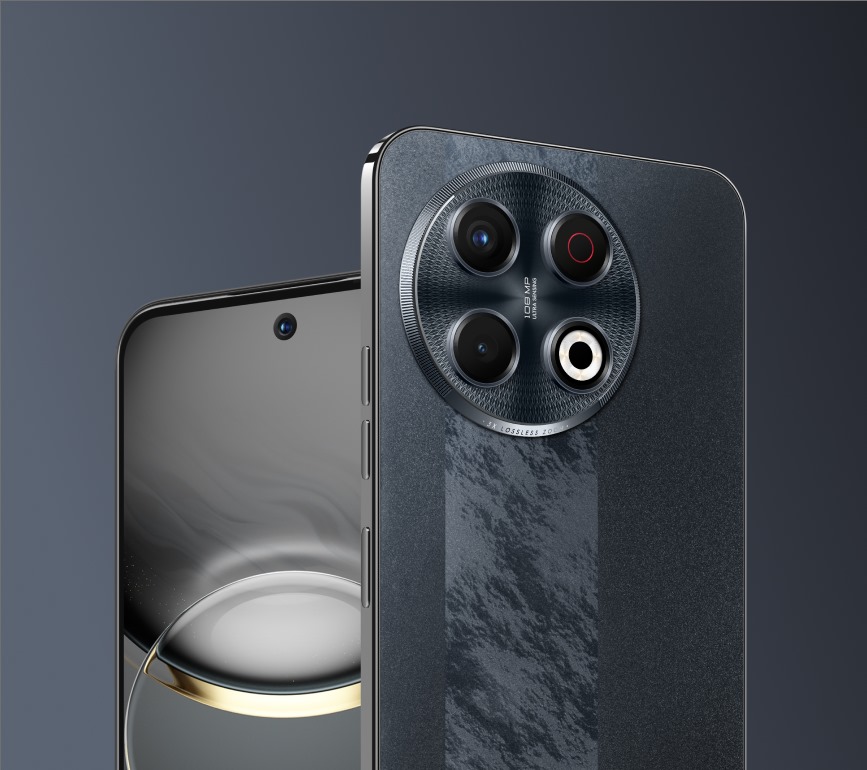
The two colours are Arctic Glow, a white with a pale vertical stripe, and Obsidian Edge, a dark blue-black with a rougher vertical band. The camera sits in a round ring at the top left of the back, which carries engraved text referring to the 108MP sensor in the dark version. Tecno quotes an IP54 rating based on SGS testing, meaning protection against limited dust and splashes from any direction. That is a lower rating than the IP64 on the standard Spark 30, so the Pro gains on the screen but gives up some dust protection. A wet-touch mode keeps the screen responsive when your fingers are damp.
Sound and extras
The phone has stereo dual speakers with Dolby Atmos and Hi-Res Audio, and Tecno claims that the symmetrical layout can deliver up to 300% louder full-scene volume. As elsewhere, that is relative to the company's own baseline rather than a measured loudness figure. NFC and an infrared remote control are both listed as supported, and the phone runs Android 14 with Tecno's interface.
Performance
The Helio G100 is a budget octa-core chip from MediaTek, and it replaces the Helio G91 used in the standard Spark 30; Tecno does not publish a direct speed comparison between the two. For messaging, streaming, navigation and light gaming it should deliver a smooth everyday experience, but it is not a chip for heavy 3D titles at maximum settings. Tecno pairs it with a "5 Years Lag-free Guarantee" slogan backed by a TÜV SÜD "60-month fluency rating" label; the rating is a third-party assessment of expected smoothness over time, and the phrase should be read as an indicator of design intent rather than a promise that no lag will ever appear.
Memory is 8GB of physical RAM plus 8GB of extended RAM, so the 16GB headline includes virtual memory, and storage comes in 128GB and 256GB versions. Extended RAM can help keep more apps alive in the background, but it uses storage and is slower than real memory.
Connectivity
A less obvious selling point is the network. Tecno lists 2G, 3G, 4G and 4.5G (LTE Advanced) and says the faster mode can reach download speeds of up to 300Mbps, which it describes as up to twice as fast as plain 4G. That is a theoretical maximum that depends on carrier support, and the phone does not have a 5G modem; for 5G you would need a different model in the family.
Camera
The rear camera is listed as a 108MP main camera, with a four-part rear flash. High megapixel counts on budget phones usually rely on pixel binning, which combines groups of pixels into one for better light sensitivity, so default photos are normally output at a lower resolution than the headline figure. Tecno does not publish the sensor size, aperture or whether the camera has optical stabilisation, and no ultrawide or telephoto lens is listed, so this should be seen as a capable single-camera system. The 13MP selfie camera has a flash with two colour temperatures. Real-world image quality was not independently assessed for this write-up.
Battery and charging
The 5000 mAh battery is charged at up to 33W over USB-C, noticeably faster than the 18W of the standard Spark 30 though well below the 70W of the Camon 30. Tecno states that the battery keeps more than 80% of its capacity after 1,000 charge cycles. AMOLED panels at 120Hz draw more power than 90Hz LCD panels, so endurance may be similar to the cheaper model despite the bigger screen features; adaptive refresh settings help.
Living with the screen
It helps to translate the display numbers into everyday use. A 120Hz refresh rate makes scrolling through feeds, menus and web pages look smoother, and it matters most when you move a lot of text across the screen. The high PWM dimming frequency is aimed at people who are sensitive to flicker at low brightness, such as readers in dark bedrooms. The wide colour coverage helps photos and video look vivid, although colour accuracy depends on the display mode you choose in the settings. Peak brightness is the figure most likely to differ from what you see in a typical bright-sun situation, because AMOLED panels dim when large areas of the screen show white. Tecno does not publish a typical full-screen brightness, so the 1700 nits headline should be treated as the upper limit, not the everyday level.
Because the fingerprint reader sits under the glass, the front of the phone looks cleaner than on models with a side-mounted sensor, but optical readers can be a little slower and more sensitive to screen protectors and wet fingers than a physical button. Tecno's wet-touch feature addresses the screen rather than the reader, so it is worth testing both if you often use the phone with damp hands.
Who it is for
The Spark 30 Pro suits people who watch a lot of video, read or browse for hours and want the most pleasant screen they can get at a budget price, and who value an under-display fingerprint reader and 4.5G speeds. It is a sensible step up for those who find the standard Spark 30 too plain, and it avoids the premium for 5G if that is not a priority.
Compromises
- IP54 only: less dust protection than the IP64 of the standard Spark 30.
- No 5G: 4.5G is a faster form of 4G, not 5G.
- Mid-budget chip: the Helio G100 is not meant for demanding games.
- Camera details missing: sensor size and stabilisation are not published.
- Extended RAM: half of the "16GB" figure is virtual.
For context on how Tecno's phones compare with the wider market, see the current rankings.
Where it ranks
Compare Tecno Spark 30 Pro with similar devices
More from Tecno
Frequently asked questions
When was the Tecno Spark 30 Pro released?
The manufacturer’s release date for the Tecno Spark 30 Pro is not stated in the information we have.
What are the main specs of the Tecno Spark 30 Pro?
Headline figures for the Tecno Spark 30 Pro: Battery: 5,000 mAh, Refresh rate: 160 Hz, Main camera: 108 MP, RAM: 8 GB. The full specification table is further up this page.
Is the Tecno Spark 30 Pro worth buying?
That depends on your priorities. Use the editorial review on this page for our view, check the rankings above to see where the device stands on battery, display and camera, and compare it directly with similar models before you decide.


