Phones
realme C75
The realme C75 is a budget 4G phone with a 6,000 mAh battery, 45W charging, a 90Hz 6.72-inch screen and an unusually broad IP66/IP68/IP69 rating for its class.
Key figures at a glance
Gallery
Specifications
- Display
- 6.72" FHD+ (2400x1080), 90Hz, 580 nits typical / 690 nits HBM
- Chipset
- MediaTek Helio G92 Max
- RAM
- 8GB
- Extended RAM
- up to 16GB dynamic (virtual) RAM, software-based
- Storage
- 128GB / 256GB (plus microSD slot)
- Rear Camera
- 50MP main (f/1.8, 1/2.88")
- Front Camera
- 8MP (f/2.0)
- Battery
- 6,000 mAh (typical; 5,860 mAh rated), 45W wired
- OS
- realme UI 5.0, Android 14
- Weight
- 196 g
- Dimensions
- 165.69 x 76.22 x 7.99 mm
- Water Resistance
- IP66 / IP68 / IP69
- Connectivity
- 4G LTE, dual SIM, Wi-Fi 5, Bluetooth 5.0, USB-C
- Colors
- Lightning Gold, Storm Black
The realme C75 is a budget smartphone built around three ideas: a very large 6,000 mAh battery, a durability rating that is unusually broad for an entry-level device, and a modest, 4G-only hardware platform that keeps the cost down. It uses a MediaTek Helio G92 Max processor, a 6.72-inch Full HD+ display with a 90Hz refresh rate and a single 50MP rear camera. This page is based on the published specifications and manufacturer information. It explains where the C75 sits in realme's range, what the hardware realistically offers in daily use, and which compromises come with a phone of this class.
Place in the realme lineup
realme sells its phones in several families. The numbered series and the GT line chase performance and camera quality, while the C series is aimed at people who mainly need a reliable phone for messaging, video, maps and social apps. The C75 belongs to that C series, and the details of its specification make the target audience clear: it has no 5G modem, a processor from MediaTek's Helio G line and a single main camera. What it spends money on instead is endurance and robustness. realme positions the phone around "waterproof, shockproof, worry-proof" ideas, with the battery and the protection ratings as the headline features.
The C75 is also a good example of how a manufacturer can use certification as a selling point. realme states that the phone carries a TÜV Rheinland rugged smartphone certificate and claims MIL-STD-810H shock resistance, in addition to its dust and water ratings. Those are the manufacturer's claims and test results, but they show where the engineering budget went. A buyer who is deciding between the C75 and a slightly more expensive model with a faster chip should ask which of the two matters more for their own routine: a phone that survives rain, drops and a dusty work environment, or a phone that opens apps a fraction of a second sooner.
If you want to see how the C75 compares with a more mainstream Android phone, the realme C75 vs Galaxy A56 comparison shows the gap in processor, display and camera hardware, and the rankings page shows where the C75 lands in the overall list.
Design, display and durability
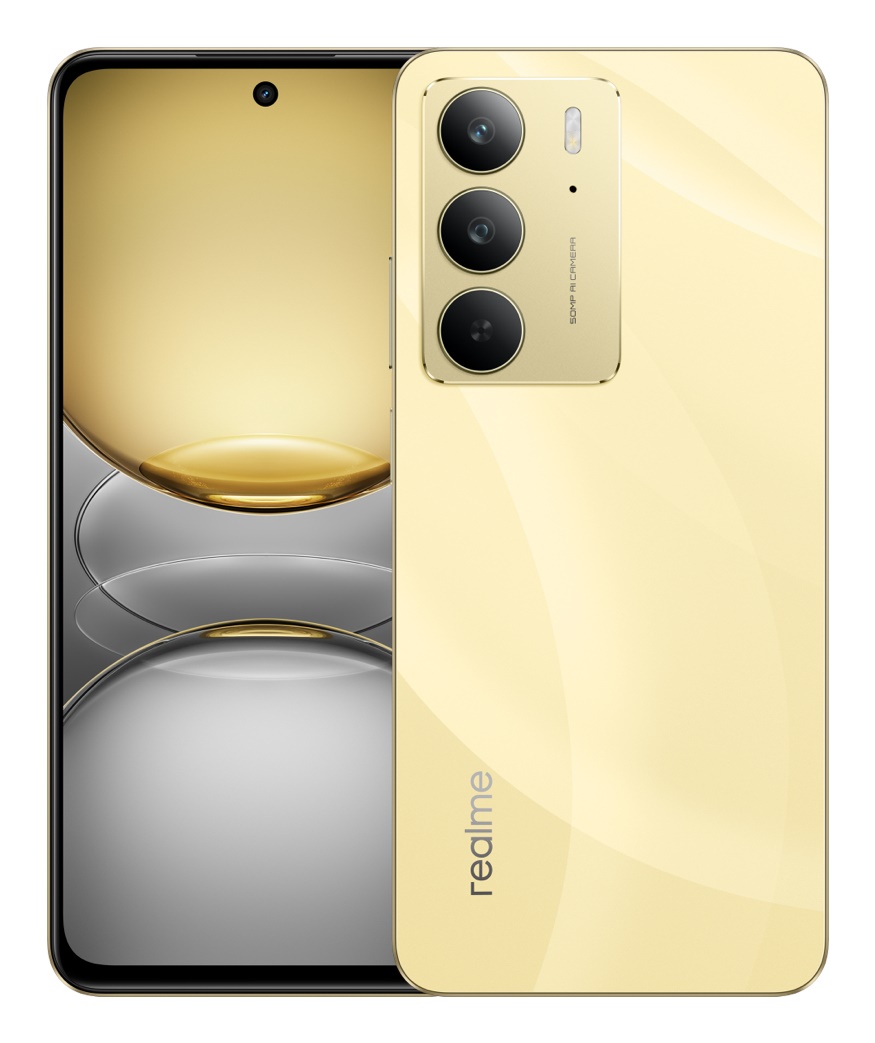
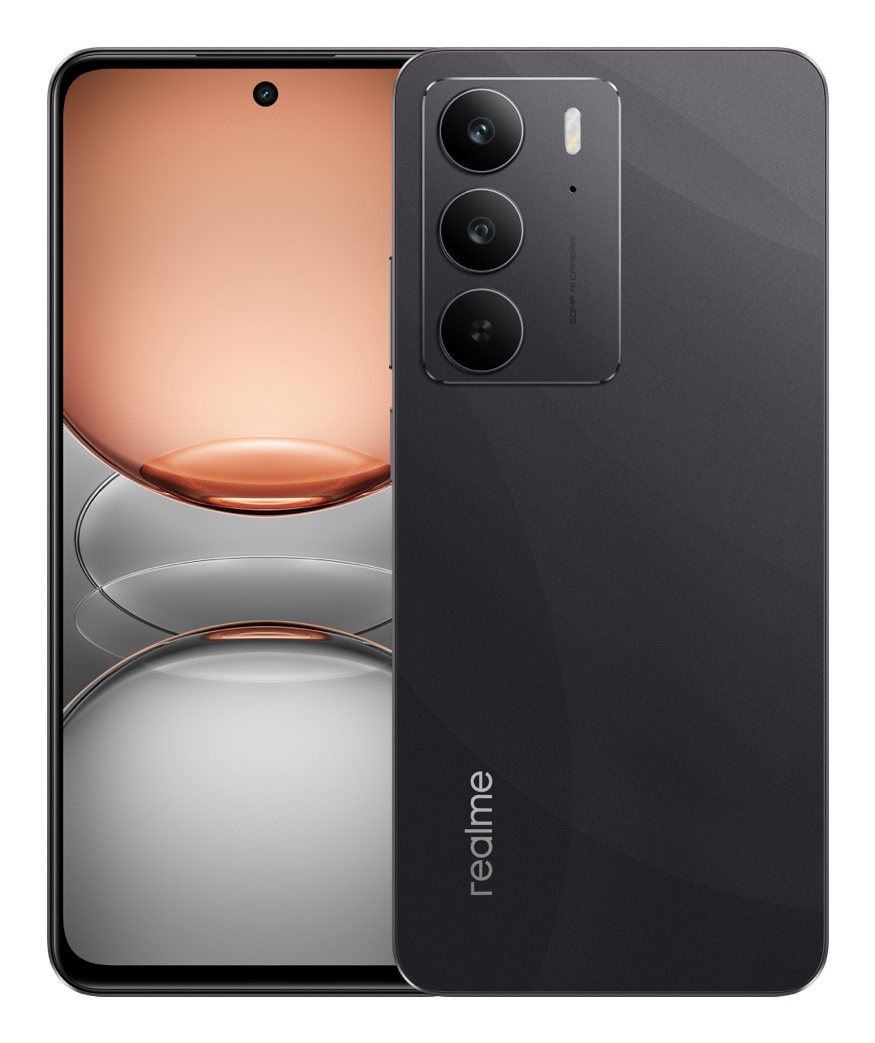
According to realme, the C75 measures 165.69 x 76.22 x 7.99 mm and weighs 196 g. That is a reasonably slim body for a phone with a 6,000 mAh cell, and 196 g is not heavy for a 6.72-inch device. The phone is offered in two colours, Lightning Gold and Storm Black. In the official images the back panel carries a rectangular camera plate with three round openings, which is a common look on budget phones; the specification lists only one rear camera. realme also mentions "ArmorShell" glass over the screen, a name for its own protective glass treatment. The company does not name a Corning product, so it is best treated as a marketing term rather than a measurable specification.
The durability numbers are the most interesting part of the sheet. realme lists IP66, IP68 and IP69 ratings. The IP68 rating covers immersion in water, IP66 covers strong water jets and IP69 refers to hot, high-pressure water jets. It is rare for a budget phone to claim all three, and realme says the ratings were achieved under controlled laboratory conditions. As with every water-resistance rating, the protection can degrade with age, and water damage is not covered by a normal warranty, so the sensible interpretation is "it should survive rain, a splash in the kitchen or a rinse under the tap", not "it is designed for diving".
The display is a 6.72-inch panel with 2400 x 1080 resolution, a 90Hz maximum refresh rate and a 180Hz touch sampling rate. realme quotes 580 nits of typical brightness and 690 nits in high-brightness mode, a 1500:1 contrast ratio and 83 percent NTSC colour coverage. These numbers are typical for the price class, and the brightness level in particular tells you that the screen is perfectly usable indoors but will be harder to read in strong direct sunlight than the panels of premium phones, which reach well over 1,000 nits. The 90Hz refresh rate is a welcome step up from 60Hz and makes scrolling feel smoother. realme does not state the panel type on the specification page, so this review does not assume one.
Performance and software
The MediaTek Helio G92 Max is an eight-core chip clocked at up to 2.0 GHz. It is a 4G processor, and it belongs to the lower mid-range generation of MediaTek's gaming-oriented G series. realme cites an AnTuTu score of 288,947 for the phone, but that is a manufacturer figure that depends on the test version, so it should be read as a rough indicator of "entry-level" rather than a promise. In practice, a chip of this class handles messaging, browsing, video streaming, mapping and casual games well. Heavy 3D games at high settings, long multitasking sessions with many large apps open, and demanding photo or video editing are where it will feel limited.
Memory is sold in versions with up to 8GB of physical RAM. realme also advertises "up to 24GB" of memory, but its own footnote explains that this figure includes up to 16GB of dynamic RAM, which is a software feature that uses part of the storage as a virtual extension. That extra memory helps keep a few more apps in the background, but it is not the same as real RAM and does not make the phone faster, so the figure that matters for performance is the 8GB of physical memory. Storage options are 128GB and 256GB, and the phone has a separate microSD slot alongside two SIM slots, which is a practical advantage over many current phones that have dropped expandable storage.
The software is realme UI 5.0 based on Android 14. realme's official page does not state how many years of operating system or security updates this model receives, so buyers who care about long-term support should check realme's update policy for their region before purchasing. The interface includes the usual realme extras: an always-on display, an eye-comfort mode and a "Mini Capsule 3.0" feature that shows notifications and activity in a pill-shaped area at the top of the screen.
Camera
The rear camera is a single 50MP sensor with an f/1.8 aperture, a five-element lens and a 1/2.88-inch sensor, marketed with AI features such as "AI Clear Face". There is no ultrawide camera and no telephoto camera, so zoom is digital and wide group shots depend on how far you can step back. For daylight photos a 50MP main sensor of this kind usually produces acceptable results, especially after the processing that combines pixels into a lower-resolution image. Low-light performance and dynamic range are the typical weak spots of the class, and a Helio G92 Max processes images more slowly than a flagship chip does.
Video recording is limited to 1080p at 30 frames per second, and slow motion is available at 720p and 120 frames per second. There is no 4K recording listed, which is a notable limit for anybody who wants to shoot video regularly. The front camera is an 8MP unit with an f/2.0 aperture and an 80-degree field of view, which is enough for video calls and casual selfies. Overall, the camera setup is functional rather than a reason to buy the phone.
Battery and charging
The battery is the strongest part of the specification. realme gives a typical capacity of 6,000 mAh and a rated capacity of 5,860 mAh. The difference is normal, because the typical value is a laboratory average and the rated value is the minimum guaranteed capacity. A battery this large, combined with a modest 90Hz screen and an efficient but not especially fast processor, should deliver a full day for heavy use and a comfortable second day for lighter use, though real endurance always depends on signal strength, brightness and the apps you run.
Charging is handled by a 45W wired system over USB-C, and realme says that a full charge from the supplied charger takes about 90 minutes. That is a respectable figure for such a big battery in this class. The phone also supports reverse charging, so it can top up earbuds or another phone in an emergency. There is no wireless charging listed. The charger is included in the box together with a USB-C cable, a screen protector and a case, which is a small but useful bonus when many manufacturers have started to remove such accessories.
Connectivity and everyday details
The C75 supports dual 4G standby, Wi-Fi 5 on both the 2.4GHz and 5GHz bands, Bluetooth 5.0 with the SBC, AAC and LDAC audio codecs, and a standard set of satellite navigation systems. It does not support 5G, and in a region where networks are moving fast to 5G only, that is a real limitation for the next few years. For users who live where 4G still has the best coverage, or who rarely use mobile data at speeds above what 4G can offer, the limitation is less serious. Audio is marketed with an "Ultra Volume" mode of up to 400 percent, a relative figure that means louder than the normal setting rather than a guarantee of high fidelity.
Who the realme C75 is for
This phone suits people who want a long-lasting, tough phone without spending much: students, parents buying a first phone for a child, workers in dusty or wet environments, and anybody who wants a dependable backup device. The combination of a big battery, a 90Hz screen, expandable storage and an unusually thorough water and dust rating is hard to find at the lower end of the market. It is also a sensible phone for someone who mostly uses messaging, video calls, maps, banking apps and streaming, and who does not care about benchmark leadership.
Compromises to weigh
The compromises are equally clear. There is no 5G, which limits future-proofing. The single camera and the 1080p video ceiling make it a weak choice for people who care about photography. The Helio G92 Max is fine for everyday tasks but will not keep up with demanding games, and the virtual RAM figure should not be mistaken for real memory. Screen brightness of 690 nits at best means outdoor visibility is only average. And the update policy is not stated on the product page. Buyers who can stretch their budget should compare the C75 against the Galaxy A56 and other mainstream models, which bring 5G, better cameras and longer software support, in exchange for a smaller battery and a higher price.
Where it ranks
Compare realme C75 with similar devices
More from realme
Frequently asked questions
When was the realme C75 released?
The realme C75 was released on 2024-12-01, according to the manufacturer’s published information.
What are the main specs of the realme C75?
Headline figures for the realme C75: Battery: 6,000 mAh, Refresh rate: 90 Hz, Main camera: 50 MP, RAM: 8 GB. The full specification table is further up this page.
Is the realme C75 worth buying?
That depends on your priorities. Use the editorial review on this page for our view, check the rankings above to see where the device stands on battery, display and camera, and compare it directly with similar models before you decide.


