Phones
Motorola Razr 50 Ultra
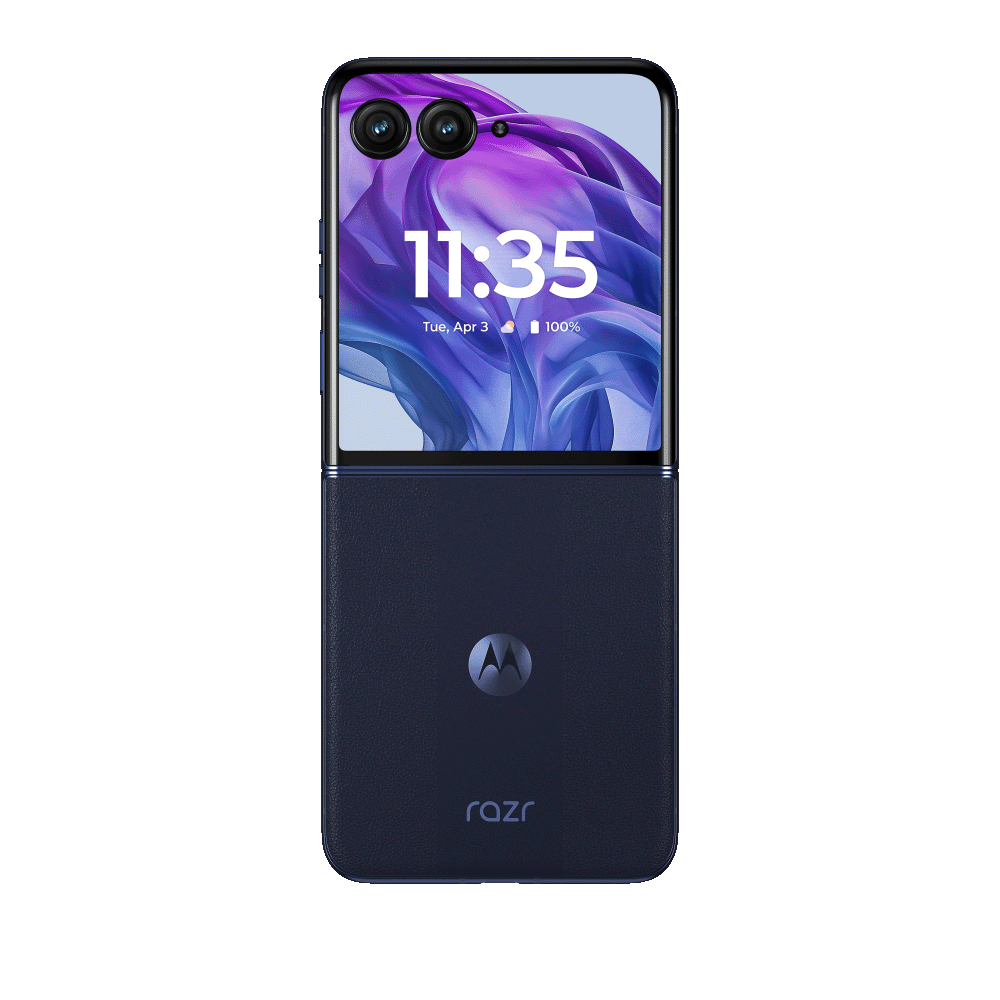
Motorola's 2024 top flip phone pairs a 4.0-inch cover display and Snapdragon 8s Gen 3 with a 6.9-inch 165Hz inner screen and a 50MP telephoto lens.
Key figures at a glance
Gallery
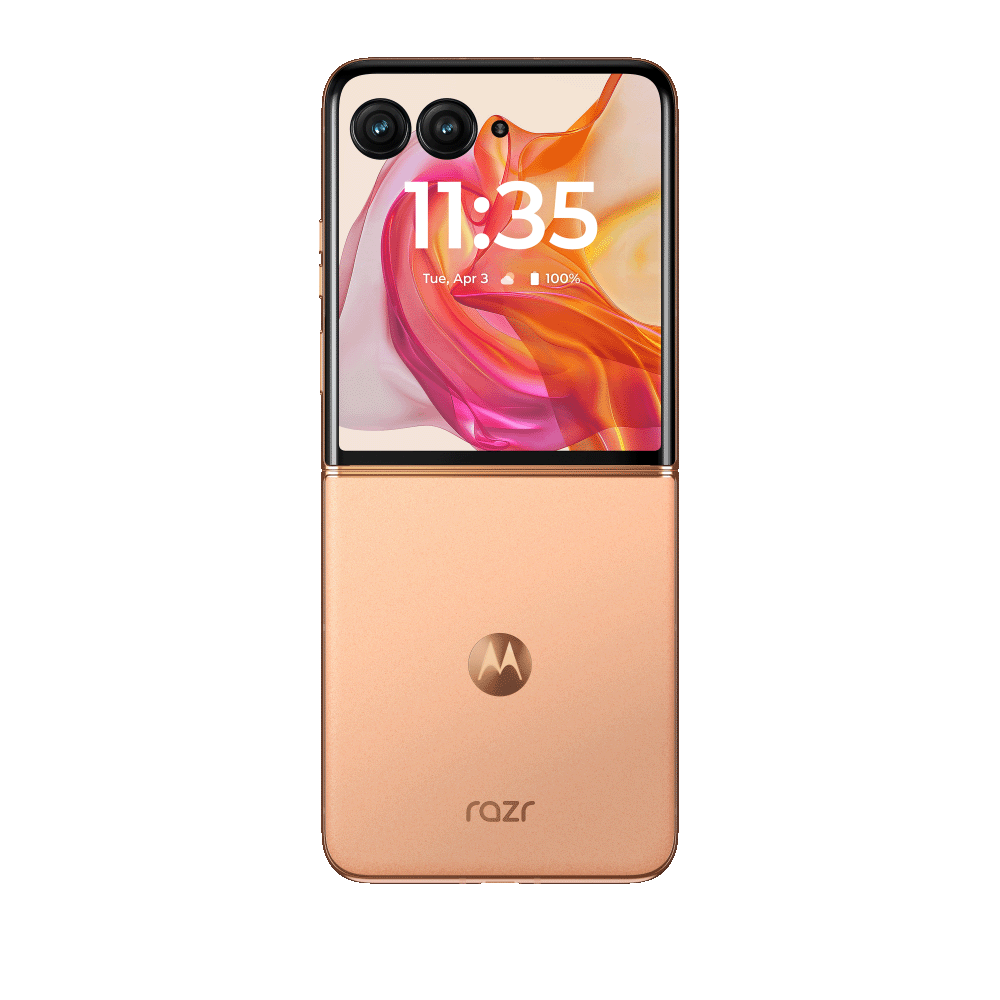
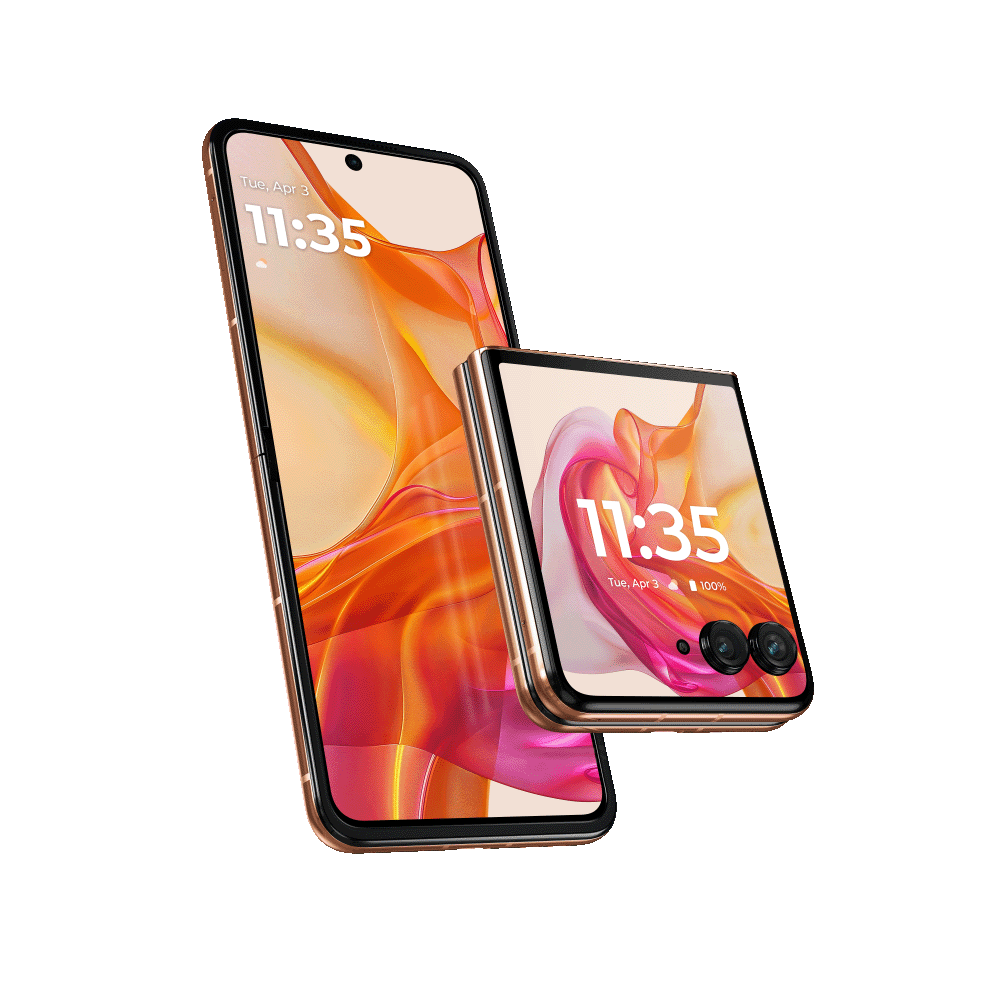
Specifications
- Display
- 6.9" LTPO foldable pOLED, 2640x1080, up to 165Hz, HDR10+, 3000 nits peak; 4.0" LTPO cover pOLED, 1272x1080, up to 165Hz, HDR10+, 2400 nits peak
- Chipset
- Snapdragon 8s Gen 3
- RAM
- 12GB
- Extended RAM
- RAM Boost 3.0 (virtual extension)
- Storage
- 512GB (UFS 4.0)
- Rear Camera
- 50MP main (f/1.7, OIS) + 50MP telephoto (2x optical zoom)
- Front Camera
- 32MP (inner display); cover display uses the rear cameras
- Battery
- 4,000 mAh, 45W wired (68W charger in the box), 15W wireless, 5W reverse
- OS
- Android 14
- Weight
- 189 g
- Dimensions
- Open 73.99 x 171.42 x 7.09 mm; closed 73.99 x 88.09 x 15.32 mm
- Water Resistance
- IPX8
- Build
- Corning Gorilla Glass Victus front, vegan leather back, 6000-series aluminium frame
- Connectivity
- 5G, Wi-Fi 7, Bluetooth 5.4, NFC, eSIM + physical SIM
The Motorola Razr 50 Ultra is the top model of Motorola's 2024 flip-phone family. It folds into a compact square, but its main selling point is the unusually large 4.0-inch outer screen, which Motorola describes as the biggest cover display on a flip phone at the time of launch. This review is based on the published specifications and manufacturer information, so it concentrates on what the hardware offers on paper, where it differs from its siblings, and which compromises a buyer should expect.
Where it sits in the lineup
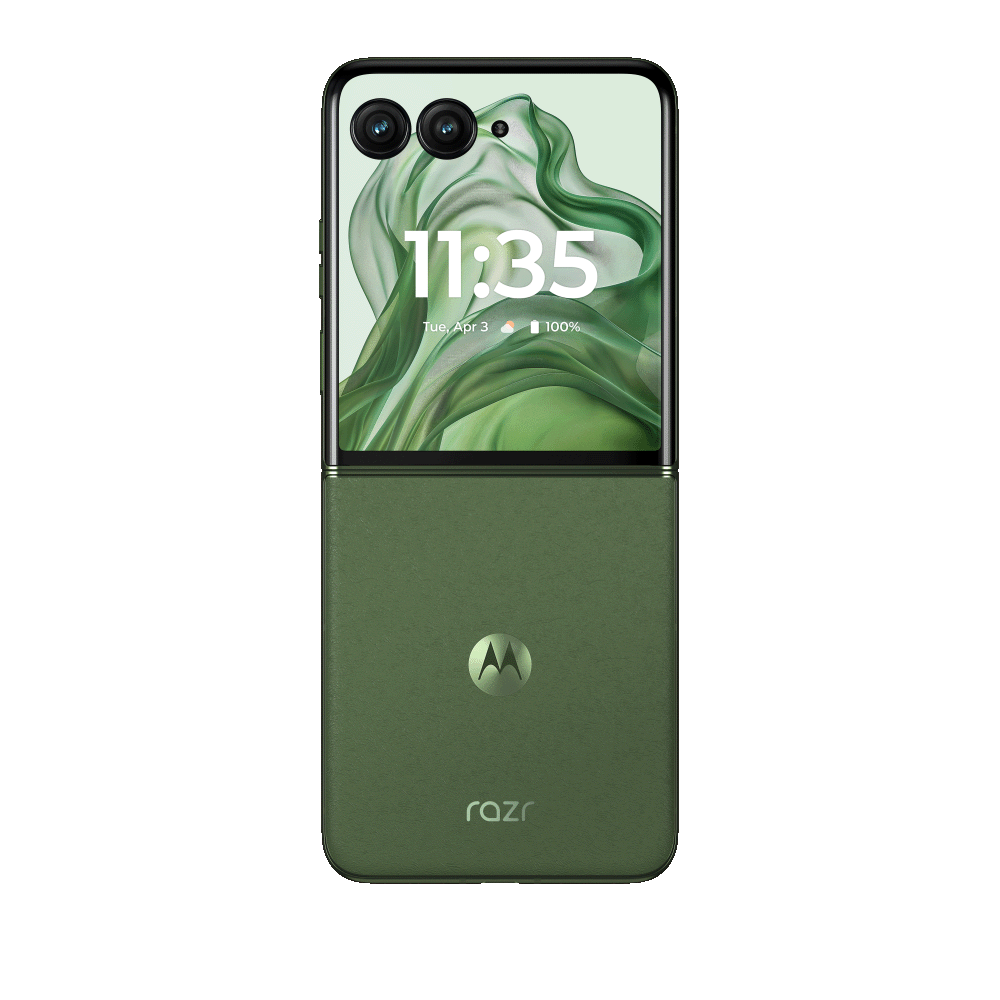
In 2024 Motorola split its flip phones into two clear tiers. The standard Razr 50 uses a MediaTek chip, a smaller cover screen and a 33W charger. The Razr 50 Ultra sits above it with a flagship-class Snapdragon 8s Gen 3, 12GB of RAM, 512GB of UFS 4.0 storage, a 4.0-inch cover display and a second 50MP camera with 2x optical zoom. On the Indian product page the phone is listed with a single 12GB/512GB configuration in three colours: Midnight Blue, Peach Fuzz with a vegan-leather back, and Spring Green.
A year later Motorola replaced the model with the Razr Ultra 2025, which moves to a newer Snapdragon 8 Elite and a larger battery. If you can find the 2024 model at a reduced price, it is worth comparing the two directly, because the design language has barely changed. Buyers who want a cheaper flip phone from the following generation can also look at the Razr 60.
Design and displays
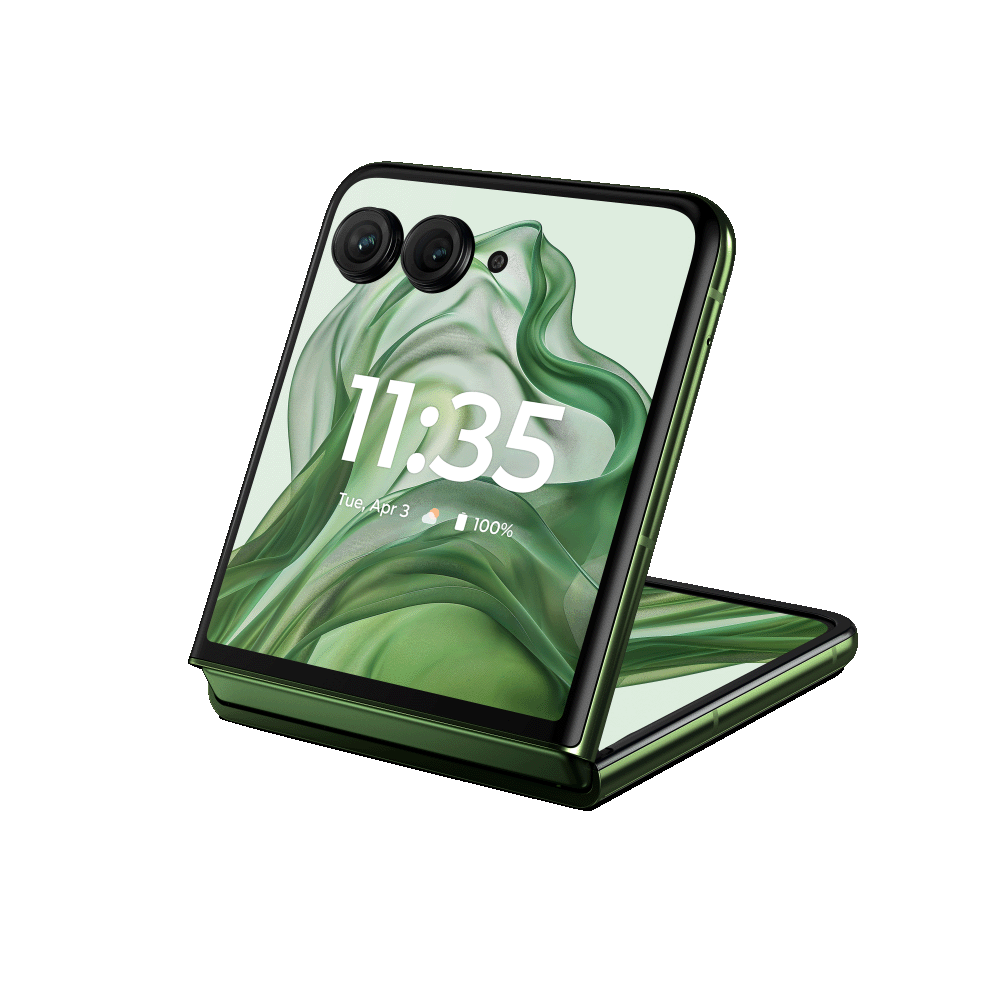
Closed, the phone measures 73.99 x 88.09 x 15.32 mm and weighs 189 g; opened, it is 171.42 mm tall and just 7.09 mm thick. Motorola lists Corning Gorilla Glass Victus on the front, a 6000-series aluminium frame and a vegan-leather back for the Peach Fuzz version. The hinge is rated IPX8 for water resistance, which is a meaningful step for a folding phone, although the specification contains no dust-resistance rating, so sand and grit remain a risk.
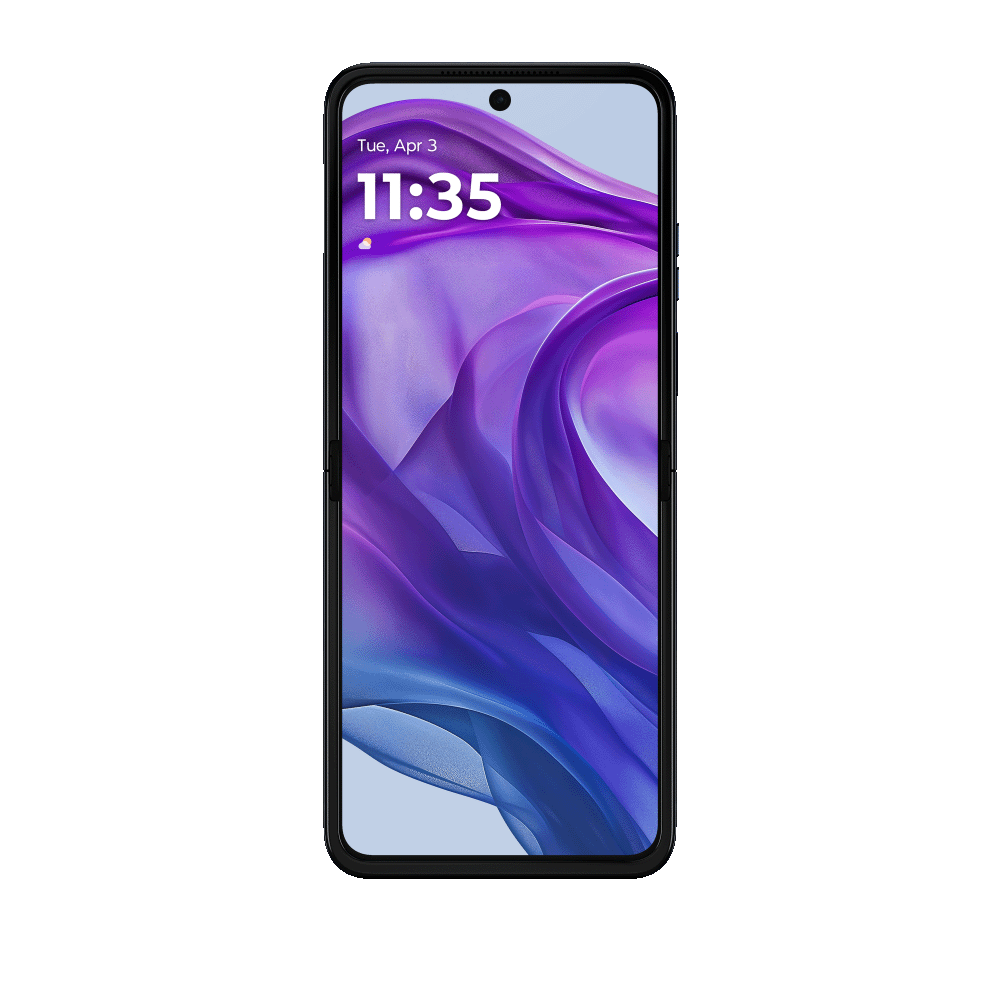
The inner panel is a 6.9-inch LTPO foldable pOLED with 2640 x 1080 pixels (413 ppi), HDR10+, 10-bit colour and a refresh rate that scales up to 165Hz. Motorola quotes a 3000-nit peak brightness. The 22:9 aspect ratio makes the screen tall and narrow, which suits scrolling and reading but is less ideal for video with black bars.
The cover display is the headline feature. At 4.0 inches and 1272 x 1080 pixels (417 ppi), it is also an LTPO panel with HDR10+, a 165Hz ceiling and a stated 2400-nit peak. Because it is nearly square and covers almost the whole front half, apps can run on it at full size, and the two rear cameras can be used for selfies without opening the phone. The trade-off is that cover-screen apps are limited by software choices; they work well for quick replies, maps, music and short videos, but long sessions will still push you to unfold the phone.
Performance and software
The Snapdragon 8s Gen 3 is a high-end chip but not the very top Snapdragon of its generation. It is a sensible fit for a foldable, where thermal room is limited and sustained peak performance matters less than efficiency. Together with 12GB of LPDDR5X memory and UFS 4.0 storage, app launches and multitasking should feel quick. Motorola also lists RAM Boost 3.0, which borrows storage space as virtual memory; this is a software extension and should not be counted as additional physical RAM.
The phone runs Android 14 with Motorola's fairly light interface. Gestures such as twisting the wrist twice to launch the camera and flipping to silence a call are carried over from earlier Motorola phones, and Gemini is integrated as a voice assistant alongside Motorola's own assistant features. The product page does not state the update policy for this model, so we do not repeat figures that the source does not give. For connectivity, the phone offers 5G, Wi-Fi 7, Bluetooth 5.4, NFC and a physical SIM plus eSIM, which is complete for a flagship.
Camera
Motorola equips the Razr 50 Ultra with a 50MP main camera (f/1.7, 0.8 µm pixels, optical stabilisation) and a 50MP telephoto lens (f/2.0) with 2x optical zoom. Both can combine pixels into 12.6MP images for better low-light output. There is no dedicated ultrawide camera on this model, which is a notable difference from the cheaper Razr 50, so wide group shots and architecture photography rely on moving back or cropping less. The telephoto lens is useful mainly for portraits; the Portrait mode offers 24, 35, 50 and 85 mm framings.
The inner selfie camera is a 32MP unit that also bins to 8MP. Because the cover screen acts as a large viewfinder, most photographers will use the rear cameras for selfies, which is the practical advantage of a flip design. Video goes up to 4K at 60 frames per second on the main and telephoto cameras, with HDR10+ recording at 30 fps and slow-motion up to 960 fps at Full HD according to the listed specifications.
Battery and charging
The 4,000 mAh battery is the weakest part of the spec sheet in relative terms. It is smaller than the cells in most conventional flagship phones, and the two high-refresh screens will draw power under heavy use. Charging support is 45W wired, though Motorola ships a 68W charger in the Indian box, with 15W wireless charging and 5W reverse charging. Expect a day of mixed use rather than a multi-day battery; heavy gamers or video watchers will want to charge in the evening.
Who it is for
- Style-focused buyers who want a compact phone that still unfolds into a full-size screen and who like the colour and material choices.
- Quick-glance users who handle messages, navigation and music mostly on the large cover display.
- Buyers who value water protection in a foldable and want an IPX8 rating.
- Android users who prefer a near-stock interface with a few useful gestures.
Compromises to consider
- The 4,000 mAh battery is modest and will limit endurance compared with a slab phone.
- No ultrawide camera; the second lens is a 2x telephoto.
- No dust-resistance rating is listed, and the inner screen has a visible crease like all foldables.
- The Snapdragon 8s Gen 3 is strong but not the fastest chip available.
One practical point concerns daily handling. A foldable with a large cover screen invites you to leave the phone closed most of the time, which reduces wear on the hinge area and keeps the inner display protected in a pocket. At the same time, the closed phone is 15.32 mm thick, noticeably chunkier than a slab phone, so the square shape is easier to carry in a small bag or jacket pocket than in tight trousers. Motorola also bundles accessories in the box on the Indian market, including a protective case, which is a small but helpful detail for a device with a delicate hinge.
For a more conventional large-screen alternative, you can place it against the Razr Ultra 2025 to see what the next generation adds, or against the Motorola Edge 50 for a non-folding option. Our rankings show how it fits among other phones.
Where it ranks
Compare Motorola Razr 50 Ultra with similar devices
More from Motorola
Frequently asked questions
When was the Motorola Razr 50 Ultra released?
The Motorola Razr 50 Ultra was released on 2024-07-10, according to the manufacturer’s published information.
What are the main specs of the Motorola Razr 50 Ultra?
Headline figures for the Motorola Razr 50 Ultra: Battery: 4,000 mAh, Refresh rate: 165 Hz, Main camera: 50 MP, RAM: 12 GB. The full specification table is further up this page.
Is the Motorola Razr 50 Ultra worth buying?
That depends on your priorities. Use the editorial review on this page for our view, check the rankings above to see where the device stands on battery, display and camera, and compare it directly with similar models before you decide.


