Phones
Motorola Razr 50
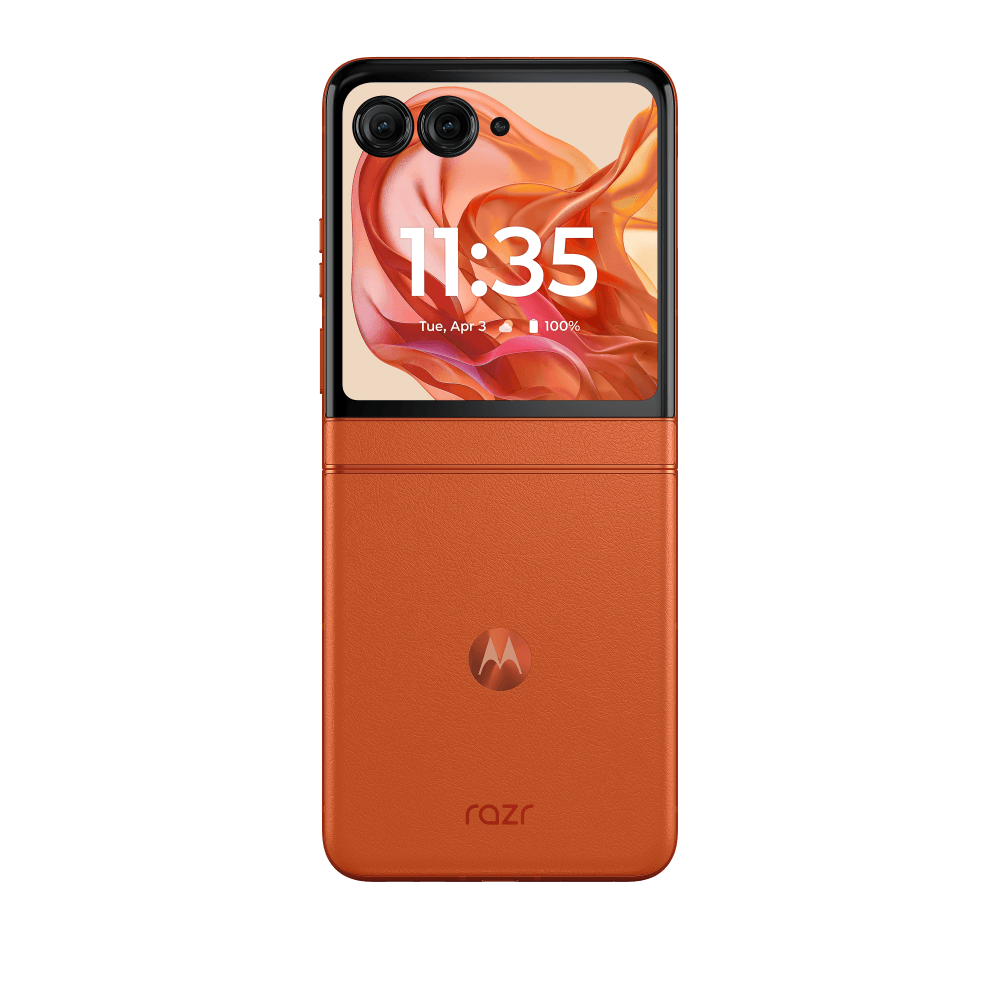
The more affordable 2024 Razr flip phone offers a 3.63-inch cover display, a Dimensity 7300X chip, a 6.9-inch 120Hz inner screen and IPX8 water protection.
Key figures at a glance
Gallery
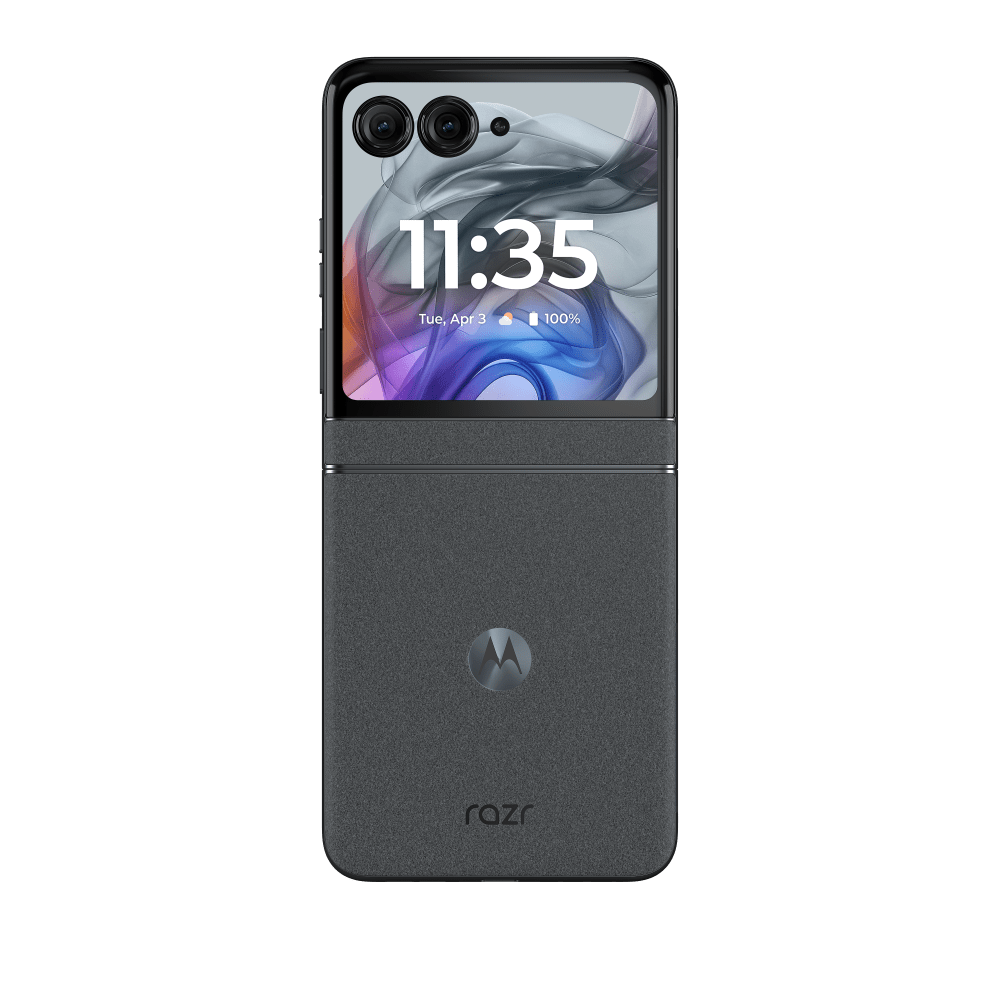
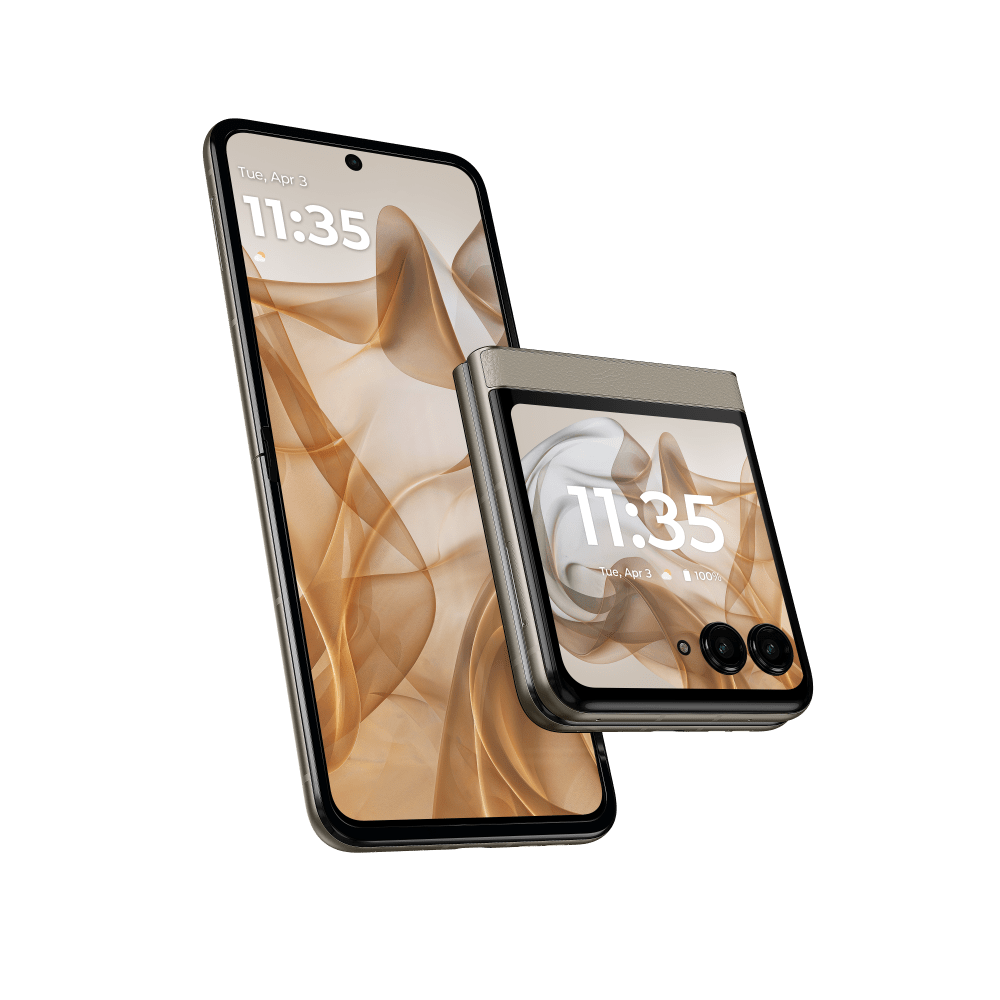
Specifications
- Display
- 6.9" LTPO foldable pOLED, 2640x1080, up to 120Hz, HDR10+, 3000 nits peak; 3.63" cover OLED, 1056x1066, up to 90Hz, 1700 nits peak
- Chipset
- MediaTek Dimensity 7300X (4 nm)
- RAM
- 8GB
- Extended RAM
- RAM Boost 3.0 (virtual extension)
- Storage
- 256GB
- Rear Camera
- 50MP main (f/1.7, OIS) + 13MP ultrawide/macro (120° field of view)
- Front Camera
- 32MP (inner display); cover display uses the rear cameras
- Battery
- 4,200 mAh, 33W wired
- OS
- Android 14, 3 OS upgrades and 4 years of security updates
- Weight
- Around 188 g
- Dimensions
- Open 73.99 x 171.30 x 7.25 mm; closed 73.99 x 88.08 x 15.85 mm
- Water Resistance
- IPX8
- Build
- Corning Gorilla Glass Victus front, vegan leather back, 6000-series aluminium frame
- Connectivity
- 5G, Wi-Fi 6/6E, Bluetooth 5.4, NFC, eSIM + physical SIM
The Motorola Razr 50 is the more affordable half of Motorola's 2024 flip-phone pair. It keeps the part that matters most to many buyers, a large folding inner screen and a cover display big enough to be useful, while trimming the processor, camera hardware and charging speed compared with the Razr 50 Ultra. This review is based on the published specifications and manufacturer information. It explains what the phone offers, where it saves money and who is likely to be happy with those choices.
Where it fits
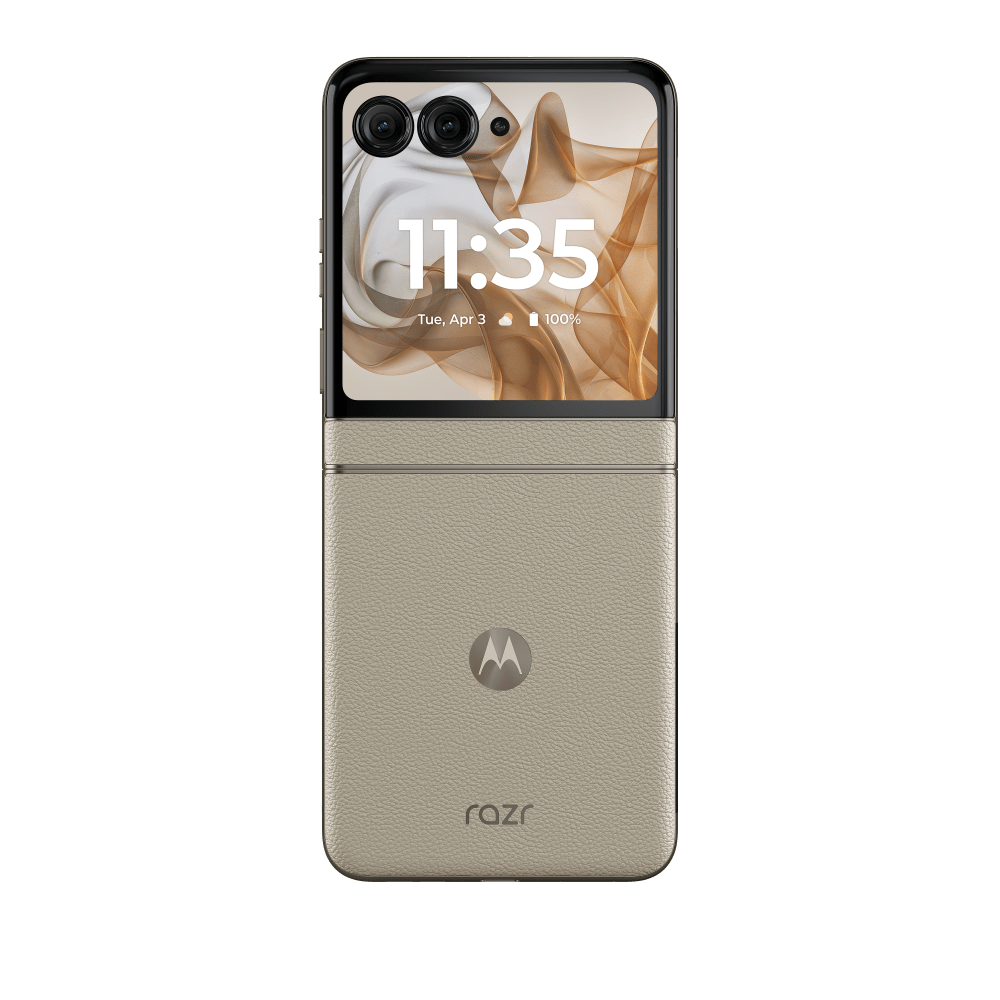
Flip phones used to be a niche for people who paid a premium for novelty. Motorola's approach with the Razr 50 is to make the format a little less exotic: a 6.9-inch folding display, IPX8 water protection, a recognisable design and a three-colour palette of Spritz Orange, Beach Sand and Koala Grey. The Indian product page lists one configuration, 8GB of RAM with 256GB of storage, and the box includes a protective cover, a 33W charger and a USB cable.
Within Motorola's own range the phone is the entry point to the Razr line. Above it sits the Razr 50 Ultra, and the next generation added the Razr 60 and the Razr Ultra 2025. If you want a flip phone without the highest price tag, this is the model to study, but it is also worth checking the newer generation if the price difference is small.
Design and displays
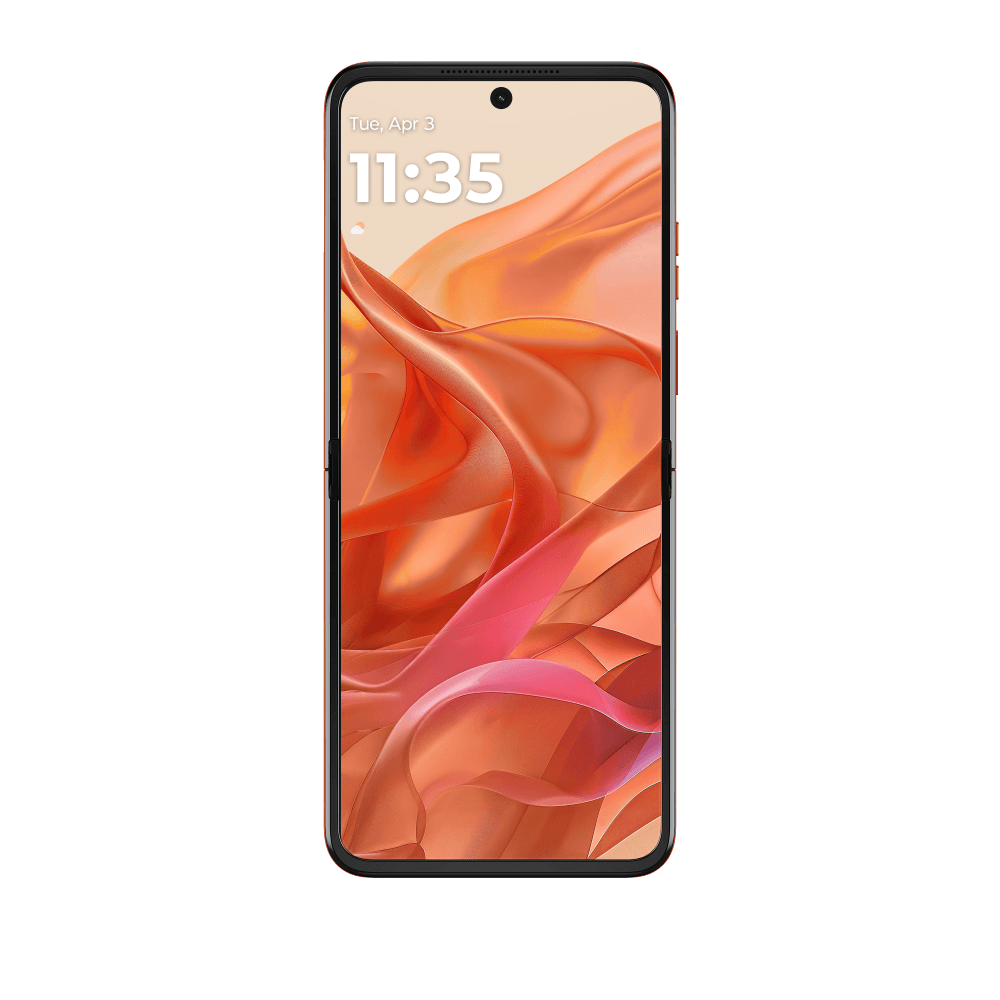
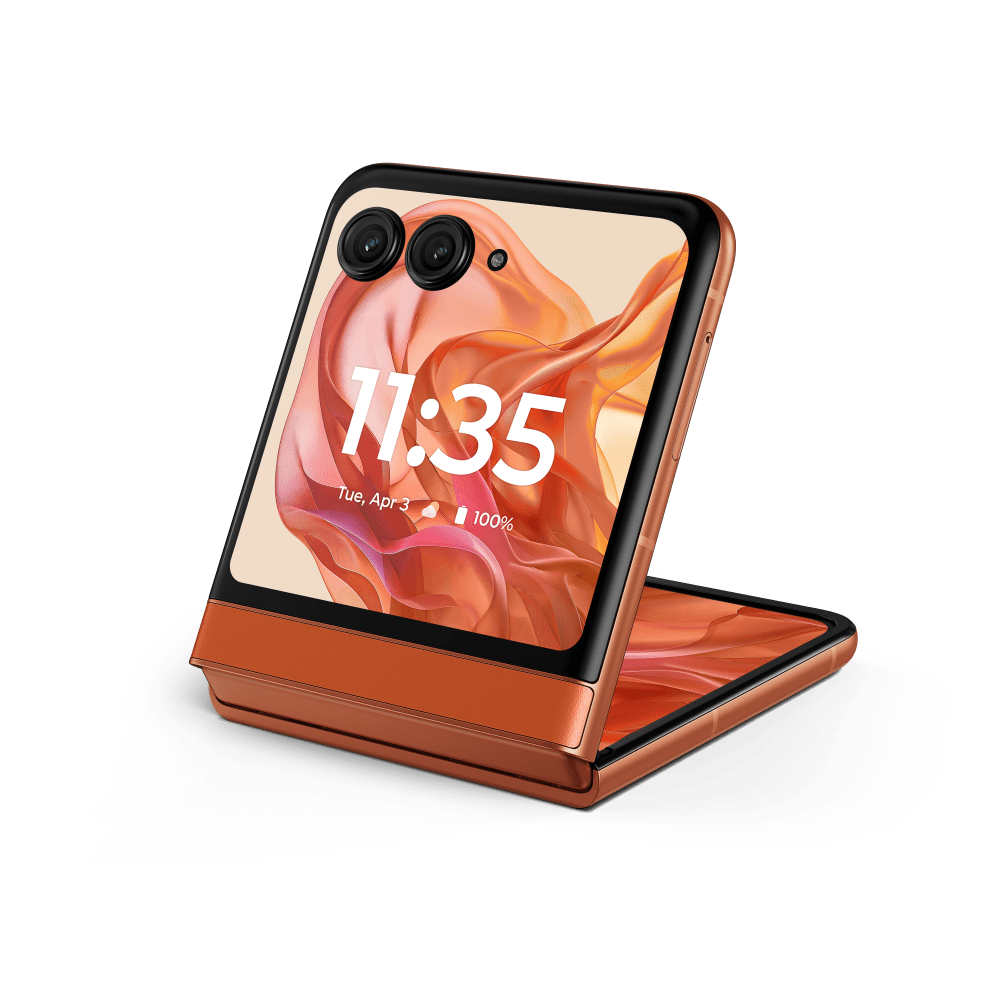
Open, the phone measures 73.99 x 171.30 x 7.25 mm; closed it is 88.08 mm tall and 15.85 mm thick, and the listed weight is around 188 g. The front uses Corning Gorilla Glass Victus, the frame is 6000-series aluminium and the back is vegan leather. That material choice helps grip and keeps the device from feeling slippery, which matters on a phone that is tall when unfolded.
The inner display is a 6.9-inch LTPO foldable pOLED with 2640 x 1080 pixels (413 ppi), HDR10+, 10-bit colour and a refresh rate of up to 120Hz. Motorola states a peak brightness of 3000 nits. Compared with the Ultra's 165Hz panel, the difference is noticeable only if you are particular about scrolling smoothness; for most daily tasks 120Hz is smooth.
The cover screen is a 3.63-inch flexible AMOLED with 1056 x 1066 pixels (413 ppi), HDR10 support for Amazon video, up to 90Hz and 1700 nits. It uses an LTPS backplane rather than the LTPO type found on the Ultra, so the refresh rate does not scale across as wide a range. It is smaller than the Ultra's cover display, but still large enough for widgets, notifications, a camera viewfinder and quick app use. The cover area hosts two cameras and is the display you will look at most often.
Performance and software
The processor is the MediaTek Dimensity 7300X, built on a 4 nm process with four Cortex-A78 cores at 2.5 GHz, four Cortex-A55 cores at 2.0 GHz and a Mali-G615 MC2 graphics unit. It is an upper mid-range chip: capable for social apps, streaming, navigation and casual games, but not a match for the Snapdragon 8s Gen 3 in the Ultra for heavy 3D titles. Memory is 8GB with RAM Boost 3.0, a software feature that uses storage as virtual memory; the physical figure is 8GB. Storage is 256GB and cannot be expanded.
The phone runs Android 14 and Motorola lists three OS upgrades and four years of security updates, a clearly stated commitment that is better than many phones at this level. Motorola's interface adds gestures such as the wrist-twist camera launch and Flip for Do Not Disturb, plus the Moto Secure privacy toolkit and ThinkShield for mobile. Connectivity covers 5G, Wi-Fi 6 and 6E, Bluetooth 5.4, NFC, GPS with several satellite systems, and eSIM plus a physical SIM. There is no headphone jack, and dual stereo speakers with Dolby Atmos make up the audio side.
Camera
The rear camera system pairs a 50MP main sensor (f/1.7, optical stabilisation, quad-pixel binning to 12.6MP) with a 13MP ultrawide that doubles as a macro camera and has a 120-degree field of view. This is the reverse of the Ultra's choice: the Razr 50 offers a wide-angle lens, but no telephoto. For travel, landscapes, interiors and group photos that is arguably the more useful second lens, while the Ultra's 2x telephoto helps with portraits.
The inner selfie camera has 32MP (binning to 8MP), and the cover screen can be used as a viewfinder for the rear cameras. Video is listed at up to 4K at 30 fps on the rear cameras and 4K at 30 fps for the selfie camera, with Full HD at 60 fps as an alternative. There is no 4K 60 fps option on this model, which is something to keep in mind if you shoot a lot of video.
Battery and charging
The Razr 50 carries a 4,200 mAh battery, slightly larger than the Ultra's 4,000 mAh cell, and charges at up to 33W with the charger included in the box. A smaller cover screen and a lower-refresh inner display may help efficiency, although real-world endurance depends on use and we do not quote any battery-life figure. The specification lists only wired charging; no wireless charging is mentioned on the page, so buyers who depend on it should check the retailer's description.
A word on everyday use of the cover display. Because the outer screen is smaller than the one on the Ultra, apps that are not designed for a nearly square canvas can feel cramped, and typing on it is best kept to short replies. Most owners will treat it as a smart glance screen: check the time, dismiss a notification, start a timer, pick a song or frame a selfie with the main camera. That is a perfectly sensible way to use a flip phone, and it also means the large inner display stays closed and protected for much of the day.
Who it is for
- First-time foldable buyers who want the flip experience without paying for the top model.
- Photographers who prefer wide angles to telephoto and appreciate a macro-capable second lens.
- Users who care about software support, thanks to the stated three OS upgrades and four years of security updates.
- Style-minded owners who like the vegan-leather back and the colour options.
Compromises to consider
- The Dimensity 7300X is slower than the chip in the Ultra and will matter in demanding games.
- The cover display is smaller, slower (90Hz) and dimmer (1700 nits) than the Ultra's.
- Only 8GB of RAM and 256GB of storage, with no expansion slot.
- No telephoto lens, no 4K 60 fps video and no stated wireless charging.
- Like every foldable, the inner screen shows a crease and the hinge needs careful handling.
To see how it stacks up against other devices, you can open the comparison with the Razr Ultra 2025 or look at a conventional mid-range option such as the Moto G35. The site's rankings give a wider view of where the phone lands among current models.
Where it ranks
Compare Motorola Razr 50 with similar devices
More from Motorola
Frequently asked questions
When was the Motorola Razr 50 released?
The manufacturer’s release date for the Motorola Razr 50 is not stated in the information we have.
What are the main specs of the Motorola Razr 50?
Headline figures for the Motorola Razr 50: Battery: 4,200 mAh, Refresh rate: 120 Hz, Main camera: 50 MP, RAM: 8 GB. The full specification table is further up this page.
Is the Motorola Razr 50 worth buying?
That depends on your priorities. Use the editorial review on this page for our view, check the rankings above to see where the device stands on battery, display and camera, and compare it directly with similar models before you decide.


