Phones
Motorola Moto G35
Motorola's budget 5G phone offers a 6.72-inch 120 Hz Full HD+ LCD, a 50 MP main camera, a 5,000 mAh battery, stereo speakers and a headphone jack, but no NFC and only 18 W charging.
Key figures at a glance
Gallery
Specifications
- Display
- 6.72" LTPS LCD, 2400x1080, 120Hz, 240Hz touch sampling, Gorilla Glass 3
- Chipset
- UNISOC T760 (6nm), 4x Cortex-A76 @ 2.2GHz + 4x Cortex-A55 @ 2.0GHz, Mali-G57 MC4
- RAM
- 8GB
- Extended RAM
- RAM Boost supported (uses storage as virtual memory)
- Storage
- 128GB (UFS 2.2), microSD up to 1TB (hybrid slot)
- Rear Camera
- 50MP main (f/1.8, Quad Pixel, PDAF) + 8MP ultrawide (f/2.0, 120.2 degrees)
- Front Camera
- 16MP (f/2.4)
- Battery
- 5000 mAh, 18W wired (20W charger in box)
- OS
- Android 14 (1 OS update, 2 years of security updates)
- Weight
- Around 185 g
- Dimensions
- 166.29 x 75.98 x 7.79 mm
- Water Resistance
- IP52
- Network
- 5G (12 bands), 4G, 3G, 2G
- Connectivity
- Wi-Fi 5 (802.11ac), Bluetooth 5.0, GPS, no NFC
- Audio
- Stereo speakers, Dolby Atmos, 3.5mm headphone jack, FM radio
- Security
- Side fingerprint reader, face unlock
- Colors
- Leaf Green, Midnight Black, Guava Red
The Moto G35 (sold as the moto g35 5G) is a budget 5G smartphone from Motorola with a 6.72-inch Full HD+ screen running at up to 120 Hz, a 50 MP main camera, a 5,000 mAh battery, stereo speakers and a headphone jack. It targets buyers who want modern basics, including 5G, a smooth display and a clean Android experience, without paying mid-range prices. This page is based on the published specifications and manufacturer information from Motorola's India product page and its product data. It describes where the phone sits in Motorola's lineup, what each specification means in practice, and where the compromises lie.
Place in the lineup
Motorola's Moto G family is its volume range, and the G35 sits in the affordable tier of it. Above the G series are the Edge phones, such as the Motorola Edge 60, which bring better processors, brighter displays and more advanced cameras, and the Razr foldables, for example the Motorola Razr 60. The page Moto G35 vs Edge 60 shows how large the step up is. If you are weighing other budget phones from different brands, the Tecno Spark Go 1 is an even lower-priced option with a smaller feature set.
Motorola's page does not state an official on-sale date, so the date listed for this model is the approximate date from our catalogue and not a confirmed launch day. Prices on Motorola's Indian store are in rupees and vary by configuration and offers; there is no US list price in the sources we used, so none is given here.
Design and build
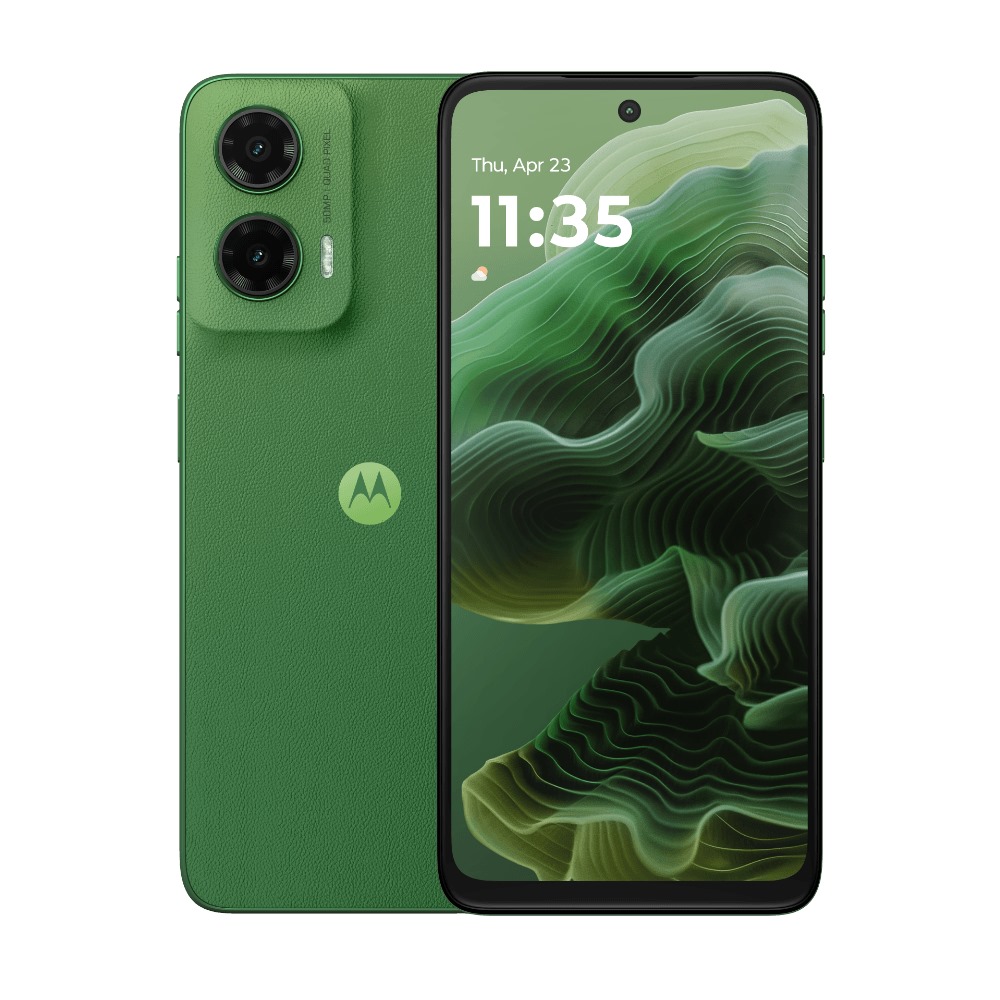
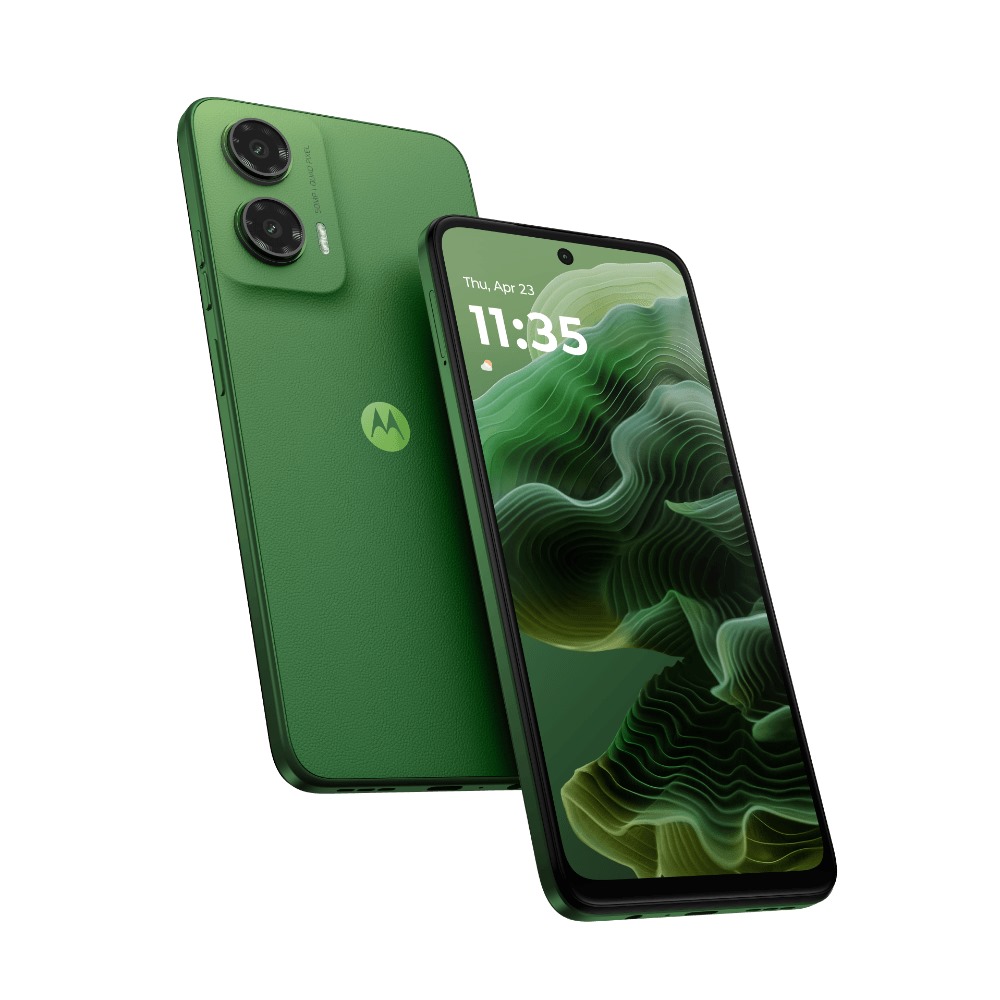
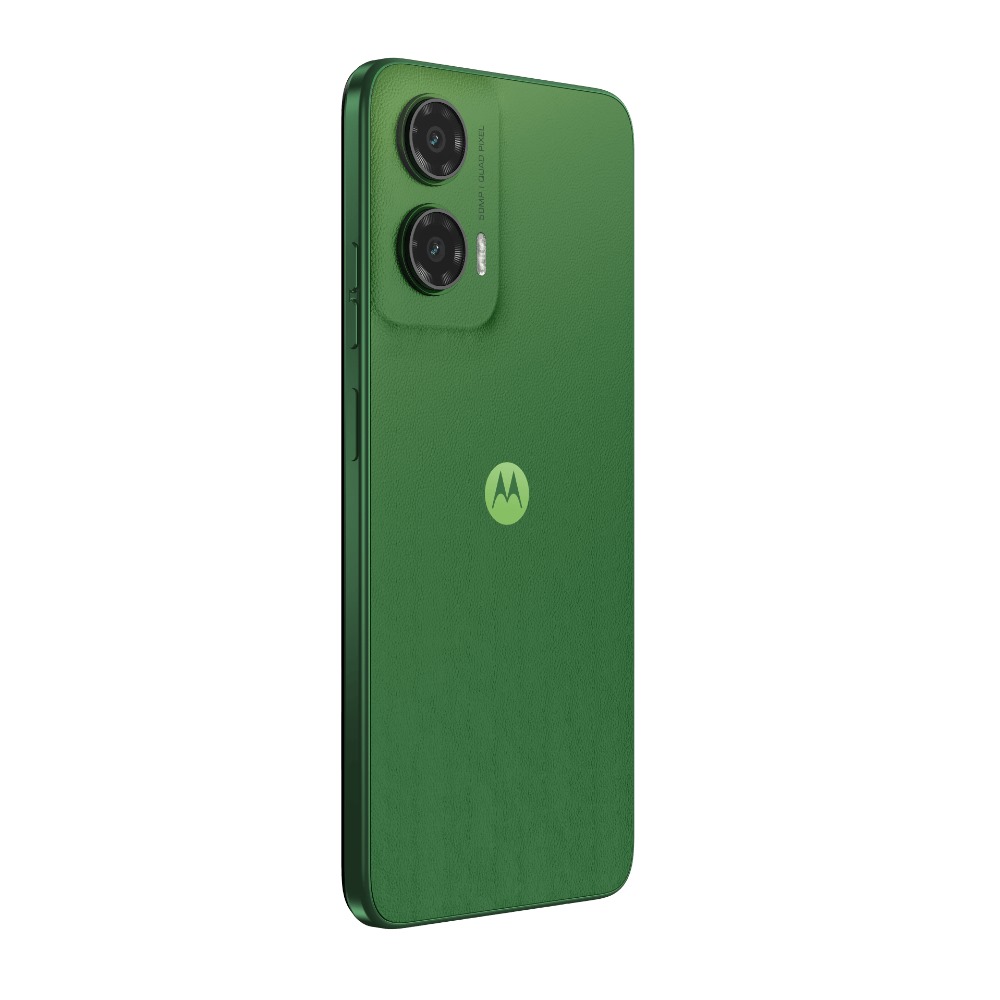
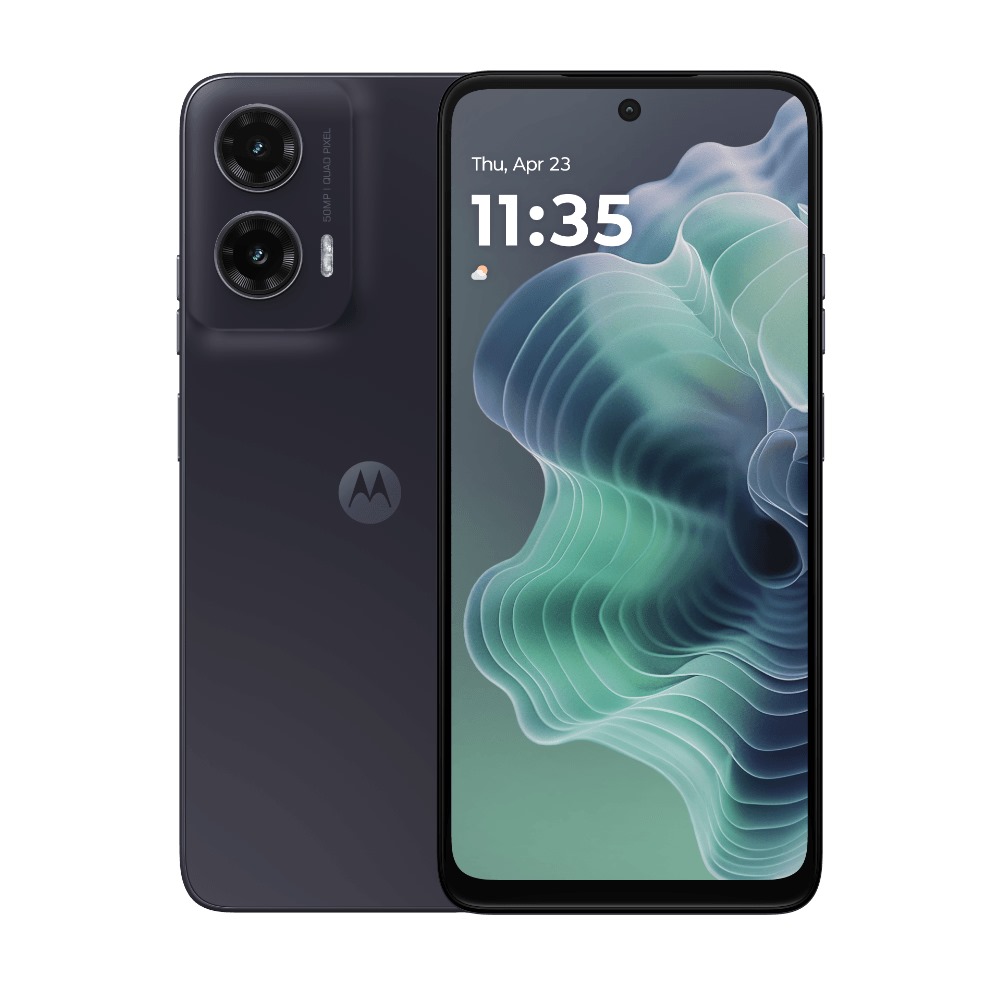
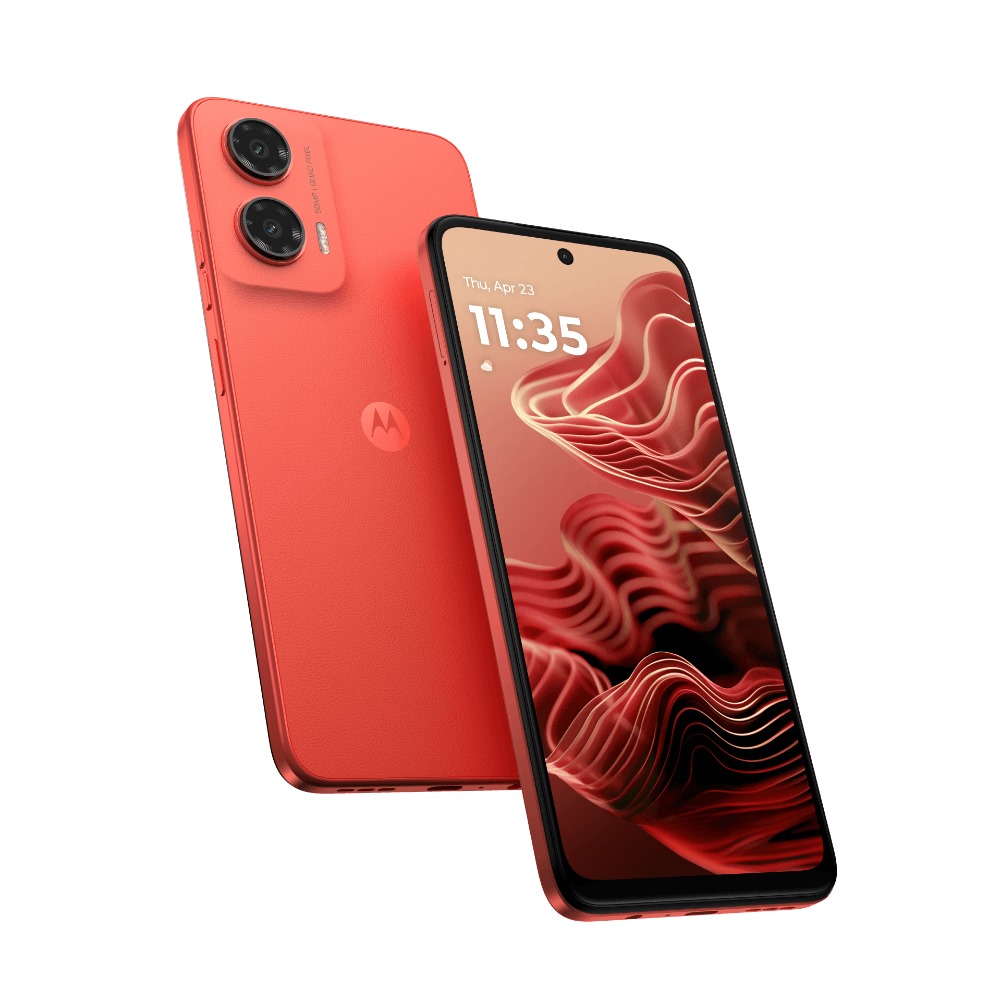
The Moto G35 measures 166.29 x 75.98 x 7.79 mm and weighs around 185 g. That is a slim and light profile for a phone with a 5,000 mAh battery. Motorola describes the body as 3D PMMA with a PU vegan leather finish. Three colours are offered: Leaf Green, Midnight Black and Guava Red. The official renders show a dual-lens camera module on the upper back, with a rounded rectangular island, and the Motorola batwing logo in the centre. The vegan leather finish gives a textured grip that feels different from the glossy backs common at this price. A side-mounted fingerprint reader handles biometric unlocking, and face unlock is available as well. The phone has an IP52 rating, which Motorola lists under water protection: it offers limited dust protection and resistance to vertically dripping water tilted up to 15 degrees. In practice that means light rain and splashes are fine, but this is not a waterproof phone.
Display
The screen is a 6.72-inch LTPS LCD with a Full HD+ resolution of 2400 x 1080 pixels, a 20:9 aspect ratio and a pixel density of 391 ppi. Motorola specifies a 120 Hz refresh rate, with an automatic mode that switches between 60 Hz and 120 Hz depending on content and settings. The touch sampling rate is given as 240 Hz, which helps with responsiveness in games. The panel is covered with Corning Gorilla Glass 3, a reasonable but not top-tier scratch protection, and the screen-to-body ratio is 87 percent. In marketing material, Motorola refers to a "Vision Booster" feature for outdoor visibility and describes a brightness of up to 1,000 nits; as with any manufacturer figure, treat that as a claim for peak conditions rather than a typical brightness. An LCD panel does not deliver the deep blacks of OLED, but a 120 Hz Full HD+ screen is an advantage at this level.
Performance, memory and software
The chipset is the UNISOC T760, built on a 6 nm process, with four Cortex-A76 cores at 2.2 GHz and four Cortex-A55 cores at 2.0 GHz, plus a Mali-G57 MC4 graphics unit. It is an everyday-performance processor suitable for messaging, social media, streaming and casual games; demanding 3D games will need lower settings. It supports 5G with 12 5G bands, according to Motorola, and its promotional material also mentions four-carrier aggregation and VoNR.
Memory options listed by Motorola's Indian store are 4 GB or 8 GB of RAM, both paired with 128 GB of UFS 2.2 storage. The product data describes the 4 GB variant as having "RAM Boost", which uses part of the storage as extra virtual memory. Motorola's footnote notes that extended RAM reduces available storage while in use, so the physical RAM figure remains the one that counts for multitasking. Storage can be expanded to 1 TB through a microSD card; note that this uses a hybrid SIM tray, so you choose between two Nano SIMs or one SIM plus a memory card.
The software is listed as Android 14 with one OS update and two years of security maintenance releases. Motorola's near-stock Android is typically light on preinstalled apps and includes gesture features such as quick capture, a fast flashlight and a three-finger screenshot, along with Moto Secure features including a secure folder and phishing detection. The update promise is short by current standards, and we have no information from the sources about exactly when updates will arrive in each market, so check this before buying if long-term support matters to you.
Camera
The rear camera system has two lenses. The main sensor is 50 MP with an f/1.8 aperture, Quad Pixel technology (pixel binning, which combines four neighbouring pixels to gather more light) and phase-detection autofocus. The second lens is an 8 MP ultra-wide with an f/2.0 aperture and a 120.2-degree field of view, with fixed focus. There is a single LED flash. Rear video goes up to 4K at 30 fps from the main camera, while the ultra-wide records up to Full HD at 30 fps. Software features include Night Vision, Portrait, Pro mode with long exposure, RAW photo output, high-resolution digital zoom up to 6x and Google Lens integration. The front camera is 16 MP with an f/2.4 aperture, recording at 1080p and 30 fps. The 50 MP main camera is the interesting part: Motorola claims four times better low-light sensitivity from Quad Pixel binning. As usual, that is a manufacturer claim, and image quality ultimately depends on processing, which the data cannot show. The ultra-wide lens is basic, and there is no telephoto or macro camera listed.
Battery, charging and connectivity
The battery is 5,000 mAh. Charging is rated at 18 W with QC and PD support, and the box includes a 20 W charger and a USB cable, according to Motorola's product data. This is slower than many modern mid-range phones, but the large battery and efficient screen should still deliver a full day for most users. The port is USB-C running at USB 2.0 speeds, and a 3.5 mm headphone jack is included, which is increasingly rare. The phone has stereo speakers with Dolby Atmos support, an FM radio and Google Assistant voice control.
Connectivity includes Wi-Fi 802.11 a/b/g/n/ac on 2.4 GHz and 5 GHz, Bluetooth 5.0 and GPS with A-GPS, GLONASS, Galileo and QZSS. NFC is not supported, which matters if you rely on contactless payments, as it rules out tap-to-pay in most markets. The phone also lacks Wi-Fi 6.
Who it is for, and the compromises
The Moto G35 suits buyers who want a reliable first 5G phone with a smooth 120 Hz Full HD+ display, long battery life, a headphone jack, expandable storage and a clean software experience. Its main strengths are the display refresh rate, the 50 MP main camera, the large battery and the build, which is slimmer and lighter than its battery size suggests.
The compromises are the absence of NFC, the modest 18 W charging, the LCD panel, the short update commitment, an entry-level ultra-wide camera and a processor aimed at everyday tasks rather than gaming. If NFC payments or faster performance are priorities, consider stepping up the range; our rankings and compare pages help you see where the Moto G35 sits against other devices.
Where it ranks
Compare Motorola Moto G35 with similar devices
More from Motorola
Frequently asked questions
When was the Motorola Moto G35 released?
The Motorola Moto G35 was released on 2024-12-01, according to the manufacturer’s published information.
What are the main specs of the Motorola Moto G35?
Headline figures for the Motorola Moto G35: Battery: 5,000 mAh, Refresh rate: 240 Hz, Main camera: 50 MP, RAM: 8 GB. The full specification table is further up this page.
Is the Motorola Moto G35 worth buying?
That depends on your priorities. Use the editorial review on this page for our view, check the rankings above to see where the device stands on battery, display and camera, and compare it directly with similar models before you decide.


