Phones
Motorola Moto G04
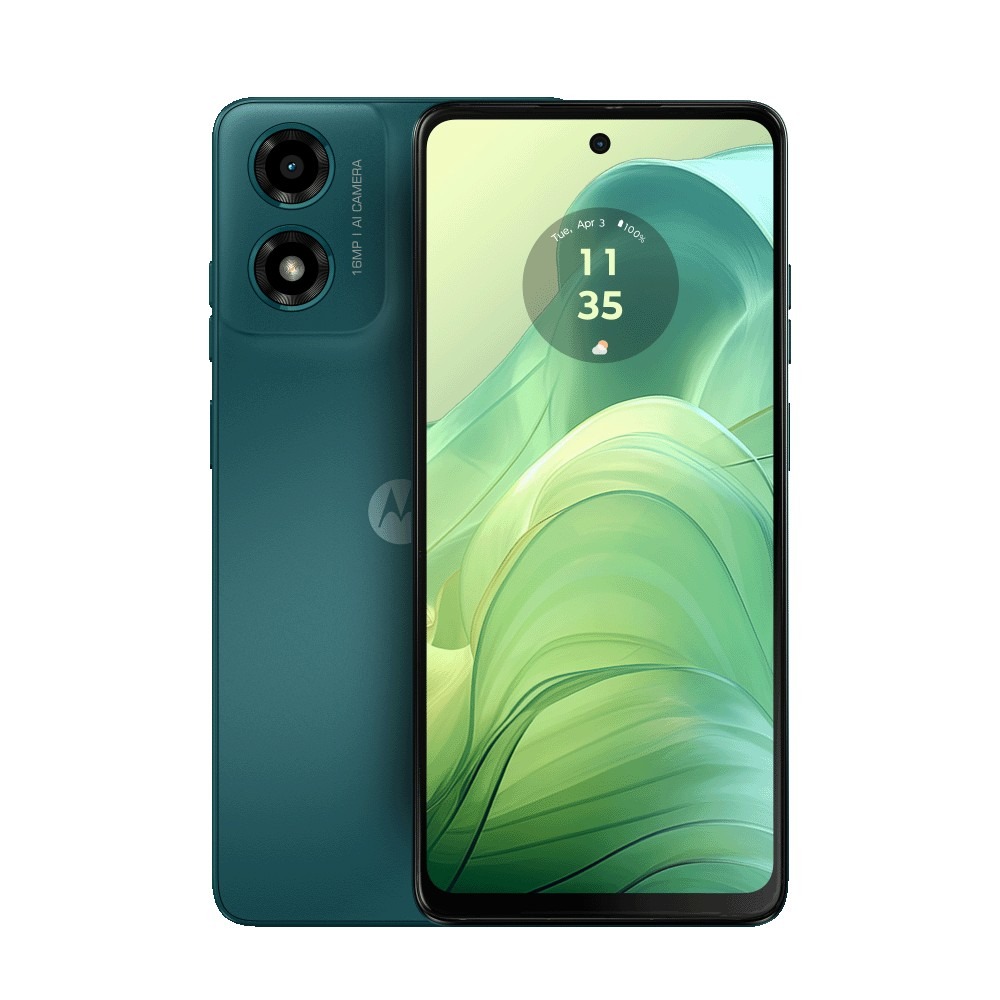
Motorola's entry-level Moto G04 offers a 6.56-inch 90Hz screen, a UNISOC T606 chip, a 16MP camera and a 5000 mAh battery on Android 14.
Key figures at a glance
Gallery
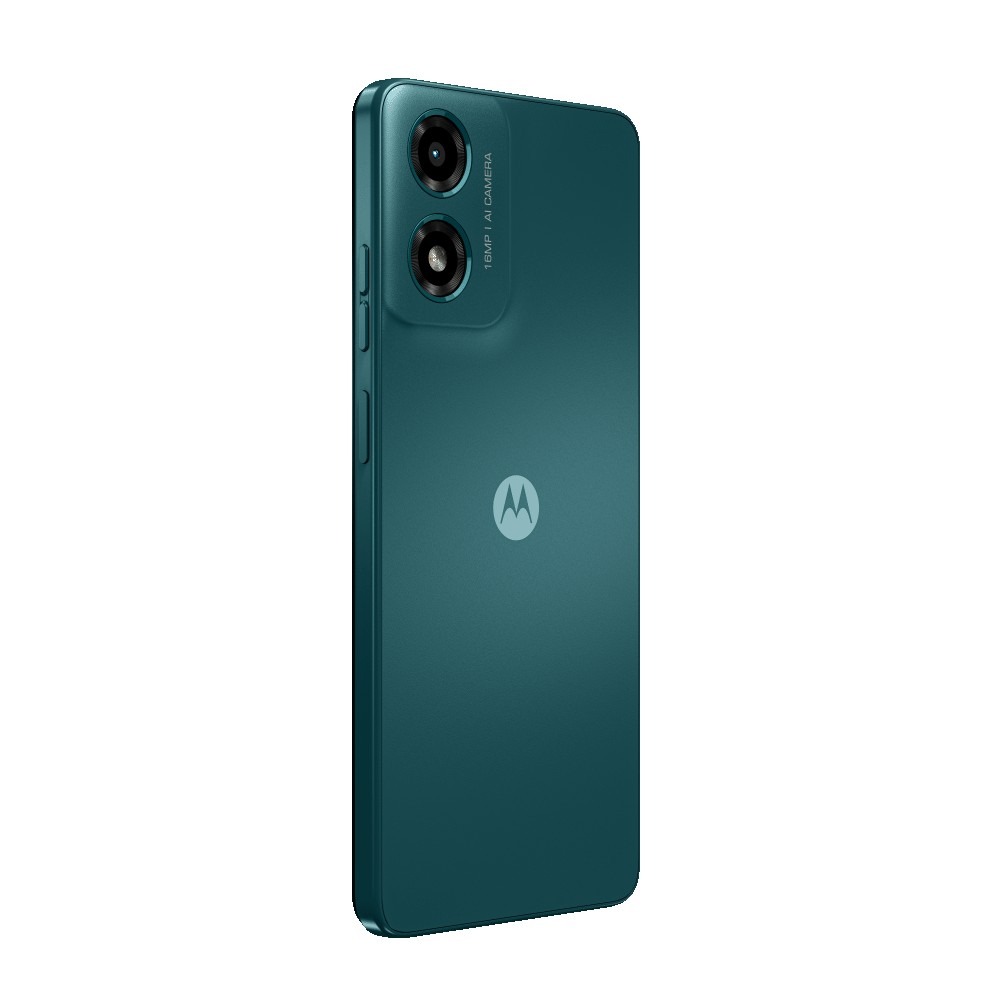
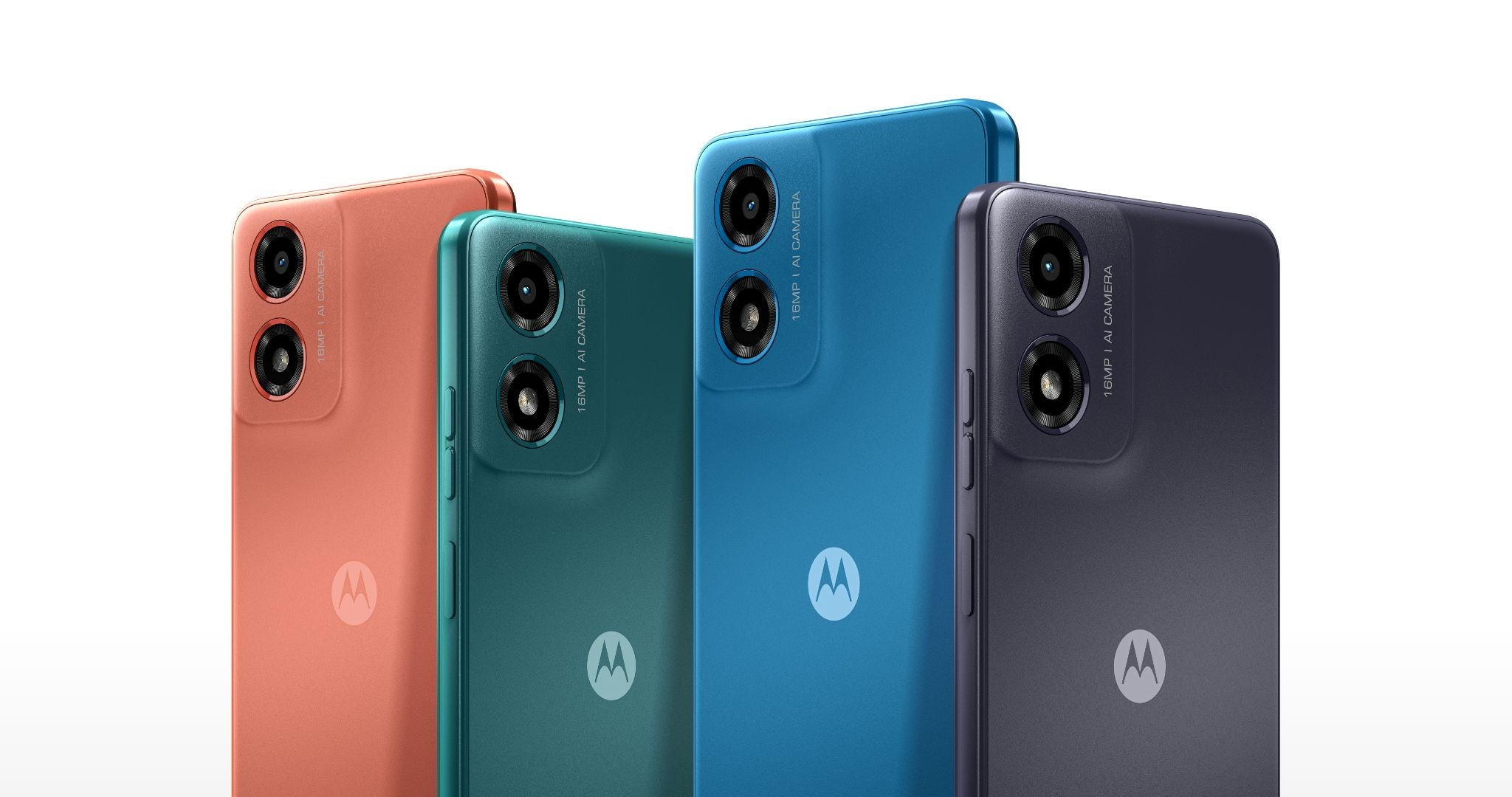
Specifications
- Display
- 6.56" IPS LCD, HD+ 1612x720, 269 ppi, 90Hz, 20:9
- Chipset
- UNISOC T606 (2x Cortex-A75 + 6x Cortex-A55, up to 1.6GHz), Mali-G57 MP1 GPU
- RAM
- 8GB
- RAM Boost (virtual)
- Up to 16GB with RAM Boost on the 8GB model (up to 8GB on the 4GB model)
- Storage
- 64GB / 128GB, UFS 2.2, microSD up to 1TB
- Rear Camera
- 16MP main (f/2.2, PDAF), FHD 30fps video
- Front Camera
- 5MP (f/2.2)
- Battery
- 5000 mAh, 15W charging capable (10W charger in the box in India)
- OS
- Android 14 (no OS upgrade, 2 years of security patches stated)
- Weight
- 178.8 g
- Dimensions
- 163.49 x 74.53 x 7.99 mm
- Water Resistance
- Water-repellent design (no IP rating stated)
- Body
- PMMA
- Connectivity
- 4G LTE, Wi-Fi 802.11 a/b/g/n/ac, Bluetooth 5.0, dual nano SIM + microSD
- Audio
- Single speaker with Dolby Atmos, 3.5mm headset jack, FM radio
- Security
- Side fingerprint reader, face unlock
The Moto G04 is one of the most affordable phones in Motorola's G series: a 6.56-inch screen with a 90Hz refresh option, a UNISOC T606 processor, a single 16MP rear camera and a 5000 mAh battery, running Android 14. This page is based on the published specifications and manufacturer information. It explains where the phone sits in the Moto G family, what the hardware is designed to do, which parts of the spec sheet deserve a closer look, and who is likely to be happy with a phone that makes clear choices about what to leave out.
Place in the Moto G lineup
Motorola's G series is built around a simple idea: give buyers a clean, recognisable phone at a modest price, with a few features that are usually reserved for more expensive models. The G04 sits at the bottom of that range. It does not try to compete with the faster chips and AMOLED panels of the mid-range. If you want a step up, the Moto G35 and the Moto G64 are the natural next stops, and you can see how the entry-level phone compares in Moto G04 vs Moto G35.
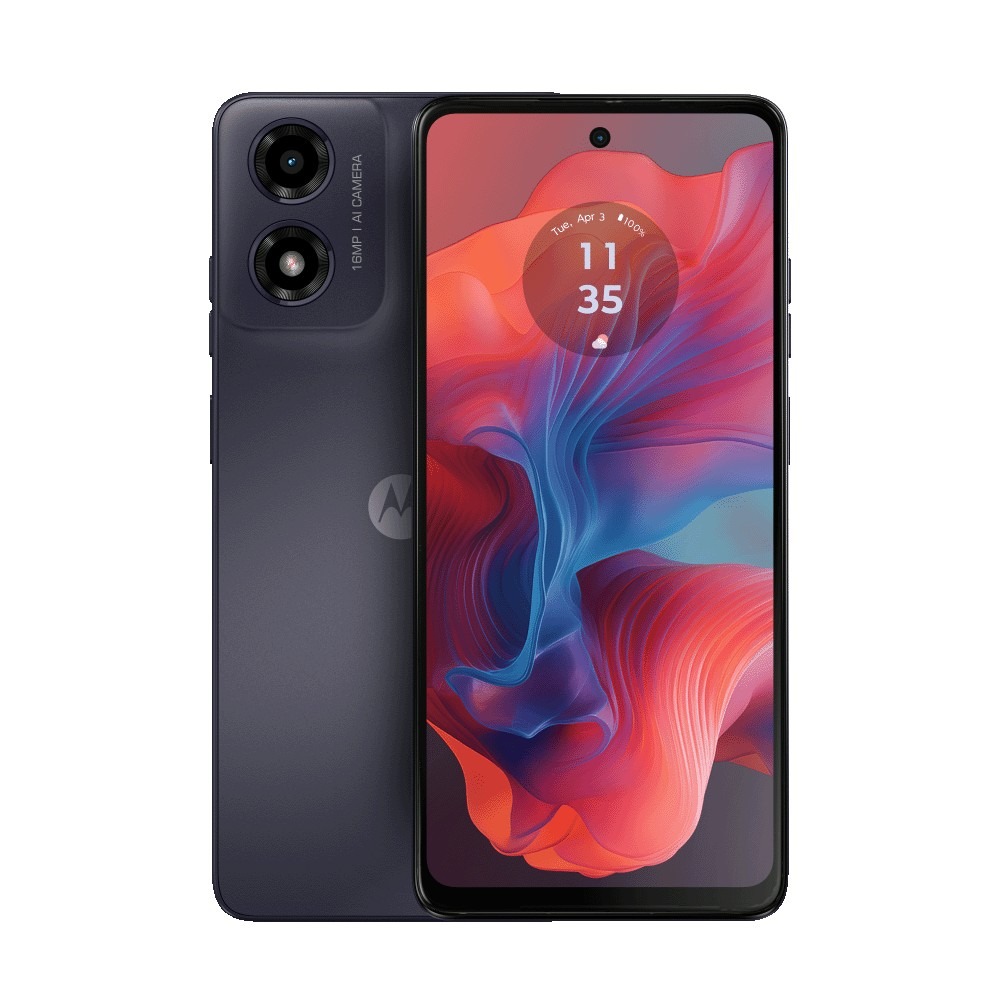
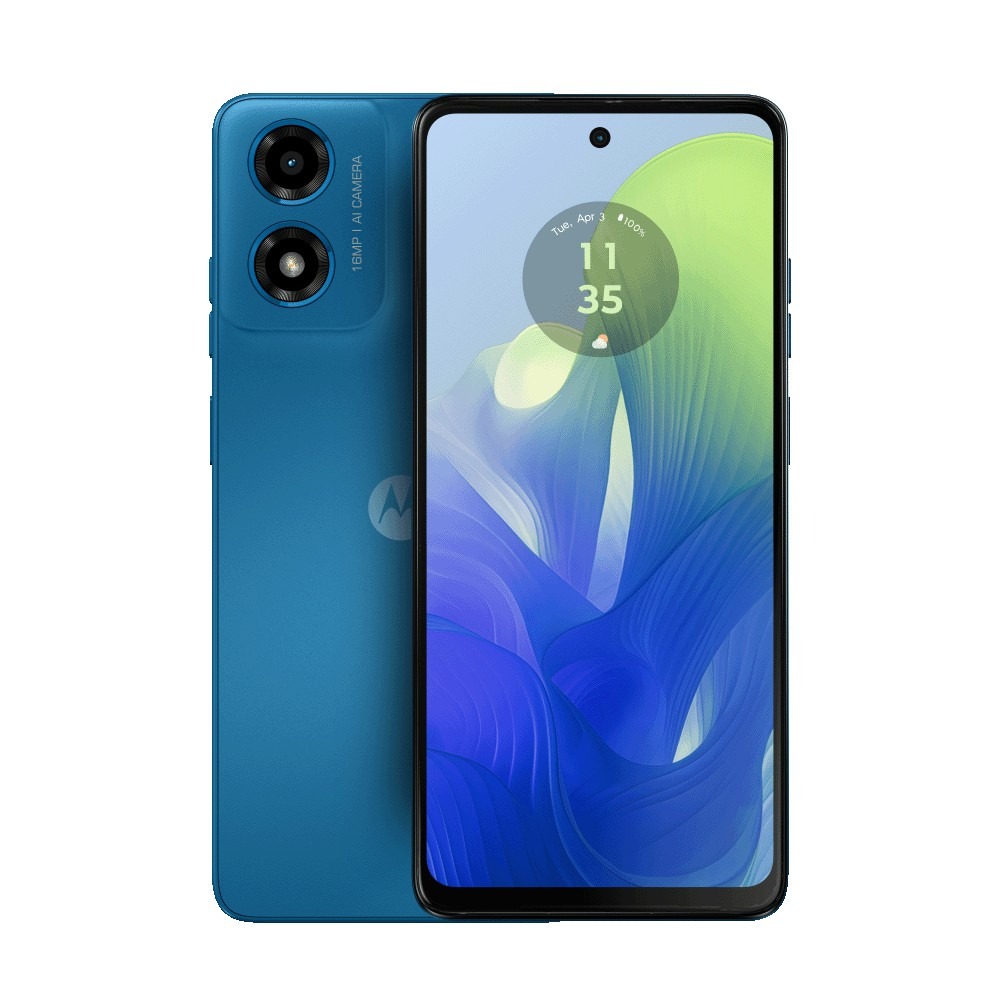
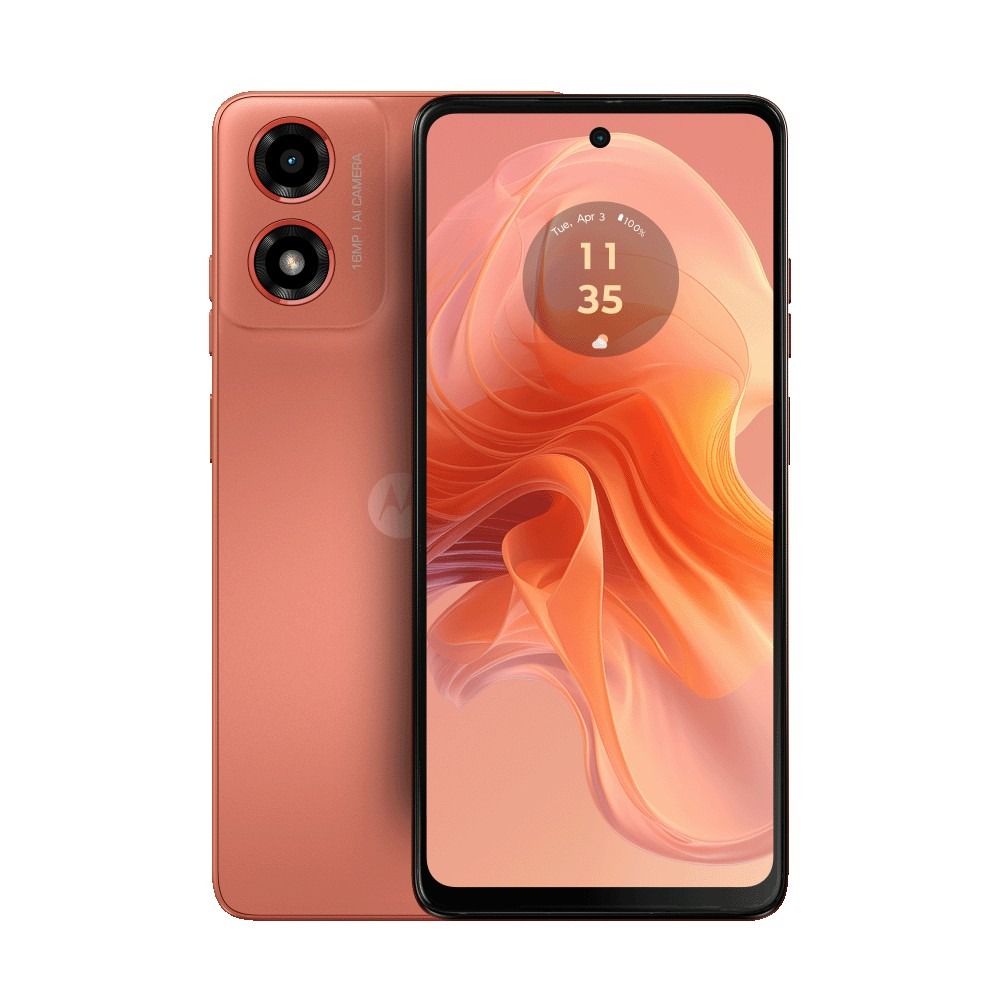
The product page used for this article is the Indian page, and it dates the model's release to 9 February 2024. Motorola lists the phone in four colours: Concord Black, Sea Green, Satin Blue and Sunrise Orange. No US list price is stated on the pages we relied on, so none is given here. Memory and storage come in two versions according to Motorola: 4GB of RAM with 64GB of storage, or 8GB of RAM with 128GB.
Design and display
The body measures 163.49 x 74.53 x 7.99 mm and weighs 178.8 g. Motorola gives the material as PMMA, a hard plastic, which is typical at this price and explains why the phone stays relatively light for its size. The back carries a raised, rounded camera module in the upper left corner, and the four colours are the main way the phone expresses personality.
The display is a 6.56-inch IPS LCD with a 20:9 aspect ratio and an HD+ resolution of 1612 x 720 pixels, which Motorola gives as 269 ppi. That is a modest sharpness figure, and text will look softer than on a full HD panel. What partly makes up for it is the refresh rate. In automatic mode the screen switches between 60Hz and 90Hz, and Motorola points out that the actual rate depends on the app and the settings. For scrolling through menus, social feeds and web pages, 90Hz makes the interface feel noticeably smoother than a plain 60Hz screen. Motorola also states an active-area ratio of 89.5 percent for the touch panel and about 85 percent for the whole body.
Water protection is limited. The company calls the phone water-repellent, and says in its own fine print that the design helps against accidental spills, splashes or light rain, that it is not waterproof, and that the effect can diminish over time. No IP rating is given, so the phone should not be treated as something to take swimming or to rinse under a tap.
Performance and software
The processor is the UNISOC T606, an octa-core chip with two Cortex-A75 cores and six Cortex-A55 cores running at up to 1.6GHz, plus a Mali-G57 MP1 graphics unit. This is a chip designed for light everyday work: messaging, calls, video streaming, maps, mobile banking and basic social media. Heavy 3D games and demanding multitasking will push it hard, and anyone who regularly edits video or plays recent titles at high settings should look at the Moto G85 or a similarly priced phone with a stronger chip.
Memory is where the specification needs careful reading. Motorola lists 4GB or 8GB of physical RAM and then adds a feature called RAM Boost, which can extend the figure to 8GB or 16GB. RAM Boost borrows space from internal storage and uses it as virtual memory. Motorola's own footnote says that it reduces the available storage while active and that it is switched on by default unless turned off. The sensible reading is that the physical memory is the real number, and that the extension is useful mainly to keep a few more apps alive in the background. Storage is UFS 2.2, with 64GB or 128GB built in, and a microSD card slot that Motorola says supports cards up to 1TB. The card sits in a separate tray next to two nano SIMs, so you do not have to choose between a second SIM and extra storage.
The phone ships with Android 14. The software support statement on the product page is brief and worth knowing before you buy: it lists no OS upgrade and two years of security maintenance releases. In plain terms, you should expect security patches for a limited time but no move to Android 15 or later. For a phone at this level that is not unusual, though buyers who plan to keep a phone for five years should weigh it carefully.
Camera
The camera setup is deliberately simple. The main sensor is a 16MP unit with an f/2.2 aperture, a 1.0 micrometre pixel size and phase-detection autofocus, and there is a single LED flash. There is no ultrawide camera and no depth sensor. Motorola's marketing refers to AI-powered automatic enhancements, and the shooting modes listed include photo, portrait, night vision and Google Lens integration. Video is recorded at up to full HD at 30 frames per second, with HD also available. There is no 4K video mode.
The front camera is a 5MP sensor (f/2.2) with face retouch and portrait modes. That is enough for video calls and casual selfies in good light. In dim rooms, expect the usual limitations of a small sensor with a modest lens: less detail and more noise. A phone with one rear camera also cannot switch to a wider view for group shots or buildings, so the occasional photo will require stepping back instead of tapping a button.
Battery, charging and connectivity
The battery is a 5000 mAh cell, large for a phone of this size. Motorola's page states a claimed 40 hours of battery life, with the footnote that all battery life claims are approximate and depend on the usage mix, network conditions and settings. This is a manufacturer claim and should be read as such. Charging is described as 15W capable at 5V and 3A over USB-C (USB 2.0), while the box in India includes a 10W charger. A 5000 mAh battery on a low-power chip with a 720p screen usually gives a comfortable day and often more, but a slow charger means a full charge takes a long time.
Connectivity is 4G only: the phone supports LTE, 3G and 2G bands listed by Motorola, and there is no 5G. Wi-Fi covers 802.11 a/b/g/n/ac on 2.4GHz and 5GHz, Bluetooth is version 5.0, and location services include GPS, A-GPS, GLONASS and Galileo. There is no mention of NFC on the page, so contactless payments by phone should not be assumed. In its favour, the G04 keeps a 3.5mm headphone jack, an FM radio and a side-mounted fingerprint reader alongside face unlock. There is a single speaker with Dolby Atmos processing, which means audio is mono; headphones are the better choice for music.
Who it is for
The Moto G04 suits buyers who want a reliable second phone, a first smartphone for a young user, a backup device, or a straightforward phone for calls, messages, maps and video in a market where 5G is not a priority. The large battery, the 90Hz screen, the headphone jack and the microSD slot are practical strengths that matter more in daily use than a benchmark number. It also makes sense for someone who values a light plastic body that does not shatter like glass.
It is less convincing for anyone who photographs often, who plays demanding games, or who expects the latest software features. If your budget allows, step up to the Moto G35 or look at the wider choice in our phone rankings.
Compromises to keep in mind
- HD+ LCD screen. The 90Hz refresh helps smoothness, but sharpness and contrast are below AMOLED rivals.
- Entry-level chip. The UNISOC T606 handles everyday tasks but is not built for sustained heavy loads.
- Software support. Motorola lists no OS upgrade and two years of security updates.
- Single rear camera. No ultrawide and no 4K video.
- No 5G. Connectivity stops at 4G LTE, with Bluetooth 5.0 and Wi-Fi 5.
- Plastic body, limited water protection. Water-repellent only, without an IP rating.
- Virtual RAM. RAM Boost trades storage for memory and should not be read as extra physical RAM.
Seen as a whole, the Moto G04 is a pragmatic, low-cost phone whose strengths are battery capacity, a smooth-feeling display and a few conveniences that are disappearing elsewhere. Its weaknesses are the ones its price predicts, and they are stated openly in Motorola's own specification pages.
Where it ranks
Compare Motorola Moto G04 with similar devices
More from Motorola
Frequently asked questions
When was the Motorola Moto G04 released?
The Motorola Moto G04 was released on 2024-02-09, according to the manufacturer’s published information.
What are the main specs of the Motorola Moto G04?
Headline figures for the Motorola Moto G04: Battery: 5,000 mAh, Refresh rate: 90 Hz, Main camera: 16 MP, RAM: 8 GB. The full specification table is further up this page.
Is the Motorola Moto G04 worth buying?
That depends on your priorities. Use the editorial review on this page for our view, check the rankings above to see where the device stands on battery, display and camera, and compare it directly with similar models before you decide.


