Phones
Apple iPhone Duo
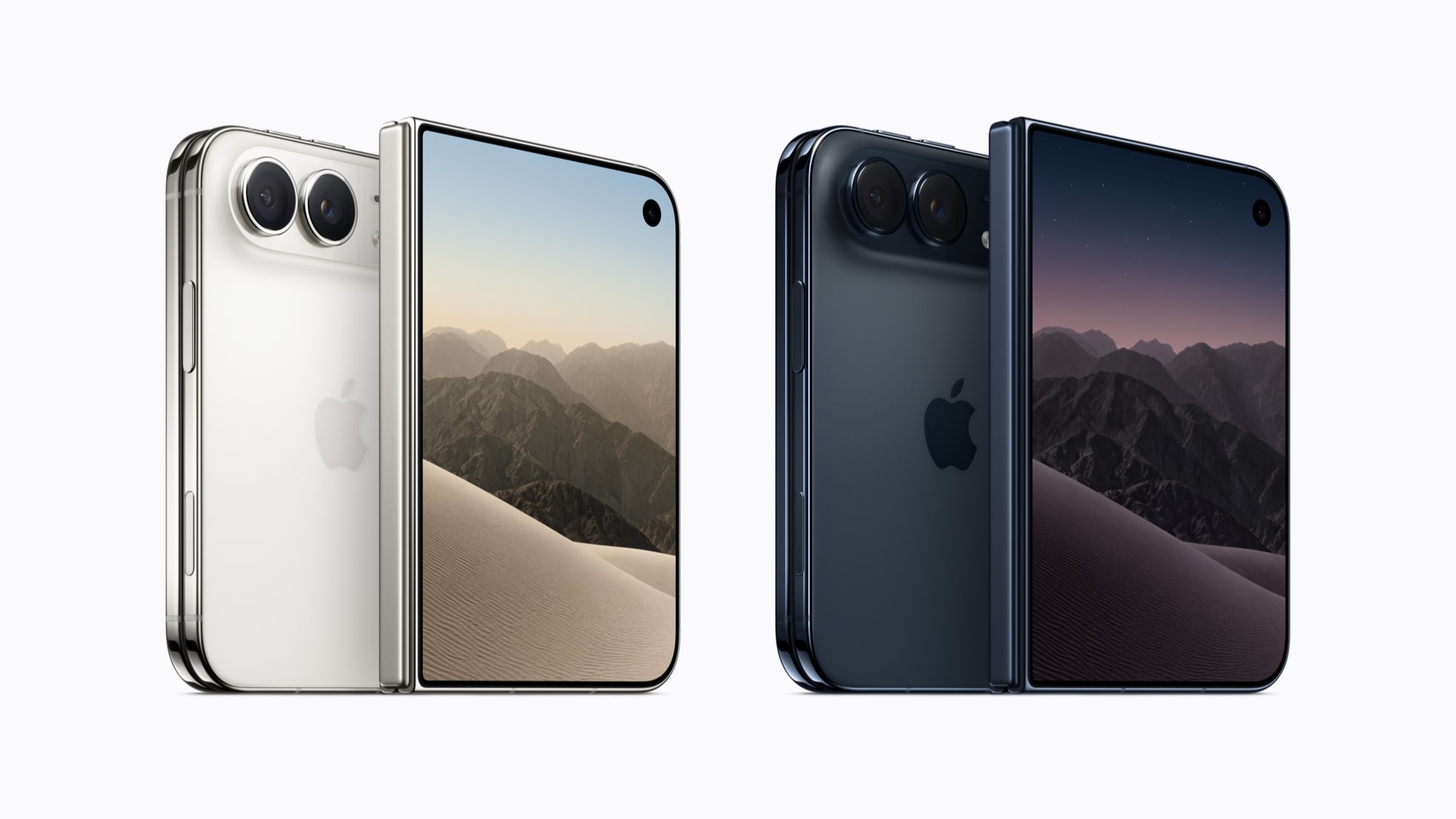
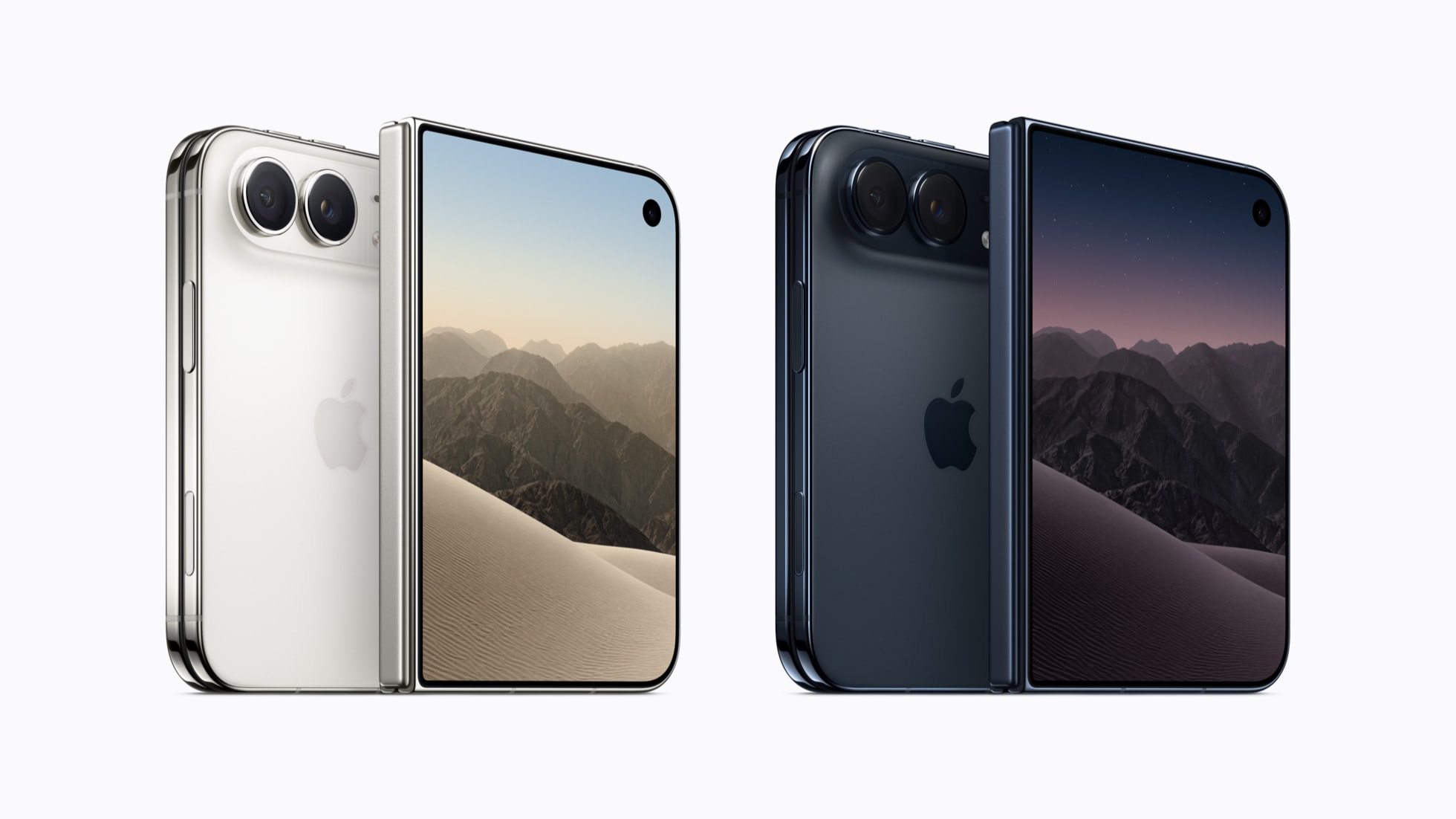
Apple's first foldable: a 7.6-inch inner display, a 5.4-inch outer display, grade 5 titanium and a dual-battery design, on sale from 23 October 2026.
Key figures at a glance
Gallery
Specifications
- Inner Display
- 7.6-inch Super Retina XDR (7.58 in measured as a rectangle), nano-texture finish, ProMotion, Always On
- Outer Display
- 5.4-inch Super Retina XDR (5.36 in measured), 90 percent of the screen area of iPhone 18 Pro
- Brightness
- 3000 nits peak outdoor brightness
- Chip
- A20 Pro (2 nm) with custom vapor chamber and dual display engine
- Rear Camera
- 48MP Fusion Main (24MP default, 2x optical-quality Telephoto) + 48MP Fusion Ultra Wide
- Front Camera
- Center Stage front camera on the outer display plus a FaceTime camera under the inner display
- Battery
- Dual battery: up to 31 h video (inner display), 44 h (outer display), 24 h usage; 50 percent in about 20 minutes
- Build
- Grade 5 titanium, Ceramic Shield 2 outer display, IP68
- Connectivity
- eSIM only worldwide, N1 (Wi-Fi 7, Bluetooth 6, Thread), C2 modem
- Storage
- 256 GB, 512 GB, 1 TB, 2 TB
- Colors
- Star white, night sky
- OS
- iOS 27.1
- Price
- From $1,999 in the U.S.; pre-order 16 Oct 2026, availability 23 Oct 2026
The iPhone Duo is Apple's first foldable iPhone. Apple introduced it on 9 September 2026 alongside the iPhone 18 Pro, but unlike those phones it goes on sale later: pre-orders begin on Friday 16 October and availability starts on Friday 23 October 2026, with 28 more countries following on 30 October. This page is built from Apple's launch press release. It is a description of announced hardware, not a review, and every performance and battery figure is Apple's own claim.
Two displays, one design
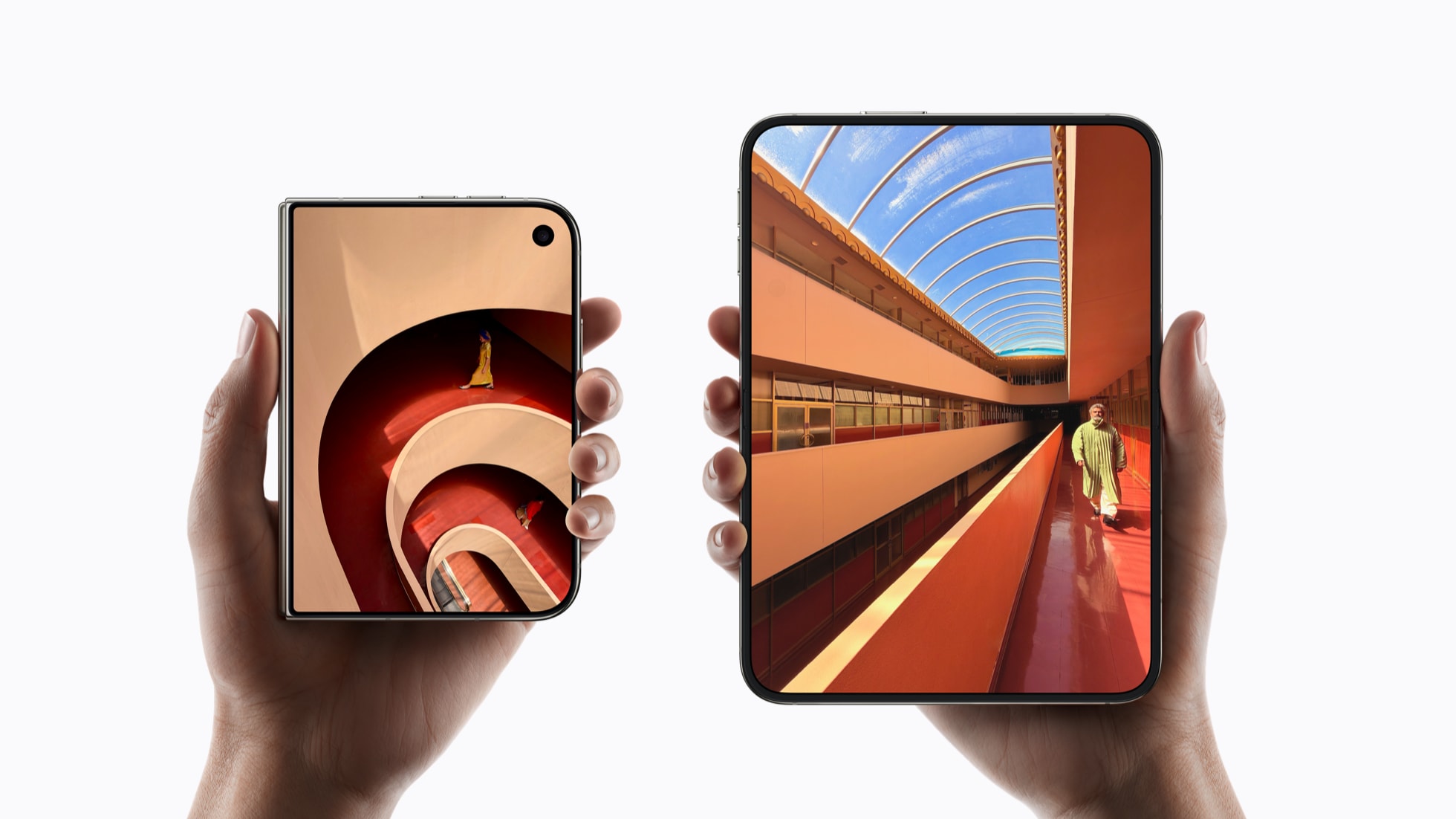
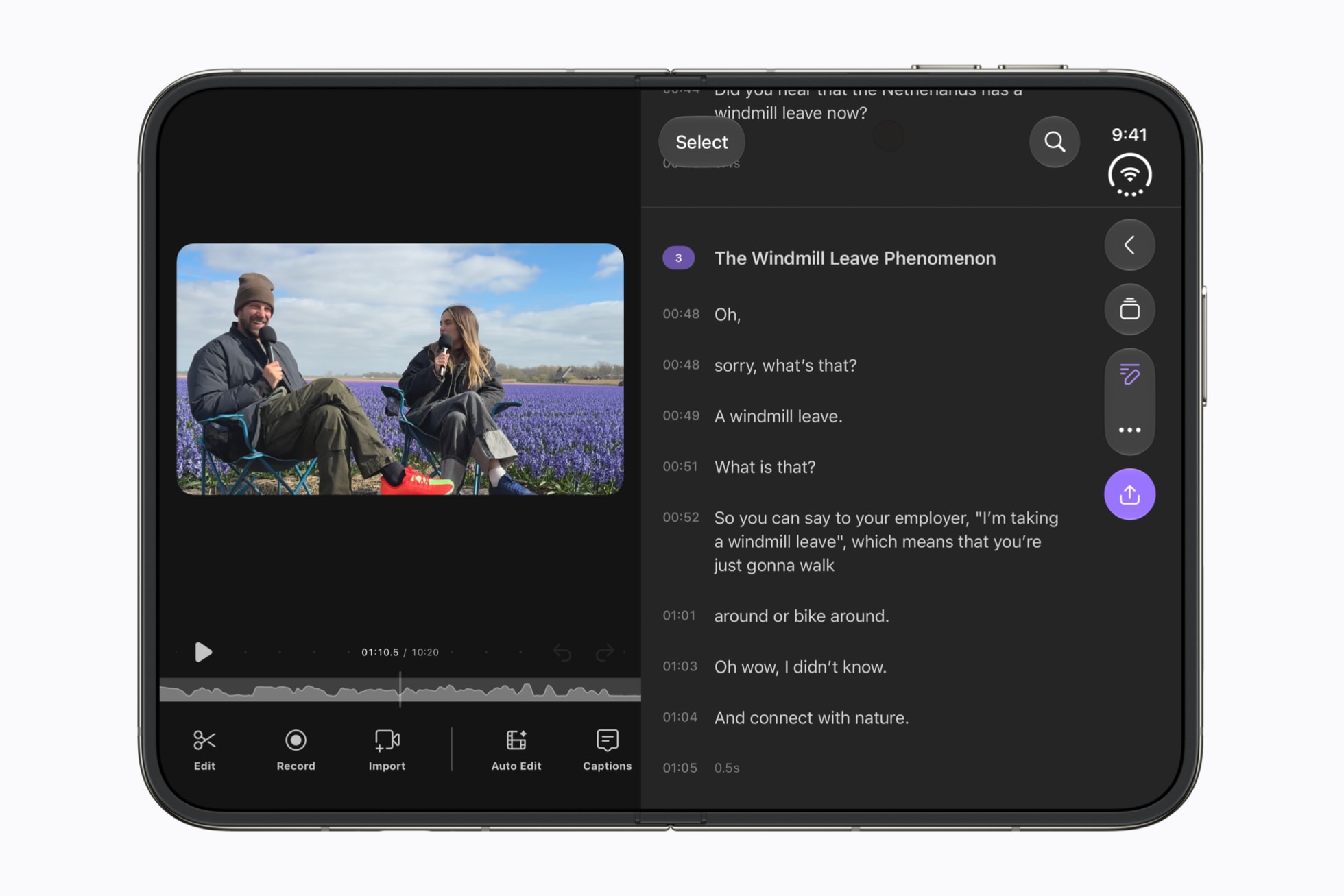
Opened, the iPhone Duo has a 7.6-inch inner Super Retina XDR display that Apple calls the largest ever on an iPhone, about 50 percent larger than the screen of the iPhone 18 Pro Max, and it is the thinnest iPhone ever made. Closed, it is roughly the size of a passport, with a 5.4-inch outer Super Retina XDR display that offers 90 percent of the screen area of the iPhone 18 Pro. Both displays share the same aspect ratio, so content scales proportionally and the experience feels continuous whether the phone is open or shut. Measured as a standard rectangle, the inner display is 7.58 inches and the outer one 5.36 inches; Apple notes that the visible area is smaller because of the rounded corners.
The inner display has a nano-texture finish that reduces glare and reflections and, in Apple's words, minimises the visibility of the crease and gives a matte surface that feels good to touch. Both displays have ProMotion, Always On and a peak outdoor brightness of 3000 nits. A new FaceTime camera sits beneath the inner display and stays hidden when not in use. Later in 2026 the phone is due to support Apple Pencil with USB-C on either display for notes, sketches and markup. Touch ID is built into the side button so that authentication works the same open or closed, and the phone can also be unlocked with an Apple Watch. Camera Control is present and launches the camera, including a new Siri Camera mode in which Siri sees what the user sees.
Built around a hinge
Apple puts a lot of weight on durability. The frame is grade 5 titanium with a mirror-polished finish, and the hinge cover is 3D printed with a contrasting micro-blasted finish. The hinge is engineered from more than 100 components; it supports the middle of the display so it lies flat when opened, and an integrated magnet array gives a secure closure. Internally, support ribs stiffen the structure and antenna splits with ceramic fibre inserts add rigidity. Ceramic Shield protects the back and Ceramic Shield 2 the outer display, which Apple says has three times better scratch resistance than the previous generation. The phone is rated IP68 under IEC standard 60529, tested to a maximum depth of six metres for up to 30 minutes, and Apple reminds users that resistance is not permanent and liquid damage is not covered by warranty.
The inner display has its own protection: a scratch-resistant coating and a nano-textured cover layer made of a custom polymer that Apple says is up to 40 percent stiffer than other materials used in the industry. High-strength glass sits above and below the folding panel, custom adhesives let the layers glide past one another like pages in a book to relieve bend stress, and a titanium plate at the bottom adds durability.
Cameras that use the fold
The rear system has a 48MP Fusion Main camera, which shoots at up to 48MP with zero shutter lag, defaults to 24MP for a good balance of quality and file size, and includes an optical-quality 2x Telephoto, so Apple likens it to two cameras in one. A large sensor, a fast aperture and sensor-shift optical stabilisation help in low light. A 48MP Fusion Ultra Wide, the same as on the iPhone 18 Pro models, adds wide views and macro photography. The Center Stage front camera can expand the view and rotate the frame to fit friends into a selfie and to shoot in any orientation. Photographic Styles with the new texture and grain controls are supported on the Ultra Wide, Main and Center Stage cameras. Video goes up to 4K at 120 fps in Dolby Vision on the Main camera, Cinematic effects can be applied after capture at up to 60 fps, and Time-lapse supports 4K Dolby Vision, with the phone propped up without a tripod.
The folding form enables features Apple says no other iPhone has. Smart Take uses on-device models on the A20 Pro to capture photos automatically when subjects pose. Duo Preview shows the live preview on the outer display so subjects can check framing, and it lets people take selfies with the higher-resolution rear cameras. Kid Cue plays Peanuts animations on the outer display to catch children's attention. In FaceTime, Dual Capture shares front and rear feeds at the same time, and Duo FaceTime lets someone next to you join the call on the outer display.
Software made for the fold
iOS 27 is tailored to the device. Lock Screen controls, the Dock and app navigation move to the side to save vertical space; opened, the phone shows two Home Screen pages with Today View on the left. The Dynamic Island is redrawn to sit vertically on the side of both displays. Split View arrives on iPhone for the first time, allowing two apps side by side, two windows of the same app such as Safari, and a conversation with Siri AI next to other content. StandBy works on either display even when the phone is not charging. Apple names Netflix, Zoom and Slack as third-party apps already using the fold, and the phone ships with iOS 27.1.
Performance and battery
The phone uses the A20 Pro built on a 2-nanometre process, with a chip package inspired by Apple's M-series and a custom vapor chamber. Apple claims up to 35 percent better sustained performance than the iPhone 17 Pro, a CPU up to 20 percent faster than the A19 Pro, a GPU up to 40 percent faster and a Dual 16-core Neural Engine with twice the compute. A new display engine drives both displays at once.
Instead of one large battery, the iPhone Duo has one on each side, and Apple's silicon and energy-balancing algorithms make them work as one. Apple gives up to 31 hours of video playback with the inner display, up to 44 hours with the outer display and up to 24 hours of usage when the two are used equally. Wired charging reaches 50 percent in about 20 minutes and MagSafe or Qi2 wireless charging in about 30 minutes. The phone is eSIM-only worldwide, and carries the N1 chip for Wi-Fi 7, Bluetooth 6 and Thread and the C2 modem system with mmWave in the U.S.
Colours, accessories and price
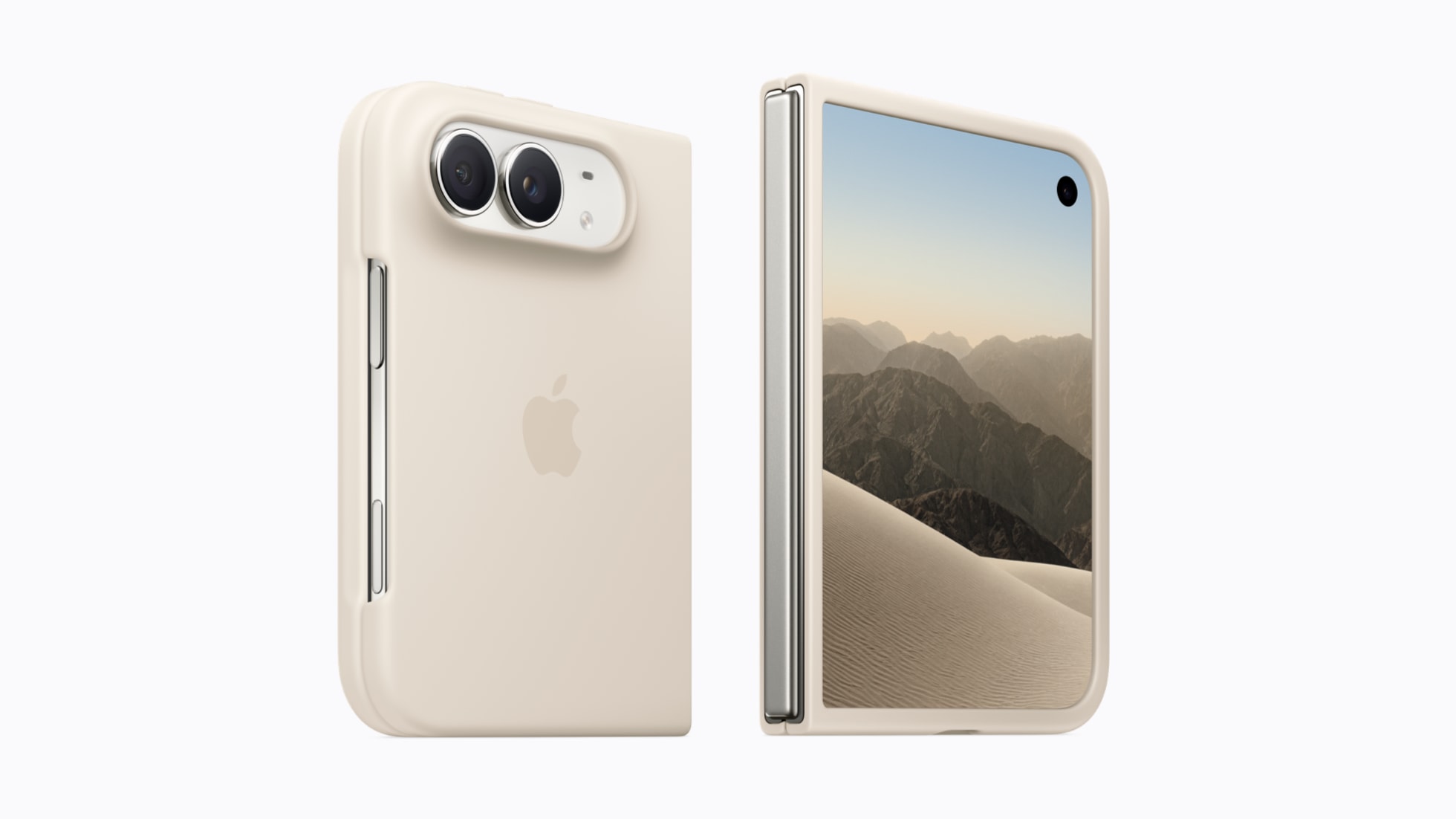
The iPhone Duo comes in star white and night sky. Two new accessories are the iPhone Duo Folio with a kickstand, in navy blue and taupe, at 129 dollars in the U.S., and the iPhone Duo Case in sand and navy blue at 79 dollars. In the U.S. the phone starts at 1,999 dollars, with 256 GB, 512 GB, 1 TB and 2 TB of storage. Apple says it is made with 35 percent recycled content, including 100 percent recycled cobalt in the battery and 100 percent recycled titanium in the hinge cover.
What the release does not say
The press release gives no weight, no thickness figures in millimetres, no RAM, no crease measurements and no telephoto zoom range beyond 2x, and it does not say how the phone was tested for hinge lifespan. Apple Intelligence and Siri AI are available in beta with limits, and Siri AI is not initially available in the EU.
Where it fits
The iPhone Duo enters a field where Samsung and Google already sell foldables. Compare it with the Galaxy Z Fold7 and the Pixel 10 Pro Fold, and if you prefer a clamshell, see the Galaxy Z Flip7. The camera and chip it shares are covered on the iPhone 18 Pro page, and the page iPhone Duo versus Galaxy Z Fold7 puts the two books side by side. More models are listed under phones.
Where it ranks
Compare Apple iPhone Duo with similar devices
More from Apple
Frequently asked questions
When was the Apple iPhone Duo released?
The Apple iPhone Duo was released on 2026-10-23, according to the manufacturer’s published information.
How much does the Apple iPhone Duo cost?
The estimated range for the Apple iPhone Duo is $1799 to $2199 in US dollars, based on the launch list price. Actual prices vary by country, retailer and storage option.
What are the main specs of the Apple iPhone Duo?
Headline figures for the Apple iPhone Duo: Main camera: 48 MP. The full specification table is further up this page.
Is the Apple iPhone Duo worth buying?
That depends on your priorities. Use the editorial review on this page for our view, check the rankings above to see where the device stands on battery, display and camera, and compare it directly with similar models before you decide.


