Phones
Infinix Zero 40 5G
A 5G Infinix with a 144Hz curved AMOLED screen, Dimensity 8200 Ultimate chip, 108MP OIS main camera, 45W wired and 20W wireless charging.
Key figures at a glance
Gallery
Specifications
- Display
- 6.78" 3D-curved flexible AMOLED (LTPS), 1080x2436, 60/120/144Hz, 1300 nits peak
- Chipset
- MediaTek Dimensity 8200 Ultimate
- RAM
- 12GB
- Extended RAM
- 24GB (software feature using storage space)
- Storage
- 256GB / 512GB
- Rear Camera
- 108MP main + 50MP ultrawide + 2MP
- Front Camera
- 50MP
- Battery
- 5,000 mAh, 45W wired, 20W wireless
- OS
- XOS 14.5, Android 14
- Dimensions
- 164.31 x 74.47 x 7.9 mm
- Weight
- 195g
- Water Resistance
- IP54
- Connectivity
- 5G, Wi-Fi 6E, NFC, dual nano SIM, USB-C
- Colors
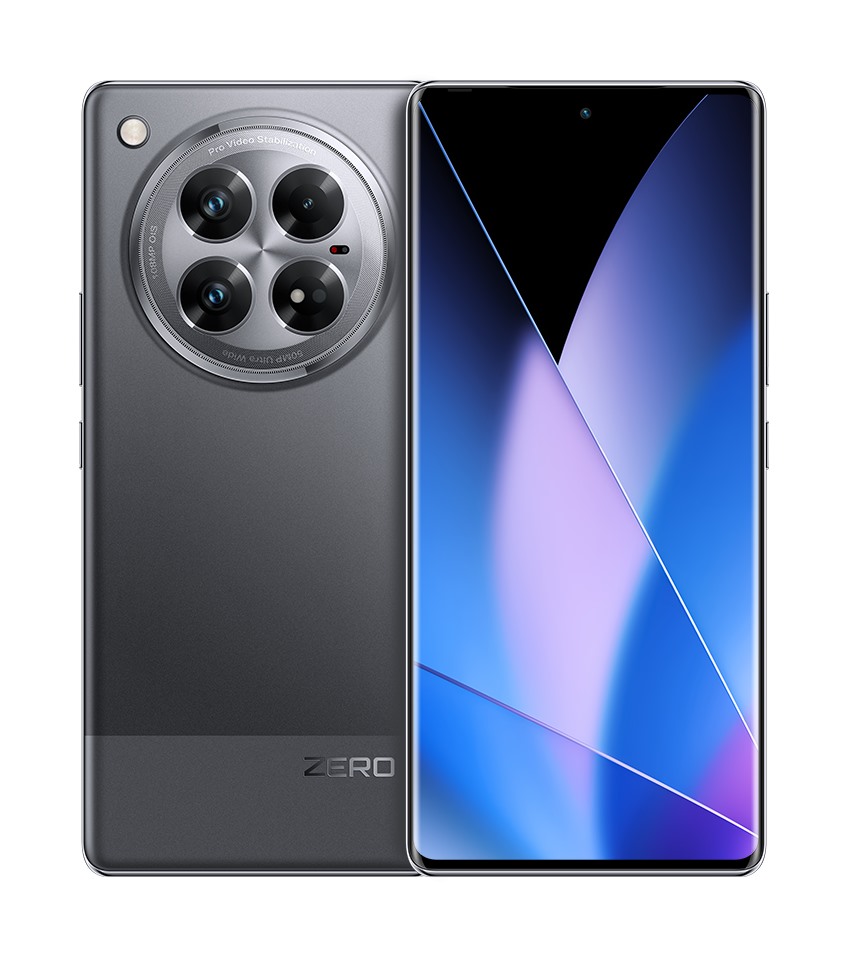
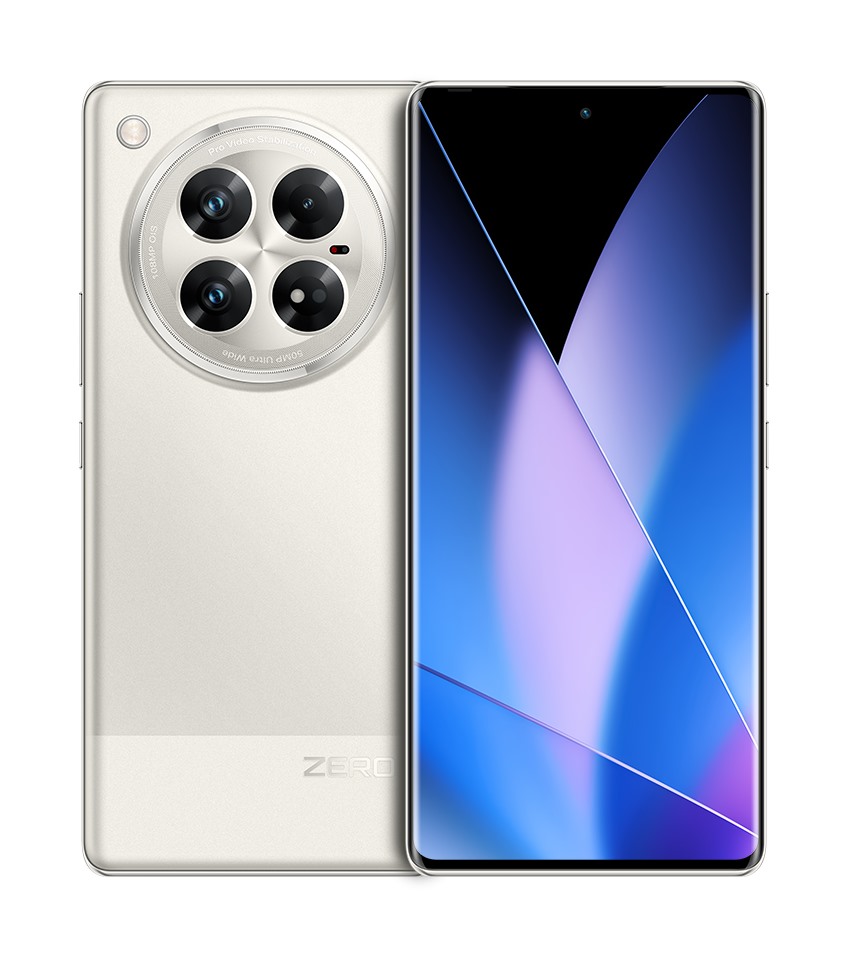
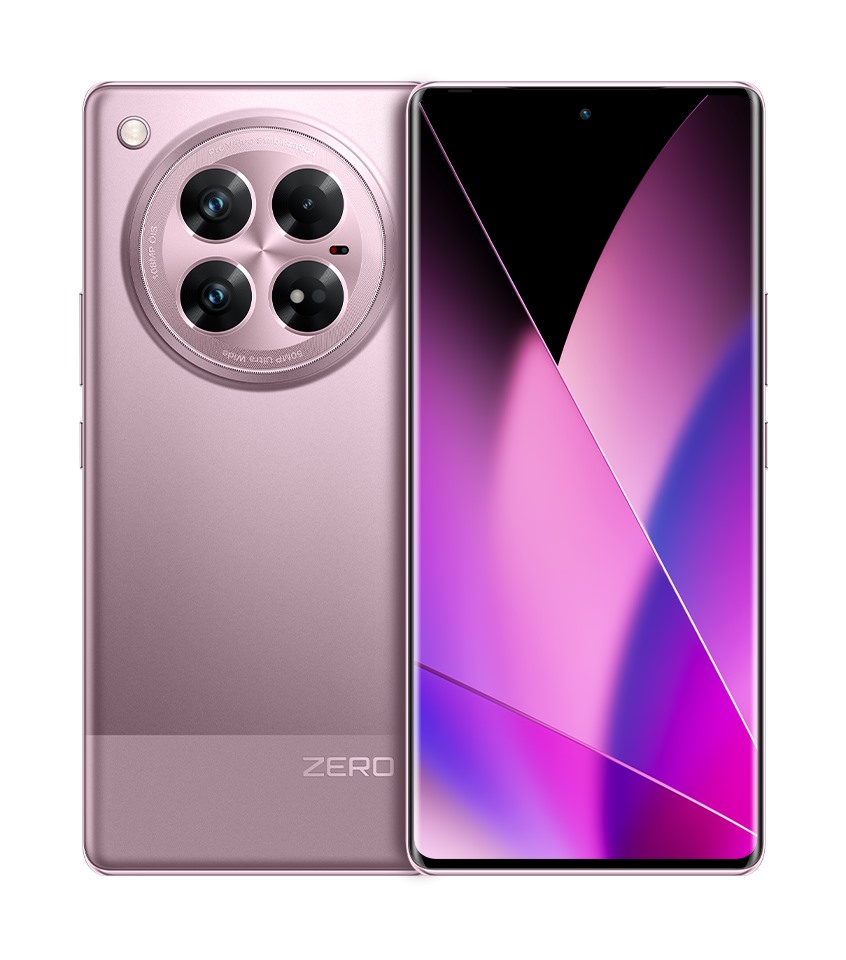
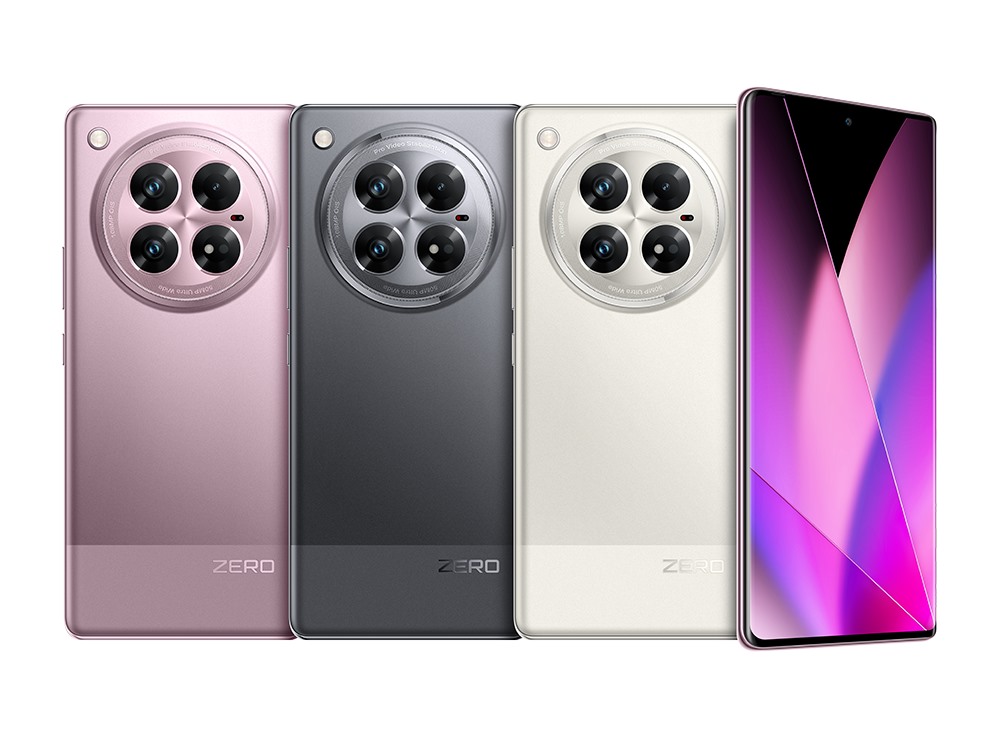
- Rock Black / Violet Garden / Moving Titanium
The Infinix Zero 40 5G is the more capable of the two phones in Infinix's Zero 40 pair. It combines a 6.78-inch curved AMOLED screen that can refresh at up to 144 Hz, a MediaTek Dimensity 8200 Ultimate processor, a 108 MP main camera with optical stabilisation, a 5,000 mAh battery with 45 W wired charging, and, unusually for a phone in this class, 20 W wireless charging. This page works through what the published specifications and Infinix's own descriptions say about the phone, where the real strengths are, and which compromises come with it. It is a specification-based read, not a lab test, and manufacturer statements are marked as such.
Where it sits in the Infinix range
Infinix sells the Zero line alongside its Hot, Note, GT and Smart families. Within the Zero 40 generation there are two models, identified by their model codes: this 5G phone (X6861) and the 4G-only Infinix Zero 40 (X6860). The two share a body concept, the same 6.78-inch panel size and a very similar 108 MP plus 50 MP camera layout. The differences are in the electronics underneath: this model has the faster Dimensity chip, LPDDR5X memory with UFS 3.1 storage, Wi-Fi 6E and wireless charging, while the other uses a Helio G100 and gives up those features.
If you are looking for the brand's most recent performance-oriented phones, the Infinix GT 30 Pro is positioned on gaming, and the Hot 50 Pro+ is a thinner, simpler device with a 33 W charger. The Zero 40 5G is the one that asks you to weigh imaging and build features rather than gaming extras.
Design and display
The body measures 164.31 x 74.47 x 7.9 mm and weighs 195 g, which is a normal weight for a phone with a large battery and a glass front and back. Infinix lists three colours: Rock Black, Violet Garden and Moving Titanium. The official renders show a large circular camera island on the back with four openings, and a two-tone rear panel with a lower band carrying the Zero wordmark. The front uses a 3D-curved flexible AMOLED panel with a punch-hole selfie camera, and Infinix gives a 93.4 percent screen-to-body ratio.
Panel details from the spec sheet: Full HD+ resolution of 1080 x 2436 pixels, an LTPS backplane, a peak brightness of 1,300 nits, a stated contrast ratio of 10,000,000:1, DCI-P3 wide colour gamut coverage, PWM dimming at 2,304 Hz and touch sampling of up to 360 Hz with two fingers. The refresh rate options are 60, 120 and 144 Hz. The top figure matters mainly for games that can use it, and for scrolling smoothness; the rest of the time the phone will likely sit lower to save power. Cover glass is Corning Gorilla Glass 5, which is an older generation than the glass found on many current flagships, so a case and screen protector are sensible for a curved display.
The phone carries an IP54 rating, meaning protection against dust ingress and splashes, but not immersion. Infinix says that rating was assessed under laboratory conditions and that liquid damage is not covered by the warranty. An in-display fingerprint reader, a Z-axis linear vibration motor and an infrared blaster are listed, the last of which is a useful extra for anyone who still controls a television or air conditioner with a remote. Audio support includes DTS and Hi-Res Audio, with Widevine L1 for HD streaming.
Performance and software
The Dimensity 8200 Ultimate is an octa-core chip. The official table gives one Arm Cortex-A78 core at 3.1 GHz, three more A78 cores at 3.0 GHz and four Cortex-A55 cores at 2.0 GHz, paired with an Arm Mali-G610 MC6 graphics processor. It is an upper-mid-range design, so it should be noticeably faster than the Helio G100 used in the 4G sibling, but it is not a flagship-class processor and should not be expected to match one in sustained heavy gaming.
Memory is 12 GB of LPDDR5X with UFS 3.1 storage in 256 GB or 512 GB sizes. Infinix also advertises 24 GB of "extended RAM". That figure is a software feature that borrows storage space to act as additional swap-like memory; it is not extra physical RAM, and the real memory remains 12 GB. Day to day, 12 GB of fast memory is generous for multitasking.
The phone ships with XOS 14.5 based on Android 14. Infinix states that it can be upgraded up to Android 16 and promises three years of security patches. Those are manufacturer commitments rather than measured behaviour, and as with all Android skins the practical experience depends on how quickly updates actually arrive in your region. XOS is also more heavily customised than Pixel-style software, so some buyers will want to review the pre-installed apps and notification behaviour when they set the phone up.
Connectivity is a strong point. 5G is supported on a long list of sub-6 bands (TDD n38, n40, n41, n77 and n78 plus FDD n1, n3, n5, n7, n8, n12, n20, n28 and n66), with the usual note that band availability depends on region and carrier. Wi-Fi 6E, Bluetooth, NFC, dual nano SIM, USB-C, OTG and FM radio are listed. Infinix mentions that connectivity can vary with the local operator, so anyone importing the phone should compare the band list with their carrier's frequencies.
Camera
The rear system is led by a 108 MP Samsung ISOCELL HM6 sensor, 1/1.67 inch in size, behind a six-element lens with an aperture of f/1.75, optical image stabilisation and phase-detection autofocus. It is joined by a 50 MP ultra-wide camera at f/2.0 and a 2 MP auxiliary camera at f/2.4. In practice the 2 MP unit is a depth or macro helper rather than a camera most people will think about, so this is effectively a two-camera system with one very high-resolution main sensor. There is no telephoto lens, so zoom beyond the main camera's crop is digital.
The front camera is a 50 MP ISOCELL JN1 on a 1/2.76 inch sensor at f/2.45 with phase-detection autofocus. That is a high-resolution selfie camera by any standard, and Infinix pairs it with a dual front flash. The rear has a triple flash. Video is one of the headline claims: the phone records 4K at 60 or 30 fps, 1080p at 60 or 30 fps and slow motion at 1080p 120 or 240 fps. Infinix markets "Front and Rear 4K Vlog" and ProStable stabilisation, which suggests the selfie camera can also record 4K. The camera app lists many modes, including Super Night, Dual Video, Long Exposure, AR Shot, Documents and a Pro mode.
What the specification does not tell you is image quality: colour tuning, noise handling at night and video stabilisation quality come from software, not from the sensor size. A large sensor and OIS are good ingredients, but the specification is not a substitute for reviewing sample images before buying.
Battery and charging
The battery is rated at 5,000 mAh (typical). Wired charging is 45 W, with the listed profiles 11 V at 4.1 A and 10 V at 4.5 A, and Infinix notes that different voltage inputs can change the maximum output in some regions. The standout feature is 20 W wireless charging, which the 4G sibling does not offer. Wireless charging at this power is not especially fast, but it is convenient for a bedside or desk pad, and it is rare enough on phones in this segment to be a genuine differentiator. Infinix does not publish a charge-time figure on the specification page, so any time-to-full number you see elsewhere should be treated as a manufacturer or reviewer claim rather than a certified result.
Who it is for
This phone suits someone who wants a large, smooth 144 Hz curved display, a high-resolution main camera and wireless charging without moving into a flagship budget. It also suits heavy multitaskers because of the 12 GB of LPDDR5X memory. If you value 4K video from both cameras, Wi-Fi 6E for a modern router, or the convenience of an infrared blaster, the specification list is unusually complete.
It is less obviously for people who want the best available software support, since the promised three years of security patches is a modest commitment and depends on Infinix actually delivering it. The Galaxy A56 is a useful reference point from a different brand, and use the Infinix Zero 40 5G vs Galaxy A56 table to see the hardware differences side by side. The rankings page shows where the specifications place it among other phones.
Compromises to be aware of
- Older glass: Gorilla Glass 5 on a curved panel is a reasonable but not best-in-class choice.
- No telephoto: the camera system has a main, an ultra-wide and a 2 MP helper, so optical zoom is absent.
- Extended RAM is virtual: the 24 GB figure includes borrowed storage; the physical memory is 12 GB.
- IP54 only: splash and dust resistance is not the same as waterproofing.
- Update promise: three years of security patches and Android up to version 16 is a claim to verify rather than a guarantee.
- Sustained load: the Dimensity 8200 Ultimate is capable, but sustained gaming performance and thermals will depend on tuning.
Overall, based on the published specifications and manufacturer information, the Zero 40 5G is a feature-rich 5G phone whose most distinctive points are the 144 Hz curved screen, the wireless charging and the 4K video capability on both cameras. Its weaknesses are mostly the familiar ones: unproven image quality, a software update promise that is only as good as its delivery, and a few component choices that look dated beside the newest phones.
Where it ranks
Compare Infinix Zero 40 5G with similar devices
More from Infinix
Frequently asked questions
When was the Infinix Zero 40 5G released?
The manufacturer’s release date for the Infinix Zero 40 5G is not stated in the information we have.
What are the main specs of the Infinix Zero 40 5G?
Headline figures for the Infinix Zero 40 5G: Battery: 5,000 mAh, Refresh rate: 144 Hz, Main camera: 108 MP, RAM: 12 GB. The full specification table is further up this page.
Is the Infinix Zero 40 5G worth buying?
That depends on your priorities. Use the editorial review on this page for our view, check the rankings above to see where the device stands on battery, display and camera, and compare it directly with similar models before you decide.


