Phones
Samsung Galaxy Z Fold6
Samsung's 2024 book-style foldable: a 7.6-inch 120Hz inner screen, Snapdragon 8 Gen 3, 12GB RAM, a triple rear camera and a 4,400 mAh battery in a 239 g body.
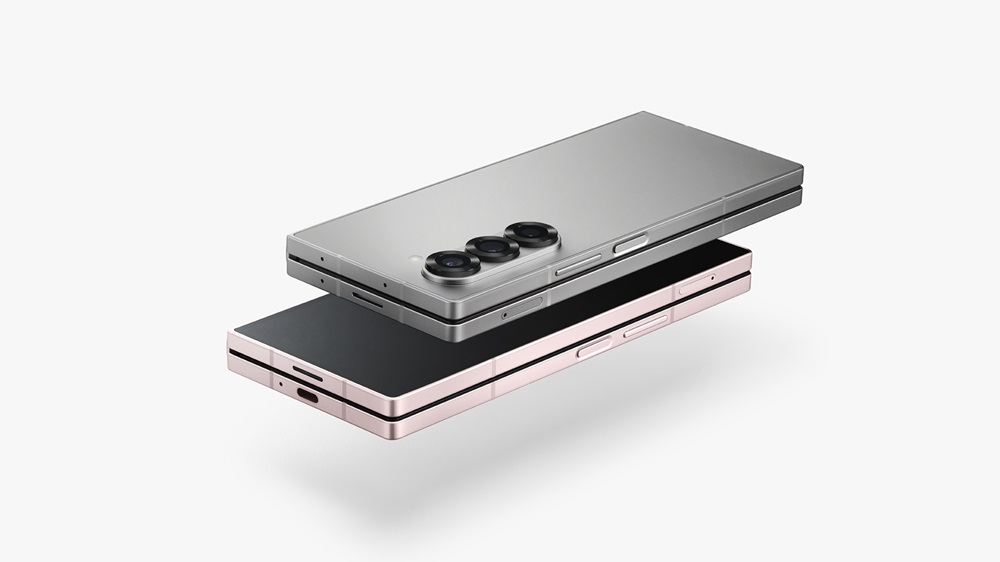
Key figures at a glance
Gallery
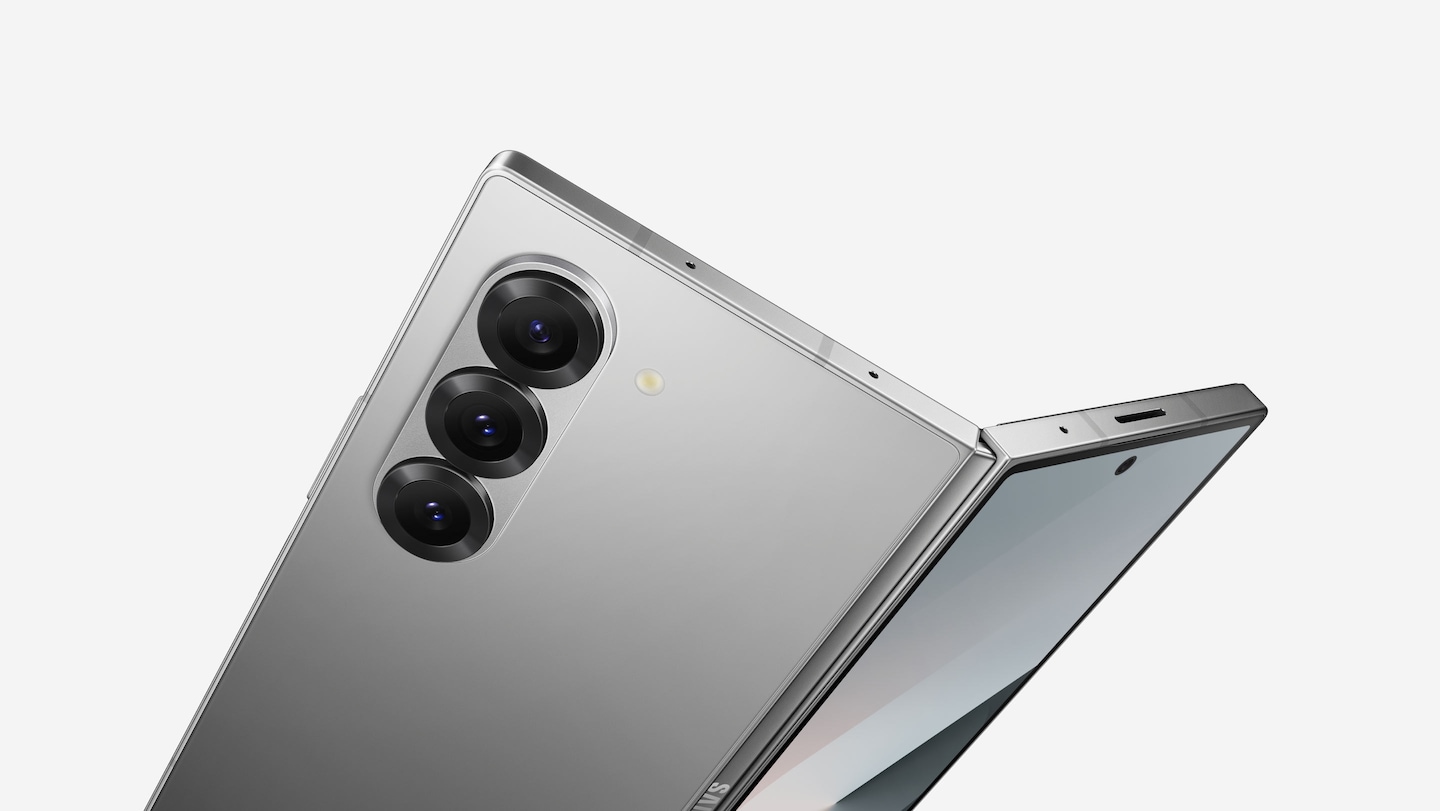
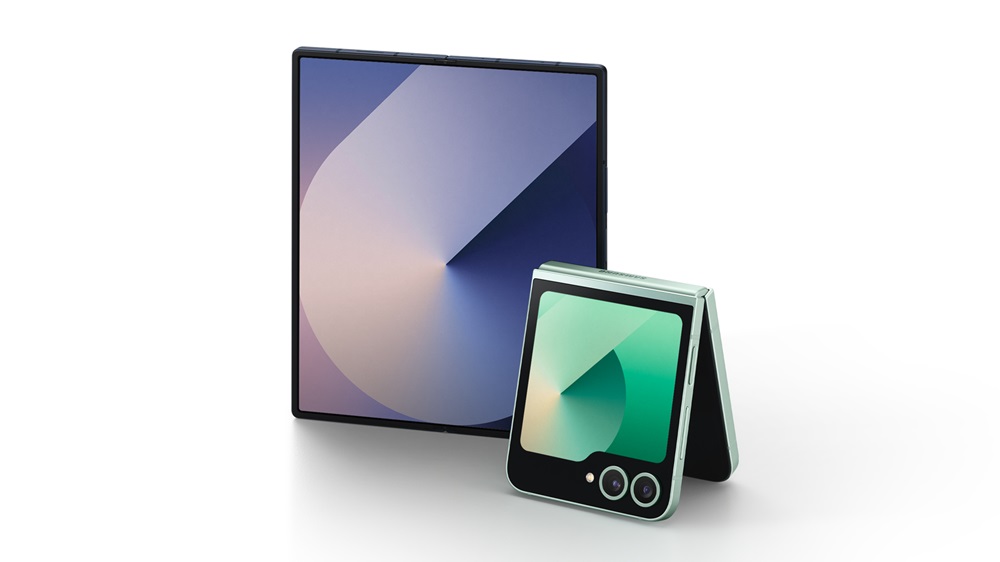
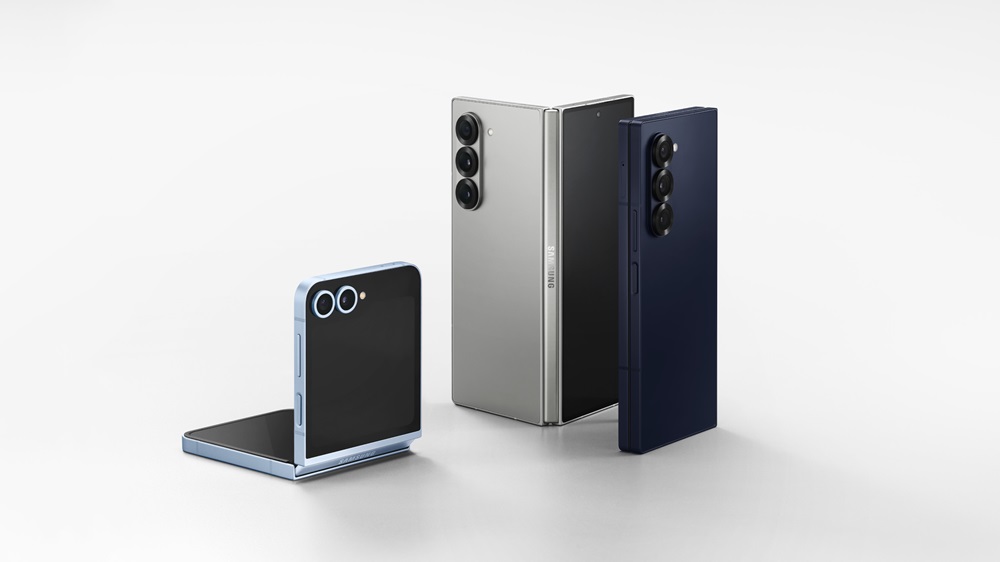
Specifications
- Display
- 7.6" QXGA+ Dynamic AMOLED 2X inner screen (2160 x 1856), 1-120Hz, up to 2600 nits; 6.3" HD+ Dynamic AMOLED 2X cover screen (2376 x 968), 1-120Hz
- Chipset
- Snapdragon 8 Gen 3 Mobile Platform for Galaxy
- RAM
- 12GB
- Storage
- 256GB / 512GB / 1TB
- Rear Camera
- 50MP main (f/1.8, OIS) + 12MP ultrawide + 10MP telephoto 3x optical
- Front Camera
- 10MP cover camera, 4MP under-display camera on the inner screen
- Battery
- 4,400 mAh (typical), 25W wired, Fast Wireless Charging 2.0
- OS
- Android 14, One UI 6.1.1
- Dimensions
- 153.5 x 132.6 x 5.6 mm unfolded (153.5 x 68.1 x 12.1 mm folded), 239 g
- Durability
- IP48, Armor Aluminum frame, Gorilla Glass Victus 2
- Connectivity
- 5G, Wi-Fi 6E, Bluetooth 5.3, dual nano-SIM + eSIM
The Samsung Galaxy Z Fold6 is the book-style foldable that Samsung unveiled at Galaxy Unpacked in Paris on 10 July 2024 and put on general sale on 24 July 2024. This article is based on the published specifications and manufacturer information; it sets out what the phone is, what Samsung says it does, and where the trade-offs sit for someone weighing a large-screen foldable against a conventional flagship.
Where the Fold6 sits in the lineup
The Fold6 is the larger of the two foldables launched together in 2024, the other being the clamshell Galaxy Z Flip6. Where the Flip folds a normal-sized phone down to a pocketable square, the Fold6 turns a phone-sized cover screen into a small tablet when opened. In the US it launched at a starting price of $1,899.99 for the 256GB version, with 512GB and 1TB options above it. That puts it firmly in ultra-premium territory, above any bar-type Galaxy of its generation.
Samsung positioned the generation as its slimmest, lightest and most durable Z series so far. The company also leaned heavily on Galaxy AI features, arguing that the foldable form factor suits tools such as dual-screen translation and large-canvas note taking. Newer successors exist, including the Galaxy Z Fold7, which makes the Fold6 relevant mainly as a reference point, a used or discounted purchase, or a phone someone already owns.
Design and displays
Closed, the Fold6 measures 153.5 x 68.1 x 12.1 mm; open, it is 153.5 x 132.6 mm and 5.6 mm thick (Samsung notes that the unfolded figure does not include the frame around the main screen). It weighs 239 g. That is still a heavy phone by bar-type standards, and the thickness when folded is something to feel in a trouser pocket, but Samsung describes it as lighter and slimmer than any earlier Z Fold.
The inner display is a 7.6-inch QXGA+ Dynamic AMOLED 2X panel at 2160 x 1856 pixels (20.9:18, 374 ppi) with an adaptive 1-120Hz refresh rate. Samsung quotes a peak brightness of up to 2,600 nits for this screen, and says enhanced layers on the main display improve how visible the crease is while keeping strength. The cover screen is a 6.3-inch HD+ Dynamic AMOLED 2X panel at 2376 x 968 pixels (22.1:9, 410 ppi), also 1-120Hz. The cover screen has a new, wider aspect ratio compared with the very narrow one on earlier Folds, which is meant to make typing and browsing on the outside feel closer to a normal phone.
Durability is built around a dual rail hinge, an Armor Aluminum frame and Corning Gorilla Glass Victus 2 on the exterior. The phone carries an IP48 rating. The first digit means protection against objects larger than 1 mm, not against fine dust, so it is water-resistant (submersion in up to 1.5 metres of fresh water for up to 30 minutes in Samsung's lab conditions) but not dustproof. That is a normal compromise for a hinged device, though it matters if you spend time at the beach or in sandy environments.
Performance and software
Inside is the Snapdragon 8 Gen 3 Mobile Platform for Galaxy, paired with 12GB of memory across all versions. Storage options are 256GB, 512GB and 1TB; there is no card slot. Samsung cites a vapor chamber that is 1.6 times larger, there to sustain performance during long sessions, and the screen supports ray-traced graphics in compatible games. We make no benchmark claims here; the spec sheet points to a chip that is one tier above the mainstream at launch, and it should remain comfortably quick for daily use for several years.
The phone shipped with Android 14 and One UI 6.1.1. Samsung commits to seven generations of operating system upgrades and seven years of security updates, which is among the longest policies on the market. The software story is also where the foldable form factor earns its keep: multi-window apps, a taskbar, split-screen layouts, Samsung DeX support, and support for the S Pen Fold Edition on the main screen (the Fold6 has no built-in pen slot, and Samsung describes the pen as supported on the inner display only).
On the Galaxy AI side, Samsung highlights Note Assist, including PDF overlay translation and transcription of voice recordings, Interpreter with a conversation mode that shows translations on both screens, Composer for drafting text from keywords, Sketch to image for the S Pen, Portrait Studio and Instant Slow-mo, alongside Circle to Search and Gemini integration with Google. Samsung stated that Galaxy AI features would be provided free until the end of 2025 on supported devices, which is worth remembering when comparing the long-term cost of ownership.
Cameras
The rear camera is a triple system: a 50MP wide-angle camera (f/1.8, Dual Pixel autofocus, optical stabilisation), a 12MP ultrawide camera (f/2.2, 123-degree field of view) and a 10MP telephoto camera (f/2.4, optical stabilisation) with 3x optical zoom. Samsung markets up to 30x Space Zoom, which combines the optical 3x with digital zoom and AI super resolution, and acknowledges that zooming past 3x can introduce some image deterioration.
There are two selfie options. A 10MP camera on the cover screen is the one to use for high-quality selfies and video calls, since you can use the rear camera system as a selfie camera by looking at the cover display. Inside, a 4MP under-display camera is meant for video calls when the phone is open; it prioritises an unbroken screen rather than image quality, so expect a clear step down from the cover camera. Compared with a bar-type Galaxy of the same period, the main camera is competent rather than class-leading, and the telephoto sensor is modest in resolution.
Battery and charging
The Fold6 uses a dual-cell battery with a typical capacity of 4,400 mAh (rated capacity 4,273 mAh). Samsung quotes wired charging of up to 50 percent in about 30 minutes with a 25W adapter and 3A USB-C cable; the adapter is sold separately. Fast Wireless Charging 2.0 and Wireless PowerShare for topping up accessories are also supported. For a phone with two large panels, 25W is slow compared with some rivals that ship 60W or more chargers, and the battery is not especially large either. In practice, heavy use of the inner screen is where the battery will be tested most.
Connectivity covers 5G, LTE, Wi-Fi 6E and Bluetooth 5.3, with up to two nano-SIMs plus multi-eSIM. A side-mounted capacitive fingerprint sensor handles unlocking.
Who it is for
The Fold6 suits people who want one device that can also work as a reading, note-taking and multitasking tablet: those who read documents or PDFs on the go, who answer email in split-screen, or who use an S Pen for annotations. Business travellers are an obvious audience. Those who use a phone mainly for messaging, social media and photos will find that the advantages are less pronounced and the price harder to justify.
If you want to see how the successor changed the formula, the Galaxy Z Fold6 vs Galaxy Z Fold7 comparison lines up the main differences, and the rankings show how foldables compare with other phones on the site.
Compromises to consider
- Price. Even at the Fold6's launch price of $1,899.99 in the US, it was priced well above conventional flagships.
- Weight and thickness. At 239 g and 12.1 mm folded, it is noticeably more substantial than a standard phone.
- Charging. 25W wired charging is modest.
- Dust protection. IP48 offers water resistance but no rating against fine dust.
- Cameras. Capable, but the 10MP telephoto and the 4MP under-display camera are not class leaders.
- Visible crease. Samsung says the crease is less visible than before, but it is still part of the experience of a folding screen.
If a clamshell format appeals more than a book-style one, the Galaxy Z Flip6 takes a very different approach with the same chip, and the Galaxy Z Fold7 is the newer option for those who want the latest hardware.
Where it ranks
Compare Samsung Galaxy Z Fold6 with similar devices
More from Samsung
Frequently asked questions
When was the Samsung Galaxy Z Fold6 released?
The Samsung Galaxy Z Fold6 was released on 2024-07-24, according to the manufacturer’s published information.
How much does the Samsung Galaxy Z Fold6 cost?
The estimated range for the Samsung Galaxy Z Fold6 is $1710 to $2090 in US dollars, based on the launch list price. Actual prices vary by country, retailer and storage option.
What are the main specs of the Samsung Galaxy Z Fold6?
Headline figures for the Samsung Galaxy Z Fold6: Battery: 4,400 mAh, Refresh rate: 120 Hz, Main camera: 50 MP, RAM: 12 GB. The full specification table is further up this page.
Is the Samsung Galaxy Z Fold6 worth buying?
That depends on your priorities. Use the editorial review on this page for our view, check the rankings above to see where the device stands on battery, display and camera, and compare it directly with similar models before you decide.


