Tablets
Xiaomi Redmi Pad Pro
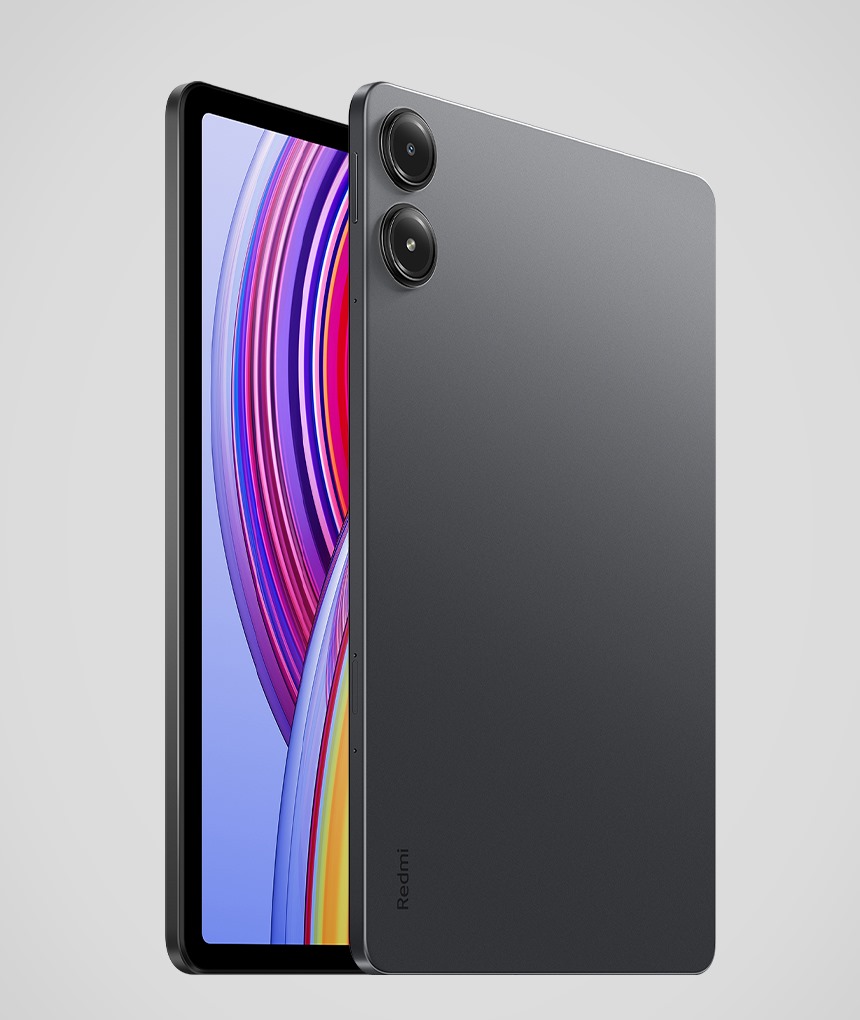
The Redmi Pad Pro offers a 12.1-inch 2.5K 120Hz display, Snapdragon 7s Gen 2, four Dolby Atmos speakers and a 10000 mAh battery with 33W charging.
Key figures at a glance
Gallery
Specifications
- Display
- 12.1" LCD, 2560 x 1600 (249 ppi), 16:10, 120Hz AdaptiveSync, 500 nits typical / 600 nits HBM, Dolby Vision
- Chipset
- Qualcomm Snapdragon 7s Gen 2 (4nm, up to 2.4GHz)
- RAM
- 8GB
- Storage
- 128GB / 256GB (6GB+128GB, 8GB+128GB, 8GB+256GB; microSD up to 1.5TB)
- Rear Camera
- 8MP main (f/2.0), 1080p video
- Front Camera
- 8MP (f/2.28), 1080p video
- Battery
- 10000 mAh typical (9800 mAh minimum), 33W wired charging (adapter not included)
- OS
- Xiaomi HyperOS
- Dimensions
- 280.0 x 181.85 x 7.52 mm, 571 g
- Audio
- Quad speakers with Dolby Atmos, 3.5mm headphone jack
- Connectivity
- Wi-Fi 6, Bluetooth 5.2, USB-C 2.0, microSD slot
The Redmi Pad Pro is a large-screen Android tablet from Xiaomi's Redmi sub-brand, aimed at people who want a big display, a very large battery and four speakers without paying for a premium tablet. It was the first Redmi Pad to ship with Xiaomi's HyperOS, and the company positions it as an entertainment and light-productivity device. This page is based on the specifications and statements published by Xiaomi. It describes what the hardware offers, flags which figures are the maker's own lab claims, and explains who the compromises suit.
Where it sits in the lineup
Xiaomi's own support page gives the launch date as 21 May 2024, with sales starting in May 2024. The Redmi Pad Pro sits above the original Redmi Pad, and Xiaomi compares the two directly: the screen grows from 10.6 to 12.1 inches, which the company describes as a 33% larger display area, and the processor and graphics performance are stated as up by 51% and 100% in the maker's own tests. A separate product page exists for a Redmi Pad Pro 5G variant, so buyers who need cellular data should check that listing, because this overview covers the model described on the main global page. In Xiaomi's own premium range, the Xiaomi Pad 7 Pro is the more expensive step up. No official US price was published, so none is listed on this site.
Design and display
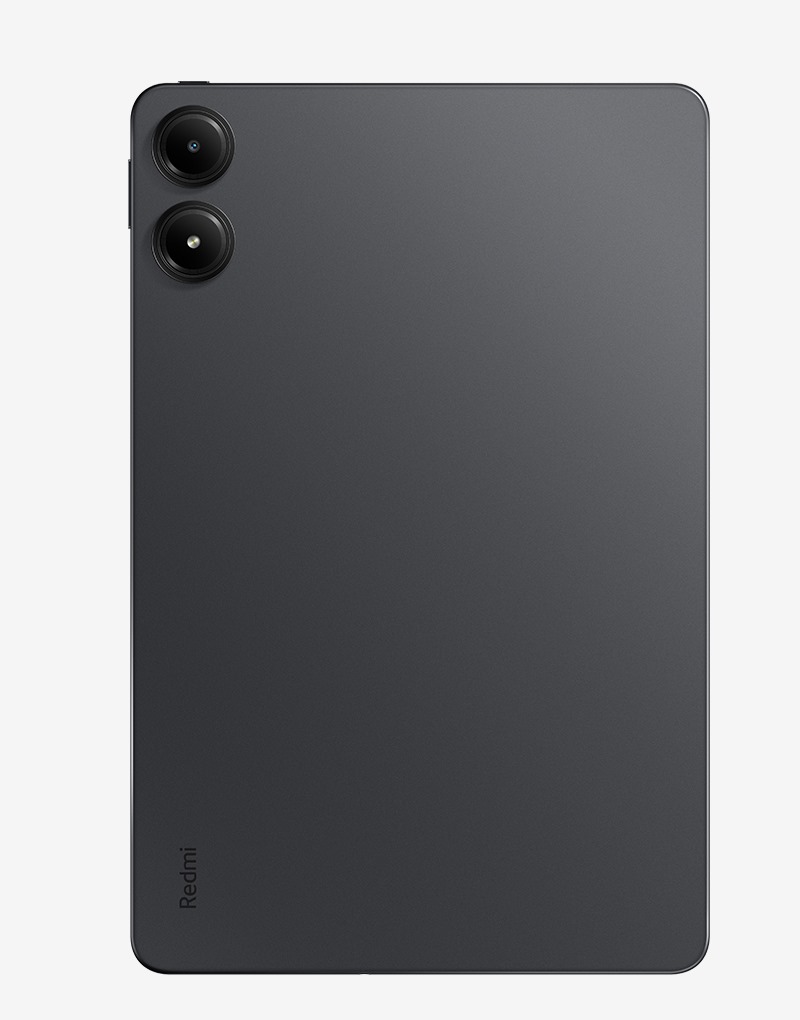
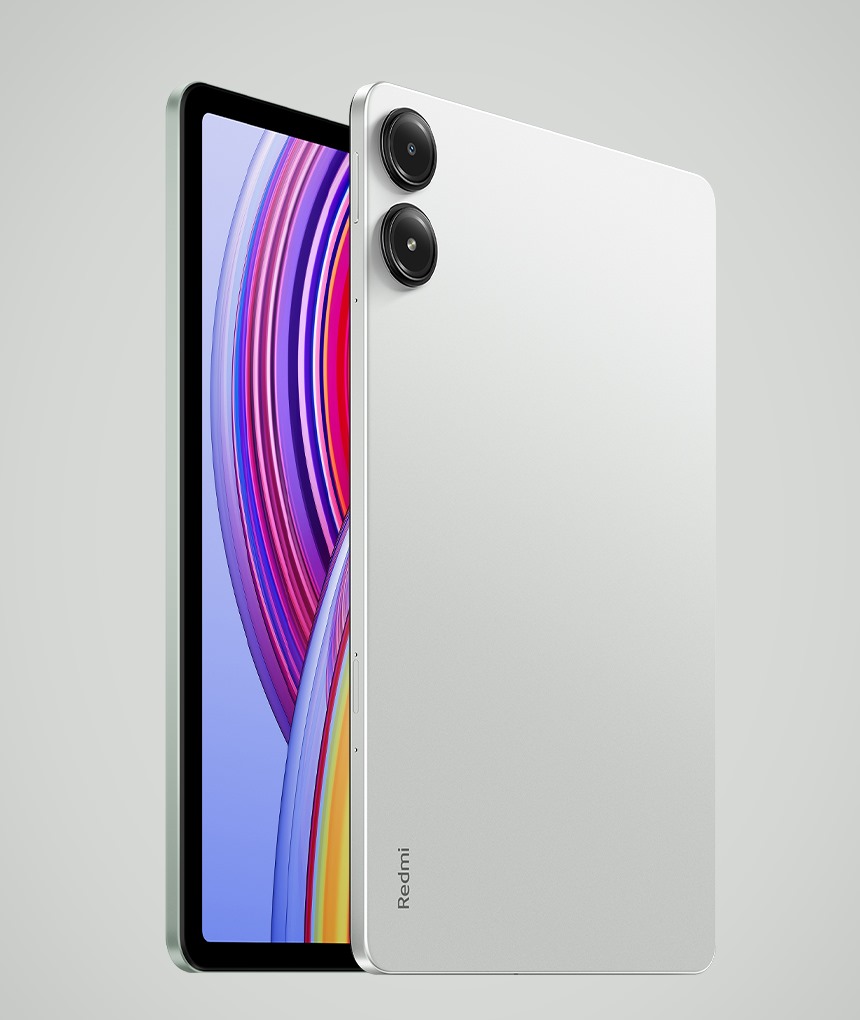
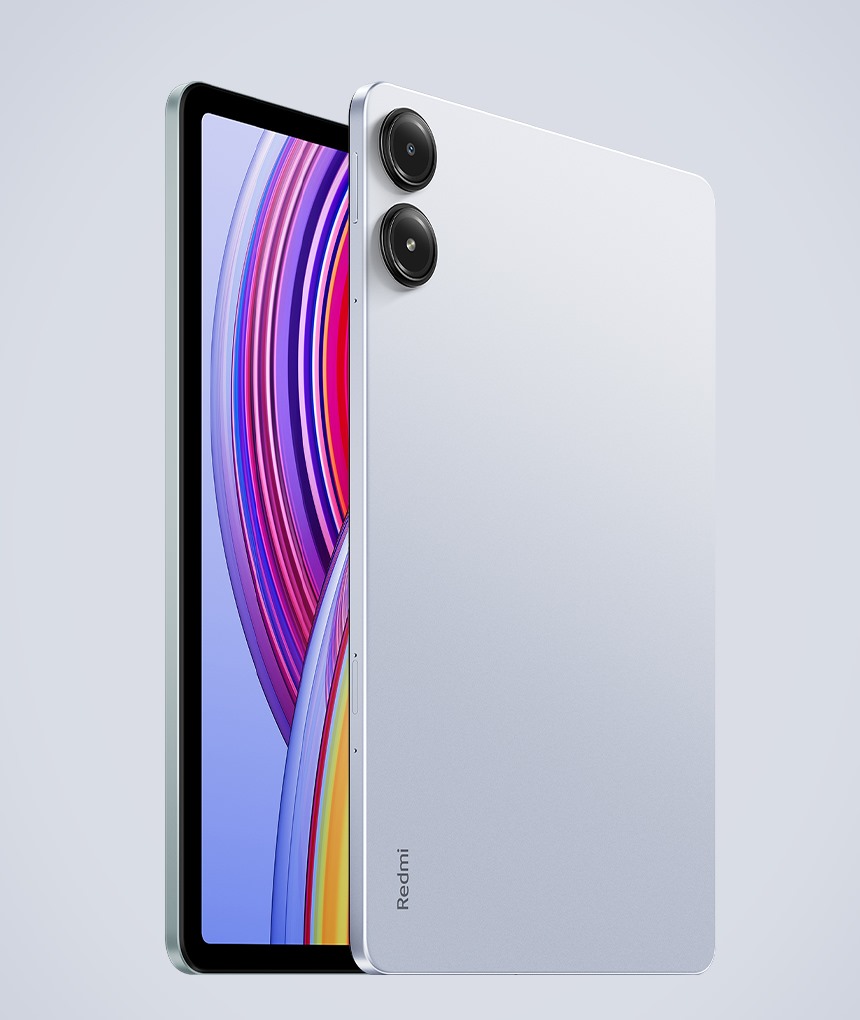
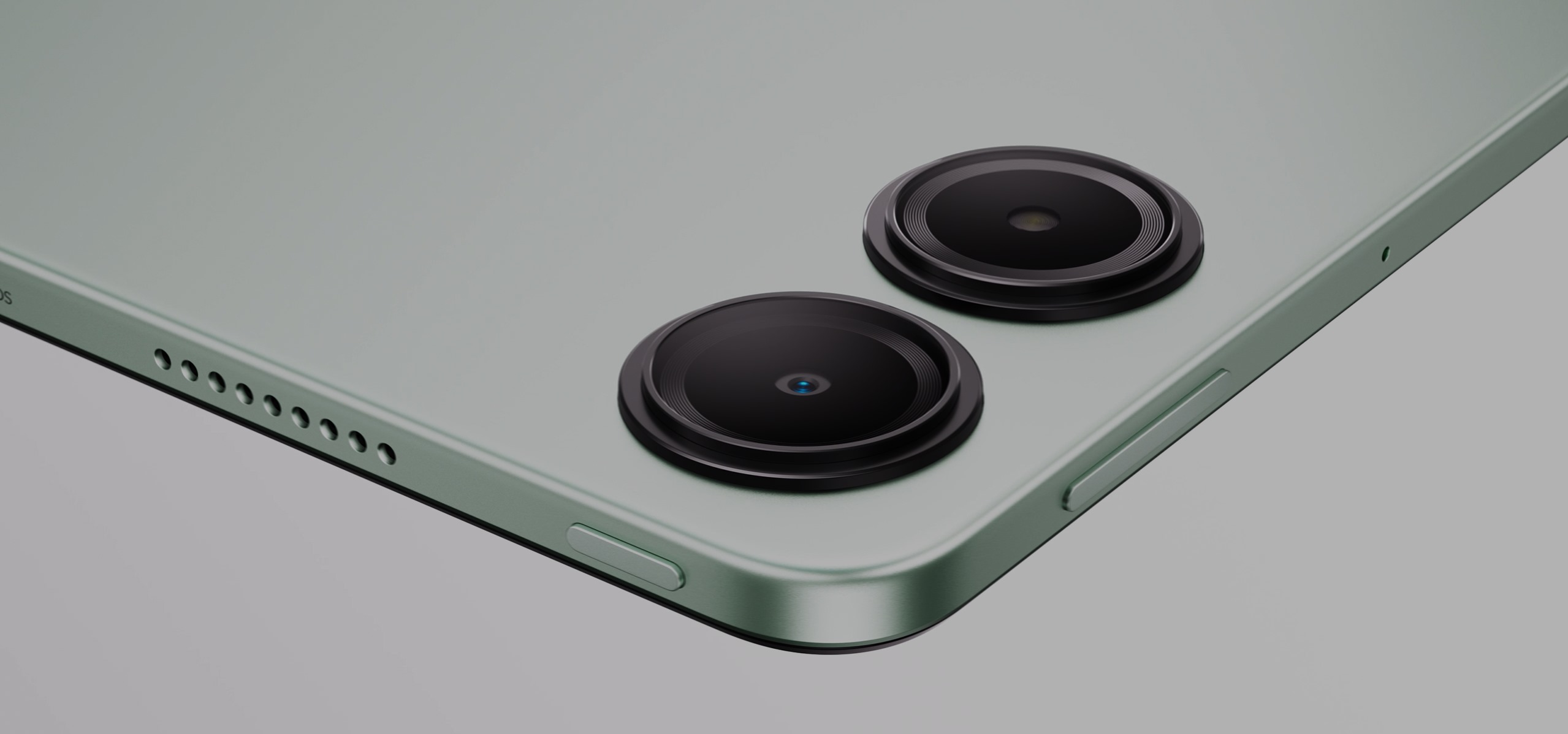
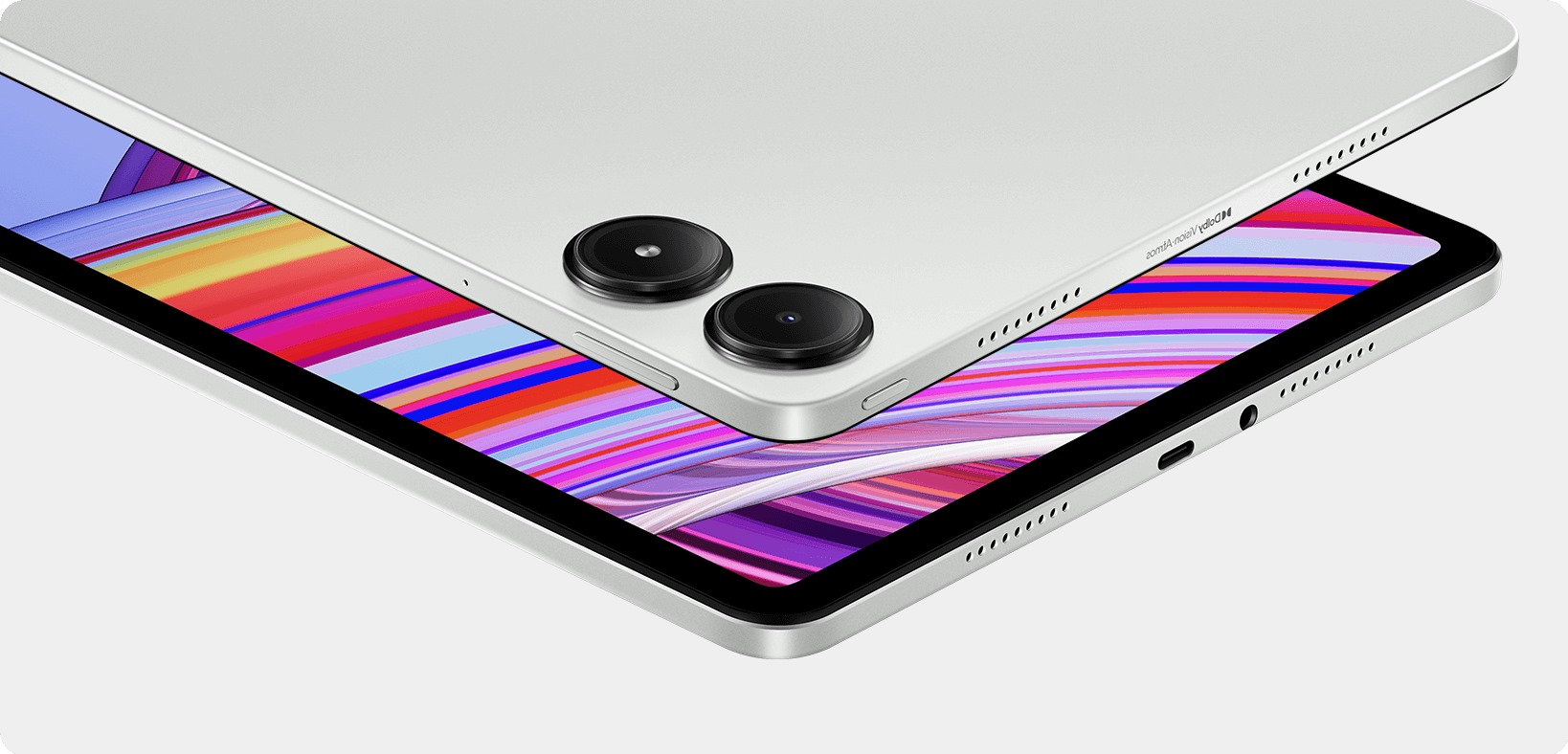
The tablet measures 280.0 x 181.85 mm, is 7.52 mm thick and weighs 571 g. Xiaomi describes a metal unibody back with a dual-ring camera deco that also hides the antenna. It comes in three colours: Graphite Gray, Mint Green and Ocean Blue. Xiaomi states that the front glass is Corning Gorilla Glass 3 and that the tablet passed more than 30 durability tests, although it adds the usual warning that a tablet may still fail after a drop. The weight is worth noting: at over half a kilogram, it is comfortable on a desk or stand and acceptable for sofa use, but heavy for long one-handed reading.
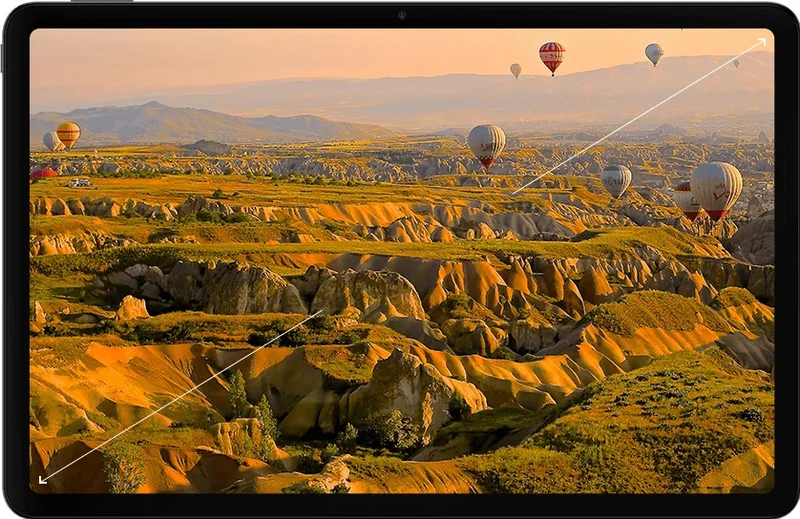
The display is a 12.1-inch LCD panel with a 16:10 aspect ratio and a 2560 x 1600 resolution, which Xiaomi gives as 249 ppi. The refresh rate is adaptive up to 120Hz, with steps at 30, 48, 50, 60, 90 and 120Hz, and users can also fix it at 60, 90 or 120Hz. Brightness is given as 500 nits typical and 600 nits in high-brightness mode, with a 1500:1 contrast ratio, 12-bit colour depth and 68.7 billion colours, and support for Dolby Vision. Touch sampling reaches 240Hz when the Redmi Smart Pen is used. The screen-to-body ratio is stated at 83.6%. For eye comfort Xiaomi lists three TÜV Rheinland certificates (low blue light by hardware, flicker free and circadian friendly), DC dimming and 4096 brightness levels. Because this is an LCD and not an OLED, blacks will not be as deep, which matters mostly for dark-room movie viewing.
Performance and software
The processor is the Snapdragon 7s Gen 2 on a 4nm process, running at up to 2.4GHz. It is a mid-range platform suited to browsing, streaming, reading, note-taking and ordinary games, and Xiaomi quotes the CPU and GPU gains compared with the older Redmi Pad rather than against other brands. Memory configurations listed on the global specification page are 6GB with 128GB, 8GB with 128GB and 8GB with 256GB, using LPDDR4X RAM and UFS 2.2 storage, with the note that configurations vary by region. The storage can be extended with a microSD card up to 1.5TB, which is a genuine advantage over many tablets that have no card slot.
The software is Xiaomi HyperOS. Xiaomi highlights its interconnectivity features: opening the phone camera from the tablet's Notes app, connecting to a phone's hotspot with one tap, viewing phone apps and notifications on the tablet through Home screen+, and a shared clipboard. These require a Xiaomi account on both devices and are listed as working with certain Xiaomi phones and tablets, so they are most useful for people already in Xiaomi's ecosystem. The company also sells a Redmi Smart Pen, described as the brand's first active pen, and a keyboard case, both sold separately and with availability that differs by country. The pages reviewed do not publish a software update commitment, so that point is left open.
Camera and audio
The cameras are basic by design: an 8MP rear camera with an f/2 lens and an 8MP front camera with an f/2.28 lens, both recording up to 1080p at 30 frames per second. They are sufficient for video calls and for scanning documents, and Xiaomi includes a front-camera framing feature, but nobody should buy a tablet like this for photography.
Audio is a stronger point. Four stereo speakers support Dolby Atmos, and with Dolby Vision on the display Xiaomi presents the tablet as a "personal cinema". There is also a 3.5mm headphone jack, which is increasingly unusual, plus Bluetooth 5.2 with AAC, LDAC, aptX, aptX HD and aptX Adaptive codec support for wireless headphones. Wi-Fi 6 with 2x2 MIMO and 160MHz channel width is listed.
Battery and charging
The battery is the headline: a 10,000 mAh typical capacity, with a minimum rated capacity of 9,800 mAh. Xiaomi quotes up to 12.1 hours of HD video playback, 15.1 hours of reading and up to 33.9 days of standby, all from its internal laboratory, so real use will differ. Charging is 33W wired over USB-C, though Xiaomi states in its notes that no power adapter is included in the box and recommends a 33W charging combo or better, sold separately. The USB-C port runs at USB 2.0 speed. There is no wireless charging.
Who it is for
The Redmi Pad Pro suits families, students and commuters who watch a lot of video, read and browse on a big screen and want a battery that lasts several days of light use. The 120Hz display, four speakers, headphone jack and expandable storage give it a feature list that is unusually generous for its tier. For comparison with a more premium rival, see the comparison with the Xiaomi Pad 7 Pro, and for a different brand's large-screen option, look at the HONOR MagicPad 3. The rankings page shows how all tracked devices compare on a common scale.
Compromises
The compromises follow from the price tier. The display is LCD rather than OLED and peaks at a modest 600 nits, so bright sunlight use is limited. The Snapdragon 7s Gen 2 is a mid-range chip, so very demanding games will not run at the highest settings. The cameras are basic, the USB-C port is USB 2.0, there is no wireless charging, and the charger is not in the box. The 571 g weight is noticeable. Pen and keyboard are extras that raise the total cost. Finally, the quoted battery-life and performance gains are internal tests against the older Redmi Pad, so treat them as relative indications. If a big, long-lasting, media-focused tablet with expandable storage is the goal, it is a coherent package.
Where it ranks
Compare Xiaomi Redmi Pad Pro with similar devices
More from Xiaomi
Frequently asked questions
When was the Xiaomi Redmi Pad Pro released?
The Xiaomi Redmi Pad Pro was released on 2024-05-21, according to the manufacturer’s published information.
What are the main specs of the Xiaomi Redmi Pad Pro?
Headline figures for the Xiaomi Redmi Pad Pro: Battery: 10,000 mAh, Refresh rate: 120 Hz, Main camera: 8 MP, RAM: 8 GB. The full specification table is further up this page.
Is the Xiaomi Redmi Pad Pro worth buying?
That depends on your priorities. Use the editorial review on this page for our view, check the rankings above to see where the device stands on battery, display and camera, and compare it directly with similar models before you decide.