Tablets
OPPO Pad Neo
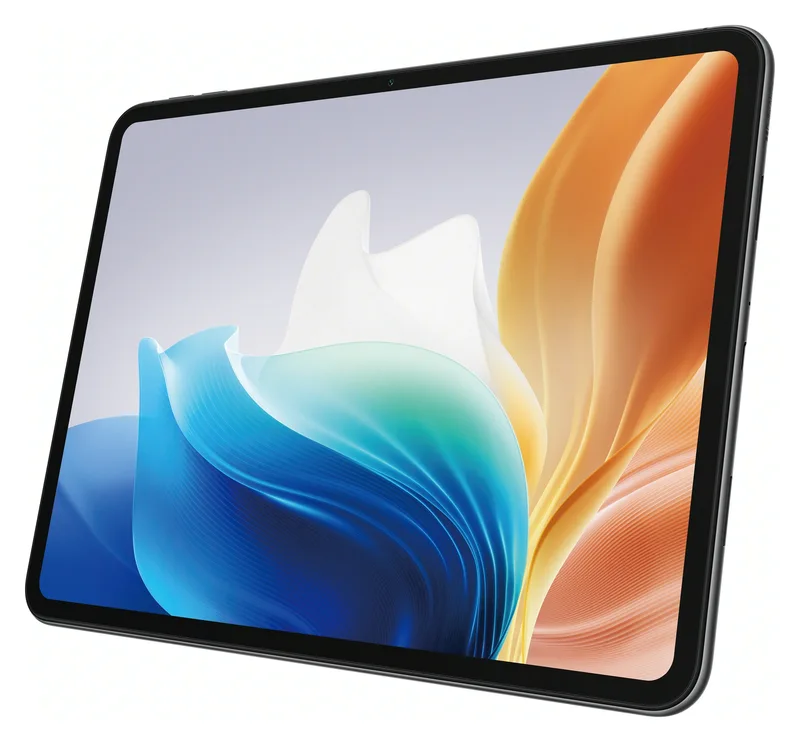
OPPO's Pad Neo pairs an 11.4-inch 7:5 screen with 90Hz, a Helio G99 chip, quad speakers with Dolby Atmos and an 8000 mAh battery with 33W charging.
Key figures at a glance
Gallery


Specifications
- Display
- 11.36" LCD (LTPS), 2408x1720, 7:5, 260 ppi, 90Hz, 180Hz touch sampling, 400 nits, 96% NTSC
- Chipset
- MediaTek Helio G99
- RAM
- 8GB
- RAM Options
- 6GB (Wi-Fi version) / 8GB (4G LTE version), LPDDR4X
- Storage
- 128GB, UFS 2.2, microSD supported
- Rear Camera
- 8MP main (f/2.0), 1080p 30fps video
- Front Camera
- 8MP (f/2.0)
- Battery
- 8000 mAh, 33W SUPERVOOC charging
- OS
- ColorOS 13.2
- Weight
- 538 g
- Dimensions
- 255.12 x 188.04 x 6.89 mm
- Audio
- Quad speakers with Dolby Atmos
- Connectivity
- Wi-Fi 5, Bluetooth 5.2 (SBC, AAC, aptX, aptX HD, LDAC), USB-C, optional 4G LTE version
- Biometrics
- Face recognition
- Colour
- Space Grey
The OPPO Pad Neo is a mid-range Android tablet built around an unusual screen: an 11.36-inch LCD with a 7:5 aspect ratio and a resolution of 2408 x 1720 pixels. Around it OPPO puts a MediaTek Helio G99 chip, quad speakers with Dolby Atmos, an 8000 mAh battery with 33W SUPERVOOC charging and ColorOS 13.2. This page is based on the published specifications and manufacturer information, including OPPO's Singapore press release. It looks at where the tablet sits in OPPO's line, what the unusual display means in practice, how much performance to expect and where the compromises are.
Place in the OPPO tablet lineup
OPPO announced the Pad Neo in Singapore on 26 January 2024, with sales starting the next day, 27 January 2024. The company positions it as a mid-range tablet focused on entertainment and comfort rather than raw speed. Two versions are listed: a Wi-Fi model with 6GB of RAM and 128GB of storage, and a 4G LTE model with 8GB of RAM and 128GB. In Singapore OPPO gave launch prices of S$369 and S$439 respectively; no US price is stated on the pages used here, so none is given in the specification list.
Other tablets in OPPO's range include the OPPO Pad SE and the later OPPO Pad 3, and the Pad Neo is the one to read about if screen shape and speakers matter more than raw speed. Across the wider market, buyers will also look at the iPad (A16) and Samsung's Galaxy Tab S9, though those occupy higher price tiers. If you want to see how the numbers stack up, the comparison OPPO Pad Neo vs OPPO Pad 3 is a good starting point.
Design and display
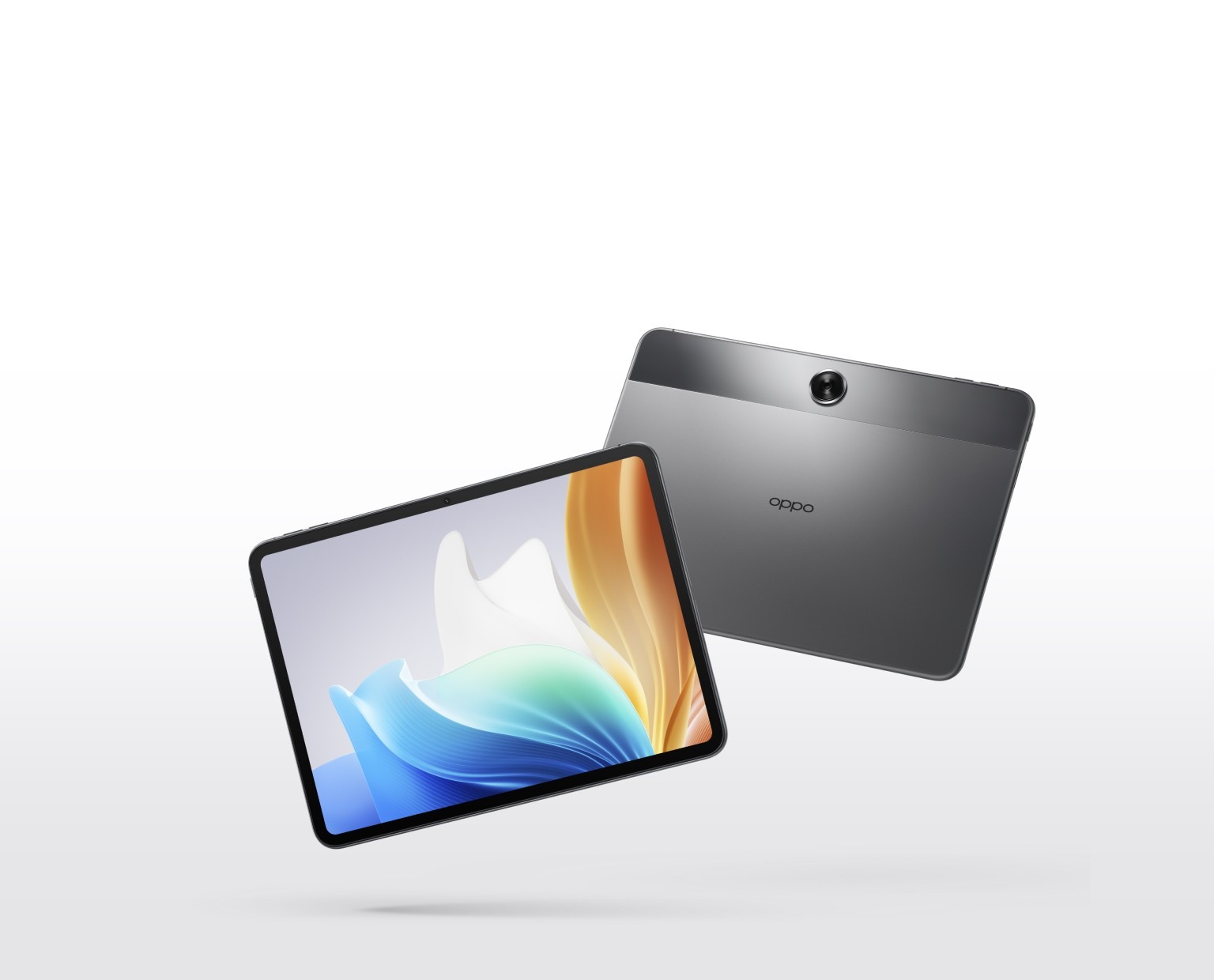
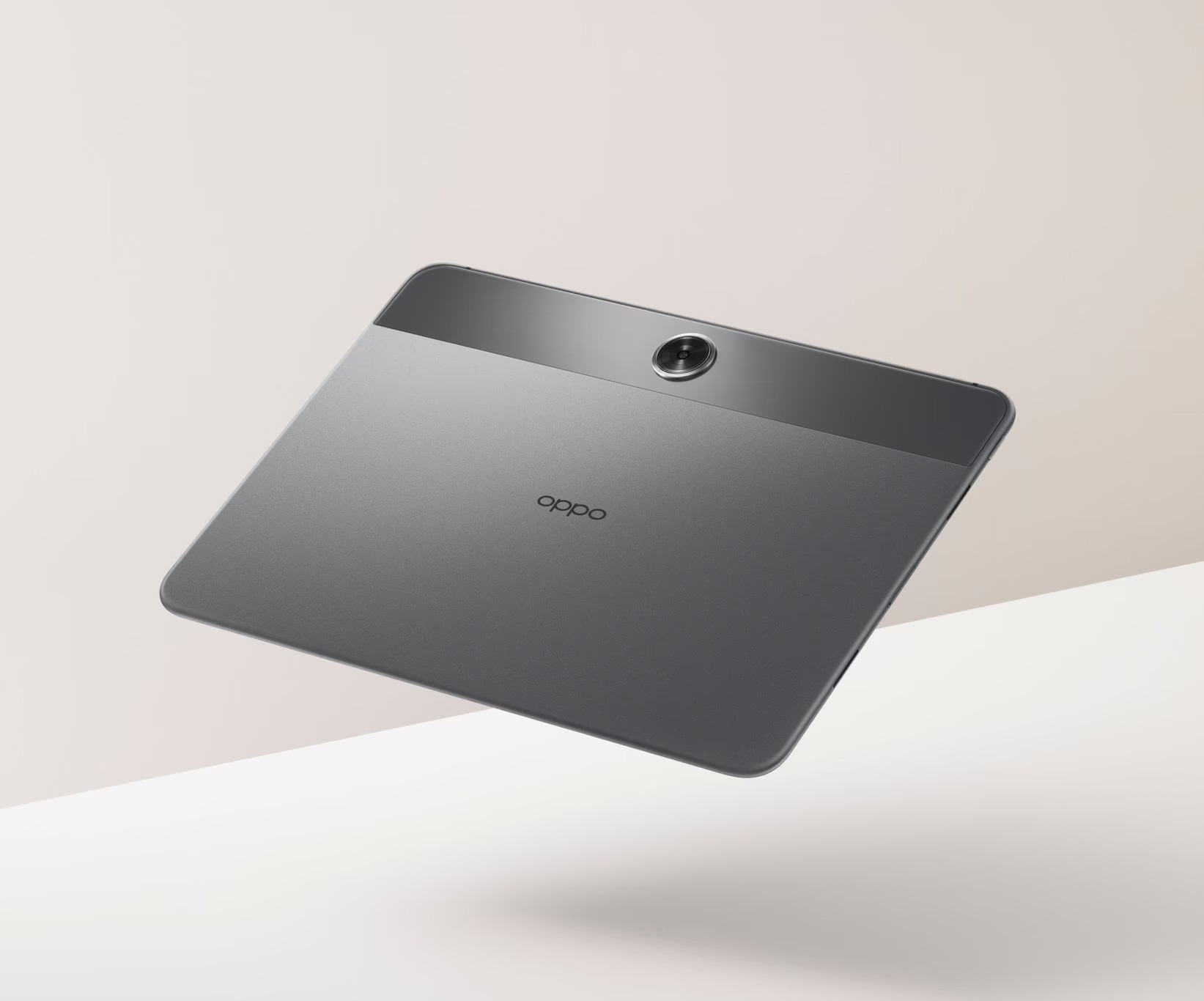
The tablet measures about 255.12 mm tall and 188.04 mm wide, with a thickness of about 6.89 mm, and weighs about 538g. It comes in a single colour, Space Grey. OPPO describes a back panel that mixes matte and glossy textures, with a central camera placement that it says makes the tablet more comfortable to hold.
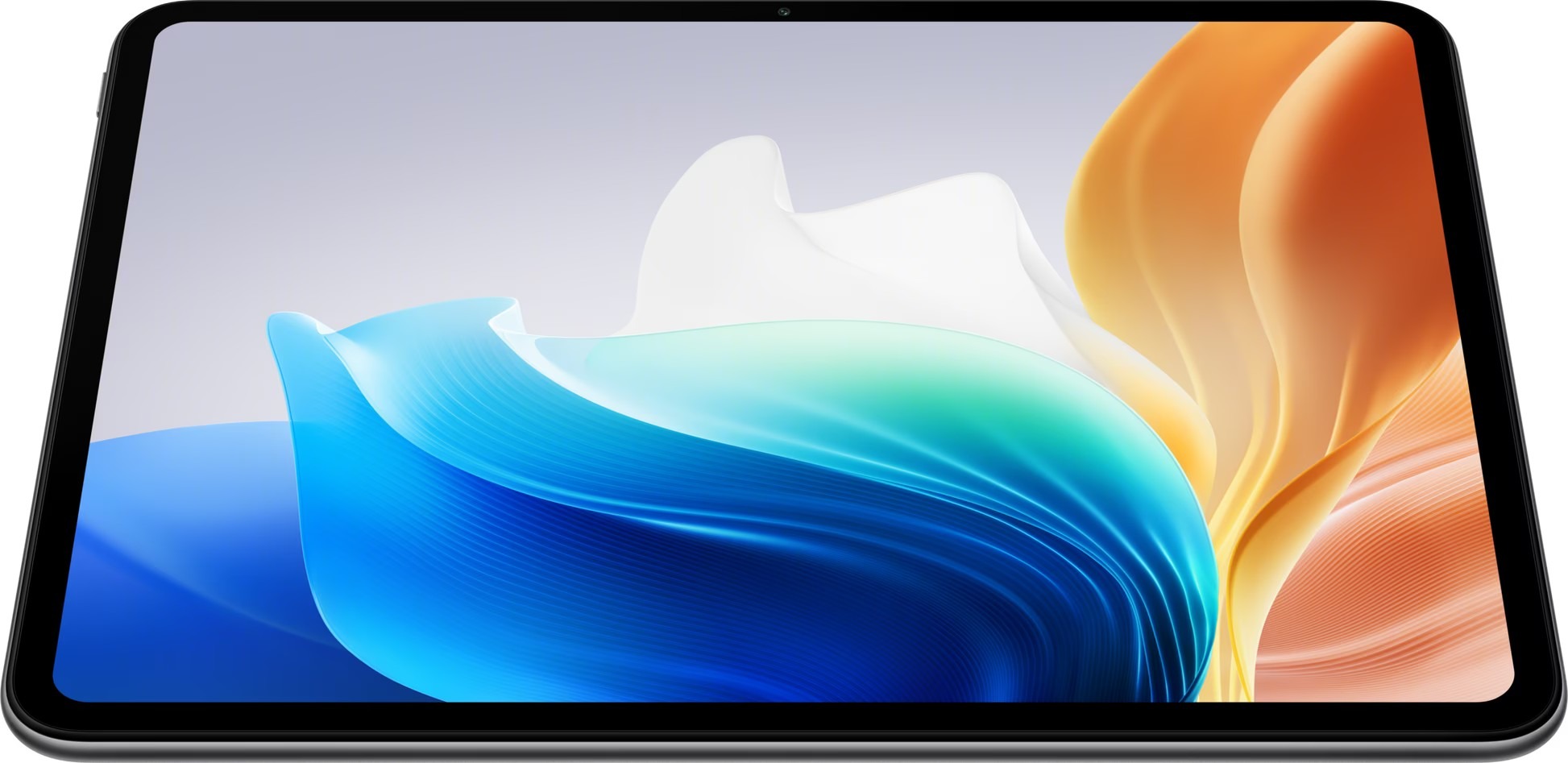
The display is the main selling point. The 11.36-inch LCD (LTPS) uses a 7:5 aspect ratio, which is closer to the proportions of a book or a sheet of paper than the 16:10 panels common on tablets. OPPO says it provides nearly 7 percent more screen area than a conventional 5:3 display of similar diagonal size, and that it looks more consistent in landscape, portrait and split-screen. For reading, browsing, document work and video calls in portrait, a squarer screen is a real advantage. For widescreen video, it means larger black bars above and below the picture than on a 16:10 or 16:9 display.
The numbers are respectable for the class: 2408 x 1720 pixels at 260 ppi, a maximum refresh rate of 90Hz (OPPO notes it only works with certain apps and may vary), a touch sampling rate of up to 180Hz, 96 percent NTSC colour gamut, 1 billion colours (8-bit plus 2-bit realised by software) and a brightness of 400 nits. That brightness is a limit worth remembering: it is fine indoors but will be hard to read in direct sun. OPPO also highlights hardware-level low blue light and says the screen received Circadian Friendly and Full Care Display 2.0 certifications from TÜV Rheinland.
Performance and software
The chip is a MediaTek Helio G99, which OPPO's press release calls dependable. It is an efficient processor aimed at everyday tasks: streaming, browsing, reading, light photo editing and casual games. It is not a tablet chip for heavy creative work or demanding 3D titles, and people who plan to run many apps at once or play recent games at high settings should look at a more powerful tablet such as the OPPO Pad 3. Memory is LPDDR4X, 6GB on the Wi-Fi version and 8GB on the LTE version, and storage is UFS 2.2 at 128GB. Unlike many tablets, the Pad Neo supports a microSD card, so storage can be expanded if the base 128GB fills up with video.
The software is ColorOS 13.2 as listed on the specification page. OPPO uses the tablet as a showcase for its phone-to-tablet features. When a compatible OPPO phone is nearby, OPPO says the tablet can share the phone's mobile connection (Communication Sharing), receive photos and screenshots in real time (Content Sync), copy and paste text between devices, hand off apps (App Relay) and mirror the phone screen. OPPO notes in its fine print that these functions need ColorOS 13.1 or later on the phone, with Bluetooth and Wi-Fi switched on. Anyone using a phone from another brand should not expect these features; the tablet remains a normal Android device, but the extras are tied to OPPO phones.
Cameras and audio
The cameras are basic: an 8MP rear camera (f/2.0) and an 8MP front camera (f/2.0), both recording up to 1080p at 30 frames per second, with electronic stabilisation on the rear camera. For scanning documents and video calls this is enough. A tablet is a poor camera for photographs, and the Pad Neo makes no attempt to change that.
Audio is a stronger point. OPPO fits quad speakers with Dolby Atmos support, which is more than the two speakers on many tablets at this level. On a tablet that is mainly used to watch films or series on the sofa, good speakers matter as much as the screen. The tablet also supports a wide range of Bluetooth audio codecs (SBC, AAC, aptX, aptX HD and LDAC) over Bluetooth 5.2, and a USB-C port handles charging and data. Connectivity otherwise stops at Wi-Fi 5 (802.11ac); the LTE model adds mobile data. Face recognition is the only biometric option listed, as there is no fingerprint reader on the specification page.
Battery and charging
The 8000 mAh battery is large and is one reason the tablet weighs more than 500g. OPPO quotes 14.5 hours of continuous video playback based on its own laboratory data and states that real figures depend on the device, software version and usage. Charging is 33W SUPERVOOC, which will refill a tablet of this size faster than a basic 10W or 18W charger, though still not instantly. With a low-power chip and a 90Hz LCD that adapts, a day of mixed use with some video should be comfortable, and a long flight or a few days of light use are realistic.
Who it is for
The OPPO Pad Neo makes sense for people who want a large, comfortable tablet mainly for video, reading, web browsing, video calls and light study, and who value a taller screen shape and loud, wide speakers. It is a good fit for families who want a shared screen at home and for OPPO phone owners who will use the connected features. The microSD slot and the large battery add practical value.
It is a weaker match for anyone who wants a stylus-first drawing tablet, a laptop replacement or a gaming tablet. For those uses, our tablet rankings list stronger models.
Compromises
- Modest chip. The Helio G99 is fine for everyday tasks but not for heavy apps or demanding games.
- 400-nit LCD. The screen is sharp and large, but not bright outdoors and not OLED.
- 7:5 shape. Excellent for reading and documents, with more black bars on widescreen video.
- Basic cameras. 8MP front and rear, 1080p video at 30 frames per second.
- Older Wi-Fi and software. Wi-Fi 5 and ColorOS 13.2 as listed on OPPO's specification page.
- Weight. About 538g is noticeable in one hand.
- Cross-device features need an OPPO phone. The best extras work with compatible OPPO handsets running ColorOS 13.1 or later.
In short, the Pad Neo is a comfortable, well-equipped screen-first tablet, with sensible choices in audio, battery and storage expansion, and an honest set of limits in performance and brightness.
Where it ranks
Compare OPPO Pad Neo with similar devices
More from OPPO
Frequently asked questions
When was the OPPO Pad Neo released?
The OPPO Pad Neo was released on 2024-01-27, according to the manufacturer’s published information.
What are the main specs of the OPPO Pad Neo?
Headline figures for the OPPO Pad Neo: Battery: 8,000 mAh, Refresh rate: 180 Hz, Main camera: 8 MP, RAM: 8 GB. The full specification table is further up this page.
Is the OPPO Pad Neo worth buying?
That depends on your priorities. Use the editorial review on this page for our view, check the rankings above to see where the device stands on battery, display and camera, and compare it directly with similar models before you decide.