Tablets
OPPO Pad 3
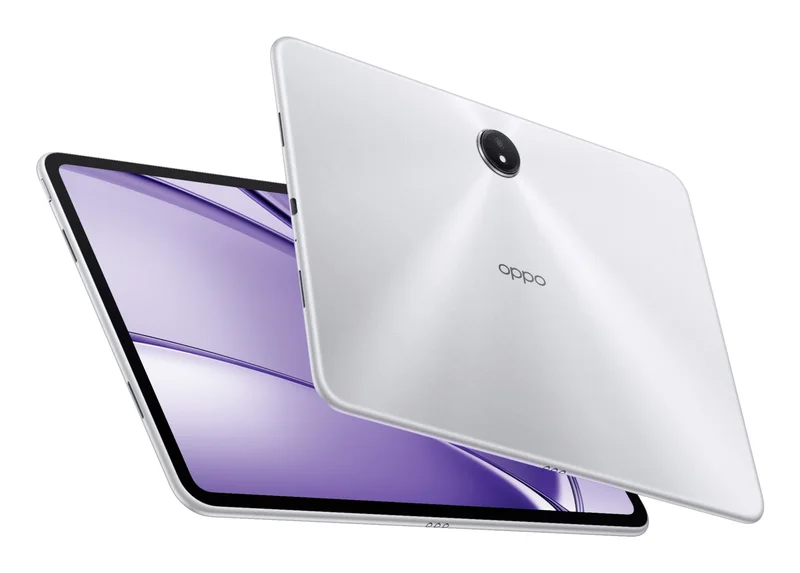
OPPO's Pad 3 is a 6.29 mm thin 11.61-inch tablet with a 144Hz 2800x2000 screen, MediaTek Dimensity 8350, a 9,520 mAh battery and 67W charging.
Key figures at a glance
Gallery



Specifications
- Display
- 11.61" (29.49 cm) LCD (LTPS), 2800x2000, up to 144Hz, 500 nits (700 nits HBM), 296 ppi; Matte Display Edition with nano-texture anti-reflective finish
- Chipset
- MediaTek Dimensity 8350 (4nm), Arm Mali-G615 MC6
- RAM
- 8GB
- Storage
- 128GB (UFS 3.1) / 256GB (UFS 4.0)
- Rear Camera
- 8MP main (f/2.0, autofocus)
- Front Camera
- 8MP (f/2.0)
- Battery
- 9,520 mAh (typical), 9,230 mAh (rated), 67W SUPERVOOC wired
- OS
- ColorOS 15.0
- Dimensions
- 257.75 x 189.11 x 6.29 mm, 536 g
- Connectivity
- Wi-Fi 6, Bluetooth 5.4, USB-C
- Audio
- Hi-Res Audio certified, LHDC and LDAC codecs
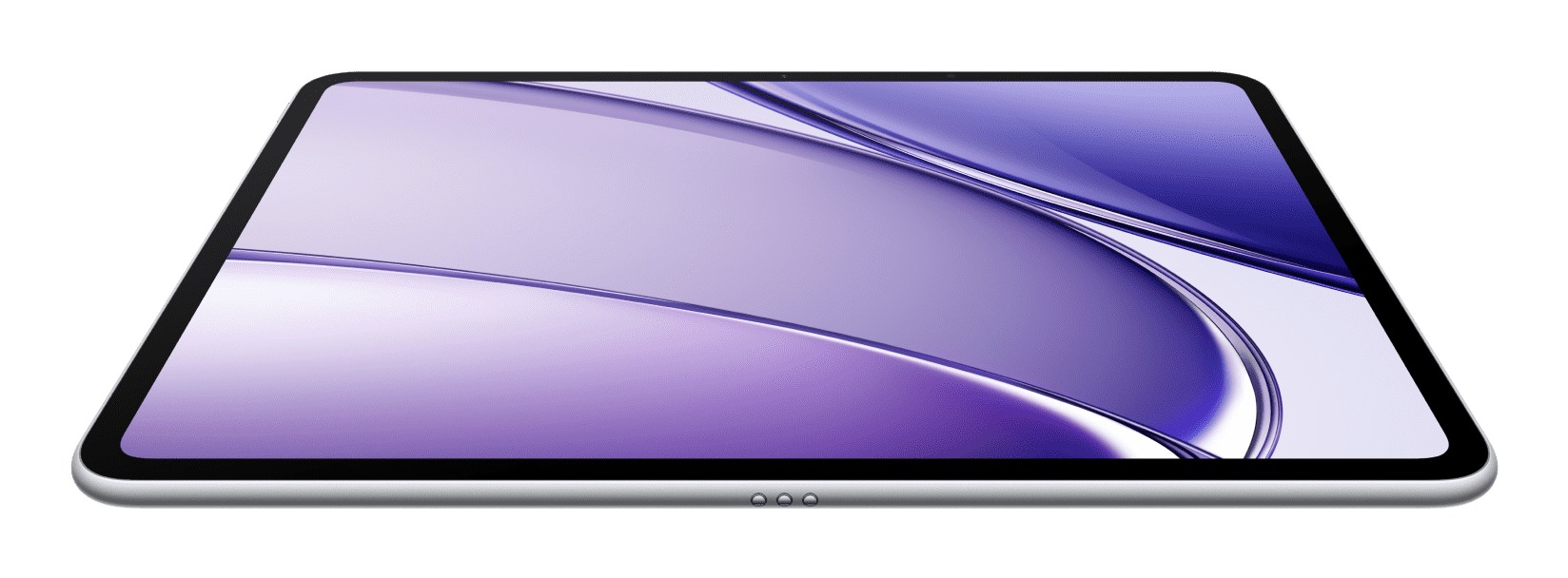
The OPPO Pad 3 is an 11.61-inch Android tablet built around three ideas: a very thin body, a fast 144Hz screen that comes with an anti-reflective matte finish in the Matte Display Edition, and a large battery of roughly 9,500 mAh. OPPO positions it for reading, note-taking, video and light productivity, with ColorOS 15 and a MediaTek Dimensity 8350 chipset. This page is based on the published specifications and manufacturer information, and it explains where the tablet fits, what it offers and which compromises come with that design.
Place in the lineup
OPPO's global tablet range currently lists the Pad 3 Matte Display Edition next to the Pad 3 Pro, the Pad SE and newer models. The Pad 3 is the thin-and-light model in that group; for a simpler tablet, see the OPPO Pad SE, and for another Android tablet to compare it with, look at the OnePlus Pad 3. The model number on OPPO's spec sheet is OPD2406.
A note on the date and price. The release date shown here, 8 January 2025, is a reference date for the launch window. OPPO Singapore's announcement for the Matte Display Edition carries a 2024 date in its text that is evidently a typo, since the same release describes ColorOS 15 and the Dimensity 8350, so we have used the January 2025 reference date instead. OPPO's global pages give no US price. The Singapore announcement lists the 8GB+256GB model at S$799, accompanied by launch gifts that varied by sales channel, so treat any price you see as regional.
Design and display
The headline number is the thickness: 6.29 mm at the thickest point, which OPPO describes as its thinnest tablet so far. The tablet measures about 257.75 mm by 189.11 mm and weighs about 536 g according to the spec sheet. That weight is reasonable for a tablet of this size, though not light enough to hold one-handed for a long time. Silver is the colour shown on OPPO's global pages.
The panel is an LCD (LTPS) of 11.61 inches, which OPPO's sheet gives as 29.49 cm diagonal, with a resolution of 2800 x 2000 pixels and a density of 296 ppi. The maximum refresh rate is 144Hz, and the adaptive steps listed are 30, 48, 50, 60, 90, 120 and 144Hz, so the screen can drop to lower rates for static content. Typical brightness is 500 nits, with a high-brightness-mode figure of 700 nits. OPPO lists 96% NTSC coverage and 97.4% DCI-P3 coverage, 10-bit colour depth (8 bits in hardware and 2 bits through software) and a screen ratio of 88%. Touch sampling is up to 480Hz for fingers and 240Hz for the stylus.
The Matte Display Edition adds a nano-texture anti-reflective surface. OPPO states that it reduces glare by up to 97% and calls it a paper-like experience for reading, writing and sketching. It also cites a hardware low-blue-light approach with very low flicker and DC-like dimming, with TÜV Rheinland Intelligent Eye Care 3.0 and Reflection Free certifications. These are manufacturer claims. Matte surfaces generally trade a little sharpness and contrast for less reflection, and OPPO's pages do not quantify that trade-off, so judge it in person if you can. A relatively modest 500-nit typical brightness is another reason a glare-reducing finish may be useful, since the panel is not an OLED or mini-LED model.
Performance, memory and software
The chipset is the MediaTek Dimensity 8350, which the Singapore announcement describes as a 4nm part tuned jointly by MediaTek and OPPO, with an APU 780 AI processor. The graphics unit is the Arm Mali-G615 MC6 and the CPU has eight cores. OPPO claims 3.3 times higher AI performance than the previous generation and support for models up to 10 billion parameters. Those are manufacturer claims about AI workloads and do not translate directly into gaming or app speed. For ordinary tablet tasks such as web, video, reading, drawing and office apps, a chip in this class is normally more than adequate.
The global spec sheet lists 8GB of LPDDR5X RAM, paired with either 128GB of UFS 3.1 storage or 256GB of UFS 4.0 storage. The listing does not mention a storage card slot; the page only notes that USB OTG is supported. Choose the 256GB version if you plan to keep many offline videos or large documents, since it also uses the faster storage standard.
The operating system is ColorOS 15.0, and OPPO's announcement says it is the first time ColorOS 15 arrives on a tablet. The Android version beneath it is not stated on the pages we used, so we do not give one. OPPO highlights several software features. Up to three apps can run side by side in split-screen layouts. OPPO's AI tools offer on-screen translation, summaries, replies and note-writing help. A cross-device feature called O+ Connect is described as the first on an Android tablet to share content with an iPhone or iPad. OPPO also says the tablet is the first to pass a TÜV SÜD 60-month Class A fluency certification, meaning smooth performance is expected to hold up after five years of intensive use. These are claims; software updates, regional AI availability and the length of the update commitment are not stated on the spec sheet, so confirm them locally.
Connectivity is Wi-Fi 6 with 160MHz bandwidth on 5GHz and 2x2 MIMO, Bluetooth 5.4 and a USB-C port, with the usual sensors. Audio codecs include SBC, AAC, LHDC and LDAC, and OPPO states Hi-Res Audio certification for both wired and wireless listening. There is no cellular modem on the spec sheet, so this is a Wi-Fi tablet. Face recognition is listed for unlocking.
Cameras
Cameras are not the point of a tablet, and OPPO treats them accordingly. The rear camera is 8MP with an f/2.0 aperture, a 77.2-degree field of view and autofocus, and the front camera is 8MP with fixed focus. Rear video goes up to 4K at 30 frames per second with zoom and electronic stabilisation, while the front camera records 1080p at 30 frames per second, and 60fps video is not supported. That is enough for scanning documents, video calls and the occasional quick photo, but nobody should buy this tablet as a camera.
Battery and charging
The battery is rated at 9,230 mAh and has a typical capacity of 9,520 mAh. Charging is up to 67W using SUPERVOOC, and the spec sheet also lists SuperVOOC 2.0, VOOC 3.0, UFCS and standard PD and QC modes at lower power. A charger is listed in the box for the markets that include it. With a 144Hz LCD, battery life will depend heavily on the refresh rate you choose; OPPO does not publish an endurance figure on the pages we used, so we do not quote one. A large cell like this one is a strong point for travel, streaming and reading sessions, and 67W charging is fast for a tablet.
Accessories and who it is for
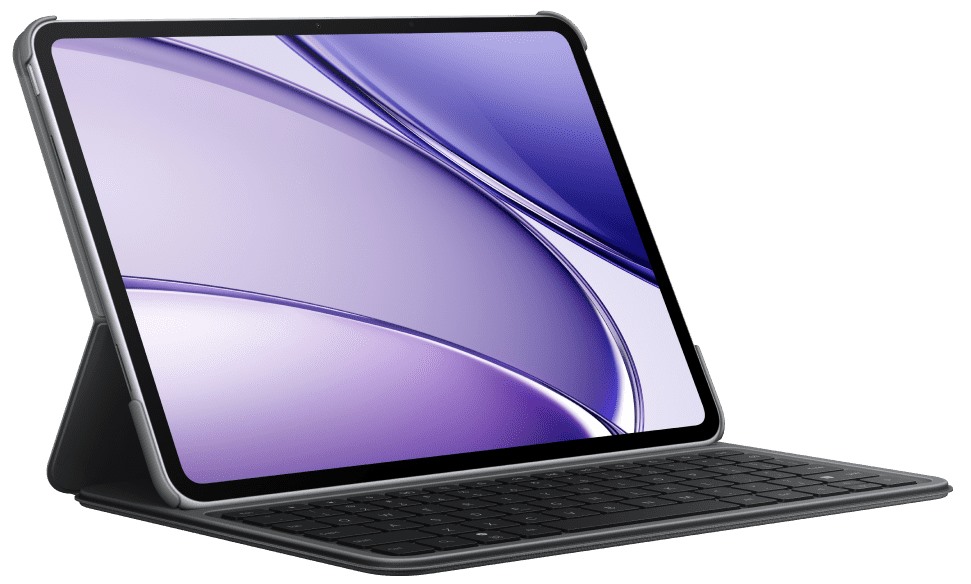
OPPO sells the OPPO Pencil 2 and the OPPO Pad 3 Smart Keyboard as separate accessories. The keyboard has PC-style keys, a dedicated AI key and NFC for a touch-to-share feature. Together they make the Pad 3 a credible light laptop alternative for students and professionals who write a lot, while the matte display aims at people who read or sketch in bright rooms or near windows.
The Pad 3 suits readers, students, note-takers and frequent travellers who want a slim tablet with a big battery, and people who need to move files between an Android phone, an iPhone and a tablet. If you prefer the larger accessory ecosystems of other brands, compare it with the Samsung Galaxy Tab S9 in our OPPO Pad 3 vs Galaxy Tab S9 page, or see how it ranks overall in the rankings.
Compromises to weigh
- LCD, not OLED: contrast and peak brightness are limited next to OLED rivals, even with 144Hz.
- Matte trade-offs: an anti-reflective finish reduces glare but can slightly soften fine detail; this is a general property, and OPPO gives no measurement of it.
- Modest cameras: 8MP front and rear, with 4K video only at 30fps on the rear.
- Memory options: the global sheet lists only 8GB of RAM and no card slot.
- No cellular: the spec sheet lists Wi-Fi only.
- Unstated details: the Android version, the update commitment and a US price are not given on the pages used here, and accessories are sold separately.
In short, the OPPO Pad 3 is a thin, fast-screened tablet with a large battery and a distinctive matte option. It makes sense if you value reading comfort and endurance more than cameras or an OLED panel.
Where it ranks
Compare OPPO Pad 3 with similar devices
More from OPPO
Frequently asked questions
When was the OPPO Pad 3 released?
The OPPO Pad 3 was released on 2025-01-08, according to the manufacturer’s published information.
What are the main specs of the OPPO Pad 3?
Headline figures for the OPPO Pad 3: Battery: 9,520 mAh, Refresh rate: 144 Hz, Main camera: 8 MP, RAM: 8 GB. The full specification table is further up this page.
Is the OPPO Pad 3 worth buying?
That depends on your priorities. Use the editorial review on this page for our view, check the rankings above to see where the device stands on battery, display and camera, and compare it directly with similar models before you decide.