Smartwatches
Huawei Watch GT Runner 2
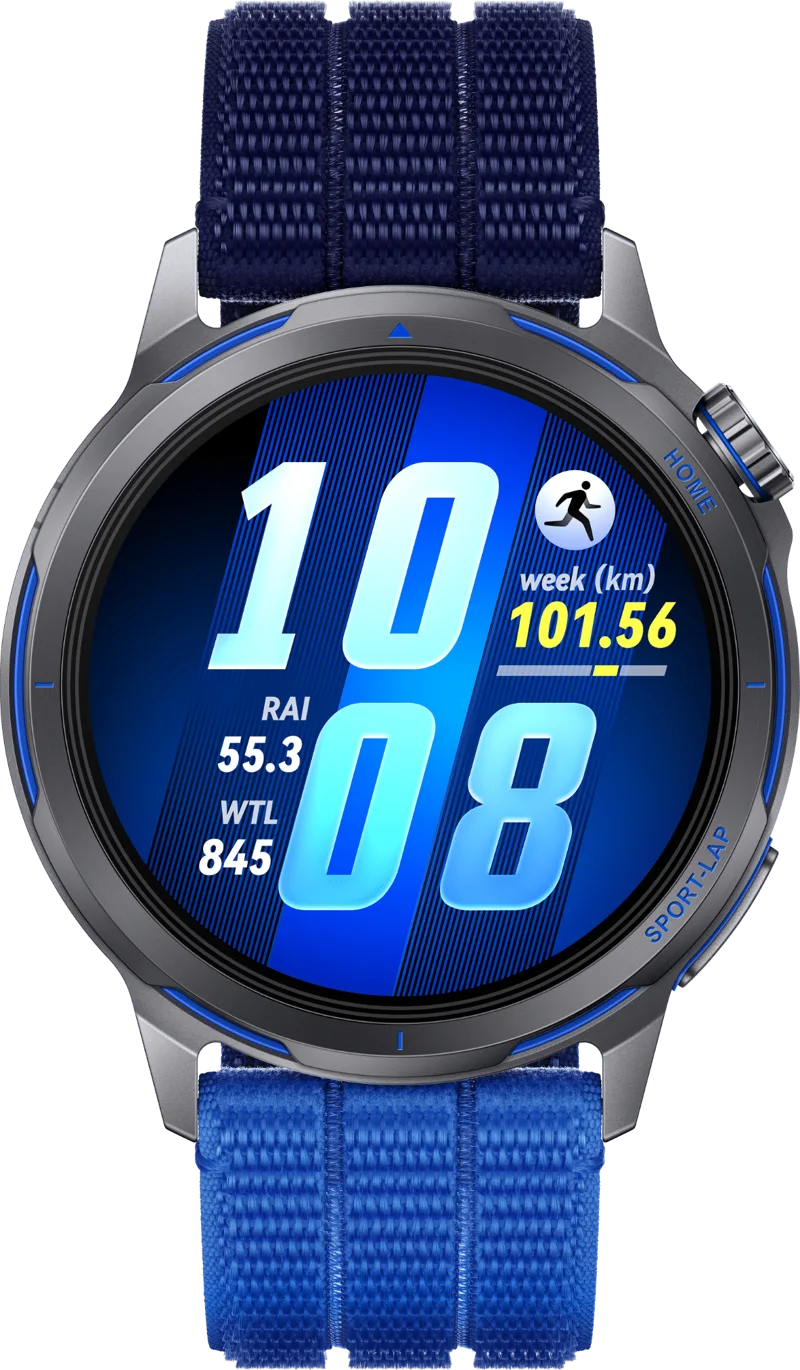
Huawei's 2026 running watch has a 34.5 g titanium case, a 1.32-inch AMOLED display, dual-band GPS and up to 7 days of typical battery life, or 32 hours of outdoor workouts.
Key figures at a glance
Gallery
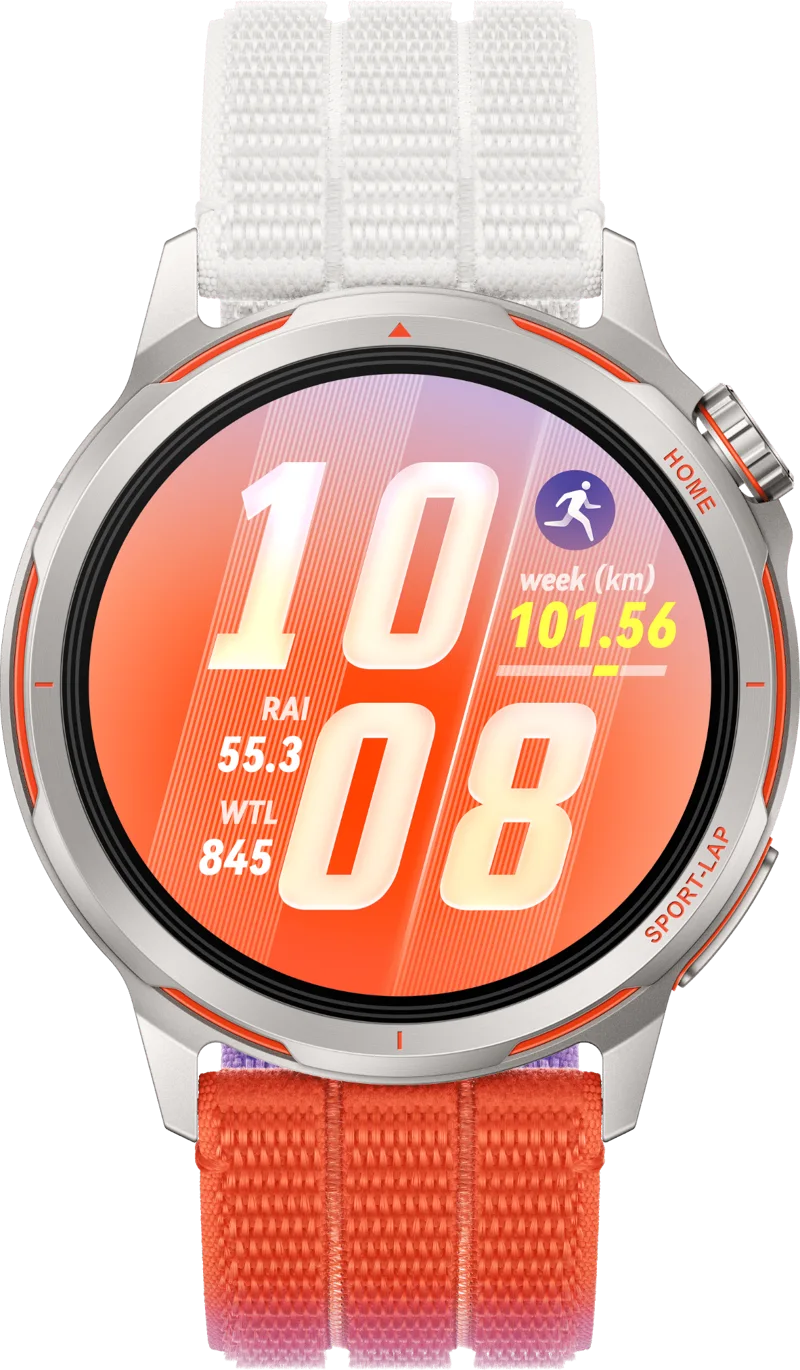
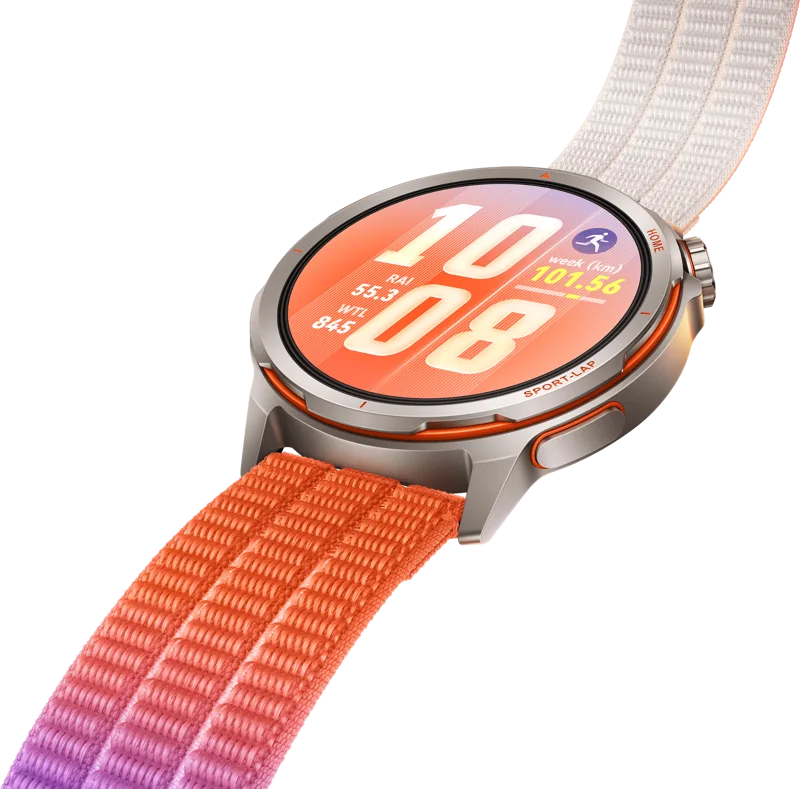
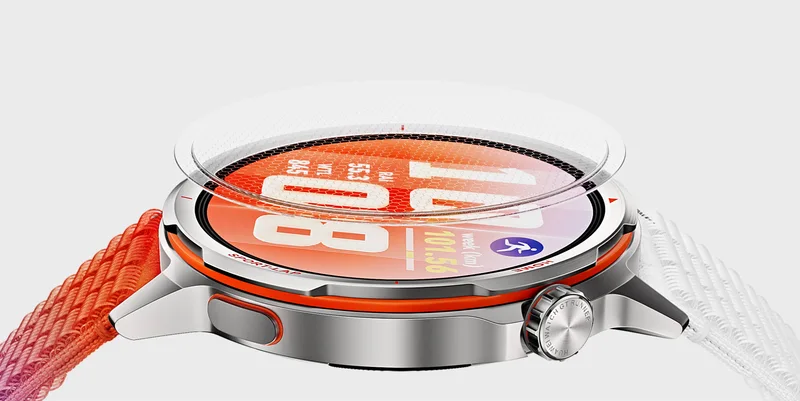
Specifications
- Display
- 1.32-inch AMOLED, 466 x 466, 352 ppi, up to 3,000 nits peak brightness, 2nd-generation Kunlun Glass
- Body
- Titanium alloy front case, bezel, crown and button; fiber-reinforced composite rear case; 43.5 x 43.5 x 10.7 mm; about 34.5 g without strap
- Battery
- Up to 7 days typical use, up to 14 days light use, up to 32 hours outdoor workout mode
- Positioning
- Dual-band GPS (L1+L5), GLONASS, BeiDou, Galileo, QZSS, NavIC; 3D floating antenna
- Sensors
- Optical heart rate, ECG, accelerometer, gyroscope, magnetometer, barometer, temperature, ambient light, depth
- Connectivity
- Bluetooth 6.0, NFC, speaker and microphone for calls
- Durability
- 5 ATM, IP69, free dives up to 40 m (EN13319)
- Charging
- Wireless charging cradle
- Straps
- HUAWEI AirDry woven strap (about 9 g) plus a fluoroelastomer strap in the box; wrist size 120-190 mm
- Compatibility
- Android 9.0 or later, iOS 13.0 or later, via the HUAWEI Health app
- Sports
- 100+ workout modes, Intelligent Marathon Mode, offline color maps
The Huawei Watch GT Runner 2 is a lightweight running watch that Huawei presents as a successor to its first GT Runner. It pairs a 34.5 g titanium-alloy case and a 1.32-inch AMOLED display with dual-band GPS, a new 3D floating antenna and a battery rated for up to 7 days of typical use or 32 hours of outdoor workouts. Huawei also leans on a collaboration with the dsm-firmenich Running Team for a Marathon Mode, and sells a Racing Legend Edition created with marathon runner Eliud Kipchoge. This page is based on the published specifications and manufacturer information from Huawei's global site. It covers the watch's place in the range, the materials and design, positioning and running features, health tools, battery life, who it is for and its compromises.
Place in the lineup
The GT family is Huawei's mainstream sports-watch line, with the Huawei Watch GT 6 Pro as a sibling aimed at a more general audience. The GT Runner 2 is the running-focused variant: very light, with a woven strap designed to stay comfortable during long runs and a feature set tilted toward training analysis. Huawei compares the new watch with the original GT Runner and the GT 6 series in its footnotes, so the claims about better positioning accuracy and battery energy density are measured against those. The watch ships in Dawn Orange, Dusk Blue and Midnight Black, plus the Racing Legend edition, and the global page does not list a US price or an on-sale date, so neither is stated here.
Among competitors, the closest in purpose are Garmin's Forerunner 265 and the pricier Forerunner 970, as well as Amazfit's Active 3 Premium at the entry end of runner-focused watches. For a direct look, see Huawei Watch GT Runner 2 vs Garmin Forerunner 265, and use the rankings page to compare the tracked numbers across smartwatches.
Design and materials
The GT Runner 2 measures 43.5 x 43.5 mm and is 10.7 mm thick, excluding the sensor area, and Huawei lists a weight of about 34.5 g without the strap. The strap adds roughly 9 g in the woven version. The front case, bezel, crown and button are titanium alloy, while the rear case is a fiber-reinforced composite, which keeps weight low. The crystal is second-generation Kunlun Glass, and the AMOLED display is 1.32 inches with a 466 x 466 resolution at 352 pixels per inch and a quoted peak brightness of 3,000 nits under laboratory conditions. The watch has a rotating crown that works as the Home button and a separate side button, and it charges wirelessly on a cradle that comes in the box.
The most distinctive part is the HUAWEI AirDry woven strap, a hollow-out design that Huawei says improves breathability by 25 percent compared with a nylon strap from its Watch Fit 3. The colors are created with a capillary-dye process and fade in a gradient, echoing the color names. Each box also includes a fluoroelastomer strap with perforations. This matters, because Huawei's fine print states that the woven strap is not designed for water activities such as swimming or to withstand sweat in the long term, and recommends alternative straps in those situations. In other words, the woven strap is for dry runs and daily wear, and the fluoroelastomer strap is the one for pools and heavy sweat. The wrist size range is 120 to 190 mm.
Positioning and running features
Positioning is the headline. The watch supports dual-band GPS (L1 and L5), GLONASS, three-band BeiDou, dual-band Galileo, QZSS and NavIC, and it uses a 3D floating antenna along with an intelligent converged positioning algorithm. Huawei claims 20 percent more accurate positioning than the original GT Runner, including through buildings and tree-lined streets. That is a manufacturer claim based on a lab comparison, so real-world results will vary with the environment and should be checked against independent tests.
On the software side, Huawei built an Intelligent Marathon Mode with the dsm-firmenich Running Team. It offers an event assistant that follows major marathons, customized training plans, a digital pacer that shows how far ahead or behind target pace the runner is, a performance prediction for finishing time, and a refuel reminder as part of a personalized fueling strategy. Professional metrics include lactate threshold, a single Running Ability Index (RAI), training intensity and running power. Huawei notes in its footnotes that some of these features arrive with an over-the-air update, and that event information comes from official event websites. A web-based Training Camp Dashboard lets users view and compare ten key metrics, import FIT and TCX files from other devices, and export data for analysis. Daily running support includes 13 built-in courses, a guided warm-up, heart-rate guidance and alerts, full-color offline maps with voice navigation to headphones, an auto-pause, and post-run stretching. Beyond running, the watch lists more than 100 workout modes, including cycling, swimming, trail running, golf with courses in certain markets, wheelchair mode and free diving to 40 meters.
Health and everyday features
The health toolkit centers on an optical heart-rate sensor with an ECG sensor. The watch can prompt an ECG reading 30 minutes after a medium to high intensity workout, taken by holding the side electrode for 30 seconds, and it provides pulse wave arrhythmia analysis for potential atrial fibrillation and premature beat risks. It tracks heart-rate variability, SpO2, sleep stages and sleep breathing awareness, estimates stress and, in a more playful touch, identifies 12 emotional states shown through floral watch faces. It can warn about high-altitude risks above 2,500 meters and detect hard falls, placing an SOS call if not cancelled within 60 seconds after the feature is enabled and a phone is connected. Huawei stresses that this is not a medical device, that results are for reference only, and that availability of some features varies by region and by the connected phone.
For daily life the watch supports NFC payments and QR code scanning, Bluetooth calls through the HUAWEI Health app, standalone music playback on Android phones, and third-party apps from the Watch AppGallery, with availability varying by country. It works with Android 9 or later and iOS 13 or later. Some features differ on iPhone: music syncing and custom video watch faces are not supported when paired with iOS. Owners receive a free three-month trial of HUAWEI Health+, which unlocks premium content such as global city runs and fitness courses.
Battery life
Huawei rates the battery at up to 32 hours in outdoor workout mode with precise positioning, up to 7 days of typical use and up to 14 days of light use with auto-detect workouts disabled. The typical-use test assumes 30 minutes of Bluetooth calling and music per week, always-on heart-rate monitoring, sleep and stress monitoring, 240 minutes of GNSS-enabled exercise per week and 30 minutes of screen time per day, so heavier use will reduce the figure. Huawei credits a stacked silicon battery with 68 percent higher energy density compared with the GT 6 series, again from its lab. The watch charges wirelessly with a 5V to 10V supply at up to 2A.
Who it is for
The GT Runner 2 is aimed at runners, from regular road runners to marathon trainees, who want a light watch with good battery life and detailed training analysis without paying for a premium multisport device. It suits people who like the idea of a woven strap on a small, light case, who use both Android and iOS phones, and who want ECG and health features in a sports watch. Those who plan to swim or sweat heavily should plan on using the fluoroelastomer strap.
Compromises
The global page does not state the watch's operating system, memory or a price, and some headline features depend on later updates, so check what is live on your device. Several functions vary by region or phone type, and iPhone users lose music syncing and custom video watch faces. The 20 percent positioning and 68 percent battery claims come from Huawei's own comparisons, and the woven strap is not meant for water or heavy sweat. As with any health feature on a watch, the ECG and arrhythmia tools are for reference and not for diagnosis.
Where it ranks
Compare Huawei Watch GT Runner 2 with similar devices
More from Huawei
Frequently asked questions
When was the Huawei Watch GT Runner 2 released?
The Huawei Watch GT Runner 2 was released on 2026-02-26, according to the manufacturer’s published information.
What are the main specs of the Huawei Watch GT Runner 2?
Headline figures for the Huawei Watch GT Runner 2: Battery life: 7 days. The full specification table is further up this page.
Is the Huawei Watch GT Runner 2 worth buying?
That depends on your priorities. Use the editorial review on this page for our view, check the rankings above to see where the device stands on battery, display and camera, and compare it directly with similar models before you decide.