Smartwatches
Huawei Watch GT 6 Pro
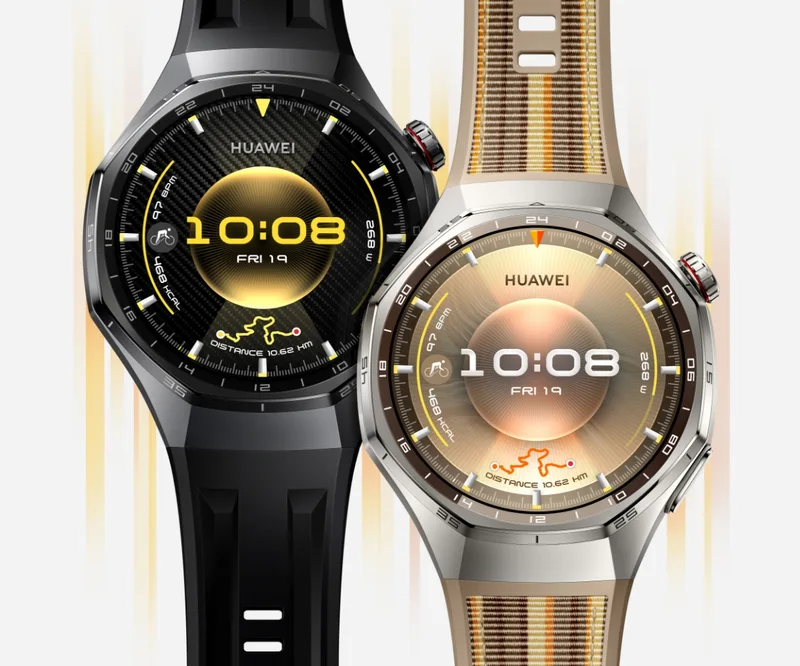
Huawei's 2025 flagship GT watch combines a titanium case and sapphire glass with an ECG sensor, wrist-based cycling power and up to 21 days of battery in light use.
Key figures at a glance
Gallery
Specifications
- Size
- 45.6 x 45.6 x 11.25 mm, about 54.7 g without strap; wrist size 140-210 mm
- Display
- 1.47-inch AMOLED, 466x466, 317 ppi, up to 3,000 nits (Huawei claim), sapphire glass
- Case
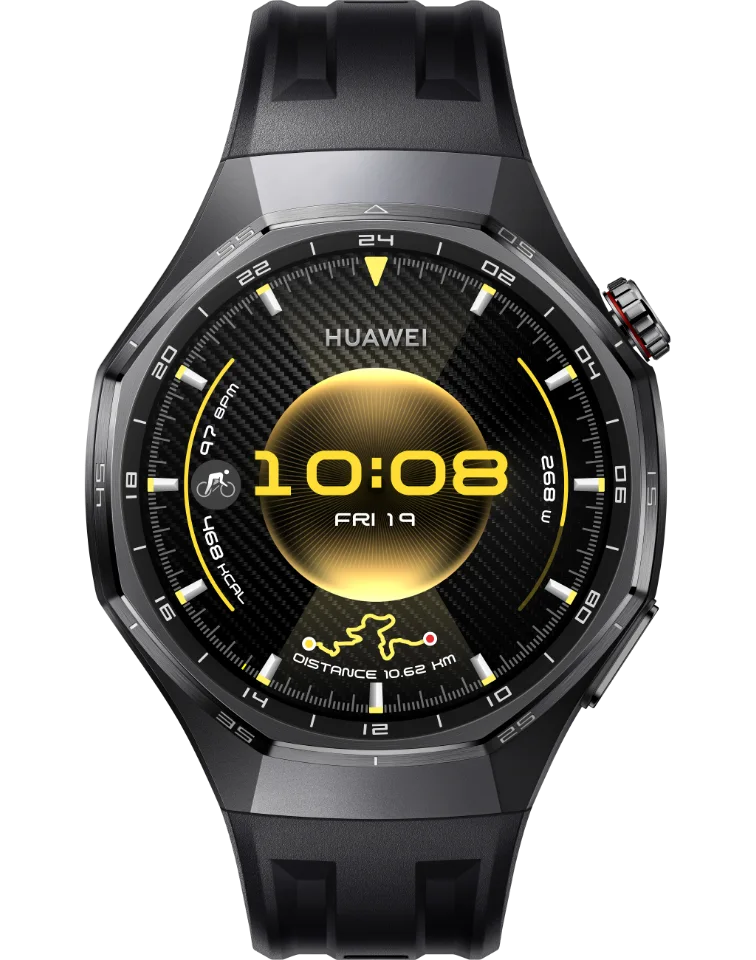
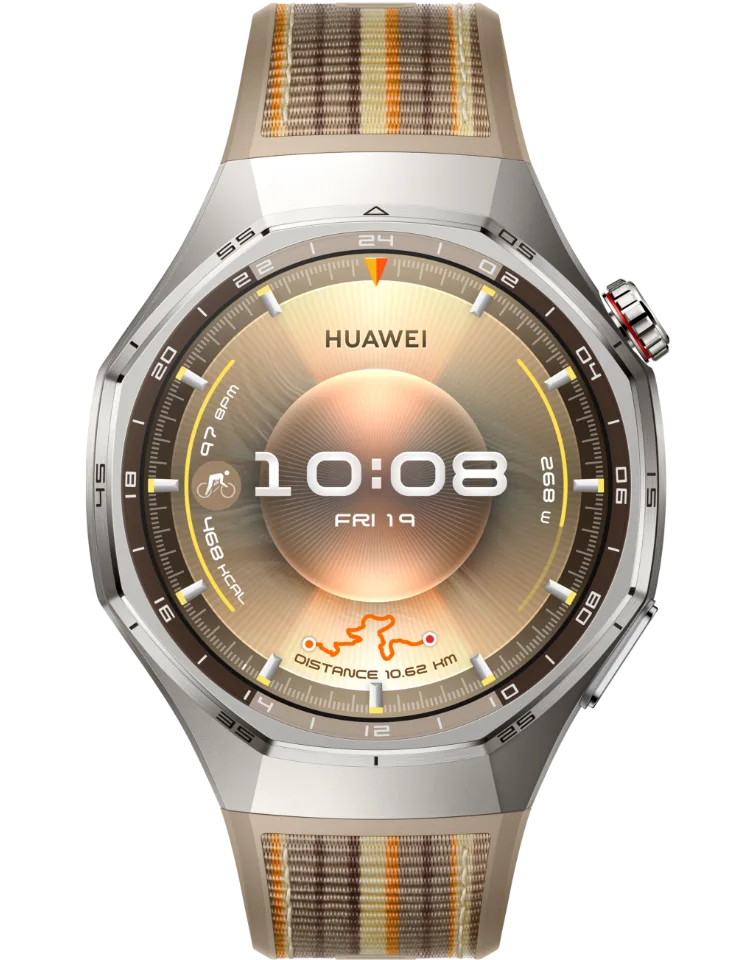
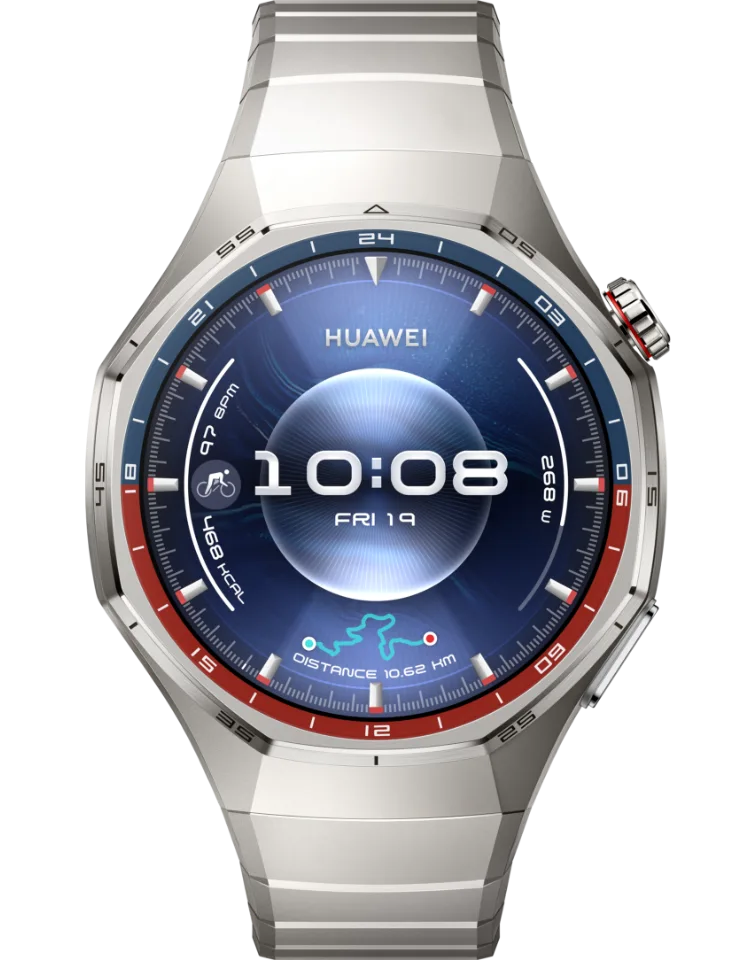
- Titanium alloy; Black fluoroelastomer, Brown composite woven or Titanium strap
- Battery
- Up to 21 days (light use, Huawei lab test), up to 12 days typical use, up to 7 days with always-on display, up to 40 hours in outdoor sport mode; wireless charging
- Durability
- 5 ATM, IP69, freediving to 40 m (EN13319)
- Sensors
- Optical heart rate, ECG, temperature, barometer, depth, accelerometer, gyroscope, magnetometer, ambient light
- Positioning
- Dual-band GPS (L1+L5), GLONASS, BeiDou, Galileo, QZSS, NavIC; offline maps
- Connectivity
- Bluetooth 6.0, NFC, speaker and microphone for Bluetooth calls
- Sports
- 100+ sports modes, wrist-based cycling power, trail running, golf with 17,000+ course maps, skiing, freediving
- OS
- Huawei watch software with the Huawei Health app; works with Android 9.0+ and iOS 13.0+
The Huawei Watch GT 6 Pro is the top model of Huawei's GT 6 smartwatch family, introduced to global customers in September 2025. It uses a titanium alloy case, sapphire glass, a 1.47-inch AMOLED display and a battery that Huawei rates at up to 21 days in light use. It adds an ECG sensor, a depth sensor, wrist-based cycling power and a large set of outdoor modes for running, cycling, golf, skiing and freediving. This page is a review based on the published specifications and manufacturer information. It explains where the Pro sits in the range, what the hardware is, how the battery numbers were produced and which compromises come with Huawei's own software.
Where it sits in the lineup
The GT 6 series has two members: the GT 6, offered in 41 mm and 46 mm sizes, and the GT 6 Pro, which comes in a single 46 mm-class case of 45.6 x 45.6 x 11.25 mm. Huawei's global page lists the Pro in Black, Brown and Titanium variants, which differ mainly in the strap: a black fluoroelastomer strap, a brown composite woven strap or a titanium link strap. The Pro is the version with the titanium case and the sapphire glass, and it follows the GT 5 Pro of the year before. Pricing differs between countries and we found no official US launch price, so none is listed here; check the price in your market. Its closest rivals in this price class are sports-focused watches such as the Garmin Forerunner 970 and general smartwatches such as the Samsung Galaxy Watch8. The page Huawei Watch GT 6 Pro vs Garmin Forerunner 970 shows the numbers side by side.
Design and display
Huawei describes the case as aerospace-grade titanium alloy and the cover as sapphire crystal, and the watch weighs about 54.7 g without the strap, according to the specification page. It is sized for wrists between 140 and 210 mm. The bezel has an angular, faceted shape with scale markings on the sloping edges, and the right side carries a rotating crown, which Huawei calls the Home button, and a second side button. The display is a 1.47-inch AMOLED panel with 466 x 466 pixels and about 317 pixels per inch. Huawei claims a screen area 5.5 percent larger and a peak brightness of up to 3,000 nits, which it describes as 1.5 times brighter, and this should help in direct sunlight; these are manufacturer claims and not independent measurements.
For durability, Huawei lists three ratings: 5 ATM, IP69 and a freediving rating down to 40 metres under the EN13319 standard. IP69 means resistance to hot, high-pressure water jets under the test conditions, but Huawei warns against wearing the watch in hot showers, saunas or other hot and humid places. Treat the freediving rating with equal care: it comes with a long list of conditions and is not a substitute for a dive computer for scuba diving.
Performance and software
Huawei does not publish a processor or memory figure for the GT 6 Pro. The watch runs Huawei's own software and connects to the Huawei Health app on a phone; the specification page says it needs Android 9.0 or later or iOS 13.0 or later, so it works with both major phone platforms. Bluetooth calls are supported when the watch is connected through the Huawei Health app, and standalone music playback exists, although syncing music from the phone is not supported with an iPhone. The watch has a speaker and a microphone, NFC, a remote shutter for the phone camera and a voice notepad. Bluetooth 6.0 is supported.
The trade-off of Huawei's own platform is the app ecosystem. Because the watch does not run Wear OS or watchOS, third-party apps are not available in the way they are on a Samsung or Apple watch, and many people who rely on payment apps, maps or messaging apps on the wrist will notice. Within its own sphere the watch is well equipped, and Huawei includes a three-month free membership of Huawei Health+, which offers workouts, guided meditation and a Stay Fit plan.
Health, sports and navigation
The sensor list is long: optical heart rate, ECG, temperature, barometer, depth, accelerometer, gyroscope, magnetometer and ambient light. Huawei bundles the health features under the name TruSense System. The watch can create an ECG report after a measurement in which the user holds the electrode on the side for 30 seconds, estimates stress, tracks sleep and offers an emotional wellbeing assistant that uses on-watch tracking and breathing exercises. For safety, there is fall detection that can send an SOS call after the wearer confirms it, an SOS function triggered by five quick presses on the crown and a high-altitude adaptation alert for areas at 2,500 m and above. As always, Huawei positions these tools for wellness and not as a replacement for medical advice.
For sports, the main addition of this generation is cycling power estimated from the wrist, so that no separate power meter is needed, with FTP metrics if a real power meter is paired. Huawei says its Sunflower positioning system, together with dual-band GPS and several other satellite systems, improves positioning accuracy by 20 percent. The watch tracks over 100 sports modes, has trail running tools, a ski mode that records up to 100 runs, a freediving mode, a wheelchair mode and golf maps for more than 17,000 courses in over 80 countries and regions, with golf availability varying by market. Offline maps can be downloaded for running and navigation. In comparison to the Garmin Forerunner 265, the GT 6 Pro offers more sensors and a premium case, though Garmin has the deeper training analysis.
Battery and charging
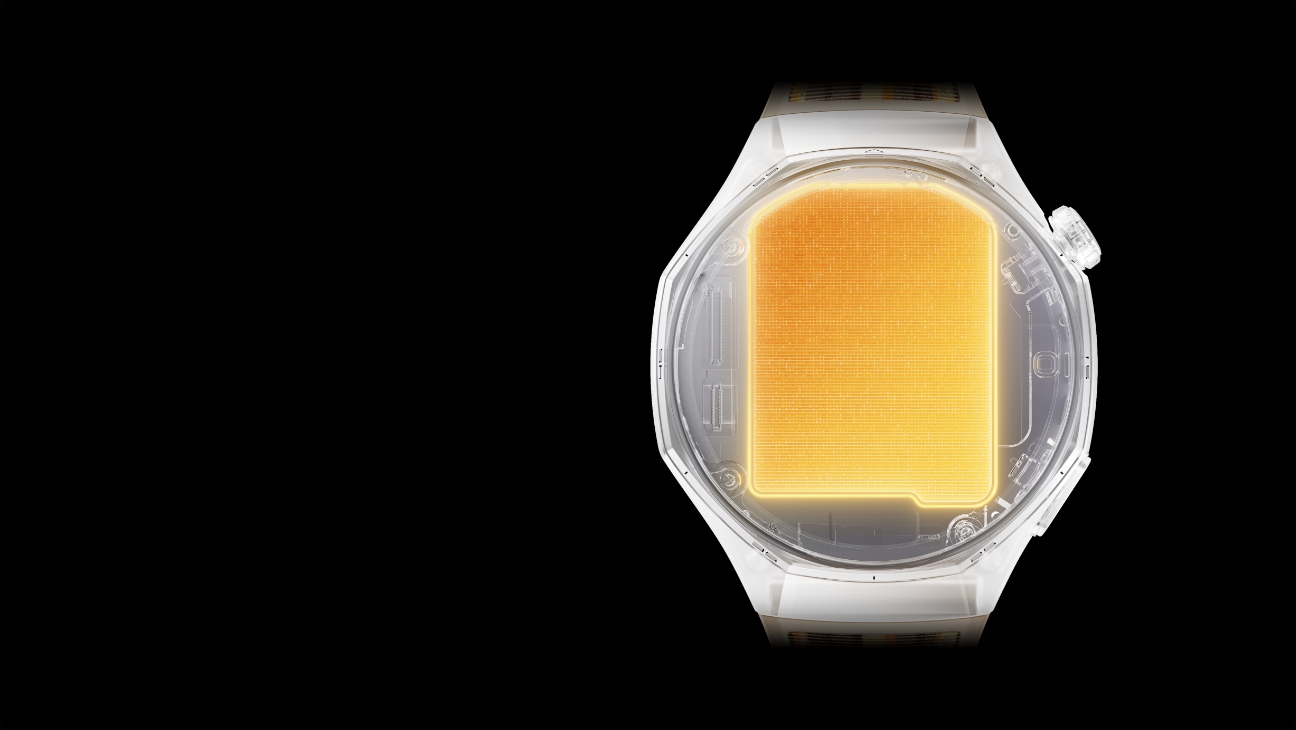
The battery is the headline feature. According to Huawei's specification page, the watch lasts up to 21 days at most in light use, up to 12 days in typical use, up to 7 days with the always-on display enabled and up to 40 hours in the outdoor sport mode. Huawei explains that these figures come from lab tests with defined settings, for example heart rate monitoring always on, a set amount of Bluetooth calling and music, and an average of 90 minutes of exercise per week for the light-use figure and 180 minutes for the typical figure. This is why the 21-day number should be seen as a best case: with the always-on display and regular training, 7 to 12 days is the more realistic range. Huawei says its high-silicon battery raises energy density by 37 percent. Charging is wireless with the supplied cradle, and Huawei recommends using the official cradle for best performance.
Who it is for
The GT 6 Pro is suitable for people who want a premium-looking watch with titanium and sapphire, a long battery life, a wide choice of sports modes and ECG, and who are comfortable with Huawei's own software. It is a good fit for cyclists who want power estimates without extra equipment, for golfers who value course maps, and for people who prefer to charge a watch once or twice a week. Android and iPhone users can both use it. It is less suitable for anyone who needs third-party apps, a wide choice of payment methods or full integration with Google or Apple services, and for those buyers the Apple Watch Ultra 3 or a Wear OS watch is a more natural choice; see the page Huawei Watch GT 6 Pro vs Apple Watch Ultra 3. A cheaper route to a long battery is the Amazfit Balance 2.
Compromises
The first compromise is the platform: the app selection and the integration with phone features is narrower than on Wear OS or watchOS. The second is that some of the best features depend on market availability, such as golf maps and certain health functions, and Huawei notes that feature availability varies by region. The third is the gap between marketing and daily use: the 21-day battery figure applies to light use, and the 3,000-nit brightness and the larger screen are Huawei's own claims. The fourth is that the training analysis is not as deep as that of dedicated sports brands. Finally, the buying experience differs by country, as official distribution, pricing and support vary. Within those limits, the GT 6 Pro is one of the more complete premium fitness watches with an unusually long battery, and a reasonable candidate for anyone whose priorities are endurance, build quality and outdoor tracking.
Where it ranks
Compare Huawei Watch GT 6 Pro with similar devices
More from Huawei
Frequently asked questions
When was the Huawei Watch GT 6 Pro released?
The Huawei Watch GT 6 Pro was released on 2025-09-19, according to the manufacturer’s published information.
What are the main specs of the Huawei Watch GT 6 Pro?
Headline figures for the Huawei Watch GT 6 Pro: Battery life: 21 days. The full specification table is further up this page.
Is the Huawei Watch GT 6 Pro worth buying?
That depends on your priorities. Use the editorial review on this page for our view, check the rankings above to see where the device stands on battery, display and camera, and compare it directly with similar models before you decide.