Smartwatches
Garmin Forerunner 265
Garmin's 2023 mid-range running watch adds an AMOLED touchscreen to multi-band GPS and detailed training metrics, with up to 13 days of battery in smartwatch mode.
Key figures at a glance
Gallery
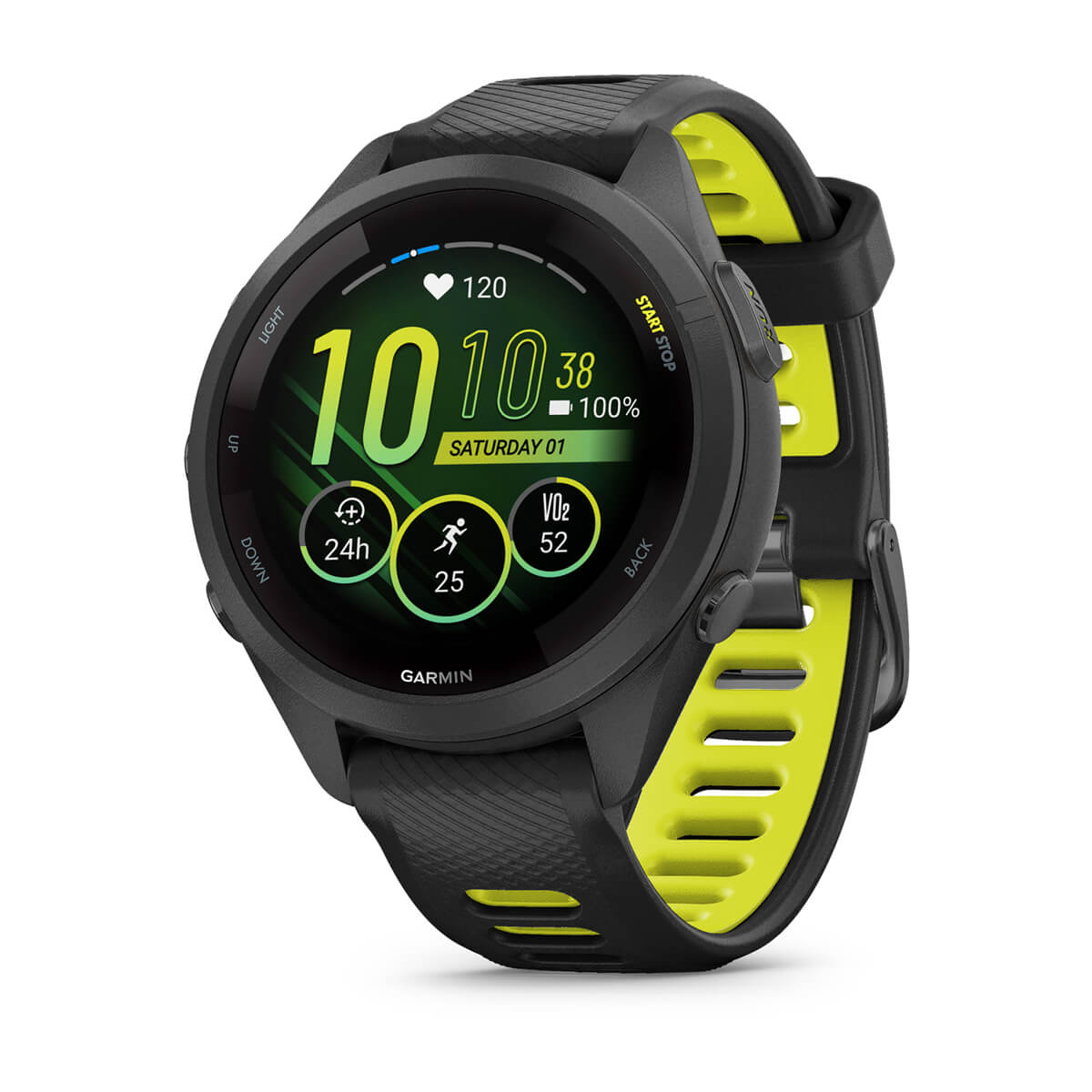
Specifications
- Sizes
- 46 mm Forerunner 265 and 42 mm Forerunner 265S
- Display
- 1.3-inch AMOLED touchscreen (416x416) with optional always-on mode, plus five physical buttons (Forerunner 265, 46 mm)
- Case
- 46.1 x 46.1 x 12.9 mm (Forerunner 265)
- Battery
- Up to 13 days in smartwatch mode (up to 15 days for the 265S); up to 20 hours in GPS mode (24 hours for the 265S) (Garmin claims)
- Navigation
- Multi-band GPS with SatIQ technology; PacePro pacing guidance
- Storage
- Up to 8GB for music and data; Spotify, Deezer and Amazon Music downloads (subscription required)
- Training
- Training readiness, morning report, daily suggested workouts, Garmin Coach, VO2 max, running power and running dynamics
- Health
- Wrist-based Pulse Ox, Body Battery, sleep score, HRV status, stress tracking, menstrual cycle tracking
- Features
- Garmin Pay, smart notifications, incident detection and LiveTrack
- Durability
- 5 ATM water rating
- OS
- Garmin firmware; pairs with Android and iOS through the Garmin Connect app
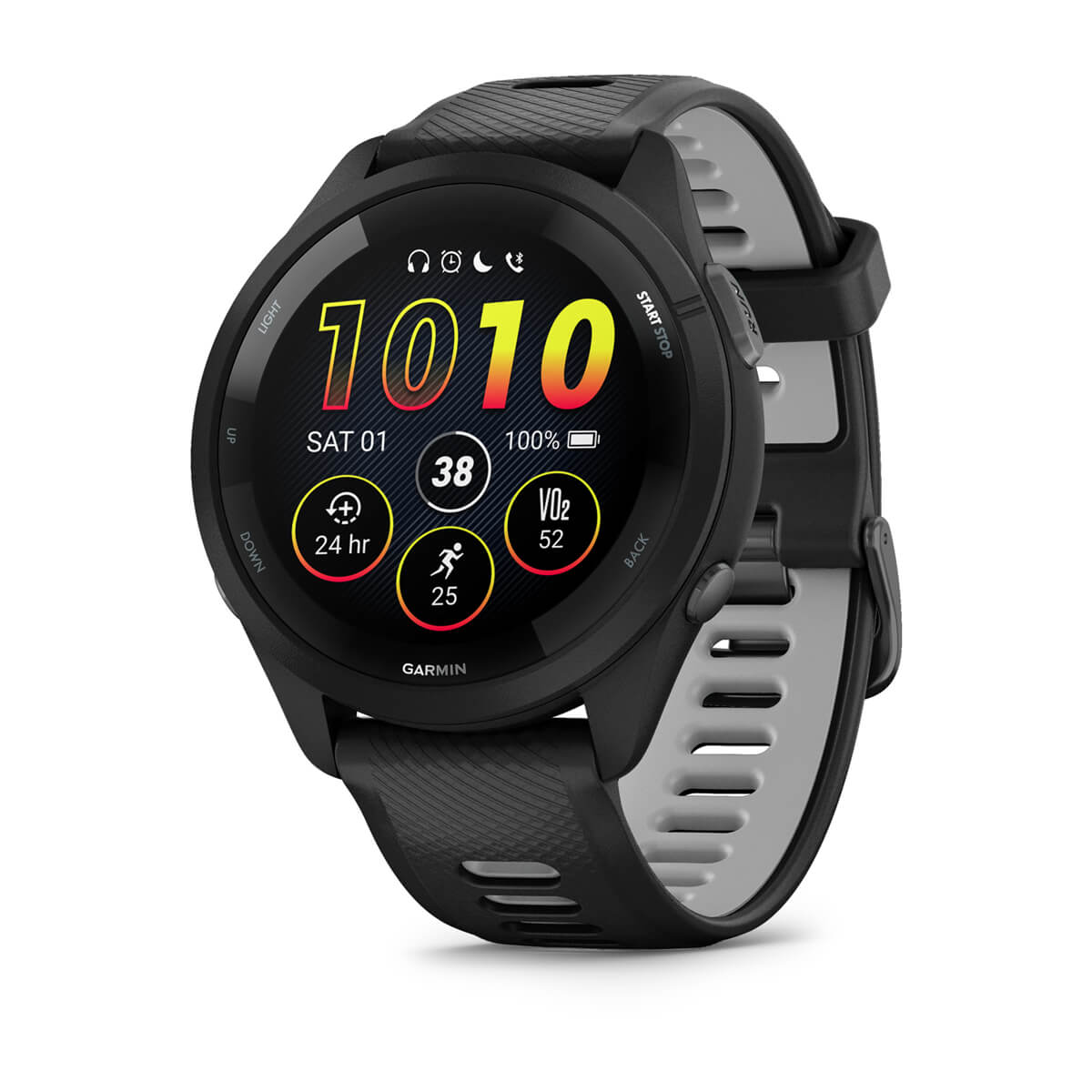
The Garmin Forerunner 265 is a mid-range GPS running watch that Garmin announced on 2 March 2023 with an AMOLED touchscreen, multi-band GPS and the company's usual depth of training metrics. Garmin called it, together with the 965, its first dedicated GPS running smartwatch line with AMOLED displays, and it kept the five physical buttons that runners expect. This page is a review based on the published specifications and manufacturer information. It covers where the 265 fits in Garmin's range, how the hardware and software work, what the battery claims mean and who should still consider a watch that is now several years old.
Where it sits in the lineup
Garmin introduced the Forerunner 265 series together with the Forerunner 965. The 265 was priced at $449.99 and was available immediately, while the 965 followed in late March 2023 at $599.99. The 265 comes in two sizes: the 46 mm Forerunner 265 and the 42 mm Forerunner 265S, which share features and differ in size and battery. The more expensive 965 adds a titanium bezel, a 1.4-inch display, built-in full-colour maps, a larger battery and extra metrics such as load ratio and real-time stamina, according to Garmin. Since then, Garmin has moved on: the Forerunner 970 and 570 arrived in 2025 and cover the same two tiers with newer features. The page Garmin Forerunner 265 vs Garmin Forerunner 970 shows what changed. Because it is now an older model, the 265 is often found at a discount, which makes the comparison between its price and what it still does well more interesting than it was at launch.
Design and display
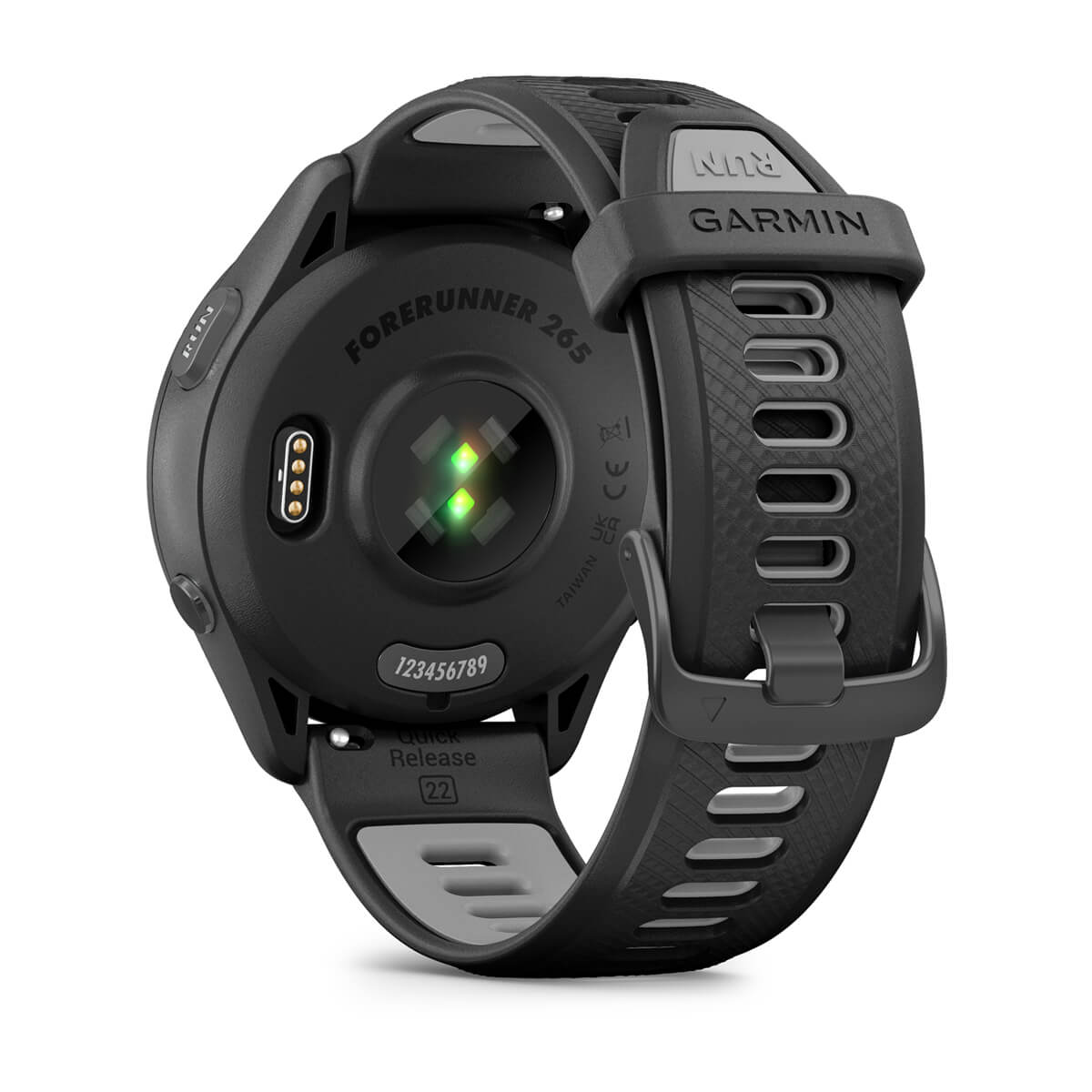
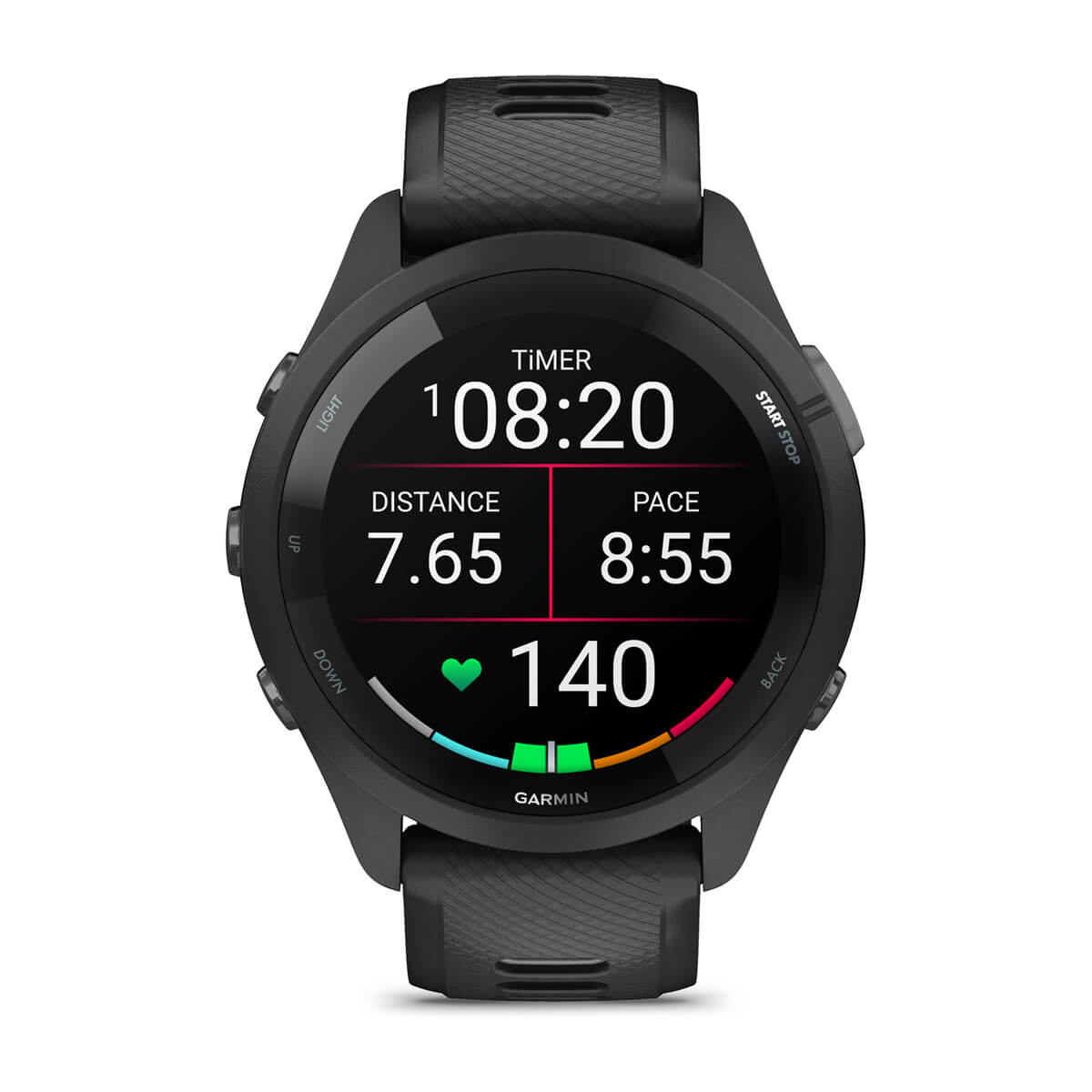
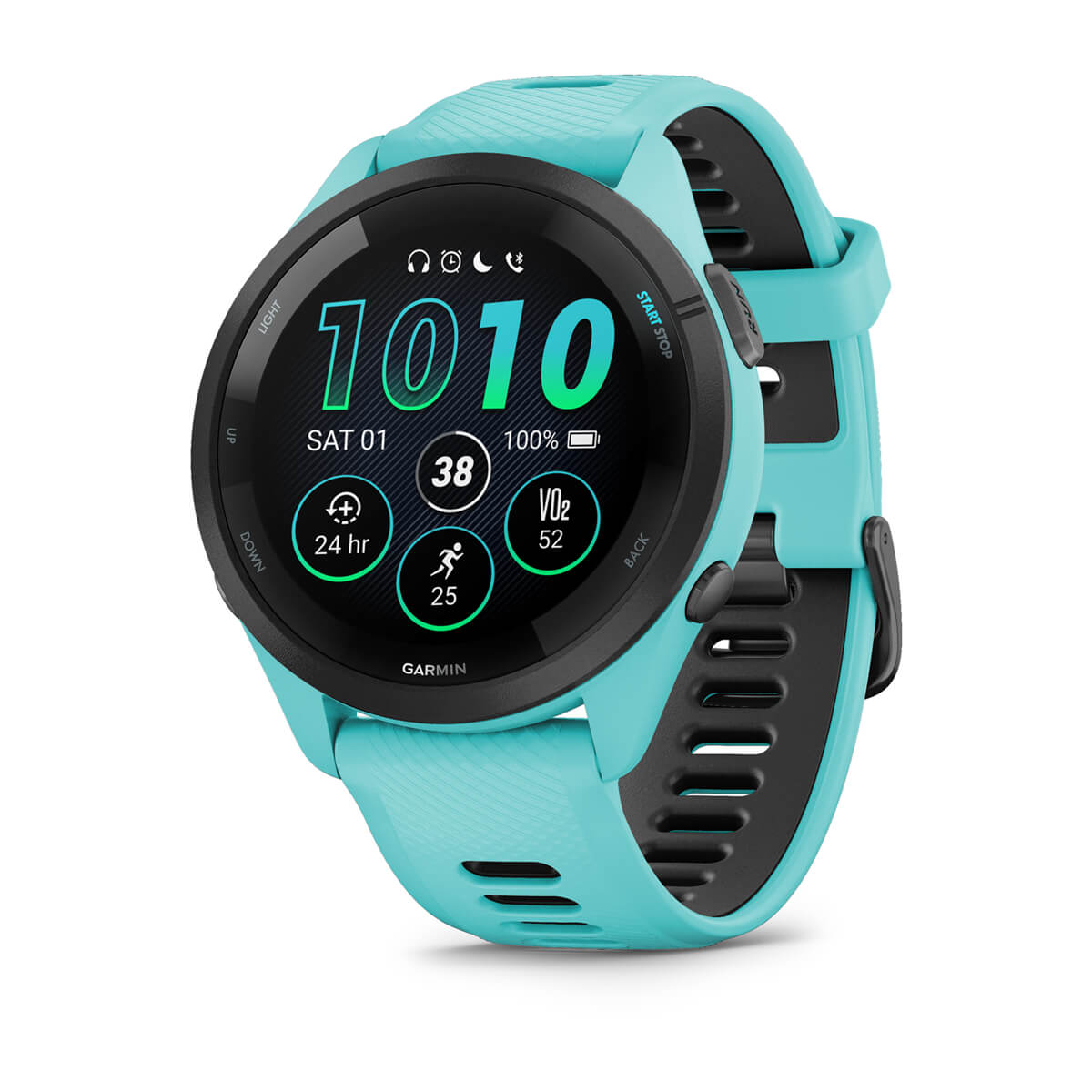
The 46 mm watch has a case of 46.1 x 46.1 x 12.9 mm and a 1.3-inch AMOLED display with 416 x 416 pixels, according to Garmin's specification page. The screen can be set to stay on all the time, and it is a touchscreen as well as being operated by five buttons. That mix is a deliberate choice: the touchscreen is handy for scrolling through widgets and glances in daily life, while the buttons still work with wet or gloved hands during a run. Garmin describes the display as the brightest on its running watches at launch, and the colour screen makes charts, heart rate zones and training suggestions easy to read in all kinds of weather. The watch uses a quick-release band with a 22 mm fit, and Garmin sells it in several colours, from plain black to aqua and yellow accents. The water rating is 5 ATM, which is fine for pool swimming and showering but not for diving.
Performance and software
Garmin does not publish a chipset or a memory figure for the Forerunner 265, so the watch is better judged by what it does than by numbers. It runs Garmin's own firmware, not Wear OS or watchOS, which is why battery life is so long and why third-party app choice is smaller than on an Apple or Samsung watch. Apps and watch faces come from Garmin's Connect IQ store. Notifications from the phone, Garmin Pay contactless payments and music control are supported, and the watch stores up to 8GB, enough for playlists from Spotify, Deezer and Amazon Music (a premium subscription is required for those services). Pairing works with both Android and iPhone through the Garmin Connect app, and there is no subscription fee for the core features. Garmin also includes incident detection, assistance and LiveTrack so that contacts can follow a run.
Training and GPS
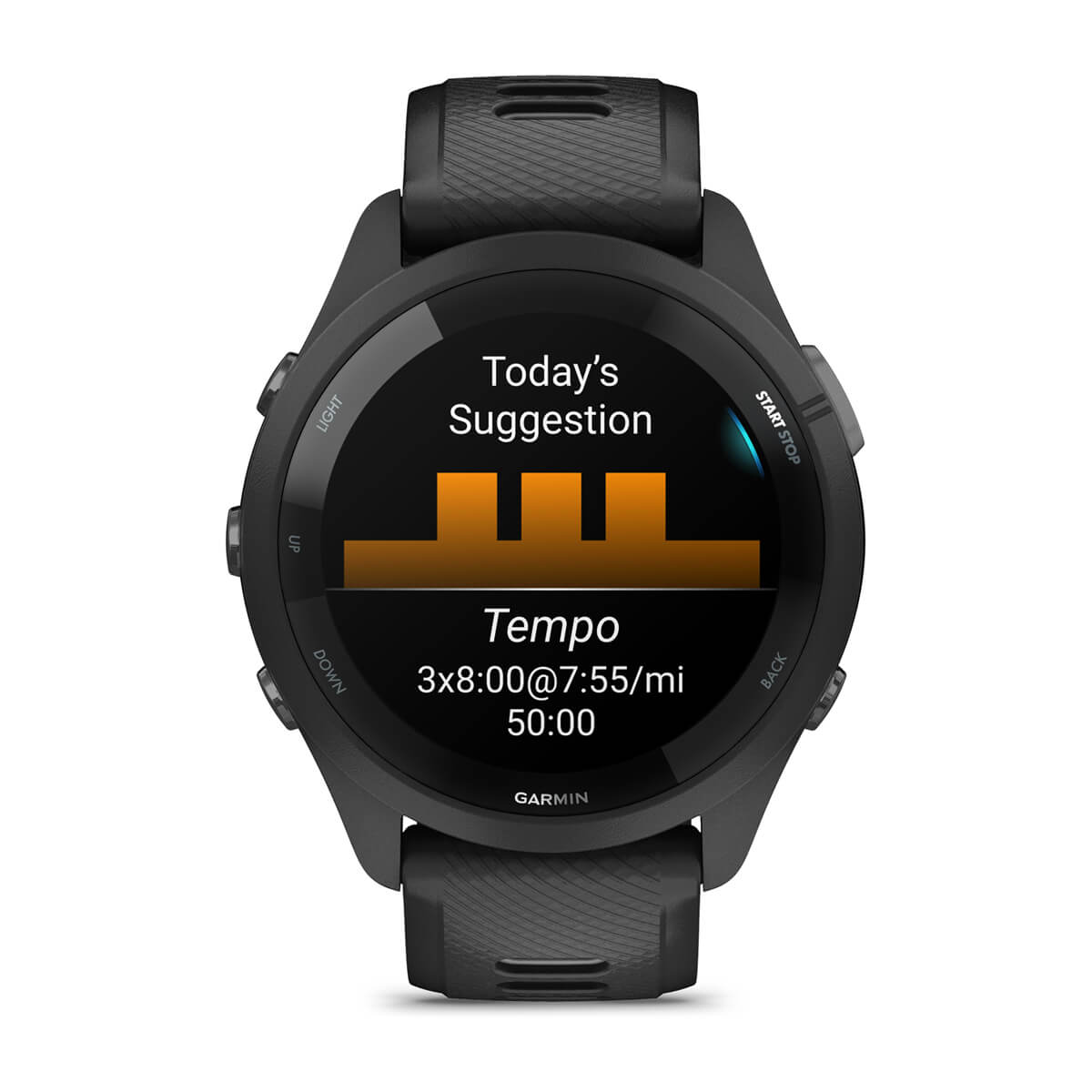
The training tools are the reason to buy a Forerunner. Garmin's Firstbeat analytics supply VO2 max, performance condition and training effect. A morning report summarises last night's sleep, HRV status and the day's training outlook. A training readiness score is built from sleep, recovery and training load, and daily suggested workouts adapt after each run; the race widget estimates a finish time for an upcoming event. For people who prefer a plan, the free Garmin Coach plans from experienced coaches are available, and PacePro offers grade-adjusted pacing for a chosen course. Running power and running dynamics such as cadence, stride length and ground contact time are measured on the wrist, with no extra pod. Pulse Ox, Body Battery, sleep score, stress tracking and menstrual cycle tracking cover the everyday health side, with Garmin noting that Pulse Ox is not a medical device.
For positioning, the 265 has multi-band GPS and Garmin's SatIQ technology, which picks the best positioning mode for the conditions. Garmin says this gives better accuracy in difficult environments such as cities and tree cover. Multi-band mode uses more power, so the GPS battery figures differ by mode, as explained below. The watch does not have the full-colour built-in maps of the 965, so navigation is limited to following courses and breadcrumb trails. Runners who want to leave the phone at home will find the music storage helpful, but those who need on-watch maps should look at the next tier up.
Battery and charging
Garmin's owner's manual lists the following battery life for the 46 mm Forerunner 265: up to 13 days in smartwatch mode with activity tracking, phone notifications and wrist heart rate; up to 20 hours in GPS-only mode; up to 16 hours with Auto Select GPS; up to 14 hours in All + Multi-Band GPS mode; and about 7 hours in GPS-only mode with music playback, falling to 6 hours with multi-band GPS and music. The 42 mm Forerunner 265S gets up to 15 days in smartwatch mode and up to 24 hours in GPS-only mode. These are Garmin's figures, produced under its own conditions, and the manual adds that real battery life depends on the features switched on. Charging is through Garmin's proprietary cable. For a watch with an AMOLED screen, 13 days of smartwatch use is a good result, and even the multi-band figure of 14 hours covers most marathon times with room to spare. Slower runners and ultra-distance racers may prefer the lower-power GPS modes.
Who it is for
The Forerunner 265 is aimed at runners who train with structure, from someone preparing for a first half marathon to a serious club athlete, and who want more than a general-purpose smartwatch can offer. It is also a good fit for people who want a running watch that still works as an everyday watch, thanks to the colour display and notifications. Smartwatch fans who care about apps, voice assistants and rich messaging will be happier with the Samsung Galaxy Watch7, which you can compare on Garmin Forerunner 265 vs Galaxy Watch7. Triathletes and trail runners who want maps or heavier durability should step up to the Forerunner 970 or the Garmin fenix 8.
Compromises
The first compromise is age. The watch was launched in 2023, and Garmin has since added more sensors, more detailed metrics and a newer design to its range, so the 265 does not have the newest features. The second is the absence of full-colour built-in maps, which the 965 has. The third is the lack of an official figure for the processor or memory, which makes it hard to say how it will feel after several years of software updates. The fourth is the water rating, which is 5 ATM and not a dive rating; the titanium bezel is reserved for the 965. Finally, the price at launch was high for a watch without maps; today the discounts make it better value. For a runner who wants multi-band GPS, a bright screen, strong training analysis and a battery that lasts for days, the 265 remains one of the most convincing running watches in its class.
Where it ranks
Compare Garmin Forerunner 265 with similar devices
More from Garmin
Frequently asked questions
When was the Garmin Forerunner 265 released?
The Garmin Forerunner 265 was released on 2023-03-02, according to the manufacturer’s published information.
How much does the Garmin Forerunner 265 cost?
The estimated range for the Garmin Forerunner 265 is $405 to $495 in US dollars, based on the launch list price. Actual prices vary by country, retailer and storage option.
What are the main specs of the Garmin Forerunner 265?
Headline figures for the Garmin Forerunner 265: Battery life: 13 days. The full specification table is further up this page.
Is the Garmin Forerunner 265 worth buying?
That depends on your priorities. Use the editorial review on this page for our view, check the rankings above to see where the device stands on battery, display and camera, and compare it directly with similar models before you decide.