Phones
Tecno Pova 6 Neo
A budget gaming-styled Tecno phone built around a 7,000 mAh battery, a 120Hz 6.78-inch screen and the MediaTek G99 Ultimate chip.
Key figures at a glance
Gallery
Specifications
- Display
- 6.78" FHD+ (1080 x 2460), 120Hz refresh rate, up to 580 typ brightness
- Chipset
- MediaTek G99 Ultimate (6nm)
- RAM
- 8GB
- RAM Extended
- 3GB / 5GB / 8GB storage-based extension options, up to 16GB total (as stated by Tecno)
- Storage
- 128GB / 256GB
- Rear Camera
- 50MP main camera with light sensor
- Front Camera
- 8MP with dual-tone LED flash
- Battery
- 7000 mAh (typ), 33W flash charge
- OS
- Android 14, HiOS 14
- Dimensions
- 168.6 x 76.6 x 9.23 mm
- Durability
- IP53 water and splash resistance
- Audio
- Dual speakers with Dolby Atmos
- Colors
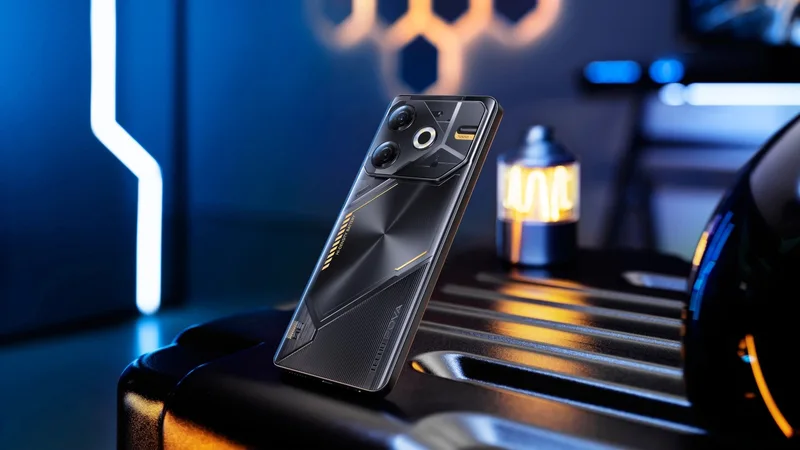
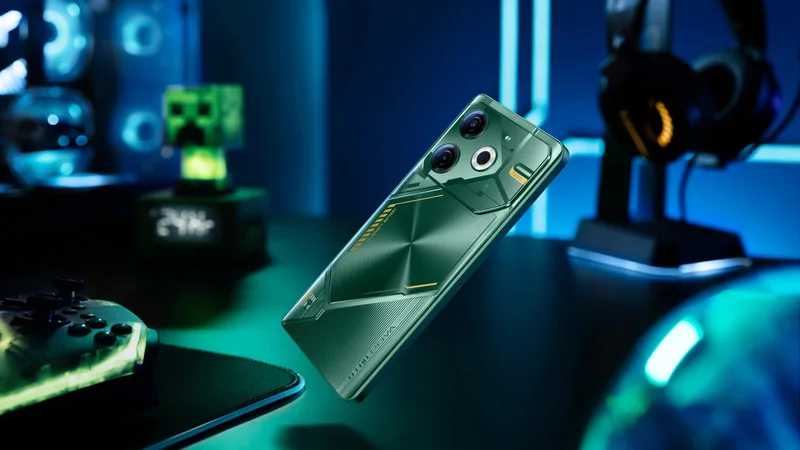
- Starry Silver, Speed Black, Comet Green
- Connectivity
- NFC, GPS, Wi-Fi, FM, OTG
The Tecno Pova 6 Neo is a budget phone that puts its weight behind one idea: a very large battery wrapped in a body that looks like gaming hardware. Tecno's specification page lists a 7000 mAh (typical) cell with 33W flash charging, a 6.78-inch Full HD+ screen at 120Hz, the MediaTek G99 Ultimate processor, 8GB of RAM and up to 256GB of storage, running Android 14 with the HiOS 14 skin. This review is based on the published specifications and manufacturer information, and it tries to separate what Tecno states from what a buyer can reasonably expect in daily use.
Where it sits in the Pova family
Pova is Tecno's performance-and-endurance line, the one aimed at people who play mobile games and want a phone that lasts a long day without a charger. On Tecno's own site the Pova 6 Neo sits next to the Pova 6 and the Pova 6 Pro 5G. It does not chase a flagship-style camera or an exotic display. Instead it concentrates the budget on battery capacity, a smooth screen, stereo sound and a software layer with several gaming tools. If you later want a newer generation of the line, the Tecno Pova 7 is the follow-up on this site, and the Tecno Spark 40 Pro and Tecno Camon 40 cover the brand's lifestyle and camera-first lines instead.
One note on the date: Tecno's regional pages do not show an on-sale date for this model, so no official launch date is quoted here.
Design, display and sound
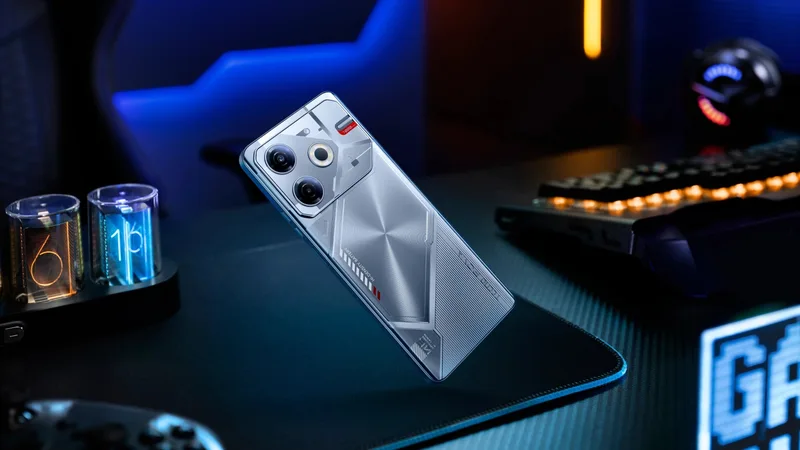
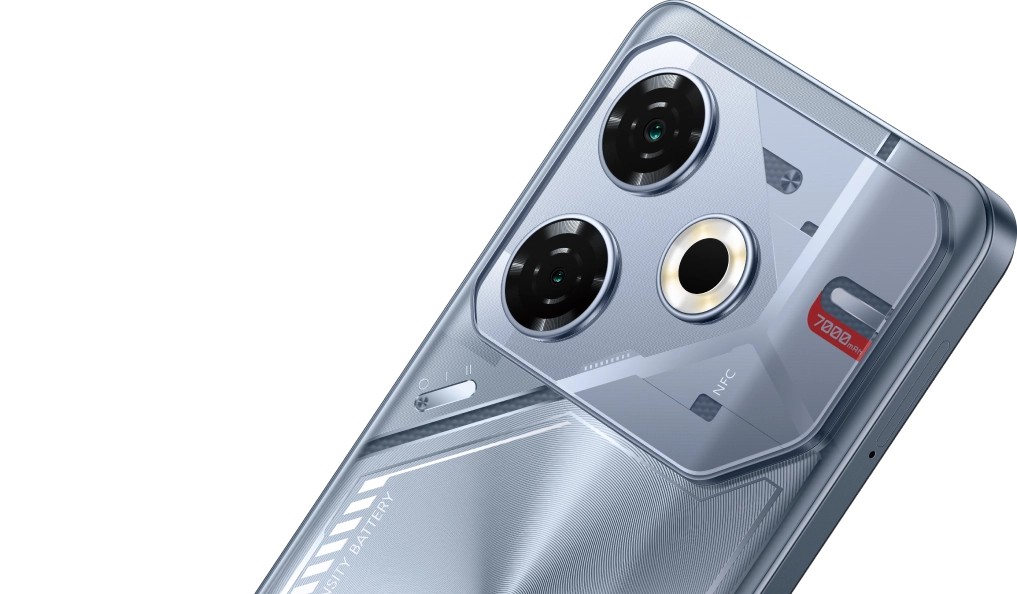
The back panel is the main styling statement. Tecno's renders show a technical, circuit-like pattern, a vertical camera island with two lenses and a ring-shaped flash, and a red label printed with the battery capacity on the silver version. Three colours are listed: Starry Silver, Speed Black and Comet Green. The body measures 168.6 x 76.6 x 9.23 mm, which is thick by modern standards, and the page does not state a weight. That thickness is the price of the battery, and it is worth keeping in mind if you prefer slim phones. Tecno lists IP53 protection, which means resistance to dust ingress and splashes of water, not immersion. Treat it as insurance against rain and a wet hand, not as permission to swim.
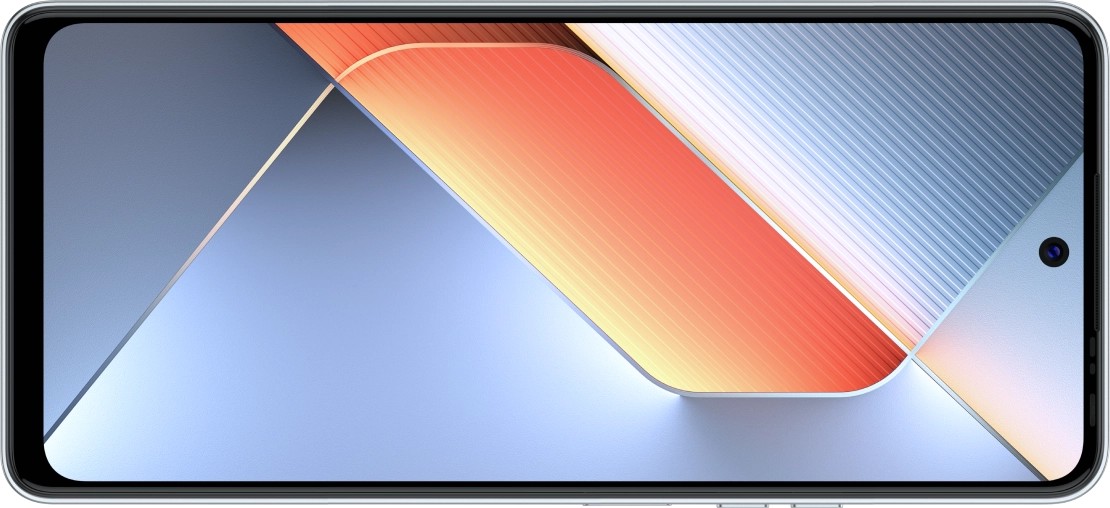
The screen is a 6.78-inch Full HD+ panel (1080 x 2460) with a 120Hz refresh rate, which Tecno calls a Dot-in display, meaning the front camera sits in a small hole in the glass. Tecno gives a brightness figure of up to 580 typ, worded just like that on the page, without a unit. That is a modest number compared with mid-range phones that advertise peaks above a thousand, so outdoor readability in direct sun is the likely weak point. At this price the resolution and refresh rate are what matter for everyday smoothness, and both are good for the class.
Sound is a stronger point on paper. The phone has dual speakers and Tecno describes it as its first smartphone with Dolby Atmos. That is the company's own claim about its history, and it simply means the audio tuning is a headline feature rather than an afterthought. For video and gaming, stereo speakers with spatial processing are a clear step up from the single bottom-firing speaker found on many cheaper phones.
Performance and software
The processor is the MediaTek G99 Ultimate, built on a 6nm process. Tecno states that CPU performance is up 7 percent over the standard version of the chip, which is a modest, believable claim. This is an entry-level gaming chip: fine for casual games, social apps and video, but not the right tool for the heaviest 3D titles at maximum settings. The memory configurations listed are 8GB of RAM with either 128GB or 256GB of storage. Tecno also advertises extended RAM, using part of the storage as extra working memory in steps of 3GB, 5GB or 8GB, up to a headline figure of 16GB. That extra is virtual and borrowed from storage, so the physical RAM remains 8GB, and the practical effect is to keep a few more apps alive in the background rather than to speed anything up.
The software is Android 14 with HiOS 14. Tecno's feature list leans toward play: Game Space 4.0 schedules GPU use and offers power-saving, balanced and performance modes, and Game Assistant 4.0 lets you whitelist contacts and apps so notifications are not blocked while a game is running. The phone also supports a motion-based virtual control scheme in which tilts and flips of the phone trigger in-game actions. There is a 4D vibration feature using a Z-axis linear motor and a gyroscope, which Tecno says was jointly certified with PUBG and Tencent's lab. Outside games, HiOS 14 adds live wallpapers, a revised icon style, Dynamic Port 2.0, a floating notification area at the top of the screen, and a Smart Search tool that finds photos in the gallery by natural-language description. The page does not describe an update policy, so long-term support is not something this review can promise.
Camera
Camera hardware is the plainest part of the phone. The rear has a single 50MP camera paired with a light sensor, and the page names no ultrawide or telephoto lens. Video on both the rear and the front cameras tops out at 2K at 30fps, with 1080p at 60 or 30fps and 720p at 30fps as lower settings. The front camera is 8MP with a dual-tone LED flash and a screen fill light, which can switch between cool and warm tones depending on the surroundings, plus an AI portrait mode. Tecno also adds a Sky Shop feature with more than a dozen sky filters that replace a dull sky in one tap.
In practice, expect decent daylight photos and a typical budget-phone struggle in dim rooms. A single main lens means no optical zoom, so zooming is cropping. The camera is adequate for social media and documents but not a reason to buy this phone. If photography matters more than endurance, the Camon line linked above is the better direction.
Battery and charging
This is the reason the phone exists. The specification page lists a 7000 mAh typical battery with 33W flash charging. One caution is worth stating plainly: some of Tecno's own page metadata for the Pova 6 Neo mentions a 6000 mAh battery, while the body copy and the technical specification page say 7000 mAh and the phone's rear panel render is marked 7000. The figure used here is the one on the specification page, and it is a good idea to check the capacity printed on the box of your regional version.
Tecno's endurance claims come from its own laboratory and are not independent measurements. It states more than 39 hours of calling, more than 11 hours of gaming, more than 18 hours of Facebook use and more than 14 hours of video streaming. It also says the last 1 percent of charge is good for around 20 minutes of calls, based on a pattern of about one and a half days per charge. Treat those as best-case, lab-condition numbers. A realistic expectation for a 7000 mAh phone with a 6nm chip and a 120Hz screen is comfortable two-day use for light users and a full heavy day for gamers, which is still more than most rivals manage.
Charging tools are thoughtful. A ladder charging system offers a low-temperature mode that charges slowly to extend battery life, a smart mode that balances speed and heat, and a hyper mode that charges as fast as possible at the cost of more heat and some performance. Tecno says charging stays efficient at minus 10 degrees Celsius, and it describes a waterproof charging mode that raises an alert if moisture is detected at the port. It also states that the battery should retain more than 80 percent health after 1,600 charges, about six years at one and a half days per charge, and that a coating technology, called STS, reduces the risk of internal short circuits. 33W is not the fastest charging at this price, so a full charge of such a large cell will take a while.
Who it is for
The Pova 6 Neo suits a student, a commuter or a casual gamer who values battery life above everything and wants a smooth 120Hz screen and stereo speakers for little money. It also suits people in regions where charging is inconvenient or power cuts are common. NFC is listed, which is useful for contactless payments in markets that support them, and a fingerprint sensor is included for unlocking.
If you want a phone for mobile photography, comparing it with a more camera-focused device such as the Tecno Pova 6 Neo versus Galaxy A57 page shows how much further a more expensive mid-ranger goes on cameras and display quality. For readers who just want a ranked overview of the whole market, the rankings page orders phones using the same specification data.
Compromises to weigh
- Thickness: at 9.23 mm the body is chunky, and the page gives no weight figure.
- Brightness: a stated figure of up to 580 typ points to limited visibility in strong sunlight.
- Single main camera: no ultrawide or telephoto lens is listed.
- Processor ceiling: the G99 Ultimate is an entry-level chip, so demanding games will need lowered settings.
- Virtual RAM: the 16GB headline includes storage borrowed as memory; the physical figure is 8GB.
- Conflicting capacity text: Tecno's own pages mention both 6000 and 7000 mAh, so verify your local variant.
- Charging speed: 33W is modest for such a large battery.
Taken together, the Pova 6 Neo is a focused, honest budget phone: it does not pretend to be a flagship, it spends its budget on endurance and fun, and its weaknesses are the ones you would expect at the price. If your priorities line up with that, it is an easy recommendation to consider; if they do not, look at the family members linked above or at the broader rankings.
Where it ranks
Compare Tecno Pova 6 Neo with similar devices
More from Tecno
Frequently asked questions
When was the Tecno Pova 6 Neo released?
The manufacturer’s release date for the Tecno Pova 6 Neo is not stated in the information we have.
What are the main specs of the Tecno Pova 6 Neo?
Headline figures for the Tecno Pova 6 Neo: Battery: 7,000 mAh, Refresh rate: 120 Hz, Main camera: 50 MP, RAM: 8 GB. The full specification table is further up this page.
Is the Tecno Pova 6 Neo worth buying?
That depends on your priorities. Use the editorial review on this page for our view, check the rankings above to see where the device stands on battery, display and camera, and compare it directly with similar models before you decide.


