Phones
realme P3 Pro
realme's 2025 performance mid-ranger pairs a 6.83-inch 120Hz quad-curved OLED and Snapdragon 7s Gen 3 with a 6,000 mAh battery, 80W charging and IP66/68/69 protection.
Key figures at a glance
Gallery



Specifications
- Display
- 6.83" quad-curved EdgeFlow OLED, 2800x1272 (1.5K), 120Hz, 1500 nits local peak, 1.07 billion colors, 100% DCI-P3, in-display fingerprint scanner
- Chipset
- Qualcomm Snapdragon 7s Gen 3 (4nm, octa-core up to 2.5GHz), Adreno 810
- RAM
- 12GB
- Dynamic RAM
- Up to 14GB of storage-backed dynamic RAM (realme states up to 26GB total)
- Storage
- 128GB / 256GB
- Rear Camera
- 50MP main (Sony IMX896, 1/1.56", f/1.8, OIS) + 2MP secondary camera, 4K video
- Front Camera
- 16MP
- Battery
- 6,000 mAh typical (5,860 mAh minimum), 80W SUPERVOOC wired charging, 80W adapter included, bypass charging
- OS
- realme UI 6.0 based on Android 15
- Durability
- IP66 / IP68 / IP69
- Connectivity
- Dual 5G (SA/NSA), Wi-Fi 6, Bluetooth 5.2, dual nano-SIM, GPS/BeiDou/GLONASS/Galileo/QZSS
- Dimensions
- 163.51 x 77.34 mm; 8.29 mm thick (Saturn Brown, Galaxy Purple) or 7.99 mm (Nebula Glow)
- Weight
- About 192 g (Saturn Brown, Galaxy Purple), about 190 g (Nebula Glow)
- Colors
- Nebula Glow, Galaxy Purple, Saturn Brown
The realme P3 Pro is a performance-focused mid-range phone that leans on three ideas: a very large battery, a curved OLED panel with a 120Hz refresh rate, and a Snapdragon 7s Gen 3 chip with a generous cooling system. This review is based on the published specifications and the manufacturer's own information, so claims from realme are marked as claims rather than treated as measured results. The aim is to explain who the phone suits, what it does well on paper and where the compromises sit.
Where the P3 Pro sits in the realme lineup
realme's P series targets buyers who want gaming-friendly hardware and big batteries without paying flagship money. The P3 Pro is a step below the P3 Ultra in the same generation, and realme positions it against its predecessor, the P2 Pro, by stating a 20 percent CPU gain and a 40 percent GPU gain. Those are manufacturer comparisons, not independent benchmarks, but they show the intended upgrade story: the same segment, a newer chip and a bigger battery.
If you want to see how the line evolved, the later realme P4 Pro and the more powerful realme P3 Ultra sit above or after it, and you can set the P3 Pro against them directly in this comparison. For a broader view of where it lands among all phones in the database, the rankings page is the quickest overview.
Design and display
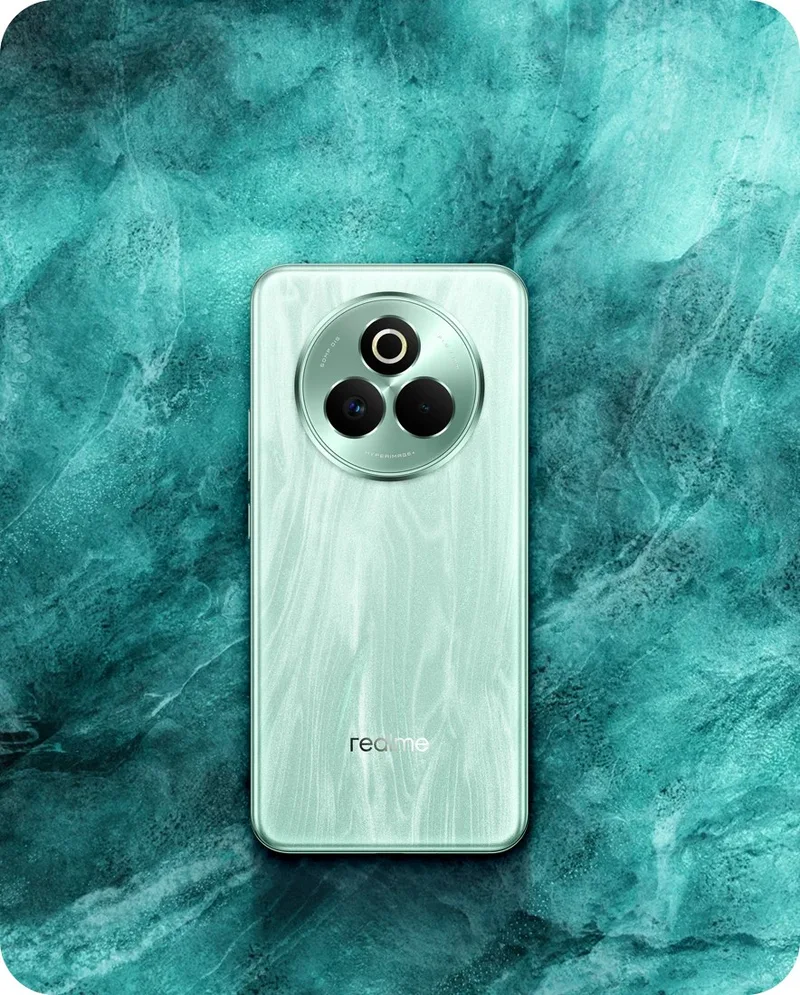
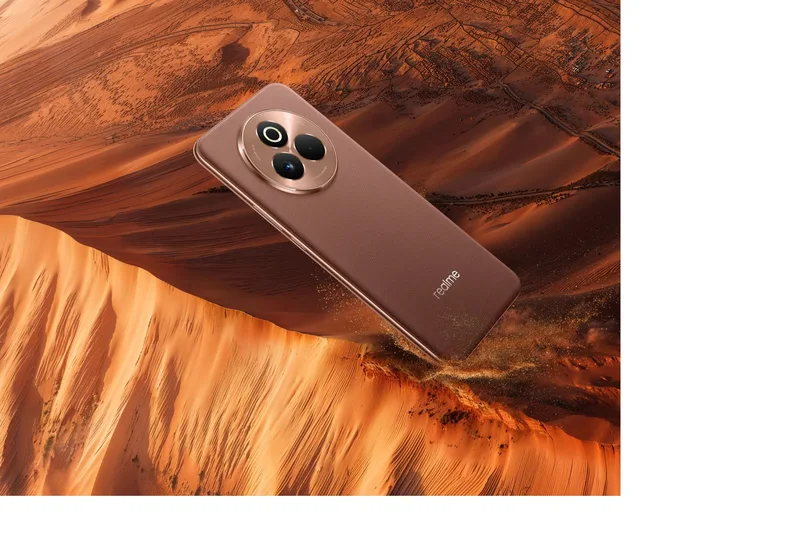
realme calls the look "Nebula Design". The back panel has a luminescent, marbled texture and the phone comes in three colours: Nebula Glow, Galaxy Purple and Saturn Brown. The camera sits inside a large circular ring with three openings, a design that is easy to recognise. According to the spec sheet the phone measures 163.51 x 77.34 mm and is 8.29 mm thick in Saturn Brown and Galaxy Purple, or 7.99 mm in Nebula Glow. Weight is about 192 g for the first two colours and about 190 g for Nebula Glow. With a 6,000 mAh cell inside, that is a reasonable figure rather than a remarkable one.
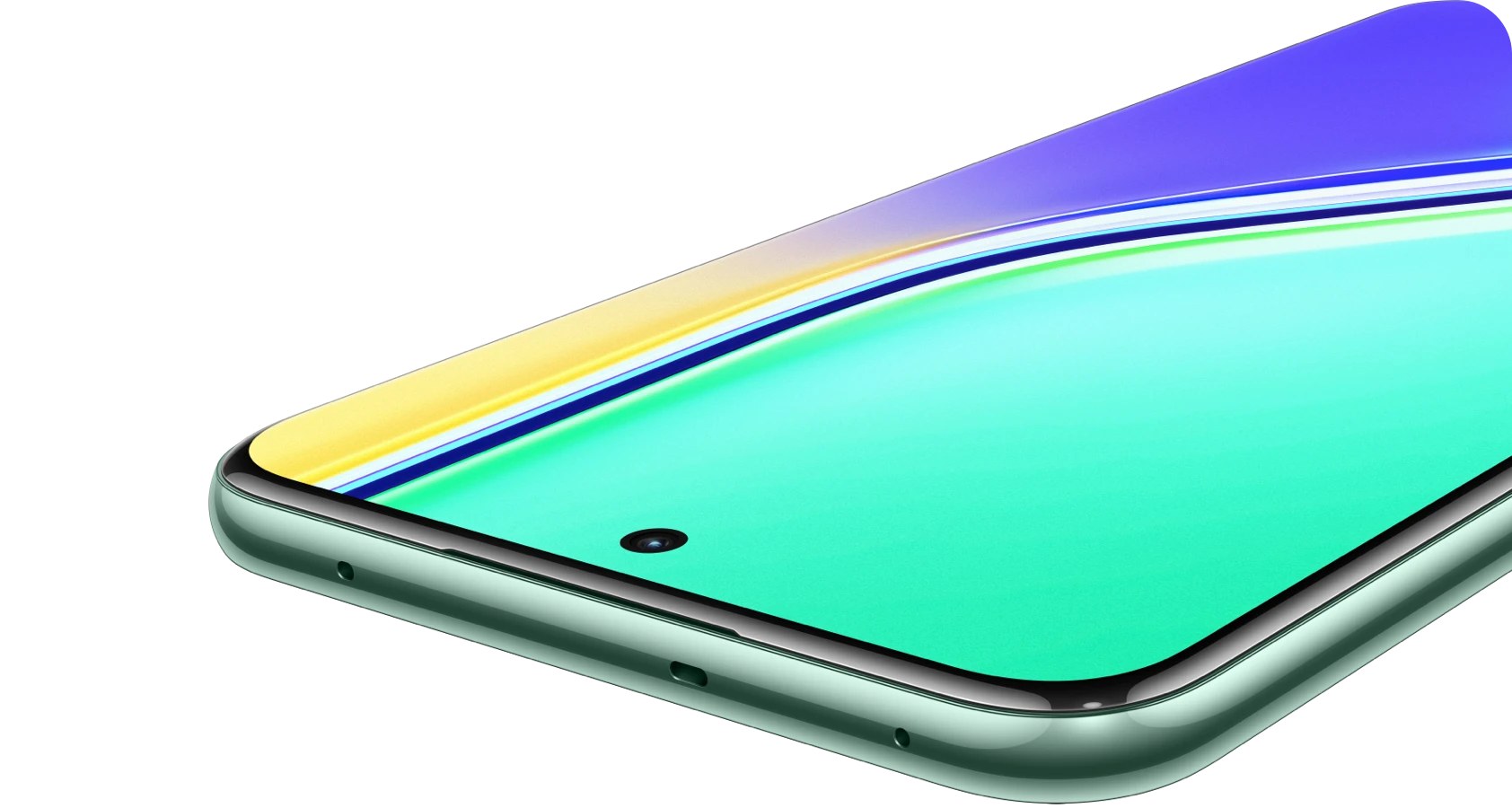
The screen is a 6.83-inch quad-curved OLED, which realme calls EdgeFlow. Resolution is 2800 x 1272 (marketed as 1.5K), refresh rate is 120Hz, and the panel covers 100 percent of DCI-P3 with 1.07 billion colours. Brightness is listed as 600 nits typical, 1,200 nits at global maximum and 1,500 nits at local peak. The company also quotes 3840Hz PWM dimming, which is aimed at people who are sensitive to flicker at low brightness, and a 5,000,000:1 contrast ratio. Touch sampling is given as 240Hz in the specification table, while the marketing page mentions a higher figure for gaming; treat the table value as the baseline.
A fingerprint scanner sits under the display. The curved edges look attractive but, as on any quad-curved screen, they can cause accidental touches and reflections, and they make flat screen protectors harder to fit. Stereo speakers and dual-microphone noise cancellation complete the media features.
Performance and software
The chipset is the Qualcomm Snapdragon 7s Gen 3, built on a 4nm process with an octa-core CPU reaching up to 2.5GHz and an Adreno 810 GPU. realme quotes an AnTuTu result above 800,000 on its product page. That figure is a claim from the vendor and real scores vary with software version and thermal conditions. What matters more for daily use is that this chip sits in the upper mid-range: it should handle social apps, video and mainstream games comfortably, but it is not meant to compete with flagship silicon in sustained heavy workloads.
Memory comes in 8GB or 12GB configurations, with 128GB or 256GB of storage. realme also offers dynamic RAM, which borrows part of the storage to extend memory by up to 14GB, giving up to 26GB in total by its own count. This is software-based and is not the same as physical RAM; the figure that counts for multitasking is the 12GB (or 8GB) of real memory. Cooling is handled by a vapour chamber that realme says covers 6,050 mm², which is large for this price class and should help the chip hold speed during long gaming sessions. The company also mentions 90 FPS support for BGMI, pending a future game update from the publisher, so that feature should be considered conditional.
The software is realme UI 6.0 based on Android 15. realme UI offers many customisation options and some pre-installed extras, as is typical for this brand. The specification page does not state how many years of operating system or security updates the P3 Pro will receive, so buyers who keep phones for four or five years should check realme's current update policy before purchase.
Camera
The main camera is a 50MP Sony IMX896 sensor, 1/1.56 inch in size, with an f/1.8 aperture, a 24mm-equivalent focal length and optical image stabilisation. This is a large sensor for the class, and it is the only camera realme highlights. A second 2MP camera is listed, with an f/2.4 lens; realme does not describe its function in detail on the specification table, and in practice such secondary cameras add little to image quality. There is no dedicated ultrawide or telephoto lens here, which is one of the clearest compromises compared with more expensive phones.
Video recording on the rear camera reaches 4K at 30 frames per second, with 1080p at 60 frames per second also available. The front camera is 16MP with an f/2.4 lens and records 1080p at 30 frames per second by default. For selfies and video calls that is adequate; do not expect the 4K front video or advanced zoom options of premium models. Anyone who relies heavily on wide-angle shots or optical zoom should look at phones with a more complete camera array, for example the Galaxy A56.
Battery and charging
The battery is the headline feature. realme lists 6,000 mAh as the typical capacity and 5,860 mAh as the minimum rated value, and advertises up to two days of use. Charging is by 80W SUPERVOOC, and an 80W adapter is included in the box over USB-C. realme claims a charge from 1 to 50 percent in 24 minutes. There is also bypass charging, which powers the phone directly from the charger while gaming so the battery itself does not heat up, and AI smart charging to reduce wear overnight. The brand adds a four-year battery health guarantee; the exact terms are set by realme and may vary by country.
The specification page lists wired charging only; wireless charging is not mentioned. For most buyers in this price class that is acceptable, as wired charging at 80W is already fast.
Durability and connectivity
The P3 Pro carries IP66, IP68 and IP69 ratings, which together cover dust, immersion and high-pressure hot water jets. That combination is unusual among mid-range phones and is a strong selling point for outdoor use. realme also advertises military-grade shock resistance, a marketing term that should be read as a supplier-defined test result rather than an independent certification of survivability. Connectivity includes dual 5G (SA and NSA), two nano-SIM slots, Wi-Fi 6, Bluetooth 5.2 and the major satellite navigation systems: GPS, BeiDou, GLONASS, Galileo and QZSS.
Who the realme P3 Pro is for
This phone suits people who want long battery life, a bright, smooth screen and decent gaming performance without paying for a flagship. The large main sensor, fast charging and top-level water protection make it a practical daily device. It is a sensible choice for students, commuters and mobile gamers.
It is less suited to photographers who need a flexible camera system, to users who want long-term update promises that are clearly written down, or to anyone who prefers a flat display. If you compare it with a global flagship such as the OnePlus 13, the difference in processing power, camera versatility and build materials will be obvious; the P3 Pro competes on value, not on absolute performance.
Compromises to consider
- Single useful rear camera: only the 50MP main sensor is a meaningful camera; there is no telephoto or ultrawide lens.
- Curved edges: the quad-curved glass can cause accidental touches and makes screen protection harder.
- Conditional gaming claims: the 90 FPS BGMI mode depends on a future update from the game publisher.
- Software support: the specification page does not state update duration, and virtual RAM is not a substitute for physical memory.
- No stated launch price or date on the specification page: check your local retailer for current pricing in your market.
Overall, the P3 Pro is a clearly targeted device: it gives up camera breadth to deliver a big battery, a bright 120Hz OLED and unusually strong dust and water protection. If those priorities match yours, it is one of the more interesting mid-range options from realme.
Where it ranks
Compare realme P3 Pro with similar devices
More from realme
Frequently asked questions
When was the realme P3 Pro released?
The realme P3 Pro was released on 2025-02-18, according to the manufacturer’s published information.
What are the main specs of the realme P3 Pro?
Headline figures for the realme P3 Pro: Battery: 6,000 mAh, Refresh rate: 120 Hz, Main camera: 50 MP, RAM: 12 GB. The full specification table is further up this page.
Is the realme P3 Pro worth buying?
That depends on your priorities. Use the editorial review on this page for our view, check the rankings above to see where the device stands on battery, display and camera, and compare it directly with similar models before you decide.


