Phones
realme 13 Pro 5G
realme's 2024 Sony-camera mid-ranger: Snapdragon 7s Gen 2, a 120Hz curved OLED, a 50MP Sony main camera with OIS, a 5,200 mAh battery and 45W charging.
Key figures at a glance
Gallery
Specifications
- Display
- 6.7" curved OLED, 2412 x 1080, up to 120Hz, 2000 nits local peak
- Chipset
- Snapdragon 7s Gen 2 (4nm)
- RAM
- 12GB
- Extended RAM
- Up to 12GB dynamic RAM
- Storage
- 128GB / 256GB / 512GB
- Rear Camera
- 50MP main (Sony LYT-600, f/1.88, OIS) + 8MP ultrawide
- Front Camera
- 32MP
- Battery
- 5,200 mAh (typical), 45W SUPERVOOC wired
- OS
- Android 14, realme UI 5.0
- Dimensions
- 161.3 x 73.9 x 8.4 mm, 183.5 g (vegan leather)
- Durability
- IP65, Gorilla Glass 7i
- Connectivity
- 5G, Wi-Fi 6, Bluetooth 5.2, dual nano-SIM, no NFC (India spec page)
If the 13 Pro+ is the series flagship, the realme 13 Pro 5G is the sensible sibling: the same Snapdragon chip, the same curved 120Hz OLED and the same 5,200 mAh battery, but with a single Sony main camera instead of a periscope telephoto and a 45W charger instead of 80W. It arrived in India at the end of July 2024. The notes below rely on the published specifications and realme's own product pages, and anything the company describes as a result of its lab testing is presented as a claim.
What you get compared with the Pro+
The simplest way to understand this phone is by what it leaves out. Next to the realme 13 Pro+ 5G, the Pro drops the 50MP periscope lens, so the rear cameras are a 50MP main sensor and an 8MP ultrawide. It also ships with a 45W adapter in the box rather than 80W. Almost everything else is shared: screen, processor, memory choices, battery capacity, water and dust rating, speakers and software. That makes the price gap between the two the main question for a buyer, and since no official US price exists and regional prices vary, it is worth checking local listings. Below the Pro sits the realme 13+ 5G, and the realme 14 Pro is the generation that followed.
Body and finish
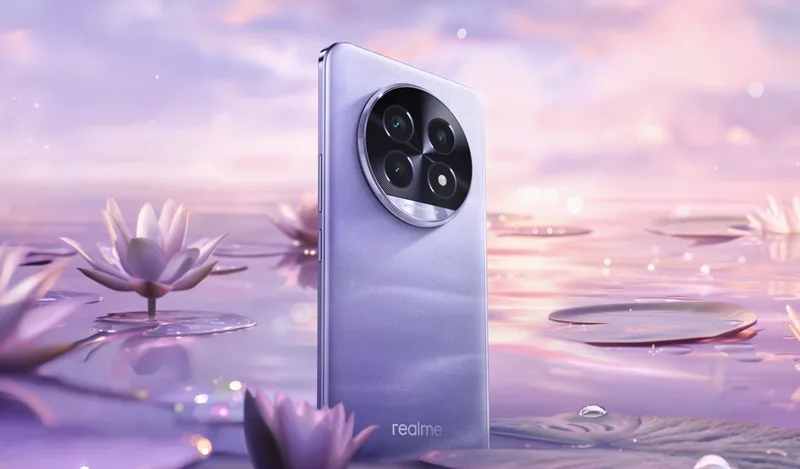
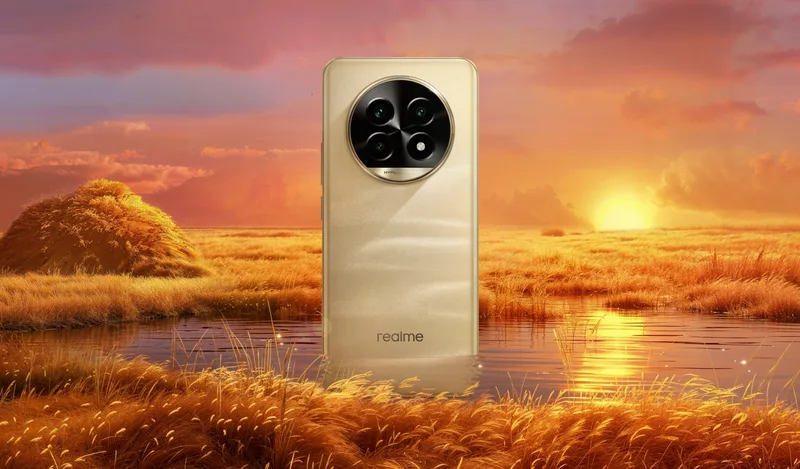
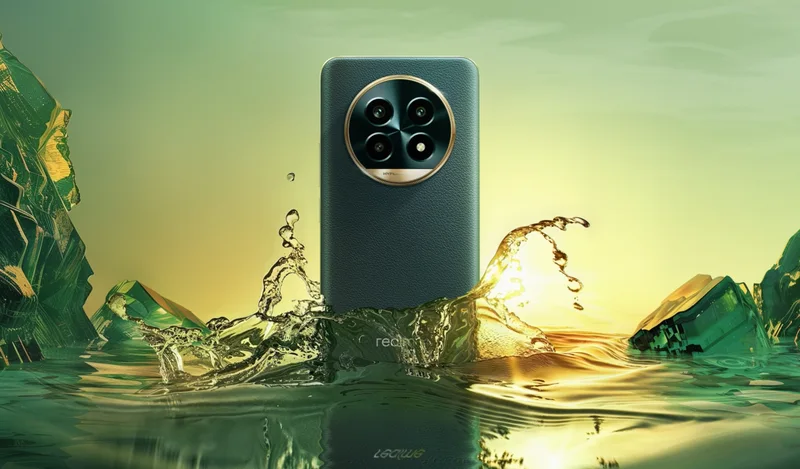
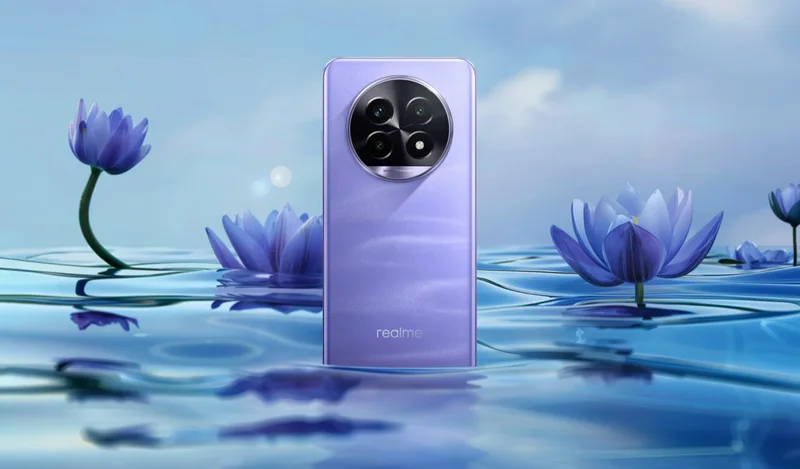
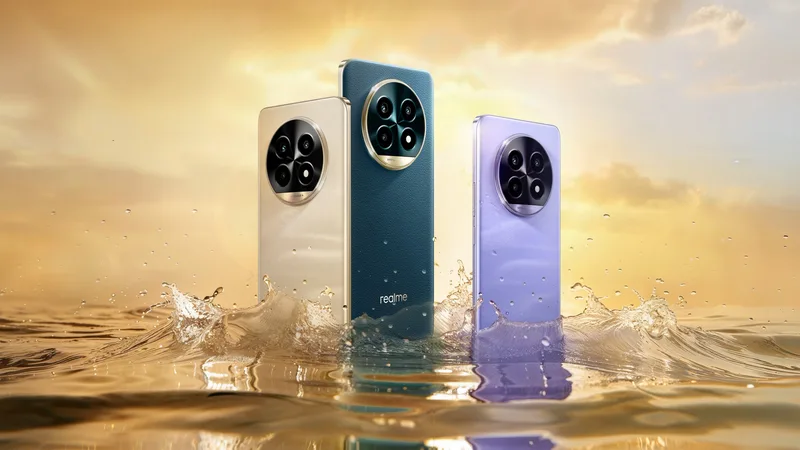
realme's marketing leans on a collaboration with an art museum, the MFA, and on colours named after Monet: Monet Gold, Monet Purple and Emerald Green. In practice that means a glossy, particle-flecked back in two colours and a textured vegan-leather back in green. The measurements are 161.3 x 73.9 mm, with 8.4 mm thickness and 183.5 g for the leather version and 8.2 mm and 188 g for the glass versions, according to realme's lab data. Both figures are a little lighter than the Pro+, which is a small but real advantage in the hand.
The glass on the front is Corning Gorilla Glass 7i, the phone carries an IP65 rating, and realme advertises a Swiss SGS five-star drop-resistance certificate for the series. IP65 means protection against dust and water jets; realme's own footnote says it is not meant for beach or pool use, and that water resistance fades with wear.
A screen that matches the dearer model
Here there is no compromise. The 13 Pro 5G has a 6.7-inch curved OLED panel at 2412 x 1080 pixels with refresh rates up to 120Hz. The listed brightness is 600 nits typical, 1,200 nits at the global maximum and 2,000 nits at local peaks, with 100 percent DCI-P3 coverage, 1.07 billion colours and 20,000 levels of automatic brightness adjustment. High-frequency PWM dimming at 2,160Hz kicks in at low brightness. The fingerprint reader is optical and sits beneath the display. Stereo speakers with Hi-Res Audio certification are included.
Because the panel is curved, you gain a slim look but also reflections and the occasional edge touch. Whether that matters is a matter of taste, though anyone who uses thick cases might care less.
Performance in everyday use
Under the hood is the Snapdragon 7s Gen 2, built on a 4nm process with eight cores running up to 2.4GHz. It is an upper-mid-range processor suited to social apps, streaming, navigation and casual gaming; for the heaviest games, realme's GT line is designed for the job. Storage options are 128GB, 256GB and 512GB and memory is 8GB or 12GB. Through dynamic RAM, up to 12GB of storage can be lent to the system as extra memory, which realme advertises as "up to 24GB". Think of it as a convenience for keeping apps alive rather than as real memory. Cooling relies on a 4,500 mm2 vapor chamber plus graphite layers.
The phone was launched on Android 14 with realme UI 5.0. Highlights from realme include AI Ultra Clarity, Smart Removal and portrait tuning developed with an Oscar-winning visual-effects artist. The listed connectivity is dual 5G SIM, Wi-Fi 6 and Bluetooth 5.2. The India specification sheet states that there is no NFC chip, so contactless payments are not supported there.
The single-camera approach
The main camera is a 50MP Sony LYT-600 with a 1/1.95-inch sensor, an f/1.88 aperture and optical stabilisation, equivalent to a 26mm lens. It is joined by an 8MP ultrawide camera (112-degree field of view, f/2.2) and a 32MP Sony front camera. realme calls the main sensor the best Sony camera in its class, which is a claim rather than a measurement. Without a telephoto lens, zoom beyond the main camera depends on cropping and software, so portraits and distant subjects are where you feel the difference from the Pro+.
Video recording is capped at 4K at 30fps on the rear camera, with 1080p up to 60fps and slow motion at 120fps in 1080p or 240fps in 720p. The front camera records up to 4K at 30fps. Other listed shooting modes include dual-view video, a document scanner and long exposure.
Battery and 45W charging
The 5,200 mAh typical battery (5,050 mAh minimum) is the same as in the Pro+, and so is realme's four-year battery health promise. Charging is 45W SUPERVOOC, which realme says takes the phone from 1 to 50 percent in 27 minutes, against 19 minutes for the Pro+. Its lab figures include 17 days of standby, 18.1 hours of YouTube, 77.8 hours of music and 8.7 hours of gaming. Since the capacity is identical, endurance should be similar to the dearer phone, and only charging speed differs in a meaningful way.
In the box and on the spec sheet
The retail package for the India model contains the phone, a 45W adapter, a USB-C cable, a protective case, a SIM tool, a pre-fitted screen film and the warranty paperwork. Two nano-SIM slots are on board, positioning relies on Beidou, GPS, GLONASS, Galileo and QZSS, and the phone includes the usual accelerometer, gyroscope, proximity, light and geomagnetic sensors. realme also lists a haptic engine for gaming feedback and a touch mode meant to keep the screen usable with wet fingers. These are small details, but they show that the cheaper sibling has not been stripped down in the areas people touch every day. The practical differences are concentrated in the camera system and the charger, which makes the choice easier to reason about than in many product families.
Is it the right choice?
The 13 Pro 5G makes sense for those who take mostly everyday photos and do not need optical zoom, and who want the display and battery of the top model at a lower price. If zoom matters, step up to the Pro+. If the budget is tighter, the 13+ is the more modest rung. For a side-by-side with the model below it, the realme 13 Pro vs realme 13+ comparison is a useful starting point, and the rankings place it among other phones.
- Pros: bright curved OLED, large battery, solid build with IP65, lighter than the Pro+.
- Cons: no telephoto lens, 45W charging, 8MP ultrawide, no NFC on the India variant, no wireless charging listed.
Where it ranks
Compare realme 13 Pro 5G with similar devices
More from realme
Frequently asked questions
When was the realme 13 Pro 5G released?
The realme 13 Pro 5G was released on 2024-07-30, according to the manufacturer’s published information.
What are the main specs of the realme 13 Pro 5G?
Headline figures for the realme 13 Pro 5G: Battery: 5,200 mAh, Refresh rate: 120 Hz, Main camera: 50 MP, RAM: 12 GB. The full specification table is further up this page.
Is the realme 13 Pro 5G worth buying?
That depends on your priorities. Use the editorial review on this page for our view, check the rankings above to see where the device stands on battery, display and camera, and compare it directly with similar models before you decide.


