Phones
Google Pixel 8 Pro
Google's 2023 flagship brought Tensor G3, a 6.7-inch 120 Hz LTPO display, a 5x telephoto and a seven-year update promise, at 999 dollars at launch.
Key figures at a glance
Gallery
Specifications
- Display
- 6.7" Super Actua LTPO OLED, 1344x2992, 1-120Hz, up to 2,400 nits peak
- Chipset
- Google Tensor G3 with Titan M2 security coprocessor
- RAM
- 12GB
- Storage
- 128GB / 256GB / 512GB / 1TB
- Rear Camera
- 50MP main + 48MP ultrawide + 48MP telephoto 5x
- Front Camera
- 10.5MP autofocus
- Battery
- 5,050 mAh typical (4,950 mAh minimum), 30W wired charging with Google charger sold separately, Qi wireless
- OS
- Android 14, 7 years of OS, security and Pixel Drop updates
- Dimensions
- 162.6 x 76.5 x 8.8 mm
- Weight
- 213 g
- Durability
- IP68, Corning Gorilla Glass Victus 2
The Google Pixel 8 Pro is the flagship of Google's 2023 phone generation and the first Pixel to launch with a seven-year update promise. It combines a 6.7-inch LTPO display, the Tensor G3 chip, 12 GB of RAM and a triple rear camera with a 5x telephoto lens. This page is based on the published specifications and manufacturer information, and it looks at where the phone sits in Google's range, how the design and screen are built, what the chip and software deliver, how the cameras work, and what compromises remain now that newer Pixels have arrived.
Where the Pixel 8 Pro fits in the lineup
Google announced the Pixel 8 and Pixel 8 Pro on 4 October 2023 and put them on shelves on 12 October. The US launch prices were 699 dollars for the Pixel 8 and 999 dollars for the Pixel 8 Pro. The Pro was the larger, better-equipped sibling: a bigger and brighter screen, a telephoto lens the standard model lacked, more memory, and a temperature sensor on the back. The same generation later gained a cheaper A-series phone, but the Pro stayed the model for people who wanted Google's best hardware.
Since then Google has moved on, first with the Pixel 9 Pro and then with the Pixel 10 Pro. That makes the 8 Pro an older flagship, which is exactly why many buyers now consider it used or discounted. The Pixel 8 Pro vs Pixel 9 Pro comparison shows what a generation changed, and the rankings page places it among current phones.
Design and display
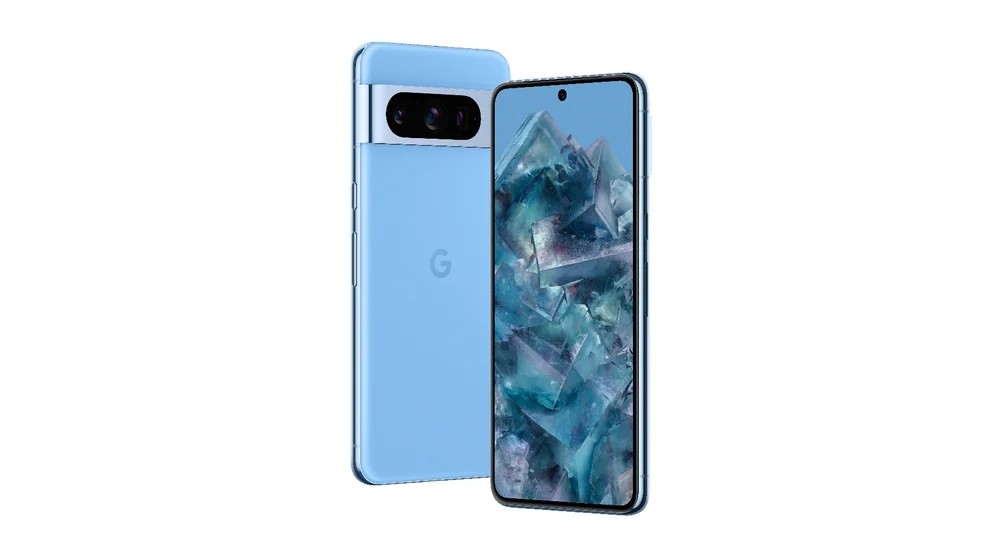
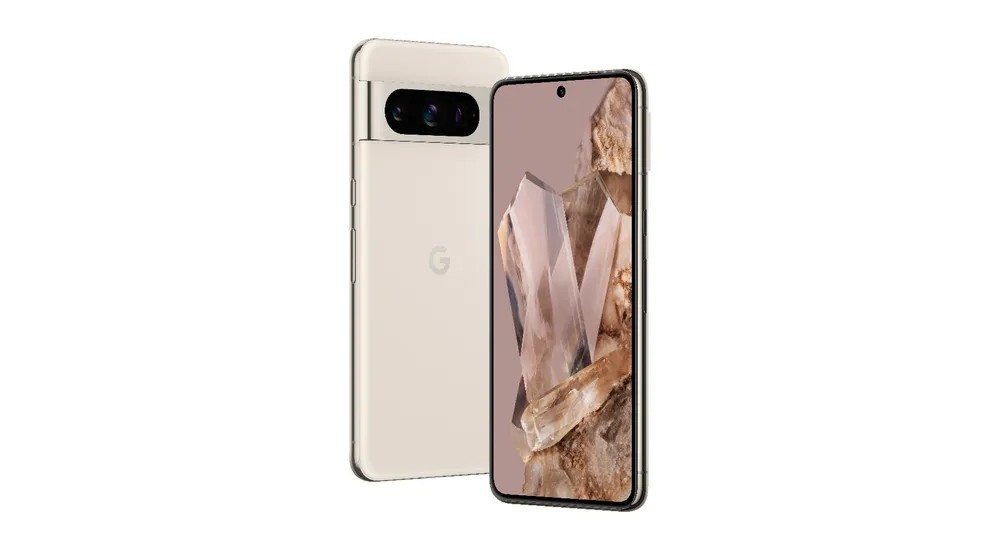
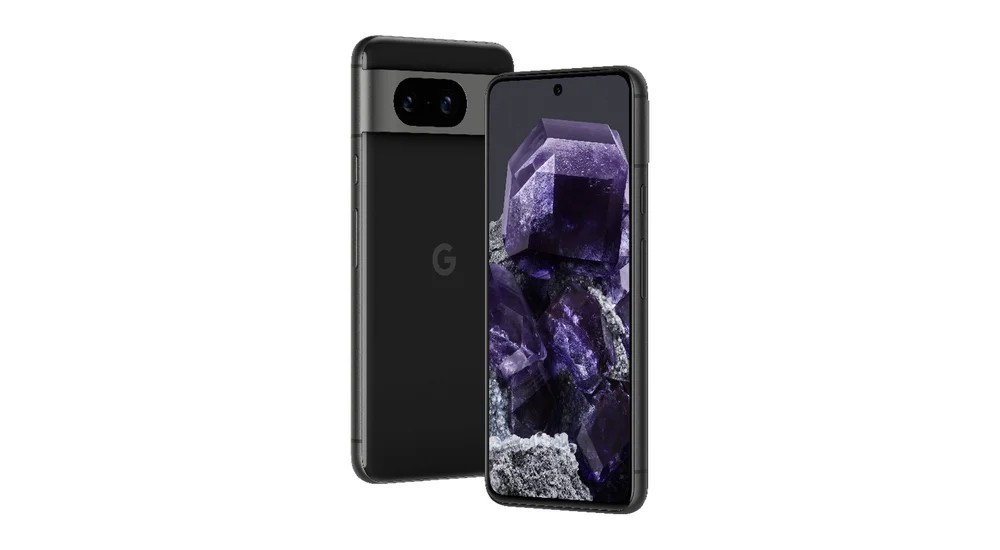
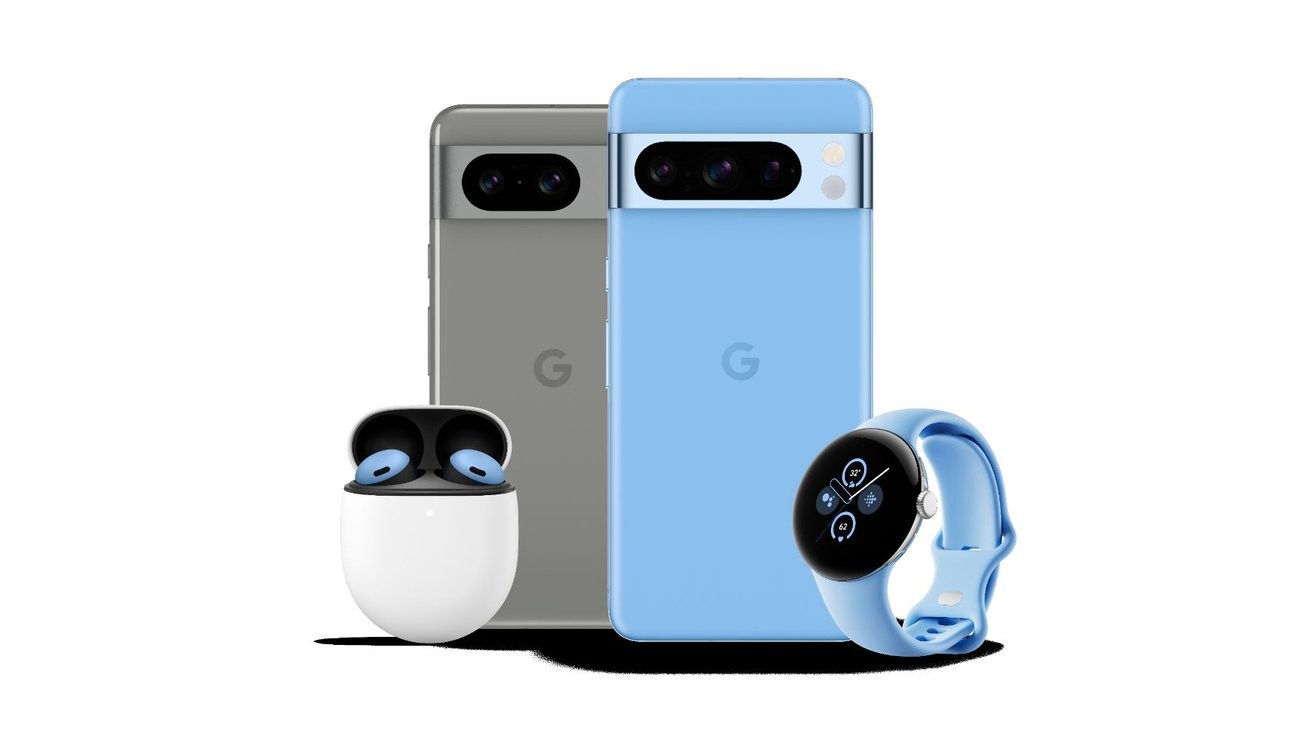
The Pixel 8 Pro has a matte glass back and a polished aluminium frame, and the camera bar that has defined Pixels since 2021 stretches across the rear. It measures 162.6 by 76.5 by 8.8 millimetres and weighs 213 grams, which is substantial but not extreme for a 6.7-inch phone. Google sold it in Obsidian, Porcelain and Bay, and the housing uses recycled aluminium. The front and back glass is Corning Gorilla Glass Victus 2, and the phone carries an IP68 rating for dust and water resistance, which is a full ingress rating rather than the water-only IPX8 found on foldables.
The display is a 6.7-inch Super Actua LTPO OLED with 1344 by 2992 pixels, which works out to about 489 pixels per inch. The refresh rate is adaptive from 1 to 120 Hz, which saves power when static content is shown. Google lists up to 1,600 nits for HDR content and up to 2,400 nits at peak brightness, and says it was its brightest display at the time. It supports an always-on display with At a Glance and Now Playing. The panel is flat rather than curved, which makes screen protectors and accidental touches less of a concern.
A small design detail unique to this model is the temperature sensor next to the camera bar. Google stated at launch that it was seeking regulatory clearance for a thermometer app that could take body temperature, and the sensor could also scan objects such as a cup of coffee. Treat this as a curiosity rather than a reason to buy.
Performance and software
The Pixel 8 Pro runs the Google Tensor G3 chip with the Titan M2 security coprocessor. Google paired it with 12 GB of LPDDR5X memory and UFS 3.1 storage in 128 GB, 256 GB, 512 GB and, in the United States, 1 TB versions. Tensor is not built to win raw performance tables, and compared with a Snapdragon flagship of the same year, sustained gaming and heavy multitasking are the weaker areas. What Google optimises for are on-device AI tasks, camera processing and efficiency in everyday use, and for those jobs the phone is quick. If top benchmark scores matter most, the figures on the rankings page are the sensible place to check.
The phone launched with Android 14, and Google promises seven years of operating system, security and Pixel Drop updates, counted from when the device first became available in the US Google Store. That means support runs into 2030, which is the main reason an older Pixel remains attractive. Software features highlighted at launch include Best Take, which merges faces from a series of group photos, Magic Editor in Google Photos, Audio Magic Eraser for reducing background noise in video, a web page summary and read-aloud function, and improved Call Screen. Video Boost, a cloud-processed enhancement for video including Night Sight Video, was exclusive to the Pro model.
Other hardware features include Wi-Fi 7 in supported regions, Bluetooth 5.3, ultra-wideband, NFC, dual SIM through one nano SIM and an eSIM, a USB-C 3.2 Gen 2 port, an under-display fingerprint sensor, Face Unlock, stereo speakers and Battery Share for charging accessories wirelessly from the phone.
Cameras
The camera package is the reason the Pro exists. The main camera is a 50 MP sensor of 1/1.31 inch with an f/1.68 aperture and optical plus electronic stabilisation. The ultrawide is 48 MP with autofocus, a 125.5-degree field of view and Macro Focus, and the telephoto is a 48 MP unit with 5x optical zoom, an f/2.8 aperture and Super Res Zoom up to 30x. The front camera is 10.5 MP with autofocus and a 95-degree field of view, a change from the fixed-focus selfie cameras on earlier models. Google states that the telephoto captures 56 percent more light, and that it can offer optical-quality results at 10x via the high-resolution sensor.
The Pro adds manual camera controls, which Google calls Pro controls: shutter speed, ISO, white balance and exposure, along with the ability to shoot 50 MP images across zoom range. Video goes up to 4K at 60 frames per second, with 10-bit HDR, Cinematic Blur and slow motion at up to 240 frames per second. All of the usual Pixel software tricks are there, including Night Sight, Astrophotography, Real Tone, Photo Unblur and Magic Eraser. The phone also launched with an experimental generative editing feature in Photos.
Against newer phones, the sensors are competitive but not new. The 8 Pro's strengths are colour handling and dynamic range in high-contrast scenes, while its weaknesses are typical Pixel ones: a telephoto that is slower than a rival periscope and video stabilisation that is good but not class leading.
Battery and charging
The battery is rated at 5,050 mAh typical and 4,950 mAh minimum. Google claims beyond 24 hours of use and up to 72 hours with Extreme Battery Saver; these are manufacturer figures and depend heavily on screen time and signal. Wired charging is quoted at up to 50 percent in about 30 minutes with Google's 30 W charger, which is sold separately, and Qi wireless charging is supported, along with Battery Share. Thirty watts is slow next to many Android rivals, so the Pixel is best treated as an overnight charger phone.
Who the Pixel 8 Pro is for
It suits people who want a clean Android experience with long support, strong camera processing and AI features that run on the device. At a discounted or used price it offers a flagship screen, a real telephoto lens and seven years of updates, which few phones of its age can match. Buyers who care mainly about the camera but are on a tighter budget could also compare the standard Pixel 8, and the Pixel 8 Pro vs Pixel 8 comparison shows what the extra money buys.
Compromises to weigh
- Sustained performance: Tensor G3 trails Snapdragon rivals in gaming and heavy loads.
- Charging speed: 30 W wired charging, with the charger sold separately.
- Age: two Pixel generations have followed, and some newer AI features may not come to this model.
- Size and weight: 213 grams and 6.7 inches is not a one-handed phone.
- Telephoto: 5x is useful, but the lens is not especially bright in dim light.
In summary, the Pixel 8 Pro remains a well-rounded flagship: a bright flat display, a capable triple camera and an unusually long update window, with its trade-offs mainly in sustained performance and charging speed.
Where it ranks
Compare Google Pixel 8 Pro with similar devices
More from Google
Frequently asked questions
When was the Google Pixel 8 Pro released?
The Google Pixel 8 Pro was released on 2023-10-12, according to the manufacturer’s published information.
How much does the Google Pixel 8 Pro cost?
The estimated range for the Google Pixel 8 Pro is $899 to $1099 in US dollars, based on the launch list price. Actual prices vary by country, retailer and storage option.
What are the main specs of the Google Pixel 8 Pro?
Headline figures for the Google Pixel 8 Pro: Battery: 5,050 mAh, Refresh rate: 120 Hz, Main camera: 50 MP, RAM: 12 GB. The full specification table is further up this page.
Is the Google Pixel 8 Pro worth buying?
That depends on your priorities. Use the editorial review on this page for our view, check the rankings above to see where the device stands on battery, display and camera, and compare it directly with similar models before you decide.


