Phones
Motorola Edge 50 Ultra
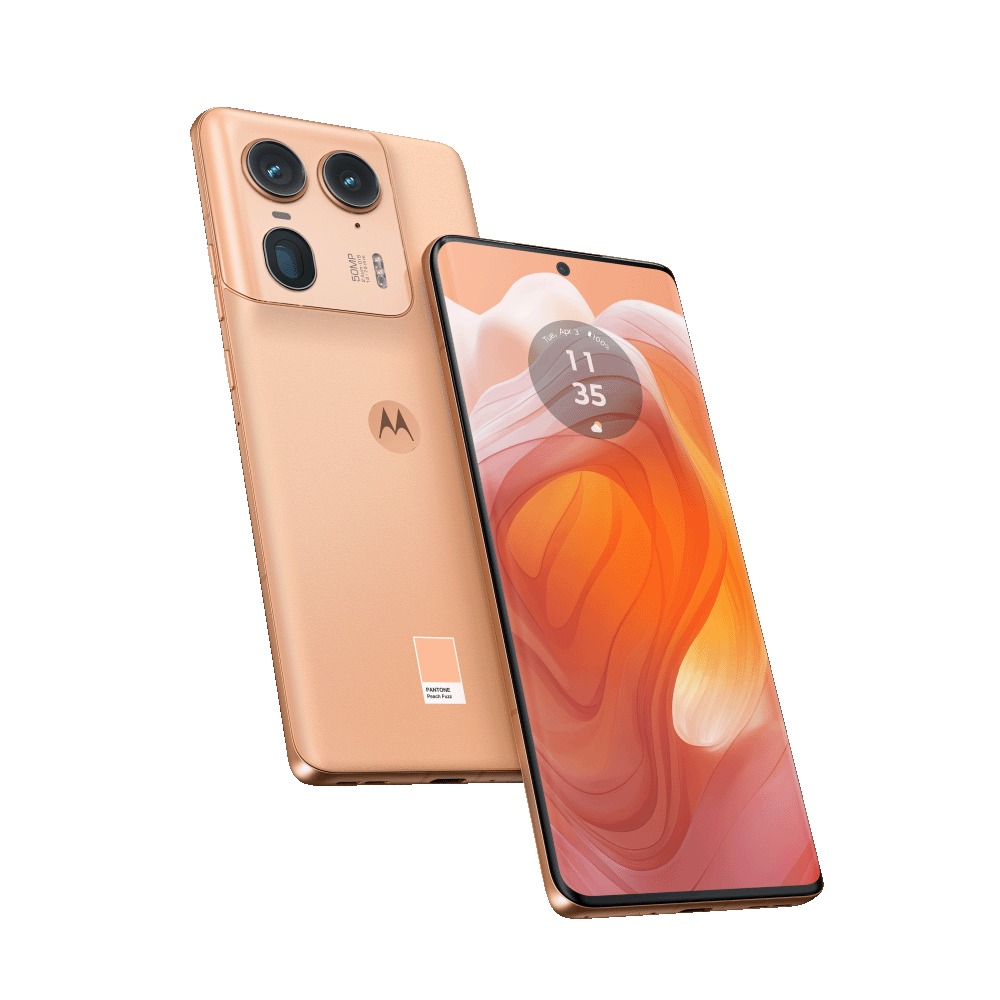
The Motorola Edge 50 Ultra pairs a 6.7-inch 144Hz pOLED display and Snapdragon 8s Gen 3 with a 64MP 3x telephoto, 125W charging and a choice of vegan leather or real wood backs.
Key figures at a glance
Gallery
Specifications
- Display
- 6.7" pOLED, 2712x1220 (446 ppi), up to 144Hz, HDR10+, 10-bit, 2800 nits peak, Gorilla Glass Victus
- Chipset
- Snapdragon 8s Gen 3 Mobile Platform
- RAM
- 12GB
- Memory extension
- RAM Boost (virtual RAM; size not stated on the source page)
- Storage
- 512GB (UFS 4.0)
- Rear Camera
- 50MP main (1/1.3", f/1.6, OIS) + 50MP ultra-wide/macro (122°, f/2.0) + 64MP telephoto (3x optical, f/2.4, OIS)
- Front Camera
- 50MP, f/1.9, autofocus
- Battery
- 4500 mAh, 125W wired TurboPower, up to 50W wireless, 10W wireless power sharing
- OS
- Android 14, Hello UI (up to 3 OS updates, up to 4 years of security updates)
- Dimensions
- 161.09 x 72.38 x 8.59 mm, 197 g
- Connectivity
- Dual SIM, 5G, Wi-Fi 7, Bluetooth 5.4, NFC, USB-C (USB 3.1 Gen 2, DisplayPort 1.4), on-screen fingerprint, face unlock
- Durability
- IP68 (up to 1.5 m for 30 minutes)
- Colors
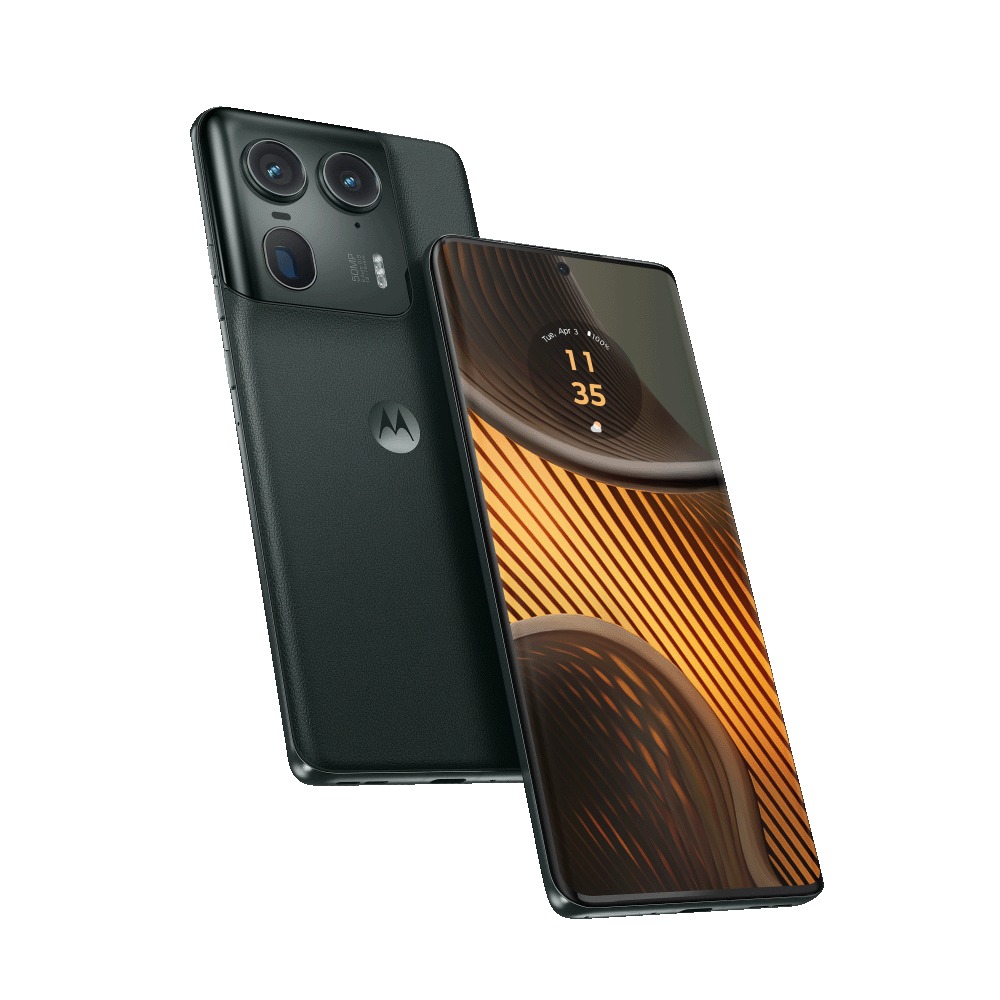
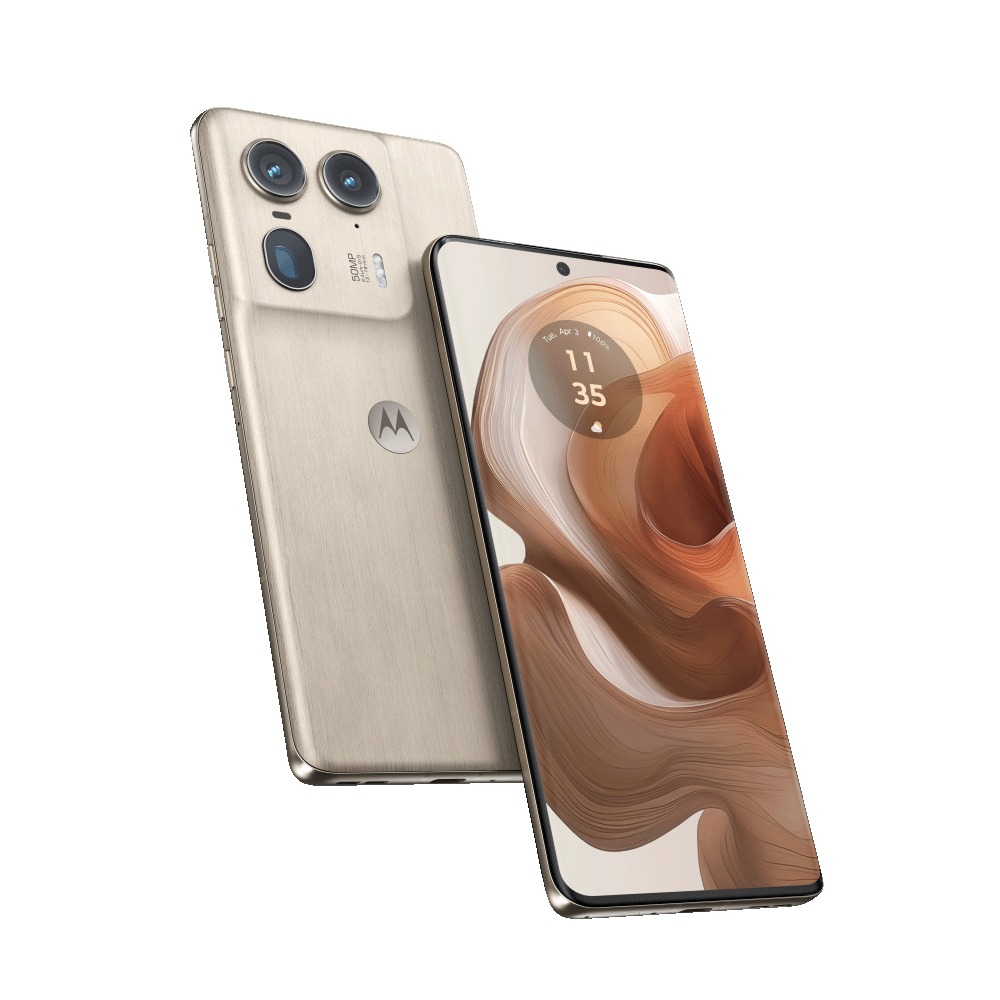
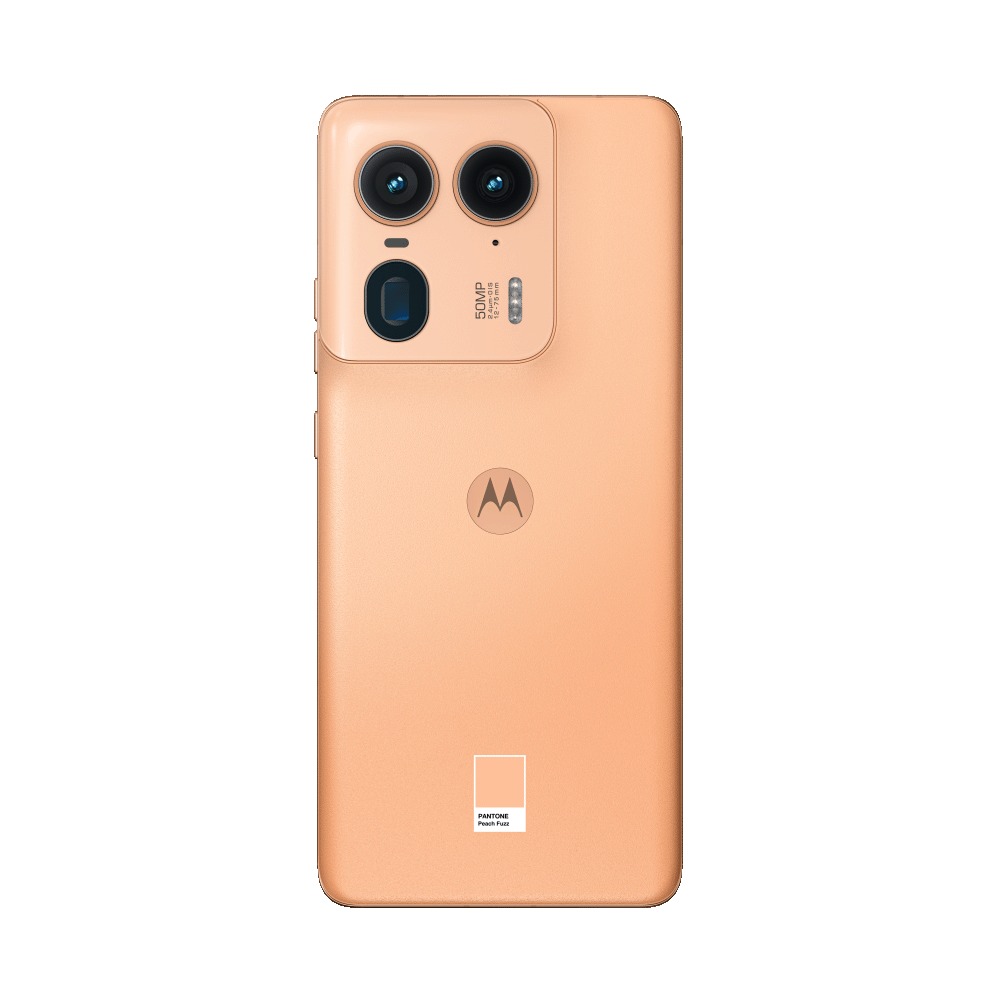
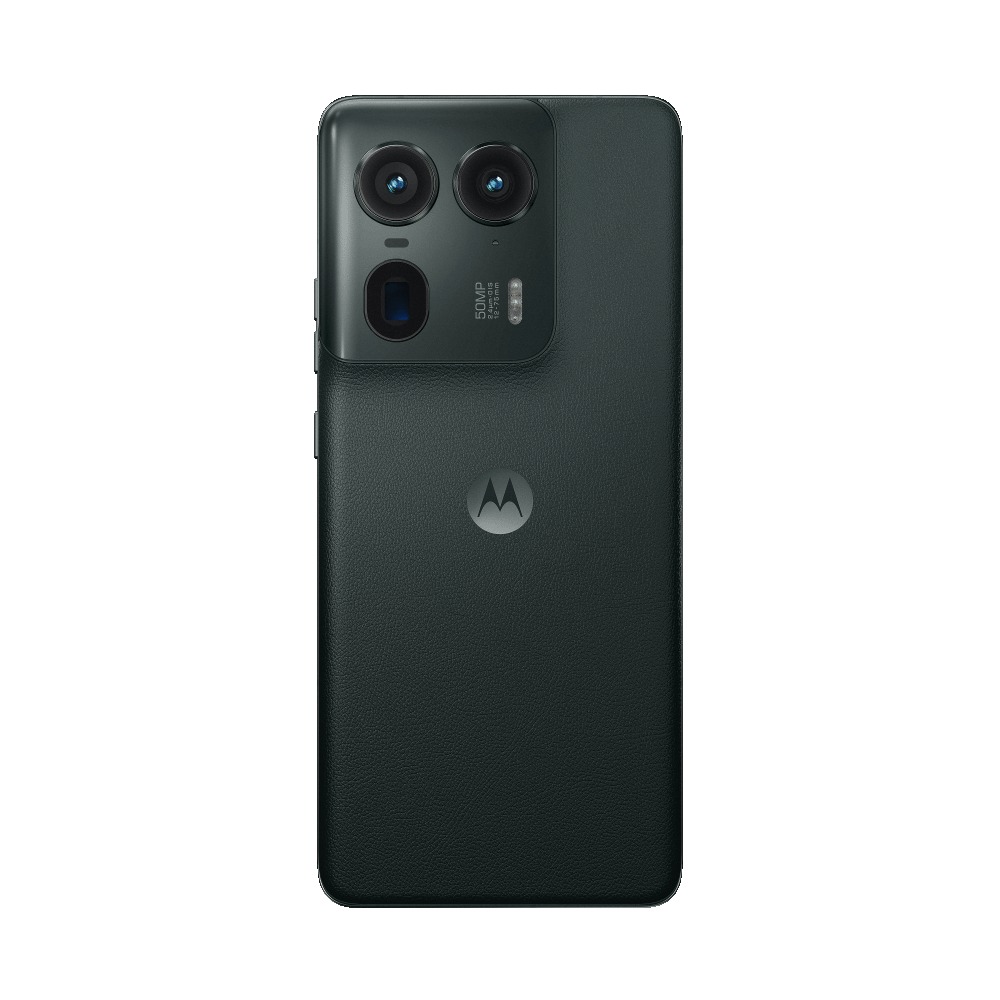
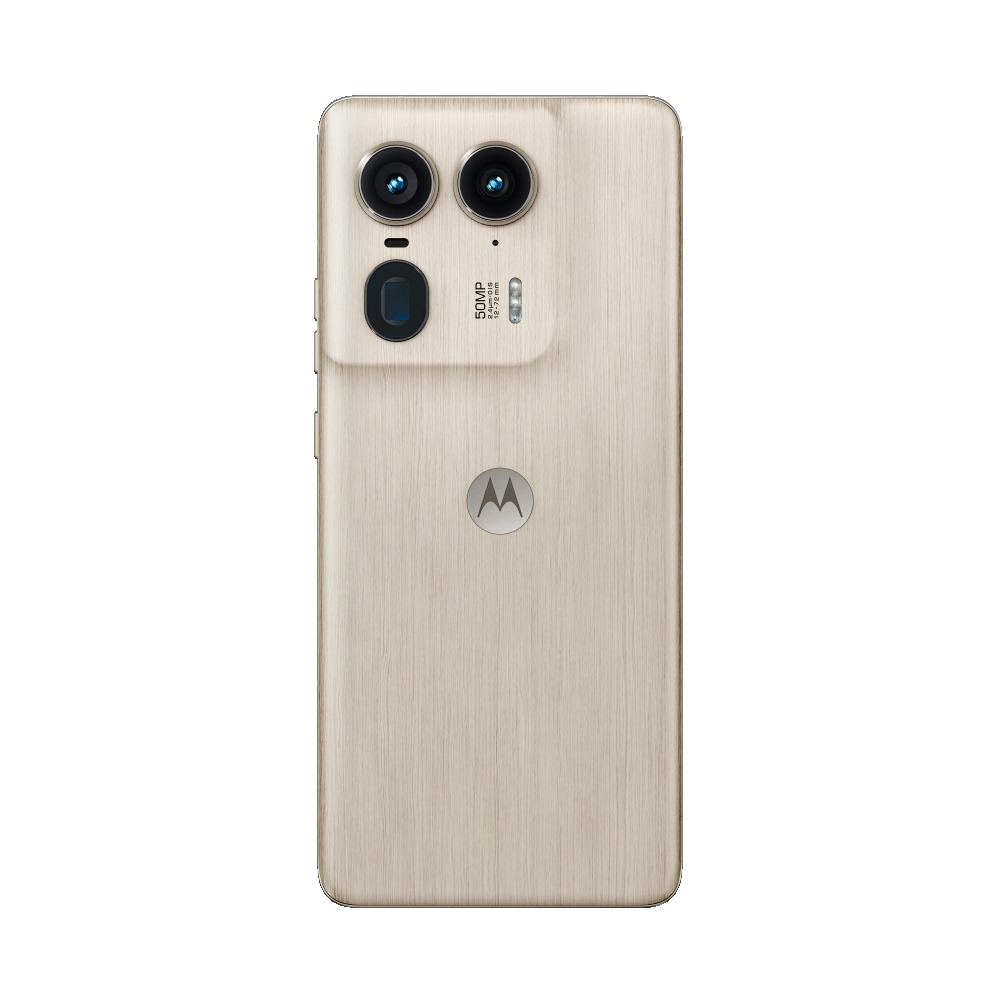
- Peach Fuzz (vegan leather), Nordic Wood (real wood), Forest Grey (vegan leather)
The Motorola Edge 50 Ultra is the top model of Motorola's 2024 Edge line, and it is easiest to understand as a phone built around materials and charging rather than around raw benchmark scores. It combines a 6.7-inch 144Hz pOLED display, the Snapdragon 8s Gen 3 chip, a triple rear camera with a 64MP 3x telephoto, and a 4,500 mAh battery that charges at up to 125W. What sets it apart visually is the back panel, which comes in vegan leather or, in one colour, real wood. This review is based on the published specifications and manufacturer information, so it explains what the hardware is designed to do and flags Motorola's statements as claims.
Where it sits in the lineup
Motorola positions the Edge 50 Ultra above the regular Motorola Edge 50 and the other Edge 50 models, as the version with the largest sensor, the telephoto lens and the fastest charging. The specification page we used lists a single configuration, 12GB of RAM with 512GB of UFS 4.0 storage, plus a feature called RAM Boost, which borrows part of the storage as extra virtual memory (the page does not state how much). The same page names three finishes: Peach Fuzz and Forest Grey in vegan leather, and Nordic Wood in real wood. Motorola's later Edge 60 Pro shows how the series developed, and the razr 50 Ultra is the company's flip-style flagship from the same year. No official US price was found on the pages we used, so none is stated here.
Design and display
The body measures 161.09 by 72.38 by 8.59 mm and weighs 197 g, according to the specification table. The front is Corning Gorilla Glass Victus with an anti-fingerprint coating, the frame is sandblasted aluminium, and the back is vegan leather or real wood, depending on the colour. The phone is rated IP68, which Motorola describes as immersion in fresh water up to 1.5 metres for up to 30 minutes, and it adds the usual warning that the phone is not designed to work while submerged. A real wood back is an unusual choice in this price class; wood is a natural material, so the grain differs from phone to phone, and it will age differently from leather or glass. Whether that is charming or impractical depends on the buyer.
The display is a 6.7-inch pOLED panel with a resolution of 2712 by 1220 pixels (about 446 ppi), a 144Hz refresh rate and a 360Hz touch rate in gaming mode. Motorola lists HDR10+, 10-bit colour with over a billion shades, 100 percent DCI-P3 coverage and a peak brightness of 2,800 nits. As always, a peak figure applies to small bright areas and test conditions rather than to everyday use. The screen has an active-area-to-body ratio of 93.5 percent and carries Pantone Validated colour and SGS low blue light and low motion blur certifications. Audio comes from dual stereo speakers tuned with Dolby Atmos.
Performance and software
The processor is the Snapdragon 8s Gen 3. It is positioned a notch below the full Snapdragon 8 Gen 3 used in the most expensive phones of 2024, but it is still a flagship-class platform, and it is paired with LPDDR5X memory and UFS 4.0 storage. For most users the difference between the two chips will be small in daily use; it would show up mainly in the longest gaming sessions or the most demanding graphics settings. We cannot give sustained benchmark results because the sources are limited to the manufacturer's information.
The phone runs Android 14 with Motorola's Hello UI, which stays close to the stock Android experience, and Motorola promises up to three operating-system updates and up to four years of security updates. That is a shorter commitment than the seven years offered by Google and Samsung on their current flagships, and it is a point to weigh for buyers who keep phones for a long time. Security features include an on-screen fingerprint reader, face unlock, Lenovo's ThinkShield and the Moto Secure app. Connectivity is thorough: Wi-Fi 7, Bluetooth 5.4, NFC, a USB-C port that supports USB 3.1 Gen 2 and DisplayPort 1.4 output, and dual SIM support using two physical cards. Note that the specification lists no eSIM.
Camera
The main camera is a 50MP sensor with a 1/1.3-inch format, an f/1.6 aperture, 1.2 micron pixels that combine to 2.4 microns, omni-directional phase-detection autofocus and optical image stabilisation. The second camera is a 50MP ultra-wide with a 122-degree field of view that doubles as a macro camera and has autofocus. The third is a 64MP telephoto with 3x optical zoom, an f/2.4 aperture and stabilisation. A laser autofocus sensor assists focusing. Motorola lists 100x Super Zoom, which relies on digital processing, so the useful range is the optical 3x and the moderate crops around it.
Video is offered at up to 4K and 60 frames per second on all three rear cameras, with HDR10+ at 30 frames per second and slow motion up to 960 fps at full HD on the main camera. The front camera is also a 50MP unit with an f/1.9 aperture and autofocus, and records 4K at 60 frames per second. A 50MP selfie camera is unusually high for the class, and the autofocus should help with group selfies. As with all computational photography, colour and processing choices matter more to the final look than the megapixel count, and the Pantone validation Motorola mentions is a claim about colour accuracy that we cannot check from specifications.
Battery and charging
The 4,500 mAh battery is modest by the standards of 2024, when many rivals moved to 5,000 mAh and beyond. Motorola makes up for it with charging speed: 125W TurboPower wired charging, up to 50W wireless charging and 10W wireless power sharing, which lets the phone charge a pair of earbuds or another device. A 125W charger and a USB-C cable are listed in the box, along with a protective case and film, which is helpful because many brands have dropped chargers. Motorola's own pages quote up to 30 hours of battery life in marketing text and up to 40 hours in the specification table under its test conditions; these are claims, and real-world endurance with a bright 144Hz screen will be shorter.
Who it is for
The Edge 50 Ultra suits buyers who want a distinctive design, a clean Android experience and fast charging, and who value a telephoto camera without paying for the very top of the market. The wood finish makes it a conversation piece; the leather versions are a more conventional choice. It also suits people who want to charge quickly in short breaks rather than overnight.
To see how it measures up against another flagship, try the Motorola Edge 50 Ultra versus Galaxy S25 Ultra comparison, or browse the rankings for all devices.
Compromises to weigh
- Update policy: up to three OS updates and four years of security patches is shorter than the best in the class.
- Battery capacity: 4,500 mAh is smaller than many rivals, offset by very fast charging.
- Single storage tier: only the 12GB and 512GB version is listed on the page we used.
- Chip tier: the 8s Gen 3 is a step below the top Snapdragon of its year.
- No eSIM listed: the specification names two physical SIM slots.
- Manufacturer claims: brightness, battery life and charging times are laboratory figures from Motorola.
In short, the Edge 50 Ultra is a design-led flagship alternative: it does not top every specification, but a real-wood option, a proper 3x telephoto, a high-refresh display and 125W charging make it a distinctive choice among 2024 Android phones.
Where it ranks
Compare Motorola Edge 50 Ultra with similar devices
More from Motorola
Frequently asked questions
When was the Motorola Edge 50 Ultra released?
The Motorola Edge 50 Ultra was released on 2024-06-17, according to the manufacturer’s published information.
What are the main specs of the Motorola Edge 50 Ultra?
Headline figures for the Motorola Edge 50 Ultra: Battery: 4,500 mAh, Refresh rate: 144 Hz, Main camera: 50 MP, RAM: 12 GB. The full specification table is further up this page.
Is the Motorola Edge 50 Ultra worth buying?
That depends on your priorities. Use the editorial review on this page for our view, check the rankings above to see where the device stands on battery, display and camera, and compare it directly with similar models before you decide.


