Phones
Infinix Note 40 Pro 5G
A 5G mid-ranger with a 6.78-inch 120Hz AMOLED screen, Dimensity 7020 chip, 108MP OIS camera, 5000 mAh battery, 45W wired and 20W magnetic wireless charging, plus a light-up Active Halo ring.
Key figures at a glance
Gallery


Specifications
- Display
- 6.78" flexible AMOLED (LTPS), 1080x2436, 60/120Hz, 1300 nits typ., 93.6% screen-to-body ratio
- Chipset
- MediaTek Dimensity 7020 (octa-core: 2x 2.2GHz Cortex-A78 + 6x 2.0GHz Cortex-A55), IMG BXM-8-256 GPU
- RAM
- 8GB
- Extended RAM
- Up to 16GB (virtual, from storage)
- Storage
- 256GB (UFS 2.2, LPDDR4X RAM)
- Rear Camera
- 108MP main (f/1.75, OIS) + 2MP (f/2.4) + 2MP (f/2.4)
- Front Camera
- 32MP (f/2.2)
- Battery
- 5000 mAh, 45W wired, 20W wireless (MagCharge with Infinix MagKit accessories)
- OS
- XOS 14
- Dimensions
- 164.28 x 74.5 x 8.09 mm
- Weight
- 196 g / 190 g (depending on finish)
- Colors
- Vintage Green, Titan Gold
- Water/dust resistance
- IP53
- Audio
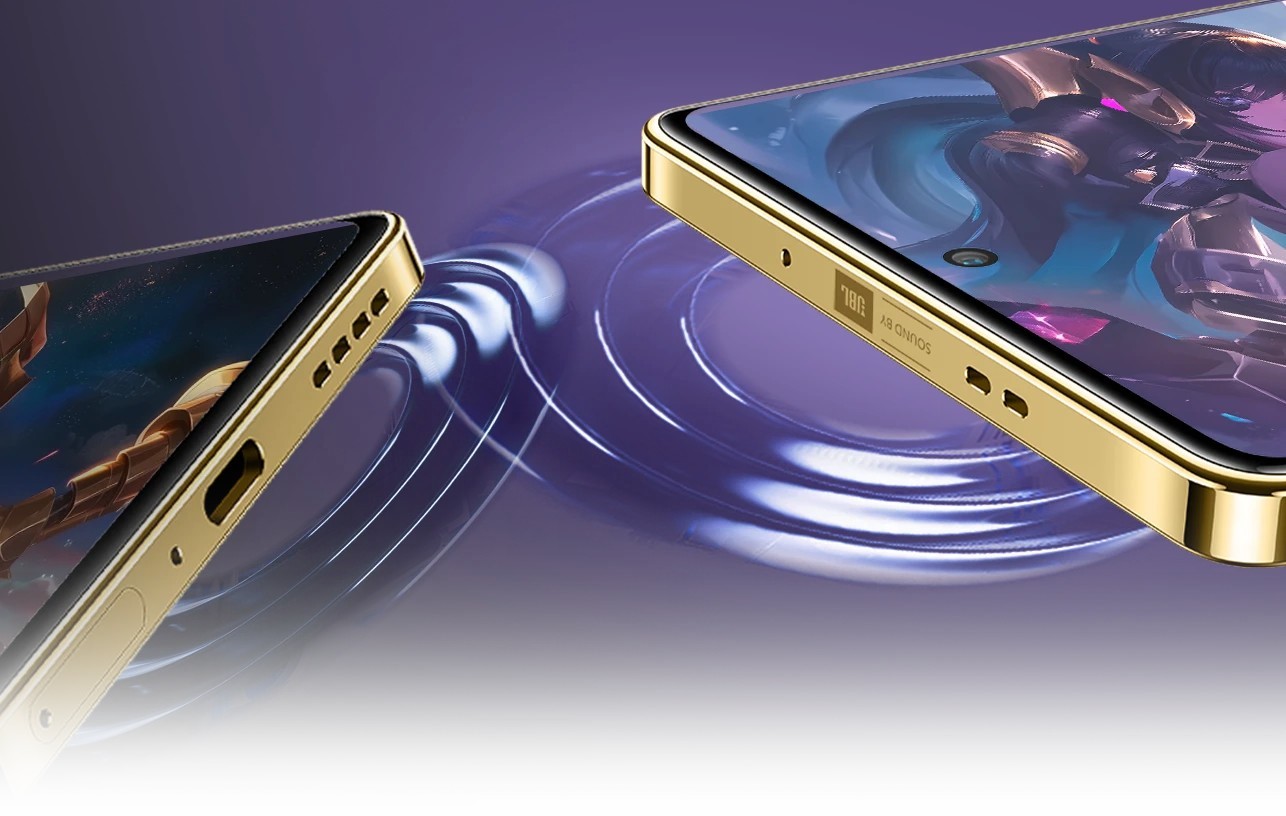
- Dual stereo speakers tuned with JBL, DTS, Hi-Res, Widevine L1
- Connectivity
- 5G, Wi-Fi 5, Bluetooth, NFC, GPS, FM radio, infrared, USB-C (OTG), dual nano-SIM
The Infinix Note 40 Pro 5G is the 5G member of the Note 40 Pro pair: a mid-range Android phone with a 6.78-inch curved 120Hz AMOLED screen, a MediaTek Dimensity 7020 chip, a 108MP main camera with optical stabilisation and a 5000 mAh battery. What sets it apart from most phones at its price is a light-up ring beside the camera lenses, which Infinix calls Active Halo, and magnetic wireless charging through the company's MagKit accessories. This page is a review based on the published specifications and manufacturer information, and it tries to separate what the spec sheet really promises from what the marketing copy suggests.
Where this model fits
Infinix sells the Note 40 line as a family. The official model list includes the Note 40, the Note 40 Pro, the Note 40 Pro 5G, the Note 40 Pro+ 5G, the Note 40S and the Note 40X 5G, along with racing-edition variants. The Pro 5G is the model that adds a modern 5G chipset to the Pro design language. Its sibling, the Note 40 Pro without the 5G suffix, keeps a 4G-only Helio chip but charges at 70W instead of 45W. The plain Infinix Note 40 5G sits a step lower in the range and uses the same Dimensity 7020 platform.
The release date listed for this page, March 2024, is an approximate launch date and not a verified on-sale date, because the product pages we read do not print one. We also found no official US price, so none is given; Infinix concentrates on markets in Asia, Africa, the Middle East and Latin America, and the figures printed on the Malaysian and Indonesian pages are the ones the specifications below come from. Regional versions can differ, in memory sizes for example, so check the local listing before assuming a specific configuration.
Design: the halo and the glass
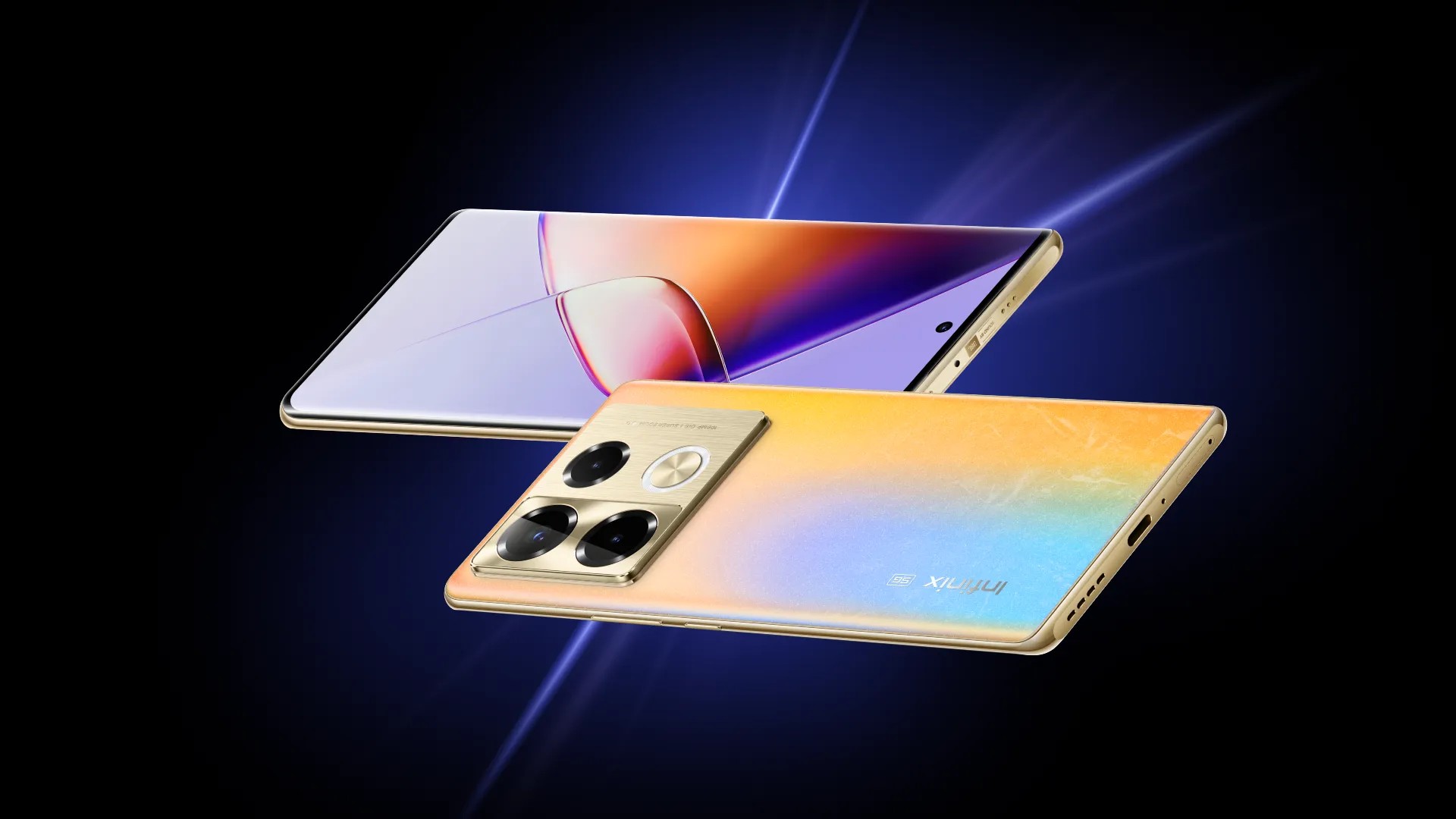
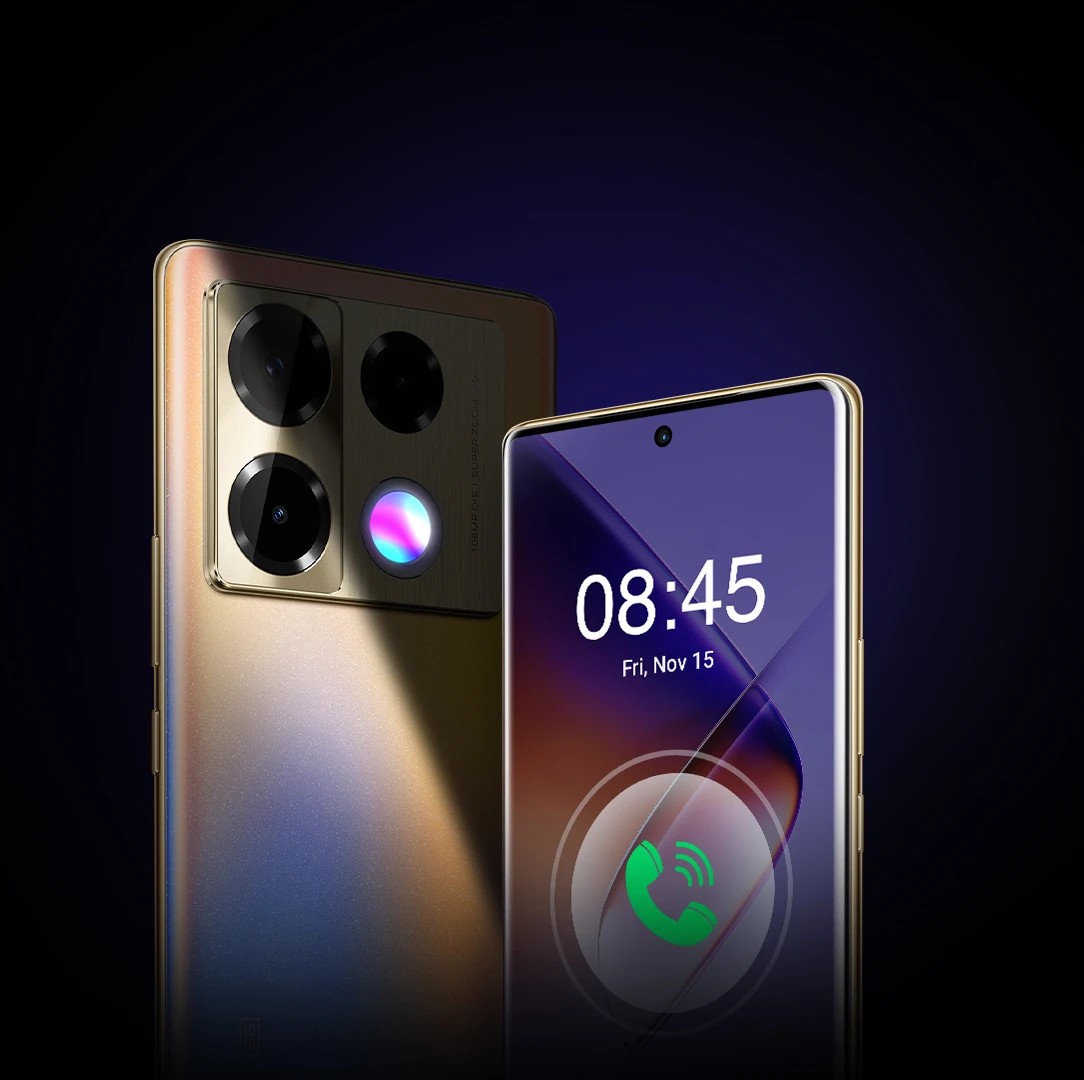
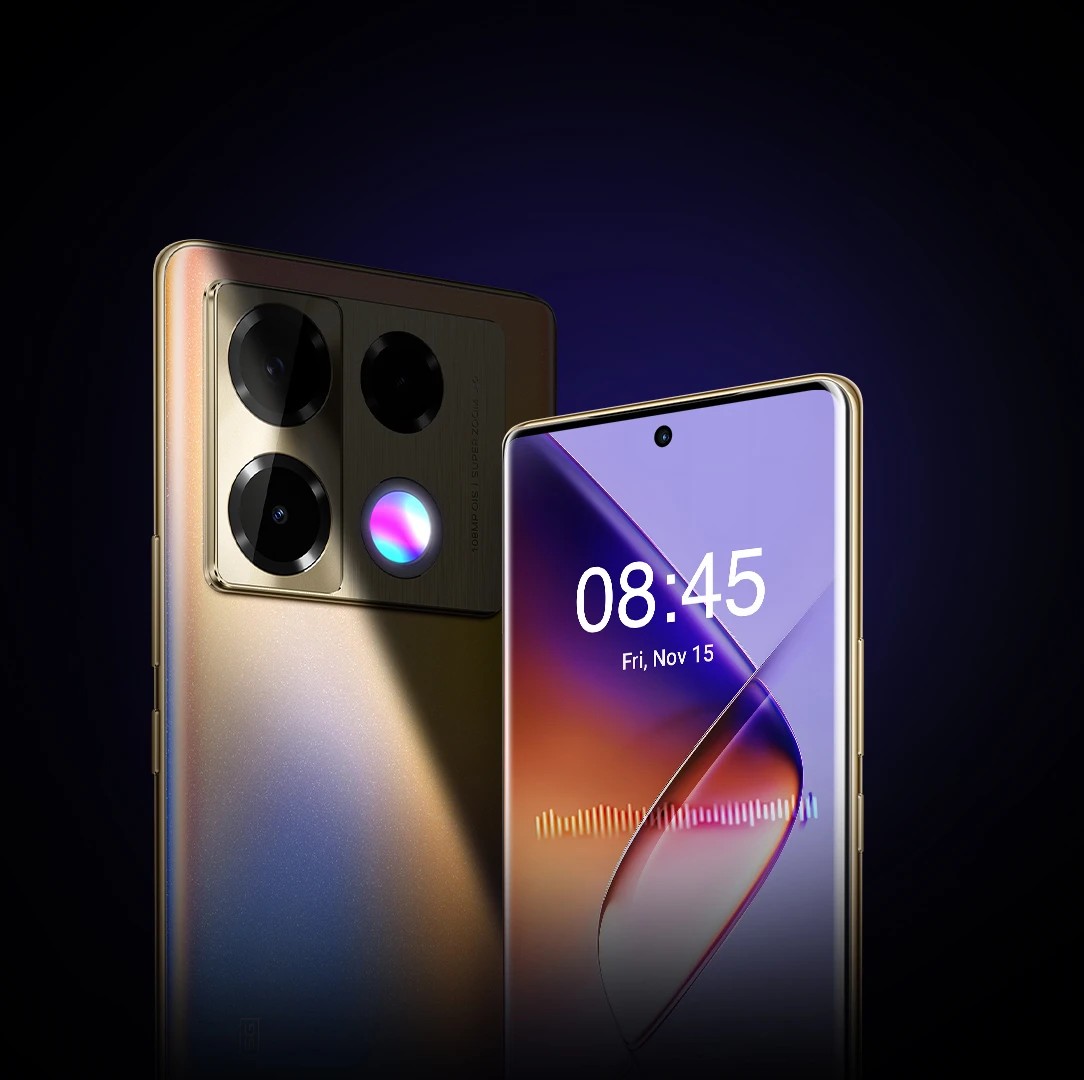
The phone measures 164.28 x 74.5 x 8.09 mm. Infinix lists two weights, 196 g and 190 g, without saying which finish is which, and two colours: Vintage Green and Titan Gold. The company describes the look as inspired by city skylines, with a brushed-metal texture on the back and a gold-toned frame. The more distinctive element is the Active Halo, a ring of light next to the three rear lenses. Infinix says it reacts to incoming calls, charging status, voice input and other events, and it markets the feature as a first in its segment. The spec sheet lists four rear flashes plus a dual front flash, which is how the ring doubles as a light source. Whether you find a glowing ring charming or gimmicky is a matter of taste, but it is a visible attempt to give the phone an identity in a crowded price class.
Protection is modest. The phone carries an IP53 rating, which covers dust to a limited degree and splashes, but it is not a water-submersion rating. Infinix says the screen uses Corning Gorilla Glass; the footnote attached to that claim on the product page is the place to look for the exact version, which the headline text does not give. A case is sensible with a curved-edge glass front, and the magnetic back means that Infinix's own MagCase is the natural choice.
Screen
The display is a 6.78-inch flexible AMOLED panel using LTPS technology, with a Full HD+ resolution of 1080 x 2436 pixels and a screen-to-body ratio that Infinix puts at 93.6 percent. The refresh rate is listed as 60Hz or 120Hz, and the brightness figure is 1300 nits typical. As with every phone, treat a peak brightness number as a manufacturer claim for a short boost under ideal conditions rather than a sustained value. The panel is rated for DCI-P3 wide colour gamut and 1.07 billion colours.
Touch sampling is given as 240Hz with ten fingers and 360Hz with five, which matters mostly to gamers, and Infinix talks at length about palm-rejection logic along the curved edges to avoid accidental inputs. Curved screens look elegant and make swiping feel smooth, but they pick up reflections and can register unintended touches, so the software filtering is not a minor detail. At 6.78 inches the phone is a one-and-a-half-hand device; the weight of around 190 g is reasonable for the battery capacity.
Performance and software
The Dimensity 7020 is a 6nm 5G chip with an octa-core CPU: two Cortex-A78 cores at up to 2.2GHz and six Cortex-A55 cores at up to 2.0GHz, paired with an IMG BXM-8-256 GPU. It is a chip for everyday tasks, social media, video and casual to moderate gaming, not for the heaviest 3D titles at maximum settings. We cannot supply benchmark scores because Infinix publishes none we could verify, and we do not invent any.
Memory is where the regional lists matter. The Malaysian and Indonesian spec pages state 8GB of LPDDR4X RAM and 256GB of UFS 2.2 storage, and the headline specification mentions up to 16GB of extended RAM. Extended RAM is virtual memory carved out of the storage; it can help keep more apps in the background, but it is not the same as physical RAM and it is slower. The phone runs XOS 14, Infinix's Android skin. The pages also list two years of Android updates and 36 months of security patches, which is a respectable promise for the category but shorter than the commitments from the large Korean or American brands.
Connectivity is broad for the price: 5G on a wide set of bands, dual nano-SIM, Wi-Fi 5, Bluetooth, NFC, GPS, an FM radio, an infrared blaster and a USB-C port with OTG. The FM radio and infrared remote are rare these days and genuinely useful in some regions. Wi-Fi 5 rather than Wi-Fi 6 is a small sign of the price class.
Camera
The main sensor is a 108MP unit with an f/1.75 aperture and optical image stabilisation, accompanied by two 2MP sensors (f/2.4 each). In practice, most of the photographic capability rests on that one lens. The two 2MP companions typically handle depth or macro duties, and they add little compared with a proper ultrawide or telephoto camera. Infinix pitches the 108MP sensor as capable of a lossless-looking zoom through cropping, which is a software technique and not an optical zoom. The 32MP front camera has an f/2.2 aperture, and the ring light can serve as fill light for selfies.
Video tops out at 2K at 30 frames per second, with 1080p at 60 and 30 frames per second and 720p at 30. There is no 4K recording listed, which is a limitation if you plan to shoot a lot of video. Optical stabilisation is the most important piece of hardware here, because it helps low-light photos and steadier video. The product page lists modes such as Super Night, Super Macro, dual video, slow motion and time-lapse.
Battery and charging
The 5000 mAh battery is typical for the class. Wired charging is rated at up to 45W, and Infinix pairs it with a charging-management chip it calls Cheetah X1, which it describes as its first self-developed power-management chip. Wireless charging at up to 20W is available through the MagCharge system with Infinix's own magnetic accessories; the phone does not mention support for a wider magnetic standard, so check accessory compatibility before buying third-party pads. Infinix also lists reverse charging, both wireless and over cable, bypass charging for gaming, and an overnight mode that holds the battery near 80 percent until shortly before the usual wake-up time. The company claims the battery retains good capacity after 1600 cycles; that is a manufacturer figure under lab conditions.
Charging at 45W is clearly slower than the 70W on the sibling Note 40 Pro, which is the trade-off for getting 5G in this model. On paper, that is the main reason to choose the 4G version, although any charging-time claim from the manufacturer should be read as a lab figure.
Who it is for
The Note 40 Pro 5G suits people who want a 5G phone that looks different from the pack, who value wireless charging and a stabilised main camera, and who prefer a curved AMOLED display. It also suits shoppers in the regions where Infinix is sold and supported, where service and accessories are easy to find. If your priority is the fastest wired charging and you do not need 5G, look at the Infinix Note 40 Pro. For newer designs in the same brand, the Infinix Note 50 Pro is worth a look, and the Note 40 Pro 5G versus Note 40 5G comparison shows what the Pro suffix adds.
Compromises to weigh
- Camera system: one capable lens and two 2MP helpers, with no real ultrawide or telephoto.
- Video: maximum 2K at 30 frames per second.
- Memory: 8GB physical RAM, with the rest of the headline figure being virtual.
- Durability: IP53 is splash protection only, and the curved glass is a drop risk.
- Charging: 45W wired is slower than the 70W of the 4G sibling.
- Software support: two Android updates is short compared with the market leaders.
- Price information: no official US price, so compare against local listings.
Overall, the Note 40 Pro 5G is a distinctive, feature-rich mid-range phone whose strengths are its screen, its charging options and its design; its weaknesses are the thin camera system and the short update promise. If you are cross-shopping, the phone rankings help to place it against rivals using the same display, battery and camera figures.
Where it ranks
Compare Infinix Note 40 Pro 5G with similar devices
More from Infinix
Frequently asked questions
When was the Infinix Note 40 Pro 5G released?
The Infinix Note 40 Pro 5G was released on 2024-03-01, according to the manufacturer’s published information.
What are the main specs of the Infinix Note 40 Pro 5G?
Headline figures for the Infinix Note 40 Pro 5G: Battery: 5,000 mAh, Refresh rate: 120 Hz, Main camera: 108 MP, RAM: 8 GB. The full specification table is further up this page.
Is the Infinix Note 40 Pro 5G worth buying?
That depends on your priorities. Use the editorial review on this page for our view, check the rankings above to see where the device stands on battery, display and camera, and compare it directly with similar models before you decide.


