Phones
Infinix Note 40
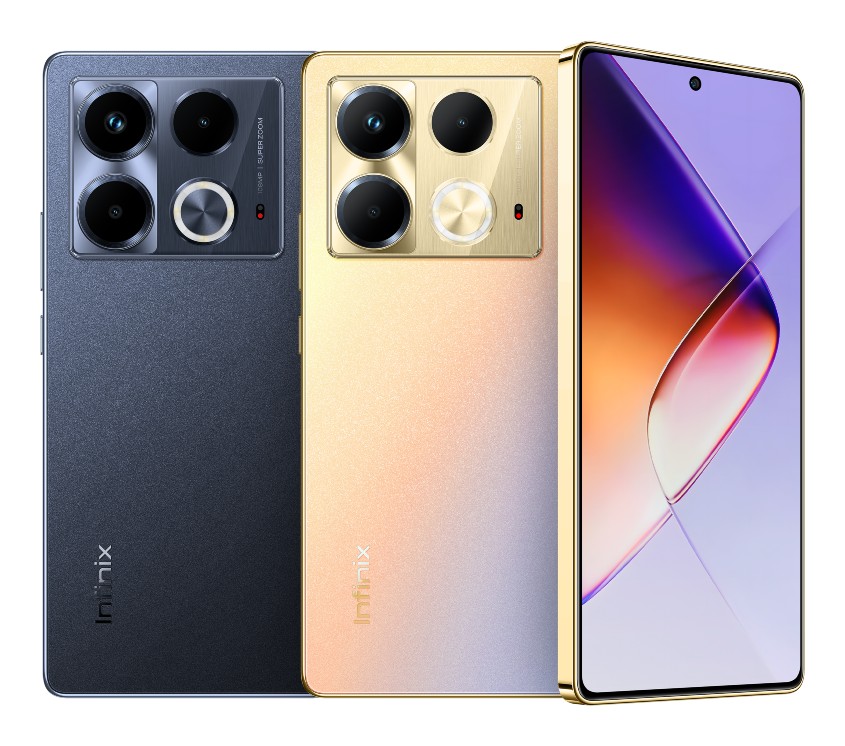
The 4G Note 40: a 6.78-inch 120Hz AMOLED, a Helio G99 Ultimate chip with 8GB RAM, a 108MP main camera, 45W wired and 20W wireless MagCharge charging, and IP54 splash protection.
Key figures at a glance
Gallery



Specifications
- Display
- 6.78" flexible AMOLED (LTPS), 1080 x 2436, 60/120Hz, 550 nits typ. / 1300 nits peak, touch sampling up to 360Hz
- Chipset
- MediaTek Helio G99 Ultimate (6nm), octa-core (2x Cortex-A76 up to 2.2GHz + 6x Cortex-A55 up to 2.0GHz), Mali-G57 MC2
- RAM
- 8GB
- Extended RAM
- Up to 16GB (virtual, from storage)
- Storage
- 256GB (UFS 2.2, LPDDR4X RAM)
- Rear Camera
- 108MP main (f/1.89, AF) + 2MP lens; listed apertures f/1.89, f/2.4, f/2.0
- Front Camera
- 32MP (f/2.2)
- Battery
- 5000 mAh (typ.), 45W wired, 20W wireless MagCharge with Infinix magnetic accessories
- OS
- XOS 14
- Dimensions
- 164.13 x 74.53 x 7.75 mm
- Weight
- 190 g
- Colors
- Titan Gold, Obsidian Black
- Water/dust resistance
- IP54
- Audio
- Dual stereo speakers, JBL-tuned, DTS, Hi-Res, Widevine L1
- Connectivity
- 4G LTE, Wi-Fi 802.11 a/b/g/n/ac, Bluetooth, NFC, FM radio, dual nano-SIM, USB-C (OTG)
- Biometrics
- In-display fingerprint sensor
- Special feature
- Active Halo AI lighting around the camera (not on Obsidian Black)
The Infinix Note 40 is the 4G member of Infinix's Note 40 family, and its identity is easy to summarise: a large flexible AMOLED display, a 108MP main camera and an unusually capable charging system for its price tier, including 45W wired charging and 20W wireless charging through magnetic accessories. This review is based on the published specifications and manufacturer information from Infinix's product and specification pages; figures that come from the manufacturer's own laboratory tests are presented as claims, not as independent measurements. In short, the Note 40 is aimed at buyers who value charging flexibility, screen quality and a long feature list over raw processor speed or 5G connectivity.
Where the Note 40 sits in the lineup
Infinix's Note line is its value-oriented family, and the Note 40 series spans several variants. This page covers the 4G model that Infinix lists with the MediaTek Helio G99 Ultimate. The specification page lists 8GB of RAM with 256GB of UFS 2.2 storage, and the marketing adds "up to 16GB extended RAM". That extension is virtual memory carved out of the storage, so the physical memory to keep in mind is 8GB. There is a separate 5G sibling, the Infinix Note 40 5G, which uses a different processor and a different charging setup, and a side-by-side is available at Infinix Note 40 vs Infinix Note 40 5G. The later Infinix Note 50 Pro shows where the family moved next, and the rankings page places all of these phones in a wider context.
Design, display and build
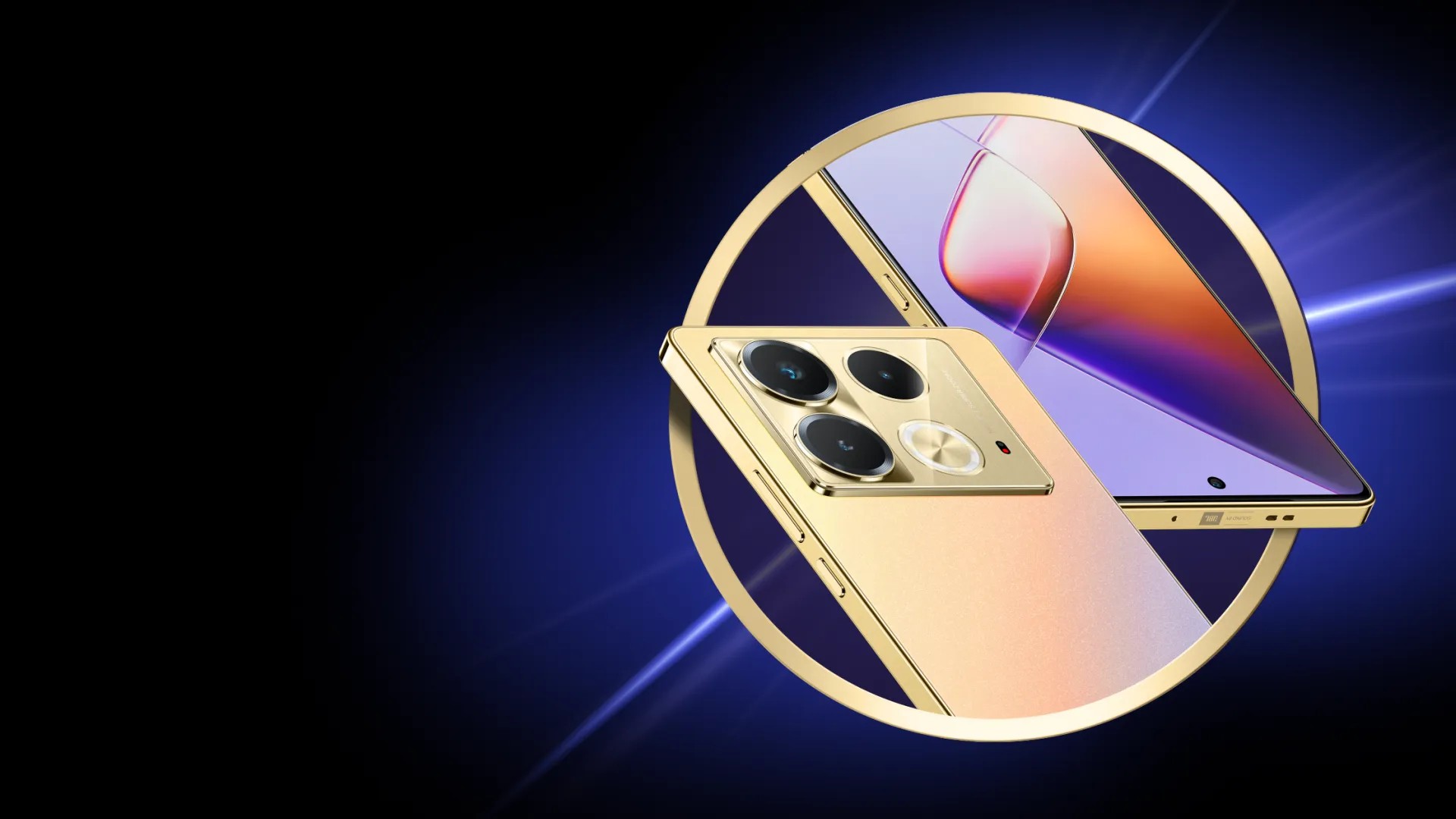
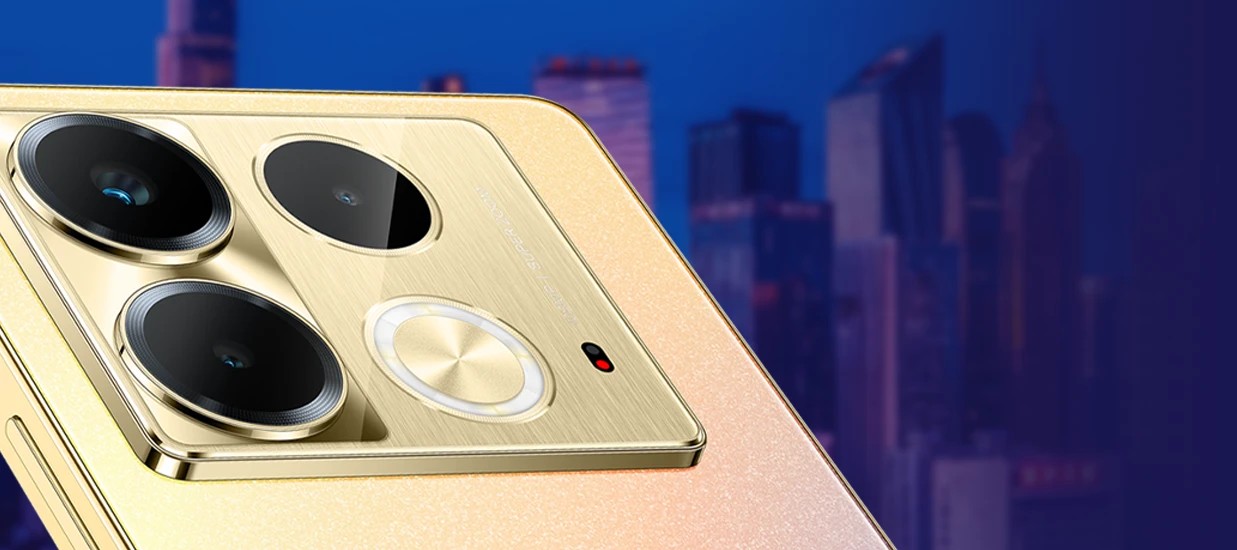
The Note 40 is offered in Titan Gold and Obsidian Black, with a Vintage Green finish also shown on the product page, and a separate Racing Edition made in collaboration with BMW DesignWorks. The body measures 164.13 x 74.53 x 7.75 mm and weighs 190 g. Infinix describes a one-piece "MDA" design, in which the antenna is hidden in the frame to allow ultra-thin bezels of about 2.1 mm and a claimed 94 percent screen-to-body ratio. The gold version has a brushed-metal look around the camera island and a gradient back, while the black version is more restrained.
The display is a 6.78-inch flexible AMOLED (LTPS) with a Full HD+ resolution of 1080 x 2436 pixels and a refresh rate that can switch between 60Hz and 120Hz. Infinix quotes a typical brightness of 550 nits and a peak of 1300 nits, and a touch sampling rate of up to 360Hz. It also lists DCI-P3 wide colour gamut support, 10-bit colour depth, PWM dimming and a TÜV Rheinland low-blue-light certification, and the fingerprint reader sits under the screen. These are strong figures for a phone in this class; as always, the peak brightness value applies to short high-brightness situations and not to constant use. A part of the appeal is the unusually slim, even bezel, which makes the screen look larger than the body suggests.
Protection is IP54, which means resistance to dust and splashes, and the page describes this as splash-proof, not waterproof. The phone also keeps a USB-C port with OTG support, NFC, FM radio and dual stereo speakers tuned with JBL and supporting DTS and Hi-Res audio, with Widevine L1 for HD streaming. Infinix says the audio hardware was reviewed under Harman's branding process, which is why the JBL name appears.
Performance and software
The chip is the MediaTek Helio G99 Ultimate, built on a 6nm process with two Cortex-A76 cores at up to 2.2GHz and six Cortex-A55 cores at up to 2.0GHz, plus a Mali-G57 MC2 graphics unit. Infinix claims an AnTuTu score of about 390,000 and highlights gaming features such as a refresh-rate control tool and tuned settings for popular titles, with a quoted average frame rate close to 60fps in one mobile game. This is a capable mid-range processor, enough for social media, streaming, navigation and casual games, but it sits below the more recent Dimensity chips used in rivals, and demanding 3D titles will need lower graphics settings. Memory is LPDDR4X and storage is UFS 2.2, which keeps app launches and file transfers reasonably quick.
The phone runs XOS 14, Infinix's Android-based interface. The company describes a cleaner, lighter experience with more than 15 pre-installed apps that can be removed, redesigned icons and smarter notification handling. For updates, Infinix lists two years of Android updates and 36 months of security patches on the product page, which is a limited commitment compared with the long update windows now offered by some rivals. Buyers who plan to keep a phone for four or five years should treat that as a real consideration.
The page also describes a set of AI features branded around the "Note AI" idea, such as text summarisation and content creation, an AI wallpaper generator and natural-language photo search. Infinix notes that the AI function is available across the whole Note series. A distinctive hardware item is the Active Halo, a ring of lighting around the camera that reacts to calls, notifications, charging, games and music; Infinix says it is not currently available on the Obsidian Black model.
Camera
The rear camera is built around a 108MP main sensor, with an f/1.89 aperture and autofocus, described on the specification page as a 1/1.52-inch sensor with a six-element lens. A 2MP lens is listed alongside it, and the aperture line includes f/2.4 and f/2.0 values, which fits Infinix's description of a triple camera system. The company promotes a lossless 3x zoom derived from the high-resolution sensor, which is a crop of the 108MP image and not an optical telephoto. A quad flash is fitted. The front camera is 32MP with an f/2.2 aperture. Video recording goes up to 2K at 30fps or 1080p at 60fps, and the scene modes include super night, portrait, slow motion, time-lapse, documents, panorama, dual video and a pro mode.
In practice, a 108MP main sensor mainly helps in good light and in cropping, while low-light results depend on the processing. The Note 40 does not have optical stabilisation listed on the page, so shaky hands in low light may be a limiting factor. For anyone who cares mostly about pictures, the more recent Note 50 Pro is worth a look.
Battery and charging
This is where the Note 40 stands out. It has a 5000 mAh typical-capacity battery and supports 45W wired charging. Infinix introduces its own power-management chip called Cheetah X1, and claims charging to 50 percent in about 19 minutes in a hyper mode or 26 minutes in a cooler mode, along with a five-minute charge that it says gives up to 6.5 hours of calling or 3.8 hours of video. The company also states that the battery keeps a full-day life after 1,600 charge cycles. Additional features include Bypass Charging 2.0, which powers the motherboard directly during gaming to cut heat, charging at temperatures down to minus 20 degrees Celsius, and an AI protection mode that holds the battery at 80 percent overnight and finishes to 100 percent shortly before you wake.
The headline extra is wireless MagCharge. Using Infinix's magnetic accessories, including a magnetic case, a MagPad and a MagPower power bank, the phone supports 20W wireless charging, and Infinix adds reverse wireless charging and reverse OTG charging for topping up another device. The footnote in the specification marks the wireless feature with an asterisk, and it relies on the matching accessories, which are sold separately in many markets. All charging numbers are laboratory results and will vary in daily life.
Who the Note 40 is for
The phone suits people who want a bright, smooth AMOLED screen, quick wired charging, the convenience of magnetic wireless charging and a flashy design, and who are happy with 4G. It is also sensible for gamers who play lighter titles and want a cooler-charging phone. Those who need 5G, long software support or a more powerful chip should consider the Note 40 5G or newer models.
Compromises to weigh
- Connectivity: 4G only, with Wi-Fi 5.
- Updates: two years of Android updates and 36 months of security patches.
- Processor: a capable but older mid-range chip.
- Camera: no optical stabilisation listed, and the "3x lossless zoom" is a sensor crop.
- Memory marketing: the 16GB figure includes virtual RAM; physical memory is 8GB.
- Accessories: wireless charging needs the magnetic MagKit accessories.
Overall, the Infinix Note 40 offers a large feature set for its category, with charging as its strongest argument. If you want the same family with 5G, check the Note 40 5G, and if you want to see the next generation, the Note 50 Pro page is the place to go.
Where it ranks
Compare Infinix Note 40 with similar devices
More from Infinix
Frequently asked questions
When was the Infinix Note 40 released?
The Infinix Note 40 was released on 2024-03-01, according to the manufacturer’s published information.
What are the main specs of the Infinix Note 40?
Headline figures for the Infinix Note 40: Battery: 5,000 mAh, Refresh rate: 360 Hz, Main camera: 108 MP, RAM: 8 GB. The full specification table is further up this page.
Is the Infinix Note 40 worth buying?
That depends on your priorities. Use the editorial review on this page for our view, check the rankings above to see where the device stands on battery, display and camera, and compare it directly with similar models before you decide.


