Tablets
Apple iPad Pro (M5)
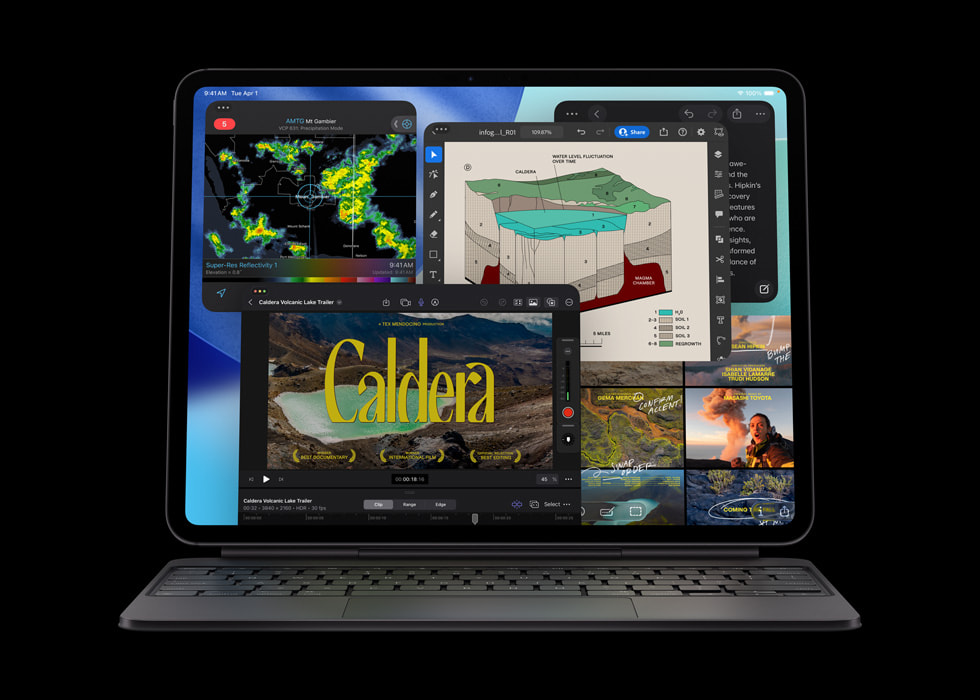
Same thin tandem-OLED body as the M4 model, but with the M5 chip, up to 3.5 times the AI performance, Wi-Fi 7 through Apple's N1, the C1X modem and iPadOS 26.
Key figures at a glance
Gallery

Specifications
- Display
- 11" and 13" Ultra Retina XDR tandem OLED, 1000 nits full-screen, 1600 nits peak HDR, nano-texture option, external display up to 120Hz
- Chipset
- Apple M5 (up to 10-core CPU, 10-core GPU with Neural Accelerators, 16-core Neural Engine)
- RAM
- 12GB on 256GB/512GB models (Apple states 12GB starting memory)
- Storage
- 256GB / 512GB / 1TB / 2TB
- Thickness
- 5.3 mm (11-inch) / 5.1 mm (13-inch)
- Connectivity
- Apple N1 chip (Wi-Fi 7, Bluetooth 6, Thread); cellular models with C1X 5G modem and eSIM
- Charging
- Fast charge, up to 50% in around 30 minutes with a high-wattage adapter
- Pencil
- Apple Pencil Pro and Apple Pencil (USB-C)
- OS
- iPadOS 26
The iPad Pro with M5 arrived in October 2025 as a chip-and-connectivity refresh of the design Apple introduced in 2024. The body, the tandem OLED screen and the accessories are the same; what changes is the silicon inside, the memory and storage speed, the wireless chips and the software it launches with. Apple's message is that the M5 takes what it calls the next big leap in AI for iPad. This page explains what is new, what stays the same and what you should check before deciding between this model and its predecessor.
Launch and price
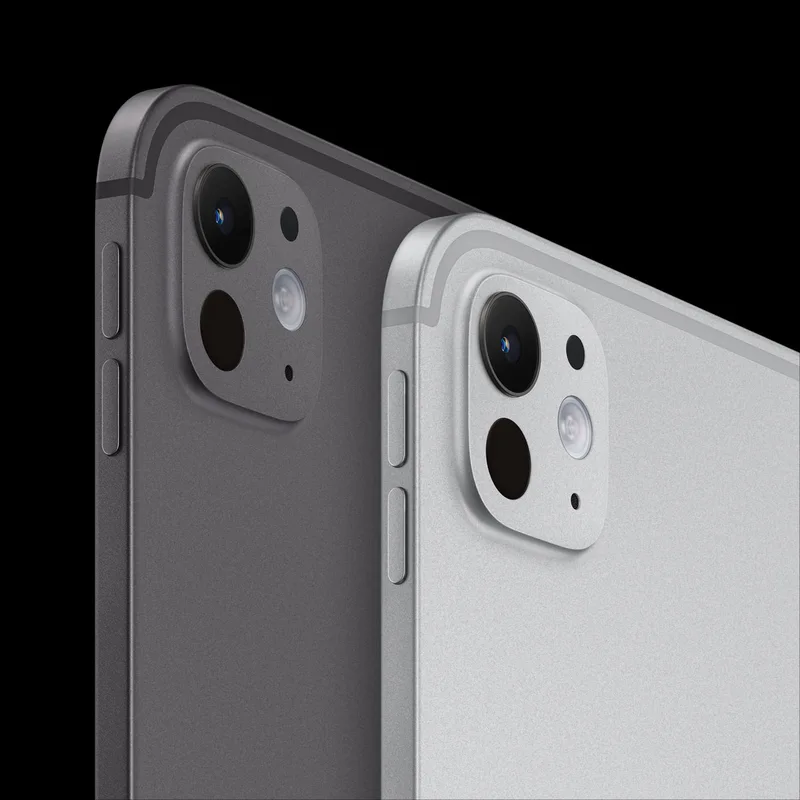
Apple announced the tablet on 15 October 2025, opened pre-orders the same day in 31 countries and regions and began store availability on Wednesday 22 October. The 11-inch and 13-inch models come in silver and space black with 256GB, 512GB, 1TB or 2TB of storage. In the United States the 11-inch model starts at 999 dollars for Wi-Fi and 1,199 dollars for Wi-Fi and cellular; the 13-inch model starts at 1,299 dollars and 1,499 dollars. That is the same starting pricing as the previous generation, which you can review on the iPad Pro (M4) page. Education pricing begins at 899 dollars for the 11-inch and 1,199 dollars for the 13-inch model. A direct spec-by-spec table is available at iPad Pro M4 vs iPad Pro M5.
What stays the same
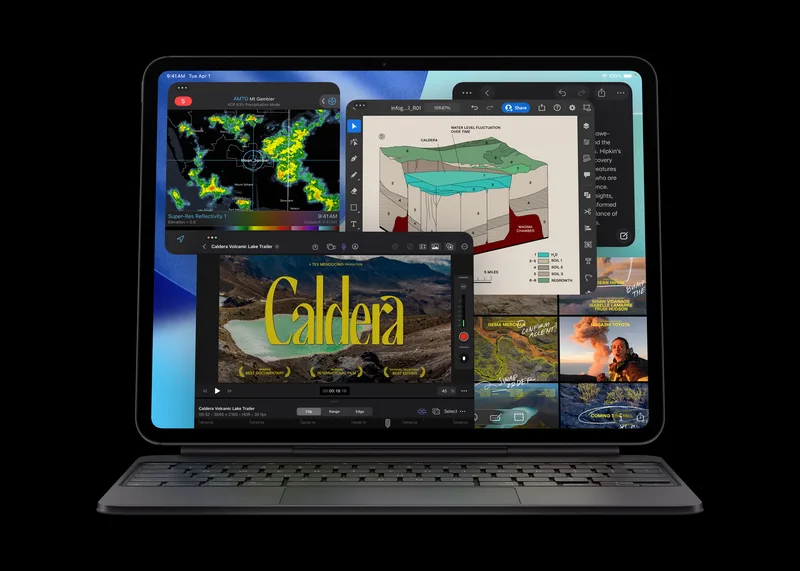
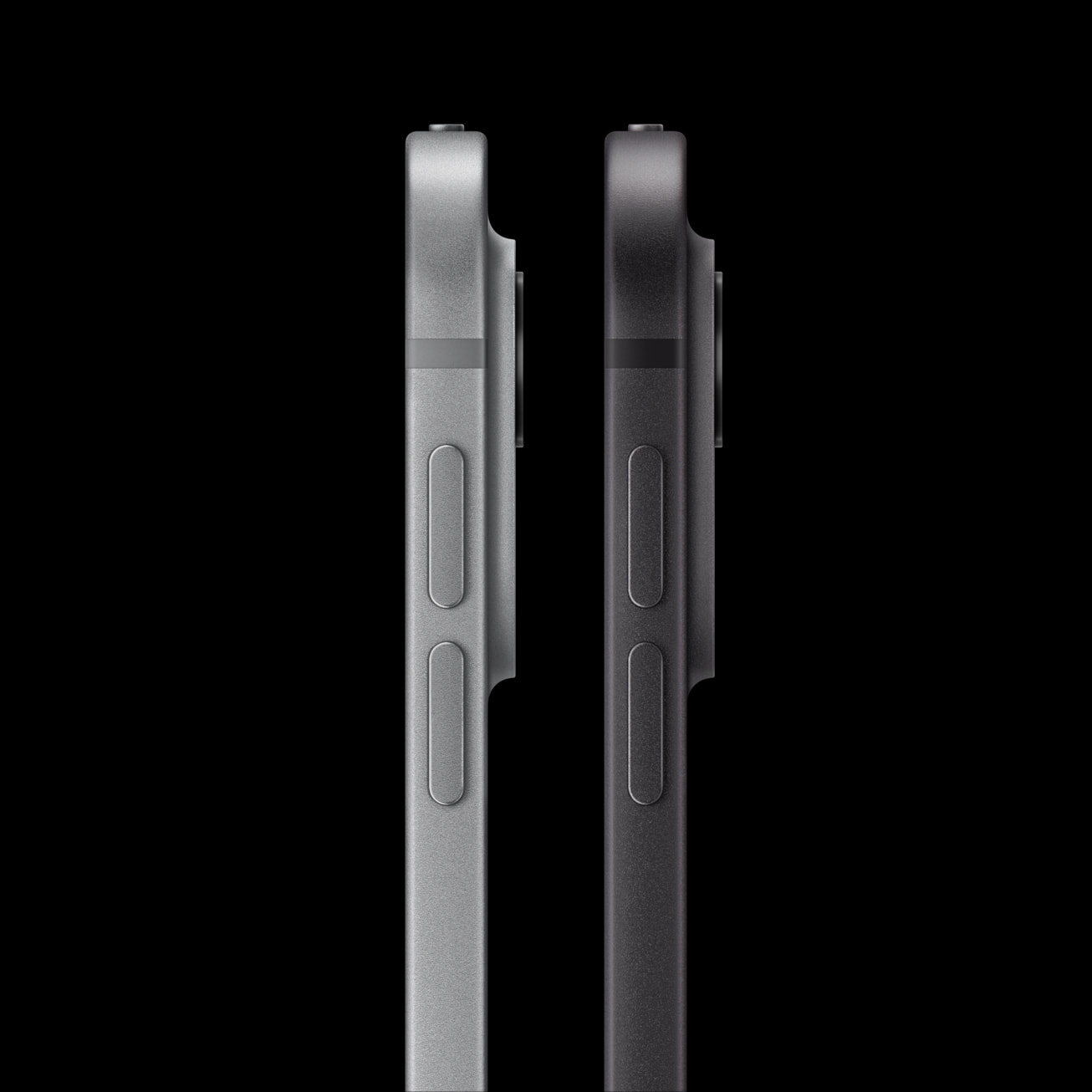
The tablet keeps the design with a 5.3 mm thickness on the 11-inch model and 5.1 mm on the 13-inch model. The display is the Ultra Retina XDR tandem OLED panel with ProMotion and True Tone, 1000 nits full-screen brightness for SDR and HDR and 1600 nits peak for HDR, with the nano-texture glass option for reducing glare in colour-managed workflows. So if you are choosing on display and portability alone, the two generations look the same on paper; the differences are in speed, memory, wireless and software.
M5: more AI performance
The M5 chip is the central change. Its 10-core GPU uses a new architecture with a Neural Accelerator in every core, and Apple says AI performance is up to 3.5 times that of the M4 and up to 5.6 times that of the M1 iPad Pro. The 16-core Neural Engine is faster too, and the CPU has up to ten cores, four performance and six efficiency, which Apple describes as the fastest CPU core in the world. A third-generation ray-tracing engine brings up to 1.5 times faster 3D rendering than the previous iPad Pro in Octane X. Apple also quotes app-specific gains over the M4: up to 1.2 times faster video transcoding in Final Cut Pro, up to twice the speed in AI image generation in Draw Things and up to 2.3 times faster AI video upscaling in DaVinci Resolve. Against the M1 the figures are larger, for example up to 6.7 times faster rendering in Octane X. These are Apple's own measurements with named apps, so real results will vary with your workload, but they show where the design is aimed: on-device generative AI, video and 3D work rather than everyday tablet tasks, which the previous chip already handled easily.
Memory, storage and charging
Unified memory bandwidth rises to more than 150GB/s, nearly 30 percent higher than before, and storage read and write speeds are up to twice as fast. The 256GB and 512GB models now start with 12GB of unified memory, 50 percent more than before, which helps when you multitask with many apps or load large AI models. The tablet also supports fast charging: with a high-wattage USB-C adapter such as Apple's new 40W Dynamic Power Adapter with 60W Max, it can reach about 50 percent in around 30 minutes.
Wireless: N1 and C1X
The M5 iPad Pro is the first in the line with an Apple-designed wireless networking chip, the N1, which brings Wi-Fi 7, Bluetooth 6 and Thread and improves performance on 5GHz networks as well as the reliability of Personal Hotspot and AirDrop. Cellular models use Apple's C1X modem, which Apple says delivers up to 50 percent faster cellular data than the previous model and, for active cellular users, up to 30 percent less energy use than the M4 iPad Pro. Cellular models also support 5G and eSIM, so you can add or transfer a plan digitally. Cellular versions include GPS and location capability for navigation. If you use the tablet mainly on Wi-Fi at home, these gains matter less than for someone who travels or works in the field.
External displays
A less obvious upgrade is external display support. The M5 iPad Pro can drive external monitors at up to 120Hz and supports Adaptive Sync on 120Hz displays for lower latency, which Apple says is useful for gaming and video editing. Combined with the new windowing system in iPadOS 26, this makes the tablet a stronger option as a desktop replacement when docked.
iPadOS 26
The tablet launches with iPadOS 26. Its design is built on Liquid Glass, a translucent material that reacts to input, and it adds a new windowing system for arranging and switching between apps, a menu bar accessible with a swipe down or by moving the cursor to the top, a supercharged Files app with folder customisation and folders in the Dock, and the Preview app for viewing and editing PDFs with Apple Pencil markup. For creative work, iPadOS 26 adds Background Tasks, more control over audio input and local capture for high-quality recordings. Apple Intelligence features include Live Translation in Phone, FaceTime and Messages, new actions in Shortcuts and automatic categorisation in Reminders. These features are not exclusive to the M5 model, but they define how it works out of the box.
Accessories and environment
Accessories carry over: Apple Pencil Pro and Apple Pencil (USB-C), the Magic Keyboard with function row and aluminium palm rest in black or white at 299 dollars for 11-inch and 349 dollars for 13-inch, and the Smart Folio. Apple says the tablet is made with 30 percent recycled content by weight, including a fully recycled aluminium enclosure, recycled rare-earth elements in all magnets and recycled cobalt in the battery, and is produced with 55 percent renewable electricity across the supply chain. If you want a cheaper tablet with the same screen sizes, see the iPad Air (M3). Android fans who want a large screen can look at the Galaxy Tab S10 Ultra, and you can browse all tablets or our reviews.
Where it ranks
Compare Apple iPad Pro (M5) with similar devices
More from Apple
Frequently asked questions
When was the Apple iPad Pro (M5) released?
The Apple iPad Pro (M5) was released on 2025-10-22, according to the manufacturer’s published information.
How much does the Apple iPad Pro (M5) cost?
The estimated range for the Apple iPad Pro (M5) is $899 to $1099 in US dollars, based on the launch list price. Actual prices vary by country, retailer and storage option.
What are the main specs of the Apple iPad Pro (M5)?
Headline figures for the Apple iPad Pro (M5): Refresh rate: 120 Hz, RAM: 56 GB. The full specification table is further up this page.
Is the Apple iPad Pro (M5) worth buying?
That depends on your priorities. Use the editorial review on this page for our view, check the rankings above to see where the device stands on battery, display and camera, and compare it directly with similar models before you decide.