Tablets
Apple iPad Air (M3)
The mid-range iPad gets the M3 chip and Apple Intelligence in 11 and 13-inch sizes, with a new Magic Keyboard and an unchanged starting price of 599 dollars.
Gallery
Specifications
- Display
- 11" and 13" sizes (Apple release gives no further display specification)
- Chipset
- Apple M3 (8-core CPU, 9-core GPU, faster Neural Engine)
- Storage
- 128GB / 256GB / 512GB / 1TB
- Connectivity
- Optional 5G cellular (Wi-Fi + Cellular models)
- Pencil
- Apple Pencil Pro and Apple Pencil (USB-C)
- Keyboard
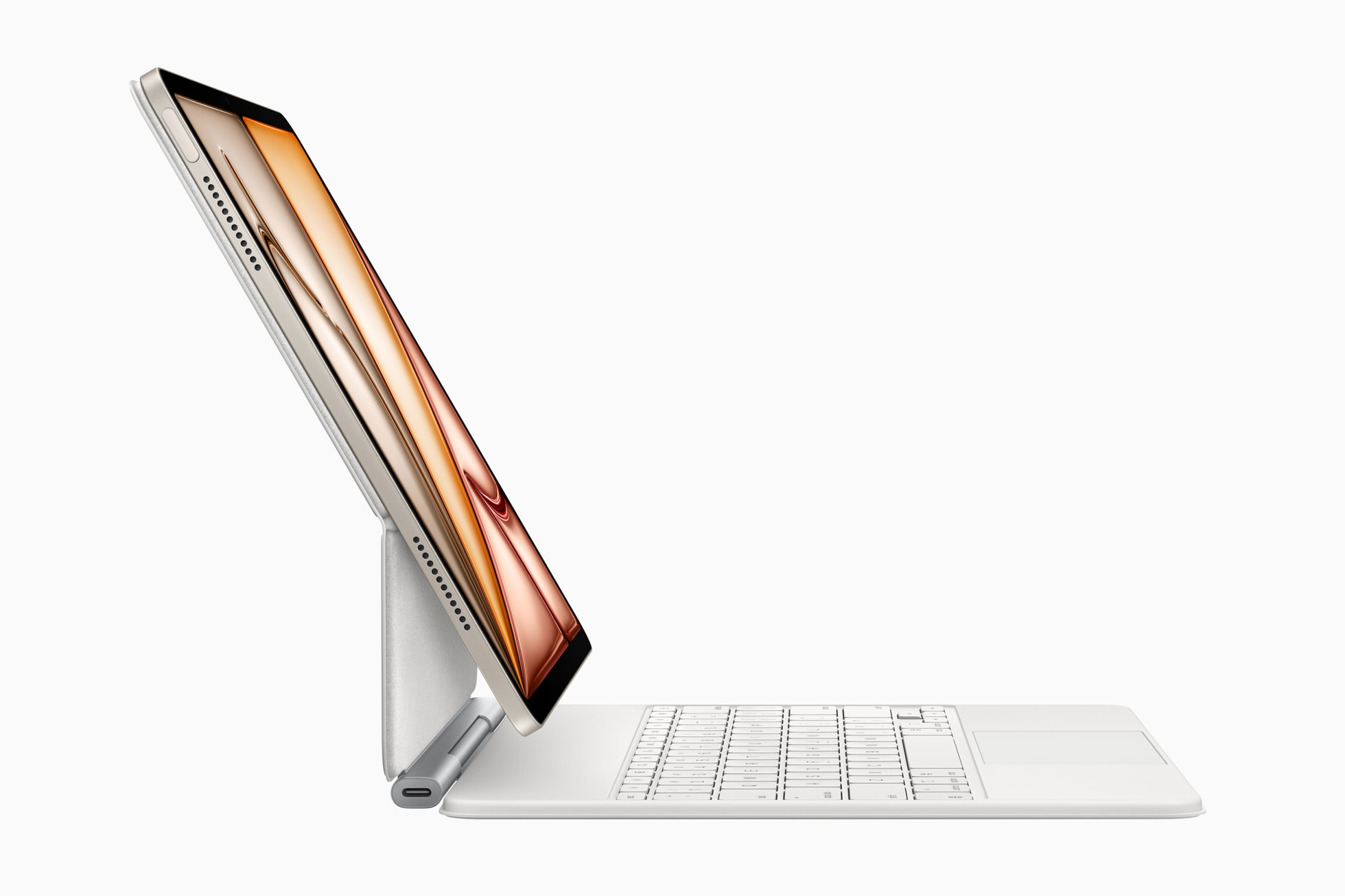
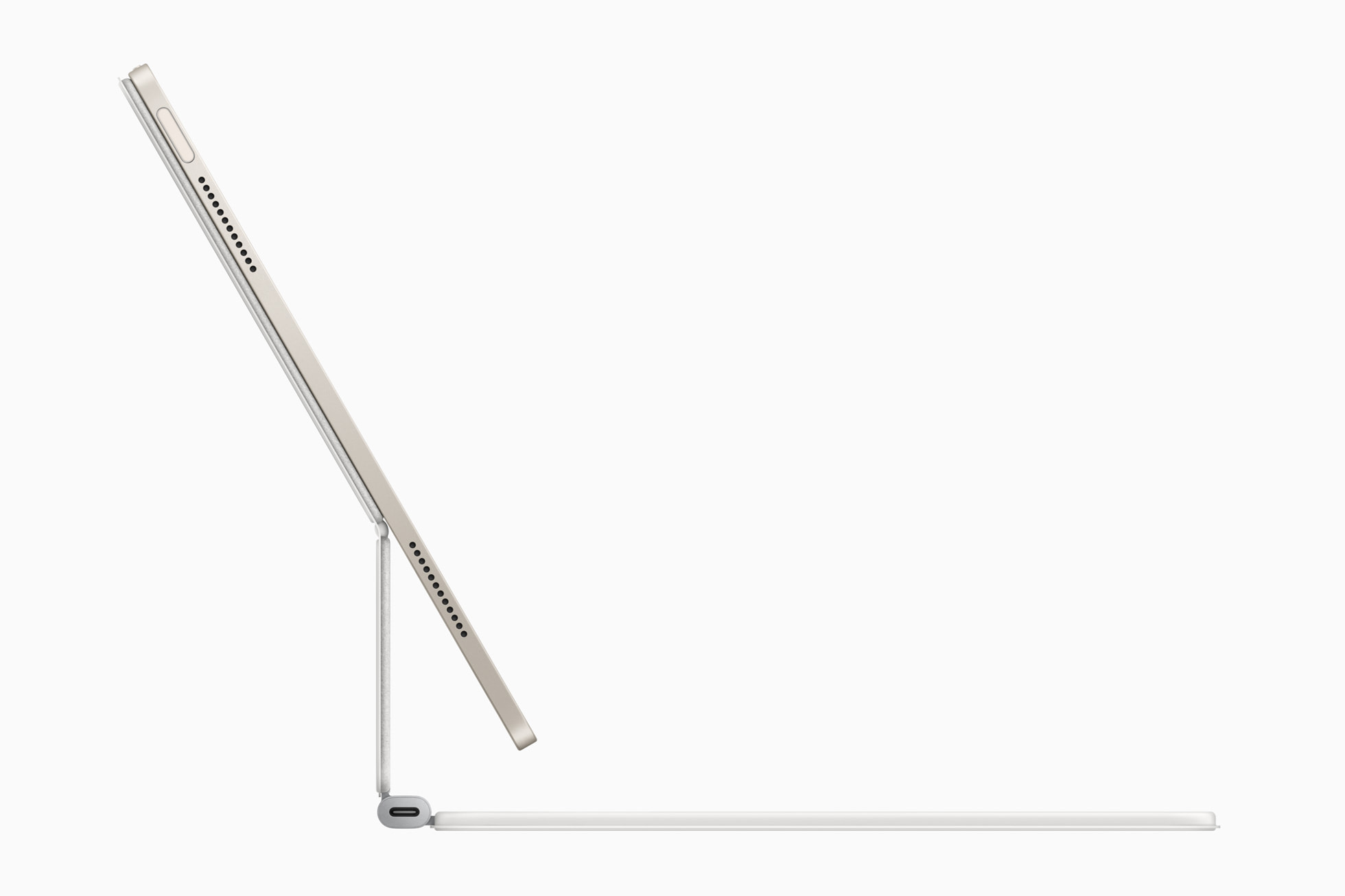
- New Magic Keyboard for iPad Air with 14-key function row and larger trackpad
- Finishes
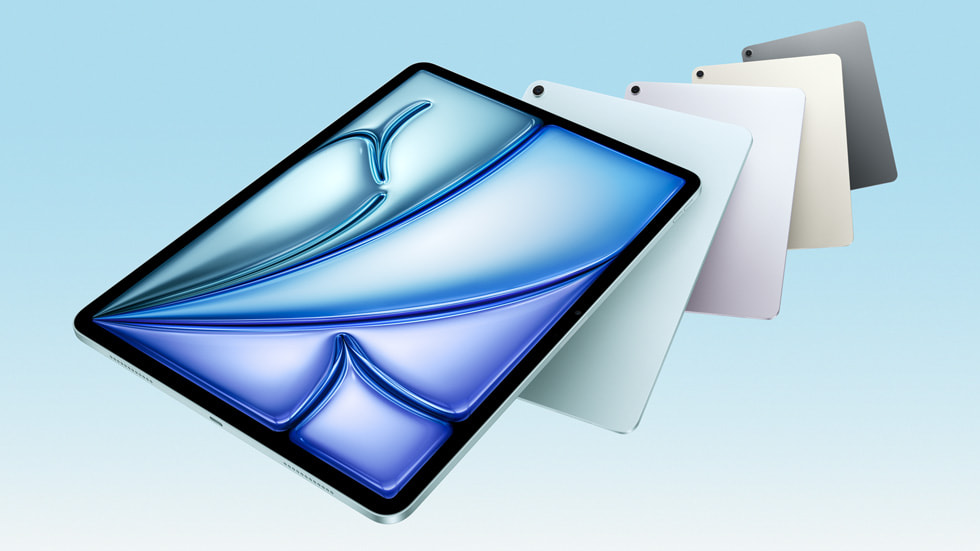
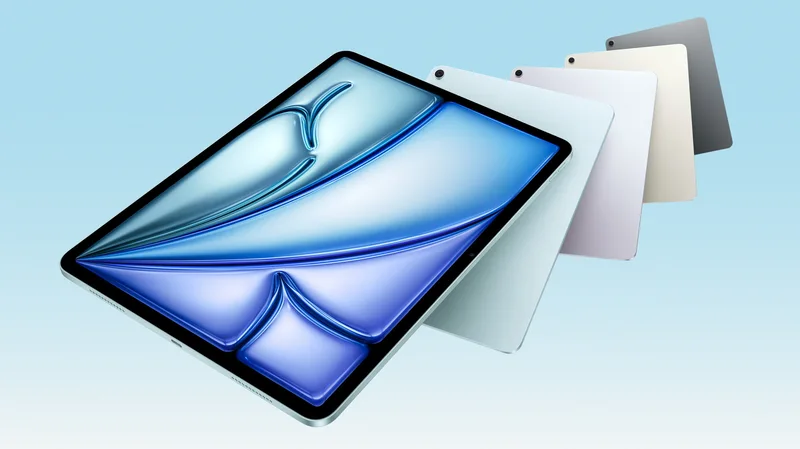
- Blue, purple, starlight, space gray
- OS
- iPadOS 18 with Apple Intelligence
The iPad Air with M3 is Apple's answer for people who want more than a basic iPad but do not need the price or the display technology of the iPad Pro. Announced on 4 March 2025, it keeps the two sizes of the previous Air, 11-inch and 13-inch, and the same starting prices, while moving to the M3 chip, adding support for Apple Intelligence and introducing a redesigned Magic Keyboard. This page summarises Apple's launch announcement and explains where the Air sits between the entry-level iPad and the Pro. Because Apple's release focuses on the chip, the keyboard and the software and does not restate display or camera specifications, we do not list figures we cannot source.
Launch, sizes and price
Apple opened pre-orders on 4 March 2025 in 29 countries and regions, including the United States, with arrivals and store availability from 12 March. The 11-inch and 13-inch models come in blue, purple, starlight and space gray, in 128GB, 256GB, 512GB and 1TB configurations. In the United States the 11-inch model starts at 599 dollars for Wi-Fi and 749 dollars for Wi-Fi with cellular, and the 13-inch model starts at 799 dollars and 949 dollars. Apple emphasised that these were the same starting prices as before. Education pricing began at 549 dollars for the 11-inch model and 749 dollars for the 13-inch model. Apple's vice president of worldwide product marketing, Bob Borchers, described the Air as popular because of its combination of performance, portability and support for advanced accessories at an affordable price. If you want to go up a tier, our iPad Pro (M4) page explains what the extra money buys.
The M3 chip
The performance change is the move to Apple's M3, which brings the company's advanced graphics architecture to the iPad Air for the first time. Apple compares it mainly with the M1 in the previous Air: overall the new Air is nearly twice as fast, and up to 3.5 times faster than the iPad Air with the A14 Bionic that many owners still use. The 8-core CPU is up to 35 percent faster than the M1 in multithreaded work, and the 9-core GPU is up to 40 percent faster in graphics. New for the Air are Dynamic Caching, hardware-accelerated mesh shading and hardware-accelerated ray tracing, and Apple says graphics-intensive rendering workflows can be up to four times faster than on the M1, which is meant to give more accurate lighting, reflections and shadows in rendering and games. The Neural Engine is up to 60 percent faster than that of the M1 for AI-based workloads. Apple singles out students taking notes with Apple Pencil Pro, travellers and content creators who need productivity on the move, and aspiring creatives working with demanding apps and large files.
Apple Intelligence
The Air is built for Apple Intelligence, which Apple describes as its personal intelligence system. In Photos, the Clean Up tool removes distracting elements from images and natural-language search lets you find photos by describing them. In Notes, Image Wand turns a rough sketch into an image when you draw a circle around it with Apple Pencil, and it can gather context from surrounding text when you circle empty space. Image Playground creates original images, Genmoji creates custom emoji, and Writing Tools rewrites and proofreads text. Siri is more conversational: you can type to it, it follows along when you stumble over words, it keeps context between requests and it can answer thousands of questions about features and settings of Apple products. ChatGPT is integrated into Siri and Writing Tools as an optional service with an obscured IP address and no account required. Apple stresses on-device processing, with Private Cloud Compute for larger requests where, according to Apple, data is not stored or shared and is used only to fulfil your request.
New Magic Keyboard
The Air's new Magic Keyboard is the accessory most likely to change how you use the tablet. It adds a 14-key function row for brightness and volume controls and a larger built-in trackpad for precise work, and it keeps the floating design that attaches magnetically and connects power and data through the Smart Connector, so no Bluetooth pairing is needed. The machined aluminium hinge includes a USB-C connector for charging. It launched in white at 269 dollars for the 11-inch model and 319 dollars for the 13-inch model in the United States, lower than earlier prices for keyboards of this kind, and Apple later added a black version. Apple Pencil Pro and Apple Pencil (USB-C) are both compatible with the tablet, at 129 dollars and 79 dollars respectively at launch. The combination of keyboard and tablet makes the Air a credible light laptop substitute for note-taking, writing and browsing, although iPadOS multitasking and file handling still differ from a notebook computer.
iPadOS 18 features
The tablet runs iPadOS 18, and Apple highlighted several features. Calculator is designed for Apple Pencil and includes Math Notes that solve handwritten or typed expressions instantly, with variables and graphs. In Notes, Smart Script smooths and straightens your handwriting as you write and lets you paste typed text in your own handwriting. Audio Recording and Transcription captures lectures or conversations with synced transcripts so you can jump to an exact moment. The Home Screen accepts app icons and widgets in any position, in dark or tinted looks and larger sizes, and the redesigned Control Center supports controls from third-party apps.
Alongside the Air: an updated iPad
On the same day Apple updated the entry-level iPad with the A16 chip and double the starting storage, at 349 dollars for the Wi-Fi model in the United States. Apple says the updated iPad is nearly 30 percent faster than the previous generation and up to six times faster than the best-selling Android tablet, a claim from Apple's own testing. That iPad does not support Apple Intelligence, which is one of the clearest reasons to pay more for the Air. For the older model in our catalogue, see the iPad (10th generation), and for an even smaller tablet with a newer feature set see the iPad mini (A17 Pro). Our iPad mini vs iPad Air table compares the two directly.
Environment and packaging
The new Air and the updated iPad each contain at least 30 percent recycled material overall, with 100 percent recycled aluminium in the enclosure and 100 percent recycled rare-earth elements in all magnets. The batteries contain 100 percent recycled cobalt and, for the first time in an iPad, more than 95 percent recycled lithium. The packaging is entirely fibre-based. Apple also lists free-of-mercury, brominated flame retardants and PVC. For more choices, browse the tablets category.
Where it ranks
Compare Apple iPad Air (M3) with similar devices
More from Apple
Frequently asked questions
When was the Apple iPad Air (M3) released?
The Apple iPad Air (M3) was released on 2025-03-12, according to the manufacturer’s published information.
How much does the Apple iPad Air (M3) cost?
The estimated range for the Apple iPad Air (M3) is $539 to $659 in US dollars, based on the launch list price. Actual prices vary by country, retailer and storage option.
Is the Apple iPad Air (M3) worth buying?
That depends on your priorities. Use the editorial review on this page for our view, check the rankings above to see where the device stands on battery, display and camera, and compare it directly with similar models before you decide.