Smartwatches
Huawei Band 10
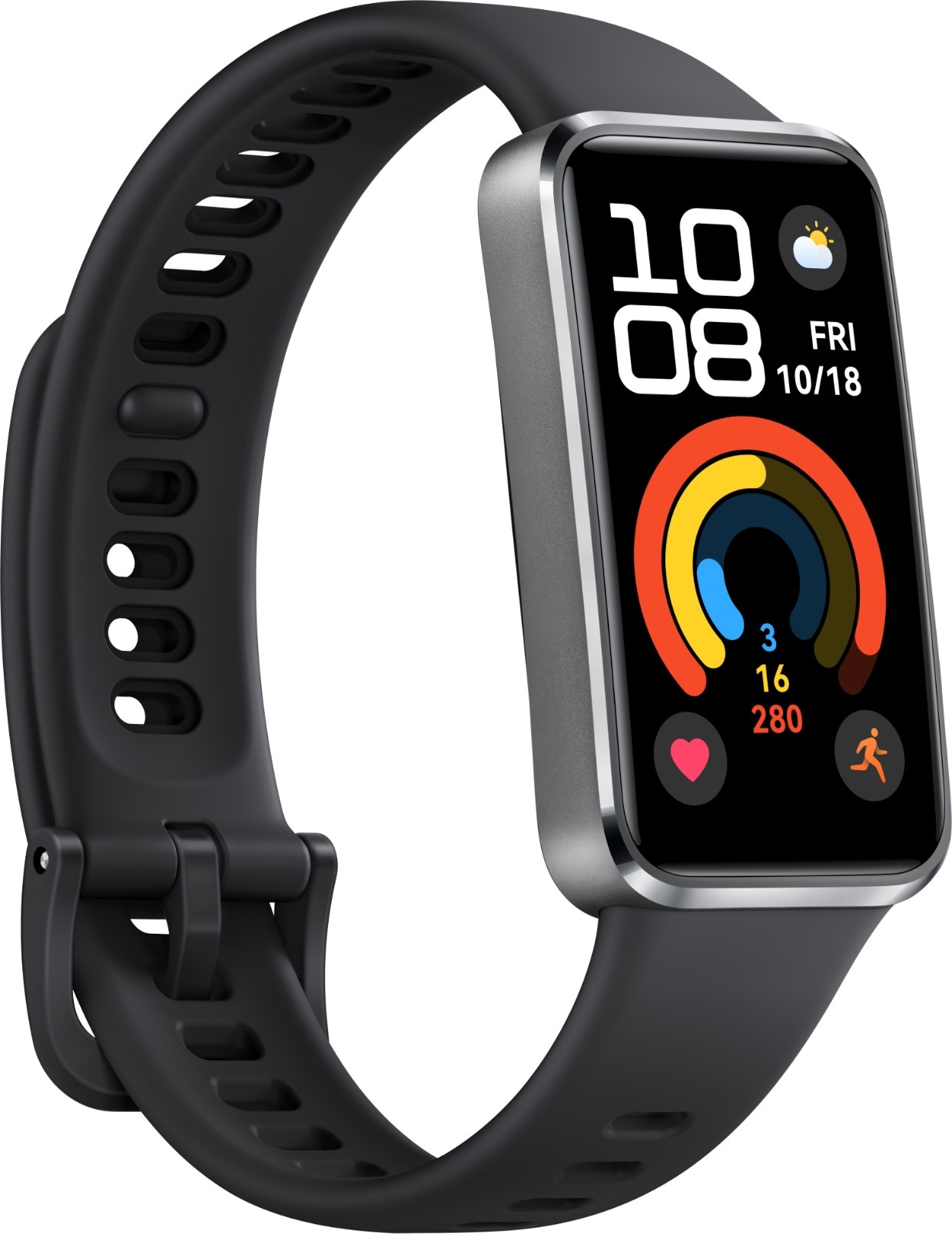
Huawei's slim fitness band has a 1.47-inch AMOLED screen, 100 workout modes, 5 ATM water resistance and a claimed 8 days of typical battery life at about 15 g.
Key figures at a glance
Gallery
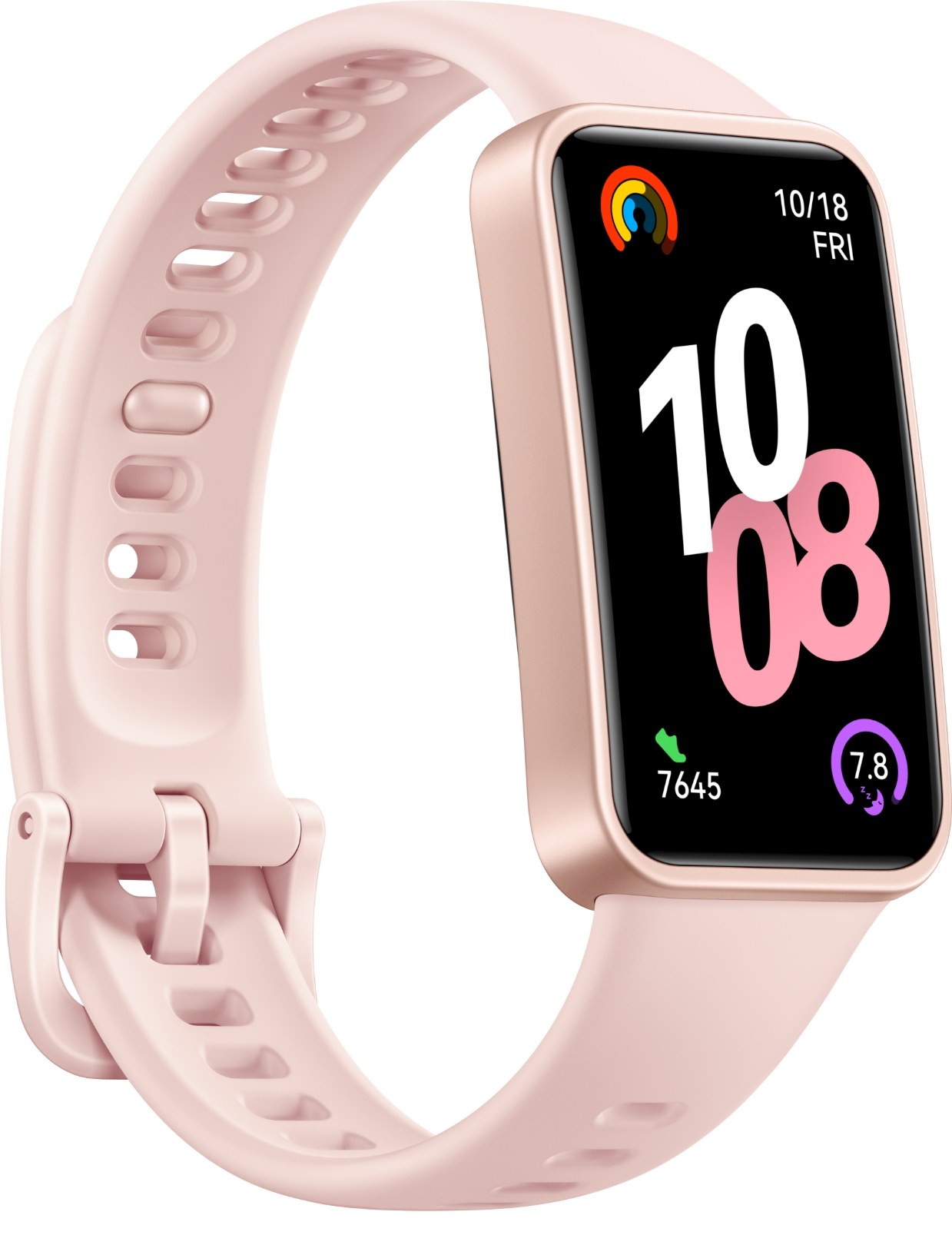
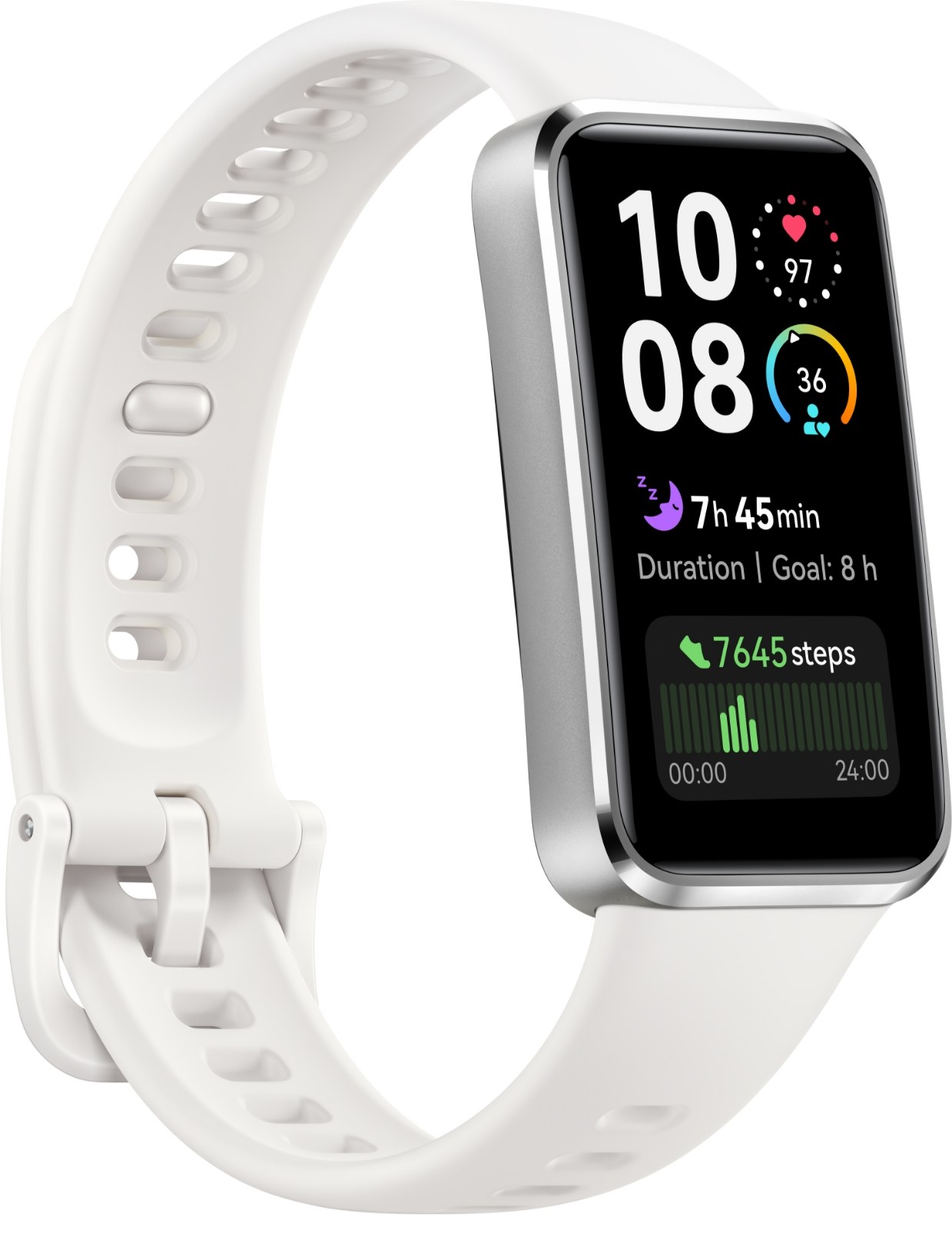
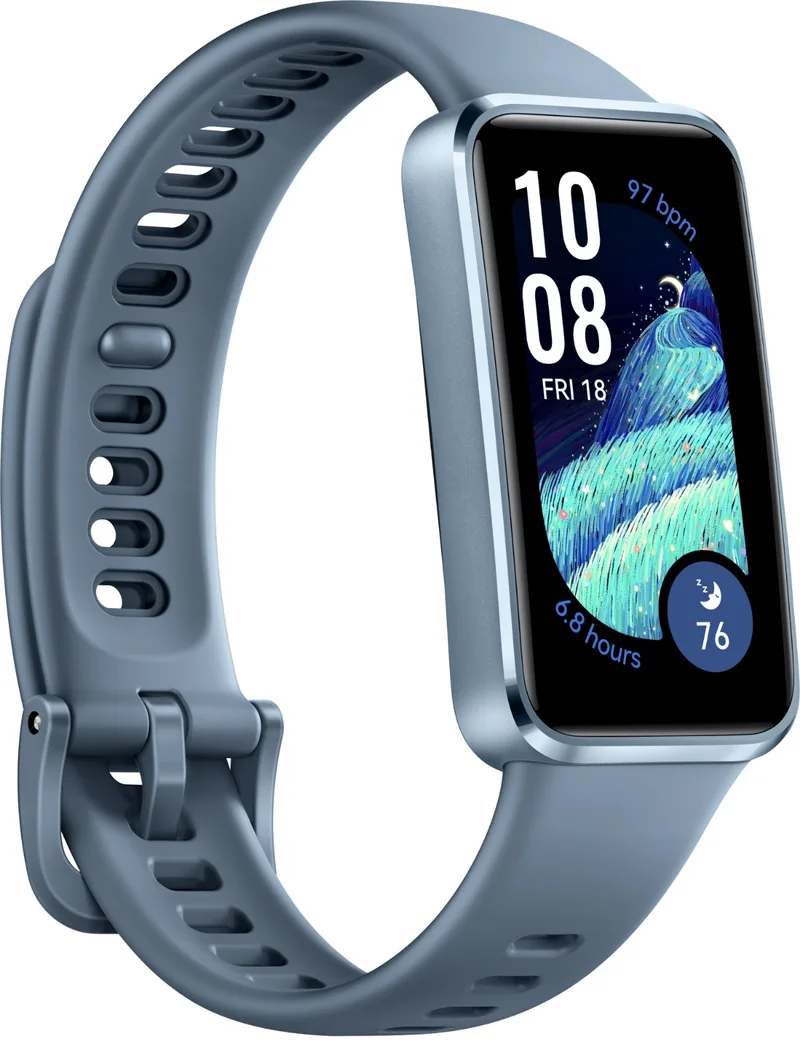
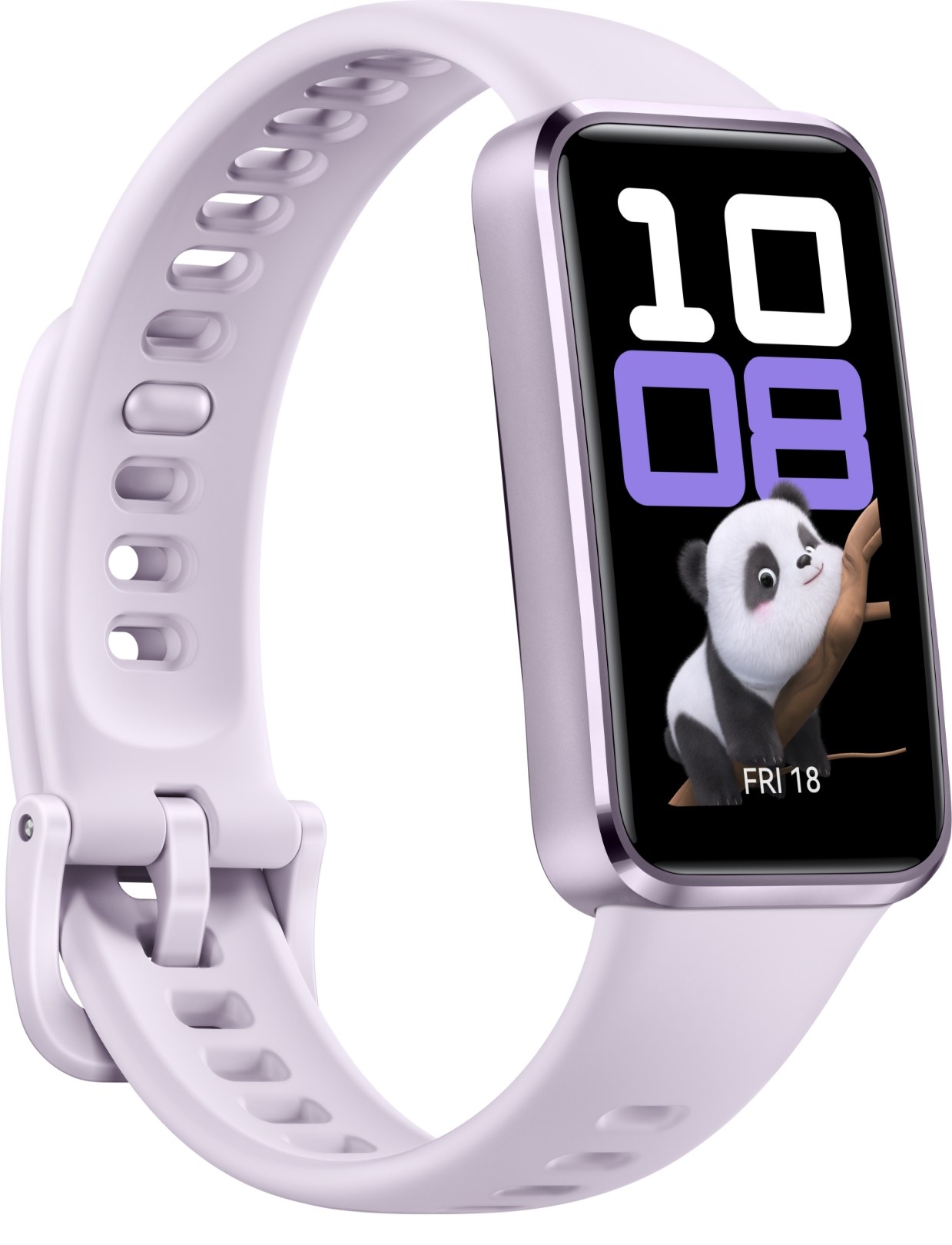
Specifications
- Display
- 1.47" AMOLED touchscreen, 194 x 368 pixels, 282 PPI
- Case
- Aluminium alloy (Matte Black, White, Green, Blue, Purple editions) or durable polymer (Black, Pink); fluoroelastomer strap
- Dimensions
- 43.45 x 24.86 x 8.99 mm
- Weight
- About 15 g (aluminium alloy case) or 14 g (polymer case), without strap
- Battery
- Up to 14 days (light use), up to 8 days (typical use), up to 3 days with Always-On Display; full charge in about 45 minutes; magnetic charging
- Sensors
- 9-axis IMU, optical heart rate (PPG) sensor, ambient light sensor
- Health Features
- Heart rate, SpO2, pulse wave arrhythmia alerts, sleep monitoring with respiratory rate and abnormal breathing, HRV, stress monitoring, women's health tracking
- Workouts
- 100 workout modes, AI swimming stroke recognition (nine-axis sensor)
- Connectivity
- Bluetooth 5.0, BLE
- Water Resistance
- 5 ATM (ISO 22810:2010)
- Compatibility
- Android 9.0 or later and iOS 13.0 or later via the Huawei Health app
- Colors
- Green, Blue, Purple, Pink, White, Matte Black, Black
The Huawei Band 10 is a slim, lightweight fitness band that focuses on the basics done well: an easy-to-read AMOLED screen, long battery life, sleep and health tracking, and a very low weight on the wrist. This review is based on the published specifications and the manufacturer's own information, so Huawei's statements are presented as claims, not as results we have measured. The goal is to explain who the band is for, what it offers and what it leaves out.
Where the Band 10 fits
Huawei's Band series is the company's entry point into wearables. Bands sit below full smartwatches such as the Huawei Watch Fit 5, trading a bigger display and standalone features for lower weight, simpler software and long runtimes. The Band 10 follows earlier models in this line, and the newer Huawei Band 11 continues the story; a direct comparison shows what changed. If you want to see how bands stack up against watches from other brands, the rankings page is the best starting point.
Design, materials and comfort
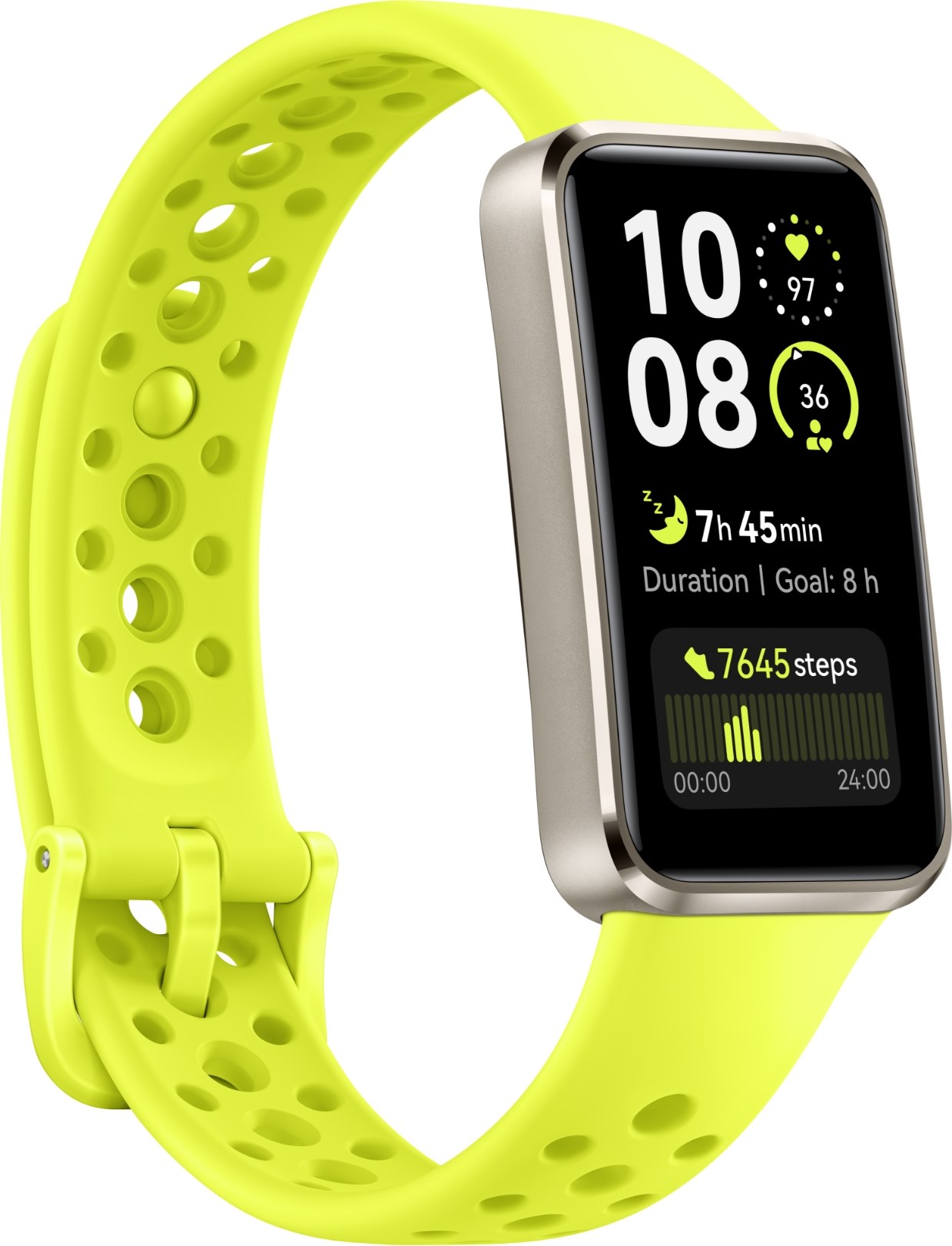
Weight is the main design theme. Huawei lists about 15 g for the aluminium alloy versions and about 14 g for the polymer versions, both measured without the strap. The body measures 43.45 x 24.86 mm with a thickness of 8.99 mm at the thinnest point, excluding the sensor area. The aluminium alloy case, polished with CNC processes, is used on the Matte Black, White, Green, Blue and Purple editions. The Black and Pink editions use a durable polymer case. All use a fluoroelastomer strap, a soft synthetic material that is common on sports bands.
Seven colours are listed in total: Green, Blue, Purple, Pink, White, Matte Black and Black. Wrist sizes differ by edition. Huawei lists 120 to 190 mm for the White, Purple and Pink versions and 130 to 210 mm for Matte Black, Green, Blue and Black, so it is worth checking your wrist circumference against the colour you want. Huawei also states that the band went through eight durability tests, including drop, roller and temperature-shock tests, which is a manufacturer claim about internal testing.
Display and interface
The screen is a 1.47-inch AMOLED touch display with 194 x 368 pixels, which works out to about 282 pixels per inch. That is sharp enough for text and watch faces on a panel this size, and AMOLED gives strong contrast and deep blacks, which helps readability outdoors and at night. Navigation uses full-screen touch plus a side button. Huawei supports an Always-On Display mode, though with it enabled the claimed battery life drops considerably, as explained below. The page does not state a refresh rate or peak brightness, so we cannot compare those values with other bands.
A large catalogue of watch faces is available through the Huawei Health app, and the band offers the usual daily tools: notifications, calendar and message alerts, find my phone, remote camera shutter, music controls, flashlight, timer, alarm, stopwatch and weather.
Health and fitness tracking
The sensor package is a 9-axis motion sensor (accelerometer, gyroscope and magnetometer), an optical heart rate sensor and an ambient light sensor. Huawei says a multi-channel heart rate module and a fusion algorithm are used to improve accuracy. The band tracks heart rate and blood oxygen (SpO2), and it offers pulse wave arrhythmia alerts that Huawei says can flag potential atrial fibrillation and premature beats. These are screening-style notifications and are not a medical diagnosis; anyone with a heart concern should talk to a clinician.
Sleep monitoring covers heart rate, SpO2, respiratory rate and abnormal breathing, and the band also reports average sleep HRV (heart rate variability). Stress monitoring and women's health tracking are included, along with wellbeing features such as breathing exercises, white noise and an emotional wellbeing app. For exercise, Huawei lists 100 workout modes. The nine-axis sensor is used for swimming stroke recognition, which Huawei says reaches 95 percent accuracy in its laboratory data. The company does not list a built-in GNSS receiver on its specification page and notes that outdoor cycling uses the phone's GPS, so runners who want to leave the phone at home should look at a watch rather than this band, such as the Garmin Forerunner 970, which is a far more expensive and capable sports device.
Battery and charging
Battery life is one of the band's strongest points. Huawei claims up to 14 days in a light-use scenario (30 minutes of exercise per week, TruSleep off, 200 screen wake-ups per day), up to 8 days in a typical-use scenario (60 minutes of exercise per week, TruSleep on at night, 500 screen wake-ups per day) and about 3 days with the Always-On Display on. These figures come from Huawei's own test conditions and real-world results will differ with notifications, brightness and workout habits.
The band charges magnetically at 5V/1A. Huawei says a full charge takes about 45 minutes and that five minutes of charging gives about two days of normal use, which is helpful if you forget to charge. The battery capacity in mAh is not listed. The operating temperature range is stated as 0 to 35 degrees Celsius.
Water resistance and compatibility
Water resistance is rated at 5 ATM under ISO 22810:2010, which Huawei describes as 50 metres. The company advises against diving, hot showers, saunas and fast-flowing water, and notes that water resistance can decline with wear. In practice that means rain, hand washing and pool swimming are fine, but hot water and steam should be avoided.
The band connects with Bluetooth 5.0 and BLE and requires the Huawei Health app. It works with Android 9.0 and later and iOS 13.0 and later, though some features differ by platform: incoming call notifications require Android 10.0 or later, declining a call with a preset message is not available on iPhone, and the find-phone ringtone is controlled by iOS on iPhone and may not respond when the screen is off. This matters for iPhone owners, who may find the feature set slightly narrower than on Android.
Who the Band 10 is for
The Band 10 suits people who want a light, simple tracker for steps, sleep and workouts, with long battery life and no daily charging. It is a good fit for first-time wearable users, for anyone who finds a full smartwatch too bulky for sleeping, and for those who simply want notifications and health data on the wrist. Parents and older users may appreciate the simplicity.
It is less suitable for people who want a bigger screen, built-in GPS or a third-party app store; the specification page also lists no offline music or contactless payment features. If you want a mainstream smartwatch with a richer app ecosystem, consider options such as the Galaxy Watch8, and for a direct sense of the trade-offs you can use the Band 10 versus Galaxy Watch8 comparison.
Compromises to consider
- No stated built-in GPS: outdoor cycling relies on the phone's GNSS, so the phone has to be carried for route tracking.
- Small screen: 1.47 inches limits how much text and data fit on screen, and the specification page does not give brightness figures.
- Always-On Display cuts runtime: Huawei's own figure falls from 8 typical days to about 3 days with it enabled.
- Platform differences: some call features are limited on iPhone.
- Health alerts are not diagnoses: arrhythmia and SpO2 notifications are informational and should not replace medical advice.
- No price or date on the specification page: check local retailers for current pricing.
In short, the Band 10 is a focused fitness band: very light, long-lasting and broad in its health features, but intentionally limited in screen size and standalone functions. If that balance fits how you use a wearable, it is a practical and low-maintenance choice.
Where it ranks
Compare Huawei Band 10 with similar devices
More from Huawei
Frequently asked questions
When was the Huawei Band 10 released?
The Huawei Band 10 was released on 2025-02-18, according to the manufacturer’s published information.
What are the main specs of the Huawei Band 10?
Headline figures for the Huawei Band 10: Battery life: 14 days. The full specification table is further up this page.
Is the Huawei Band 10 worth buying?
That depends on your priorities. Use the editorial review on this page for our view, check the rankings above to see where the device stands on battery, display and camera, and compare it directly with similar models before you decide.