Smartwatches
Amazfit Helio Strap Pro
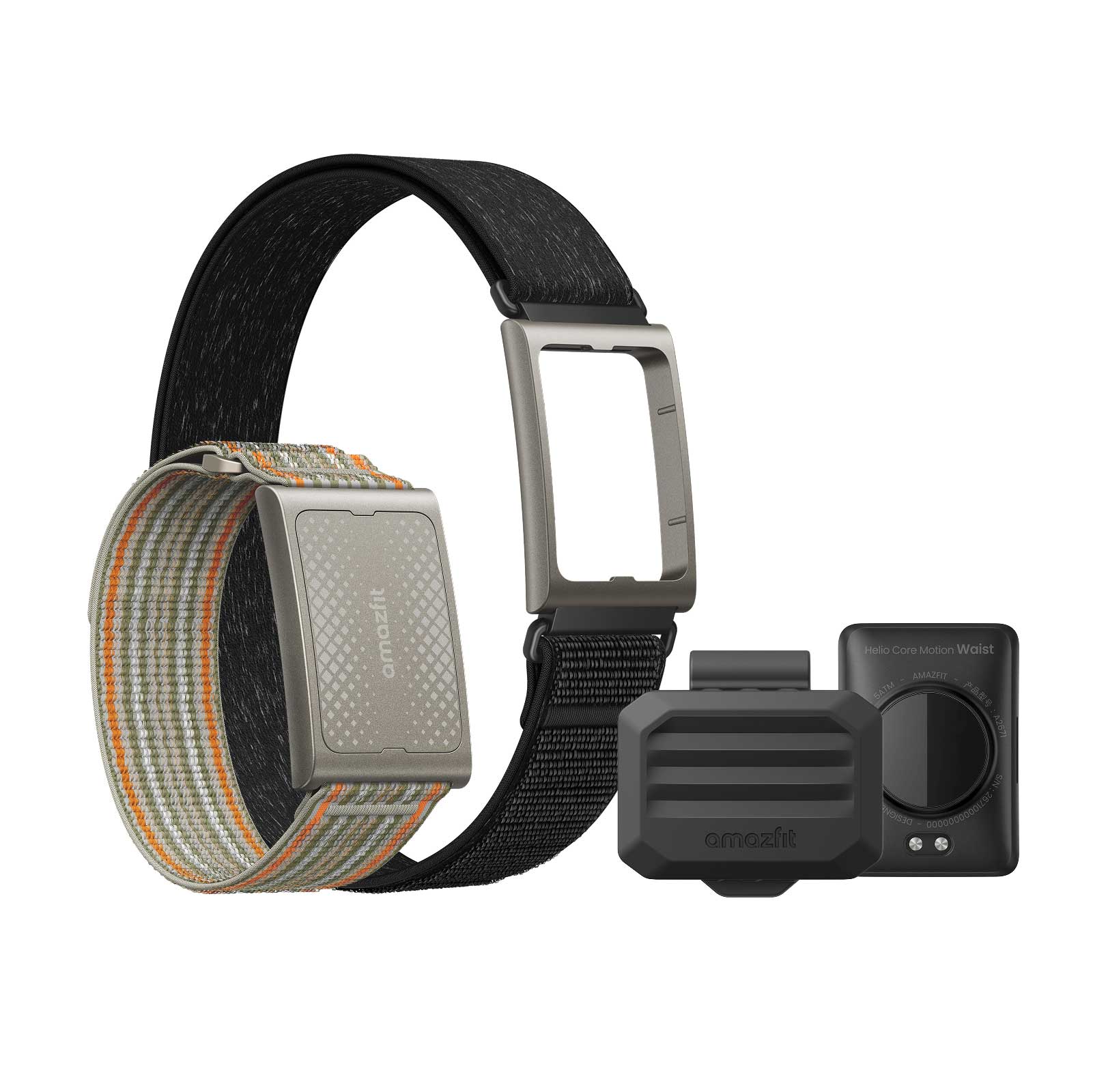
A screenless training system from Amazfit: an upper-arm heart-rate sensor plus a waist motion sensor that adds movement and muscle-load data to HYROX and hybrid workouts.
Key figures at a glance
Gallery

Specifications
- Type
- Screenless wearable training system (arm-worn heart-rate sensor plus waist-worn motion sensor), no display
- Sensors
- Helio Core Motion HR: BioTracker 6.0 PPG optical heart-rate sensor (5PD + 2LED), accelerometer, gyroscope, temperature sensor, geomagnetic sensor. Helio Core Motion Waist: accelerometer, gyroscope, geomagnetic sensor
- Battery
- Up to 11 days typical (Helio Core Motion HR), up to 40 days typical (Helio Core Motion Waist), 232 mAh cells, magnetic charger
- Water Resistance
- 5 ATM
- Connectivity
- Bluetooth 5.2 (BLE)
- Weight
- 11.4 g (Helio Core Motion HR), 10.7 g (Helio Core Motion Waist)
- Sports Modes
- More than 50 sports modes via the Zepp App, HYROX Race and Simulation support
- Compatibility
- Android 8.0 and above, iOS 17.0 and above via the Zepp App; HYROX modes require Amazfit Balance 3 or Balance Ultra at launch
- In the Box
- Helio Core Motion HR, Helio Core Motion Waist, Helio Pro Clip, wristband, armband, magnetic charging head
- Subscription
- No monthly subscription required
The Amazfit Helio Strap Pro is not a smartwatch in the usual sense: it has no screen, no notifications and no apps on the device. It is a body-worn training system made of two small sensors, one worn on the upper arm to read heart rate and one clipped at the waist to read core-body movement. Amazfit, which belongs to Zepp Health, announced it on June 18, 2026 as the next step of its Hybrid Training System, aimed at HYROX racers and hybrid athletes who mix strength and endurance work. We file it with the smartwatches because it lives in that product family and pairs with Amazfit watches, but it is best described as a strap tracker. This page is based on the published specifications and manufacturer information; performance claims below are the manufacturer's, not measurements.
What is in the package
The box contains two sensor modules: the Helio Core Motion HR, which is the arm-worn heart-rate unit, and the Helio Core Motion Waist, a motion sensor that attaches with the Helio Pro Clip. Amazfit also includes a wristband, an armband and a magnetic charging head. The listing notes that the charging head comes without a cable. The set is priced at $199.99 through Amazfit.com and select retailers, with the company saying it would be available at the end of June 2026; regional availability and shipping may vary.
The system builds on the earlier screen-free Helio Strap. The new part is the waist module, which gives the system a way to look at how you move, not only how hard your heart is working. Amazfit's argument is simple: heart rate tells you effort, while movement tells you execution. During a HYROX session, fatigue often changes technique before it changes pace, and a wrist-only watch cannot see much of that.
How the system works
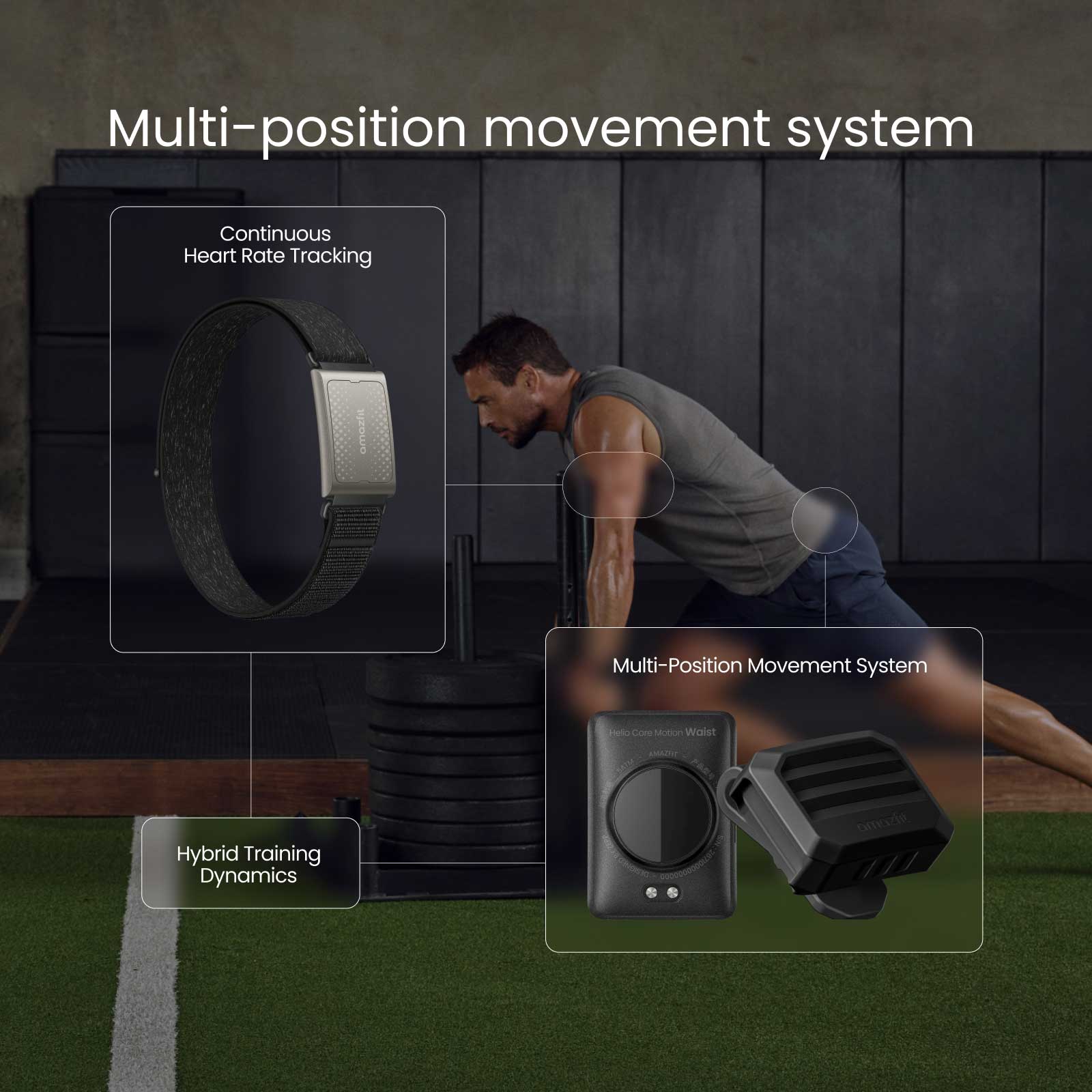
In a supported workout, three data sources work together. The watch tracks workout performance and cardio effort from the wrist. The arm sensor, worn closer to the heart, provides heart-rate readings that Amazfit says are more stable during gripping, wrist flexion and equipment contact, which are well-known problems for optical sensors on the wrist. The waist sensor captures posture, stability and movement efficiency. Afterwards, the Zepp App combines movement, muscle load and cardio effort into a structured view, including a review of each HYROX station: SkiErg, sled push, sled pull, burpee broad jumps, rowing, farmer's carry, sandbag lunges and wall balls.
An important limit: at launch, the full system requires an Amazfit Balance 3 or Balance Ultra, because HYROX Race and HYROX Simulation modes are available on those two watches. Amazfit says support for additional watches is planned, but it gives no date. If you own a different Amazfit model, such as the Amazfit Balance 2, you should not assume that the movement analysis will work with it. The strap can still be used on its own for heart-rate tracking, sleep and recovery, and as a heart-rate source for other devices.
Heart-rate tracking and recovery
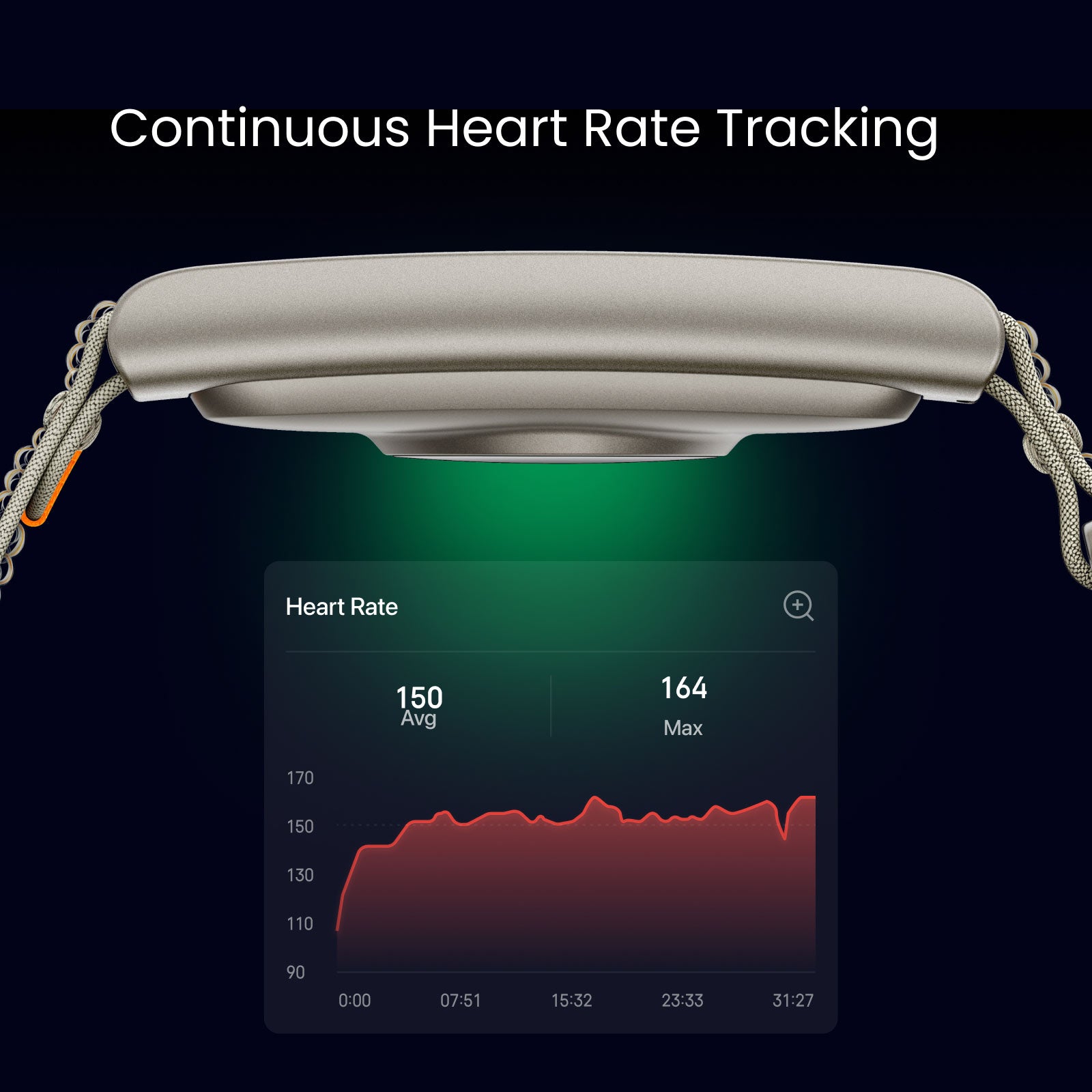
The arm sensor uses Amazfit's BioTracker 6.0 optical sensor, listed as a PPG biometric sensor with five photodiodes and two LEDs, alongside an accelerometer, gyroscope, temperature sensor and geomagnetic sensor. The company says it tracks heart rate every second and supports continuous monitoring, HRV, sleep and recovery, and skin temperature. It can also be worn on the wrist for everyday health and recovery monitoring, which Amazfit presents as the answer for days when you take your watch off to charge it. Because there is no display, the data is read in the Zepp App instead of on the device.
The company also describes a feature called HybridCharge Energy Intelligence, which combines BioCharge, Training Load and LifeLoad to estimate how much capacity you have for training, taking in factors such as stress, travel and fatigue. As with all such scores, it is a proprietary model and should be treated as guidance rather than a medical measurement. Amazfit notes that no monthly subscription is required to use the app features.
Connectivity and ecosystem
The sensors connect over Bluetooth 5.2. Real-time heart-rate data can be broadcast to compatible Amazfit watches, third-party sports watches, cycling computers, fitness equipment and training apps, so the strap can replace a chest strap for many people. Where wearing a watch is impractical, for example in team sports, the strap records heart rate and syncs it to the Zepp App afterwards, even if you are not carrying your phone. Zepp can pass data to platforms such as Strava, TrainingPeaks, Stryd, Runna and Apple Health, although the company notes that integrations may vary by region. The app runs on Android 8.0 and above and iOS 17.0 and above.
Amazfit lists more than 50 sports modes available through the Zepp App in its product listing; its press release cites more than 60. The two pages disagree slightly, so treat the exact number as approximate. Both pages describe strength, running and HIIT among them.
Battery and durability
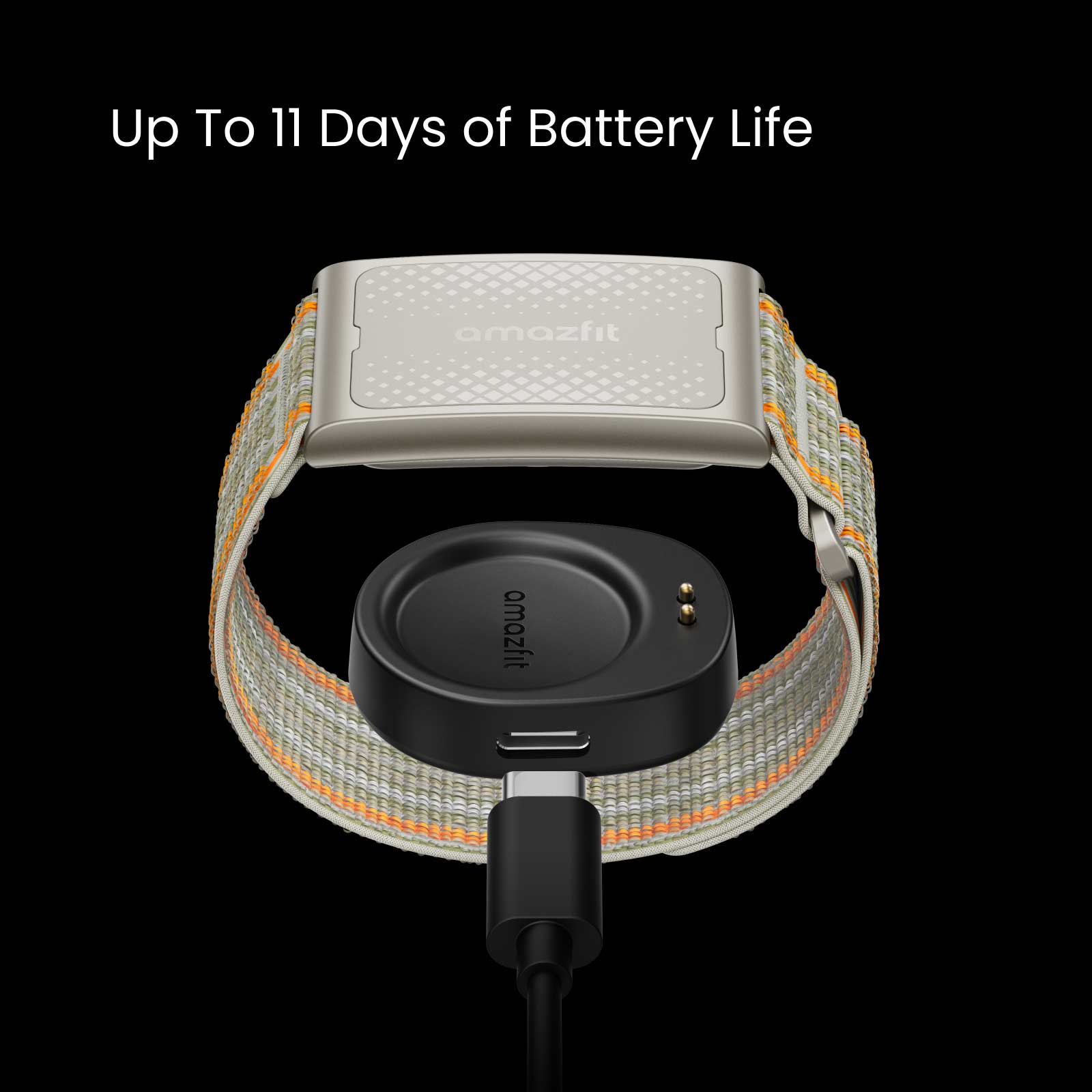
Each sensor has a 232 mAh battery and charges through a magnetic charger in up to two hours. Amazfit rates the arm sensor at up to 11 days of typical battery life. For the waist sensor the press release says up to 40 days, while the product listing says up to 44 days, so we quote roughly 40 days or more and recommend checking the current listing. Both are typical-use figures; heavy use will shorten them. Water resistance is 5 ATM for both modules, and the arm sensor weighs 11.4 g and the waist sensor 10.7 g. The cases are plastic, and the wristband and armband are nylon. The arm sensor measures about 34 x 24 x 10 mm without its sensor base.
Who it is for
The Helio Strap Pro makes sense for athletes who already own, or plan to buy, a Balance 3 or Balance Ultra and who train for HYROX or similar events, where understanding movement quality under fatigue is the point. It is also attractive for people who dislike chest straps, who want a heart-rate source that survives gripping and barbell work, or who like to track sleep and recovery without wearing a watch at night. Casual users who just want step counts and message alerts are better served by a conventional watch, such as the Amazfit Balance 2, or by a screen-based model like the HONOR Watch 6; the Helio Strap Pro vs Balance 2 page shows how different the two categories are.
Compromises to weigh
- Watch dependency: the headline HYROX features require a Balance 3 or Balance Ultra at launch.
- No display: everything is read in the app, with no on-device feedback beyond the vibration motor.
- Two things to wear: a watch, an arm sensor and a waist sensor mean more gear and more charging, even if the battery life is long.
- Proprietary metrics: muscle load and HybridCharge are Amazfit's own models; the manufacturer's page does not publish validation data, so treat the numbers as trends.
- Not a medical device: heart-rate and recovery readings are for fitness use.
- Price: $199.99 on top of the cost of a compatible watch.
For a comparison with a mainstream sports watch, see the Amazfit Helio Strap Pro vs Garmin Forerunner 970 page, or browse the rankings. The unusual fact about this product is that it measures what a wrist device usually cannot, and its value depends on whether you actually use the rest of the system.
Where it ranks
Compare Amazfit Helio Strap Pro with similar devices
More from Amazfit
Frequently asked questions
When was the Amazfit Helio Strap Pro released?
The Amazfit Helio Strap Pro was released on 2026-06-18, according to the manufacturer’s published information.
How much does the Amazfit Helio Strap Pro cost?
The estimated range for the Amazfit Helio Strap Pro is $180 to $220 in US dollars, based on the launch list price. Actual prices vary by country, retailer and storage option.
What are the main specs of the Amazfit Helio Strap Pro?
Headline figures for the Amazfit Helio Strap Pro: Battery life: 11 days. The full specification table is further up this page.
Is the Amazfit Helio Strap Pro worth buying?
That depends on your priorities. Use the editorial review on this page for our view, check the rankings above to see where the device stands on battery, display and camera, and compare it directly with similar models before you decide.