Smartwatches
Amazfit Balance 3
Amazfit's 2026 hybrid-training watch offers a 3,000-nit sapphire AMOLED display, dual-band GPS, 64GB of storage and up to 21 days of typical battery life, from $369.99 in stainless steel.
Key figures at a glance
Gallery
Specifications
- Display
- 1.5-inch AMOLED, 480x480, 323 ppi, up to 3,000 nits, sapphire glass
- Body
- Stainless steel (frame, fiber-reinforced polymer shell; 62 g) or Grade 5 titanium (frame and case; 55 g), weights without strap; 51.4 x 51.4 mm case, 12.5 mm thick excluding sensor; 22 mm quick-release strap
- Battery
- Up to 21 days (typical use), up to 10 days (heavy use), up to 7 days with always-on display; up to 41 hours in accuracy GPS mode; 658 mAh
- Positioning
- Dual-band GPS with circularly polarized antenna and six satellite systems; offline maps with turn-by-turn navigation and automatic rerouting
- Sensors
- BioTracker 6.0 PPG sensor (5PD + 2LED), accelerometer, gyroscope, ambient light, geomagnetic, temperature, barometric altimeter
- Connectivity
- Bluetooth Low Energy 5.2, Wi-Fi 2.4GHz, Bluetooth calls, microphone and speaker
- Durability
- 10 ATM water resistance; 45 m freediving and recreational scuba diving; military-grade test certification as stated by Amazfit
- Storage
- 64GB onboard
- Extras
- Built-in white and red flashlight, linear motor, four buttons
- Sports
- 180+ sports modes, 25 auto-recognized strength exercises, official HYROX tools, HybridCharge energy intelligence
- OS
- Zepp OS 6; Zepp App for Android 8.0+ and iOS 17.0+, no subscription required for workout and recovery data
The Amazfit Balance 3 is a round multisport smartwatch that Amazfit introduced on June 2, 2026, together with the pricier Balance Ultra. The two are the lead devices for what the company calls its Hybrid Training System, which pairs the watch hardware with analysis in the Zepp app. The Balance 3 is the mainstream model: a 1.5-inch sapphire-glass AMOLED display, dual-band GPS, 64GB of onboard storage, 10 ATM water resistance and up to 21 days of typical battery life. This page is based on the published specifications and manufacturer information, and it looks at the watch's place in the series, its two case options, the training features, battery life and the compromises.
Place in the lineup
Amazfit sells the Balance 3 in two versions. The stainless steel model went on sale on June 2, 2026 at $369.99. A titanium model, listed at $449.99, was described in the launch announcement as coming soon. At the top of the series sits the Amazfit Balance Ultra, a Grade 5 titanium watch with a larger battery at $599.99, and the previous generation, the Amazfit Balance 2, launched in 2025 at $299.99. Amazfit says the Balance 3 is meant for everyday hybrid athletes who want one watch for the gym, running, recovery and daily wear.
Compared with the Balance 2, the manufacturer's comparison table shows a larger 51.4 mm case versus 47.4 mm, a brighter display (up to 3,000 nits versus 2,000), and a longer accuracy-GPS battery rating (up to 41 hours versus 33), while the typical-use battery rating stays at up to 21 days. For a direct comparison, see Amazfit Balance 3 vs Balance 2. Against a premium competitor, the Garmin Forerunner 970 costs more but belongs to a different ecosystem, and the rankings page shows how these watches compare across categories.
Design and materials
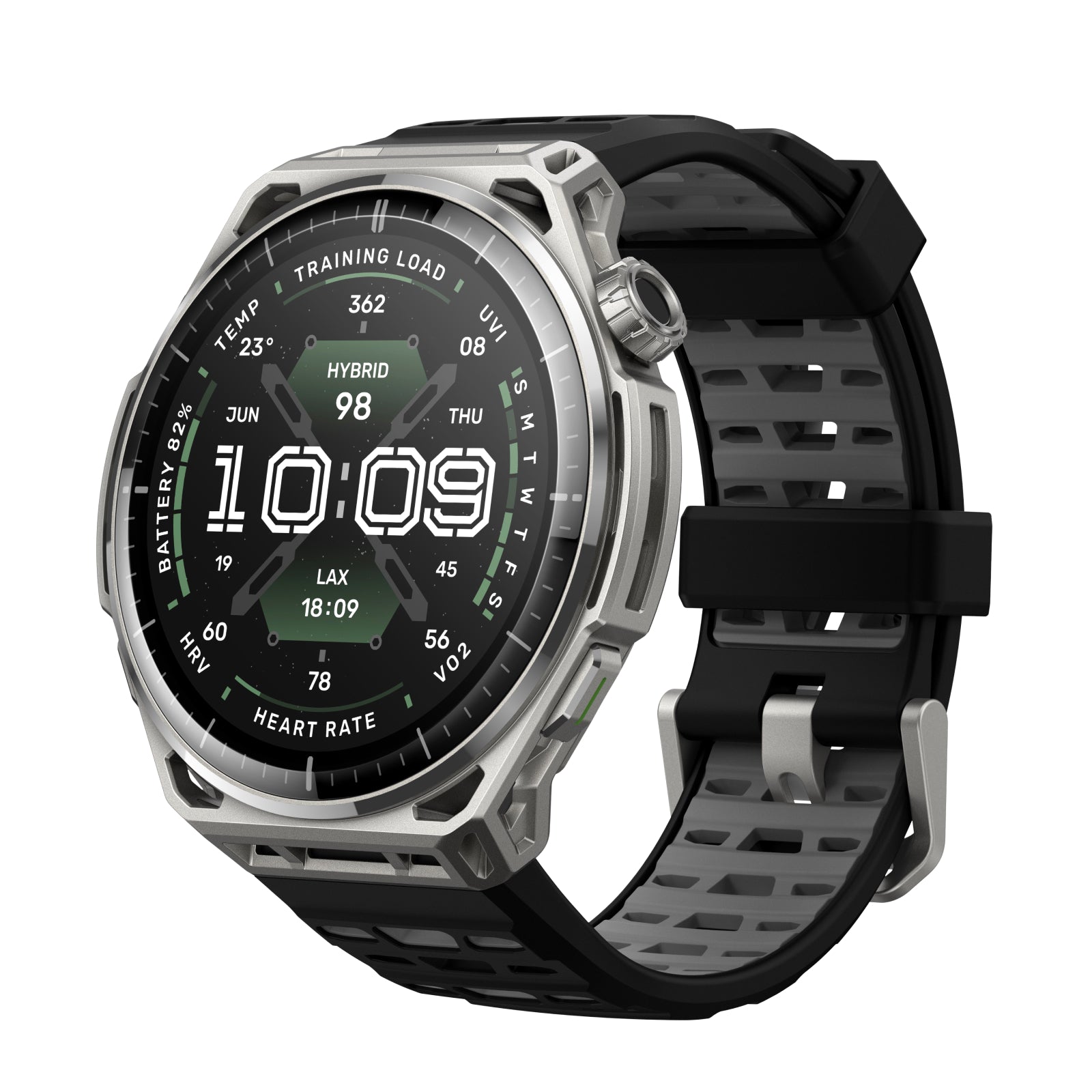
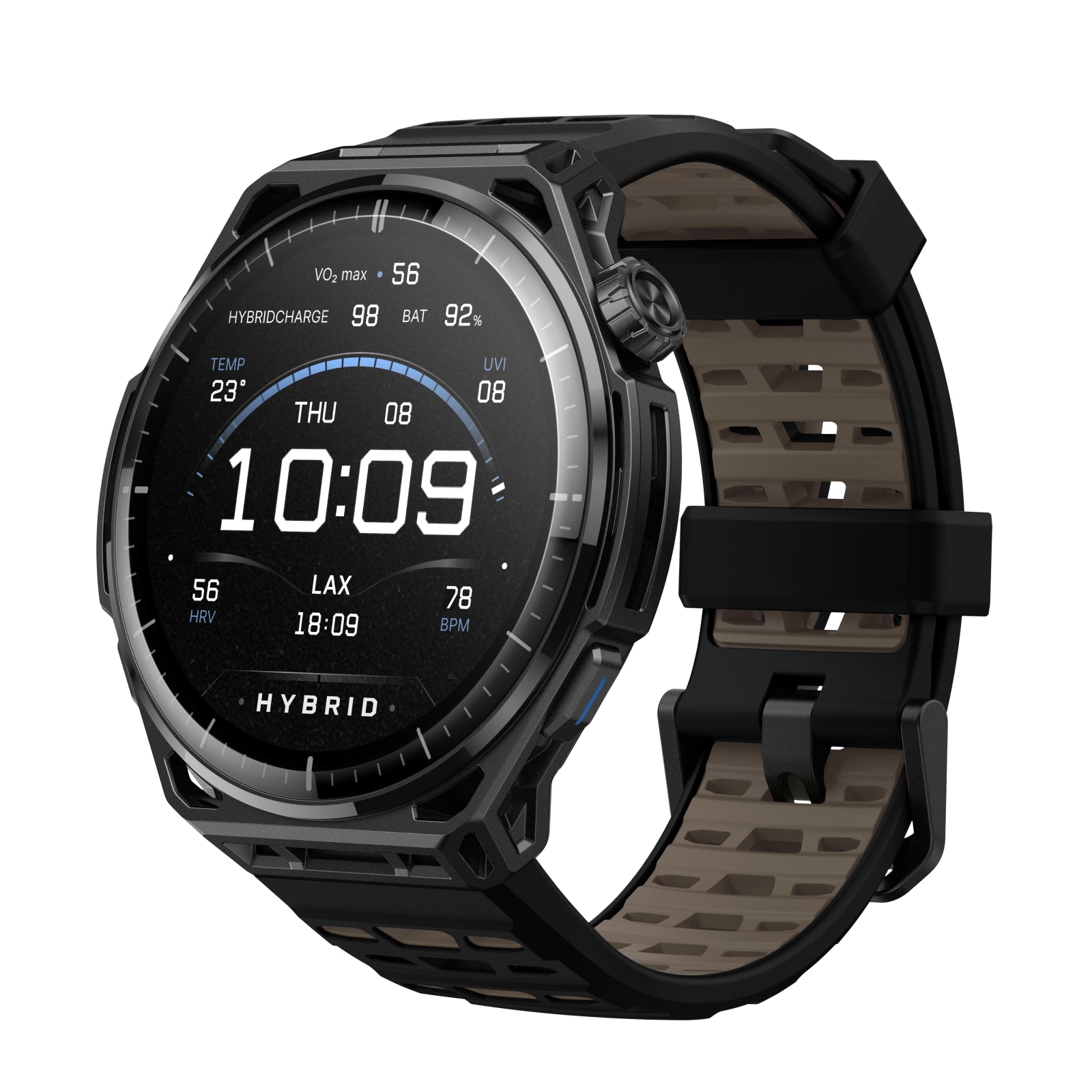
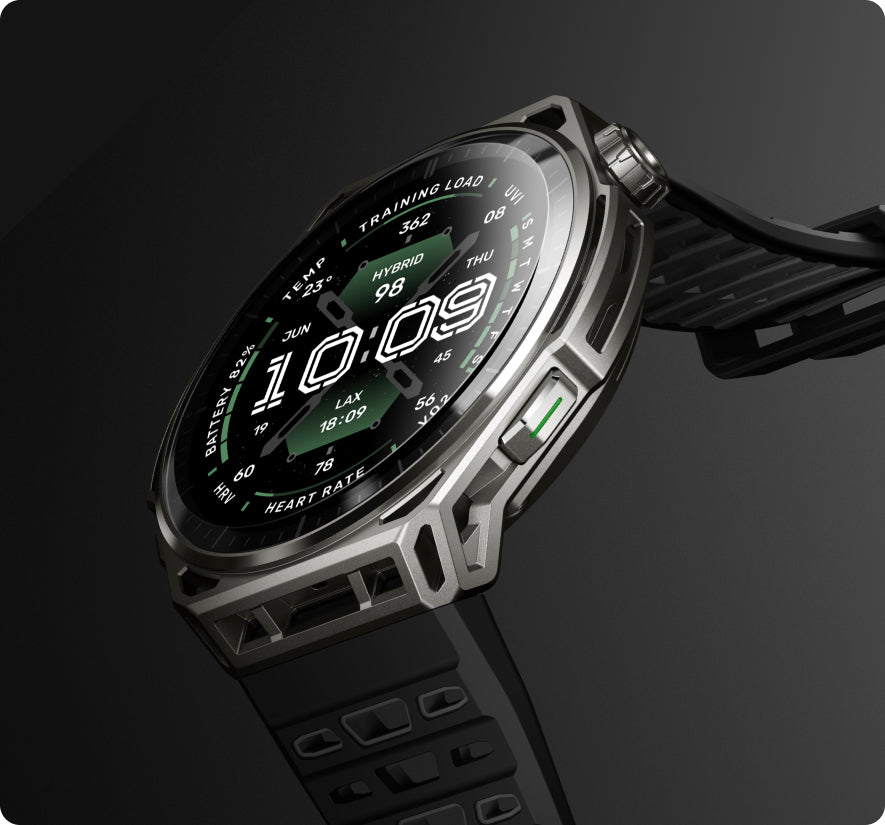
The watch has a 51.4 x 51.4 mm case with a thickness of 12.5 mm excluding the heart-rate sensor and 14.6 mm including it. The stainless steel version has a stainless frame and parts with a fiber-reinforced polymer shell and weighs 62 g without the strap; the titanium version, called Titanium Black, has a Grade 5 titanium frame and case with stainless steel buttons and weighs 55 g. Both have four buttons and a 22 mm quick-release strap. The steel model ships with a black and gray silicone strap, and the titanium model with a black and terra strap, according to Amazfit's listing. The recommended wrist size is 140 to 210 mm.
The 51.4 mm case is large. Amazfit's design is angular and rugged rather than slim, and a watch of this size will look big on smaller wrists. The 7 g difference between steel and titanium is noticeable over a long day, so those sensitive to weight should consider the titanium model once it is available.
Display
The display is a 1.5-inch AMOLED panel with a resolution of 480 x 480 pixels (about 323 ppi), covered by sapphire glass. Amazfit states a peak brightness of up to 3,000 nits. Peak brightness is typically reached in bright conditions for short periods, so the number is a ceiling rather than a typical level, but it indicates that the screen is designed to stay readable in direct sun during outdoor workouts. A flashlight with white and red modes uses the screen and is useful for early morning runs and camp use.
Training and software
The watch runs Zepp OS 6 and pairs with the Zepp app on Android 8.0 or newer and iOS 17.0 or newer. Amazfit says workout and recovery data in the app require no subscription. The headline software idea is HybridCharge, which combines three inputs: BioCharge (energy and recovery state), LifeLoad (daily stress and lifestyle demands) and training load. Weekly Focus and Training Balance views show whether a week is leaning towards strength, endurance or recovery, and Hybrid Training Plans add structure. These are manufacturer descriptions of features; how useful the scores are depends on how well each person's data matches the algorithms.
The watch lists more than 180 sports modes, official HYROX tools including training plans, race simulations and race-day features, and automatic recognition of 25 strength exercises and 8 sports movements. Amazfit also names running features such as built-in running workouts with Zepp Coach plans, lactate threshold, running power, ground contact time and track-run mode. The watch can connect to heart-rate belts, running and cycling power meters and speed and cadence sensors, and the Zepp app syncs with third-party services including Strava, TrainingPeaks, Runna, Intervals.icu, Apple Health and Google Fit. A software update in September 2026 added HYROX analysis with the separate Helio Strap Pro, according to Amazfit's update notes.
GPS and navigation
Positioning uses a dual-band, circularly polarized antenna and six satellite systems, which is the same class of hardware found on dedicated sports watches. The watch carries 64GB of onboard storage for offline maps, and Amazfit says base, contour and ski-resort maps are available, with turn-by-turn directions, point-of-interest search, round-trip route generation and automatic rerouting. Amazfit also describes wrong-way alerts and map improvements delivered through firmware updates since launch. That means the watch is meant to be usable without a phone nearby.
Health tracking
The BioTracker 6.0 optical sensor (five photodiodes and two LEDs) feeds around-the-clock heart rate, blood-oxygen, stress and skin-temperature monitoring, plus sleep tracking with heart-rate variability, sleep stages and naps. A one-tap measurement checks heart rate, stress, blood oxygen and breathing rate together in about 45 seconds, according to Amazfit. The watch also has an accelerometer, gyroscope, ambient light sensor, geomagnetic sensor, temperature sensor and barometric altimeter. These are consumer wellness features and are not medical diagnoses.
Battery and charging
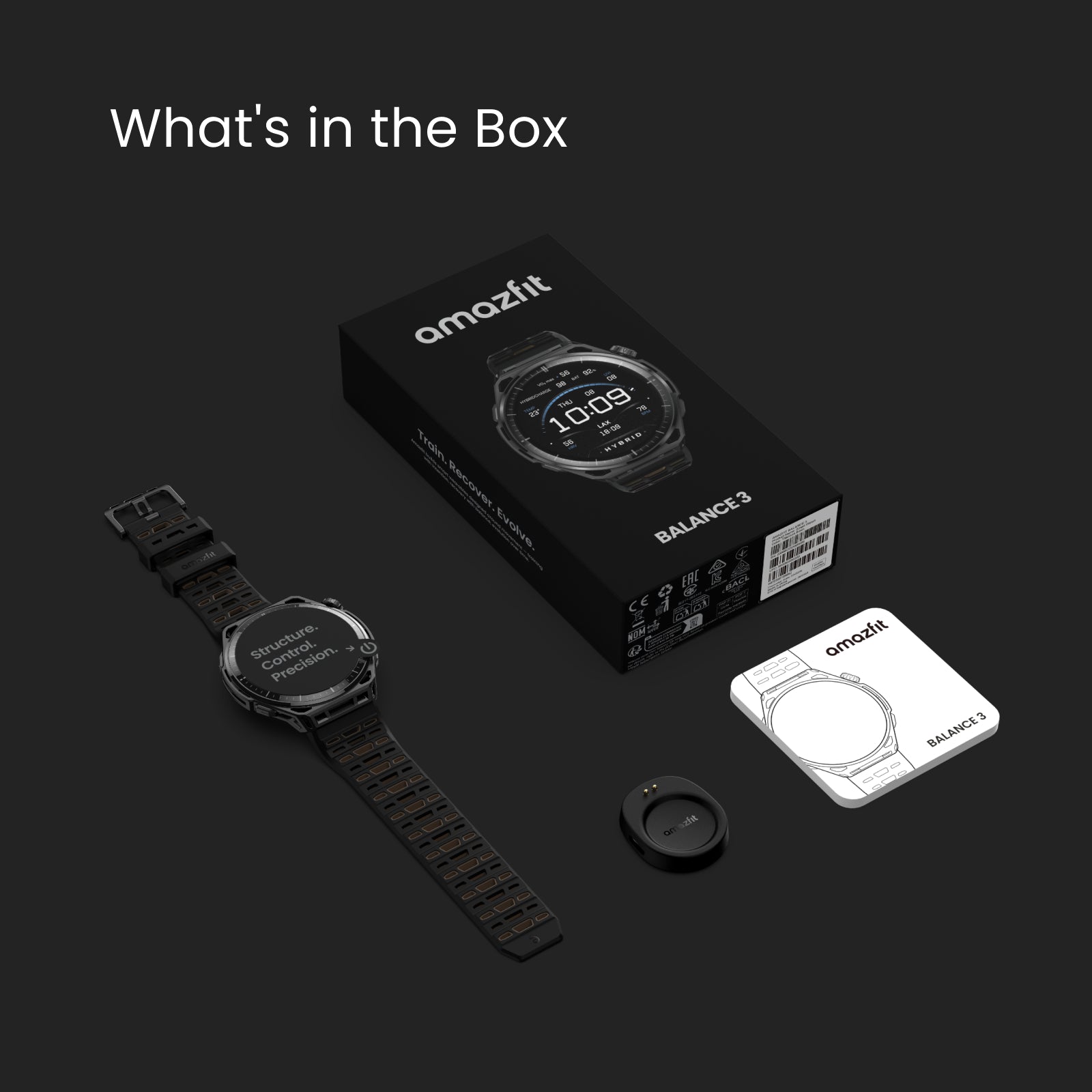
The battery is rated at 658 mAh. Amazfit specifies up to 21 days in typical use, up to 10 days in heavy use, up to 7 days with the always-on display, up to 41 hours in accuracy GPS mode and up to 84 hours in power-saving GPS mode. These are manufacturer figures from controlled usage patterns, and with dual-band GPS, offline maps, the flashlight and frequent calls the battery will drain faster. The box includes a magnetic charging head but no USB-C cable, which Amazfit says reduces waste, so a cable has to be supplied separately.
Durability and connectivity
The watch is rated 10 ATM, which Amazfit says corresponds to 100 meters of static pressure, and it is listed for 45 m freediving and recreational scuba diving. Amazfit also says it passed military-grade tests for low pressure, high and low temperature, temperature shock, vibration and impact; the company does not describe this as a formal certification of the whole watch, so treat it as a durability indicator. Connectivity is Bluetooth Low Energy 5.2 and 2.4GHz Wi-Fi. A microphone and speaker support Bluetooth calls and voice notes, and Zepp Flow 2.0 voice control is available in selected countries and regions.
Who it is for
The Balance 3 suits people who split their training between the gym and the road and want structured guidance without a subscription, HYROX participants, and anyone who wants offline maps and long battery life in a watch that also works for daily wear. It is a good fit for Android and iPhone users alike.
Compromises
- Size: a 51.4 mm case is large, and the steel model weighs 62 g without the strap.
- Price tiers: the stainless steel version starts at $369.99, and the lighter titanium version was announced as coming soon at $449.99.
- No charging cable: only a magnetic charging head is included.
- Battery under load: 21 days applies to typical use, and heavy use is rated at up to 10 days.
- Algorithmic scores: HybridCharge and recovery scores are interpretations of sensor data, not measurements.
- Ecosystem: deep features live in the Zepp app, and some functions depend on region and supported countries.
For buyers who want a rugged, long-lasting training watch at a lower price than premium alternatives, the Balance 3 covers a lot of ground. Those who want a lighter, larger-battery watch should look at the Balance Ultra.
Where it ranks
Compare Amazfit Balance 3 with similar devices
More from Amazfit
Frequently asked questions
When was the Amazfit Balance 3 released?
The Amazfit Balance 3 was released on 2026-06-02, according to the manufacturer’s published information.
How much does the Amazfit Balance 3 cost?
The estimated range for the Amazfit Balance 3 is $333 to $407 in US dollars, based on the launch list price. Actual prices vary by country, retailer and storage option.
What are the main specs of the Amazfit Balance 3?
Headline figures for the Amazfit Balance 3: Battery life: 21 days. The full specification table is further up this page.
Is the Amazfit Balance 3 worth buying?
That depends on your priorities. Use the editorial review on this page for our view, check the rankings above to see where the device stands on battery, display and camera, and compare it directly with similar models before you decide.