Smartwatches
Amazfit Cheetah 2 Pro
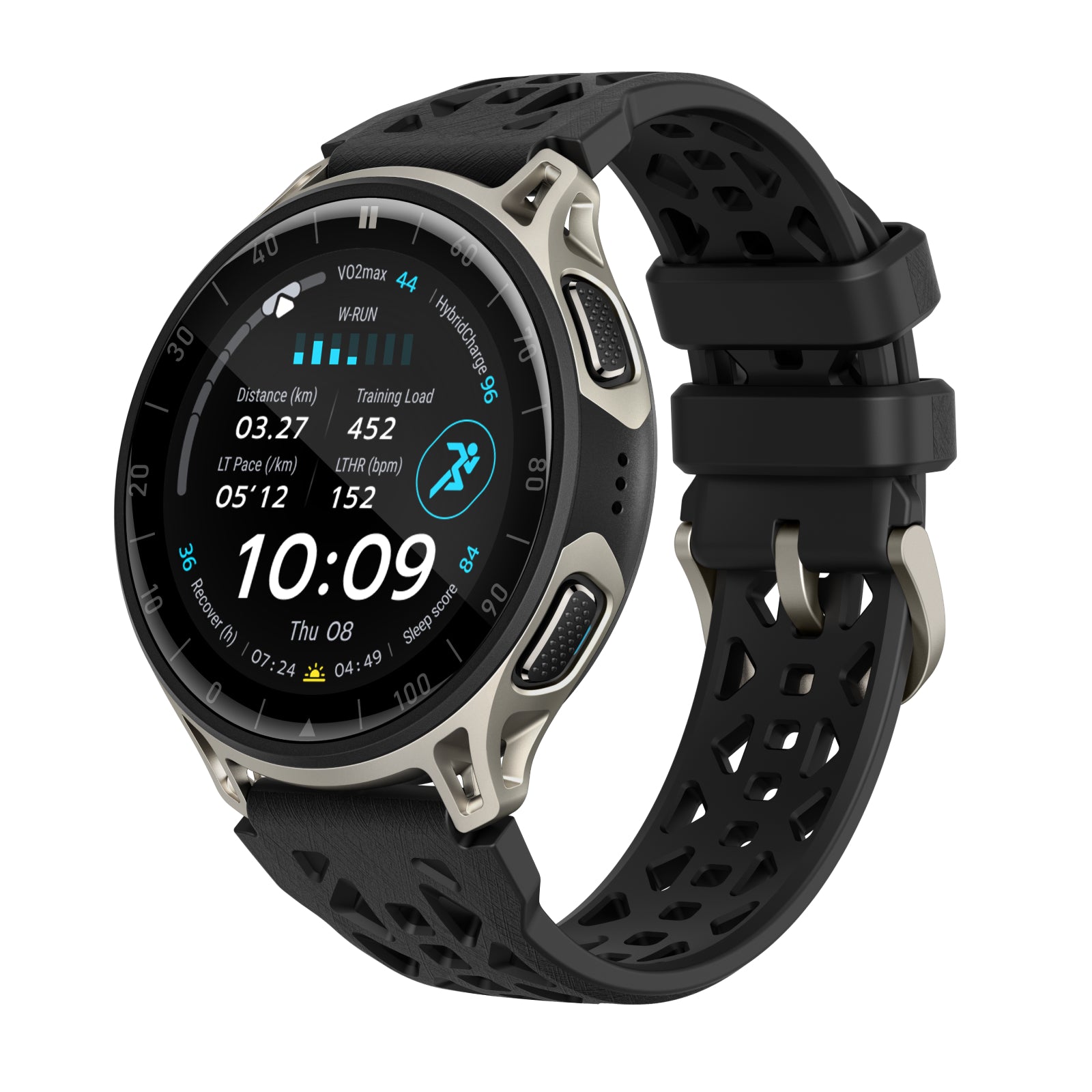
Amazfit's Cheetah 2 Pro is a 45.6 g titanium and sapphire running watch with a 1.32-inch AMOLED, dual-band GPS, offline maps and up to 20 days of claimed battery life, at $449.99.
Key figures at a glance
Gallery


Specifications
- Display
- 1.32-inch AMOLED, 466x466, 353 ppi, up to 3,000 nits, sapphire glass
- Body
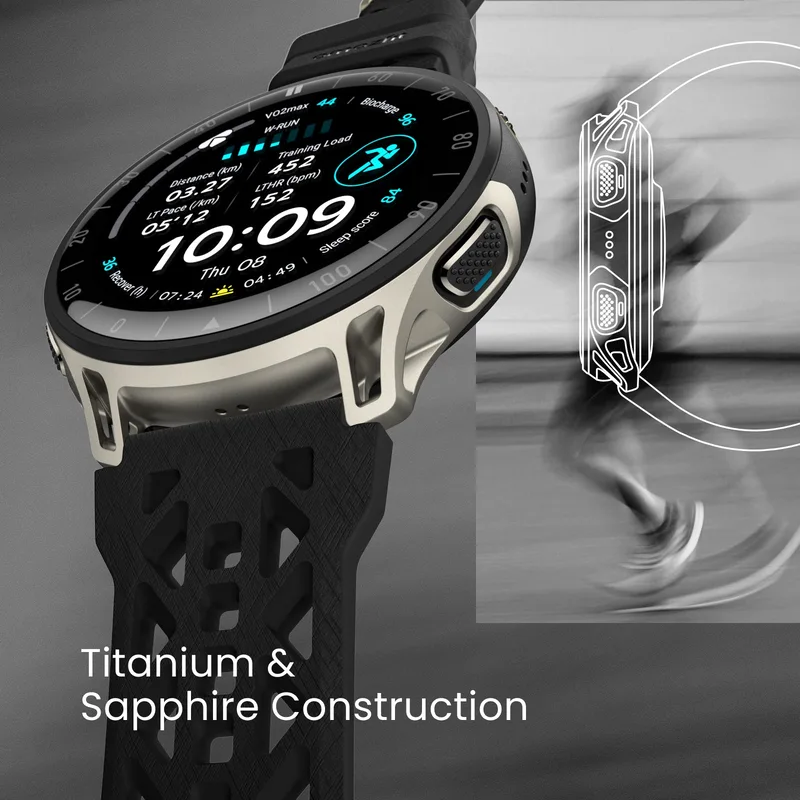
- Grade 5 titanium frame and case, aluminum alloy buttons, plastic bezel; 48 x 48 mm case, 15.6 mm thick including sensor (13.2 mm excluding), 45.6 g without strap; 20 mm silicone strap
- Battery
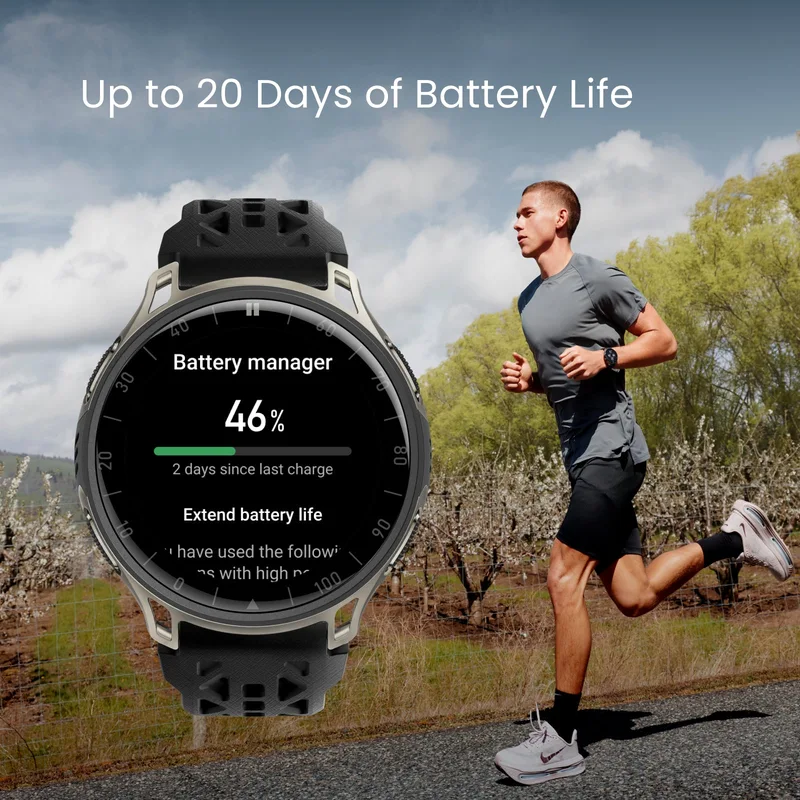
- Up to 20 days (typical use; the launch press release cites 17 days), up to 10 days (heavy use), up to 8 days with always-on display; up to 31 hours in accurate dual-band GPS mode, 69 hours in power-saving GPS; 540 mAh
- Positioning
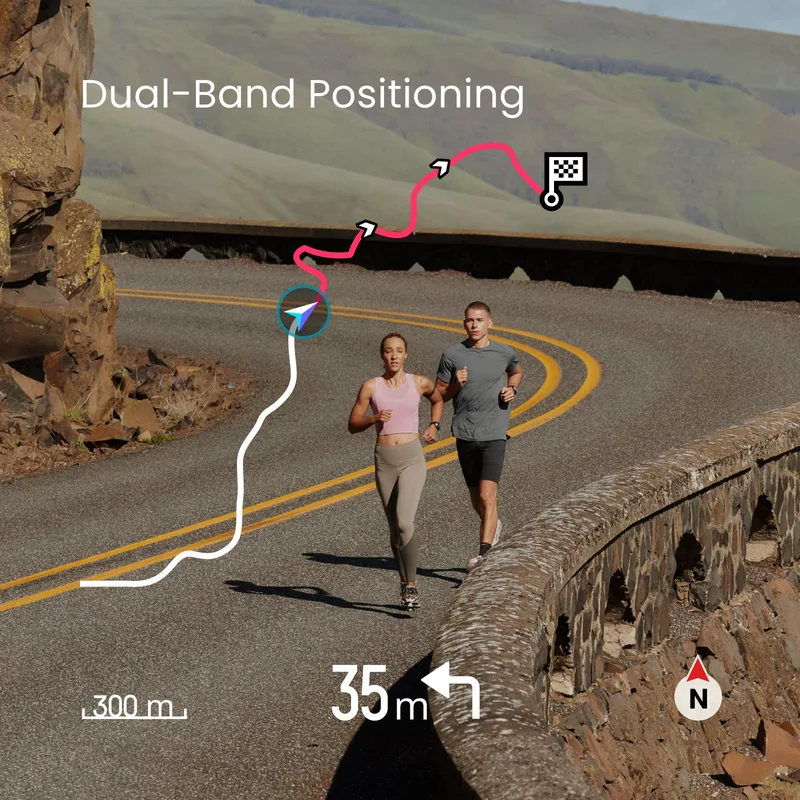
- Dual-band GPS with six satellite systems, circularly polarized antenna and point dead reckoning; downloadable offline maps with turn-by-turn navigation, automatic rerouting, POI search and round-trip route planning
- Sensors
- BioTracker 6.0 PPG sensor (5PD + 2LED), accelerometer, gyroscope, ambient light, geomagnetic, temperature, barometric altimeter
- Connectivity
- Bluetooth LE 5.3, Wi-Fi 2.4GHz, Bluetooth calls, microphone and speaker
- Durability
- 5 ATM water resistance
- Storage
- 32GB onboard
- Extras
- Built-in white and red LED flashlight, linear motor, four buttons
- Sports
- 170+ sports modes, 25 auto-recognized strength exercises, HYROX modes, Zepp Coach running plans, HybridCharge energy intelligence
- OS
- Zepp App for Android 7.0+ and iOS 14.0+, no subscription required for workout and recovery data
The Amazfit Cheetah 2 Pro is a round running watch built around marathon preparation. Amazfit announced it on 16 April 2026 as the newest member of its performance-focused Cheetah line and pitched it at runners who train through long build-ups. It combines a Grade 5 titanium case and frame with sapphire glass, a 1.32-inch AMOLED screen with a claimed 3,000 nits, dual-band GPS with offline maps and a battery that Amazfit rates at up to 20 days of typical use. It weighs 45.6 grams without the strap and costs $449.99 in the United States. This page is a specification-and-information review based on the published specifications and manufacturer information, so battery and performance numbers are Amazfit's own laboratory claims. The sections below cover the place of the watch in the lineup, its design and display, the training software, navigation and sensors, the battery, who it suits and the compromises.
Place in the lineup
The Cheetah 2 Pro is the smaller, lighter sibling in the Cheetah 2 family. Amazfit's own comparison table sets it against the Cheetah 2 Ultra, which has a 1.5-inch screen, a 780 mAh battery, up to 30 days of typical use and up to 60 hours of accurate GPS, and costs $599.99. The Pro trades that extra endurance and size for lower weight and a lower price. Both watches share sapphire glass, 3,000-nit AMOLED displays, dual-band GPS, offline maps, a built-in flashlight and a no-subscription workout and recovery experience in the Zepp app, according to Amazfit. On the Amazfit side, the Amazfit Balance 3 is the hybrid-training watch for gym and daily use, and the Amazfit T-Rex Dual Solar covers the rugged outdoor side. Among rivals, the Garmin Forerunner 970 is the closest running-focused option, and the page Amazfit Cheetah 2 Pro vs Garmin Forerunner 970 compares them.
Design and display
The case is 48 x 48 mm by the industry-standard measurement, 15.6 mm thick including the heart-rate sensor and 13.2 mm without it. The frame and case are Grade 5 titanium, the four buttons are aluminium alloy and the bezel is plastic, so it is not an all-metal build. Amazfit describes the design philosophy as refined performance and structural lightness: remove material that does not serve a purpose, but keep stiffness. At 45.6 grams without the strap it is a light watch for its size, and the 20 mm silicone strap with a classic pin buckle is the same size as many third-party straps. The silicone strap is the only one in the box; the packaging is recyclable and includes a magnetic charging base but no cable, because Amazfit expects most buyers already own a USB-C cable.
The screen is a 1.32-inch AMOLED panel at 466 x 466 pixels, about 353 pixels per inch, protected by sapphire glass. Amazfit quotes up to 3,000 nits of peak brightness and notes two limits: the maximum is not available when battery level is below 30 percent, and with automatic brightness turned on the watch can reach up to 2,000 nits, depending on the environment. The watch is rated 5 ATM under ISO 22810:2010, which Amazfit says makes it suitable for splashes, showering and swimming; this is a pressure rating equivalent to 50 metres of static water and not a recommendation for diving. A linear motor provides vibration feedback, and the watch has a speaker and microphone for Bluetooth calls.
Training software and metrics
The watch ships with built-in running workouts for aerobic base, threshold and strength-focused sessions, and it supports Zepp Coach plans, which adapt to progress. Amazfit gives the range as 5K to marathon on the product page, while the launch press release said 3K to marathon. Training plans can also be imported from TrainingPeaks, Runna and Intervals.icu, and completed activities sync to Strava, Apple Health, Google Fit and Intervals.icu. The watch tracks lactate threshold pace and heart rate, running power, ground contact time, gait analysis and finish-time prediction, along with VO2 max, training load, training effect and training status. With the Zepp app, recovery information such as heart-rate variability, sleep, fatigue and a HybridCharge energy score appears alongside those figures. There are 170 or more sports modes, including HYROX race and training options, and the watch recognises 25 strength-training exercises in strength mode. Peripherals such as heart-rate belts, running and cycling power meters and cadence sensors can connect over Bluetooth.
Navigation and sensors
The Cheetah 2 Pro uses dual-band GPS with six satellite systems, a circularly polarised antenna and point dead reckoning, which Amazfit says maintains accurate pace and tracking when signals weaken. It can download offline maps with contour lines to its 32GB of storage, give turn-by-turn directions and rerouting, search points of interest and generate round-trip routes. Amazfit's footnotes explain that maps and routes must match the user's real location, and that the straight line back to the start is not necessarily a practical route. The heart-rate and health sensor is the BioTracker 6.0 optical unit with five photodiodes and two LEDs, backed by an accelerometer, gyroscope, ambient light sensor, geomagnetic sensor, temperature sensor and barometric altimeter. Amazfit also lists 24-hour monitoring of heart rate, blood oxygen, stress and skin temperature, sleep tracking with stages and breathing quality, and a one-tap measurement of several values together. The watch is not a medical device. A built-in dual-mode flashlight with white and red light, plus Boost and SOS modes, is useful for early-morning and late-evening runs.
Battery and charging
The battery has a rated capacity of 540 mAh. Amazfit quotes up to 20 days of typical use, up to 10 days of heavy use and up to 8 days with the always-on display. The launch press release cited up to 17 days, so the two Amazfit sources do not agree exactly, and buyers should treat the figure as a range depending on the conditions. For GPS, the numbers are up to 31 hours in accurate dual-band mode, up to 26 hours with GPS and the always-on display, up to 15 hours with GPS and music playback, up to 69 hours in power-saving GPS and up to 99 hours in an extended mode that is only available for walking and hiking. Amazfit notes that these are laboratory results under defined scenarios and that real results vary. Thirty-one hours of accurate GPS comfortably covers a marathon, while the Cheetah 2 Ultra's 60 hours suits longer ultra efforts.
Who it is for
The Cheetah 2 Pro is aimed at experienced runners who follow structured plans and want accurate data without a subscription. Its titanium case, bright screen and offline maps suit people who run in cities, on trails and at races, and the metrics lean toward marathon and half-marathon training. Someone who mostly wants a smartwatch with apps and notifications will find that a general-purpose model fits better. Rankings on the site, including the rankings page, show how it compares with other watches. A similar premium running watch from outside Amazfit is the Garmin Fenix 8, which targets multisport and outdoor use.
Compromises
There are some limits. At $449.99 it is a premium price for the Amazfit brand, and the cheaper Balance 3 shares several features. The case is titanium but the bezel is plastic. Battery claims differ between Amazfit's own sources, the full 3,000 nits is not available at low battery, and brightness drops to 2,000 nits with automatic brightness. No charging cable comes in the box. Offline maps require manual downloads, and the watch is not a medical device. The Zepp ecosystem is strong on training metrics, but it has fewer third-party apps than the larger smartwatch platforms. Finally, the software-feature list is long, and availability of some functions, such as Zepp Flow voice control, depends on the country and language.
Where it ranks
Compare Amazfit Cheetah 2 Pro with similar devices
More from Amazfit
Frequently asked questions
When was the Amazfit Cheetah 2 Pro released?
The Amazfit Cheetah 2 Pro was released on 2026-04-16, according to the manufacturer’s published information.
How much does the Amazfit Cheetah 2 Pro cost?
The estimated range for the Amazfit Cheetah 2 Pro is $405 to $495 in US dollars, based on the launch list price. Actual prices vary by country, retailer and storage option.
What are the main specs of the Amazfit Cheetah 2 Pro?
Headline figures for the Amazfit Cheetah 2 Pro: Battery life: 20 days. The full specification table is further up this page.
Is the Amazfit Cheetah 2 Pro worth buying?
That depends on your priorities. Use the editorial review on this page for our view, check the rankings above to see where the device stands on battery, display and camera, and compare it directly with similar models before you decide.