Smartwatches
Amazfit Cheetah 2 Ultra
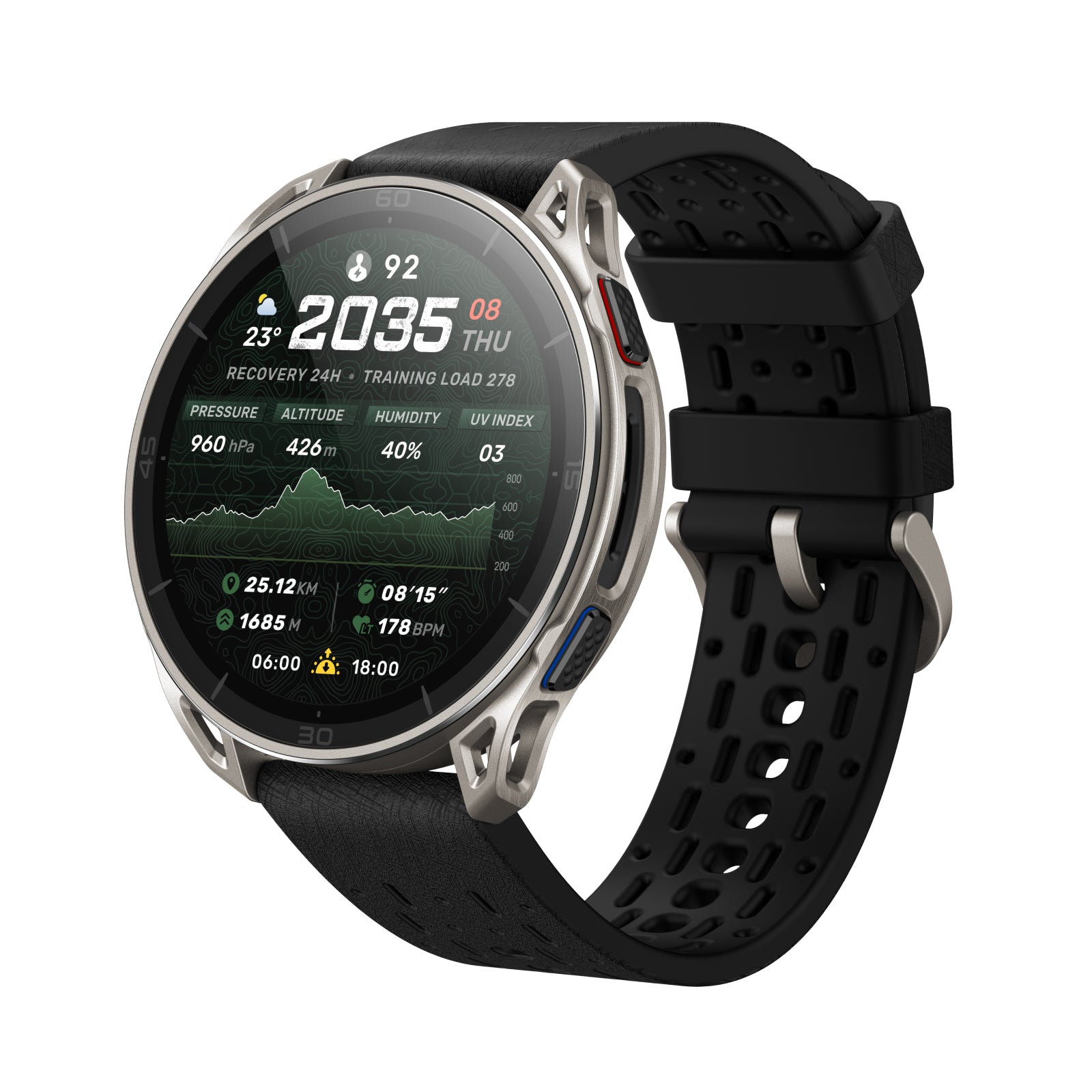
Amazfit's 2026 trail-running watch combines a Grade 5 titanium build, a 3,000-nit sapphire AMOLED display, offline contour maps and up to 30 days of typical battery life for $599.99.
Key figures at a glance
Gallery
Specifications
- Display
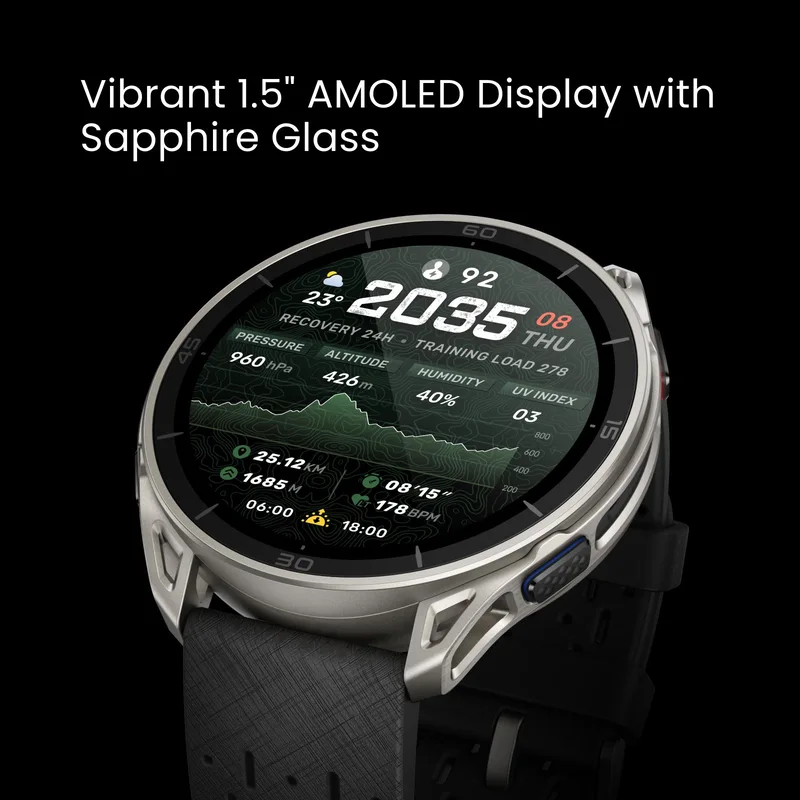
- 1.5-inch AMOLED, 480x480, 323 ppi, up to 3,000 nits peak brightness, sapphire glass
- Body
- Grade 5 titanium bezel, frame, back cover and buttons; fiber-reinforced polymer case; 52 g without strap; 47.4 x 47.4 mm case, 13.3 mm thick excluding sensor (15.6 mm including); 22 mm straps (silicone and nylon included); four buttons
- Battery
- Up to 30 days (typical use), up to 33 hours in Trail Running mode with always-on display, dual-frequency GPS and map navigation, up to 60 hours in accuracy GPS mode, up to 228 hours in maximum GPS mode; 780 mAh (rated)
- Positioning
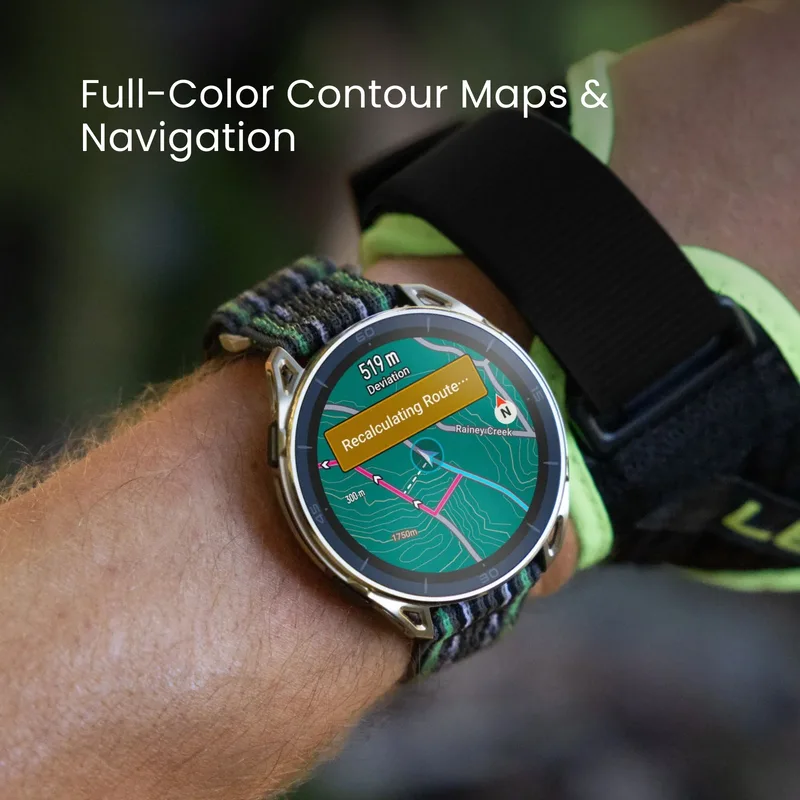
- Dual-band GPS with six satellite systems and circularly polarized antenna; offline full-color contour maps with point-to-point routes and automatic rerouting
- Sensors
- BioTracker PPG sensor (5PD + 2LED), accelerometer, gyroscope, ambient light, geomagnetic, temperature, barometric altimeter
- Connectivity
- Bluetooth LE 5.2, Wi-Fi 2.4GHz, microphone and speaker
- Durability
- 5 ATM water resistance; military-grade tests listed by Amazfit (low pressure, high and low temperature, temperature shock, vibration, impact)
- Storage
- 64GB onboard
- Extras
- Built-in flashlight (white and red; SOS and Boost modes up to 300 lux per launch text), linear motor, magnetic charger without cable
- Sports
- 180+ sports modes, 25 auto-recognized strength movements, lactate threshold, running power, ground contact time, finish time prediction; syncs to Strava, TrainingPeaks, Runna, Intervals.icu, Apple Health and Google Fit
- Compatibility
- Zepp App for Android 7.0+ and iOS 15.0+
The Amazfit Cheetah 2 Ultra is a round trail-running and mountain-racing watch that Amazfit announced on May 13, 2026, with a US price of $599.99 on the company's own store. It follows the road-focused Cheetah 2 Pro and swaps the lighter, smaller build for a 1.5-inch sapphire-glass AMOLED display, a Grade 5 titanium bezel, frame and back cover, 64GB of storage for contour maps and a 780 mAh battery. Amazfit rates it at up to 30 days of typical use and up to 33 hours in Trail Running mode with the always-on display, dual-frequency GPS and map navigation active. This page is based on the published specifications and manufacturer information, and it covers where the watch sits in the range, the build, navigation, training software, battery life and the compromises.
Place in the lineup
Amazfit sells several families of sports watches, and the Cheetah line is the one pitched at runners. The Cheetah 2 Pro, launched shortly before, targets road marathoners; the Cheetah 2 Ultra is the specialist for long trail races where elevation, terrain and time on feet matter more than pace alone. Elsewhere in the catalogue, the Amazfit T-Rex Dual Solar is the rugged outdoor watch with solar charging, while the Amazfit Balance 3 and the Amazfit Balance Ultra lean towards hybrid gym and everyday training. At $599.99, the Cheetah 2 Ultra sits at the same price as the Balance Ultra, and its closest rivals come from Garmin, such as the Garmin Forerunner 970 and the Garmin Enduro 4. For a head-to-head view, see Cheetah 2 Ultra vs Forerunner 970.
Design and display
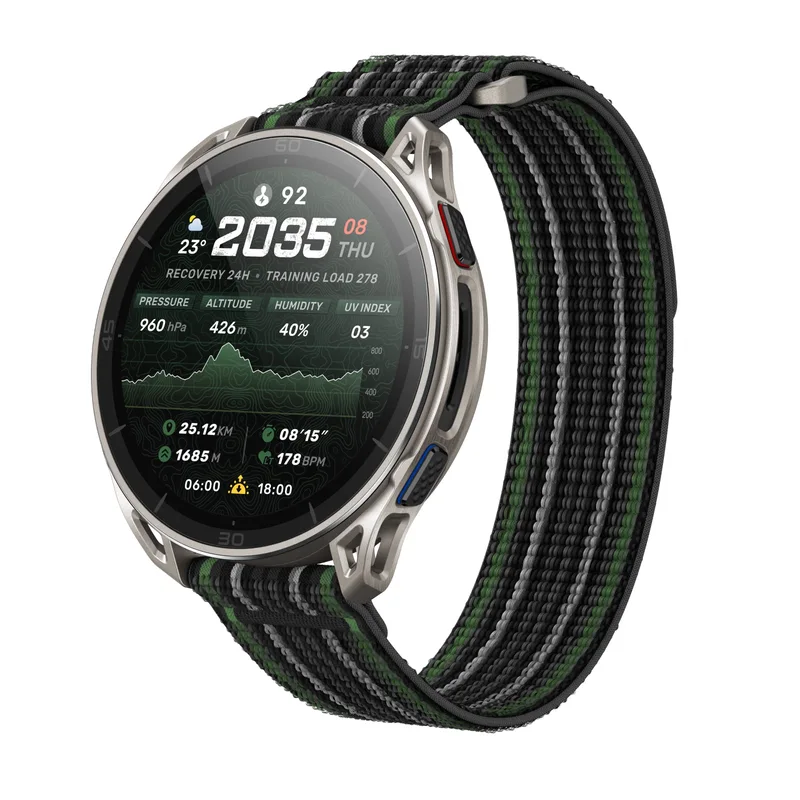
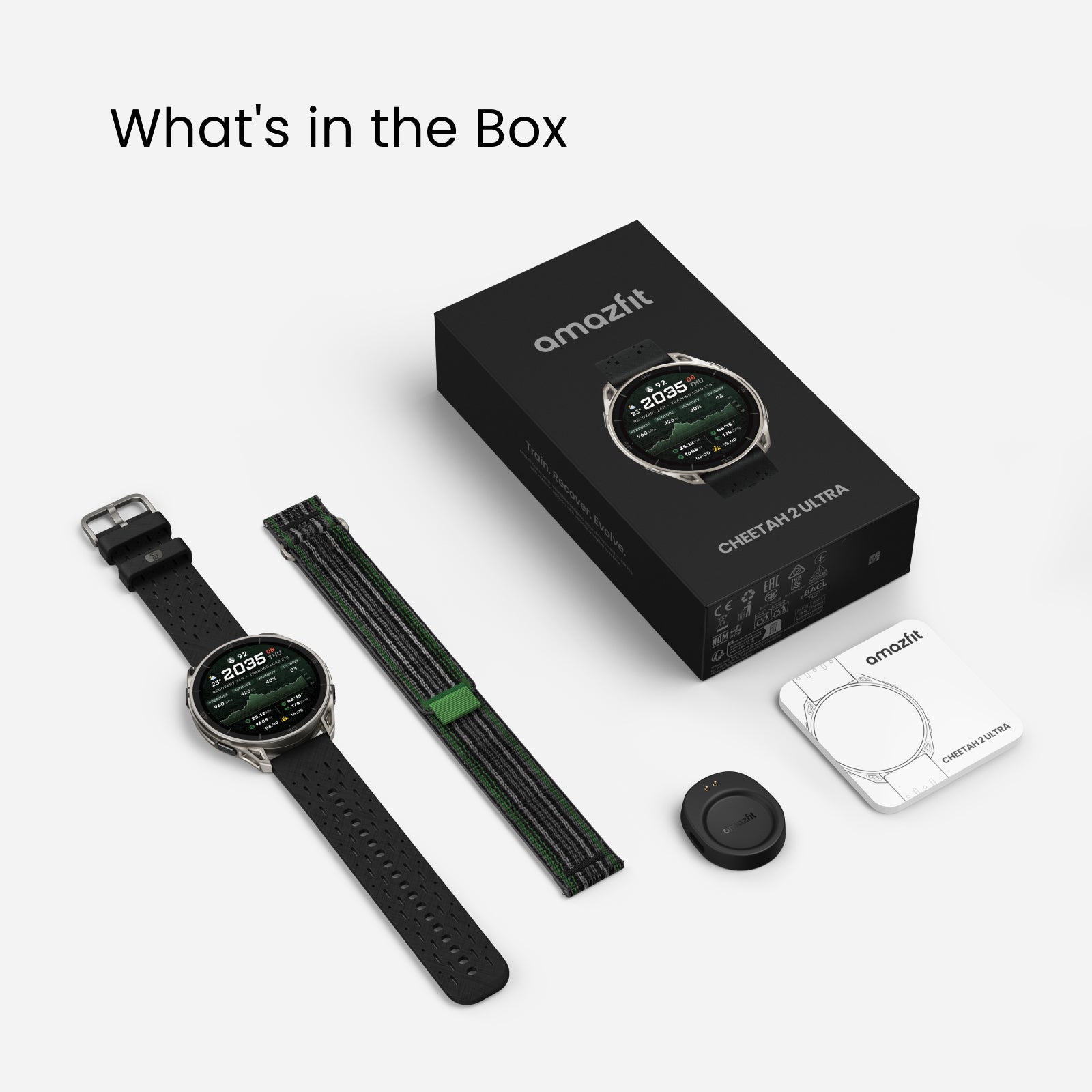
Amazfit describes the design as "structured for load": strength through architecture rather than bulk. The bezel, frame, back cover and buttons are Grade 5 titanium, while the case itself is fiber-reinforced polymer. The published numbers are 47.4 x 47.4 mm for the case, 13.3 mm thick without the heart-rate sensor (15.6 mm with it) and 52 g without the strap. The watch has four physical buttons, and the frame carries cut-out lugs that give it a distinctly technical look. Two 22 mm straps ship in the box, a black silicone one and a striped green nylon one, so you can switch between a sweat-proof option for races and a softer one for daily wear.
The display is a 1.5-inch AMOLED panel at 480 x 480 pixels (323 ppi), covered with sapphire glass. Amazfit quotes up to 3,000 nits of peak brightness, a figure that matters for high-altitude glare and for reading maps in direct sun. The company does not publish a refresh-rate figure on its spec page, so this page does not list one. A built-in flashlight offers white and red light; the launch text adds SOS and Boost modes with up to 300 lux, which is useful for early alpine starts and late finishes. Water resistance is 5 ATM, and Amazfit lists a set of military-grade tests covering low pressure, high and low temperature, temperature shock, vibration and impact.
Navigation and maps
Navigation is the main reason to choose this model over a lighter watch. The Cheetah 2 Ultra uses dual-band positioning backed by six satellite systems, with a circularly polarized antenna that Amazfit says keeps tracking stable under trees and in canyons. It stores full-color topographic and contour maps in its 64GB of memory, so you can create point-to-point routes, search nearby points of interest and rely on automatic rerouting without a phone or network connection. Amazfit states that map rendering is 2.5 times faster and refresh is 12 times faster than on its earlier maps, which are manufacturer claims rather than independent measurements.
The upgraded Trail Running mode adds an elevation overview that color-codes the slope difficulty of the whole route, so you can see the steep sections ahead at a glance. It also applies load-factor calculations for gradient, terrain resistance and vertical gain, aiming to make the recorded effort reflect a mountain run more accurately than flat-pace metrics do. The 64GB of storage also holds more than 100 hours of podcasts, according to the launch announcement, in addition to maps.
Training and software
The watch works with the Zepp app (Android 7.0 or later, iOS 15.0 or later). Amazfit pairs it with what it calls Hybrid Training: the app organizes endurance, strength and recovery, shows a weekly structure of training load and turns overnight recovery into a daily readiness signal. Metrics named in the specifications include VO2 max, fatigue level, training status, HRV, sleep scores, lactate threshold, running power, pacing analysis, ground contact time, gait tracking and finish-time predictions. The watch offers more than 180 sports modes, recognizes 25 strength movements, and syncs workouts to services including Strava, TrainingPeaks, Runna and Intervals.icu, plus Apple Health and Google Fit.
Health tracking covers heart rate, blood oxygen, stress and skin temperature, with sleep stages and a sleep score. The sensor package consists of the BioTracker PPG sensor, an accelerometer, a gyroscope, an ambient light sensor, a geomagnetic sensor, a temperature sensor and a barometric altimeter. Connectivity is Bluetooth LE 5.2 and 2.4 GHz Wi-Fi, and the watch has a microphone and a speaker. The manufacturer does not list a payment system or a cellular option, which fits the "no distractions" positioning.
Battery life
The battery is rated at 780 mAh, and Amazfit publishes several scenarios. Typical use gets up to 30 days. Trail Running mode with always-on display, heart-rate monitoring, dual-frequency GPS, all-satellite positioning and map navigation is rated at up to 33 hours. Accuracy GPS mode is listed at up to 60 hours, and the maximum GPS mode at up to 228 hours, though that last figure naturally comes with trade-offs in positioning settings. A battery chart on the product page shows that disabling the always-on screen, voice prompts or map navigation stretches the runtime toward 48, 60 or 80 hours, so how long a race can last depends on which features you keep. Charging uses a magnetic head that ships in the box without a cable.
As with every manufacturer figure, these are lab ratings, and real results will vary with settings, brightness, temperature and use of maps. A cold alpine race with the screen always on will draw more than a mild afternoon outing, so it is worth planning with a margin for anything beyond the stated figures.
Who it is for
- Trail and ultra runners who want contour maps, rerouting and an elevation overview on the wrist without buying a premium-priced Garmin.
- Mountain racers who care about a bright display in glare and a built-in flashlight for pre-dawn starts.
- Athletes who log training in third-party tools such as TrainingPeaks, Runna or Intervals.icu.
- Anyone who wants a multi-week battery in a watch that still has a full-color map display.
It is less obviously the right pick for casual runners or for buyers who prefer a small, light watch; at 47.4 mm and 52 g, it is a substantial piece of kit, and Amazfit offers smaller options in its range. If you mostly run on roads, the Cheetah 2 Pro or a cheaper model may be a better fit.
Compromises
- Price. $599.99 is a large step above Amazfit's mainstream range, and it competes with established brands whose ecosystems are more mature.
- Size. A 47.4 mm case with 13.3 to 15.6 mm thickness can feel big on a slim wrist.
- Software maturity. The training analytics rely on the Zepp app, and the quality of its recommendations against dedicated sports platforms cannot be judged from published specifications alone.
- Manufacturer claims. Battery hours, brightness and map-speed improvements are claims from Amazfit's own testing.
- No stated payments or cellular. The published specifications do not list contactless payment, LTE or satellite messaging.
- Refresh rate not stated. If smoothness of animations matters to you, there is no official number to compare.
In summary, the Cheetah 2 Ultra is a focused trail watch that pairs titanium construction, a bright sapphire AMOLED screen, offline contour maps and long battery ratings. It is expensive and large, but for mountain runners who want serious navigation without leaving the Amazfit ecosystem, the published specifications make a strong case.
Where it ranks
Compare Amazfit Cheetah 2 Ultra with similar devices
More from Amazfit
Frequently asked questions
When was the Amazfit Cheetah 2 Ultra released?
The Amazfit Cheetah 2 Ultra was released on 2026-05-13, according to the manufacturer’s published information.
How much does the Amazfit Cheetah 2 Ultra cost?
The estimated range for the Amazfit Cheetah 2 Ultra is $540 to $660 in US dollars, based on the launch list price. Actual prices vary by country, retailer and storage option.
What are the main specs of the Amazfit Cheetah 2 Ultra?
Headline figures for the Amazfit Cheetah 2 Ultra: Battery life: 30 days. The full specification table is further up this page.
Is the Amazfit Cheetah 2 Ultra worth buying?
That depends on your priorities. Use the editorial review on this page for our view, check the rankings above to see where the device stands on battery, display and camera, and compare it directly with similar models before you decide.