Smartwatches
Garmin Enduro 4
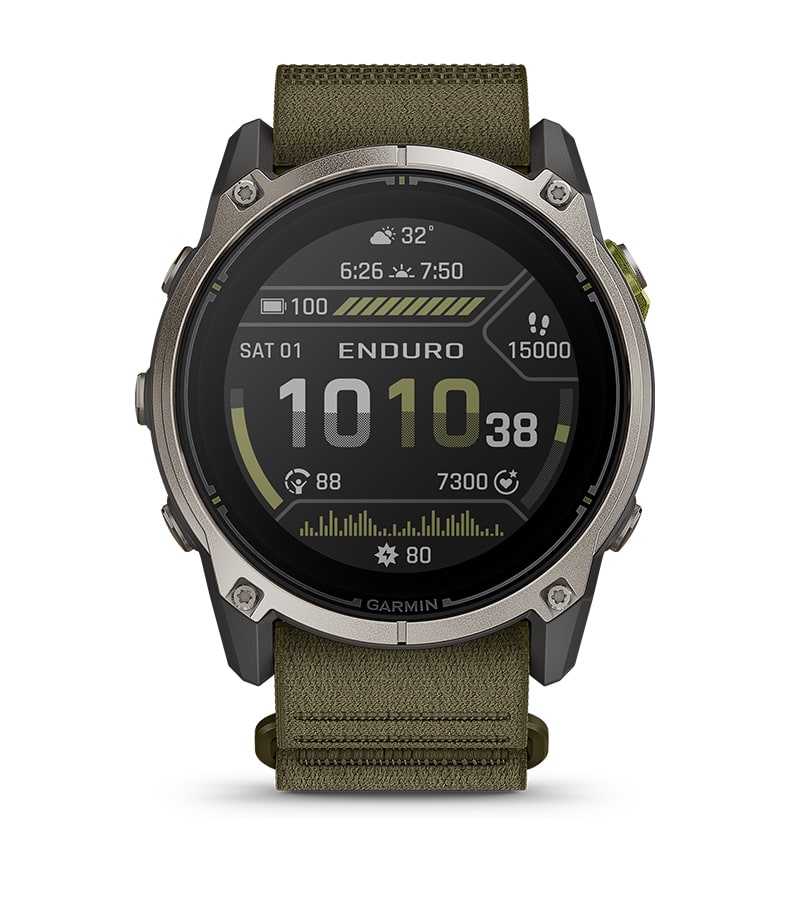
Garmin's solar-charging ultra-endurance GPS watch adds grade-adjusted pacing, stamina zones and 64 GB of storage, with up to 90 days of battery in smartwatch mode, according to Garmin.
Key figures at a glance
Gallery
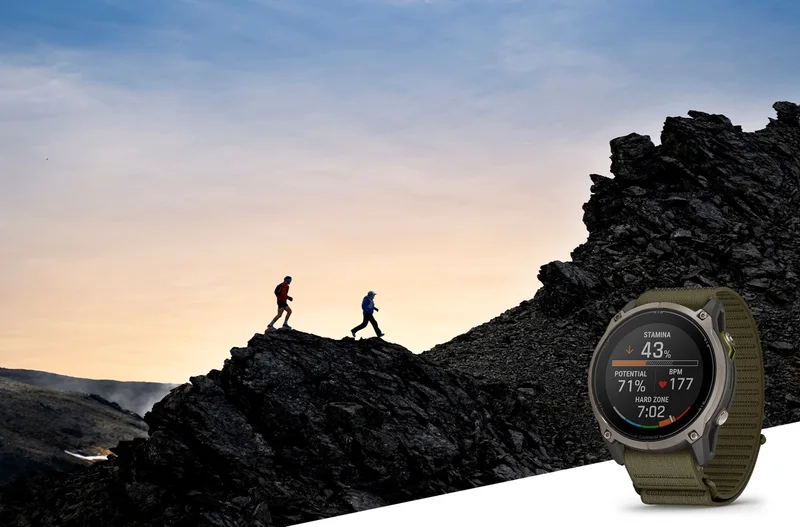
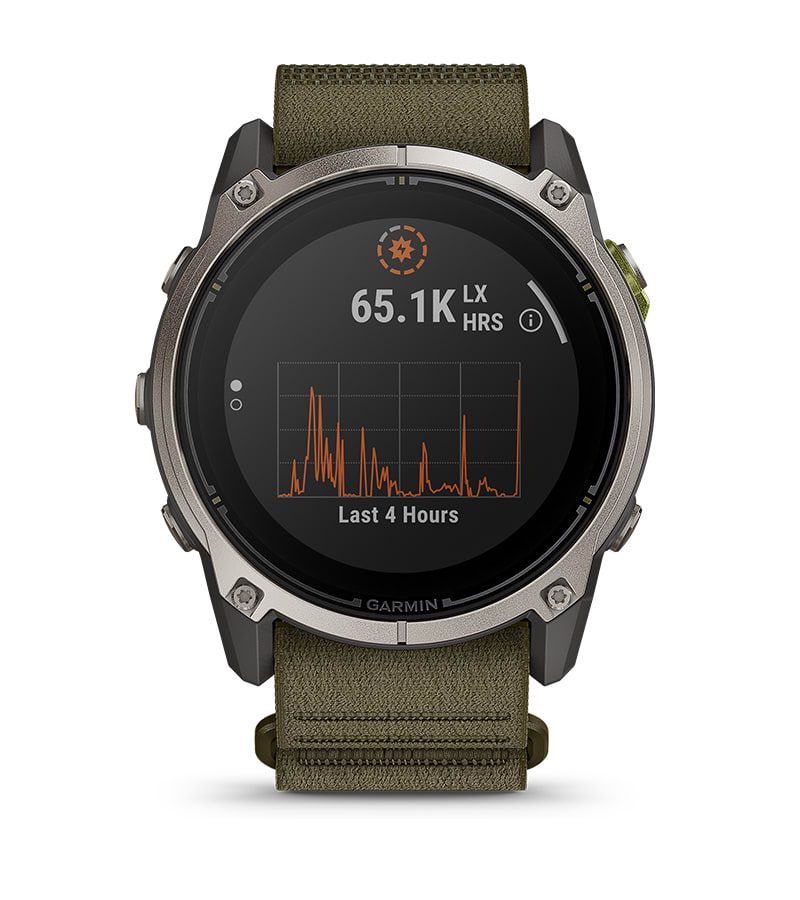
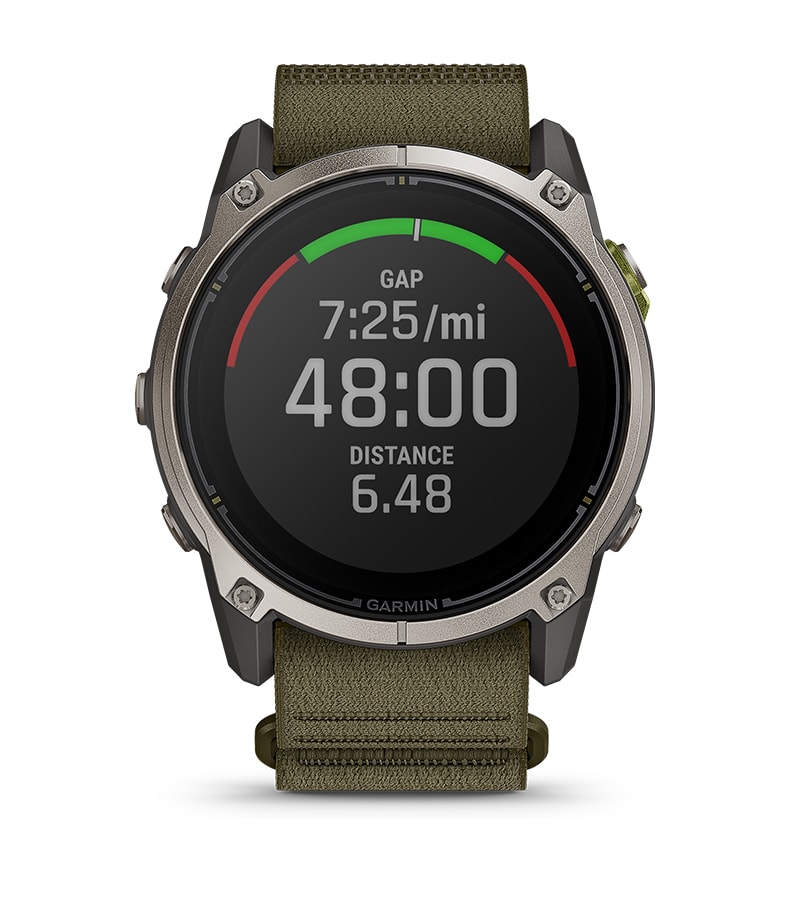
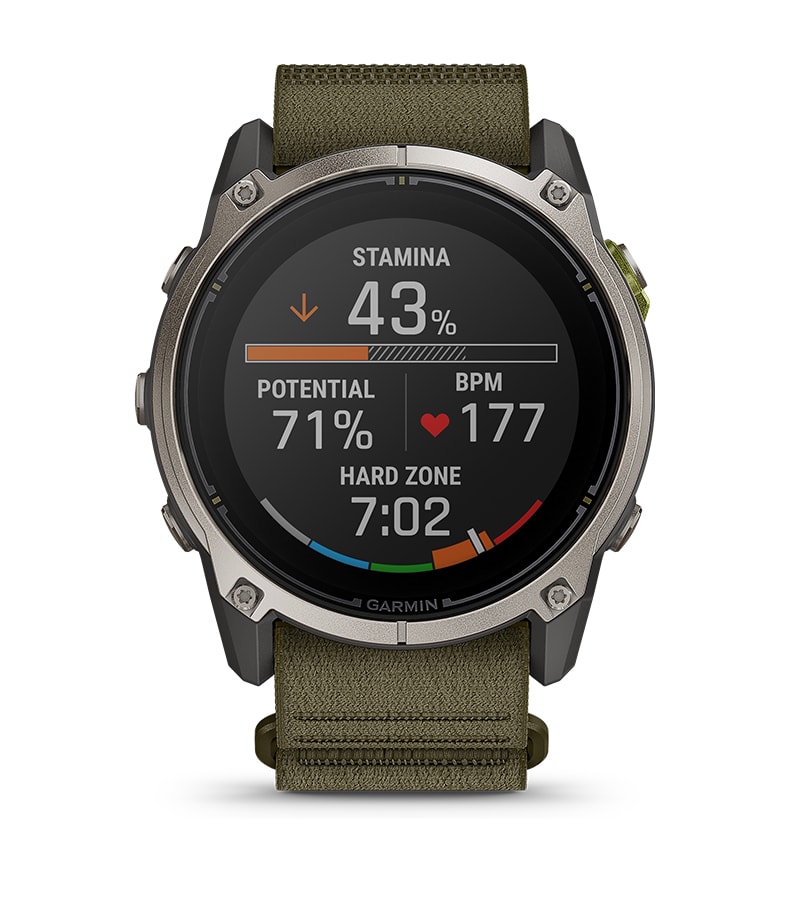
Specifications
- Display
- 1.4-inch (35.56 mm) transflective MIP display, 280x280 pixels, touchscreen, solar charging lens
- Case
- 51 x 51 x 15.7 mm, 66 g (57 g case only); fiber-reinforced polymer case, titanium bezel, Power Sapphire lens
- Battery
- Up to 36 days in smartwatch mode (90 days with solar); up to 120 hours in GPS activity mode with Extended Battery (320 hours with solar); up to 210 hours in Max Battery mode (Garmin claims, solar figures assume 50,000 lux)
- Storage
- 64GB for maps, music and data
- Navigation
- Multi-band GPS with SatIQ technology plus GLONASS, Galileo, QZSS and BeiDou; built-in routable maps, perspective view, ClimbPro and TracBack
- Training
- Grade-adjusted pace targets and rolling pace, stamina zones and stamina curve, Garmin Epic multiday logging, training readiness, endurance score, 100+ activity profiles
- Health
- Wrist-based heart rate, Pulse Ox, ECG app, Body Battery, sleep coach, HRV status, skin temperature
- Features
- Garmin Pay, music storage, white and red LED flashlight, smart notifications, Connect IQ
- Connectivity
- Bluetooth, ANT+, Wi-Fi
- Durability
- 10 ATM water rating
- Straps
- ComfortFit fabric band, QuickFit 26 mm
- OS
- Garmin firmware; pairs with Android and iOS through the Garmin Connect app
The Garmin Enduro 4 is the fourth generation of Garmin's ultra-endurance GPS watch, announced on 6 October 2026 and described by the company as its longest-lasting GPS smartwatch with solar charging. It pairs an energy-efficient 1.4-inch MIP display and a solar lens with a very light 51 mm case, and it adds training tools aimed at trail runners, multiday hikers and people who race for many hours at a stretch. This page is a review based on the published specifications and manufacturer information. It explains where the watch sits in Garmin's range, what the battery claims actually mean, which software features are new and who should look elsewhere.
Where it sits in the lineup
The Enduro line is Garmin's answer to a narrow but loyal audience: ultra runners, long-distance hikers and expedition users who care more about days of autonomy than about a bright, colourful screen. The Enduro 4 is sold at a suggested retail price of $899.99 and was available from the day of its announcement, according to Garmin. It sits alongside the company's broader outdoor flagships, and anyone weighing the two should read the comparison Garmin Enduro 4 vs Garmin fenix 8, because the fenix family offers AMOLED options, a wider choice of sizes and a different set of extras, while the Enduro trades those for stamina and low weight. Runners who mostly race on the road and want a lighter, cheaper watch may prefer the Garmin Forerunner 970, and the Enduro 4 vs Forerunner 970 page shows how far apart the two are on battery and price.
Design, display and materials
The case measures 51 x 51 x 15.7 mm. Garmin gives the weight as 66 g with the band and 57 g for the case alone, and calls it one of the lightest ultraperformance smartwatches on the market, a claim that is worth treating as a marketing statement rather than a measured ranking. The construction mixes a fiber-reinforced polymer case with a titanium bezel and a Power Sapphire lens, a sapphire glass that also lets light through to the solar cells beneath it. The watch is rated to 10 ATM, which covers swimming and most water sports, and it includes an integrated LED flashlight with white and red light for camp chores and night runs.
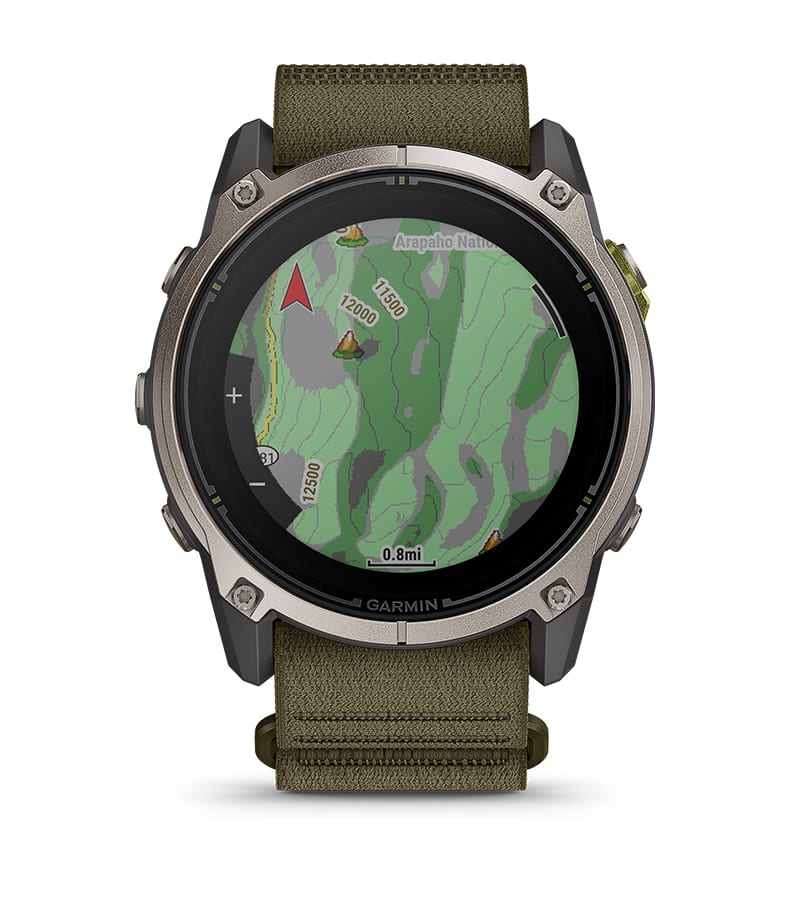
The display is a transflective memory-in-pixel (MIP) panel, 1.4 inches across with 280 x 280 pixels and touch input. MIP screens work differently from the AMOLED panels used on most mainstream watches: they reflect ambient light rather than producing their own, so they are readable in bright sun and consume very little power, but they look flatter in the dark and cannot match the contrast or colour of an OLED. For this kind of watch that is the intended trade, and it is the main reason the battery figures are so high. A new ComfortFit Fabric Band is included; it uses Garmin's QuickFit system with a 26 mm fit, so the straps are swapped without tools, and the Garmin specification lists wrist circumferences from about 127 to 225 mm depending on the band.
Battery: what the claims mean
Garmin states up to 36 days in smartwatch mode without solar and up to 90 days with solar charging. In GPS activity mode the numbers are expressed per power mode. Normal mode gives up to 80 hours, or 144 hours with solar. Max Accuracy runs up to 60 hours, or 90 hours with solar. Extended Battery reaches up to 120 hours, or 320 hours with solar, and Max Battery up to 210 hours, or unlimited with solar. Expedition mode is rated at up to 77 days. Playing music while recording an activity cuts the figure to around 22 hours, or 25 hours with solar.
The fine print matters. Garmin's solar numbers assume 50,000 lux conditions, which is bright outdoor daylight, and the smartwatch-mode figure assumes three hours per day outside. Real results will depend on the weather, on how often the sleeve covers the watch and on whether the user enables features such as always-on displays, multi-band GPS or music. The practical reading is that the Enduro 4 should comfortably last through a multiday race or a week-long trek without a charger, but the headline 320-hour number is a best case that needs sustained sunshine and a power mode that reduces tracking accuracy. The new set of comprehensive power modes lets the wearer choose in advance whether a given effort needs full accuracy or maximum duration.
Training, navigation and software
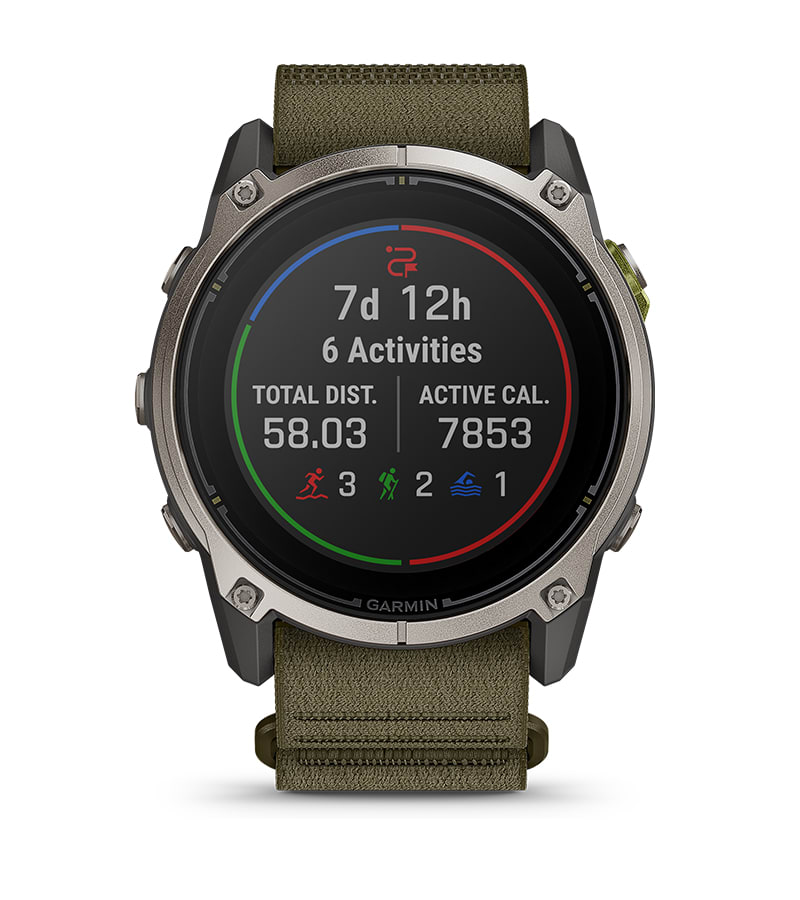
The software introduces several tools that the earlier Enduro models lacked. Grade-adjusted pace-based workout targets help a runner stay inside an effort range on hilly terrain, and grade-adjusted rolling pace shows a live value that accounts for slope. Stamina zones show how a runner's stamina changed during an activity, while the stamina curve tracks how endurance evolves over time based on fitness and training history. Garmin Epic lets several activities be grouped over days, weeks or months into a single story in Garmin Connect, with photos and aggregated health and performance data, which suits stage races and multiday hikes. Indoor rowing gains VO2 max and power curve data when paired with a compatible rower, and rucking now allows pack weight to be adjusted during an activity.
The watch ships with more than 100 activity profiles and the usual Garmin training layer, including training readiness, training status, endurance score, load ratio and race predictors. Navigation uses multi-band GPS with SatIQ technology and several satellite systems, plus built-in routable maps with a perspective view that shows terrain both nearby and further ahead. Garmin says the Enduro 4 has 50 percent more RAM than the Enduro 3 and a more powerful map engine, with panning up to 30 percent faster. Memory is 64 GB, which leaves plenty of space for maps, music and activity history. Connectivity covers Bluetooth, ANT+ and Wi-Fi, and the watch works with both iPhone and Android through the Garmin Connect app.
Health tracking and everyday use
Beyond sport, the watch offers the Garmin health suite: wrist-based heart rate with abnormal-rate alerts, Pulse Ox, an ECG app, respiration, stress, Body Battery, advanced sleep tracking with a sleep coach, HRV status and skin temperature. Garmin Pay, smart notifications, a calendar, weather and Connect IQ apps cover everyday needs, and music can be stored on the watch. Garmin notes that its health features are not medical devices, so readings are best used as trends rather than diagnoses. In daily use the main benefit of this watch is not a feature but a habit: with a battery measured in weeks, the charger can stay at home for most of a season.
Who it is for
The Enduro 4 is aimed at three groups: ultra and trail runners who race beyond a day, multiday hikers or bikepackers who may be away from power for a week or more, and people who simply dislike charging a watch every few days. It also fits users who want a light watch for all-day wear, because the polymer case keeps the weight down even with a 51 mm diameter. For them, the long list of power modes, the large internal storage and the reliable map engine are real advantages, and the new grade-adjusted tools address a common complaint about earlier versions: that pace alone is misleading on steep trails.
Compromises to consider
There are trade-offs. The MIP display is not as vivid as an AMOLED, and it will feel dated next to the screens on phone-like watches such as the Apple Watch Ultra 3. At 51 mm and 15.7 mm thick, the watch is large, and people with small wrists may find it cumbersome even at 66 g. The suggested price of $899.99 is high compared with Garmin's own running watches, and many of the training metrics also exist on cheaper models, so the premium is mainly paying for battery life, solar charging and the rugged build. The longest battery numbers rely on sunny conditions and reduced-accuracy modes. Finally, the watch has no cellular connection or satellite messaging, so safety-minded adventurers who need those functions will have to look at other devices.
Bottom line
Based on the published information, the Garmin Enduro 4 is a focused, specialist tool. If the priority is autonomy over a bright screen, and the price is acceptable, it offers one of the strongest endurance claims in the category, backed by a mature training and mapping platform. If a day or two of battery is enough and a vivid display matters more, a general-purpose sports watch will be cheaper and more pleasant to look at. Check the rankings on the smartwatch rankings page to see how it compares across the full range.
Where it ranks
Compare Garmin Enduro 4 with similar devices
More from Garmin
Frequently asked questions
When was the Garmin Enduro 4 released?
The Garmin Enduro 4 was released on 2026-10-06, according to the manufacturer’s published information.
How much does the Garmin Enduro 4 cost?
The estimated range for the Garmin Enduro 4 is $810 to $990 in US dollars, based on the launch list price. Actual prices vary by country, retailer and storage option.
What are the main specs of the Garmin Enduro 4?
Headline figures for the Garmin Enduro 4: Battery life: 36 days. The full specification table is further up this page.
Is the Garmin Enduro 4 worth buying?
That depends on your priorities. Use the editorial review on this page for our view, check the rankings above to see where the device stands on battery, display and camera, and compare it directly with similar models before you decide.