Smartwatches
Amazfit Helio Strap
Amazfit's first screenless tracker: a $99.99 arm or wrist strap for continuous heart rate, sleep and recovery data, up to 10 days per charge and no required subscription.
Key figures at a glance
Gallery

Specifications
- Type
- Screenless fitness, sleep and recovery tracker worn on the upper arm or wrist, no display
- Display
- None (screenless, all data is read in the Zepp App)
- Sensors
- BioTracker 6.0 PPG optical heart-rate sensor (5PD + 2LED), accelerometer, gyroscope, temperature sensor
- Battery
- Up to 10 days typical use, 232 mAh (rated), magnetic charging head
- Water Resistance
- 5 ATM
- Connectivity
- Bluetooth 5.2 (BLE)
- Dimensions
- 33.97 x 24.3 x 10.59 mm (without sensor)
- Weight
- 20 g
- Body Material
- Fiber-reinforced polymer
- Strap
- 22 mm nylon strap with hook-and-loop fastening, fits 145-205 mm
- Sports Modes
- 50+ sports modes via the Zepp App, 25 recognised strength movements, HYROX race mode
- Health Tracking
- Continuous heart rate (per second), blood-oxygen, stress, sleep stages including REM, naps, sleep breathing quality, sleep score, BioCharge energy score, PAI, heart-rate recovery
- Heart-Rate Broadcast
- Real-time heart rate over Bluetooth to compatible watches, bike computers, gym equipment and apps; offline heart-rate storage up to 21 days
- Compatibility
- Android 7.0 and above, iOS 15.0 and above, via the Zepp App
- In the Box
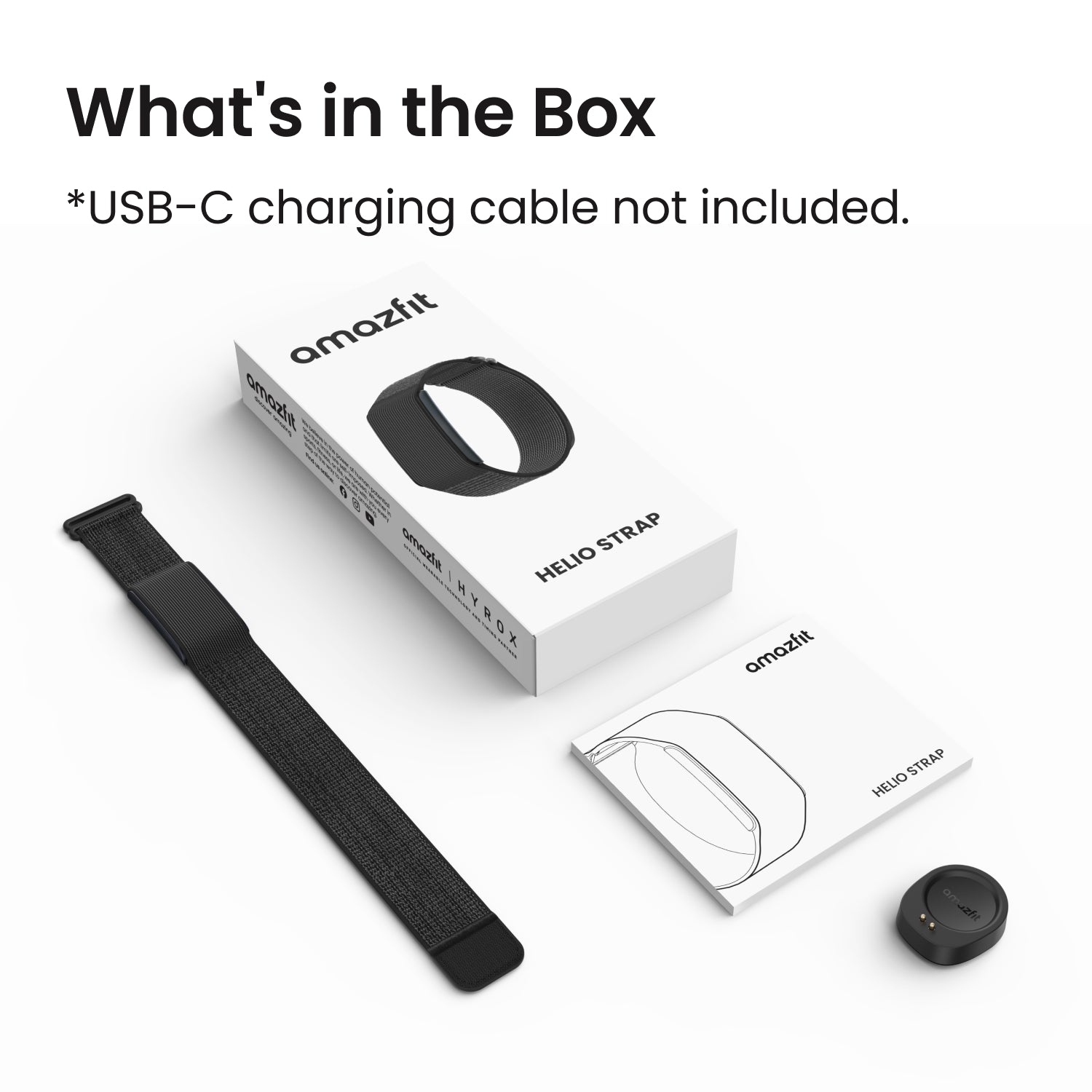
- Helio Strap with assembled strap, magnetic charging head (no cable), instruction manual
- Subscription
- No required monthly subscription
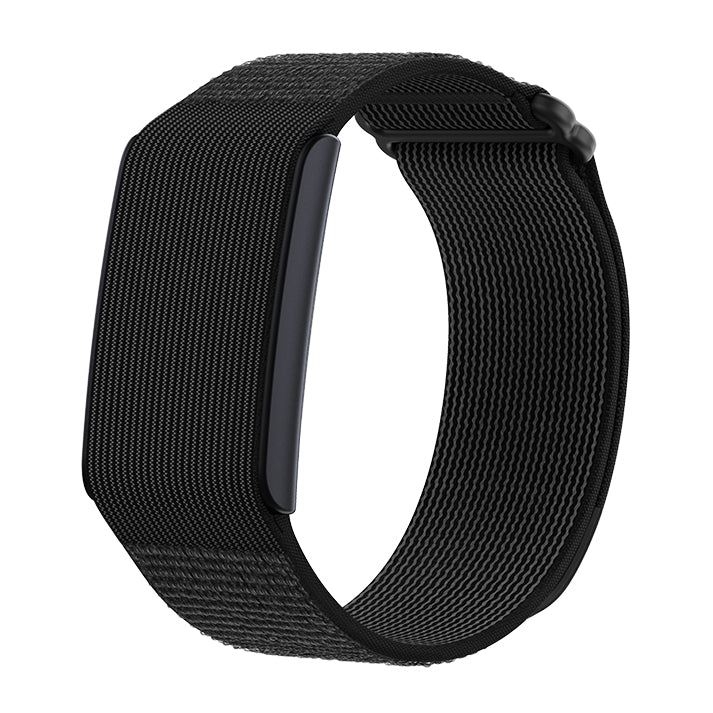
The Amazfit Helio Strap is a wearable with nothing to look at. There is no display, no notification buzz worth the name and no app store. It is a small sensor pod stitched into a nylon band, and its whole job is to collect heart-rate, sleep and recovery data and hand it to the Zepp App on your phone. Amazfit introduced it on 24 June 2025 alongside the Balance 2 smartwatch, calling it its first screen-free fitness, recovery and sleep tracker, and listing it at $99.99 in the United States. This review is based on the published specifications and the manufacturer's own information, and it tries to answer a simple question: who actually benefits from a tracker that cannot even tell you the time?
Where it sits in the lineup
Amazfit sells watches, bands and a ring, and the Helio Strap slots in beside the Helio Ring as the second "no screen" product. It is not a cheaper smartwatch and should not be judged as one. The closest relatives are the Amazfit Helio Strap Pro, which is a different idea in several ways, and the screenless bands from competitors that focus on recovery scoring. The Pro is a two-sensor system: an arm-worn heart-rate sensor plus a separate waist-worn motion sensor, sold at $199.99. The standard Helio Strap is a single sensor, a single band and half the price. If you want the second motion sensor for movement-heavy training, the Pro exists; if you want a simple, comfortable heart-rate and sleep logger, this is the one to read about.
Amazfit also positions it as a partner for its smartwatches. Pair it with a watch such as the Amazfit Balance 2 and the company says the combined data improves heart-rate accuracy, fatigue assessment and recovery analysis. Equally, it works on its own with just a phone.
Design and comfort
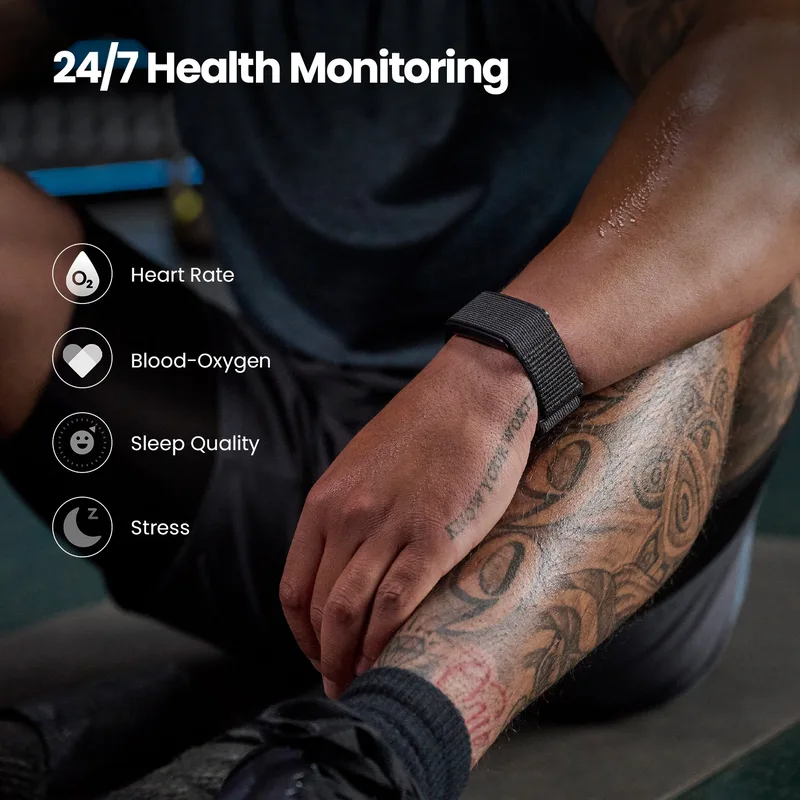
The physical design is the main selling point. According to Amazfit's specification page, the sensor body measures 33.97 x 24.3 x 10.59 mm without the sensor window and weighs 20 g in total with the strap. The case is fiber-reinforced polymer and the strap is a 22 mm nylon loop with hook-and-loop fastening, rated to fit wrists from 145 to 205 mm. The generous range matters because the product is meant to be worn in two places: on the wrist like a normal band for all-day and sleep tracking, or higher on the upper arm during training. Amazfit's FAQ explicitly describes the upper arm as the place that gives more stable optical readings while the wrist is flexing, gripping or sweating.
With no screen to protect, the water rating of 5 ATM is easy to accept. Amazfit says that is suitable for sweating, showering and shallow-water swimming, and not for diving or high-pressure water activities. Only one colour, black, is listed. The charging solution is a small magnetic round dock with a USB-C socket; the cable is not included, which is a minor annoyance for anyone without a spare one in a drawer.
Sensors and what it tracks
Inside is Amazfit's BioTracker 6.0 PPG optical sensor with five photodiodes and two LEDs, plus an accelerometer, a gyroscope and a temperature sensor. Bluetooth 5.2 (BLE) handles the connection. Amazfit lists continuous heart-rate tracking at one reading per second, blood-oxygen saturation and stress levels for round-the-clock monitoring. Sleep tracking covers sleep-time heart-rate variability, sleep stages including REM, daytime naps, a schedule view, breathing quality and an overall sleep score. The sleep breathing feature has to be switched on in the app, and Amazfit is explicit that neither the strap nor the Zepp App is a medical device.
One new feature is BioCharge, a daily energy score that combines sleep, naps, exertion and stress into a single figure for how much capacity you have left. Amazfit presents it as a way to balance effort and recovery. It is a proprietary index, so treat it as a trend line rather than a clinical measurement. The page also lists PAI, a health assessment system based on heart-rate activity, and a heart-rate recovery measurement after workouts.
Training and workout features
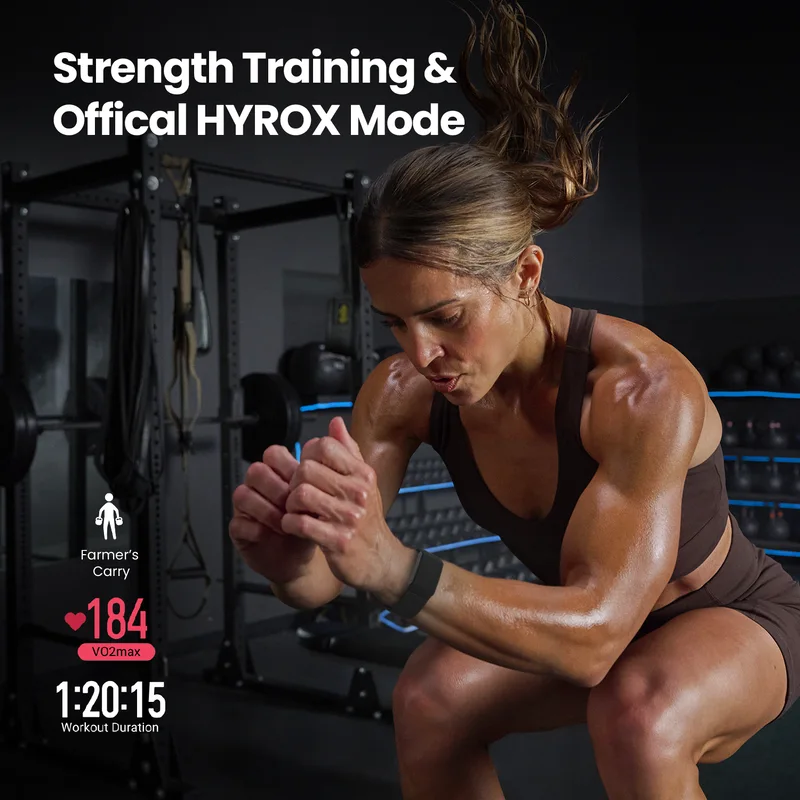
The launch press release spoke of 27 workout modes, while the current product page says 50+ sports modes, so the list has clearly grown since 2025. They are started and reviewed through the Zepp App: running, walking, cycling, rowing, elliptical, HIIT, yoga, a long list of ball and combat sports, pool swimming, jump rope and an official HYROX race mode. Amazfit says the strap can recognise 25 strength-training movements inside the strength mode, and tracks reps, sets and rest periods. Those exercises include squats, bench press, deadlifts, rows and lateral raises, so lifters get the most from the device.
Because there is no screen, you cannot check your pace or heart rate during a session on the strap itself. The sensible way to use it is as a heart-rate source. It broadcasts real-time heart rate over Bluetooth to compatible Amazfit watches, third-party smartwatches, treadmills, bike computers and training apps. When no phone is nearby, it stores heart-rate data and Amazfit gives the offline capacity as up to 21 days. Workout data can be pushed from Zepp to Strava, adidas Running, TrainingPeaks (via Terra), komoot, Relive, Google Fit and Apple Health. Amazfit also uses the term PeakBeats for a workout-status readout.
Battery and charging
The 232 mAh rated battery lasts up to 10 days in Amazfit's typical-use scenario, which assumes all-day wear, always-on heart-rate and blood-oxygen measurement, eight hours of breathing-quality monitoring, stress monitoring and three one-hour workouts a week with phone GPS. That is a manufacturer lab scenario, and heavy use will shorten it. Even so, ten days is a useful number for a sleep tracker, since people tend to abandon wearables that need charging every night. Charging uses the magnetic dock; Amazfit does not publish a charging time on the page.
Who it is for
The strap makes the most sense in three situations. The first is the person who already owns a watch and wants a better heart-rate signal during lifting, rowing or HIIT, where wrist sensors often struggle. The second is the person who dislikes sleeping with a watch on and would prefer a light band that disappears on the arm. The third is the buyer who wants health data but does not want notifications, a glowing screen or a subscription: Amazfit states that the strap needs no required monthly subscription, which sets it apart from some screenless rivals.
It is a weaker choice for anyone who wants real-time stats on the wrist, GPS pace or contactless payment. For that, look at a proper smartwatch such as the Amazfit Active Max, or compare the strap with its sibling directly in our Helio Strap versus Helio Strap Pro comparison. You can also see where it lands in the rankings.
Compromises to keep in mind
- No screen at all. You cannot see the time, live heart rate or battery level on the device; everything goes through the phone app.
- Optical sensor limits. An optical heart-rate sensor on the arm is convenient, but Amazfit itself describes it as a comfortable alternative to a chest strap "for most athletes", not a guaranteed replacement in every sport.
- No charging cable in the box, only the magnetic dock.
- Single colour and one strap type, with no mention of alternative bands on the specification page.
- Proprietary scores. BioCharge and PAI are Amazfit's own calculations and cannot be compared across brands.
- Lighter motion tracking than the Pro. There is no separate waist sensor.
Bottom line
The Helio Strap is a focused, inexpensive tool: it trades the screen for comfort, a ten-day battery and a subscription-free app. Judged on the published numbers, it is a sound pick for strength athletes and light sleepers who already have a phone and, ideally, a watch. If you want one device that does everything, buy a watch; if you want a quiet data collector that rides on your arm, this is a clear and honest product.
Where it ranks
Compare Amazfit Helio Strap with similar devices
More from Amazfit
Frequently asked questions
When was the Amazfit Helio Strap released?
The Amazfit Helio Strap was released on 2025-06-24, according to the manufacturer’s published information.
How much does the Amazfit Helio Strap cost?
The estimated range for the Amazfit Helio Strap is $90 to $110 in US dollars, based on the launch list price. Actual prices vary by country, retailer and storage option.
What are the main specs of the Amazfit Helio Strap?
Headline figures for the Amazfit Helio Strap: Battery life: 10 days. The full specification table is further up this page.
Is the Amazfit Helio Strap worth buying?
That depends on your priorities. Use the editorial review on this page for our view, check the rankings above to see where the device stands on battery, display and camera, and compare it directly with similar models before you decide.