Phones
realme GT 7
realme's performance phone pairs a Dimensity 9400e and a 6.78-inch 120Hz screen with a 7,000 mAh battery, 120W charging and a three-camera back.
Key figures at a glance
Gallery
Specifications
- Display
- 6.78" 8T LTPO, 2780x1264 (1.5K), up to 120Hz, 6000 nits peak (claimed), 2600Hz instantaneous touch sampling, 2160Hz PWM dimming, Dolby Vision, HDR10+
- Chipset
- MediaTek Dimensity 9400e (4nm, up to 3.4GHz), Arm Immortalis-G720
- RAM
- 16GB
- Storage
- 256GB / 512GB
- Rear Camera
- 50MP main (Sony IMX906, 1/1.56", f/1.8, OIS) + 50MP 2X camera (Samsung S5KJN5, f/2.0) + 8MP ultrawide (f/2.2)
- Front Camera
- 32MP (Sony IMX615, f/2.4)
- Battery
- 7,000 mAh typical (6,850 mAh minimum), 120W wired charging
- OS
- Android 15, realme UI 6.0
- Dimensions
- 162.42 x 76.13 x 8.30 mm
- Weight
- Approx. 206 g
- Durability
- IP69, ArmorShell glass
- Connectivity
- Wi-Fi 7, Bluetooth 5.4, NFC, dual nano-SIM
- Colours
- IceSense Blue, IceSense Black, Aston Martin Green
The realme GT 7 is the performance-first phone of realme's 2025 GT line: a 6.78-inch 1.5K screen rated by the maker at 6,000 nits peak, a MediaTek Dimensity 9400e chip, a 7,000 mAh battery with 120W charging and a three-camera back that includes a 50MP "2X" sensor. This page is a specification-and-information review based on what realme publishes on its own product and specification pages. It explains where the phone sits in the range, what the hardware actually contains, which claims are the manufacturer's own, and which compromises come with the package.
Where the GT 7 sits in the lineup
realme presented the GT 7 at a global launch event in Paris on 27 May 2025, alongside a cheaper sibling, the realme GT 7T. The pairing follows a familiar pattern for the brand. The standard model gets the stronger chip, the more capable camera set and the extra-large memory option, while the "T" model trims the processor and the camera hardware to hit a lower price. Above both sits the earlier realme GT 7 Pro, which belongs to the Snapdragon-based flagship tier, and the later realme GT 8 Pro continues that upper line. The plain GT 7 is therefore best read as the "sensible performance" option: close to flagship behaviour in games and daily use, but without the very top-end silicon.
If you want to see how it stacks up against its more expensive relative, the side-by-side page realme GT 7 vs realme GT 7 Pro lists both spec sheets next to each other.
Design, build and display
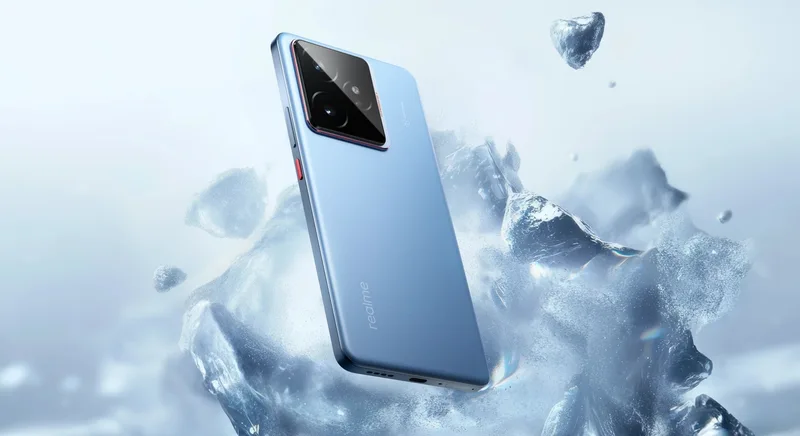
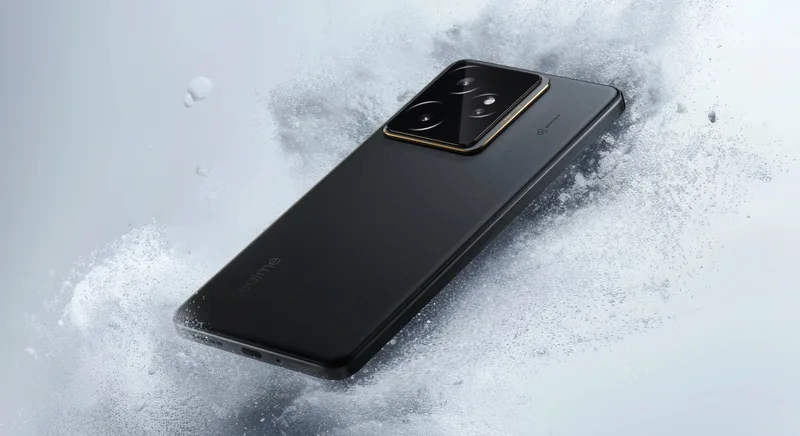
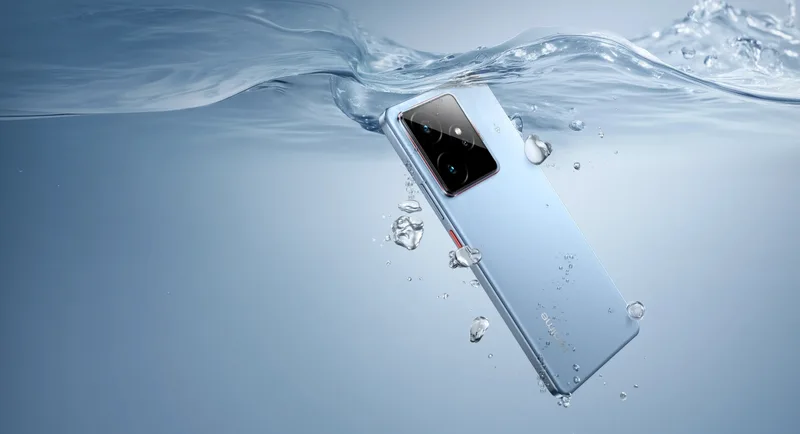
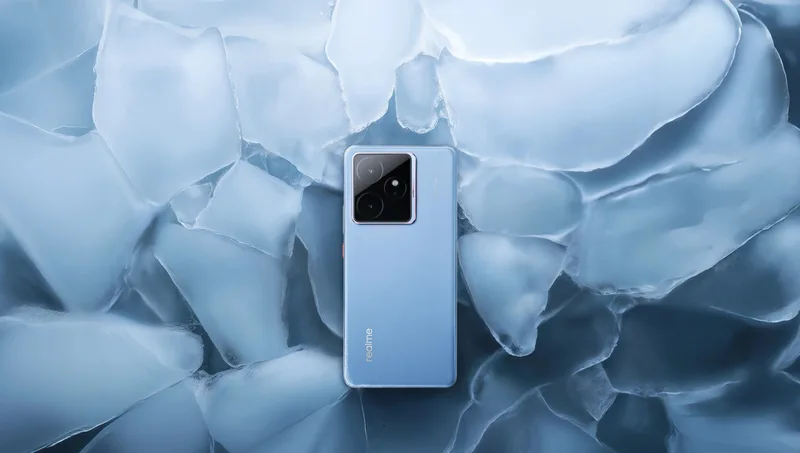
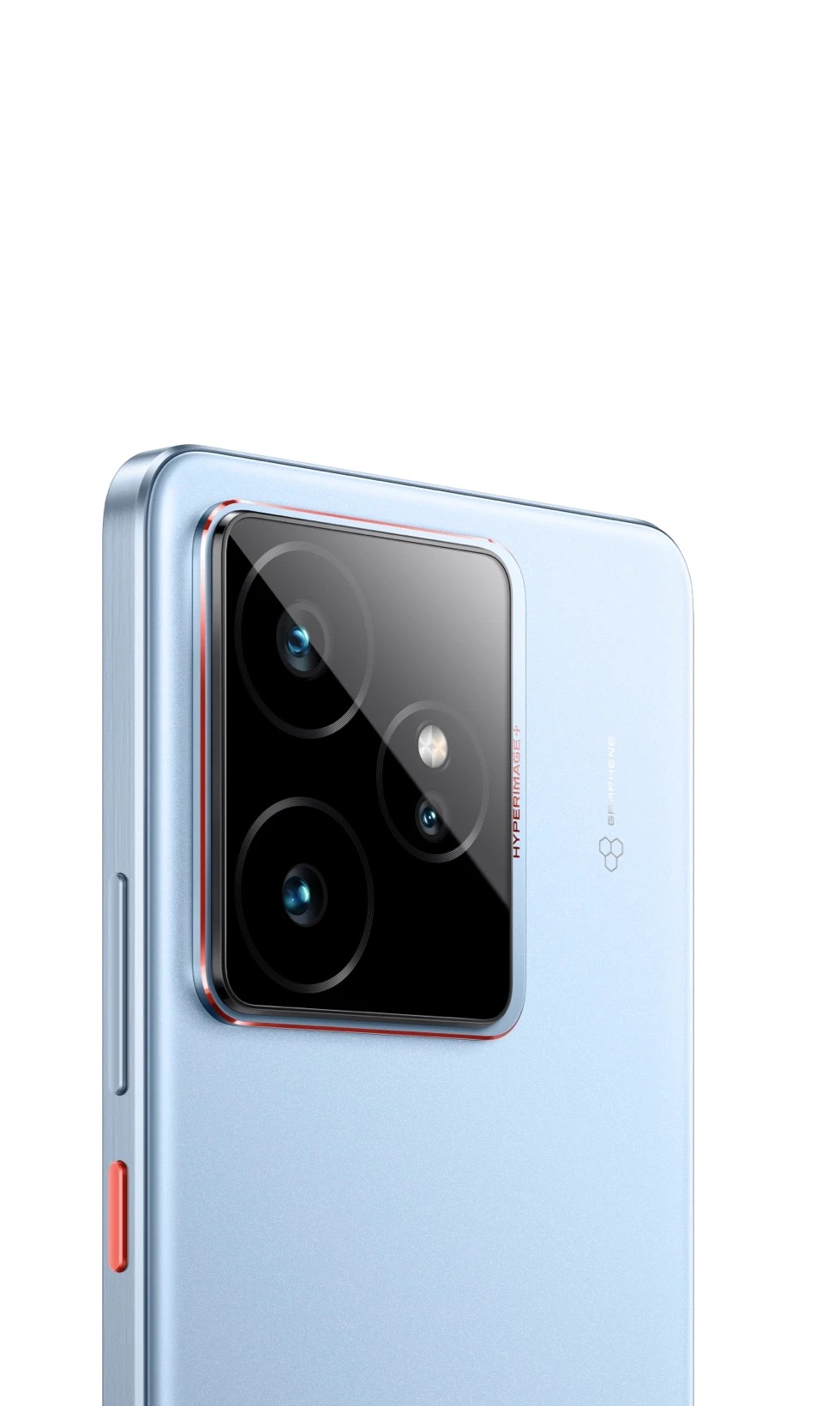
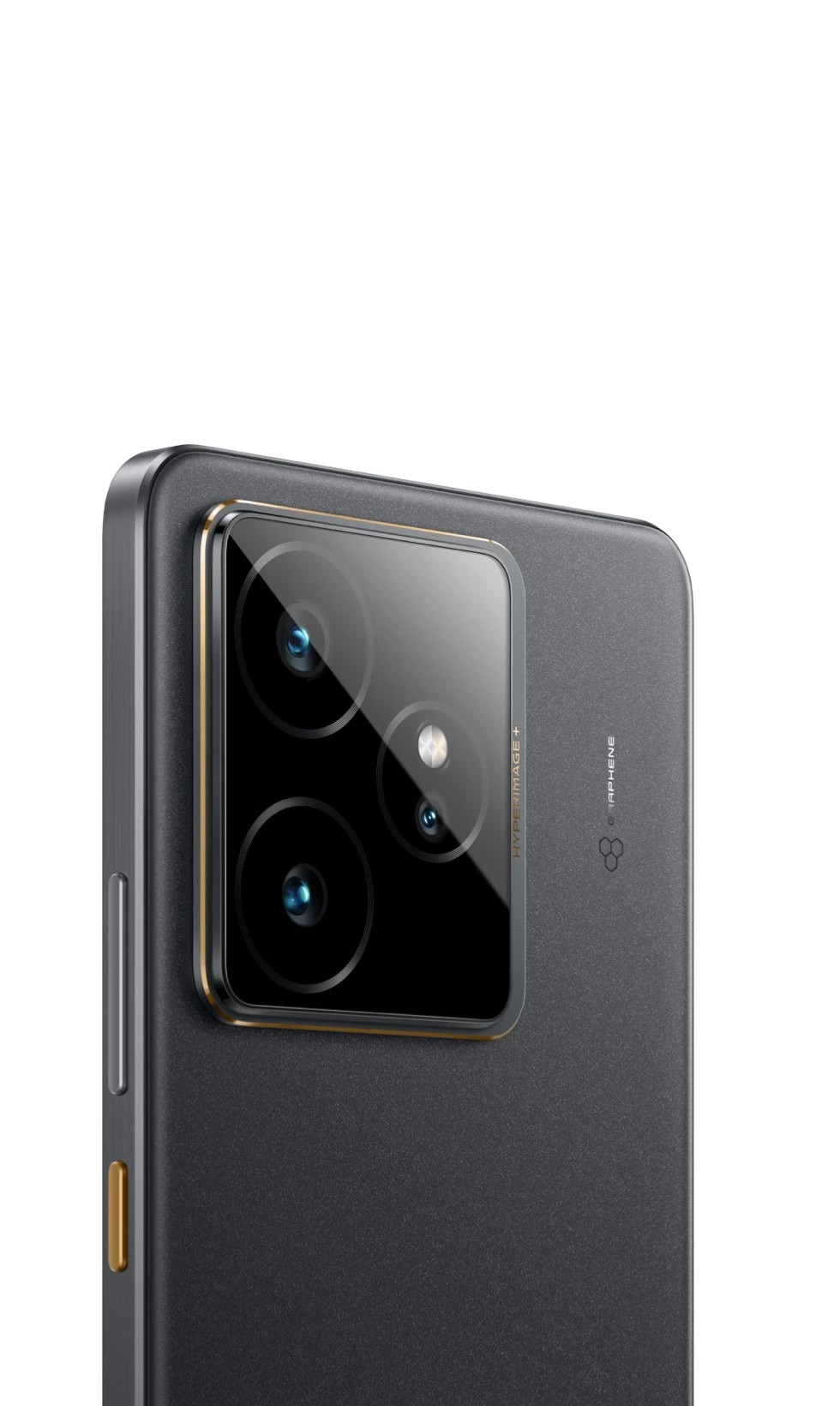
The body measures 162.42 x 76.13 x 8.30 mm and weighs about 206 g according to realme's own measurements, which makes it a large but not unusual phone for a 7,000 mAh battery. A Dream Edition variant is thicker at 8.73 mm and heavier at about 211 g. realme sells the standard phone in IceSense Blue and IceSense Black, and its specification page also lists an Aston Martin Green finish. The back carries a square camera block with a thin coloured trim, and the maker highlights an "IceSense Graphene" back cover that is part of its cooling story. The frame is protected against dust and water to IP69, and the company claims the glass, which it calls ArmorShell, survives drops from 1.5 metres in its own laboratory testing. Those are manufacturer claims, not independent results.
The display is a 6.78-inch panel with a 2780 x 1264 resolution, described as 1.5K, and a refresh rate of up to 120 Hz. realme quotes a peak brightness of 6,000 nits, a 5,000,000:1 contrast ratio, 100 percent P3 colour coverage, a screen-to-body ratio of 93.9 percent and a touch sampling rate of up to 360 Hz, with an instantaneous figure of up to 2,600 Hz for gaming. The company also lists 2,160 Hz PWM dimming, Dolby Vision and HDR10+ support and an LTPO panel type. The 6,000-nit number is a local peak under special conditions, so everyday outdoor readability will be lower, but the combination of a high peak, high-frequency dimming and adaptive refresh is on paper a strong screen for the price tier.
Performance, memory and software
The processor is the MediaTek Dimensity 9400e, built on a 4 nm process with an octa-core layout that tops out at 3.4 GHz and an Arm Immortalis-G720 graphics unit. realme says it co-engineered the part with MediaTek, and the "e" in the name marks it as a model below MediaTek's top-tier numbering. Memory comes as 8 GB or 12 GB with 256 GB or 512 GB of storage, and the Dream Edition pairs 16 GB of RAM with 512 GB. The page also mentions up to 12 GB of "dynamic RAM", which borrows storage space as virtual memory and is not the same thing as physical RAM, so the plain figure to compare is 16 GB at the top and 8 GB at the bottom.
Cooling gets a lot of attention in the marketing. realme describes a 360-degree cooling setup with a large vapour chamber and the graphene back cover, aimed at long gaming sessions. The company also lists a SignalCatcher chip that is meant to hold a stable connection in weak-signal areas. The software is realme UI 6.0 on top of Android 15 on the specification page, with a set of AI features that realme groups under its NEXT AI label, including a travel-oriented camera mode. The phone has dual nano-SIM slots, Wi-Fi 7 (802.11be), Bluetooth 5.4, NFC, LDAC and LHDC 5.0 audio support, dual-band GPS and several other satellite systems, plus Hi-Res audio certification.
Camera system
The main camera is a 50MP Sony IMX906 sensor, 1/1.56 inch, with an f/1.8 lens and optical stabilisation, capable of 8K video at 30 fps and 4K at up to 120 fps, with 4K Dolby Vision recording listed too. Next to it sits a 50MP Samsung S5KJN5 sensor that realme calls the "2X camera", a 1/2.8-inch unit with an f/2.0 lens that provides a mild optical-quality zoom step for portraits and street scenes. The third camera is an 8MP ultrawide with an f/2.2 lens. The front camera is a 32MP Sony IMX615 behind an f/2.4 lens, recording 4K at 60 fps.
This is a more complete rear set than the two-camera layout on the GT 7T, and the dedicated 2X lens is probably the most practical difference between the two. It is not a long telephoto, and the ultrawide is a modest 8MP part, so anyone who shoots a lot of wide or low-light scenes should treat the main sensor as the star. Image quality, tuning and video stability cannot be judged from a specification sheet alone, and independent camera tests are the right place to check them.
Battery and charging
The headline is the 7,000 mAh battery. realme specifies that as a typical value, with a minimum rated capacity of 6,850 mAh, and the phone uses what the company calls a Titan cell design made of two 3,500 mAh cells. It also mentions a long-life battery chip with 99.5 percent energy conversion efficiency. Charging runs at 120W with a charger in the box, and realme's laboratory figures are 0 to 50 percent in about 14 minutes and 0 to 100 percent in about 40 minutes. Wireless charging is not listed on the specification page. For a phone of this size, a battery above 6,500 mAh is rare enough that it is a real selling point, and the cost is the 206 g weight.
Who the GT 7 is for
- Mobile gamers who want a high-refresh screen, strong sustained cooling and a big battery without paying for a top-tier flagship.
- Heavy daily users who value endurance and very fast charging more than a premium finish.
- People who want a 16 GB phone, since the Dream Edition is one of the larger memory configurations in its class.
- Buyers who want one step more camera than the T model, thanks to the extra 2X sensor.
Compromises to weigh
The phone is not the lightest option, and the 8.30 mm thickness reflects the large cell. The ultrawide camera is only 8MP, there is no real telephoto, and wireless charging is not mentioned. The Dimensity 9400e is a step below the top Dimensity and Snapdragon parts, so benchmark-focused buyers may prefer the Pro line. The 6,000-nit figure and the cooling claims come from realme's own laboratory, and the global spec list varies by market, so storage and RAM options, colours and the charger in the box can differ from region to region. Always check the local listing before buying.
Bottom line
On paper the realme GT 7 delivers a strong performance package: a fast 120 Hz 1.5K screen, a near-flagship chip, a very large battery with 120W charging and a more flexible three-camera back than its T sibling. The trade-offs are weight, a modest ultrawide and the absence of wireless charging. For a wider view of where it lands among its rivals, see the phone rankings.
Where it ranks
Compare realme GT 7 with similar devices
More from realme
Frequently asked questions
When was the realme GT 7 released?
The realme GT 7 was released on 2025-05-27, according to the manufacturer’s published information.
What are the main specs of the realme GT 7?
Headline figures for the realme GT 7: Battery: 7,000 mAh, Refresh rate: 600 Hz, Main camera: 50 MP, RAM: 16 GB. The full specification table is further up this page.
Is the realme GT 7 worth buying?
That depends on your priorities. Use the editorial review on this page for our view, check the rankings above to see where the device stands on battery, display and camera, and compare it directly with similar models before you decide.


