Phones
Nothing Phone (3)
Nothing's first true flagship swaps LED strips for a rear Glyph Matrix and adds a Snapdragon 8s Gen 4, three 50MP cameras with a 3x periscope, and seven years of security updates.
Key figures at a glance
Gallery
Specifications
- Display
- 6.67" flexible AMOLED, 1260x2800, adaptive 120Hz, 4500 nits peak
- Chipset
- Snapdragon 8s Gen 4 (4nm)
- RAM
- 16GB
- Storage
- 256GB / 512GB
- Rear Camera
- 50MP main + 50MP ultrawide + 50MP periscope telephoto 3x
- Front Camera
- 50MP
- Battery
- 5,150 mAh, 65W wired, 15W wireless
- OS
- Android 15, Nothing OS 3.5
- Dimensions
- 160.6 x 75.59 x 8.99 mm, 218 g
- Water resistance
- IP68
- Rear display
- Glyph Matrix
The Nothing Phone (3) is the London-based brand's first true flagship, and the phone Nothing uses to argue that a small company can compete on design and software against the largest names. It trades the glowing LED strips of earlier models for a rear dot-matrix display called the Glyph Matrix, adds a Snapdragon 8s Gen 4 chipset, a 6.67-inch OLED panel with a very high peak brightness, three 50-megapixel rear cameras including a 3x periscope telephoto, and a promise of long software support. This page goes through the published specifications and manufacturer information, explains where the phone sits in Nothing's range, and describes the trade-offs. It is a specification-based overview, not a hands-on test.
Where it sits in the lineup
Nothing's earlier numbered phones, the Phone (1) and Phone (2), were priced below the established flagships, and the brand's "a" models, such as the Nothing Phone (3a), are the lower-priced line. The Phone (3) is a deliberate move upward. Nothing announced it on 1 July 2025 and it went on sale on 15 July 2025, at 799 US dollars for the base version in the United States and 699 pounds in the UK. That price puts it directly against the entry-level models of Apple, Samsung and Google, and a side-by-side with Google's Pixel 10 is available on the Nothing Phone (3) vs Pixel 10 page. For a comparison against Samsung's compact flagship, see Nothing Phone (3) vs Galaxy S25.
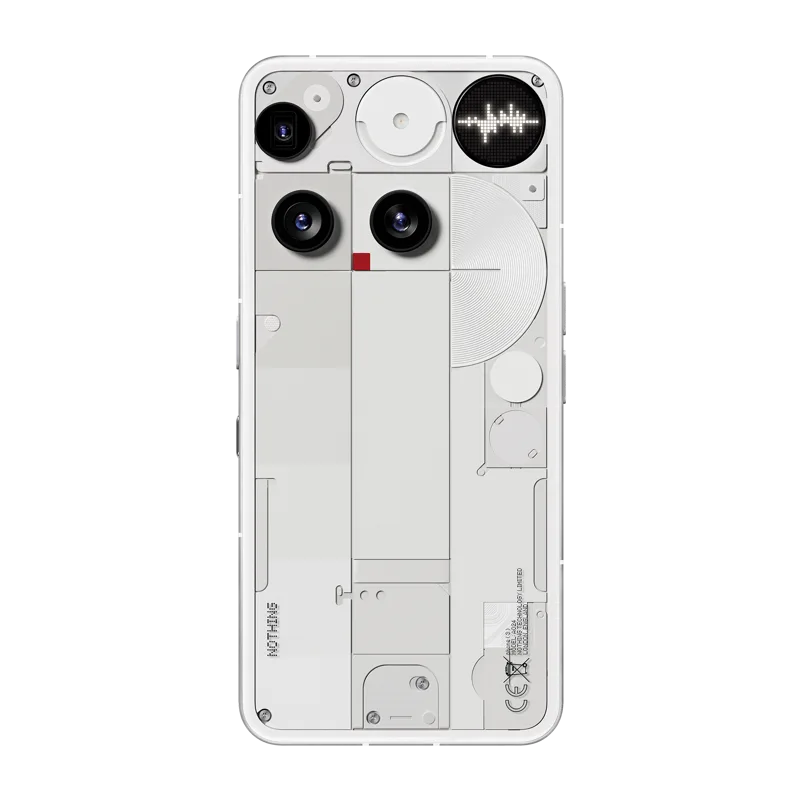
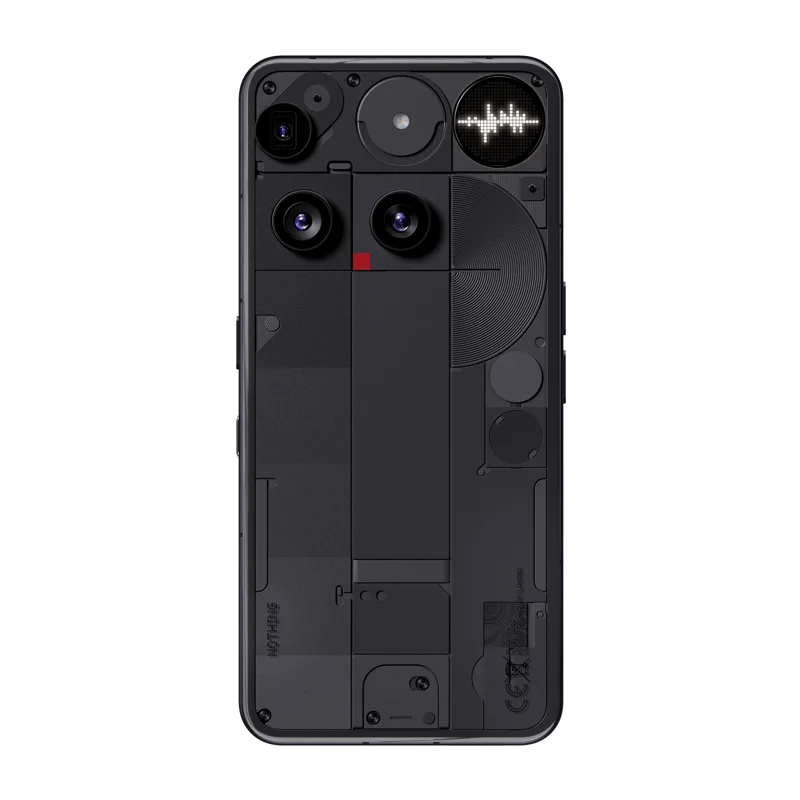
The phone is sold in white and black. Memory options are 12GB of RAM with 256GB of storage, or 16GB with 512GB; the RAM is LPDDR5X and the storage is UFS 4.0.
Design and the Glyph Matrix
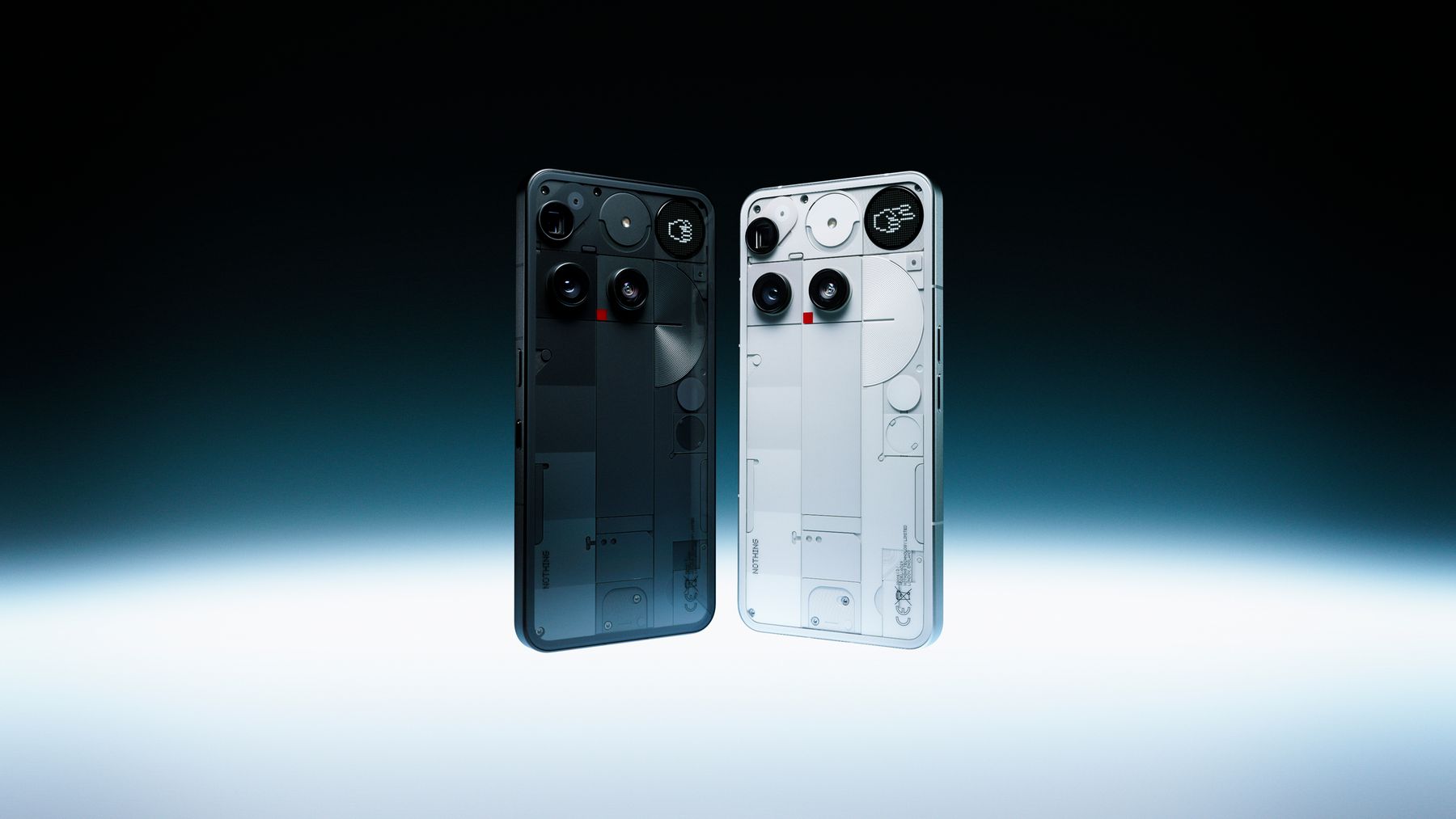
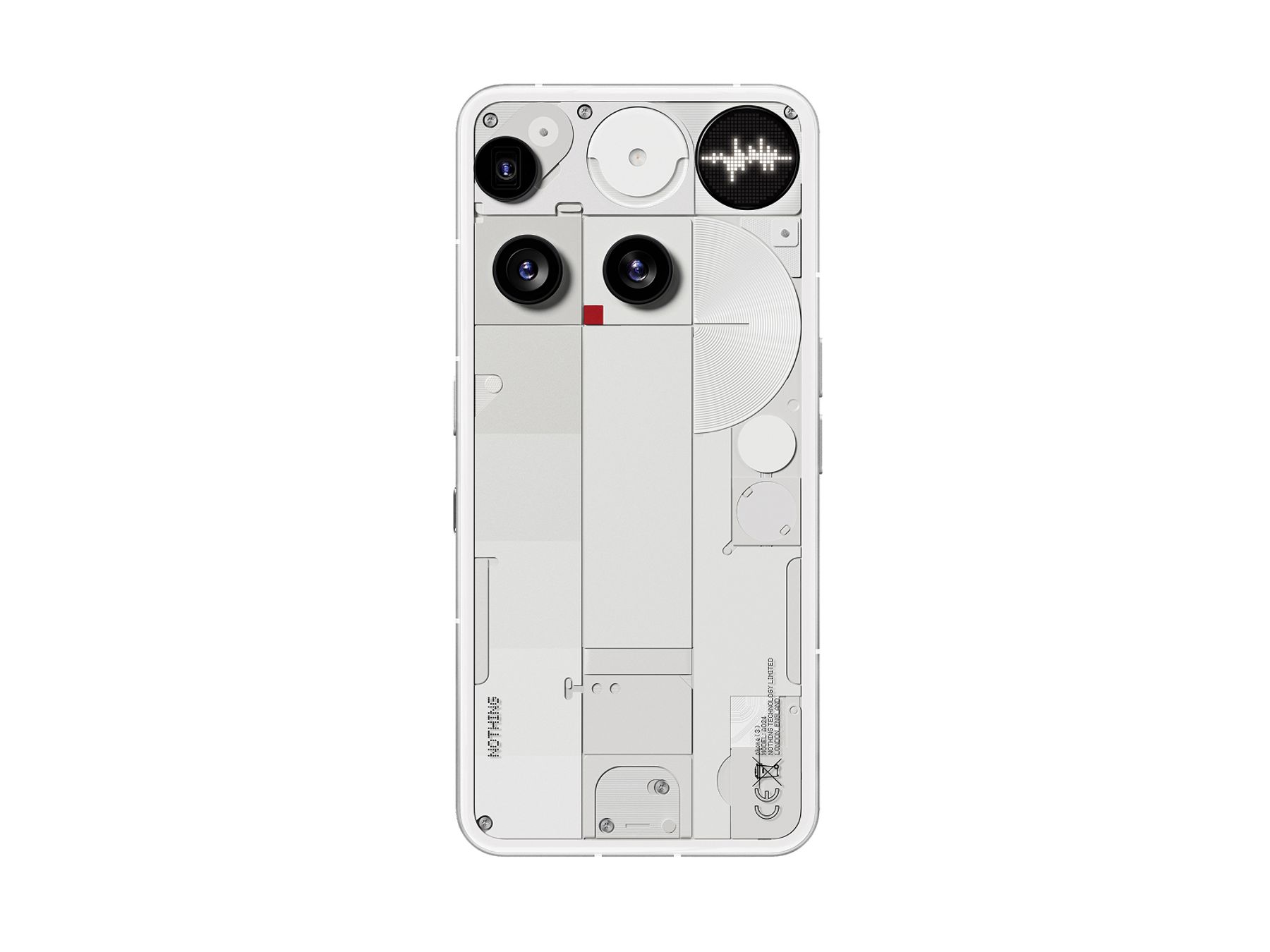
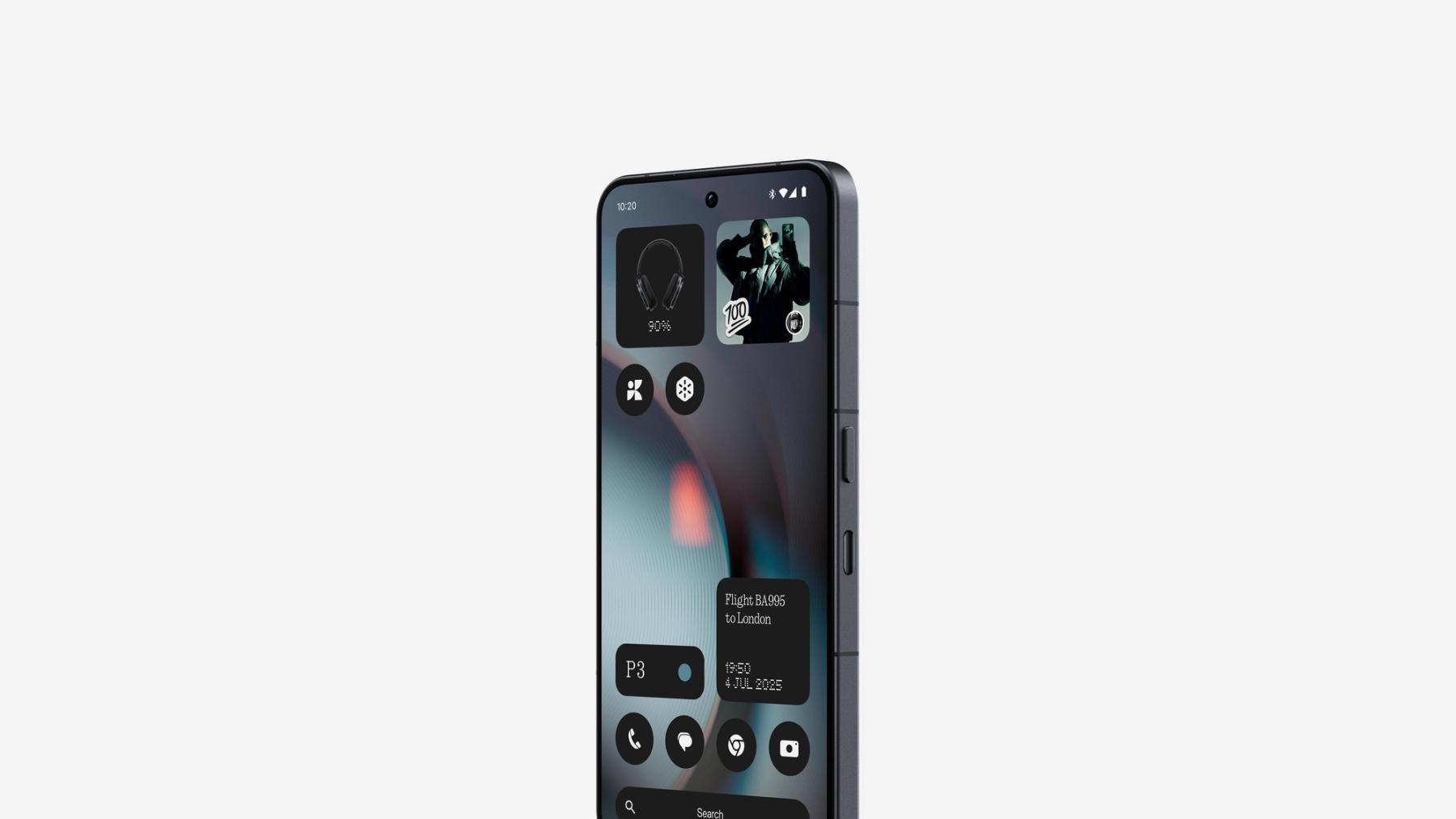
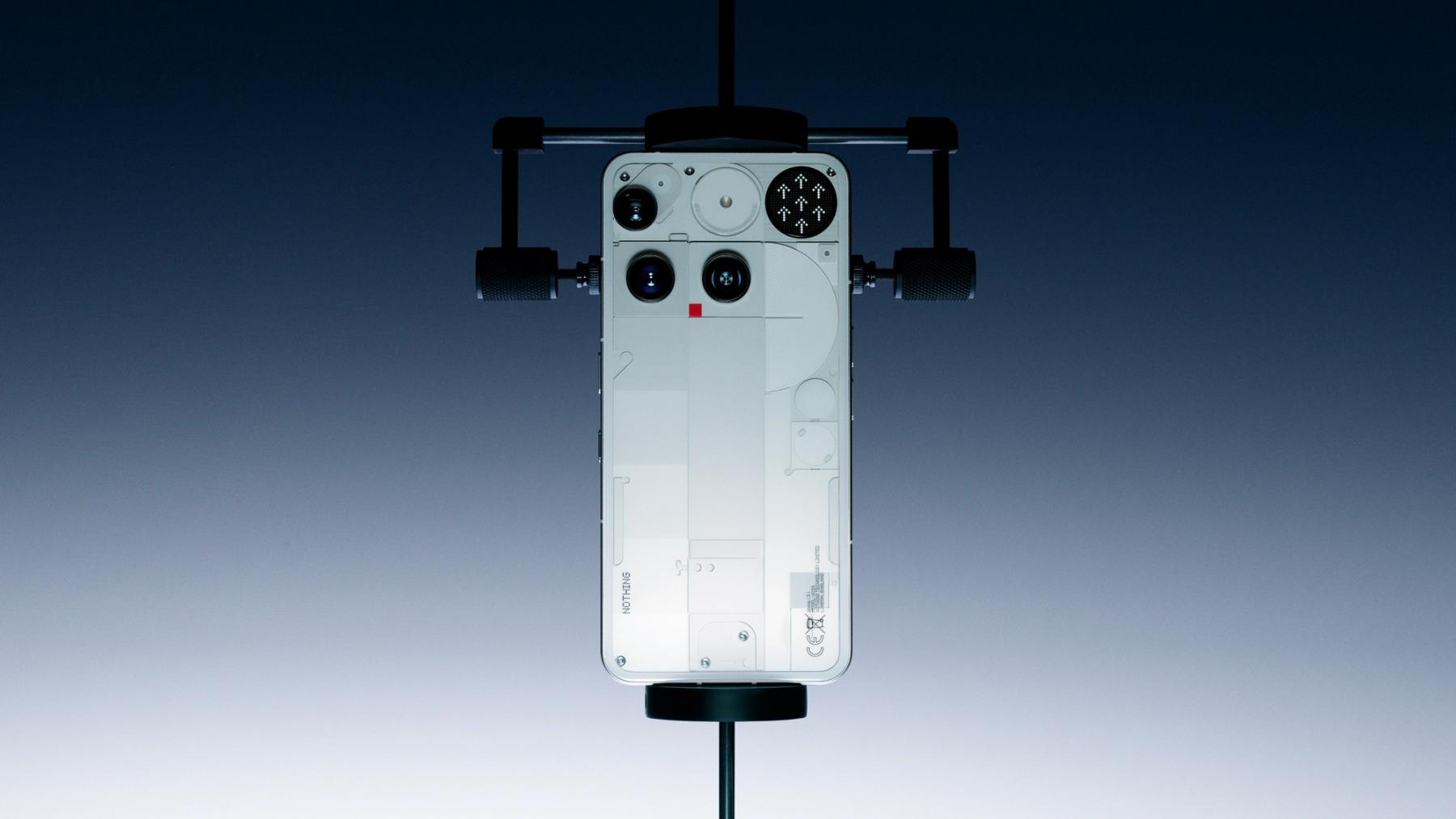
Nothing's design identity is the transparent look, and the Phone (3) keeps it with exposed internal-looking elements and a rear panel that hints at the components beneath. The big change is the Glyph Matrix, a small round dot-matrix display next to the cameras that replaces the long LED strips of earlier phones. It can show icons, a clock, notification indicators, a live selfie preview for the rear camera, and simple games or toys. Nothing presents it as a way to glance at information without picking up the phone and being drawn into the main screen, which fits the brand's pitch of a less distracting phone. A side button called the Essential Key and an Essential Space app collect screenshots, voice notes and other captures in one place and can summarise them with AI features.
The body measures 160.60 x 75.59 x 8.99 mm and weighs 218 g, which is on the heavier side for a phone with a 6.67-inch screen. The frame is aluminium that Nothing describes as anti-fingerprint, and the front and back use Corning Gorilla Glass; the display glass is listed as Gorilla Glass 7i. Water and dust resistance is rated IP68, and Nothing states "fully resistant to water and dust".
Display
The screen is a 6.67-inch flexible AMOLED with 1260 x 2800 pixels, about 460 pixels per inch, and 10-bit colour. The adaptive refresh rate goes up to 120Hz, and touch sampling is listed at 1000Hz. Nothing quotes 800 nits typical brightness, 1600 nits outdoors and 4500 nits peak; as with all peak brightness figures, the last number applies to small bright areas under specific conditions. These numbers put the panel in the top tier for 2025 on paper, although the resolution is somewhat below the QHD panels of the largest rival flagships. The selfie camera sits in a small hole at the top of the screen, and the fingerprint reader is inside the display.
Performance and software
The chipset is Qualcomm's Snapdragon 8s Gen 4, a 4nm processor that sits just below the full-power Snapdragon 8 Elite. Nothing says the chip delivers 125 percent faster processing speed and 36 percent faster CPU processing than the Phone (2), though both figures compare against the older phone rather than against competitors. For everyday use, gaming and photo processing, that class of chip is more than enough; the main difference from the 8 Elite is in sustained peak graphics and the very heaviest games.
The phone launched with Nothing OS, a lightly customised Android skin with a dot-matrix look, a focus on widgets and fewer pre-installed apps than many competitors. At launch it ran Nothing OS 3.5 based on Android 15, and Nothing's current specification page lists Nothing OS 4 on Android 16. Nothing promises five years of Android updates and seven years of security patches counted from the date of release on its own store, a policy that is longer than most Android brands offer and comparable to Google and Samsung. Connectivity is thorough: Wi-Fi 7, Bluetooth 6.0, NFC, dual SIM with eSIM support, and a wide set of 5G bands.
Camera system
The Phone (3) has four 50-megapixel cameras in total, three on the back and one on the front:
- Main: 50MP with a large 1/1.3-inch sensor, f/1.68 aperture, 24mm focal length, optical stabilisation. Nothing markets the sensor as ultra-large and claims a gain of 44 percent in light intake, without a comparison model stated on the main page.
- Periscope telephoto: 50MP, 1/2.75-inch sensor, f/2.68, 3x optical zoom, 6x in-sensor zoom and up to 60x digital zoom, with autofocus.
- Ultrawide: 50MP, 1/2.76-inch sensor, f/2.2, 114-degree field of view.
- Front: 50MP, f/2.2, 81.2-degree field of view, autofocus.
Four equally rated cameras are unusual, since most phones use lower-resolution ultrawide and selfie cameras. Video recording supports 4K with Ultra XDR at 60 and 30fps. Nothing's imaging tools include macro, night and motion-capture modes. The telephoto's f/2.68 aperture is smaller than the main camera's, so low-light zoom depends on processing. As always, specifications do not describe colour tuning or processing quality, and those should be judged from independent samples.
Battery and charging
The silicon-carbon battery is rated at 5,150 mAh in most markets, and 5,500 mAh in India only. Charging is 65W wired, 15W wireless, 5W reverse wireless and 7.5W reverse wired. Those numbers are solid rather than class-leading; some Chinese rivals offer 90W or more, but the Phone (3) is competitive with many Western flagships on this point. Real endurance depends on use, but a 5,150 mAh cell with an efficient 4nm chip should comfortably cover a day.
Who it is for
The Phone (3) suits people who want a phone that looks and feels different, who like a clean Android skin with a distinct character, and who value a long update promise. It also appeals to buyers who want a modest-sized, well-built flagship with a strong main camera and a real telephoto lens rather than the biggest screen. People who are curious about the Glyph Matrix and the Essential tools will probably get more out of it than those who want the spec-sheet maximum.
Compromises
The price is high for a brand without Apple's or Samsung's resale values and service network. The Snapdragon 8s Gen 4 is slightly behind the top chips, and the screen resolution is below QHD. At 218 g it is heavy, charging speed lags the fastest Chinese phones, and service availability varies by country. Retail availability differs by market, and the Glyph Matrix, while charming, is not to everyone's taste. Anyone weighing it against alternatives can browse the phone rankings page.
Where it ranks
Compare Nothing Phone (3) with similar devices
More from Nothing
Frequently asked questions
When was the Nothing Phone (3) released?
The Nothing Phone (3) was released on 2025-07-15, according to the manufacturer’s published information.
How much does the Nothing Phone (3) cost?
The estimated range for the Nothing Phone (3) is $719 to $879 in US dollars, based on the launch list price. Actual prices vary by country, retailer and storage option.
What are the main specs of the Nothing Phone (3)?
Headline figures for the Nothing Phone (3): Battery: 5,150 mAh, Refresh rate: 120 Hz, Main camera: 50 MP, RAM: 16 GB. The full specification table is further up this page.
Is the Nothing Phone (3) worth buying?
That depends on your priorities. Use the editorial review on this page for our view, check the rankings above to see where the device stands on battery, display and camera, and compare it directly with similar models before you decide.


