Phones
Nothing Phone (2a)
Nothing's mid-range phone with a Glyph Interface back, a 6.7-inch 120Hz AMOLED, a Dimensity 7200 Pro chip, dual 50MP cameras and a 5,000 mAh battery with 45W charging.
Key figures at a glance
Gallery

Specifications
- Display
- 6.7" flexible AMOLED, 1084 x 2412 (394 PPI), 30-120Hz adaptive, 1300 nits peak, HDR10+, 1,000,000:1 contrast, 2,160Hz PWM dimming, Corning Gorilla Glass 5
- Chipset
- MediaTek Dimensity 7200 Pro 5G (4nm TSMC), Arm Mali-G610 MC4
- RAM
- 12GB
- RAM options
- 8GB / 12GB
- Extended RAM
- Up to 20GB (12GB + 8GB RAM Booster, software-based)
- Storage
- 128GB / 256GB
- Rear Camera
- 50MP main + 50MP ultra-wide (114 degrees), OIS + EIS
- Front Camera
- 32MP
- Battery
- 5,000 mAh, 45W wired fast charging
- OS
- Nothing OS 2.5 (campaign copy); current product page lists Android 15, 3 years of major Android updates and 4 years of security updates
- Dimensions
- 161.74 x 76.32 mm
- Colors
- Milk, Black
- Water/dust resistance
- IP54
- Interface
- Glyph Interface (light patterns and sounds), Dot Engine animations and fonts
- Audio
- Stereo speakers
- Connectivity
- 5G (NSA/SA), Wi-Fi 6 (802.11 a/b/g/n/ac or ax), Bluetooth 5.3, NFC, dual nano-SIM, GPS L1, USB-C
- Biometrics
- In-display fingerprint sensor, face unlock
The Nothing Phone (2a) is the phone that took Nothing's distinctive design language out of the premium bracket and into the mid-range. It keeps the visible-circuitry look and the Glyph Interface light strips on the back, then pairs them with a MediaTek Dimensity 7200 Pro chip, a 6.7-inch 120Hz AMOLED display, two 50MP rear cameras and a 5,000 mAh battery. This review is based on the published specifications and manufacturer information from Nothing's international product page; figures that come from Nothing's own laboratory testing are presented as claims, not as independent measurements. In short, the Phone (2a) suits buyers who want a phone that looks and behaves differently from the crowd without paying flagship money, and who accept a few mid-range trade-offs.
Where the Phone (2a) sits in the lineup
Nothing sells the Phone (2a) with 8GB or 12GB of RAM and 128GB or 256GB of storage, in Milk and Black. The page promotes a "20GB RAM" figure, and it is worth reading that carefully: it is based on the 12GB version plus an 8GB "RAM Booster", a software feature that borrows part of the storage. Nothing's own footnote says that creating additional RAM uses a selected amount of storage, so the physical memory is 12GB at most. The phone sits below the flagship Phone (2) and shares its identity with later models such as the Nothing Phone (3a) and the Nothing Phone (4a), which refine the same idea. The Nothing Phone (2a) Plus is the direct step up within the same generation, and a head-to-head view is available at Nothing Phone (2a) vs Nothing Phone (3a). For the broader market picture, see the rankings page.
Design, display and build
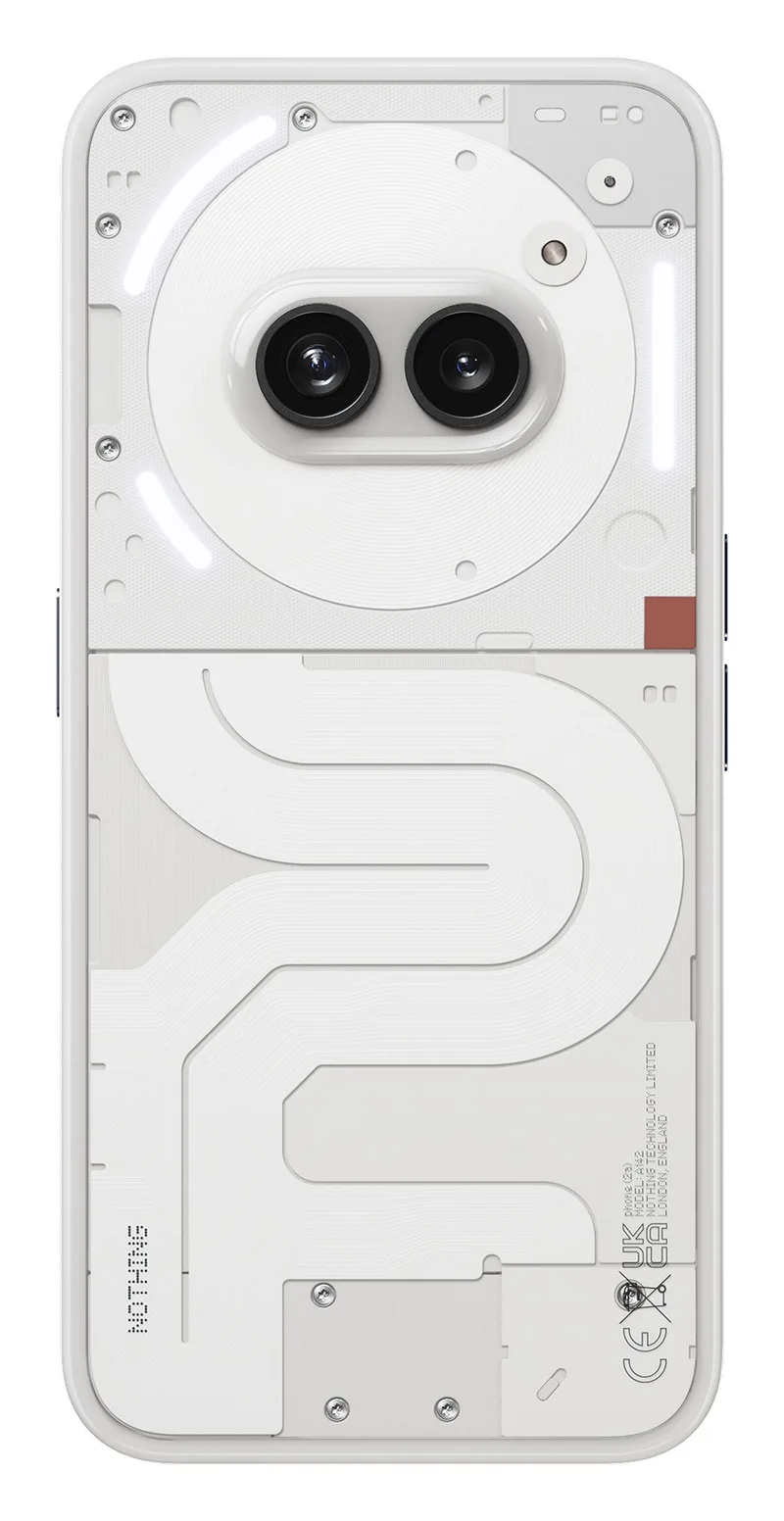
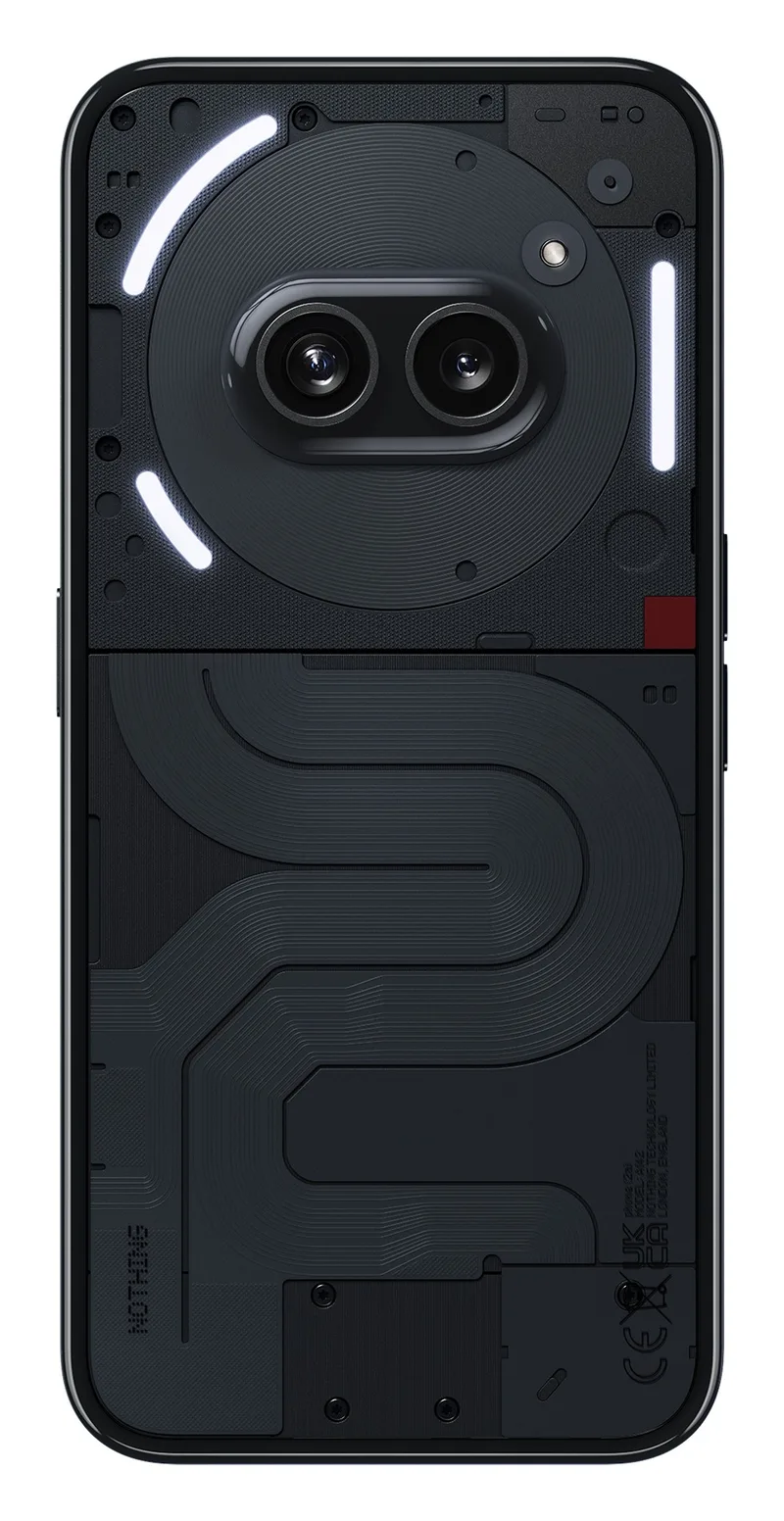
The design is the reason many people look at this phone. The back shows an exposed-component aesthetic with screws, a circular camera area and a bold flowing line that represents the wireless-charging coil, and the sides are curved. Nothing calls the rear cover an industry-first "90 degree infinity" shape, built with a dual compression and injection process that it says allows a thickness ratio of 2.2:0.8, against 2:1 for a conventional cover. The company also stresses sustainability, stating a carbon footprint of 52 kg CO2e, recycled aluminium and copper, and packaging without plastic. The dimensions are 161.74 x 76.32 mm, and the phone carries an IP54 rating, which means protection against dust and splashes, not submersion.
The screen is a flexible 6.7-inch AMOLED with a resolution of 1084 x 2412 pixels, about 394 pixels per inch. Refresh rate is adaptive between 30 and 120Hz. Nothing quotes a peak brightness of 1300 nits, HDR10+ support, 100 percent DCI-P3 coverage, a contrast ratio of 1,000,000:1, a 240Hz touch sampling rate and PWM dimming at 2,160Hz, which helps people sensitive to flicker. The page states a 91.65 percent screen-to-body ratio, and the glass is Corning Gorilla Glass 5, which is an older glass generation. In everyday use, the combination of smooth refresh rate, high peak brightness and symmetrical thin bezels puts this panel at the stronger end of what is typical for the segment.
The Glyph Interface
The Glyph Interface is the feature that justifies the design. LED strips around the camera area and the lower back can flash in patterns that Nothing lets you assign to individual contacts as ringtones, so you can tell who is calling without looking at the screen. They can also act as a persistent notification light for selected apps, as a volume indicator, as a visual countdown timer when you flip the phone face down, and as a light show that follows the beat of music. It is partly practical and partly playful. The main trade-off is that the lights only help when the phone is lying face down, and some users will find the effects a gimmick. Because these functions are tied to the back panel, using a thick opaque case would hide them.
Performance and software
Inside is the MediaTek Dimensity 7200 Pro, built on a 4nm TSMC process and paired with an Arm Mali-G610 MC4 graphics unit. Nothing says the chip was co-engineered with MediaTek and claims an AnTuTu score above 740,000 in its own laboratory test. That places it comfortably above entry-level silicon and in the upper-mid-range, enough for fluid daily use, multitasking and most popular games at sensible settings, although it is not a gaming flagship. The company adds a cooling system with a 3,200 mm² vapour chamber and a large graphite layer to keep performance steady.
The software is Nothing OS, a lightly customised Android with its own dot-matrix fonts, icons and animations known as the Dot Engine. The campaign text describes Nothing OS 2.5, and the current product page lists a version based on Android 15 together with three years of major Android updates and four years of security updates. Shared Widgets let you send quick reactions to favourite contacts' lock screens, and Quick Settings and lock-screen layouts can be customised. Nothing also promotes a ChatGPT integration that works with its earbuds when they are connected to a Nothing phone. The update commitment is a clear advantage over many budget competitors.
Connectivity is modern for the class: 5G in both standalone and non-standalone modes, Wi-Fi 6, Bluetooth 5.3, NFC, dual nano-SIM, GPS and a USB-C port. The page does not list a headphone jack, and it lists stereo speakers and a linear haptic motor.
Camera
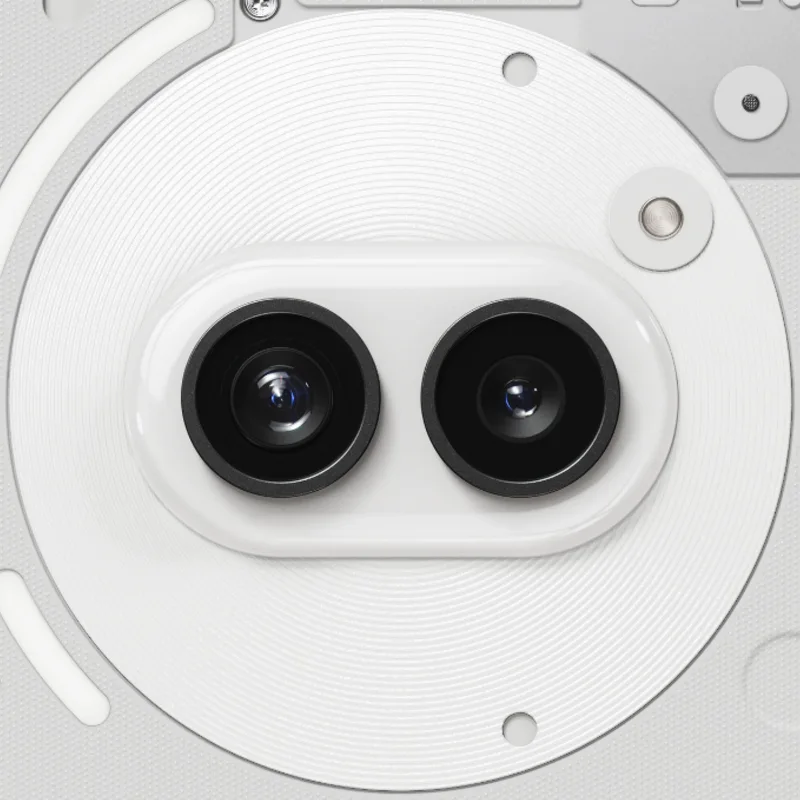
The rear camera system uses two 50MP sensors: a main camera with optical and electronic stabilisation, and a 50MP ultra-wide with a 114-degree field of view. Nothing argues that two strong cameras are better than several weak ones, which is a fair stance for a phone at this level, though it means there is no telephoto lens. Software features include Ultra XDR, which Nothing says was co-developed with Google and captures eight RAW frames at different exposures to retain highlight and shadow detail, plus a night mode and a portrait optimiser. The front camera is a 32MP unit that can record 1080p video at 60 frames per second. As always, these descriptions come from the manufacturer; actual quality will depend on tuning, and the typical weaknesses of mid-range camera systems, such as noise in very dark scenes and limited zoom reach, still apply.
Battery and charging
The battery is 5,000 mAh, which Nothing calls its biggest to date, and it quotes a longevity improvement of over 25 percent and a "two days" endurance claim. Wired charging is rated at 45W, and Nothing says a short top-up delivers a day's power in about 20 minutes. These are laboratory-based claims and depend on settings and software versions. The page's package list names the phone, a USB-C cable, a SIM ejector, a pre-applied screen protector and the safety documents, and it does not list a charger, so buyers should plan to use a compatible 45W adapter of their own. There is no wireless charging listed.
Who the Phone (2a) is for
This phone suits people who want personality and a clean software experience, long software support and a good screen, and who value design as much as raw numbers. It is a strong option for anyone upgrading from an older mid-range device who wants something visibly different. It is less compelling for people who need a telephoto camera, wireless charging or a top gaming chip, or who prefer a very understated look.
Compromises to weigh
- Charger: the package list does not include a charging adapter.
- Cameras: two lenses only, with no dedicated telephoto lens.
- Glass: Gorilla Glass 5 on the front, which is an older generation.
- Memory marketing: the 20GB figure includes 8GB of software-based RAM Booster, so the physical RAM is 12GB at most.
- Glyph limits: the lights are most useful face-down and may be hidden by an opaque case.
- Water protection: IP54 covers splashes and dust but not immersion.
Overall, the Phone (2a) gives a polished, distinctive package with a strong screen, a capable chip and a clear update policy. If you want to see how the idea evolved, compare it with the Phone (3a); if you want to know how it stacks up against a true flagship from the same maker, the Nothing Phone (3) page shows the other end of the range.
Where it ranks
Compare Nothing Phone (2a) with similar devices
More from Nothing
Frequently asked questions
When was the Nothing Phone (2a) released?
The Nothing Phone (2a) was released on 2024-03-05, according to the manufacturer’s published information.
What are the main specs of the Nothing Phone (2a)?
Headline figures for the Nothing Phone (2a): Battery: 5,000 mAh, Refresh rate: 160 Hz, Main camera: 50 MP, RAM: 12 GB. The full specification table is further up this page.
Is the Nothing Phone (2a) worth buying?
That depends on your priorities. Use the editorial review on this page for our view, check the rankings above to see where the device stands on battery, display and camera, and compare it directly with similar models before you decide.


