Phones
Apple iPhone 14
The 2022 standard iPhone: 6.1-inch OLED, A15 Bionic with a 5-core GPU, new 12MP main camera, Crash Detection and satellite SOS, launched at $799 with Lightning.
Key figures at a glance
Gallery
Specifications
- Display
- 6.1" Super Retina XDR OLED, 2532x1170, 60Hz, notch, 1200 nits peak HDR
- Chipset
- Apple A15 Bionic (6-core CPU, 5-core GPU, 16-core Neural Engine)
- Storage
- 128GB / 256GB / 512GB
- Rear Camera
- 12MP main (26mm f/1.5) + 12MP ultrawide
- Front Camera
- 12MP TrueDepth, f/1.9, autofocus
- Battery
- Up to 20 hours video playback (Apple claim; capacity not stated), 15W MagSafe, 7.5W Qi, 50% in about 30 minutes with 20W adapter
- Body
- 146.7 x 71.5 x 7.80 mm, 172 g, aluminum, IP68
- Connectivity
- Lightning, Bluetooth 5.3, 5G, Wi-Fi calling, Emergency SOS via satellite
- OS
- iOS 16
The iPhone 14 is the 2022 standard iPhone and the last base model with a notch and a Lightning port. It kept the 6.1-inch OLED display of its predecessor, reused the A15 Bionic chip with one extra graphics core, and focused its upgrades on the cameras, the battery and a new set of safety features: Crash Detection and Emergency SOS via satellite. This page is based on the published specifications and manufacturer information. It explains where the phone sits in the range, what it offered at launch, and which limits a buyer should know about if they find one used or discounted today.
Place in the lineup
Apple introduced the iPhone 14 and iPhone 14 Plus on 7 September 2022. Pre-orders opened on 9 September, the iPhone 14 reached stores on 16 September 2022, and the larger iPhone 14 Plus followed on 7 October. In the United States the iPhone 14 started at $799 with 128GB, and the Plus at $899. The faster iPhone 14 Pro models were introduced at the same event and carried the Dynamic Island and a 48MP camera, which the standard model did not receive until the following year.
The successor was the iPhone 15, which brought the Dynamic Island, a 48MP main camera and USB-C to the base price of $799. Apple later added the low-cost iPhone 16e and the iPhone 16, and the large 6.7-inch variant continued as the iPhone 15 Plus. The page iPhone 14 vs. iPhone 15 shows the differences side by side.
Design and display
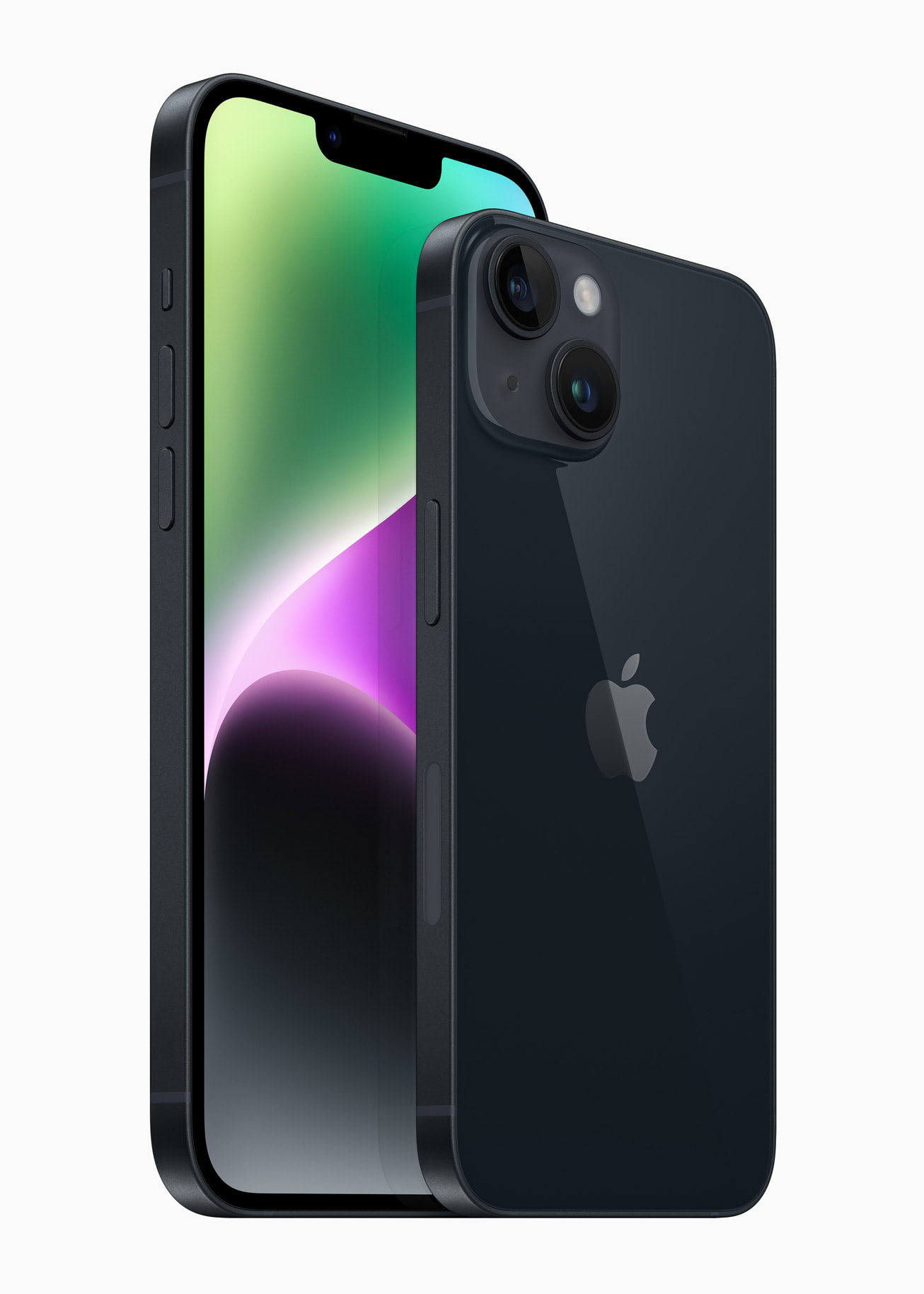
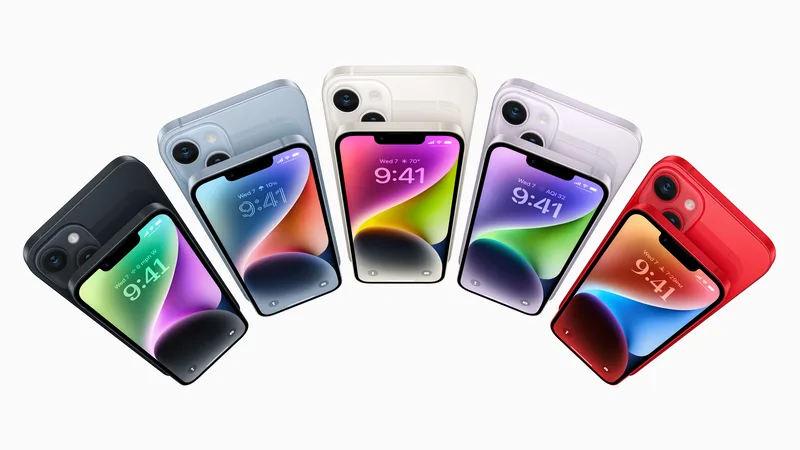
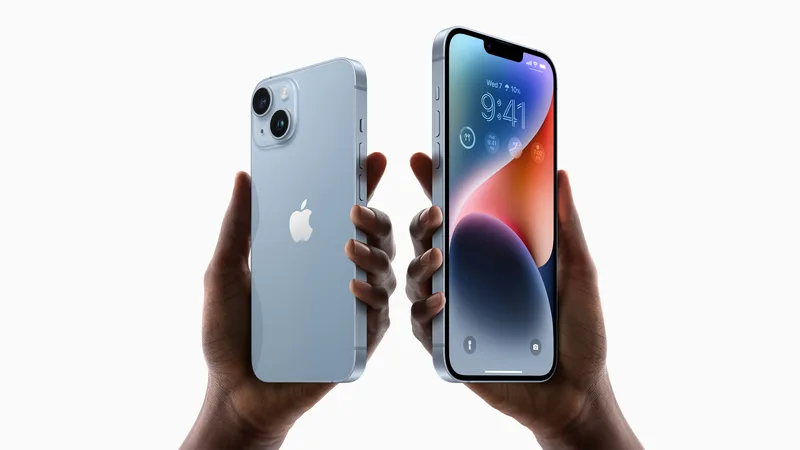
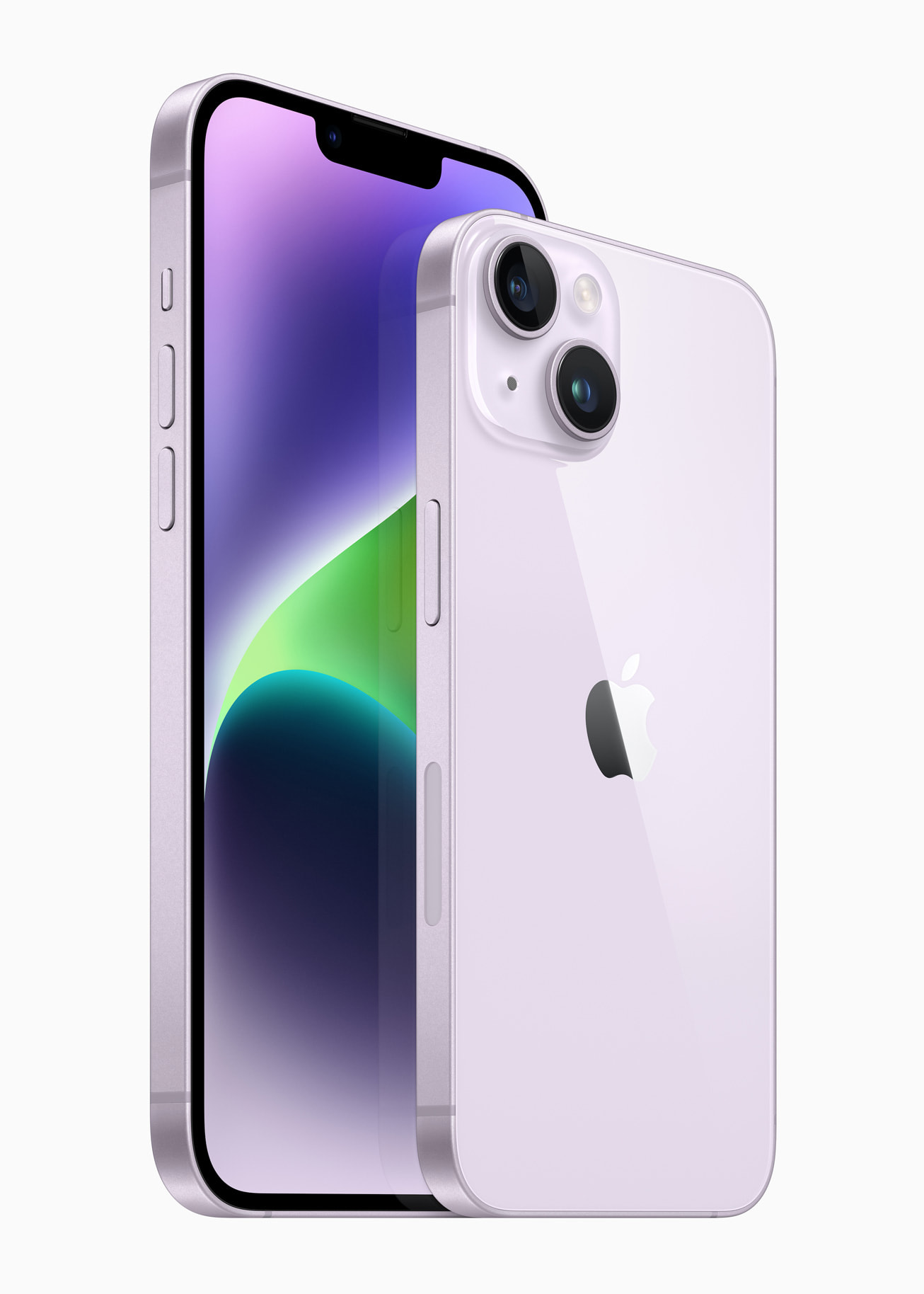
The iPhone 14 measures 146.7 x 71.5 x 7.80 mm and weighs 172 grams. It has an aluminum frame, a Ceramic Shield front and a glass back, and it is rated IP68, meaning water resistance to six meters for up to 30 minutes. Apple says the internal design was updated for better thermal performance. The launch colors were midnight, blue, starlight, purple and (PRODUCT)RED, and Apple later added yellow.
The screen is a 6.1-inch Super Retina XDR OLED at 2532 x 1170 pixels and 460 ppi. Apple lists 800 nits typical brightness and 1,200 nits peak for HDR content, with a 2,000,000:1 contrast ratio and Dolby Vision support. The display runs at a fixed 60Hz refresh rate and has no Always-On mode, as both are limited to the Pro models. The front still has a wide notch for the TrueDepth sensors, which looks dated next to the Dynamic Island found on newer models, but the display remains sharp and bright enough for most uses.
Performance, connectivity and software
The A15 Bionic has a 6-core CPU with two performance and four efficiency cores, a 5-core GPU and a 16-core Neural Engine that Apple rates at 15.8 trillion operations per second. The chip is the same generation as in the iPhone 13 Pro, with the fifth graphics core that was previously reserved for the Pro line. Apple does not state the RAM on its specification page and this page leaves it out. The phone launched with iOS 16, which introduced a reimagined lock screen with widgets and photo-based customization, and it has continued to receive newer iOS versions.
Apple highlights 5G, Gigabit LTE, Wi-Fi calling, Bluetooth 5.3 and an Ultra Wideband chip. The models sold in the United States have no physical SIM tray and use eSIM only, which is a point to check if you travel. The charging port is still Lightning, so USB-C cables from newer phones will not fit without an adapter. Wireless charging works with MagSafe at up to 15W and with Qi at up to 7.5W.
Camera
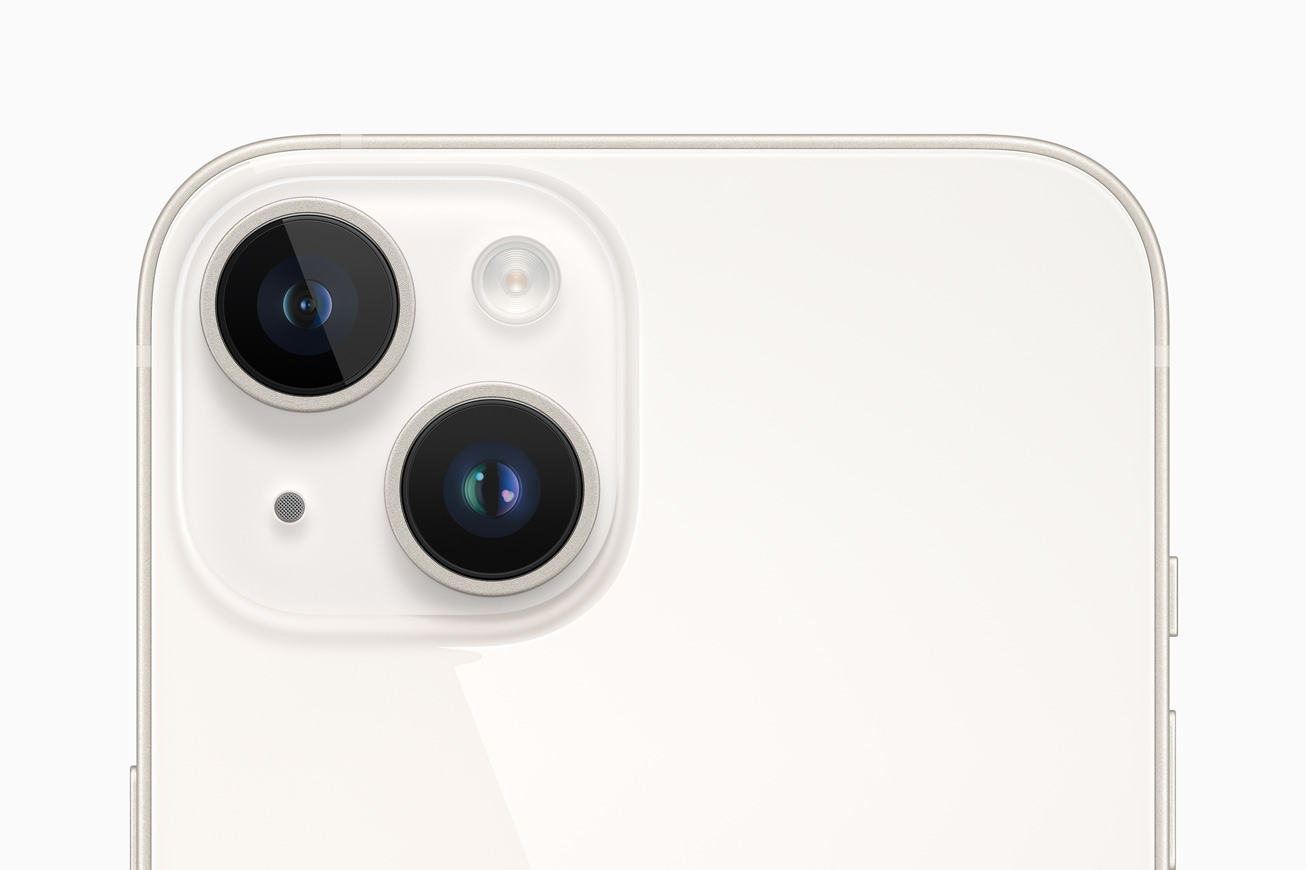
The main camera is a new 12MP sensor with larger pixels, a 26 mm equivalent lens at f/1.5 and sensor-shift stabilization. Apple states that the new main camera, together with the Photonic Engine, which applies Deep Fusion processing earlier in the imaging pipeline, improves mid- to low-light photos by up to 2.5 times compared with the previous model, a claim that rests on Apple's own testing. The ultrawide camera is a 12MP unit at f/2.4 with a 120 degree field of view. There is no telephoto lens, and the optical zoom range is limited to 2x out, with digital zoom up to 5x.
The front camera is the first iPhone selfie camera with autofocus, a 12MP TrueDepth unit at f/1.9. Video features include 4K Dolby Vision recording up to 60 frames per second, Cinematic mode in 4K at 30 frames per second and the new Action mode, which stabilizes shaky footage heavily. The camera system does not offer ProRAW or ProRes. It is a dependable point-and-shoot setup rather than a photographer's tool.
Safety and battery
Two safety features were the main talking points. Crash Detection uses a dual-core accelerometer measuring up to 256g, a high dynamic range gyroscope, the barometer, GPS and the microphone to detect a severe car crash and call emergency services automatically. Emergency SOS via satellite lets the phone send messages to emergency services without a cellular or Wi-Fi connection, which Apple launched in the United States and Canada in November 2022 with two years of free access. Availability depends on the country and the region.
Apple does not state a battery capacity in mAh. It rates the iPhone 14 at up to 20 hours of video playback, 16 hours of streamed video and 80 hours of audio playback, which are claims from Apple's own tests. A 20W or higher adapter should reach about 50 percent in around 30 minutes. If battery life is the main concern, the larger iPhone 14 Plus was rated at up to 26 hours of video.
Who it is for
The iPhone 14 suits people who want a compact, familiar iPhone at a lower price on the used or refurbished market, who do not need a telephoto lens or a high refresh rate, and who still have Lightning accessories at home. It is a safe choice for a first smartphone, for a family member who mostly calls, texts and takes photos, or as a secondary phone. The Ceramic Shield glass, IP68 rating and years of software updates make it a reasonable long-term pick. Buyers should check the battery health of any used unit, since the cells age with charge cycles, and confirm that the phone is not locked to a carrier or an Apple account before paying.
Compromises
The main weaknesses are the notch, the 60Hz screen, the 12MP-only camera and the Lightning port. For a small additional cost, the iPhone 15 fixes most of those points, and the iPhone 16 goes further. The base storage of 128GB can fill up quickly with video, and the display has no Always-On mode. See the rankings to compare the iPhone 14 with newer devices.
Where it ranks
Compare Apple iPhone 14 with similar devices
More from Apple
Frequently asked questions
When was the Apple iPhone 14 released?
The Apple iPhone 14 was released on 2022-09-16, according to the manufacturer’s published information.
How much does the Apple iPhone 14 cost?
The estimated range for the Apple iPhone 14 is $719 to $879 in US dollars, based on the launch list price. Actual prices vary by country, retailer and storage option.
What are the main specs of the Apple iPhone 14?
Headline figures for the Apple iPhone 14: Refresh rate: 60 Hz, Main camera: 12 MP. The full specification table is further up this page.
Is the Apple iPhone 14 worth buying?
That depends on your priorities. Use the editorial review on this page for our view, check the rankings above to see where the device stands on battery, display and camera, and compare it directly with similar models before you decide.


