Smartwatches
Amazfit T-Rex Ultra 2
Amazfit's 2026 expedition watch pairs a Grade 5 titanium build and 3,000-nit sapphire AMOLED display with preloaded maps, diving certification and up to 30 days of typical battery life.
Key figures at a glance
Gallery
Specifications
- Display
- 1.5-inch AMOLED, sapphire glass, up to 3,000 nits peak brightness
- Body
- Grade 5 titanium bezel, buttons and back panel; fiber-reinforced polymer case; 51 mm case diameter, 17.4 mm thick including heart-rate sensor (15.1 mm excluding); 26 mm quick-release straps
- Battery
- Up to 30 days (typical use), up to 50 hours in accuracy GPS mode; 870 mAh
- Positioning
- Dual-band GPS with six satellite systems; preloaded full-color base maps, downloadable contour and ski-resort maps; offline point-to-point routes (up to 100 km), POI search, automatic rerouting, up to 100 routes stored
- Durability
- 10 ATM water resistance; certified for freediving to 45 m and recreational scuba diving; military-grade resistance tests listed by Amazfit
- Storage
- 64GB onboard
- Extras
- Built-in two-color flashlight (white or green, Boost mode and SOS), speaker and microphone for Bluetooth calls, barometer and storm alerts, Low Temperature Mode to -30 C
- Sports
- 180+ sports modes, grade-adjusted pace, HybridCharge, Zepp Coach training plans; syncs to Strava, TrainingPeaks, komoot, Relive, Apple Health and Google Fit
- Compatibility
- Zepp App; works with iPhone and Android
The Amazfit T-Rex Ultra 2 is a titanium-and-polymer expedition watch that Amazfit announced on February 19, 2026, and put on sale the same day for $549.99 on its own store and on Amazon. It is the most expedition-focused member of the rugged T-Rex family, and it brings together a 1.5-inch sapphire-glass AMOLED display, a Grade 5 titanium bezel, buttons and back panel, 64 GB of onboard storage, dual-band GPS with six satellite systems and, for the first time in this line, full-colour base maps that come preloaded on the watch. Amazfit rates the battery at up to 30 days of typical use. This page is based on the published specifications and manufacturer information, and it covers where the watch fits in the range, the build, navigation, training features, battery life and the compromises you accept with a watch of this size.
Place in the lineup
Amazfit describes the T-Rex Ultra 2 as the latest and most advanced model of its rugged T-Rex range and says it complements the T-Rex 3 Pro by serving a more expedition-focused use case. In practice that means a bigger case than the 44 mm and 48 mm T-Rex 3 Pro, a larger battery and a longer quoted battery life, but also a higher price. The Amazfit T-Rex Dual Solar is the other 51 mm model in the family; it has a smaller 1.32-inch display and a smaller battery, but it adds dual-sided solar charging, which Amazfit says can stretch typical use well beyond its plain battery figure when enough sunlight is available. Elsewhere in the catalogue, the Amazfit Cheetah 2 Ultra is aimed at trail racers who want a lighter round watch, and the Amazfit Balance Ultra leans towards everyday and gym use. If you are weighing the Ultra 2 against Garmin's outdoor flagship, the T-Rex Ultra 2 vs Garmin Fenix 8 page lines the figures up side by side.
Design, materials and display
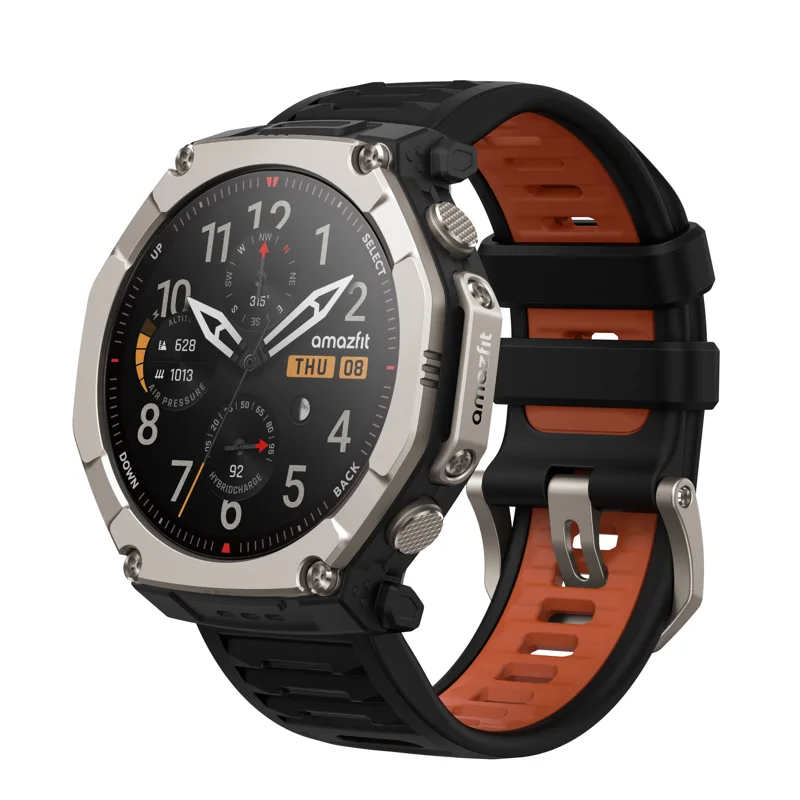
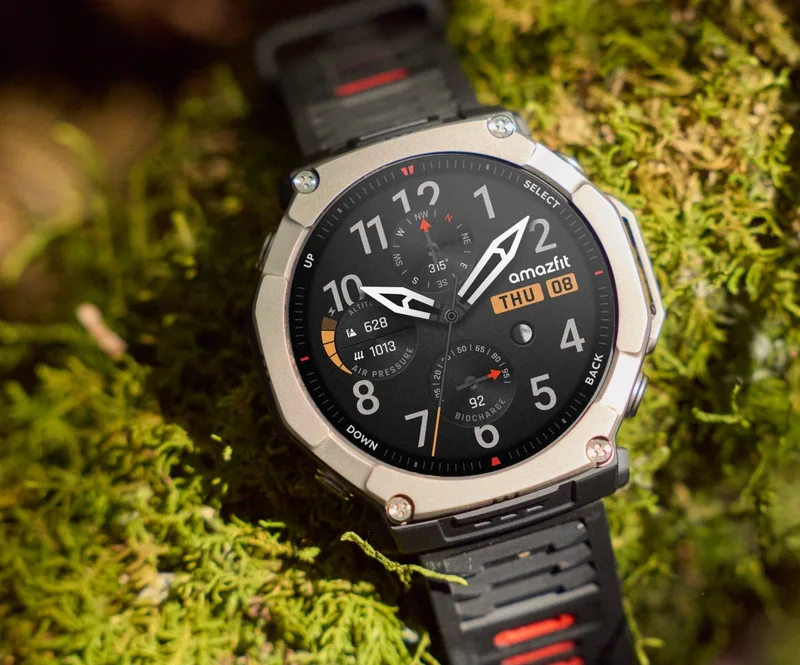
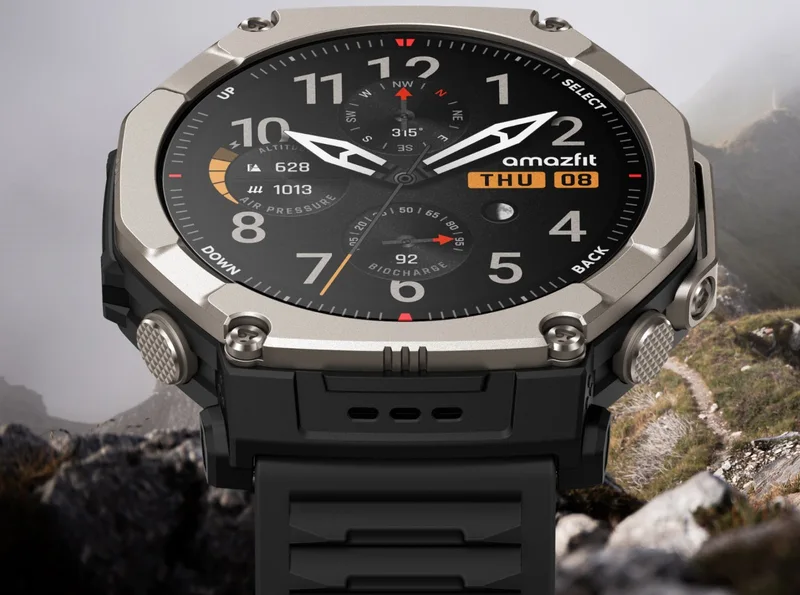
Amazfit's own comparison table lists the case at 51 mm across and 17.4 mm thick including the heart-rate sensor (15.1 mm without it). The bezel, buttons and back panel are Grade 5 titanium, while the case body is fibre-reinforced polymer, a mix that keeps the watch from feeling like a block of metal on the wrist. The company also says the watch has been through military-grade resistance testing for impact, wear and temperature swings; as with every such claim, it describes the manufacturer's own test programme rather than an independent certification. The straps attach with a 26 mm quick-release system, so straps from the smaller T-Rex models will not fit. Amazfit does not publish a weight on the pages used for this review, so no figure is given here.
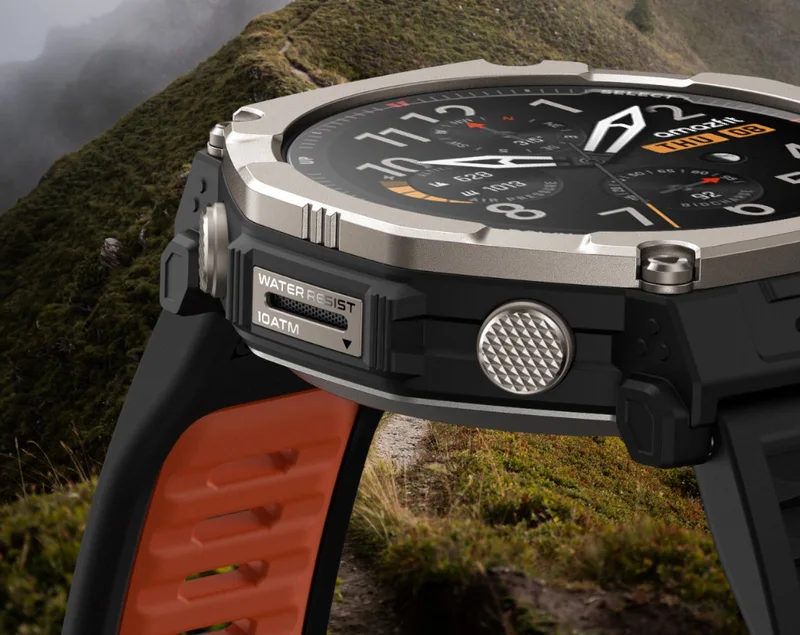
The screen is a 1.5-inch AMOLED panel under sapphire glass, with up to 3,000 nits of peak brightness according to Amazfit. The visible display is about 43 mm across, which is a lot of room on a wrist and gives the maps and elevation profiles space to breathe. The published material does not state a resolution or a refresh rate, so those details are left out. The case also carries a built-in speaker and microphone for Bluetooth calls and spoken alerts, and the side of the case is marked with its 10 ATM rating.
Navigation and maps
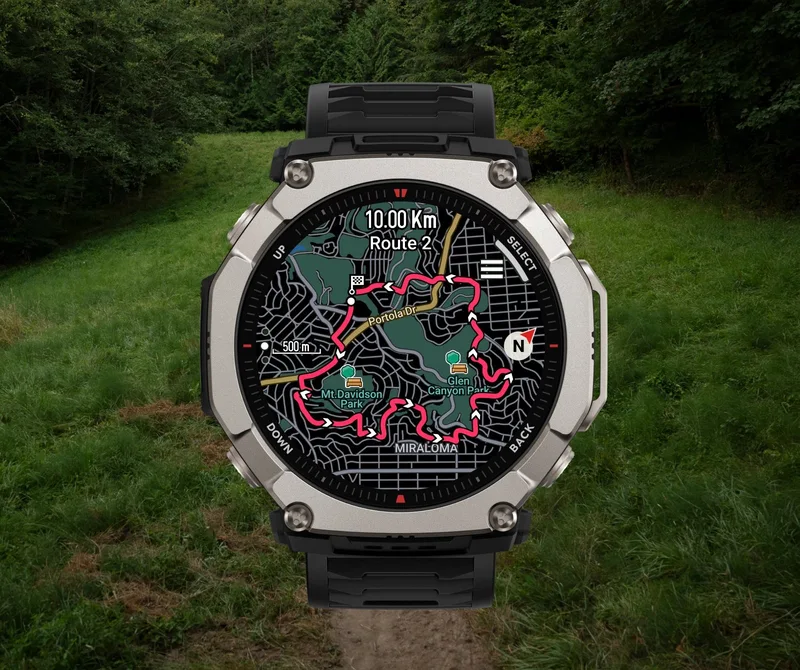
Maps are the headline change. Earlier T-Rex watches relied on downloadable map packages; the Ultra 2 ships with full-colour global base maps preloaded through the Zepp app, so you choose and install the area you need before leaving. Amazfit says the map data has been refined to distinguish terrain types more clearly, and that contour maps and ski-resort maps can be downloaded in addition. From the wrist you can create point-to-point routes, search for nearby points of interest such as water, shelter or a way back to the trailhead, and let the watch plan a new route automatically if you stray from the original one, all without a phone connection. The watch stores up to 100 routes, and offline route planning has been expanded to routes of up to 100 km.
Positioning relies on dual-band GPS and six satellite systems. For long days out, Amazfit added checkpoint displays and reminder alerts, so you can mark a water source, a shelter, an altitude target or a turnaround point and get a vibration or speaker alert as you approach it. Climb segmentation and the elevation profile have been reworked to give a clearer picture of the ascents ahead. A barometer, storm alerts and high-altitude prompts that suggest checking blood oxygen complete the mountain toolkit. As always with wrist-based altitude and weather readings, they are guides to a trend rather than survey-grade measurements.
Flashlight and water resistance
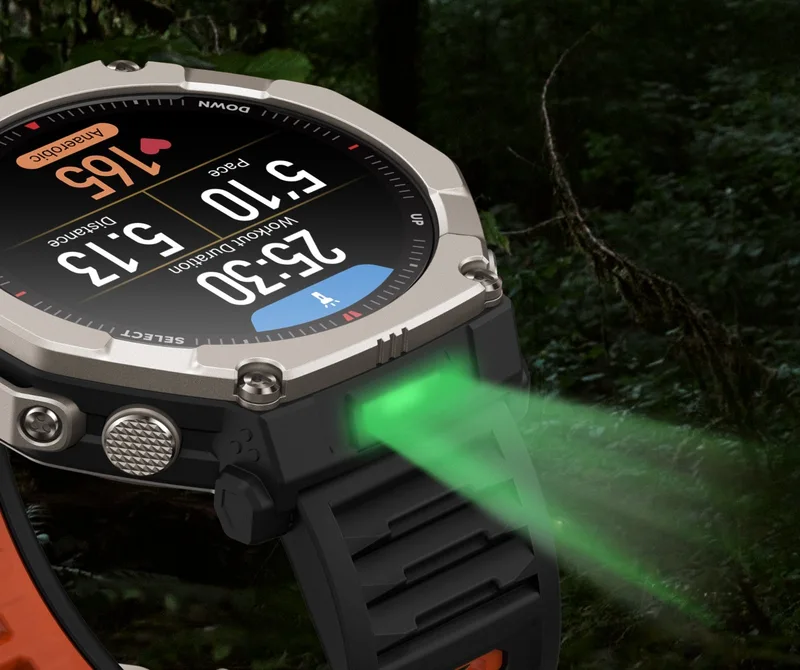
A dual-colour flashlight is built into the case. Amazfit's spec table lists white or green light, with a Boost mode for a burst of stronger illumination and an SOS signal. The green light is intended to be low-interference: the manufacturer says it lets you read the watch while wearing night-vision goggles and gives a wider, more detailed view of the immediate terrain than white light does. For cold-weather use, a Low Temperature Mode keeps essential functions responsive down to minus 30 degrees Celsius, according to Amazfit.
Water resistance is rated 10 ATM. Beyond that, the watch carries dual diving certifications: freediving to 45 m and recreational scuba diving. Automatic dive detection starts tracking when you enter the water and records time, depth and performance. This is a notable feature on a watch at this price, but it is worth reading the fine print: a certified depth rating is not a substitute for a dedicated dive computer if you do technical dives, and Amazfit positions the feature for recreational use.
Training and health features
The software side is the familiar Zepp ecosystem. The watch offers 180-plus sports modes, including hybrid training, running modes with metrics such as vertical amplitude and ground contact time, HYROX race and training options, and strength training with automatically recognised exercises. New in this generation are grade-adjusted pace for hilly terrain and voice-memo recording during workouts. Training analysis includes lactate threshold, VO2 max, training stress balance, training load and training effect, and the HybridCharge feature combines training load with BioCharge and LifeLoad scores to show how training, recovery, sleep and daily demands affect your capacity. Zepp Coach produces AI-generated training plans for 5K, 10K, half marathon and marathon goals, and the app syncs with services such as Strava, TrainingPeaks, komoot, Relive, Apple Health and Google Fit. Heart rate, sleep, blood oxygen and stress are tracked by the BioTracker sensor, and a one-tap measurement checks four metrics at once in about 45 seconds. These are wellness and training aids, not medical devices.
Battery and charging
Amazfit quotes an 870 mAh battery and up to 30 days of typical use, which compares with 25 days for the Dual Solar (660 mAh) and for the 48 mm T-Rex 3 Pro (700 mAh) on the company's own table. In accuracy GPS mode the Ultra 2 is rated for up to 50 hours, against 41 hours for the Dual Solar and 38 hours for the 48 mm T-Rex 3 Pro. All of these figures come from the manufacturer's test conditions; heavy use of the flashlight, maps with the screen on, Bluetooth calls and the speaker will shorten them. Charging uses a charging base that is USB Type-C compatible, but Amazfit does not include a cable in the box, to reduce waste, so you need to supply your own.
Who it is for
The T-Rex Ultra 2 suits hikers, mountaineers, ultra-runners and divers who want multi-week battery life, offline maps and a rugged case at a price below the most expensive outdoor brands. It works with both iPhone and Android, and its sapphire glass and titanium parts should cope with knocks that would trouble a lighter watch. The Garmin Fenix 8 is the established rival in this class, while on the Apple side the Apple Watch Ultra 3 offers a different mix of app support and a shorter battery life.
Compromises
- Size and weight. A 51 mm case with a 26 mm strap is large, and people with slim wrists may find it uncomfortable, especially for sleep tracking. Amazfit does not state a weight in the pages used here.
- Maps need planning. The base maps are preloaded, but contour and ski maps still have to be downloaded through the Zepp app, and offline route planning has a stated limit of 100 km.
- No solar charging. Unlike the Dual Solar, this watch does not charge from sunlight.
- Third-party apps. Amazfit's support page says third-party music apps cannot be installed on the watch; it only offers controls for playback from the phone.
- Cable not included. The charging base is provided but the USB-C cable is not.
- Manufacturer figures. Battery life, diving depth and cold-weather ratings are Amazfit's own claims; real-world results depend on the settings and conditions.
Where it ranks
Compare Amazfit T-Rex Ultra 2 with similar devices
More from Amazfit
Frequently asked questions
When was the Amazfit T-Rex Ultra 2 released?
The Amazfit T-Rex Ultra 2 was released on 2026-02-19, according to the manufacturer’s published information.
How much does the Amazfit T-Rex Ultra 2 cost?
The estimated range for the Amazfit T-Rex Ultra 2 is $495 to $605 in US dollars, based on the launch list price. Actual prices vary by country, retailer and storage option.
What are the main specs of the Amazfit T-Rex Ultra 2?
Headline figures for the Amazfit T-Rex Ultra 2: Battery life: 30 days. The full specification table is further up this page.
Is the Amazfit T-Rex Ultra 2 worth buying?
That depends on your priorities. Use the editorial review on this page for our view, check the rankings above to see where the device stands on battery, display and camera, and compare it directly with similar models before you decide.