Smartwatches
Amazfit Balance
Amazfit's 2023 lifestyle flagship pairs a 1.5-inch AMOLED screen and dual-band GPS with body composition readings, a Readiness score and up to 14 days of battery life.
Key figures at a glance
Gallery
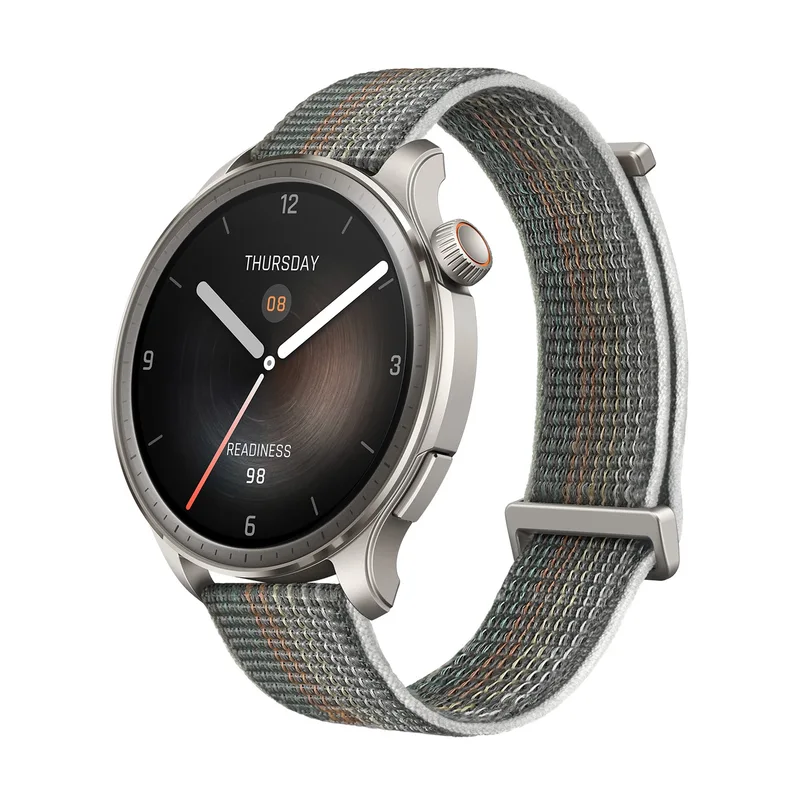
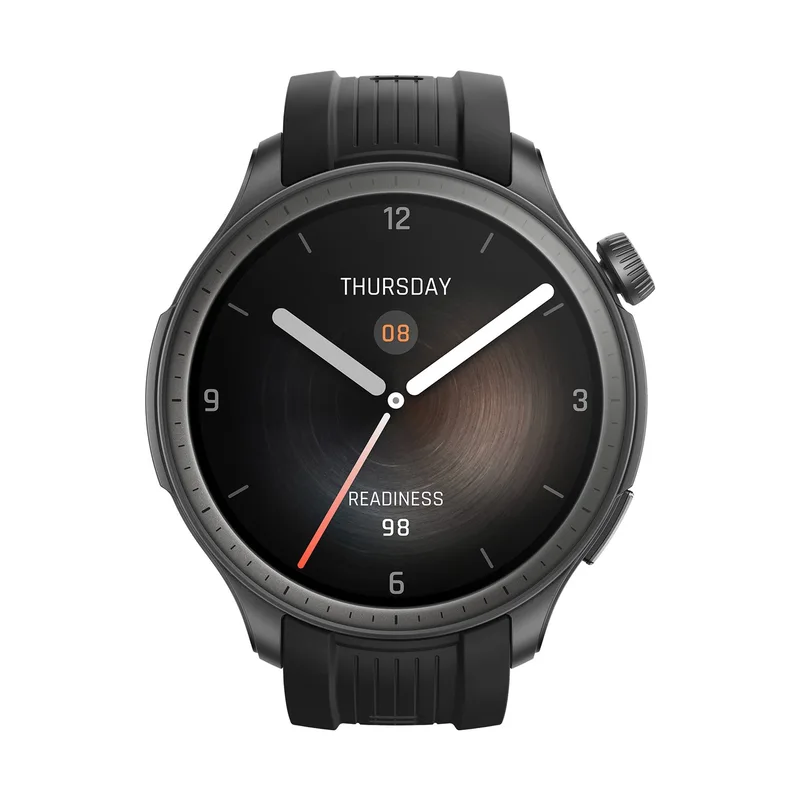
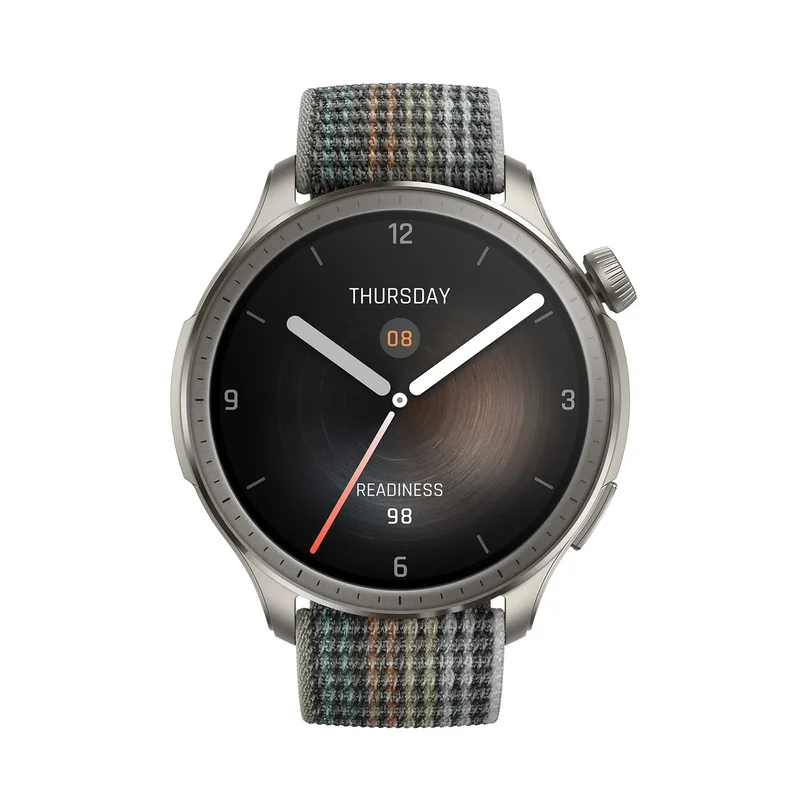
Specifications
- Display
- 1.5" AMOLED, 480 x 480, 323 PPI, tempered glass
- Case
- 46 x 46 x 10.6 mm, aluminum alloy middle frame, fiber-reinforced polymer bottom shell, 35 g without strap
- Battery
- Up to 14 days typical use (up to 5 days with always-on display), 475 mAh
- Water Resistance
- 5 ATM
- GPS
- Dual-band GPS, 6 satellite systems, offline maps
- Sensors
- BioTracker 5.0 PPG (8PD + 2LED), BIA bioelectric impedance, accelerometer, gyroscope, geomagnetic, barometric, ambient light, temperature
- Connectivity
- Wi-Fi 2.4GHz, Bluetooth 5.0, Bluetooth phone calls
- Storage
- Music storage up to 2.2GB
- OS
- Zepp OS 3.0 at launch (later Zepp OS 3.5 / 4)
- Compatibility
- Android 7.0+, iOS 14.0+
The Amazfit Balance is the watch Zepp Health introduced on 1 September 2023 as the new lead model of its Lifestyle Series, taking over from the long-running GTR and GTS families. The idea behind the name is a watch that tracks both activity and recovery, wrapped in a round metal case with a 1.5-inch AMOLED screen. This page is a spec-and-information-based review built from Zepp Health's launch announcement and Amazfit's product page, and it separates what the company states from what you would need to confirm in use.
Where it sits in the lineup
Amazfit positions the Balance as a lifestyle watch for people who want a stylish round design, credible fitness tracking and long battery life without moving to a rugged adventure model. At launch the price started at 229.99 US dollars or 249.90 euros, and it was sold through Amazfit's own website. It sits above the budget Bip family and below the heavier outdoor watches in Amazfit's range. If you are weighing it against mainstream smartwatches, the Galaxy Watch8 and the Garmin Venu 3 are natural reference points, and the Amazfit Balance vs Galaxy Watch8 table lines up the numbers.
Design and display
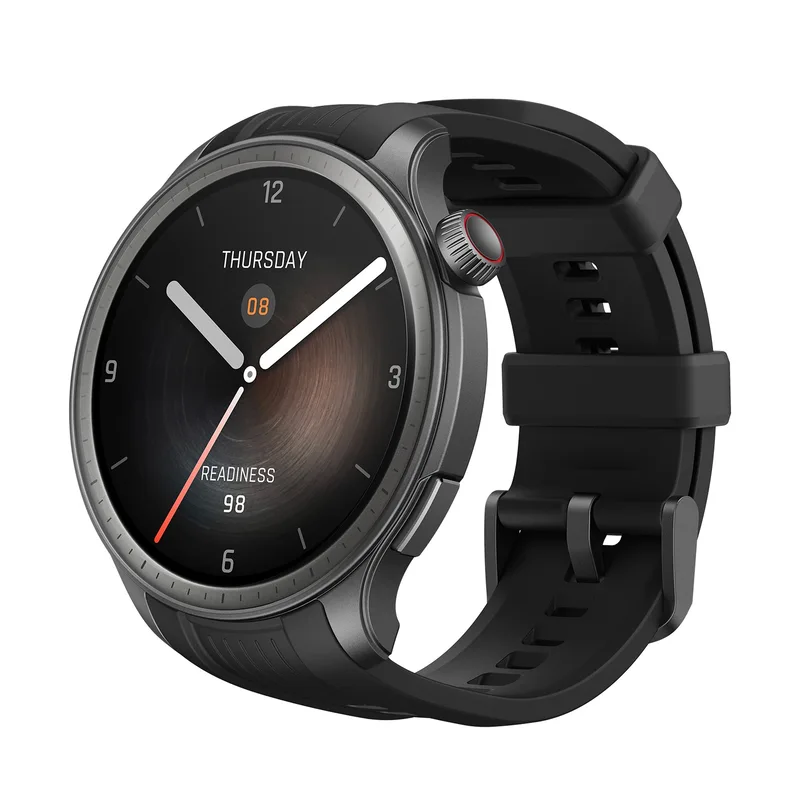
The Balance measures 46 x 46 x 10.6 mm, without the heart rate base, and weighs 35 g without the strap. The middle frame is aluminium alloy and the bottom shell is fibre-reinforced polymer, which keeps the weight down. The watch has two buttons, one of which is a crown, and Amazfit lists a 5 ATM water resistance rating. The display is a 1.5-inch AMOLED panel with 480 x 480 pixels and a pixel density of 323 PPI, covered with tempered glass that has an anti-fingerprint coating and sits inside an anti-glare glass bezel. Amazfit says the screen-to-body ratio is 73.4 percent. The standard colours are Sunset Grey and Midnight, and later Special Edition colours named Woodland, Meadow, Deep Sea Blue and Lagoon were added. The strap is 22 mm wide and comes in nylon or liquid silicone, with a wrist range of 140 to 215 mm for silicone and 140 to 210 mm for nylon. The design won an iF Design Award in 2024, which Amazfit highlights on its site.
Health and wellness features
The wellness side is the reason for the name. Each morning the watch produces a Readiness score based on sleep resting heart rate, sleep heart rate variability, breathing quality and temperature, which Amazfit presents as a measure of how recharged you are mentally and physically. In the Zepp app, Readiness insights explain the score and suggest ways to rebalance. Detailed insights require a subscription: Zepp Aura, a sleep and relaxation service that uses AI to generate adaptive music, offered buyers in the US and Europe a three-month complimentary trial of its Premium tier at launch.
The other notable feature is body composition. Using a bioelectrical impedance sensor, the watch sends a harmless micro-current through the upper body to estimate eight values: body fat, skeletal muscle, muscle, water, bone mass, protein, BMI and basal metabolism. Amazfit is clear that the wrist reading covers only the upper body and offers a separate Body Composition Analyzer Mat for lower-body measurement, sold only as part of bundles in selected locations. As with any consumer impedance measurement, treat the numbers as trends over time rather than clinical values. The optical sensor is the BioTracker 5.0 PPG sensor with eight photodiodes and two LEDs, and the watch also has temperature, barometric, geomagnetic and ambient light sensors, plus an accelerometer and gyroscope.
Sports and GPS
For training, Amazfit lists more than 150 sports modes. Strength training can auto-detect 25 exercise types and count repetitions, sets and rest time, and the watch can auto-detect eight sports movements so that a workout starts without menu scrolling. Zepp Coach adds AI-generated training plans, including couch-to-5K style running plans, with a free trial in some regions before a Zepp Fitness Membership is needed for the chat feature. Positioning uses a circularly polarised antenna with dual-band signals from six satellite systems, which Amazfit says improves accuracy between tall buildings. Offline maps can be downloaded through the Zepp app and synced to the watch, and imported route files allow navigation. You can also pair a heart rate belt or cycling power meter over Bluetooth and sync workouts to services such as Strava and Apple Health.
Software and smart features
At launch the Balance ran Zepp OS 3.0, with later updates bringing Zepp OS 3.5 and the Zepp Flow voice assistant to supported regions in English. Day-to-day smart features include Bluetooth calls through the built-in microphone and speaker, Amazon Alexa, contactless payments with Zepp Pay where banks support it and 2.2GB of music storage for playing audio without the phone. Connectivity is Wi-Fi on 2.4GHz and Bluetooth 5.0, and the watch works with Android 7.0 and above and iOS 14.0 and above. The app store offers more than 150 downloadable apps, which is a smaller ecosystem than Wear OS or watchOS, so do not expect the same breadth of third-party software.
Battery life
The Balance has a 475 mAh battery and charges magnetically in about two hours. Amazfit quotes up to 14 days of typical use, up to 7 days of heavy use and up to 5 days with the always-on display. Battery saver mode extends this to up to 25 days, and clock-only mode to up to 50 days. With GPS running, the accuracy mode lasts up to 26 hours, the automatic GPS mode up to 47 hours and the power-saving GPS mode up to 52 hours. These are manufacturer claims measured under specific conditions, so real results depend on screen settings, notifications and how often you record workouts.
Reading the numbers
With a watch of this kind it pays to separate manufacturer claims from day-to-day benefit. Amazfit's battery figures come from defined test scenarios, and the watch face you choose, the AMOLED brightness or frequent Bluetooth calls will all move the result. The Readiness score is likewise a calculated value built from several measurements rather than a medical reading; it is most useful for spotting patterns over weeks, such as how poor sleep affects training. Anyone who mainly uses the watch for runs should also remember that dual-band GPS and offline maps improve accuracy and orientation but drain the battery faster than the standard mode. A realistic plan is to note the real battery life during the first two weeks and choose modes accordingly.
Compromises to consider
- Subscriptions. Some AI features, including Readiness insights and the fitness chat, depend on paid Zepp services after the trial.
- Ecosystem. The app catalogue is far smaller than on Wear OS or watchOS.
- Size. At 46 mm, the case is large for small wrists, although the weight is low.
- No medical claims. The launch announcement frames the health features as wellness insight and does not mention clinical clearances.
- Body composition limits. The wrist reading is an upper-body estimate, and the full measurement needs a separate mat.
Who it is for
The Amazfit Balance suits people who want one watch for everyday wear and regular training, with a bright round screen, long battery life and wellness features that go beyond step counting, and who are comfortable with a smaller app ecosystem. Those who want deep third-party apps or medical-grade tracking should look at other options such as the Withings ScanWatch 2. Browse the whole smartwatches category or check the rankings to see how it compares.
Where it ranks
Compare Amazfit Balance with similar devices
More from Amazfit
Frequently asked questions
When was the Amazfit Balance released?
The Amazfit Balance was released on 2023-09-01, according to the manufacturer’s published information.
How much does the Amazfit Balance cost?
The estimated range for the Amazfit Balance is $207 to $253 in US dollars, based on the launch list price. Actual prices vary by country, retailer and storage option.
What are the main specs of the Amazfit Balance?
Headline figures for the Amazfit Balance: Battery life: 14 days. The full specification table is further up this page.
Is the Amazfit Balance worth buying?
That depends on your priorities. Use the editorial review on this page for our view, check the rankings above to see where the device stands on battery, display and camera, and compare it directly with similar models before you decide.