Smartwatches
Google Pixel Watch 3
Google's flagship watch in two sizes: brighter Actua displays, Fitbit training tools, Wear OS 5 and Loss of Pulse Detection.
Key figures at a glance
Gallery
Specifications
- Sizes
- 41mm and new 45mm
- Display
- Actua display, up to 2,000 nits peak, down to 1 nit, 60 Hz to 1 Hz always-on; 45mm shows 40% more screen and 41mm 10% more than Pixel Watch 2 (Google claims)
- Battery
- Up to 36 hours with Battery Saver Mode (Google claim); 45mm has a 35% bigger battery, 41mm charges 20% faster
- Software
- Wear OS 5, Fitbit health and fitness features, six months of Fitbit Premium included
- Health
- Loss of Pulse Detection, Daily Readiness, Cardio Load, Target Load, running form analysis
- Connectivity
- Bluetooth/Wi-Fi and LTE models, Ultra-Wideband chip
- Price
- 349.99 dollars (41mm) and 399.99 dollars (45mm) Bluetooth/Wi-Fi; 449.99 and 499.99 dollars LTE at launch in the US
The Pixel Watch 3 is Google's flagship smartwatch and, as Google put it at launch, the biggest leap forward for the line. Announced in August 2024 and available from 10 September 2024, it introduced a second size, a much brighter display, a new set of Fitbit-powered training tools and a first-of-its-kind safety feature called Loss of Pulse Detection. This page summarises what Google said in its launch post, keeps its claims labelled as claims, and points out where a health or safety feature depends on region, regulation or a paid service.
Sizes, colours and price
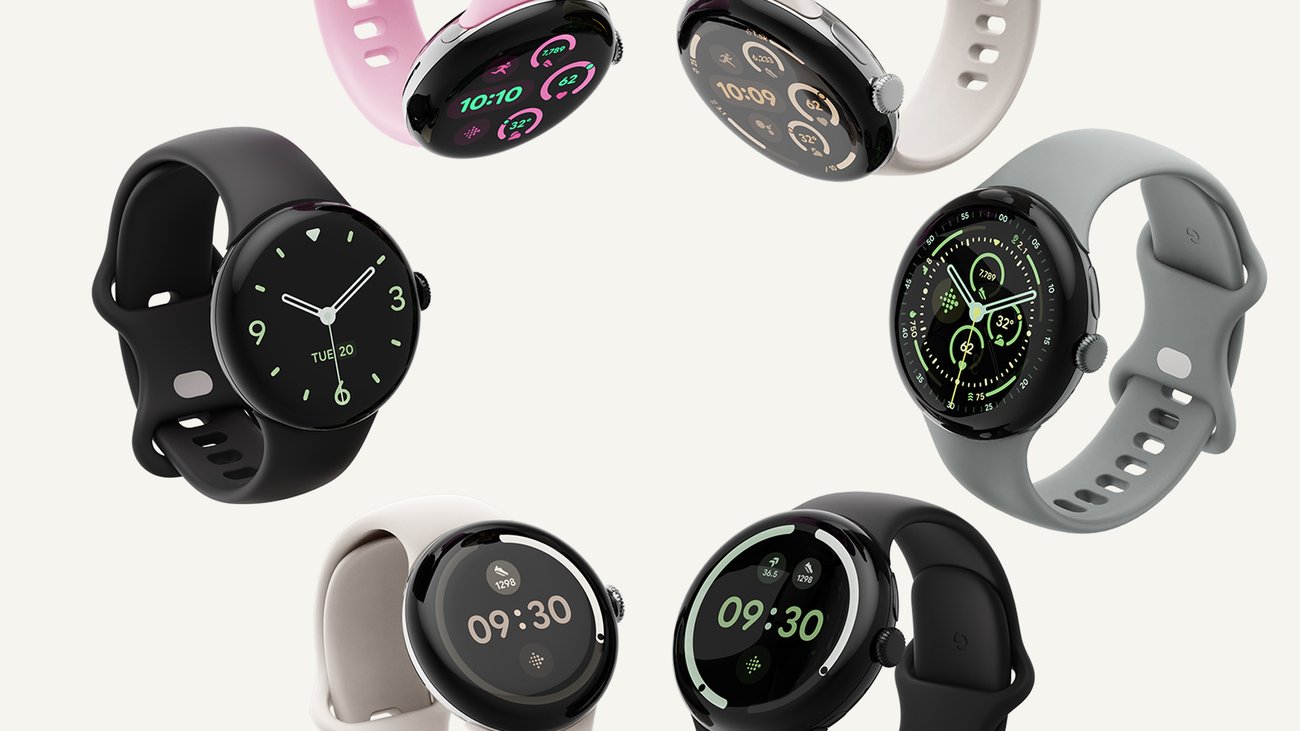
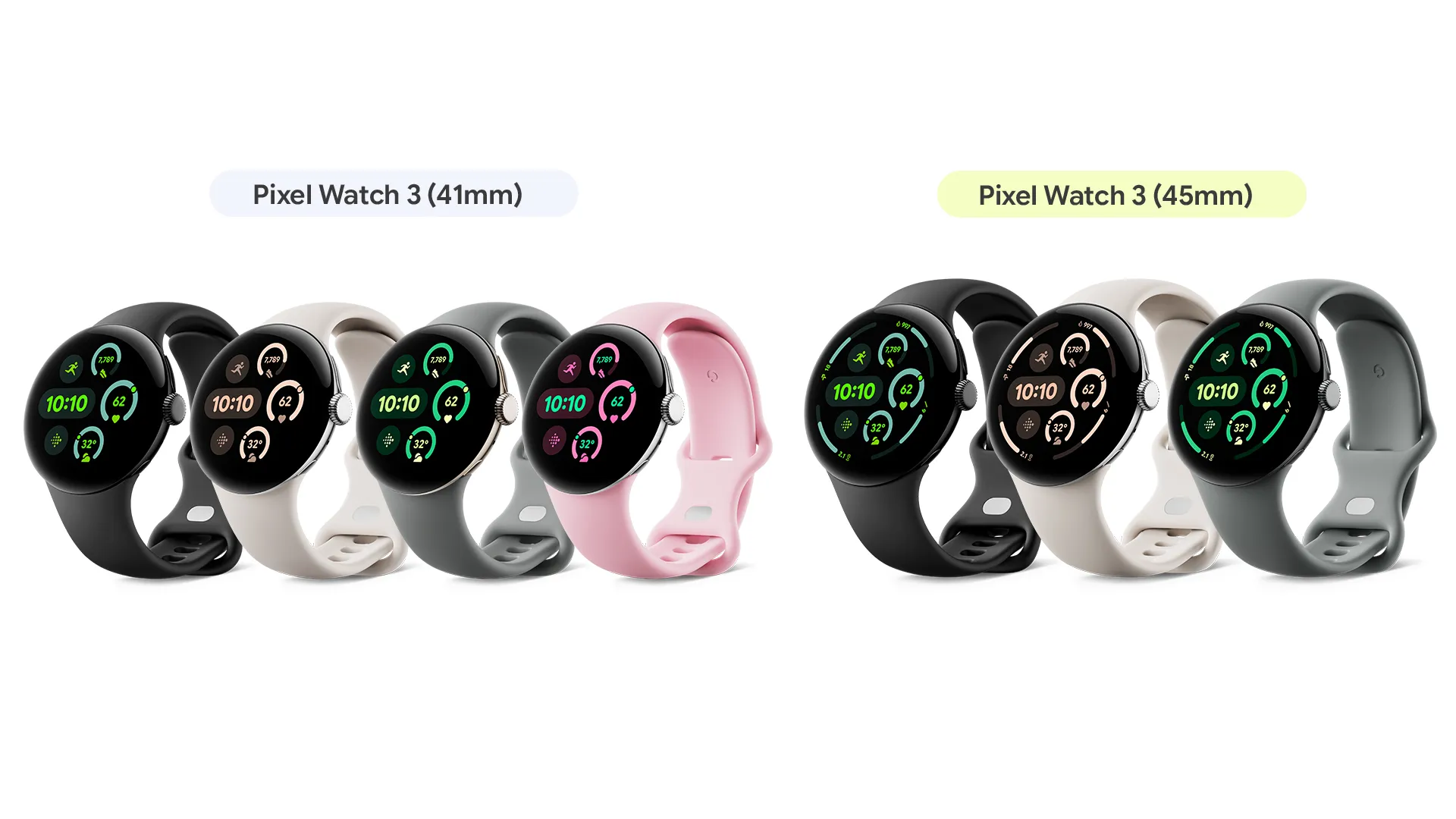
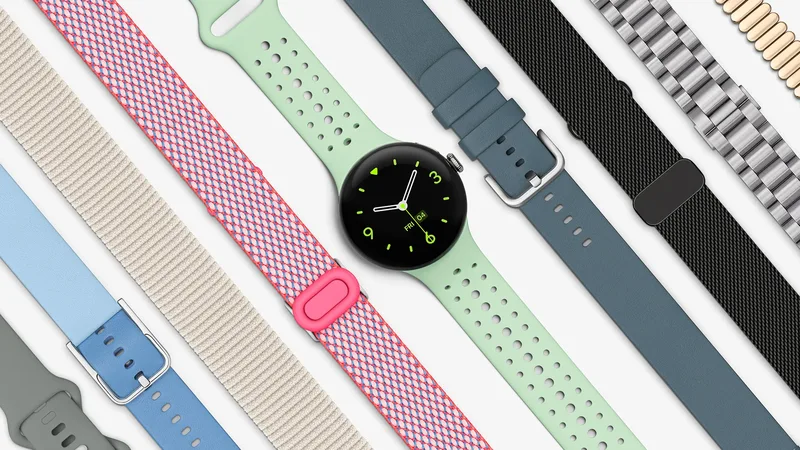
The Pixel Watch 3 comes in 41mm and a new 45mm size. The 41mm model is offered in a Matte Obsidian case with a Matte Black band, in Porcelain with Polished Silver and in Hazel with Champagne Gold, and there is a Polished Silver case with a new Rose Quartz band. The 45mm model comes in Obsidian and Porcelain and debuts a matte Hazel aluminium case with a matching Hazel band. Google also sells accessory bands in leather, metal and woven materials. At launch in the United States the 41mm cost 349.99 dollars for the Bluetooth and Wi-Fi model and 449.99 dollars for LTE, while the 45mm cost 399.99 dollars and 499.99 dollars, on sale at the Google Store, on the Fitbit website and at select retailers worldwide from 10 September 2024. Six months of Fitbit Premium came with the watch. For the successor that Google introduced a year later, see the Pixel Watch 4 page, and the Pixel Watch 3 vs Pixel Watch 4 table sets them side by side.
Brighter, bigger displays
Both sizes have what Google calls its most advanced Actua displays, twice as bright as before with a peak brightness of 2,000 nits for reading run stats in strong sun, and able to dim to as low as 1 nit for a discreet glance in the dark. The screens are bigger with smaller bezels: Google says the 45mm watch shows 40 percent more screen and the 41mm 10 percent more than the Pixel Watch 2. Both are more power efficient, with refresh rates from 60 Hz down to just 1 Hz for the always-on display. Peak brightness is a best-case figure, so the day-to-day experience depends on the watch face and on how often you use the always-on mode.
Battery and Wear OS 5
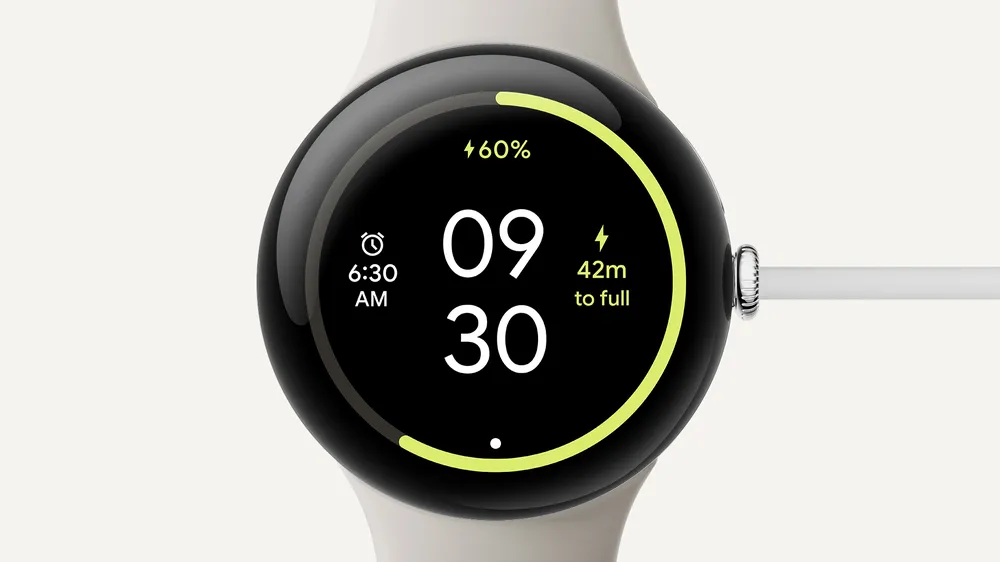
With the more efficient display, Wear OS 5 and what Google calls a power-efficient hybrid architecture, the watch is described as delivering dependable all-day battery life. It uses machine learning to detect sleep automatically and enable Bedtime Mode, which turns off notifications and the always-on display. A new, improved Battery Saver Mode extends battery life to up to 36 hours on both sizes without switching off health, fitness or safety features, according to Google. The 45mm has a 35 percent bigger battery than before, and the 41mm charges 20 percent faster. Google does not list milliampere-hour capacities in the launch post, so those numbers have to come from the store listing.
Fitness: readiness, load and targets
Three new tools aim at the balance between training and rest. Daily Readiness uses an improved algorithm that analyses resting heart rate, heart rate variability and recent sleep to estimate how ready you are to train. Cardio Load tracks the exertion and intensity of your heart during an activity and across the day, including trends that show whether you are over- or under-training. Target Load is a personalised training target delivered each morning that takes your recent cardio load and readiness into account. The new Fitbit Morning Brief pulls it together into a daily digest on your wrist with sleep, readiness, target cardio load, progress toward your weekly exercise goal and the weather, and flags metrics such as HRV, SpO2 or skin temperature that fall outside your personal range.
Tools for runners
Google gave the watch a package for runners. Workout Builder lets you create custom runs with goals for distance, time, pace or heart-rate zone and repeats for intervals. During the run, the watch gives haptic and audio guidance for when a warm-up is done, when you are off pace, when you exceed a heart-rate target or when the next interval starts, helped by continuous heart-rate sampling and what Google calls its most accurate heart rate for running yet. Afterwards, advanced motion sensing and machine learning analyse running form, including cadence, stride length and height and ground contact time, and a running dashboard in the Fitbit app tracks personal records. Fitbit Premium adds daily run recommendations powered by Google AI and Peloton classes for members.
Loss of Pulse Detection
The headline safety feature is Loss of Pulse Detection, which Google calls a first of its kind. It is designed to detect a loss-of-pulse event, in which the heart suddenly stops beating, a health emergency where every minute matters and which many people experience when they are alone. When it detects such an event, the watch can automatically place a call to emergency services and share an automated message with critical context and your location. Google says the feature was to be available on Pixel Watch 3 in September in various countries in Europe, and that it would keep working with regulators to bring it to more countries. Availability therefore depends on where you live, and the watch does not replace medical care.
Google and Pixel integration
The watch also acts as a remote and shortcut. It can control a Google TV Streamer as an on-wrist remote, open a live camera feed from Google Home when the doorbell rings, and capture voice notes with the Pixel Recorder app that sync to a Pixel phone and can be searched and transcribed. Call Assist uses Google AI to screen spam calls and to pick calls up and hold them. A new Ultra-Wideband chip lets you unlock a Pixel phone with a swipe while wearing the watch, and Google says you can use the watch as a digital car key, starting with BMW and MINI.
Who it suits
The Pixel Watch 3 suits Android and Pixel owners who want structured training advice, a bright screen and a safety feature in a round, minimalist watch. If you want to compare it with an older model, the Pixel Watch 2 page is a useful reference, and Samsung's rival is covered on the Galaxy Watch8 page. Our smartwatches section lists every model we cover.
Where it ranks
Compare Google Pixel Watch 3 with similar devices
More from Google
Frequently asked questions
When was the Google Pixel Watch 3 released?
The Google Pixel Watch 3 was released on 2024-09-10, according to the manufacturer’s published information.
How much does the Google Pixel Watch 3 cost?
The estimated range for the Google Pixel Watch 3 is $315 to $385 in US dollars, based on the launch list price. Actual prices vary by country, retailer and storage option.
What are the main specs of the Google Pixel Watch 3?
Headline figures for the Google Pixel Watch 3: Refresh rate: 60 Hz, Battery life: 36 h. The full specification table is further up this page.
Is the Google Pixel Watch 3 worth buying?
That depends on your priorities. Use the editorial review on this page for our view, check the rankings above to see where the device stands on battery, display and camera, and compare it directly with similar models before you decide.