Smartwatches
Garmin fenix 9 Pro
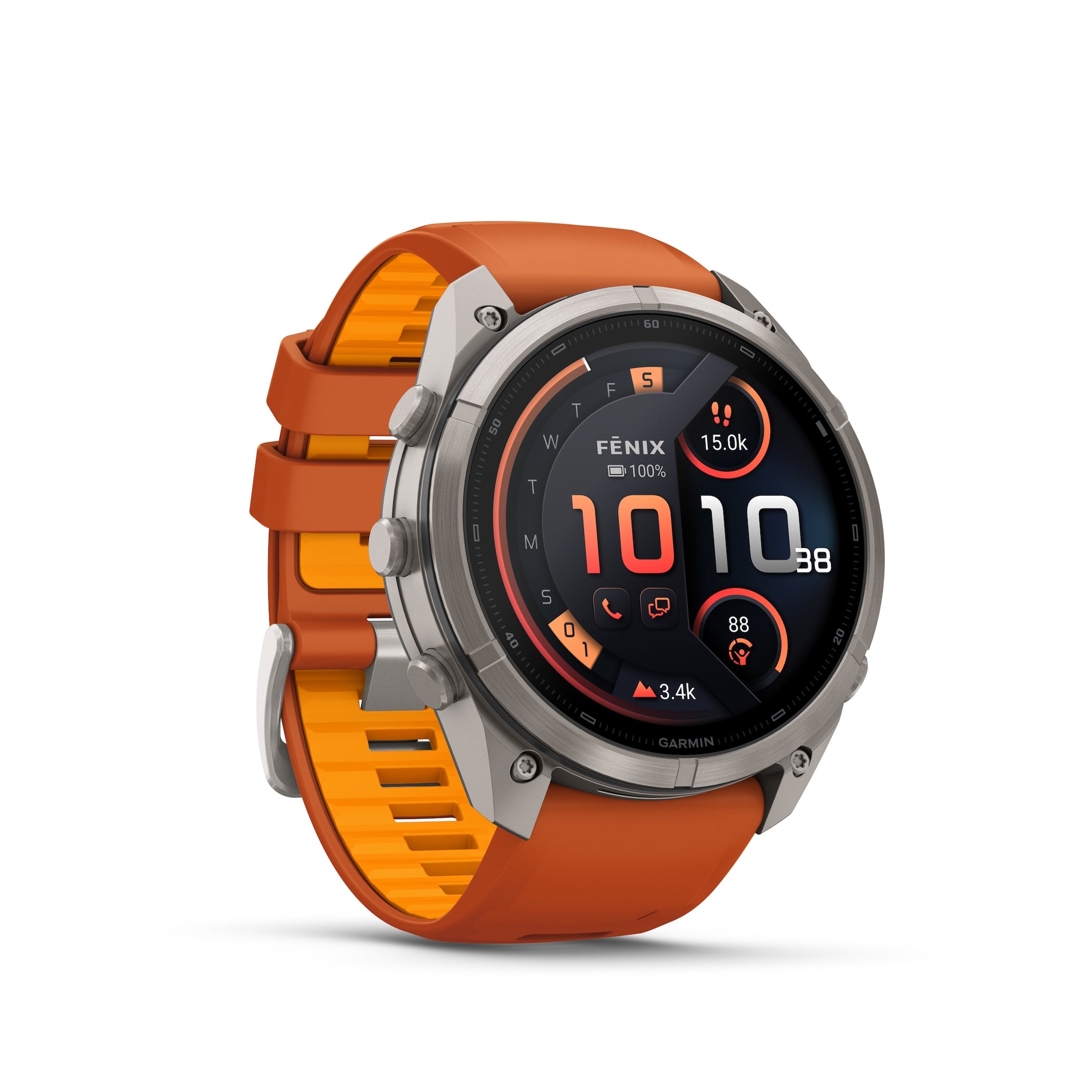
The fenix 9 Pro is Garmin's first titanium-case fenix, with up to 3,000-nit AMOLED, optional solar and LTE plus satellite connectivity on select models, from $1,099.99.
Key figures at a glance
Gallery
Specifications
- Display
- AMOLED up to 3,000 nits: 1.3-inch 416x416 (43 mm), 1.4-inch 454x454 (47 mm), 1.5-inch 466x466 (51 mm); solar models use a sunlight-visible MIP display (1.3-inch 260x260 at 47 mm, 1.4-inch 280x280 at 51 mm); sapphire or Power Sapphire lens
- Case
- 43, 47 and 51 mm; titanium case and bezel; AMOLED 62 g / 78 g / 99 g, solar 84 g (47 mm) and 102 g (51 mm)
- Battery
- AMOLED: up to 10 / 18 / 31 days in smartwatch mode (43 / 47 / 51 mm); 51 mm AMOLED: up to 56 hours GPS, 151 hours Max Battery GPS; 51 mm solar: up to 30 days (57 days with solar), up to 75 hours GPS (124 hours with solar) (Garmin claims, solar figures assume 50,000 lux)
- Storage
- 64GB for maps, music and data
- Navigation
- Multi-band GPS with SatIQ plus GLONASS, Galileo, QZSS and BeiDou; routable maps with perspective view
- Connectivity
- Bluetooth, ANT+, Wi-Fi; LTE and satellite connectivity with inReach on select models (active plan required): calls, texts, SOS, LiveTrack notifications, Garmin Locate
- Training
- Garmin Epic multi-activity stories, stamina zones and stamina curve, indoor rowing metrics, rucking with up to 100 kg pack weight, training readiness
- Health
- Wrist-based heart rate, Pulse Ox, ECG app, Body Battery, sleep coach, skin temperature
- Features
- Garmin Pay, music storage, LED flashlight with green night-vision mode, leakproof inductive buttons, Connect IQ
- Durability
- 10 ATM, rated for diving to 40 m
- Straps
- QuickFit 26 mm silicone band included, ComfortFit bands available
- OS
- Garmin firmware; pairs with Android and iOS through the Garmin Connect app
The Garmin fenix 9 Pro is the top model of Garmin's ninth-generation multisport watch line, announced on 25 August 2026 and sold from the start at a suggested starting price of $1,099.99. It is the first fenix with a titanium watch case, and it offers the largest AMOLED display ever fitted to a fenix, optional solar charging and, on select models, built-in LTE and satellite connectivity for calls, texts and SOS without a phone. This page is a review based on the published specifications and manufacturer information. It explains how the Pro differs from the standard model, what the many variants mean and where the trade-offs are.
Where it sits in the lineup
The Pro sits at the top of the family, above the fenix 9, which starts at $999.99 and uses a polymer case with a titanium rear cover. Both come in 43, 47 and 51 mm sizes and share the software, the 64GB of storage, the routable maps and the training features. The Pro adds the titanium case, a brighter display, solar options, extra flashlight modes and optional phone-free connectivity. Compared with the previous generation, read Garmin fenix 9 Pro vs Garmin fenix 8. Alternatives in the same price band include the Apple Watch Ultra 3, which is easier to use with an iPhone but has less battery life and fewer training metrics, and the Garmin MARQ Gen 3, which is a luxury-oriented option. For stamina over display brightness, the Enduro 4 is the specialist. The rankings page shows how these watches compare.
Design and display
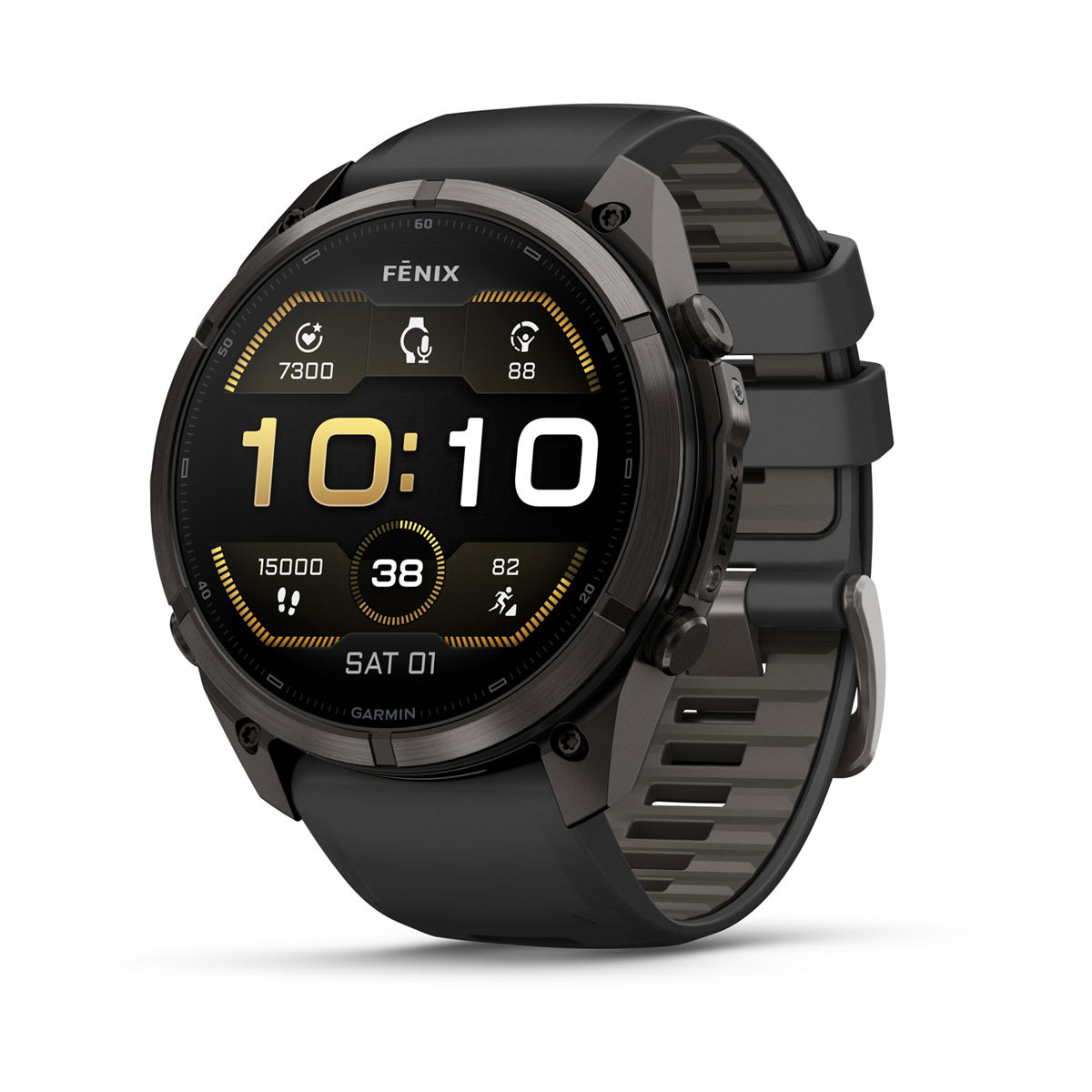
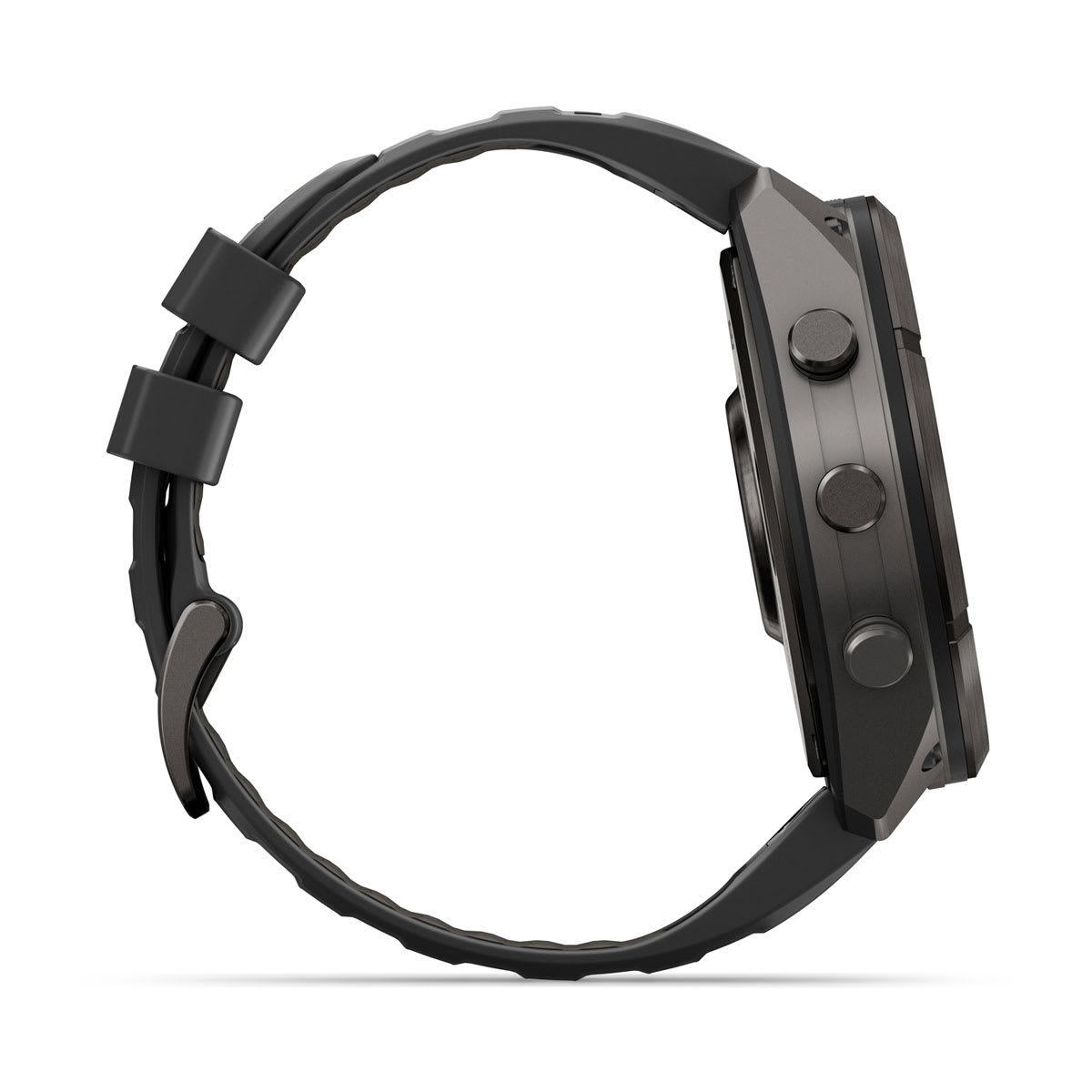
Garmin uses a nano-molding process that joins metal and plastic at a molecular level to make the titanium case, which the company says keeps the watch thin and light. The case sizes are 43, 47 and 51 mm. The weights listed on the product page are 62 grams for the 43 mm AMOLED model, 78 grams for the 47 mm AMOLED model, 99 grams for the 51 mm AMOLED model, 84 grams for the 47 mm solar model and 102 grams for the 51 mm solar model. Thickness ranges from 13.3 mm to 16.6 mm depending on the version. The lens is sapphire, with Power Sapphire on the solar models, and the buttons are leakproof. The water rating is 10 ATM with a dive rating to 40 meters. A 26 mm QuickFit silicone band comes in the box, and ComfortFit fabric bands are available.
The AMOLED models reach up to 3,000 nits of brightness according to Garmin. Screen sizes are 1.3 inches (416 x 416) on the 43 mm, 1.4 inches (454 x 454) on the 47 mm and 1.5 inches (466 x 466) on the 51 mm. The 51 mm display is Garmin's first 1.5-inch AMOLED, which the company says is 15 percent larger than the one on the fenix 8 without making the case bigger. The solar models use a sunlight-visible, transflective memory-in-pixel display: 1.3 inches (260 x 260) on the 47 mm and 1.4 inches (280 x 280) on the 51 mm. They are less colorful but they save power and, with the solar lens, can extend battery life.
The built-in LED flashlight gains a green mode that preserves night vision, which will matter to hunters, campers and people who run or ride in the dark.
Connectivity and safety
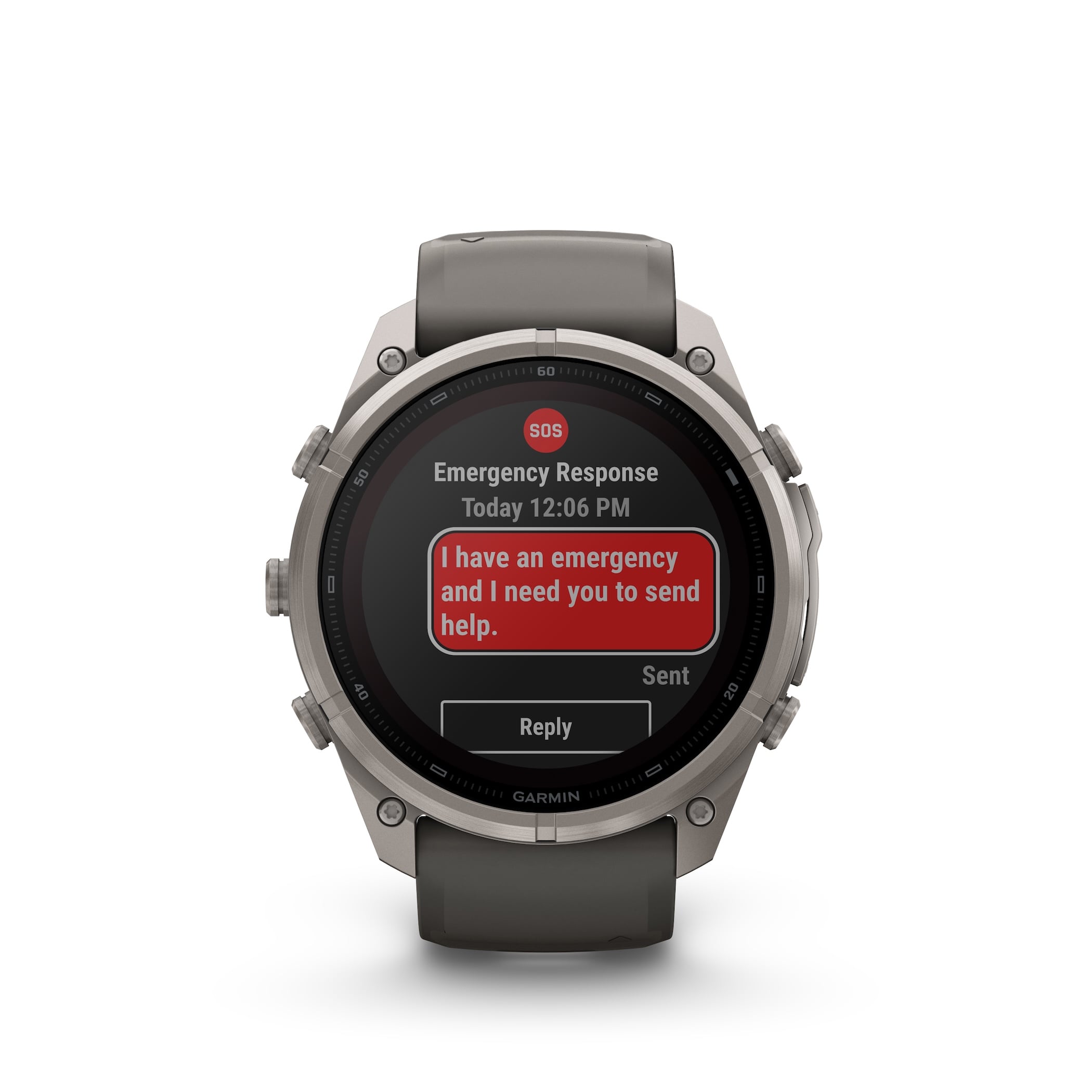
The biggest functional change is the optional inReach connectivity. Select Pro models include satellite and LTE, so that voice, text and SOS communication works from the wrist. Garmin says it is available in all three sizes for the first time. An active inReach plan is required, and the SOS goes to the staffed Garmin Response coordination center. Further functions with a plan include LiveTrack notifications through LTE in the Garmin Messenger app, so loved ones can follow your activity, quick messages to chosen recipients, the new Garmin Locate feature that shares your location over LTE and weather forecasts for a chosen place sent by satellite as well as LTE. Garmin warns that satellite and SOS functions on this watch have important limitations compared with its dedicated inReach devices and that LTE coverage is not available in all regions, so check the requirements for your area before relying on it.
For everything else the watch uses Bluetooth, ANT+ and Wi-Fi and pairs with iPhone and Android phones through Garmin Connect. Safety features also include incident detection during selected activities.
Performance and software
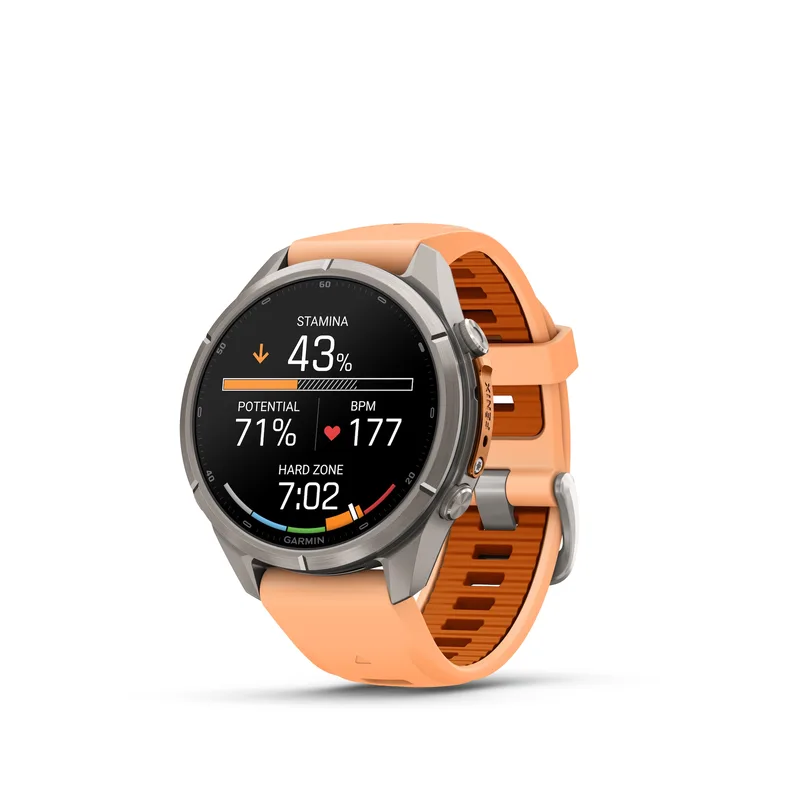
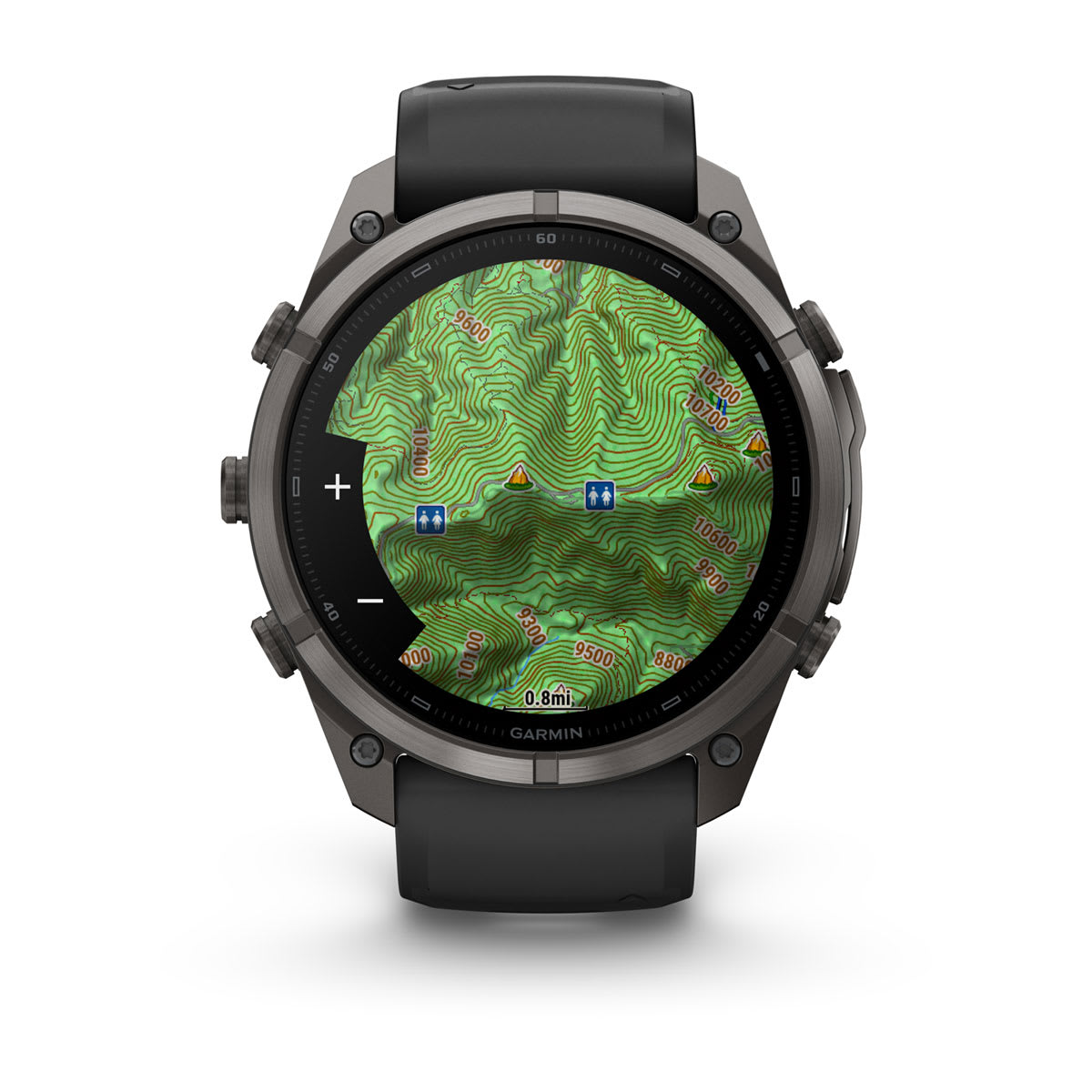
The software is shared with the standard model. The watch has 50 percent more RAM than the fenix 8, a faster map engine with panning up to 30 percent quicker and a new perspective view for the maps. Storage is 64GB, with space for up to 7,000 songs and twice as many maps as the previous generation. Garmin Epic bundles several activities into one story in Garmin Connect. Stamina zones and a stamina curve show endurance trends, indoor rowing adds VO2 Max and a power curve with a suitable rowing machine, and rucking features cover pack weights up to 100 kg and GORUCK workouts. Training readiness, training status, coaching plans, Body Battery, advanced sleep, skin temperature, Pulse Ox and an ECG app are included, subject to regional availability. Multi-band GPS with SatIQ and four additional satellite systems provide positioning, and dive modes cover single-gas and apnea use down to 40 meters.
Battery
Battery claims depend on the version. For the AMOLED models Garmin lists up to 10 days in smartwatch mode on the 43 mm, up to 18 days on the 47 mm and up to 31 days on the 51 mm. The 51 mm AMOLED reaches up to 56 hours of GPS in normal mode, up to 22 hours with music, up to 151 hours in Max Battery mode and up to 65 hours in Extended Battery mode. The 51 mm solar model is listed at up to 30 days in smartwatch mode and up to 57 days with solar charging, up to 75 hours of GPS (124 hours with solar) and up to 186 hours in Max Battery GPS mode (1,000 hours with solar). The 47 mm solar model lists up to 21 days, or 34 days with solar. Garmin's solar figures assume three hours a day outside at 50,000 lux, which is bright direct sunlight, so most people will see less. LTE and satellite use will draw additional power, and the manufacturer does not publish battery figures for these features in the press material.
Who it is for
The Pro is for athletes and adventurers who want the best of Garmin and who value a premium case, a large bright screen or the ability to leave the phone behind. The 51 mm AMOLED suits those who want maps and stats at a glance, the solar versions suit people on multi-day trips with long daylight, and the LTE and satellite models suit solo hikers, climbers and trail runners who want a link to emergency help. The 43 mm size is the first small titanium fenix with these options, which makes it relevant for people with slimmer wrists who usually find fenix watches too large.
Compromises
- Price. It starts at $1,099.99, and the connected and solar variants will cost more, so the total depends on the exact version you pick.
- Confusing variants. Three sizes, AMOLED or solar displays and with or without inReach create many combinations; solar and AMOLED do not appear on every size.
- Subscription for connectivity. Satellite, LTE and SOS functions need an active plan, and Garmin states that coverage and performance are limited compared with its dedicated inReach devices.
- Weight. The 51 mm models weigh 99 to 102 grams with the band, which some wearers find heavy for sleep tracking.
- Solar claims are ideal-case figures. The 57-day figure assumes strong daily sun exposure.
- Regional limits. The ECG app, Pulse Ox and LTE coverage are not available everywhere.
To sum up, the fenix 9 Pro is the most complete watch in Garmin's outdoor range: premium titanium case, a large and bright screen, solar choices and optional phone-free connectivity. It is also expensive and complex to choose, so check which variant matches your sport, wrist size and travel plans before buying.
Where it ranks
Compare Garmin fenix 9 Pro with similar devices
More from Garmin
Frequently asked questions
When was the Garmin fenix 9 Pro released?
The Garmin fenix 9 Pro was released on 2026-08-25, according to the manufacturer’s published information.
How much does the Garmin fenix 9 Pro cost?
The estimated range for the Garmin fenix 9 Pro is $990 to $1210 in US dollars, based on the launch list price. Actual prices vary by country, retailer and storage option.
What are the main specs of the Garmin fenix 9 Pro?
Headline figures for the Garmin fenix 9 Pro: Battery life: 31 days. The full specification table is further up this page.
Is the Garmin fenix 9 Pro worth buying?
That depends on your priorities. Use the editorial review on this page for our view, check the rankings above to see where the device stands on battery, display and camera, and compare it directly with similar models before you decide.