Smartwatches
Garmin fenix 9
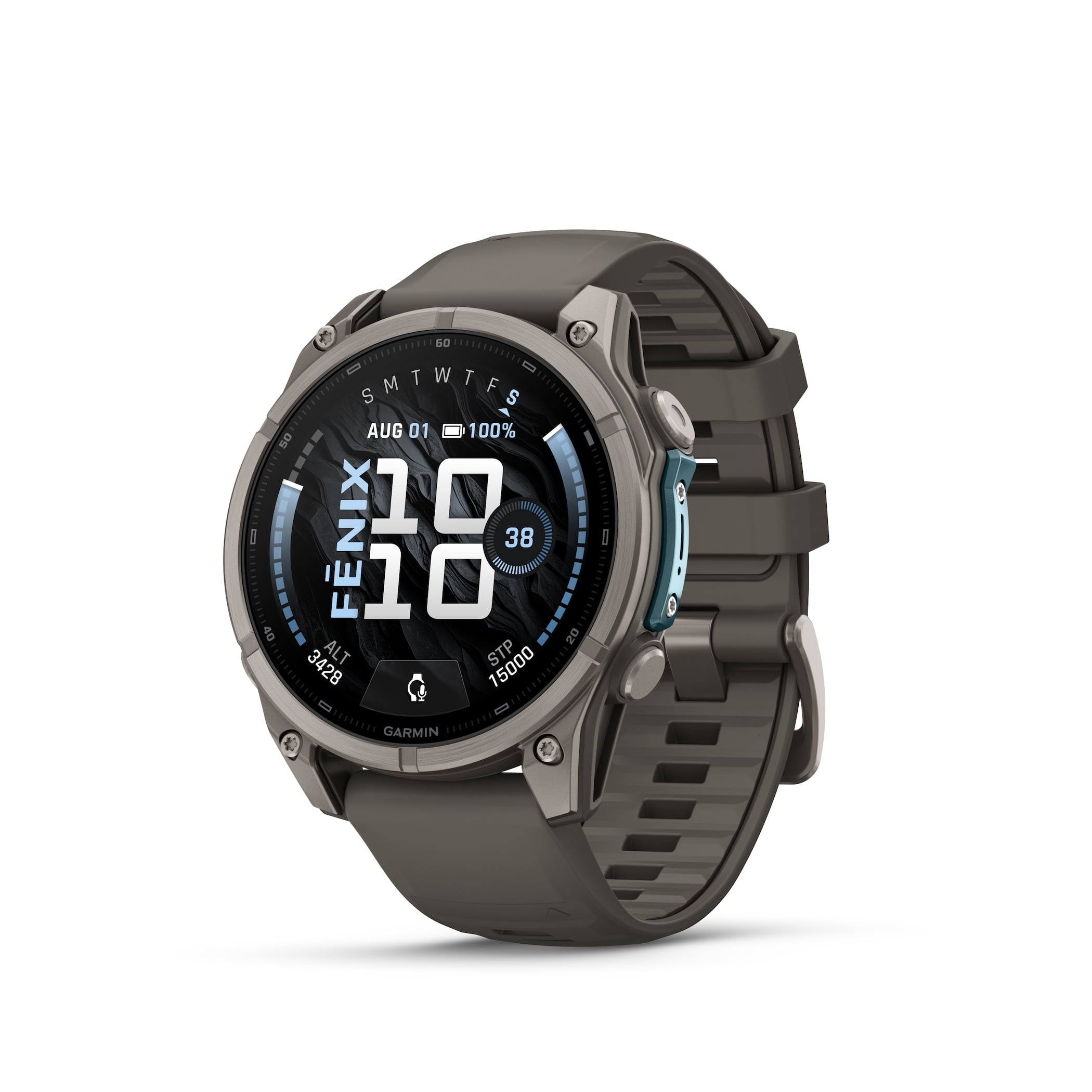
Garmin's fenix 9 brings an AMOLED display, 64GB of storage, routable maps and new stamina and Epic tools to a 43, 47 or 51 mm multisport watch starting at $999.99.
Key figures at a glance
Gallery
Specifications
- Display
- AMOLED touchscreen: 1.3-inch 416x416 (43 mm), 1.4-inch 454x454 (47 and 51 mm), up to twice as bright as fenix 8 (Garmin claim), sapphire lens
- Case
- 43, 47 and 51 mm; fiber-reinforced polymer with titanium rear cover and titanium bezel; 61 g / 75 g / 91 g; 13.8 / 13.8 / 14.7 mm thick
- Battery
- Up to 10 / 16 / 29 days in smartwatch mode (43 / 47 / 51 mm); 51 mm: up to 54 hours GPS, 145 hours Max Battery GPS, up to 31 days Expedition mode (Garmin claims)
- Storage
- 64GB for maps, music and data (about 7,000 songs per Garmin)
- Navigation
- Multi-band GPS with SatIQ plus GLONASS, Galileo, QZSS and BeiDou; routable maps with perspective view, 50% more RAM than fenix 8
- Training
- Garmin Epic multi-activity stories, stamina zones and stamina curve, indoor rowing VO2 Max and power curve, rucking with up to 100 kg pack weight, training readiness and training status
- Health
- Wrist-based heart rate, Pulse Ox, ECG app, Body Battery, sleep coach, skin temperature
- Features
- Garmin Pay, music storage, LED flashlight, leakproof inductive buttons, speaker and microphone, Connect IQ
- Connectivity
- Bluetooth, ANT+, Wi-Fi
- Durability
- 10 ATM, rated for diving to 40 m
- Straps
- QuickFit 26 mm silicone band included, ComfortFit bands available
- OS
- Garmin firmware; pairs with Android and iOS through the Garmin Connect app
The Garmin fenix 9 is the standard model of Garmin's ninth-generation flagship multisport GPS watch, announced on 25 August 2026 and available from the start at a suggested price of $999.99. It keeps the formula of the fenix line, with a rugged case, multi-band GPS, routable maps and deep training analysis, and adds a brighter AMOLED display, 64GB of storage and new software such as Garmin Epic and stamina metrics. This page is a review based on the published specifications and manufacturer information. It explains where the watch sits next to the Pro version, what the battery claims mean and who might prefer something else.
Where it sits in the lineup
Garmin launched two models at the same time: the fenix 9 and the fenix 9 Pro. The Pro is the more expensive variant at $1,099.99 and adds a full titanium case, a brighter display, optional solar charging and LTE plus satellite connectivity on select models. The fenix 9 described here is the more affordable way into the family and comes in three sizes: 43, 47 and 51 mm. If you are coming from the previous generation, read the direct comparison Garmin fenix 9 vs Garmin fenix 8. Runners who want a lighter watch with a narrower focus may also look at the Forerunner 970, and those who care more about battery than about a bright screen may prefer the Enduro 4. The rankings page places these watches next to the rest of the catalog.
Design and display
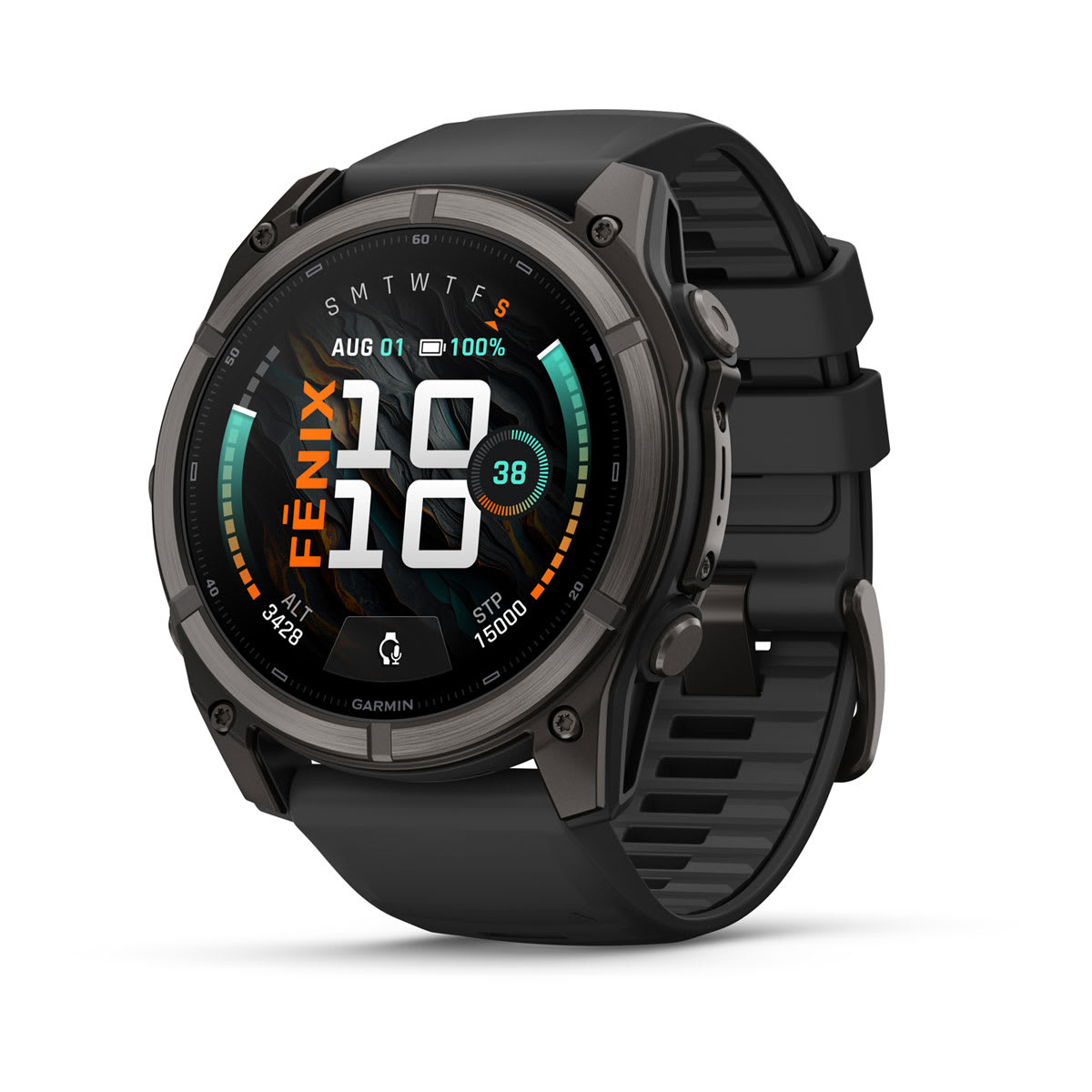
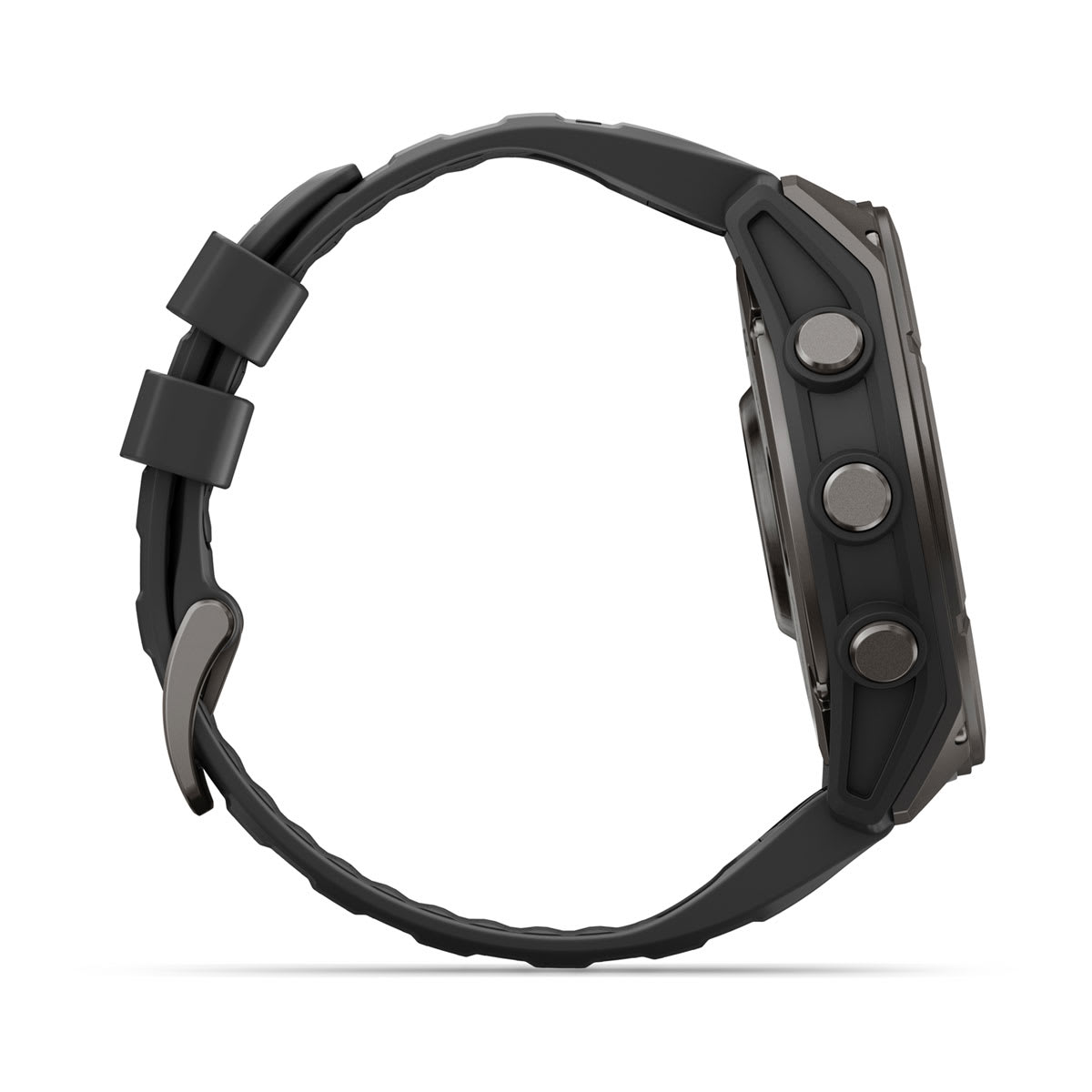
The fenix 9 uses a fiber-reinforced polymer case with a titanium rear cover and a titanium bezel, topped with a scratch-resistant sapphire lens. The case dimensions are 43 x 43 x 13.8 mm, 47 x 47 x 13.8 mm and 51 x 51 x 14.7 mm, and the weights with the silicone band are 61, 75 and 91 grams. The case-only weights are 44, 53 and 65 grams. Garmin lists a 10 ATM water rating and a dive rating to 40 meters, and leakproof inductive buttons that are designed to avoid water ingress through the buttons. A 26 mm QuickFit silicone band is included, and Garmin also sells ComfortFit fabric bands with a split-weave design.
The display is an AMOLED touchscreen. The 43 mm model has a 1.3-inch screen with 416 x 416 pixels, while the 47 mm and 51 mm models use a 1.4-inch screen with 454 x 454 pixels. Garmin states that the screen is twice as bright as that of the fenix 8, but it does not publish a nit value for the standard model, in contrast to the Pro, which is rated up to 3,000 nits. AMOLED looks vivid and sharp, but it uses more power than the memory-in-pixel screens of solar models, which is why the fenix 9 has no solar option. Buyers who prefer a screen that stays readable without any backlight in bright sun may want to look at the solar versions of the Pro.
Performance and software
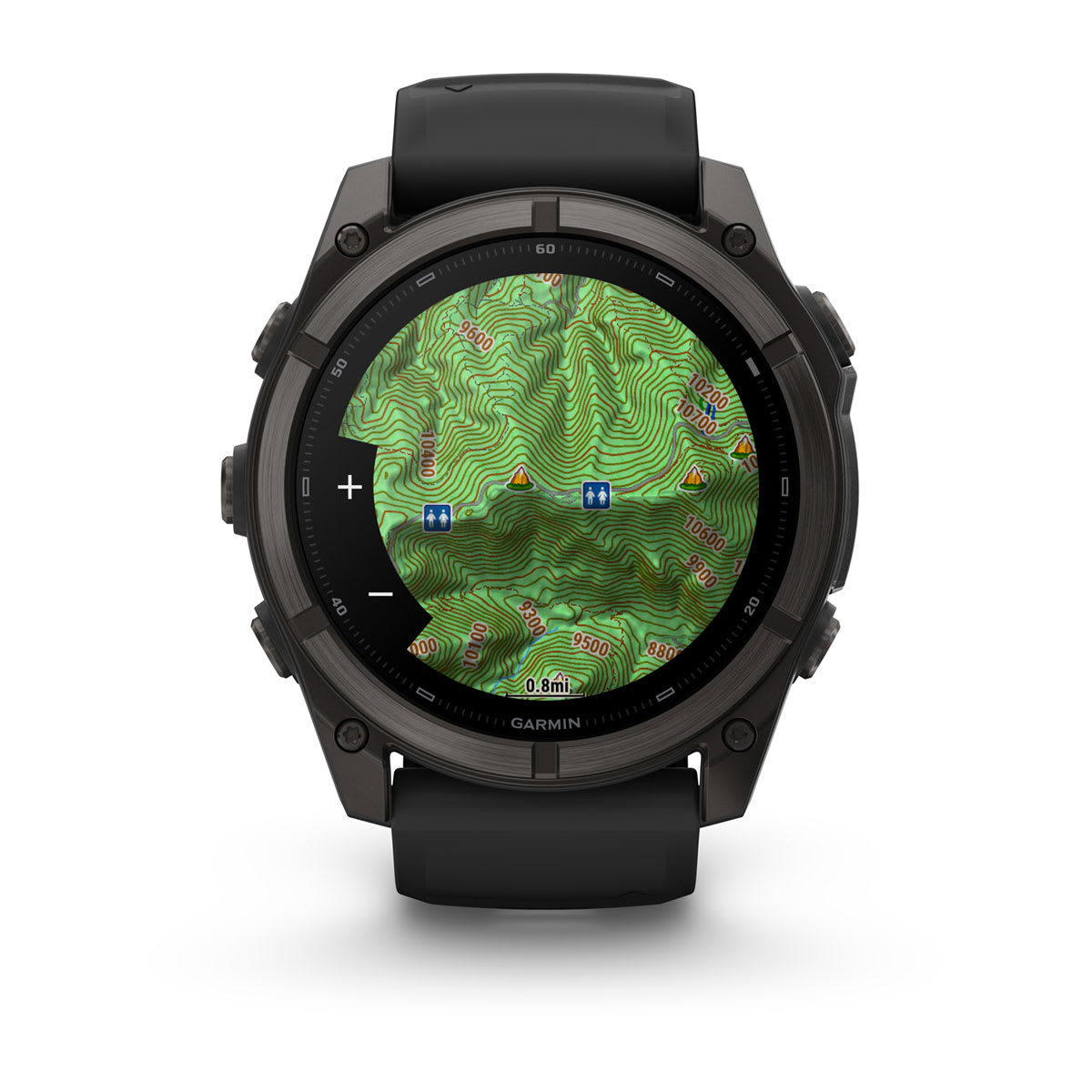
Garmin runs its own firmware, so there is no app store in the Wear OS or watchOS sense, but Connect IQ provides watch faces, data fields and apps. The company says the fenix 9 has 50 percent more RAM than the fenix 8, and a more powerful map engine that pans up to 30 percent faster. A new perspective view shows more detail close up and farther away, which helps when you plan the next stretch of a climb. Memory is 64GB, which lets you download twice as many maps as on the fenix 8 and, according to Garmin, store up to 7,000 songs.
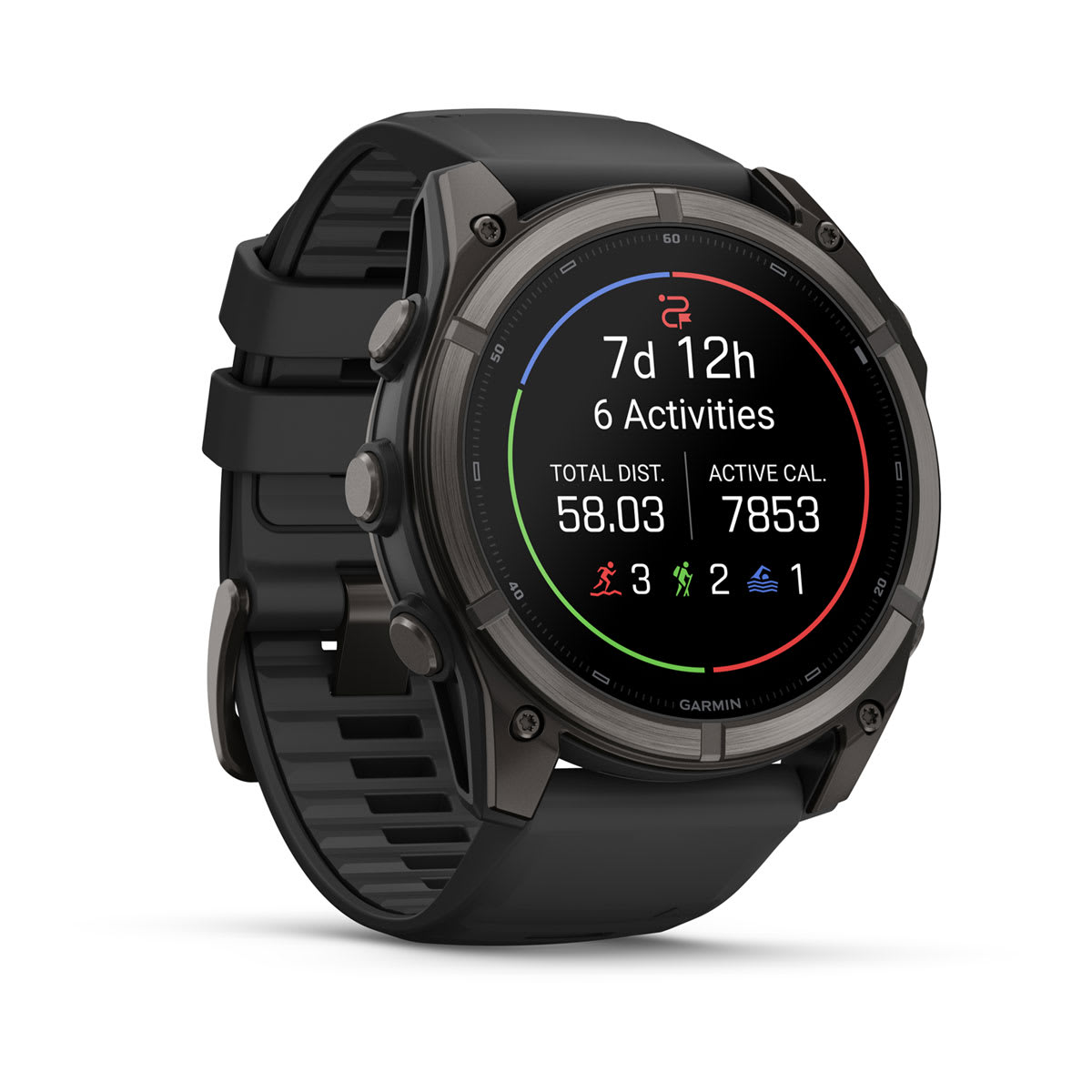
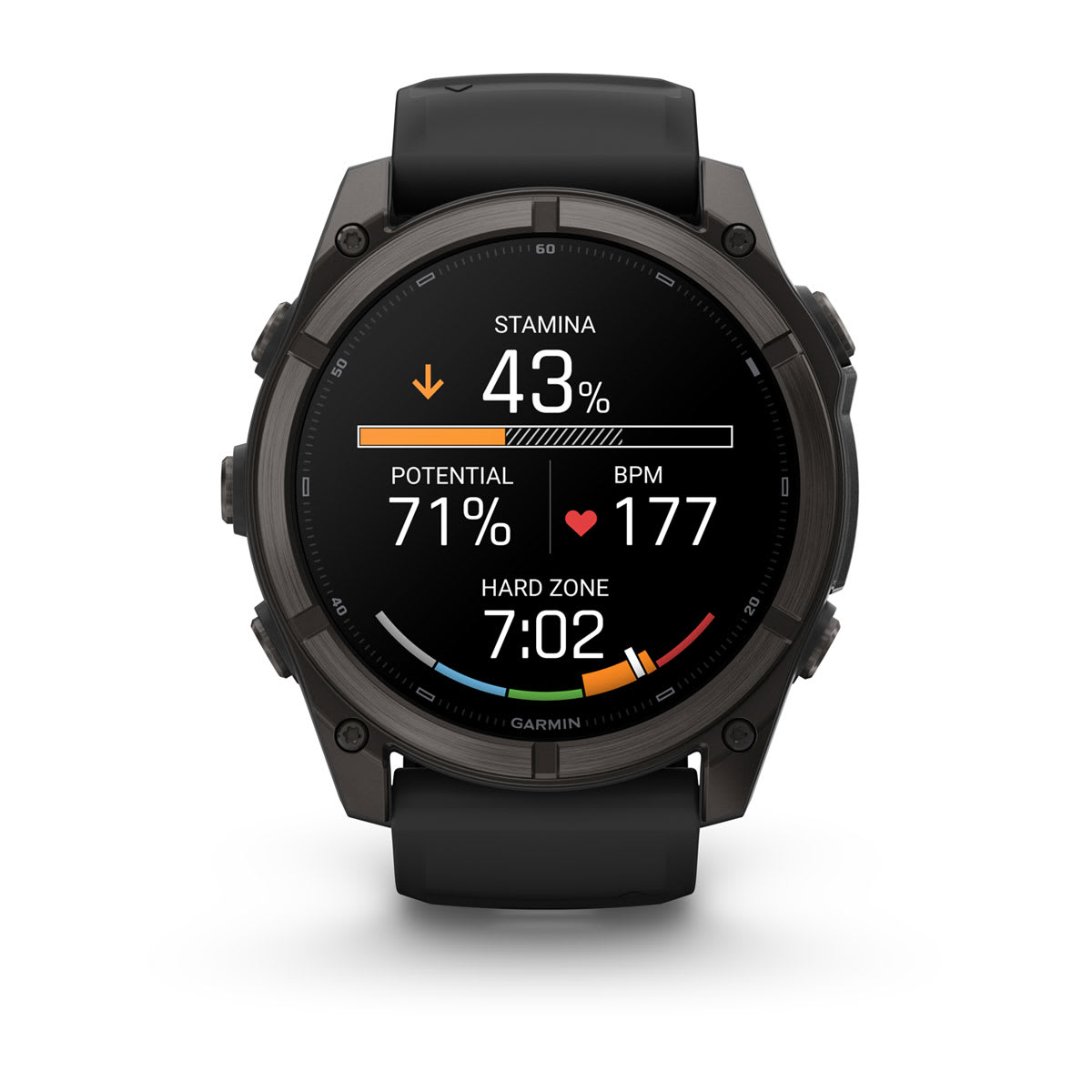
The training tools are where the fenix line separates itself from ordinary smartwatches. New stamina zones and a stamina curve show how endurance develops over time and help with pacing. Garmin Epic groups several activities from days, weeks or months into one story in Garmin Connect, with health and performance data, photos and the option to share it. Indoor rowing gains metrics such as VO2 Max and a power curve when used with a power-meter-equipped rowing machine. Rucking features allow you to change pack weight during an activity, follow GORUCK workouts on the watch and set targets up to 100 kg pack weight. Existing strengths remain: training readiness, training status, running and cycling coaching, strength workouts, multisport profiles and a long list of outdoor sports.
The sensor list includes multi-band GPS with SatIQ, GLONASS, Galileo, QZSS and BeiDou, a barometric altimeter, compass, gyroscope, thermometer and a depth sensor. Health tracking covers wrist heart rate, Pulse Ox, an ECG app that needs to be available in your country, Body Battery, advanced sleep, a sleep coach and skin temperature. Garmin Pay and music storage are included, and the watch pairs with both iPhone and Android phones over Bluetooth. ANT+ and Wi-Fi are also supported. Dive features include single-gas and apnea modes, a Bühlmann ZHL-16c decompression model and a maximum depth of 40 meters, but the watch is not a substitute for training or a dedicated dive computer.
Navigation and maps
Navigation is a core reason to buy a fenix. The built-in routable maps let you create and follow routes on the wrist,. The map engine is the new one with the faster panning, and the perspective view acts like a look-ahead. Storage for maps is now generous, and Garmin lists a map update tool for new regions. Multi-band GPS with SatIQ chooses the power mode automatically to balance accuracy and battery. Those who rely on a phone for navigation will find the watch is a good second screen, and those who go without a phone still have the maps on board.
Battery
Garmin quotes the following for smartwatch mode: up to 10 days for the 43 mm, up to 16 days for the 47 mm and up to 29 days for the 51 mm model. On the 51 mm version the GPS activity figure is up to 54 hours in normal mode, up to 21 hours with music, up to 145 hours in Max Battery mode and up to 65 hours in Extended Battery mode, with up to 45 hours in Max Accuracy mode and up to 31 days in Expedition mode. The 43 mm model is listed at up to 18 hours of GPS in normal mode. These are manufacturer claims measured under Garmin's own conditions, and heavy use of the always-on screen, music or LTE-free but constant notifications will lower them. The watch charges with a proprietary plug charger rather than with a wireless pad.
Who it is for
The fenix 9 is for athletes and outdoor users who want the full Garmin toolset: trail runners, mountain bikers, hikers, triathletes, rowers and people who combine several sports. It is also a good choice for those who want a watch that handles both daily wear and multi-day trips, because the size range from 43 to 51 mm fits slim and large wrists. The AMOLED screen suits people who check their watch often and want a colorful display. If you do not need solar charging or built-in LTE, the standard model saves $100 compared with the starting price of the Pro, according to the listed prices.
Compromises
- Price. At $999.99 it is a large investment, and ordinary fitness trackers cover basic needs for a fraction of that.
- No solar, no LTE. These options are limited to the Pro line, so the fenix 9 cannot top up through the screen and cannot make calls without a phone.
- Polymer case. Only the Pro has the full titanium case; the standard model uses fiber-reinforced polymer with a titanium rear cover.
- AMOLED battery trade-off. Days of battery life are good for AMOLED but lower than for memory-in-pixel watches with solar.
- Learning curve. The breadth of features and menus takes time to learn, and some functions need a Garmin Connect account and an app.
- Region limits. Features such as the ECG app, Pulse Ox and some maps are not available in every country.
In summary, the fenix 9 is a capable flagship for people who train seriously and travel in the outdoors. It improves the display, storage and software of the previous generation, but it is expensive and offers neither the titanium case nor the connectivity of the Pro.
Where it ranks
Compare Garmin fenix 9 with similar devices
More from Garmin
Frequently asked questions
When was the Garmin fenix 9 released?
The Garmin fenix 9 was released on 2026-08-25, according to the manufacturer’s published information.
How much does the Garmin fenix 9 cost?
The estimated range for the Garmin fenix 9 is $900 to $1100 in US dollars, based on the launch list price. Actual prices vary by country, retailer and storage option.
What are the main specs of the Garmin fenix 9?
Headline figures for the Garmin fenix 9: Battery life: 29 days. The full specification table is further up this page.
Is the Garmin fenix 9 worth buying?
That depends on your priorities. Use the editorial review on this page for our view, check the rankings above to see where the device stands on battery, display and camera, and compare it directly with similar models before you decide.