Smartwatches
Garmin MARQ (Gen 3)
Garmin's third-generation MARQ line brings six titanium and sapphire tool watches with a 1.4-inch AMOLED display, preloaded worldwide maps, LTE and satellite messaging and up to 18 days of battery.
Key figures at a glance
Gallery
Specifications
- Collection
- Six models: Adventurer, Athlete, Aviator, Commander, Diver and Golfer; US prices start at $2,500
- Display
- 1.4-inch borderless AMOLED display, the largest yet on a MARQ
- Materials
- Grade 5 titanium, sapphire lens, ceramic bezel inlays; model-specific straps and bracelets
- Battery
- Up to 18 days in smartwatch mode (Garmin claims)
- Navigation
- Preloaded worldwide TopoActive maps with address search; Preloaded ClimbPro on Adventurer
- Connectivity
- LTE calls, Garmin Messenger text and voice messages, satellite or LTE messaging, SOS to Garmin Response, Garmin Locate (active plan required)
- Health
- ECG app (AFib detection, availability varies), stress, sleep, Pulse Ox, HRV, morning and evening reports
- Features
- Built-in speaker and microphone, LED flashlight, customizable watch faces including World Timer, Panda and Flieger
- Durability
- Leakproof buttons on Adventurer and Diver; Diver supports scuba, apnea and snorkel activities up to 40 meters
- OS
- Garmin firmware; pairs with Android and iOS through the Garmin Connect app
The Garmin MARQ (Gen 3) is the third generation of Garmin's luxury "tool watch" collection, announced on 13 October 2026 and described by the company as available immediately. It is not a single watch but a family of six models built around the same hardware: Adventurer, Athlete, Aviator, Commander, Diver and Golfer. Each pairs Grade 5 titanium and a sapphire lens with its own ceramic bezel inlay, strap or bracelet and a set of activity features. This page is a review based on the published specifications and manufacturer information. Garmin's press release leaves out some numbers, such as case dimensions, weight and GPS battery life, so we flag what is not confirmed rather than guess.
Where it sits in the lineup
MARQ is Garmin's fashion-meets-function line, positioned above the Fenix, Forerunner and Venu families. US suggested retail prices start at $2,500, which puts every model in the territory of mechanical watches rather than fitness trackers. Garmin says all six share up to 18 days of battery life in smartwatch mode. The brand's performance-oriented alternatives are cheaper and, for training, arguably more practical: the Garmin Fenix 8 covers the rugged outdoor side, and the Forerunner 970 targets runners. Outside Garmin, the most direct premium rivals are the Apple Watch Ultra 3 and Samsung's Galaxy Watch Ultra, while Suunto Race 3S is a lighter sports-first option. Our Garmin MARQ (Gen 3) vs Garmin Fenix 8 page shows how the two Garmin lines differ, and the rankings place all of them side by side.
Design, materials and display
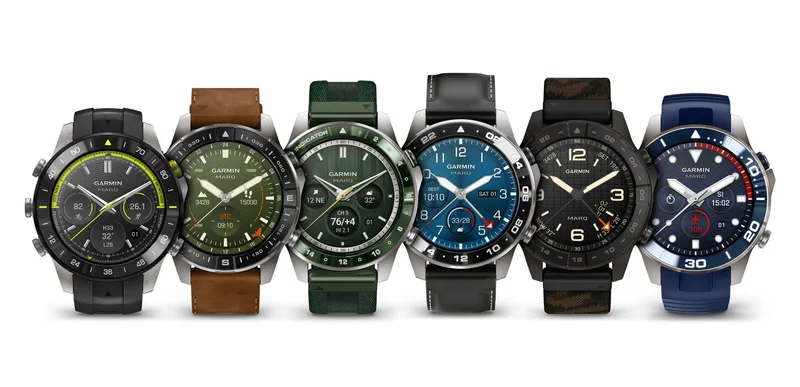
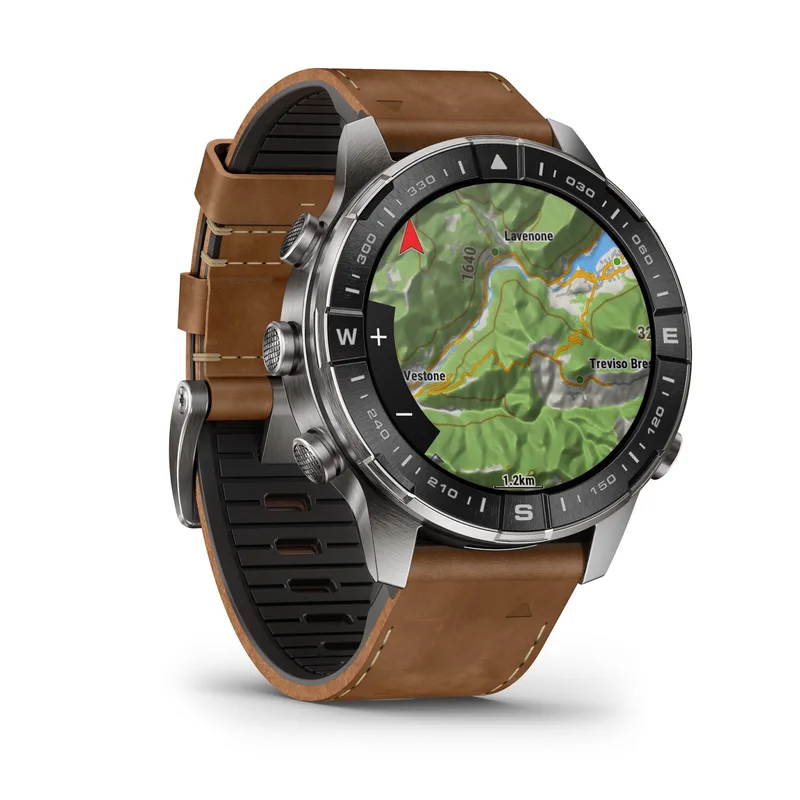
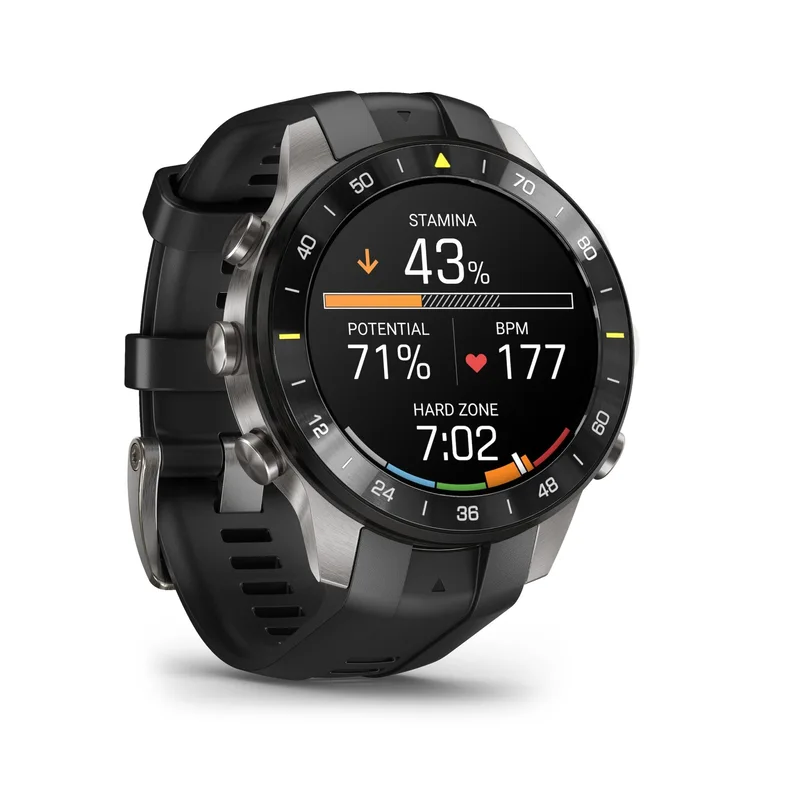
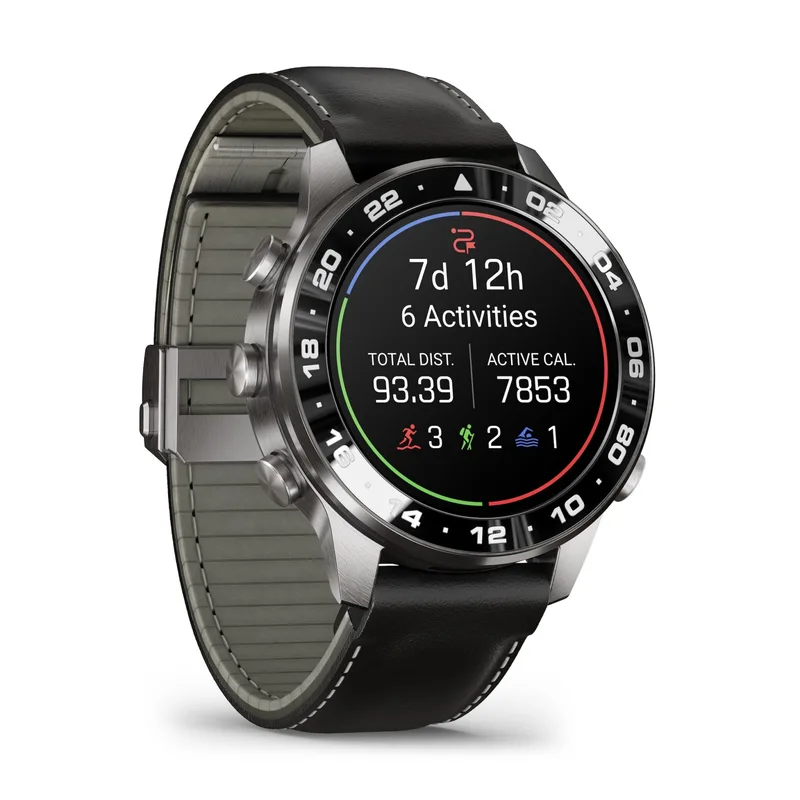
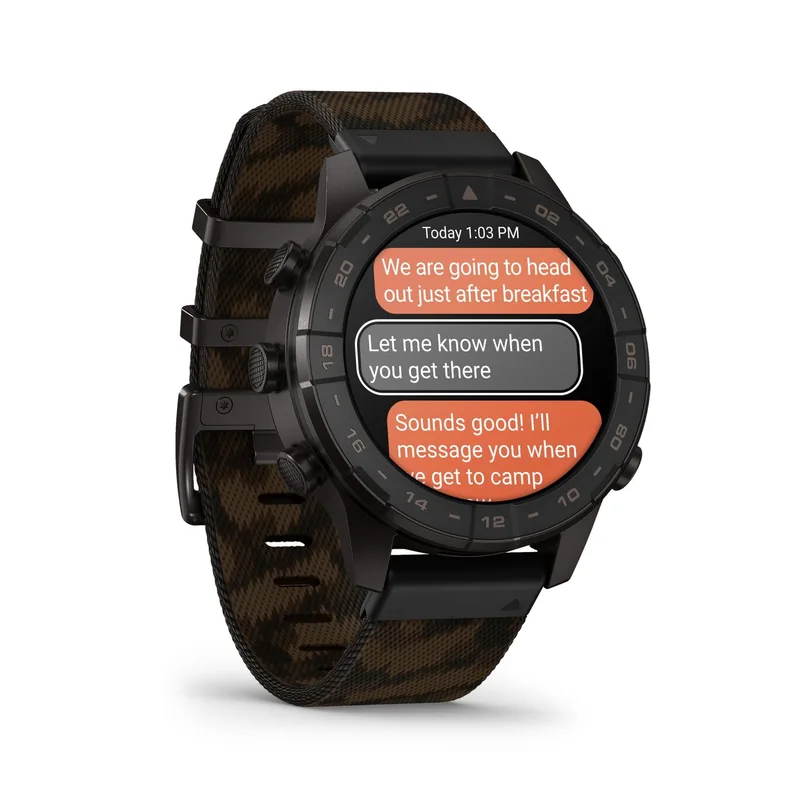
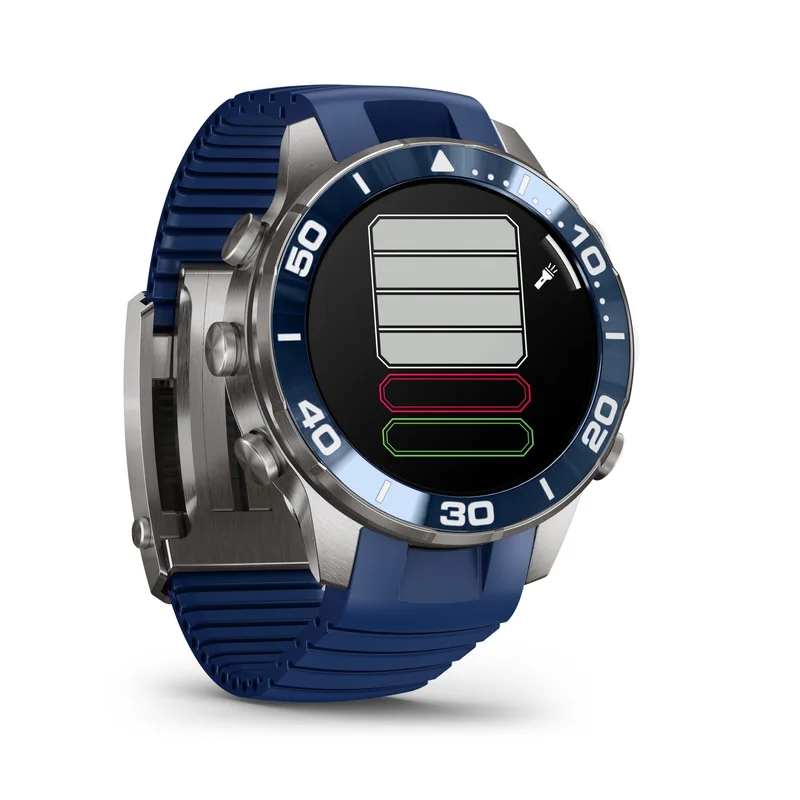
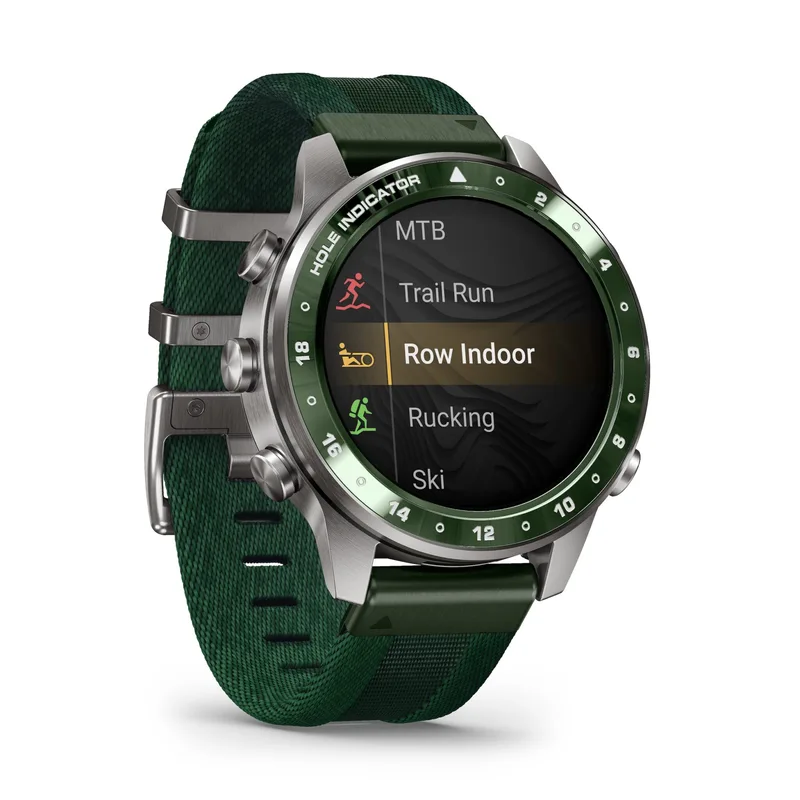
The materials list is the main selling point. Garmin states that every model uses tough Grade 5 titanium for the case and a strong sapphire lens, with ceramic bezel inlays that differ by model: a 360-degree compass scale on the Adventurer, a VO2 max indicator on the Athlete, UTC markings on the Aviator and Commander, a dive-style scale on the Diver and an 18-hole indicator on the Golfer. The straps are equally varied: full-grain Italian leather for the Adventurer, silicone rubber for the Athlete, a padded calfskin leather bracelet for the Aviator, a camo jacquard-woven band for the Commander, a jacquard strap for the Golfer and, on the Diver, a microadjust strap that Garmin lists at 15 mm. The family photograph shows how far apart the looks are, from a sporty black rubber model to a camouflage one and a blue dive watch.
The display is a 1.4-inch borderless AMOLED, the largest yet on a MARQ. That is a meaningful change for a line that earlier used smaller panels, since maps, messages and complications need space. Garmin also emphasises custom watch faces inspired by classic designs, naming World Timer, Panda and Flieger as examples, and each model has an exclusive collection. Case diameter, thickness and weight were not given in the release, so we cannot compare wearing comfort with the Fenix line beyond saying that titanium keeps the weight down.
Maps, communication and safety
Garmin highlights a set of navigation and connectivity tools as new for this generation. The watches come with preloaded TopoActive maps for worldwide use and support address search, so you can navigate to a street address without planning on a phone. When connected to LTE, you can make calls from the watch through the built-in speaker and microphone, and a new feature called Garmin Locate lets family members see your live location in the Garmin Messenger app. You can also exchange text and voice messages and receive weather forecasts via satellite or LTE. If something goes wrong, you can send an SOS message to Garmin Response, a coordination centre staffed around the clock. Garmin attaches caveats: an active plan is required, LTE coverage is not available in every region, and the satellite and SOS functions have important limitations compared with dedicated inReach devices, so check the feature requirements for your country.
A built-in LED flashlight with microlensing optics provides even illumination, which is useful for camp tasks, night walks and reading charts. It is one of those features that seems small on paper and proves its value in daily use.
Health and training features
All six models offer Garmin's health suite: an ECG app that records a Lead I-style trace and looks for signs of atrial fibrillation (adults aged 22 and over, availability depends on region), plus stress, sleep, Pulse Ox and heart rate variability. A morning report summarises overnight recovery, and an evening report outlines how much sleep you need and what tomorrow's workout, weather and events look like. The extras beyond that depend on the model.
The Adventurer adds integrated multi-layer mapping, leakproof buttons and Preloaded ClimbPro, which shows live information about current and upcoming climbs without a planned course. The Athlete focuses on training: enhanced stamina metrics, running economy and a tailored view of health and performance. The Aviator brings dynamic flight mapping, a dedicated UTC hand and aviation weather reporting. The Commander is the tactical variant with night vision capability, a stealth mode and Applied Ballistics support, plus micro-knurled buttons. The Diver supports scuba, apnea and snorkel activities down to 40 metres and adds sailing tools such as autopilot control and tack assist. The Golfer includes Virtual Caddie and green contour data for course play. Anyone choosing between them should treat the model-specific tools as the deciding factor, because the core hardware is shared.
Battery
Garmin claims up to 18 days of battery life in smartwatch mode on all models. That is a manufacturer figure for a mode with typical notifications and no continuous GPS, and a 1.4-inch AMOLED with LTE features will not reach it if the screen is always on, if the flashlight is used often or if you track long GPS activities. The press release does not publish GPS-mode or LTE-mode hours, so we cannot say how the Gen 3 compares with the Fenix 8 in heavy use. Treat 18 days as a best case and plan for far less if you navigate daily.
Who it is for
The MARQ (Gen 3) is meant for buyers who want a smartwatch that looks like a watch collector's piece and still works as a navigator, tracker and emergency device. A pilot, a sailor or a frequent traveller who values the preloaded worldwide maps and LTE messaging will find that the model-specific tools justify the choice. Collectors who like to swap straps and watch faces get a lot of room to personalise. For people who mainly want a training tool, the price is hard to justify: a Fenix or Forerunner covers most workout needs for far less money.
Compromises
The compromises are mostly about cost and about what is not stated. At $2,500 and up, the MARQ is expensive, and Garmin's own cheaper lines give you most of the software. LTE and satellite features need paid plans and are not available everywhere. Several practical specifications, including dimensions, weight, memory and GPS runtime, are not in the launch release, so check Garmin's product pages before buying. Finally, the ECG app and other health features are screening aids and are not meant for diagnosis. Within those limits, the Gen 3 is a thoughtful update that adds a larger display, maps and communications to a line that has always been about style.
Where it ranks
Compare Garmin MARQ (Gen 3) with similar devices
More from Garmin
Frequently asked questions
When was the Garmin MARQ (Gen 3) released?
The Garmin MARQ (Gen 3) was released on 2026-10-13, according to the manufacturer’s published information.
How much does the Garmin MARQ (Gen 3) cost?
The estimated range for the Garmin MARQ (Gen 3) is $2250 to $2750 in US dollars, based on the launch list price. Actual prices vary by country, retailer and storage option.
What are the main specs of the Garmin MARQ (Gen 3)?
Headline figures for the Garmin MARQ (Gen 3): Battery life: 18 days. The full specification table is further up this page.
Is the Garmin MARQ (Gen 3) worth buying?
That depends on your priorities. Use the editorial review on this page for our view, check the rankings above to see where the device stands on battery, display and camera, and compare it directly with similar models before you decide.