Smartwatches
Suunto Race 3S
Suunto's compact 46 mm titanium performance watch pairs a 2,000-nit AMOLED display and dual-band GPS with free global offline maps, 64GB of storage and up to 38 hours of GPS battery.
Key figures at a glance
Gallery

Specifications
- Display
- 1.32-inch LTPO AMOLED, 466 x 466, up to 2,000 nits, sapphire crystal lens
- Case
- 46 mm, titanium bezel and caseback, polymer case, about 56 g with the silicone strap
- Battery
- Up to 10 days in daily use; up to 38 hours of dual-band GPS in Performance mode, up to 45 hours in Endurance mode (Suunto claims)
- Navigation
- Dual-band (L1+L5) multi-constellation GNSS (GPS, GLONASS, Galileo, BeiDou, QZSS), compass, barometer, free global offline maps
- Storage
- 64GB for maps, routes, training data and music; offline music via a later software update
- Sensors
- Valencell optical wrist heart rate with SpO2, barometric altimeter, temperature sensor, compass
- Training
- Suunto AI Coach, Race Planner, Intelligent Trail Race Strategy, Climb Guidance, wrist-based running power, more than 120 sport modes
- Connectivity
- Bluetooth; Suunto app for iOS 17 or later and Android 8 or later
- Durability
- 5 ATM water resistance, 22 mm quick-release strap
- Colors
- Titanium Black, Feather Purple, Feather Gray
- OS
- Suunto firmware; pairs with Android and iOS through the Suunto app
The Suunto Race 3S is a compact GPS sports watch that Suunto announced on 15 October 2026. It takes the performance features of the Finnish brand's Race family and fits them into a 46 mm titanium-and-polymer case that weighs about 56 g with its silicone strap. The headline claims are a 1.32-inch AMOLED display with up to 2,000 nits of brightness, dual-band GPS with up to 38 hours of battery life, free global offline maps and 64GB of storage. This page is a review based on the published specifications and manufacturer information. It explains where the watch sits in Suunto's range, what the hardware and software promise, how to read the battery figures and who is likely to be happy with it.
Where it sits in the lineup
Suunto positions the Race 3S as a "next-generation performance watch" for trail running, road racing and mountain days. The "S" stands for the smaller of the two sizes, and the pitch is simple: flagship-style navigation and training tools without the bulk of a large expedition watch. In the United States the watch is listed at $580, and the UK store shows £435 for the Titanium Black version, so it sits in the upper-middle part of the sports-watch market rather than at the very top. It arrived a few weeks after the lighter Suunto Run 2 and alongside a new Suunto AI Coach service, which tells you where the company wants to go: more guidance, less raw data.
The obvious rivals come from Garmin and Apple. Garmin's Forerunner 970 is the nearest competitor for runners, while the Garmin Fenix 8 targets the same outdoor crowd with a heavier build. Apple's Watch Ultra 3 is the smartwatch-first alternative. Our Suunto Race 3S vs Garmin Forerunner 970 page lines up the numbers side by side, and the rankings show where each model lands on battery, display and price.
Design, materials and display
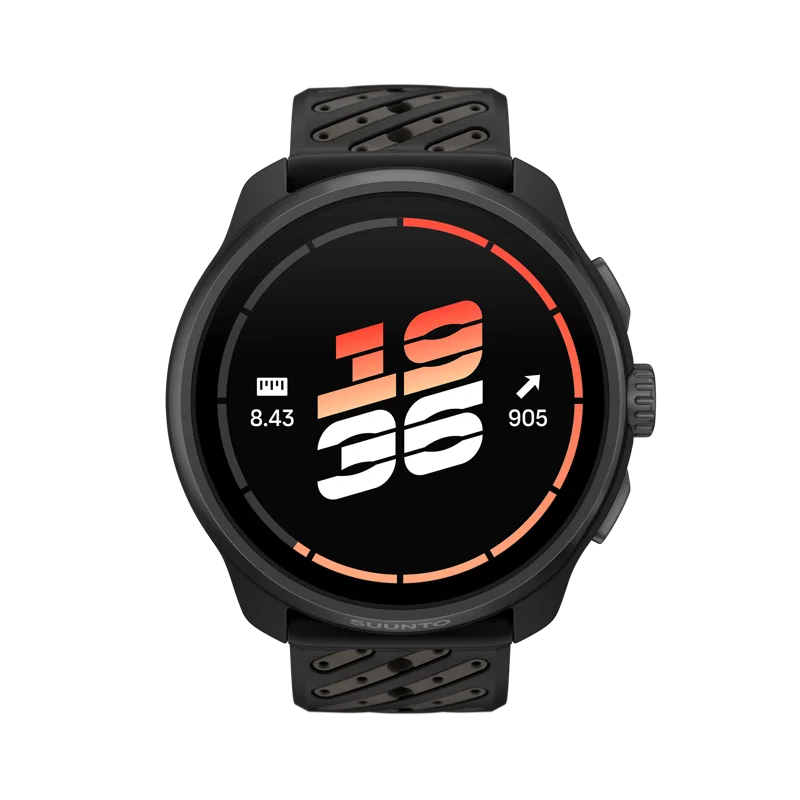
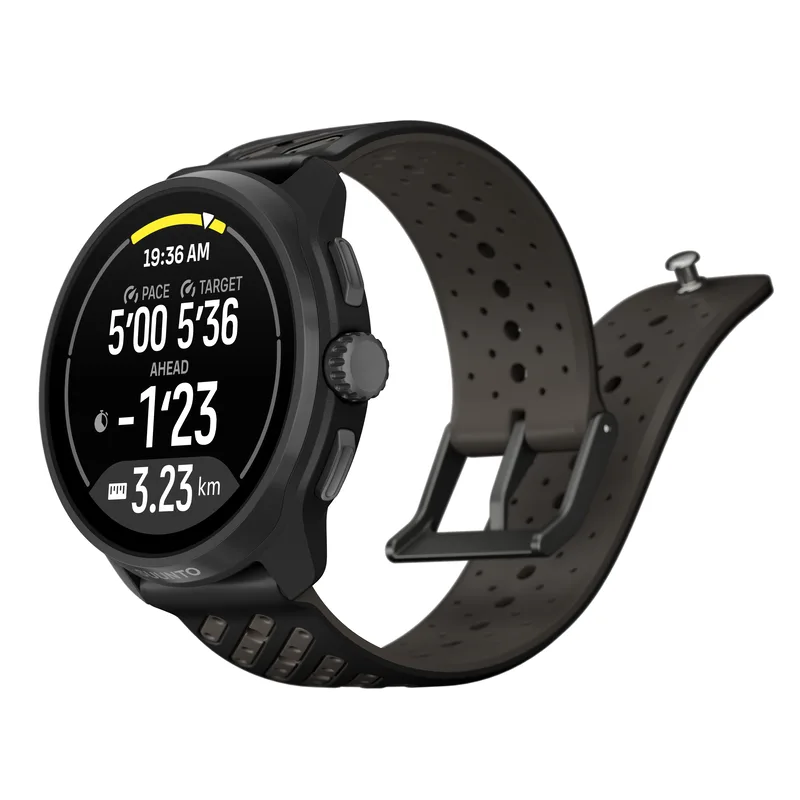
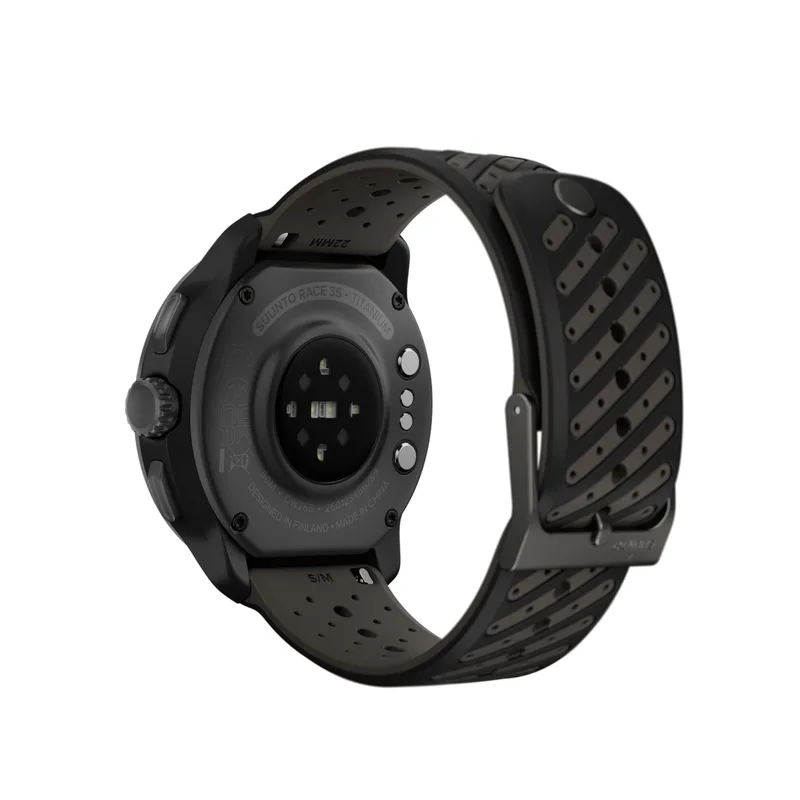
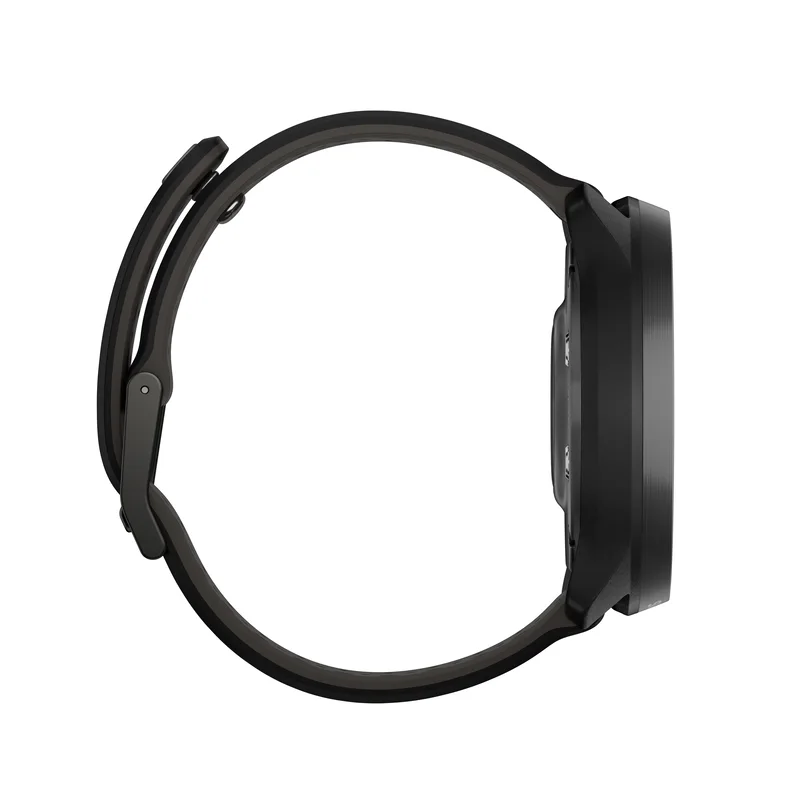
According to Suunto, the bezel and caseback are titanium, the lens is sapphire crystal and the case itself is a high-performance polymer. That mix is typical for watches trying to keep weight down: the metal where you touch and scratch it, plastic where strength per gram matters more. At 46 mm across and roughly 56 g with the strap, the watch is light enough to wear overnight for sleep tracking and to forget about on a long run. The supplied strap is a 22 mm quick-release silicone model with a perforated pattern, and any 22 mm strap fits, so changing to nylon or leather is straightforward. Suunto lists the wrist size range as 125 to 175 mm, with an accessory strap reaching 215 mm.
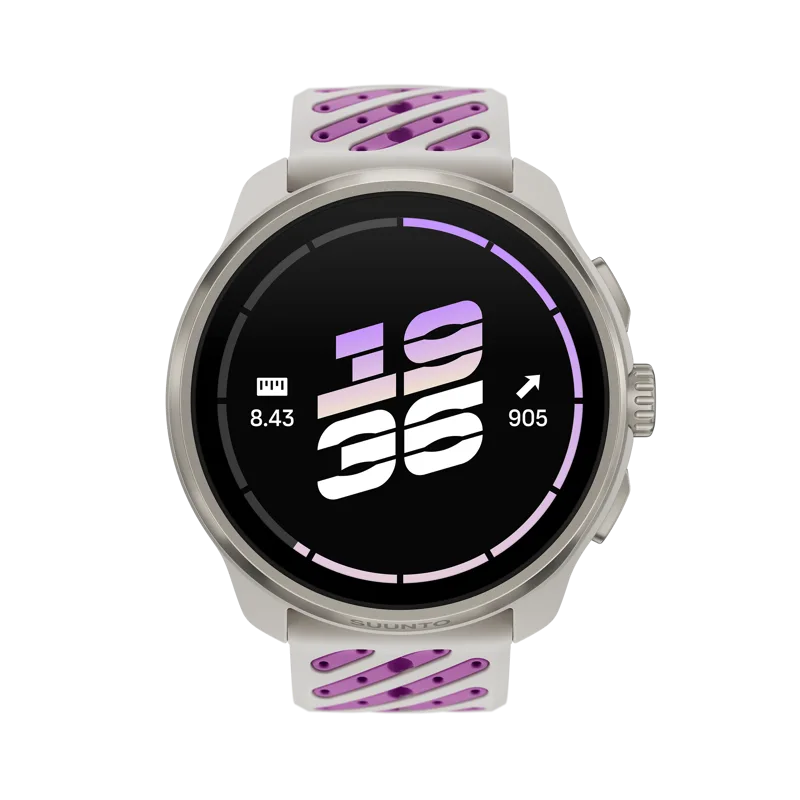
The display is a 1.32-inch LTPO AMOLED panel at 466 x 466 pixels, with a claimed peak brightness of 2,000 nits. That figure matters for a sports watch because glare is the usual enemy: a very bright panel stays readable under alpine sun and through sweaty sunglasses. The LTPO technology also allows the screen to lower its refresh rate when idle, which helps battery life when the always-on mode is enabled. Navigation is handled with three physical controls: a rotating, pressable crown in the middle and two buttons, which is the combination most runners prefer over a touch-only watch in rain or with gloves. The watch is rated to 5 ATM, which covers swimming, showering and snorkelling but not scuba diving. Colour options shown on Suunto's site are Titanium Black, Feather Purple and Feather Gray.
Navigation, sensors and training tools
The Race 3S uses dual-band L1 and L5 GNSS with support for five satellite systems: GPS, GLONASS, Galileo, BeiDou and QZSS. Suunto states that the second band reduces the signal errors you get between tall buildings or in steep valleys, so the track stays smoother and more accurate. The watch can connect to up to 32 satellites and follow four constellations at once. A compass, barometric altimeter and temperature sensor round out the outdoor kit, and a pressure drop triggers an automatic storm alarm.
Maps are where the Race 3S makes its strongest case. The watch carries free global offline maps, with contour lines, place names, roads and water features, and no subscription is mentioned. You choose regions in the Suunto app and download them to the 64GB of storage, which Suunto says is double the previous generation. Routes come from the app or from GPX and KML files. While you follow a route, the watch shows distance remaining, estimated time of arrival and an alert if you wander off course. Climb Guidance adds the length, ascent and steepness of each climb ahead, and Race Planner builds a pacing plan from the elevation profile, the weather and your fitness, then shows how far ahead or behind plan you are during the race. A newer feature called Intelligent Trail Race Strategy extends that idea to long trail events.
On the health side, the watch uses an optical heart-rate sensor from Valencell, described by Suunto as an upgraded sensor and algorithm behind a curved 2.5D lens. It records SpO2 on demand and during sleep, heart rate variability and stress and recovery indicators. Suunto reminds users that the readings are not meant for medical diagnosis. More than 120 sport modes cover running, trail running, cycling, swimming, hiking, triathlon, skiing and gym sessions, and you can create custom modes. Running power is measured at the wrist, so no accessory is required, and external power meters, foot pods and chest straps connect over Bluetooth. Pairing a Suunto heart-rate belt unlocks ZoneSense, which sets training zones automatically.
Suunto AI Coach and software
The software story is the Suunto AI Coach, introduced the same week. Suunto describes it as a conversational assistant inside the Suunto app: you ask a question about your training and receive an answer with charts, tables and maps, or you pick a running goal and let it build a plan around your target, progress and current condition. Structured workouts and routes created with the coach can be saved in the app and synced to the watch. As with any AI feature, the quality of the advice depends on the data behind it and on how the company handles updates, and a review based on specifications cannot judge either. It is better treated as an optional extra than as a reason to buy.
The watch connects to the Suunto app on iOS 17 or later and Android 8 or later. Connectivity is Bluetooth only: there is no LTE and no mention of NFC payments in the material we reviewed. Suunto says offline music is a first for the Race series, with MP3 and WAV playback to Bluetooth headphones, but adds that the feature arrives in a software update after launch and that the timing is subject to announcement. If music without a phone is central to your decision, treat it as a promise rather than a shipping feature.
Battery and charging
Battery claims need careful reading. Suunto's launch material puts the headline at up to 38 hours of dual-band GPS, and the battery-mode screen on its own product images lists Performance at 38 hours and Endurance at 45 hours; the watch also offers Ultra and Tour modes. Its support text mentions around 10 days of daily use. A separate FAQ entry on the product page quotes about 45 hours with dual-frequency GPS, which seems to match the Endurance setting rather than the default one, so we treat 38 hours as the figure for full-accuracy tracking. All of these are manufacturer numbers measured under Suunto's conditions.
For perspective, 38 hours covers most marathons and ultras that finish within a day and a half. Only the longest mountain events will push you into the longer modes, and those trade accuracy for runtime. Charging is quick by watch standards: Suunto says ten minutes on the charger gives about 10 hours of dual-frequency GPS, and a full charge takes roughly 1.5 to 2 hours with a 5V/1A or stronger USB charger.
Who it is for
The Race 3S suits runners and hikers who want strong navigation without carrying a large watch: trail racers who plan pacing from a course profile, mountain walkers who prefer a watch that holds full maps offline, and smaller wrists that find 49 mm-class expedition watches uncomfortable. The free maps and the physical crown are real advantages over many AMOLED rivals. If you already use Garmin Connect or Apple Health and rely on their ecosystems, the move to Suunto's app means re-learning, though it syncs workouts to Strava and TrainingPeaks.
Compromises
There are trade-offs. The case is partly polymer, not full titanium, which keeps weight and cost down but is less premium than the marketing language suggests. Connectivity stops at Bluetooth, so there is no LTE, no on-wrist payments and no ECG are mentioned in the material we reviewed. Offline music is delayed, the AI Coach is new, and the battery figures are claims. Garmin's Fenix 8 offers more features and a larger ecosystem for a higher price. In short, the Race 3S is a focused, lighter option for people who value maps, pacing tools and a bright display over smartwatch extras.
Where it ranks
Compare Suunto Race 3S with similar devices
More from Suunto
Frequently asked questions
When was the Suunto Race 3S released?
The Suunto Race 3S was released on 2026-10-15, according to the manufacturer’s published information.
How much does the Suunto Race 3S cost?
The estimated range for the Suunto Race 3S is $522 to $638 in US dollars, based on the launch list price. Actual prices vary by country, retailer and storage option.
What are the main specs of the Suunto Race 3S?
Headline figures for the Suunto Race 3S: Battery life: 10 days. The full specification table is further up this page.
Is the Suunto Race 3S worth buying?
That depends on your priorities. Use the editorial review on this page for our view, check the rankings above to see where the device stands on battery, display and camera, and compare it directly with similar models before you decide.