Smartwatches
Suunto Race S
A compact 45 mm sports watch with a 1.32-inch AMOLED display, dual-band GPS, free offline maps and up to 30 hours of GPS training, shrunk down from the original Suunto Race.
Key figures at a glance
Gallery
Specifications
- Display
- 1.32-inch AMOLED, 466 x 466, touch screen with crown and buttons, always-on display, Gorilla glass
- Case
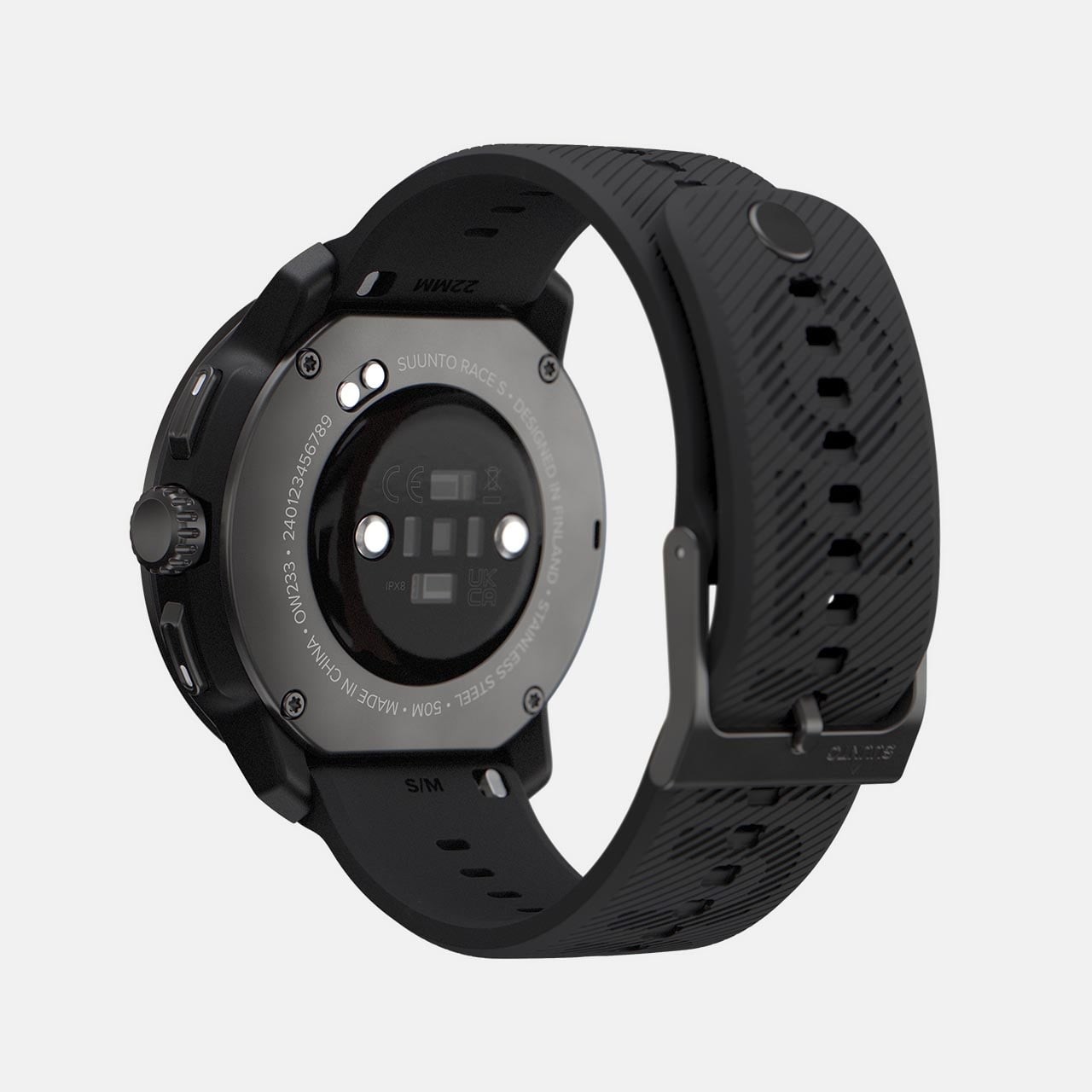
- 45 x 45 x 11.4 mm, glass fibre reinforced polyamide case; stainless steel bezel version 60 g, titanium bezel version 53 g, silicone strap, 22 mm strap width
- Battery
- Up to 9 days in daily use; up to 30 hours of training with multi-band GPS, up to 40 hours with single-band GPS, up to 120 hours in Tour mode (Suunto states)
- Navigation
- Dual-band (L1+L5) multi-constellation GNSS (GPS, GLONASS, Galileo, QZSS, BeiDou), digital compass, barometric altimeter, free offline maps, breadcrumb and route navigation
- Storage
- 32GB for offline maps
- Sensors
- Optical wrist heart rate, blood oxygen, barometer, temperature, compass
- Training
- More than 95 sport modes, HRV-based training load and recovery, Race Pacer, SuuntoPlus apps, Suunto Coach
- Connectivity
- Bluetooth, Suunto app, phone notifications, music controls, over-the-air updates
- Durability
- 50 m water resistance, operating temperature -20 to +55 degrees C
- Colors
- All Black, Powder Gray, Powder Pink, Gravel Gray, Power Orange, Power Blue (stainless steel); titanium editions in Graphite, Canary and Courtney
The Suunto Race S is the compact sibling of the original Suunto Race, a GPS sports watch with a bright AMOLED display, a crown and buttons, offline maps and a long list of training metrics. Suunto announced it on 25 June 2024 as a smaller and lighter version for athletes with slimmer wrists or a preference for a less bulky watch, and the manufacturer says it offers the same features as the larger model in a smaller package. This review is based on the published specifications and Suunto's own product information; battery times and other performance figures are Suunto's claims and depend on settings and conditions. The result is a focused performance watch for runners, cyclists, trail athletes and swimmers who want serious navigation and recovery data without the size of a typical outdoor watch.
Where the Race S sits in the lineup
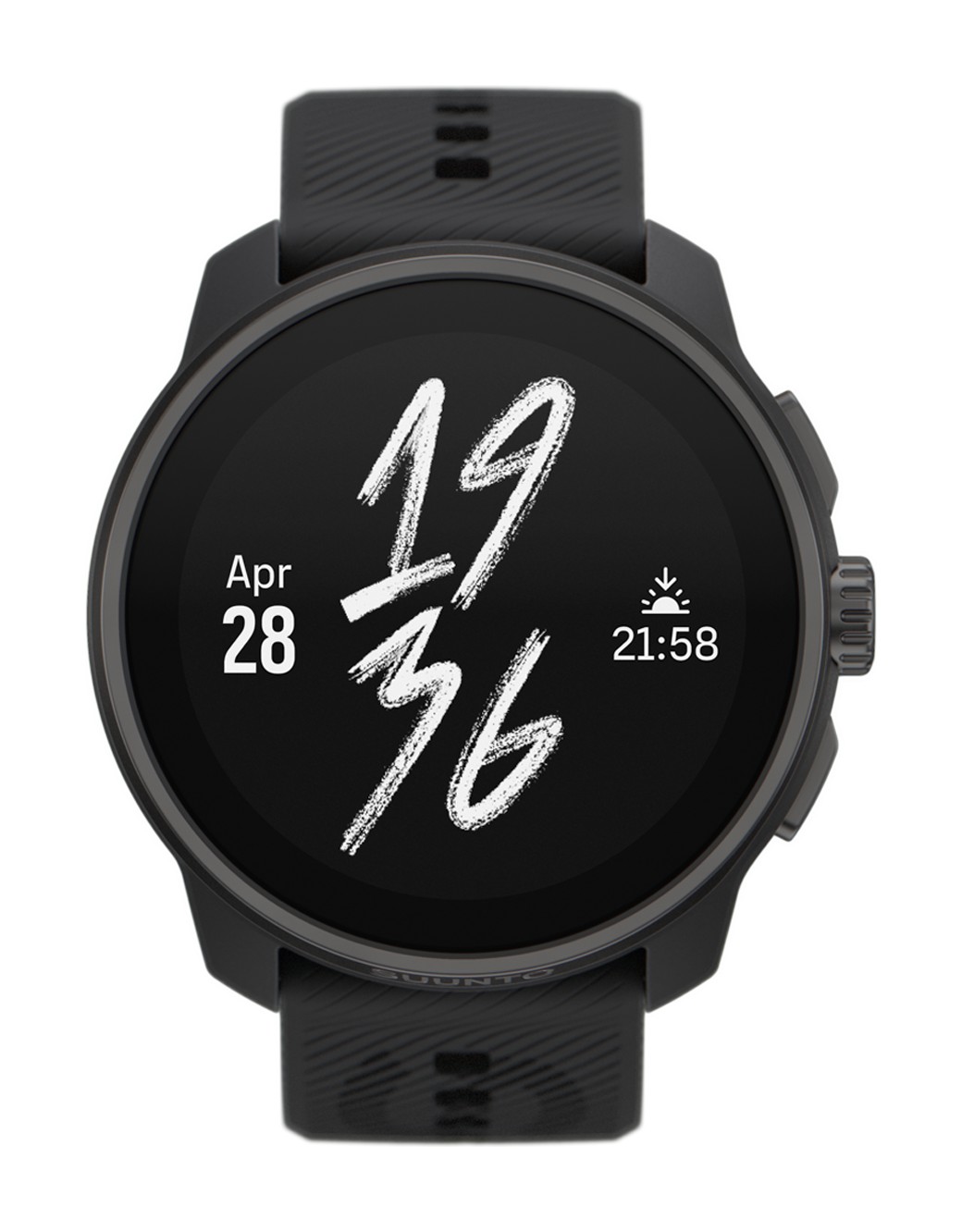
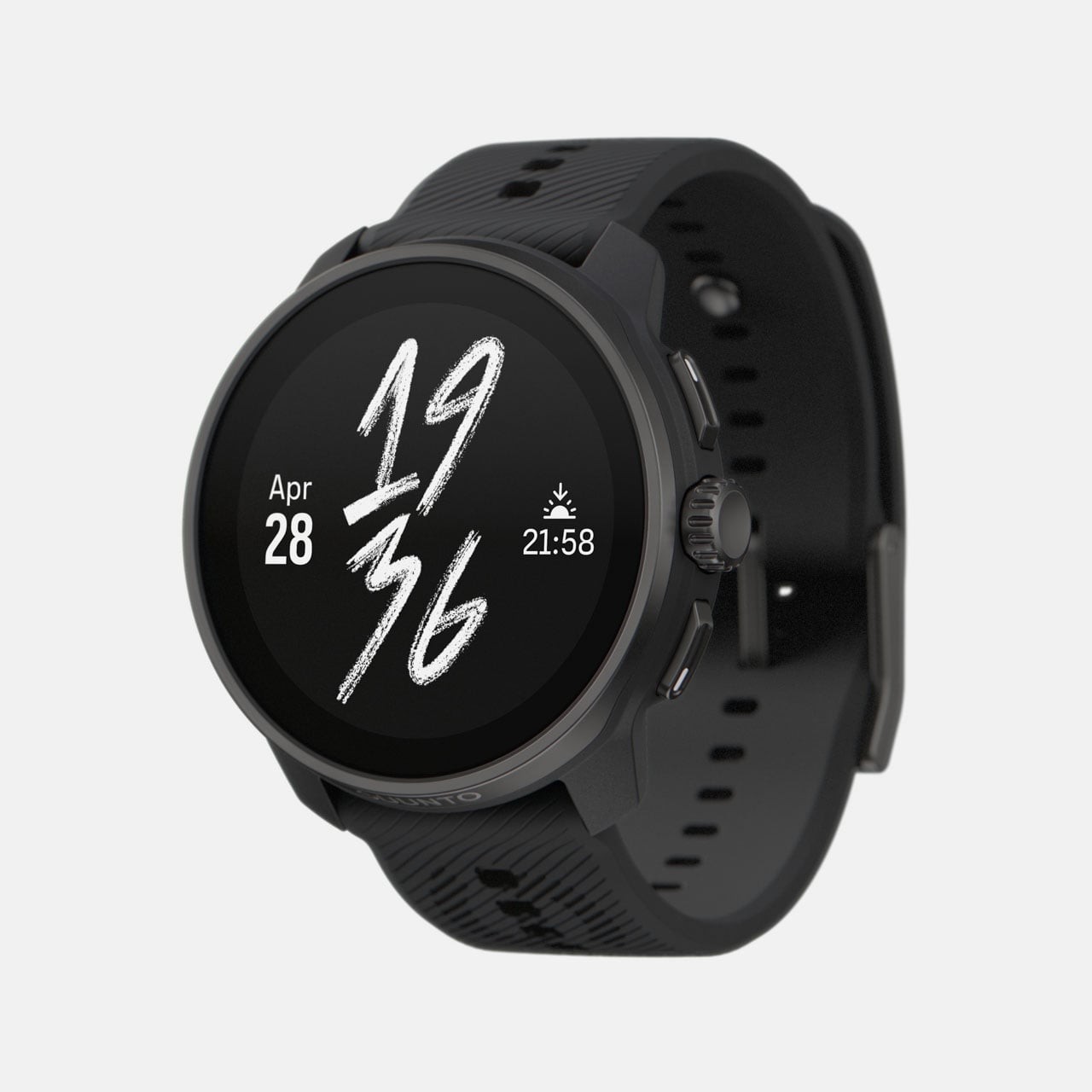
The Race S shares the shape, button layout, digital crown and AMOLED screen technology of the 49 mm Suunto Race, but its case is 45 mm wide and 11.4 mm thick. Suunto launched it with six stainless steel versions, and later added titanium editions. The stainless steel version with a silicone strap weighs 60 g according to the product page, and a titanium-bezel version weighs 53 g. The case itself is made from glass fibre reinforced polyamide, with a Gorilla glass lens.
The family has since grown. The newer Suunto Race 3S moves to a titanium case and a more advanced display, and the page Suunto Race S vs Suunto Race 3S shows how the two generations differ. Within the wider market, the closest alternatives are the Garmin Forerunner 170 and the Garmin Forerunner 970, which approach the same user from a different ecosystem.
Design and display
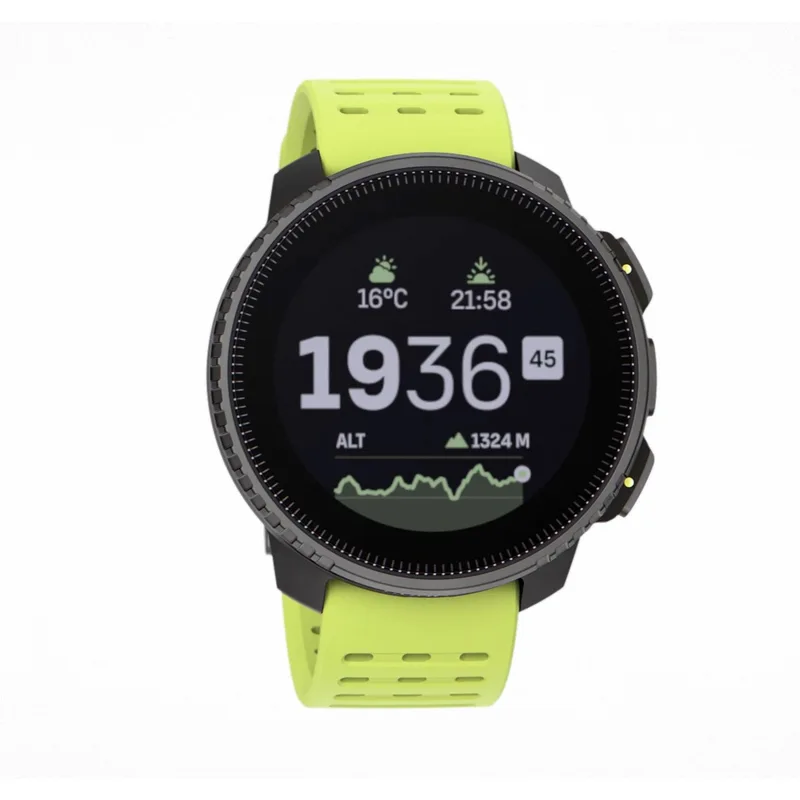
The Race S uses a 1.32-inch AMOLED touch display with a resolution of 466 x 466 pixels and an always-on option. The combination of touch, a rotating crown and physical buttons is one of the watch's best features: you can swipe through widgets when idle, then switch to buttons for precise control when your hands are wet or gloved, and use the crown to scroll through lists and zoom maps. The screen is bright enough to read in sunlight, according to Suunto, and the automatic brightness setting adjusts to ambient light.
The watch fits wrists from 125 to 175 mm with the supplied silicone strap, and up to 215 mm with a longer accessory strap. The 22 mm strap width is standard, so a wide range of Suunto and third-party straps can be fitted. Suunto lists six colour combinations at launch: All Black, Powder Gray, Powder Pink, Gravel Gray, Power Orange and Power Blue, with a special UTMB edition and titanium versions following. The water resistance is rated at 50 metres, which covers swimming in a pool or open water, and the operating temperature range runs from -20 to +55 degrees Celsius. The watch is designed in Finland, and Suunto notes it is repairable.
Training, sports and software
With more than 95 sport modes, each with default data fields that can be customised, the Race S covers running, trail running, cycling, swimming, multisport and yoga, among others. Training metrics are based on heart rate variability: the watch estimates training load, progress and recovery and gives personalised feedback through Suunto Coach and the Training Zone view in the Suunto app. At launch Suunto also added the option to see training data against menstrual cycle information. For racing, there are tools such as Race Pacer, race time estimation, performance tests and synced Strava segments. Running power is available from the wrist or with a Stryd sensor, and the watch works with Bluetooth heart rate belts, bike power meters, speed and cadence sensors and foot pods.
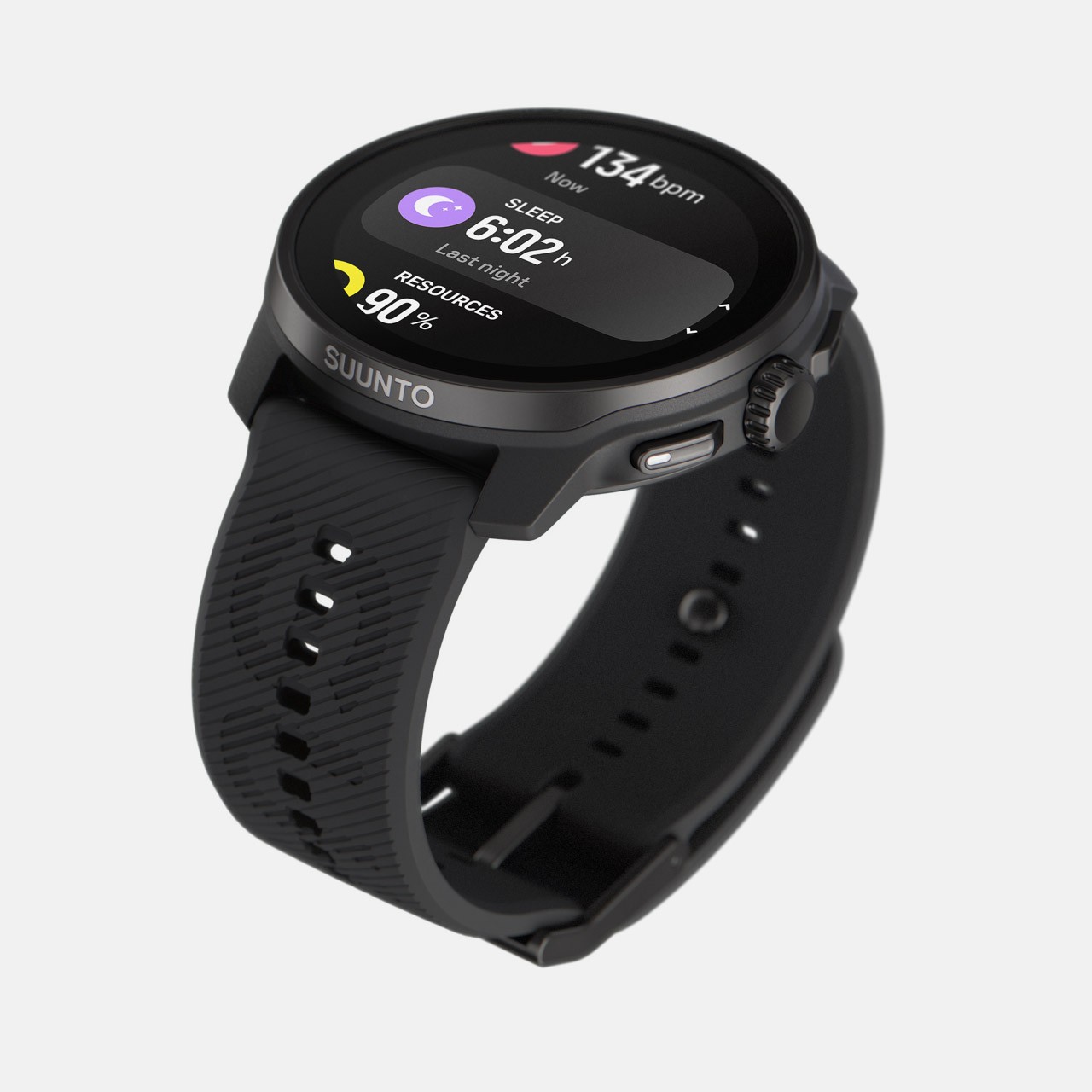
The SuuntoPlus store allows additional apps and guides to be added, and the watch updates over the air through the Suunto app. Daily tracking covers steps, calories, heart rate, sleep with sleep stages, stress and recovery, a daily resource level and blood oxygen. The watch is compatible with most common smartphones, and it can show notifications, control music playing on the phone and show the weather. Replying to messages with predefined replies is available on Android only. One limitation worth noting is that the specification list mentions music controls but not on-watch music storage, and there is no mobile payment function listed.
Navigation and GPS
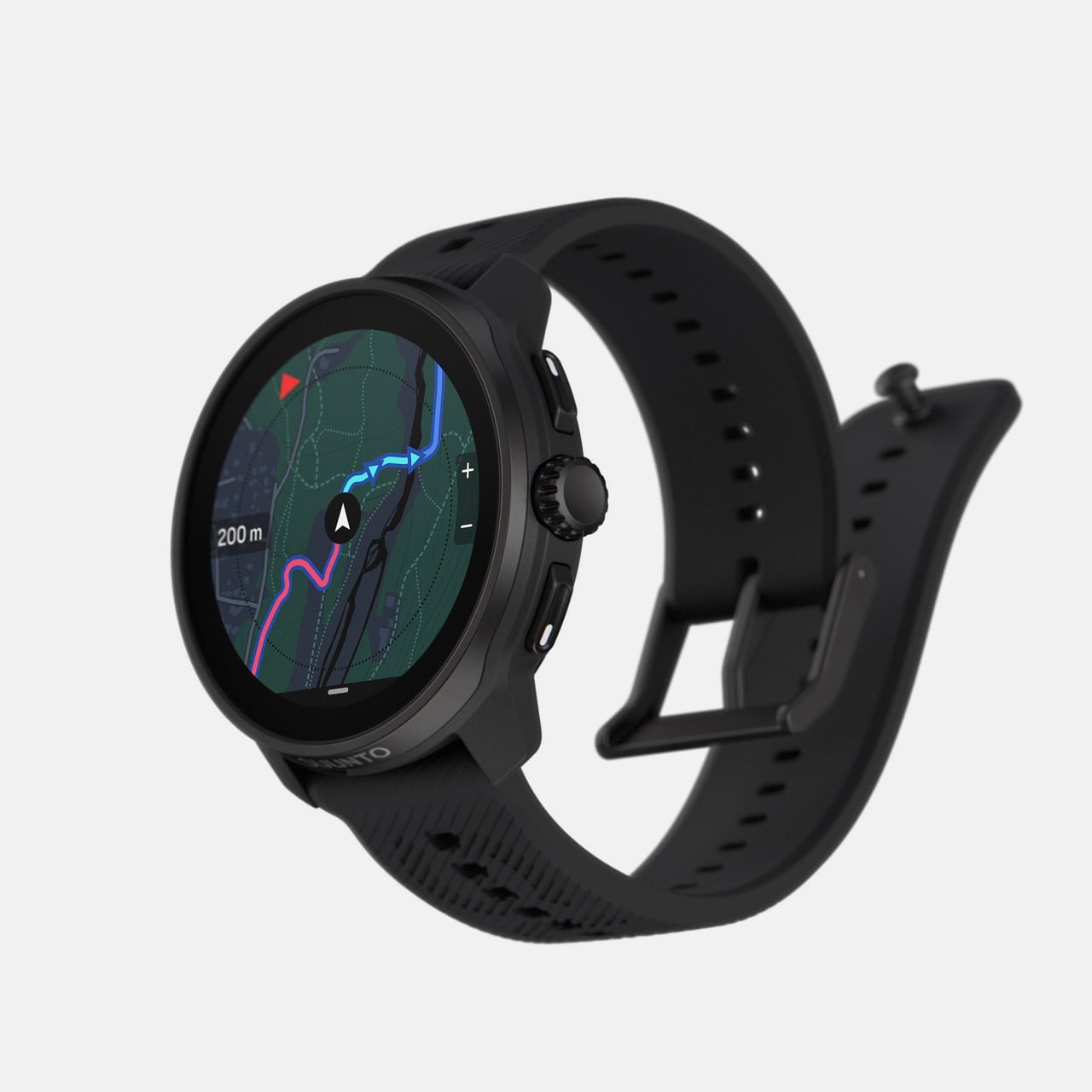
Navigation is where the Race S earns its place in Suunto's range. The watch uses dual-band (L1 and L5) multi-constellation GNSS, supporting GPS, GLONASS, Galileo, BeiDou and QZSS, and Suunto highlights the accuracy of its positioning between tall buildings and in mountains. Free offline maps are stored on the watch, which has 32GB of storage for maps, and you can navigate routes, follow a breadcrumb trail, use points of interest, route planning with heatmaps and snap-to-route. A barometric altimeter provides altitude and storm alarms, a digital compass is included, and the watch also lists temperature and sunrise and sunset times.
Suunto offers four battery modes that trade positioning accuracy against runtime: Performance, Endurance, Ultra and Tour. The GPS recording rate can be adjusted from Best to Low. The company quotes up to 30 hours of training with dual-band GPS in Performance mode, up to 40 hours with single-band GPS, up to 60 hours in a middle mode and up to 120 hours in Tour mode, where positioning accuracy is reduced and heart rate is off. These figures are Suunto's claims; in practice, tall buildings, cold weather and a bright display will all shorten the time.
Battery life
In daily use, Suunto states that the Race S lasts up to 9 days with wrist heart rate on and the display waking on a wrist raise, and up to 13 days with heart rate off. The battery is a rechargeable lithium-ion cell charged through a cable, and the watch includes intelligent charge reminders. For a watch with a 1.32-inch AMOLED display and dual-band GNSS, these numbers are competitive, although the larger Suunto Race offers a longer runtime because of its bigger case. If maximum endurance is your top priority, such as for ultramarathons, it is worth looking at the larger model or using the Tour mode.
Who the Race S is for
The Race S suits runners, triathletes, cyclists and hikers with smaller wrists, as well as anyone who wants a performance watch that is comfortable to wear around the clock, including at night for sleep tracking. It is also a good option for users who value free offline maps and a strong navigation experience without a subscription, and who want a physical-button interface for sport use. Those who also use a bike computer, a Stryd pod or a heart rate belt will find a broad range of supported sensors.
It is less suitable for people who want a full smartwatch experience with apps, payments and voice assistants, or an LTE watch. For those buyers, a general smartwatch such as the Apple Watch Series 10 may be a better fit. People who want a ruggedised, adventure-focused alternative from another brand can also look at the Polar Grit X2. The rankings give a wider overview of how sports watches compare.
Compromises to keep in mind
- Smaller battery than the larger Race: daily-use and GPS runtimes are shorter than on the bigger sibling.
- Stainless steel and polymer build: the original versions are heavier than titanium alternatives, at 60 g with the strap.
- No smartwatch extras: no mobile payments, no cellular, and music control only through the phone.
- Display brightness figures not published: Suunto describes the screen as bright but does not state a nit value on the pages we reviewed.
- Lab-based battery claims: runtimes depend on GPS mode, heart rate settings and display use.
- Price not stated: Suunto's global pages do not show a US list price, so no figure is given here.
Overall, the Suunto Race S delivers what its announcement promised: the capabilities of the Race in a smaller, lighter body. With a bright AMOLED screen, dual-band GPS, free offline maps and in-depth recovery metrics, it is a strong choice for athletes who prefer a compact watch.
Where it ranks
Compare Suunto Race S with similar devices
More from Suunto
Frequently asked questions
When was the Suunto Race S released?
The Suunto Race S was released on 2024-06-25, according to the manufacturer’s published information.
What are the main specs of the Suunto Race S?
Headline figures for the Suunto Race S: Battery life: 9 days. The full specification table is further up this page.
Is the Suunto Race S worth buying?
That depends on your priorities. Use the editorial review on this page for our view, check the rankings above to see where the device stands on battery, display and camera, and compare it directly with similar models before you decide.