Smartwatches
Polar Grit X2
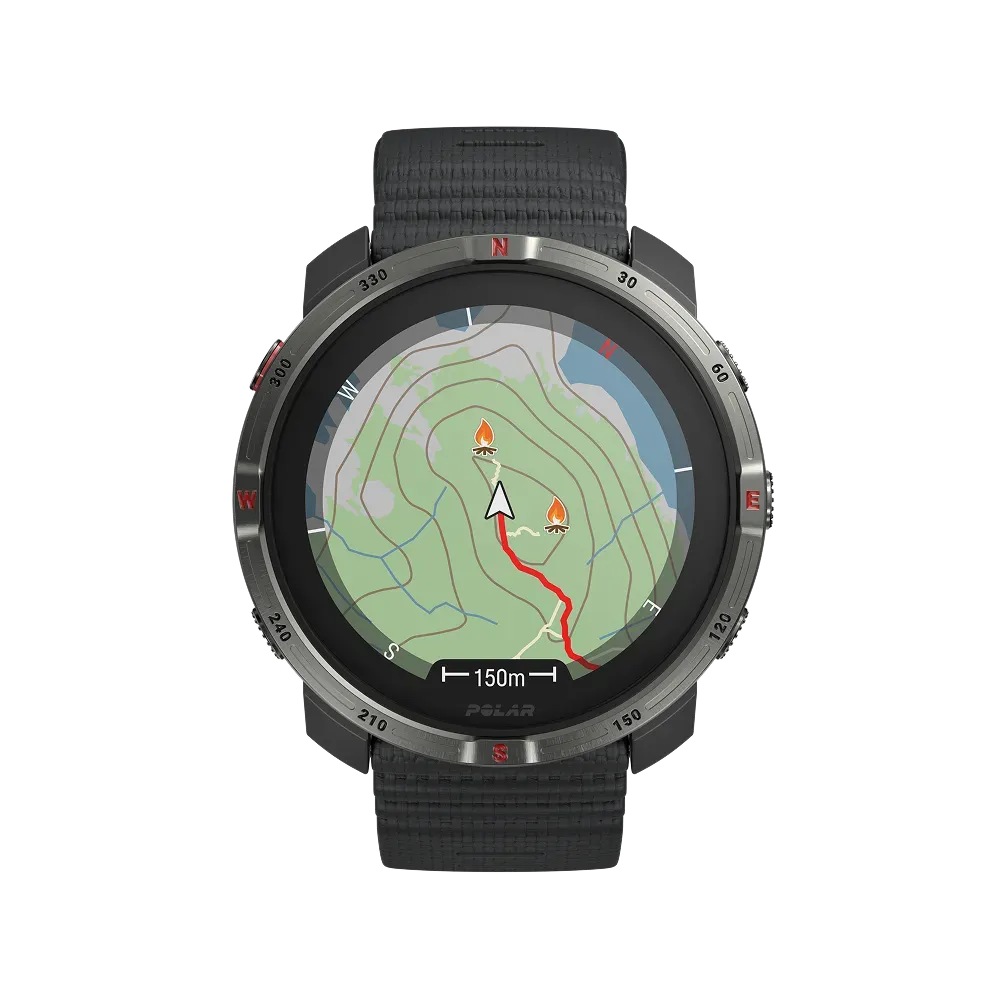
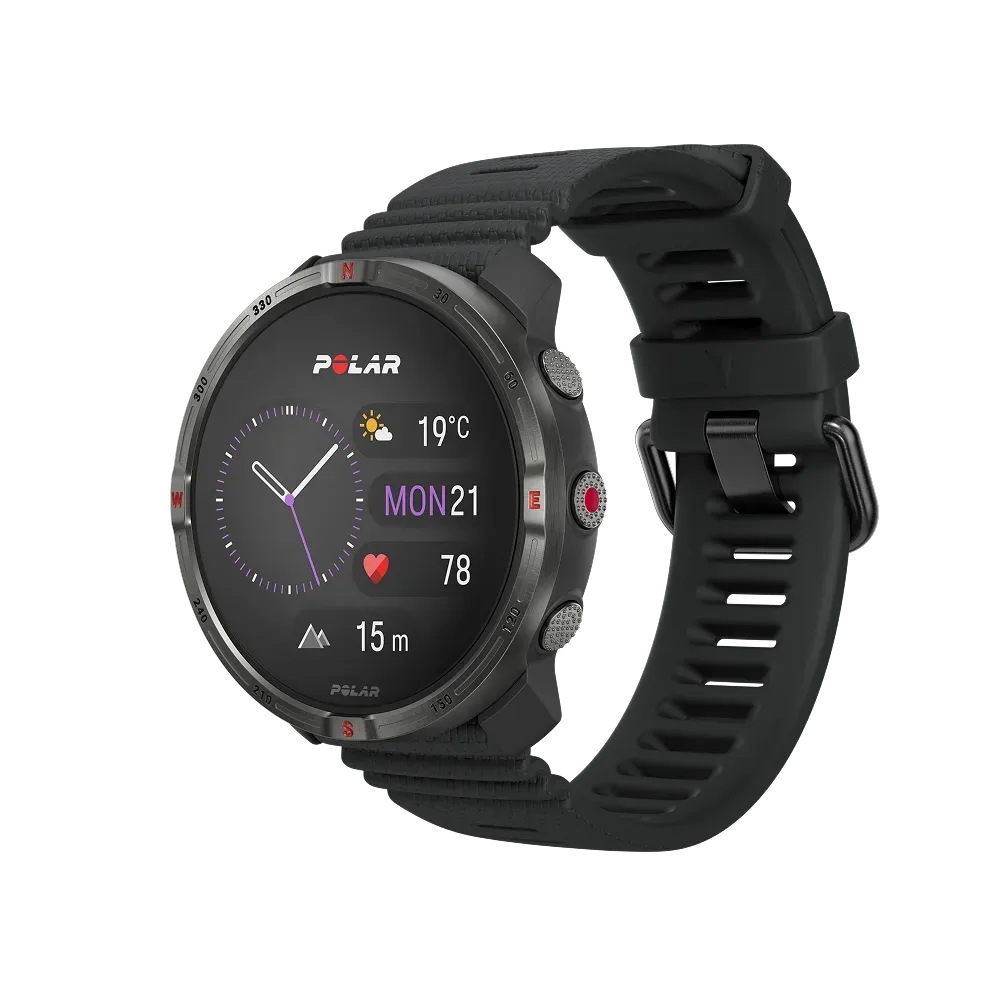
Polar's most compact outdoor watch has a sapphire AMOLED display, preloaded offline maps, dual-frequency GPS and up to 90 hours of battery in eco training mode, at 62 g.
Key figures at a glance
Gallery
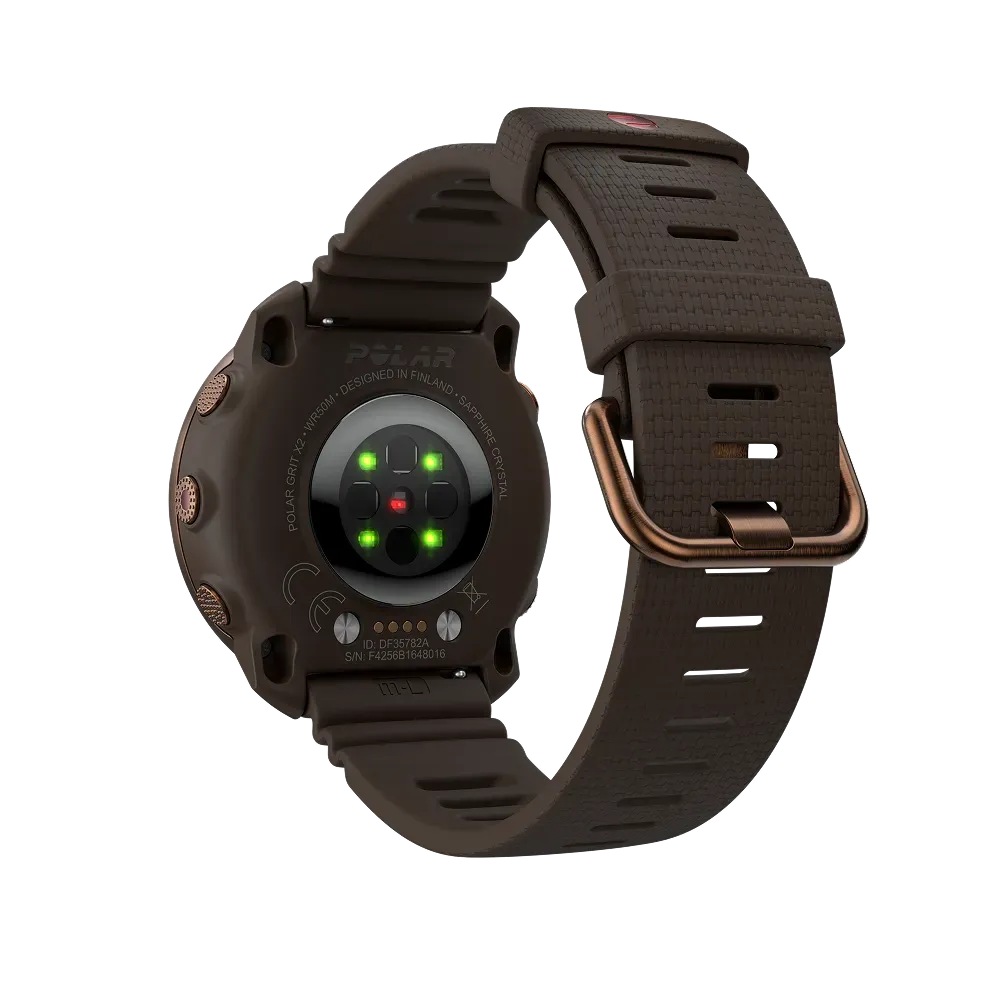
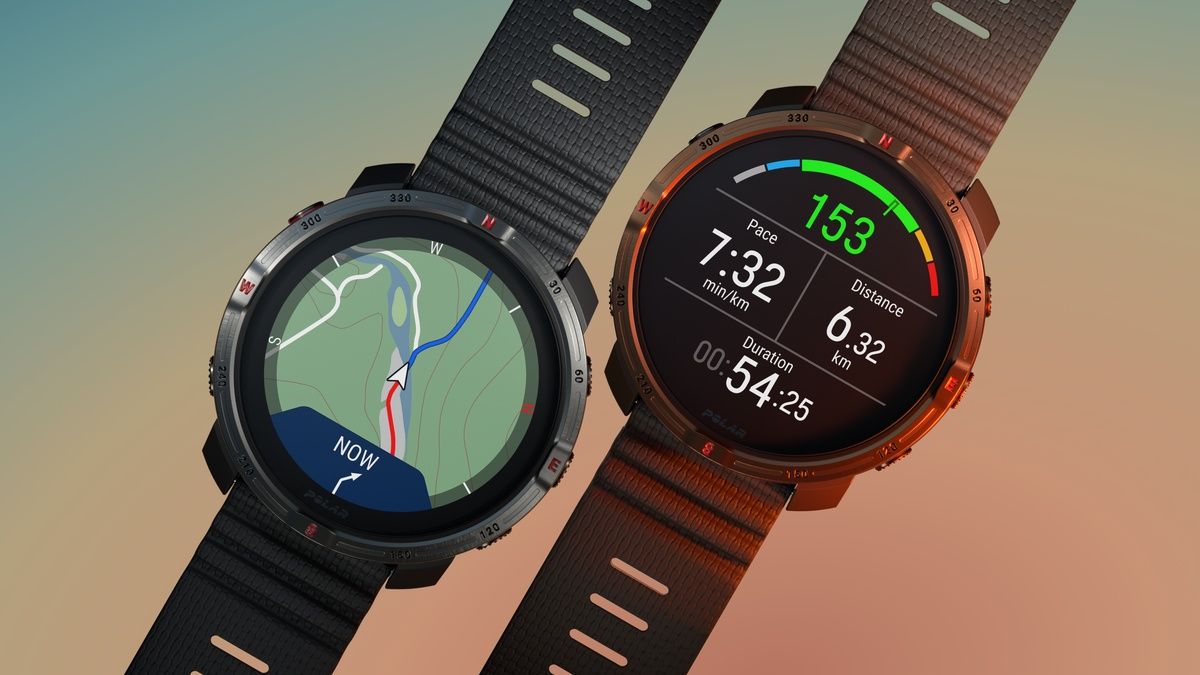
Specifications
- Display
- 1.28-inch AMOLED touchscreen, 416 x 416, sapphire crystal glass, always-on option
- Body
- 44.7 x 44.7 x 12.5 mm; 62 g with wristband (39 g without); plastic case with stainless steel bezel; 22 mm standard wristbands; WR50 water resistance; MIL-STD-810H tested
- Battery
- Up to 7 days in smartwatch mode; up to 30 hours in performance training mode; up to 90 hours in eco training mode; rechargeable and replaceable Li-Pol battery
- Storage
- 32 GB (offline maps)
- Sensors
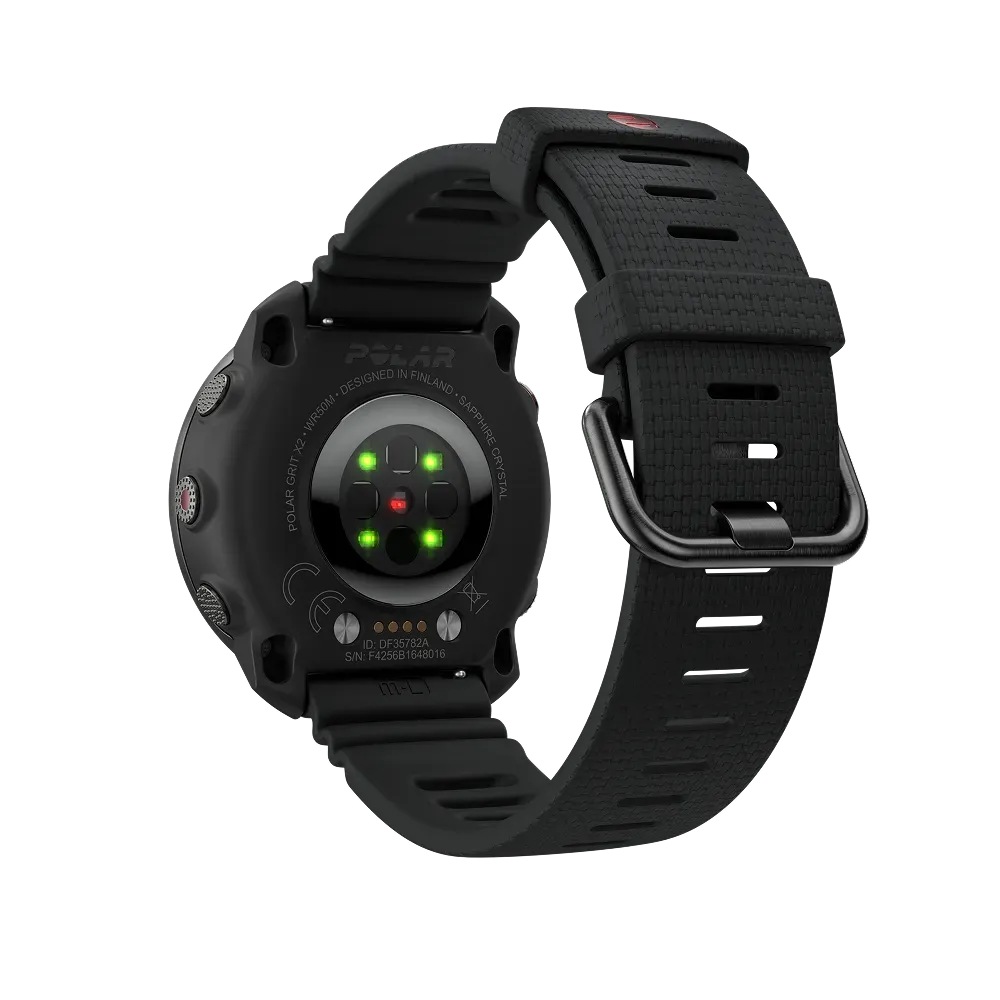
- Polar Elixir biosensing: 4th-generation optical heart rate, wrist-based ECG, SpO2, skin temperature; barometer, magnetometer compass, accelerometer, gyroscope
- GPS
- Dual-frequency GPS with GLONASS, Galileo, BeiDou and QZSS
- Navigation
- Preloaded full-colour offline topographic maps, route guidance, Track Back, points of interest
- Connectivity
- Bluetooth LE, USB-C charging cable (proprietary connector)
- Software
- Polar Flow app; Nightly Recharge, Training Load Pro, Orthostatic Test
- Colors
- Night Black, Brown Copper
The Polar Grit X2 is the Finnish company's most compact outdoor watch. Polar announced it on 4 June 2025 and put it on sale from the same day globally except in the United States, with a US launch described as planned for later. It brings the navigation, biosensing and training tools of the larger Grit X2 Pro into a case that measures 44.7 by 44.7 millimetres, weighs 62 grams with the wristband and carries a recommended price of 479.90 euros. This page is based on the published specifications and manufacturer information. It explains where the watch fits, what it offers, and which compromises come with a smaller, lighter body.
Where it sits in the lineup
Polar's outdoor range is built around the Grit X family. The Grit X2 Pro and the titanium Grit X2 Pro Titan are the large, rugged models. The Grit X2 shares their operating system and, according to Polar, will keep receiving the same feature updates, but it trades a bigger case for a slimmer one. Polar's chief executive said the company wanted to close a gap for people who like outdoor watches but find most of them bulky, and it describes the Grit X2 as aimed at a new generation of adventurers who want a more compact fit. The result is a watch aimed at hikers, trail runners and everyday wearers who want serious tools without carrying a brick on the wrist.
Within Polar's wider catalogue the Grit X2 sits well above urban or fitness-first models such as the Polar Street X and far above the screen-free Polar Loop. Both of those are lighter and cheaper, but neither carries topographic maps. Outside Polar's own range, the obvious reference points are multisport watches such as the Garmin fenix 8, and you can set the two side by side in our Grit X2 versus fenix 8 comparison.
Design, display and durability
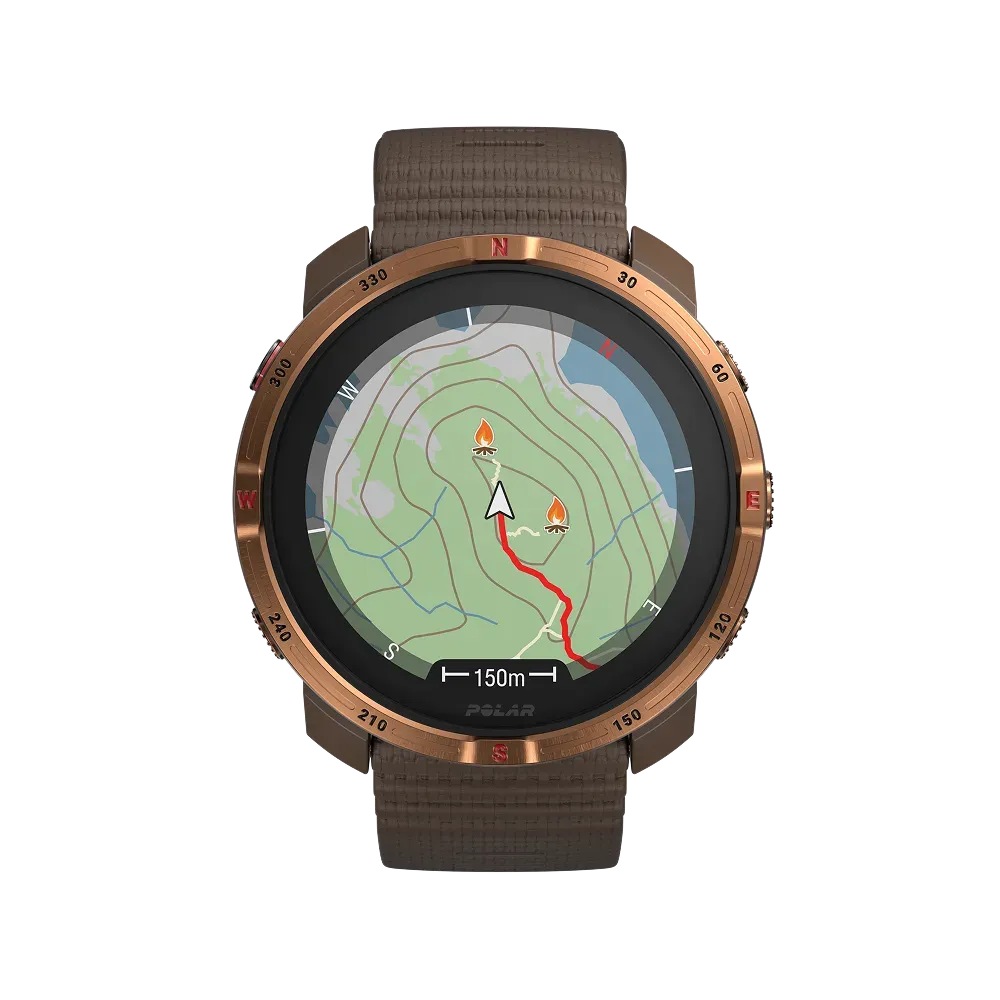
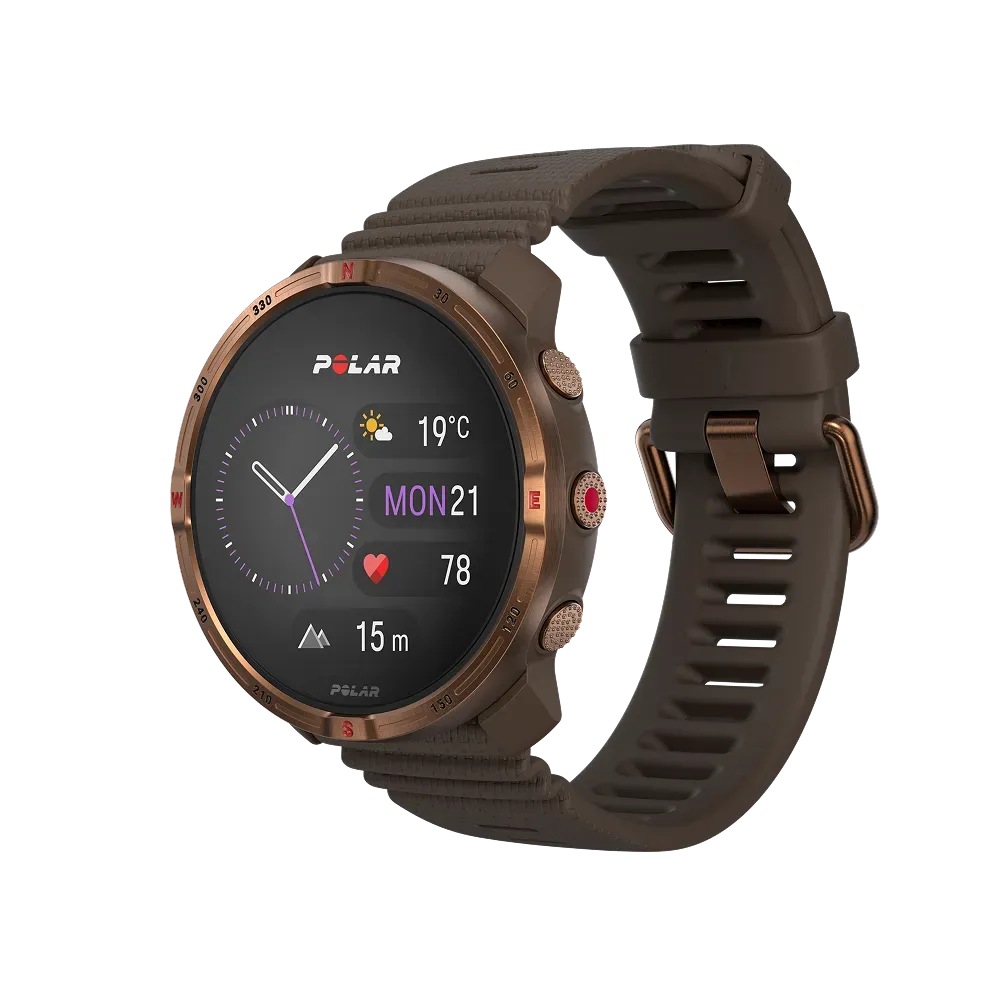
The case is round, 44.7 mm across and 12.5 mm thick. Polar lists the weight at 62 grams including the wristband and 39 grams without it. The case itself is plastic, with a stainless steel bezel that carries compass markings, and the buttons are shaped so they can be used with gloves on. The watch takes standard 22 mm wristbands, so straps from Polar's own range or from third parties can be swapped in. It comes in two colours, Night Black and Brown Copper.
The screen is a 1.28-inch AMOLED touchscreen with a resolution of 416 by 416 pixels, covered by sapphire crystal glass. Polar says this combination gives good visibility in sunlight and in harsh conditions, and the specification list includes an always-on option and an ambient light sensor. For a watch that is supposed to be worn all day, the sapphire cover is a meaningful point: it is the material watchmakers choose to resist scratches, and many cheaper sports watches use less hard glass.
On durability Polar states that the Grit X2 meets the MIL-STD-810H military standard, covering temperature extremes, altitude, shock and immersion, and lists an operating range from minus 20 to plus 50 degrees Celsius. The water resistance rating is WR50. That is suitable for rain, showers and shallow swimming, but it is a lower figure than the depth ratings some dive-oriented watches offer, so it is not a watch for deeper water sports.
Navigation and training tools
Navigation is the main reason to look at the Grit X2 rather than a plain running watch. Polar preloads full-colour offline topographic maps and describes support for points of interest and elevation profiles of planned routes, so you can see the climbing ahead before you set off. The feature list adds route guidance, planned routes with breadcrumbs, Track Back, Back to Start, coordinates, a magnetometer compass, a barometric altimeter and daylight times. Positioning uses dual-frequency GPS together with GLONASS, Galileo, BeiDou and QZSS. The watch has 32 GB of internal storage, which is where the maps live, so they do not depend on a phone connection once they are loaded.
The training side is equally broad. The list includes Training Load Pro, Energy Sources, wrist-based running power, swimming metrics, a season planner, a running programme, a running performance test, a cycling performance test, vertical speed and VAM, the Hill Splitter, the FuelWise fuelling assistant and the FitSpark daily training guide. For practical outings there are a flashlight function, weather information and music controls. Everything syncs to Polar Flow, the company's app and web service, where sessions can be analysed and routes can be prepared and sent to the watch.
Biosensing, sleep and recovery
The Grit X2 uses Polar Elixir, which the company calls its most advanced biosensing platform. It combines a fourth-generation optical heart-rate sensor with a wrist-based ECG, blood-oxygen measurement and skin-temperature sensing. Polar ties those readings to tools such as Nightly Recharge, SleepWise, Recovery Pro, the Orthostatic Test and the Leg Recovery Test, with the aim of helping you decide when to train hard and when to rest. As always with wrist-based health data, the figures are useful as trends rather than as medical diagnoses, and the ECG and SpO2 functions should be treated as wellness features unless a local approval says otherwise; Polar's materials do not claim more than that.
Sleep tracking includes sleep stages and the Nightly Recharge score, and the watch also records continuous heart rate and 24/7 activity. Because the case is slim and light, it is one of the easier Polar outdoor watches to wear in bed, which matters if you want the overnight data to be complete.
Battery and charging
Polar quotes up to 90 hours in the eco training mode, up to 30 hours in the performance training mode and a full week of everyday wear in smartwatch mode, with the specification page giving up to 7 days. These are manufacturer figures obtained under Polar's own test settings, and real results will depend on the screen settings, GPS mode, heart-rate use and map use. The battery is a Li-Pol cell that Polar describes as rechargeable and replaceable, which Polar presents as a benefit for longevity over the years. Charging uses a proprietary magnetic connector on a USB-C cable.
A compact case leaves less room for a battery than a large one, so the Grit X2 is the model for people who accept modest endurance in exchange for a smaller, lighter watch. For a day hike, a long run or a weekend away, the stated numbers should be comfortable. For multi-day expeditions without charging, check the eco-mode figure against your plans.
Who it is for
The Grit X2 is a good match for people who want proper offline navigation and a deep training and recovery toolkit but dislike large watches. It also suits those who already use Polar Flow and prefer a straightforward interface to a crowded smartwatch platform. A sapphire display, a replaceable battery and a durable build are strong points for the price, and the dual-frequency GPS can help in forests and valleys where positioning is harder.
It is also a sensible choice for someone coming from a fitness-focused watch who wants to start hiking or trail running. The maps and Track Back give confidence off the marked path, while the day-to-day features such as notifications and music controls keep it useful in town.
Compromises to consider
The plastic case with a steel bezel is lighter than a full metal build, which is the point, but it will not feel as premium as the titanium Grit X2 Pro Titan. The WR50 water rating limits it to everyday water exposure. Polar's published list does not describe a built-in speaker, microphone or contactless payment feature, so if you want a phone replacement on the wrist, a mainstream smartwatch is a better fit. The price of 479.90 euros puts it above many general fitness watches, and in the United States the launch timing and pricing were still to be announced at the time of the original press release. Finally, Polar's ecosystem is smaller than that of the biggest competitors, so check that the third-party apps you rely on are supported.
Taken together, the Polar Grit X2 is a focused watch: compact, tough, map-equipped and rich in training data, with endurance that is sufficient for most outings rather than the longest ones. If you want to see how it stacks up against other devices, visit the rankings page to compare it with the rest of the category.
Where it ranks
Compare Polar Grit X2 with similar devices
More from Polar
Frequently asked questions
When was the Polar Grit X2 released?
The Polar Grit X2 was released on 2025-06-04, according to the manufacturer’s published information.
What are the main specs of the Polar Grit X2?
Headline figures for the Polar Grit X2: Battery life: 7 days. The full specification table is further up this page.
Is the Polar Grit X2 worth buying?
That depends on your priorities. Use the editorial review on this page for our view, check the rankings above to see where the device stands on battery, display and camera, and compare it directly with similar models before you decide.